
Reviewed · METEORA TOURS
Athens to Meteora: Monasteries & Hidden Caves Bus Tour
Meteora is one of Greece’s great visual surprises: huge stone pillars rising above the plain, with monasteries perched on top as if placed there by a very determined architect. This tour takes you past all six active monasteries, inside three, and down to the Badovas hermit caves, a part of Meteora many short visits miss.
I like the mix of big views and human stories, especially the myths and tales about monks who once lived in cliffside shelters. I also like the small Mercedes minibus, helpful guides such as Katerina and Kate, and the many chances to stop for photos. The catch is the day’s length: with the bus ride from Athens taking about five hours each way, you may spend close to 14 hours in motion.
In This Review
- Key points to know before booking
- Why Meteora deserves a full day from Athens
- The five-hour bus ride from Athens
- Seeing all six monasteries from the road
- Entering three monasteries
- The Badovas hermit caves
- Breaks, food, and the pace of the day
- Guides, minibus comfort, and group style
- Is $44 a good price?
- Who should book this Meteora tour?
- Practical details worth knowing
- Should you book it?
- FAQ
- How long does the Athens to Meteora tour take?
- Where does the bus leave from in Athens?
- How many monasteries can I visit?
- Are monastery entrance fees included?
- Is food included in the tour price?
- What languages are available?
- Is the tour running by train?
- Is the tour suitable for people with mobility impairments?
Key points to know before booking
- Six monasteries, three interiors: You see all six active monasteries from the road and enter three of them.
- Badovas adds something different: The hermit caves show the rough, secluded side of Meteora beyond the famous buildings.
- Athens transport is currently by bus: The air-conditioned replacement bus leaves Larissis Station at 8:00 in the morning.
- The tour is built around views: Expect several panoramic photo stops, with help from the guide and driver if you want a picture.
- Budget extra cash: Monastery admission is €5 per person at each monastery and is not included.
- This is a demanding day: The experience is not suitable for people with mobility impairments, and monastery visits require modest clothing.
Why Meteora deserves a full day from Athens
Meteora is not simply a collection of old churches. It is a place where geology and religion meet in a startling way. Tall rock towers rise from the Thessalian plain, and Orthodox monasteries sit on ledges high above the towns of Kalambaka and Kastraki.
The setting explains the monasteries better than any brochure can. Monks came here seeking quiet and separation from ordinary life. At first, they lived in natural caves and small shelters. Later, monasteries were built higher on the cliffs, where access was difficult and protection came from the rock itself.
That is why this excursion works best when you let yourself enjoy both parts of Meteora. The famous monasteries give you architecture, icons, courtyards, and religious history. The Badovas caves give you a more rugged look at the people who chose to live in this severe place.
The site is protected as a UNESCO World Heritage Site, but it still feels more like a living religious area than an open-air museum. Monks and nuns continue their religious work, so respectful clothing and quiet behavior matter.
More Kalabaka trips worth a second look
- Meteora: Morning Half Day Sightseeing and Monasteries Tour
★ 4.7 · 478 reviews - Meteora: Majestic Sunset Tour & Monasteries with Local Guide
★ 4.7 · 359 reviews - Meteora: Panoramic Morning Small Group Tour with Local Guide
★ 4.7 · 334 reviews
The five-hour bus ride from Athens
The current departure point is outside the Larissis metro station on Deligianni Street, directly opposite Athens train station. Be there by 7:45 in the morning for the 8:00 departure.
Train service to Meteora has been temporarily disrupted by flooding, so this version of the tour uses a modern, air-conditioned bus. The route takes about five hours each way, including a 20-minute stop for refreshments and the restroom.
That is a long ride, but the bus has useful touches: Wi-Fi, USB chargers, and a bottle of water. You also get to watch the Greek countryside change as Athens gives way to central Greece. The bus is not just a transfer, since the scenery helps set up the dramatic arrival at Meteora.
Still, you should be honest with yourself about the time. The transport alone takes roughly 10 hours, and the Meteora portion lasts about five hours. Add the morning meeting time and the return to Athens around 10:00 at night, and this becomes a full day with little room for delay.
For many people, that is a fair trade for seeing Meteora without changing hotels. If you dislike long bus rides, staying overnight in Kalambaka or Kastraki would give you a calmer visit, but this tour is a practical choice when Athens is your base.
Seeing all six monasteries from the road
Once you reach Meteora, the small-group minibus begins its circuit through the rock formations. You see all six active monasteries, although seeing one from outside and entering it are two different experiences.
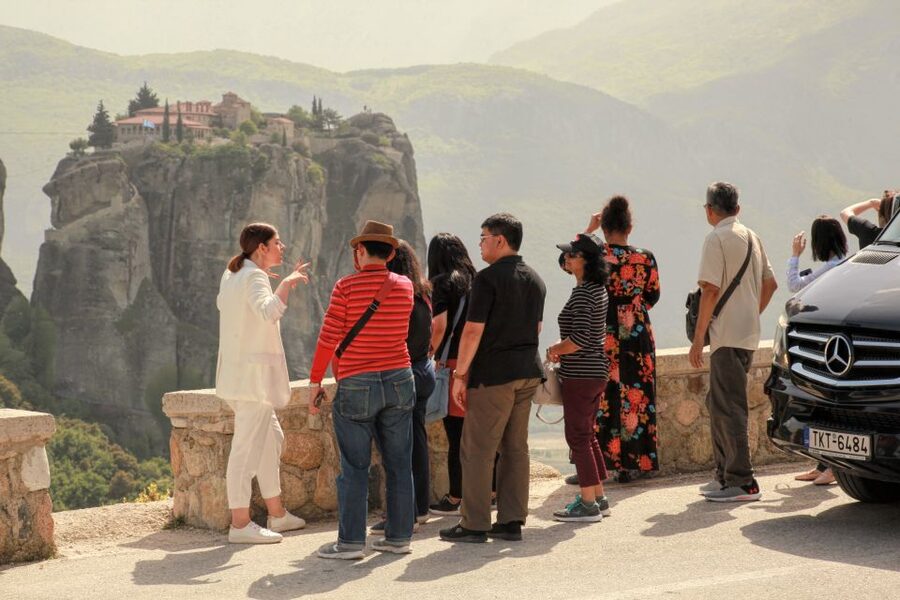
The guide explains where each monastery sits and how the buildings fit into the cliffs. From the road, you get the broad picture: towers, ravines, pale stone, and monasteries appearing at different heights. The views are particularly useful for understanding how isolated these religious communities once were.
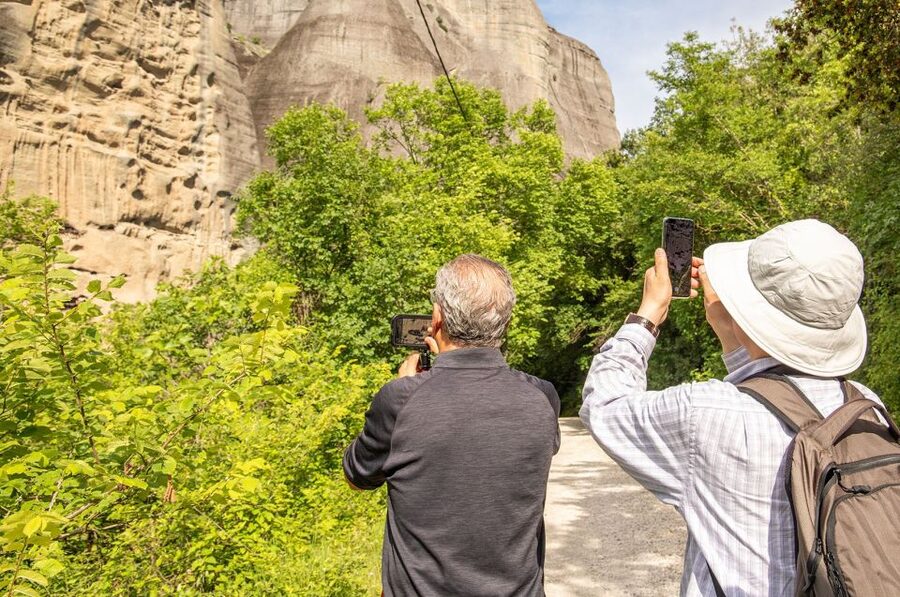
The route includes several panoramic stops. These are not quick glances from a bus window. You get time to step out, take pictures, and look across the plain toward the rock towers. The guide and driver have been praised for helping with photos, which is a small but welcome service when you are traveling alone or with a couple.
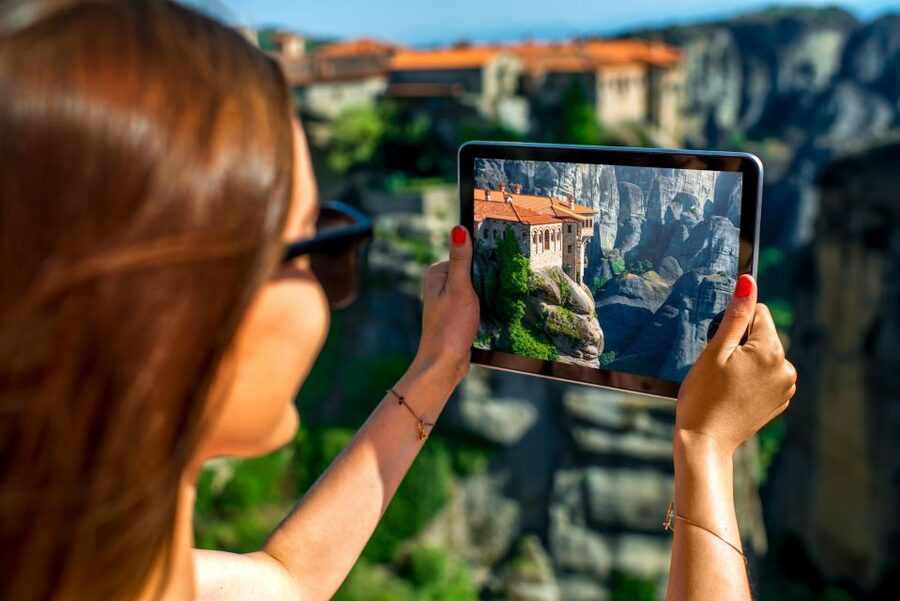
Bring a camera, but also give yourself a few minutes without looking through it. Meteora’s scale is hard to capture in one frame. The most useful pictures often include a monastery, a cliff face, and the plain below.
The route can feel fast, especially if you want to stop at every viewpoint. The guide has to keep the group moving so the monasteries, caves, meal stop, and return transport all fit into the day. You get a strong overview rather than a slow, unhurried study of every corner.
Entering three monasteries
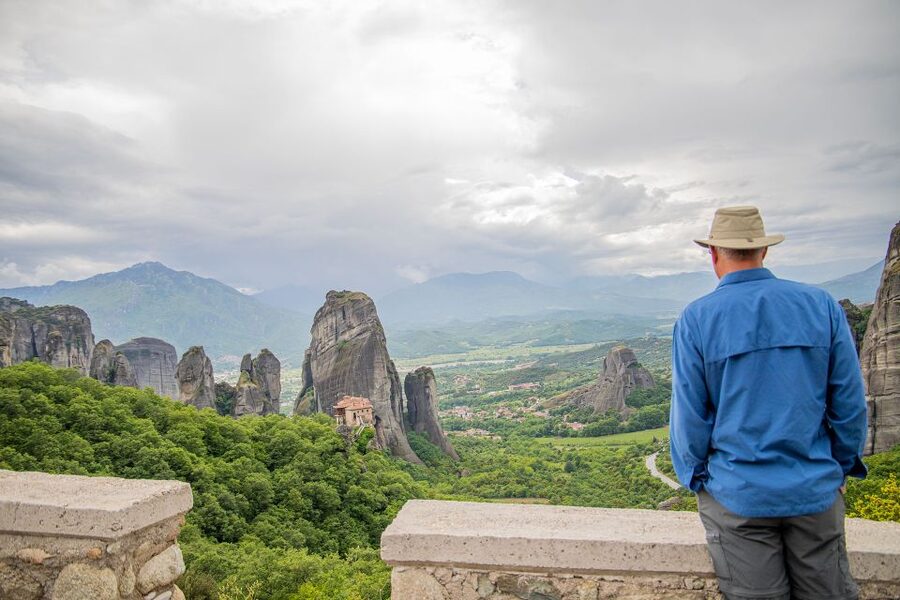
The tour includes interior visits to three monasteries. This is where the trip moves beyond scenic sightseeing.
Inside, you can expect a closer look at Orthodox religious art, old stone construction, chapels, and the practical design of buildings that had to function on steep rock. The guide explains the spiritual and architectural meaning of the sites, but the tour guide generally does not act as the state-licensed guide inside the monasteries. You may need to explore parts of the interiors independently.
That arrangement gives you some freedom, but it can also disappoint if you expect the guide to lead every step inside. A past guide named Katerina was praised for giving clear explanations outside while allowing people to look around at their own pace. Other guides, including Kate and Jim, have also been singled out for strong explanations and an engaging manner.
The number of monasteries open to you can depend on the day’s route and operating conditions, but the stated plan is entry to three. Entrance fees are extra at €5 per monastery, so budget up to €15 per person if you enter all three.
Wear clothing suitable for an active Orthodox monastery. Sleeveless shirts are not allowed. Bring cash for admission and any food or drinks you buy during the day.
A different kind of day out, same corner of Greece:
- Athens: Guided Tour to Meteora Monasteries & Hermit Caves
★ 4.7 · 211 reviews - Kalabaka: Meteora Small-Group Hiking Tour w/ Monastery Visit
★ 4.9 · 205 reviews - From Kalabaka/Kastraki: Meteora Monasteries Morning Tour
★ 4.8 · 178 reviews - Meteora: Sunset Small Size Tour with Monastery & Caves visit
★ 4.9 · 171 reviews
The Badovas hermit caves
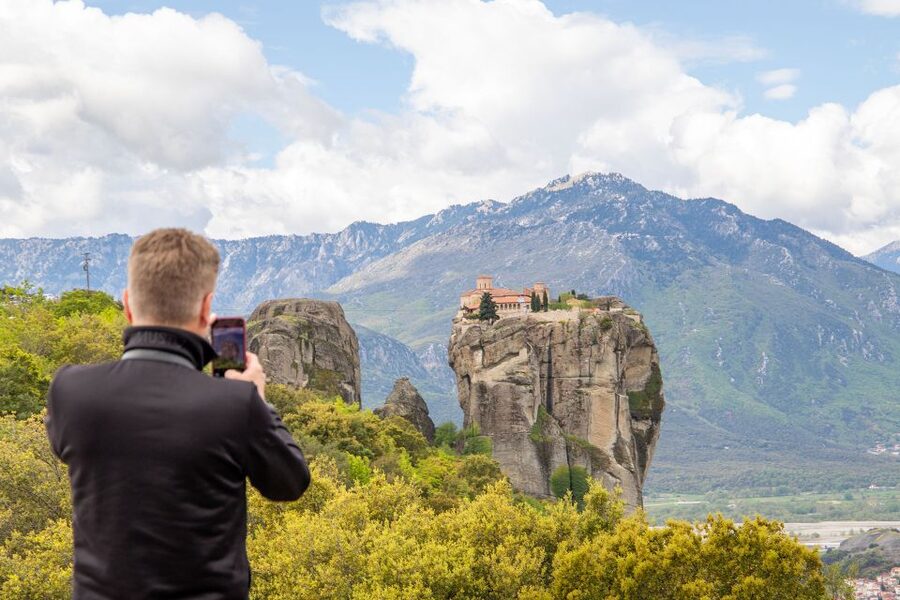
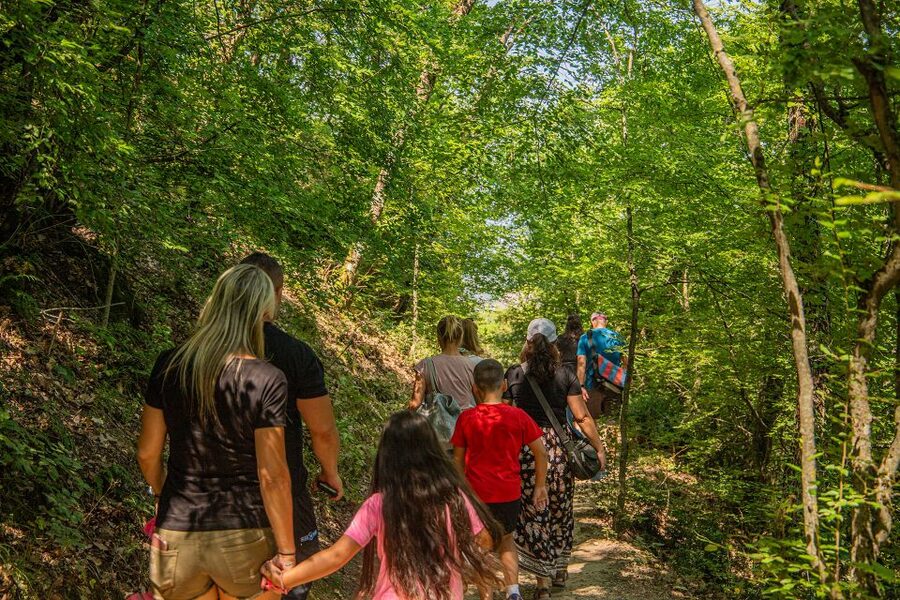
The visit to the hidden hermit caves of Badovas is the most distinctive part of this outing. Many visitors focus only on the monasteries above, but the caves tell the earlier story of Meteora’s religious life.
These shelters are connected with hermits who lived in isolation among the rocks. The setting is rougher and less polished than the monasteries. That contrast helps you understand that Meteora was first a place of solitude, not a sightseeing destination.
Do not expect a museum-style cave complex with a long display route. This is a visit to an unusual area of natural and historic shelters, and access involves walking over uneven ground. The activity specifically says it is not suitable for people with mobility impairments, so take that warning seriously.
The caves also give you a different angle for photographs. From the monastery viewpoints, you look across the rock towers. At Badovas, you get closer to the lower cliffs and the small spaces where people once made a life with very little.
A good guide makes this stop more meaningful by explaining the myths, legends, and local stories tied to the caves. This is where the human side of Meteora comes into focus. You are not only looking at dramatic stone. You are thinking about the choices made by people who wanted distance from the world.
Breaks, food, and the pace of the day
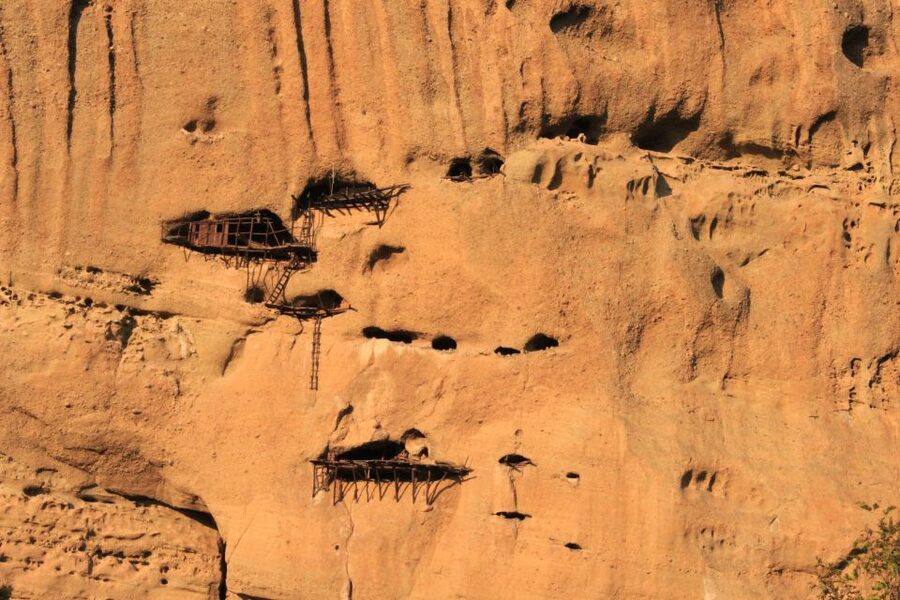
The day includes three breaks. Two are highway stops for restrooms and snacks. The third is a meal stop at a local restaurant, where you can order regional food.
Food and drinks are not included in the $44 price, so plan to pay separately. The meal break gives you a chance to sit down after the road trip and monastery visits, but the timing may feel short if you want a leisurely lunch. One past experience noted that the eating time was only about 10 minutes, while another found the schedule included too much unstructured time near the end.
Those comments point to the main weakness of a one-day Meteora trip: the schedule has to balance a long transfer with a compact local tour. You may feel rushed at one monastery and then have a little spare time later.
I suggest carrying a small snack even though highway stops are provided. Keep water with you, wear comfortable shoes, and avoid planning anything important in Athens after the return. The bus is expected back around 10:00 at night, but a full day on the road is not the time for a tight restaurant reservation or airport connection.
Guides, minibus comfort, and group style
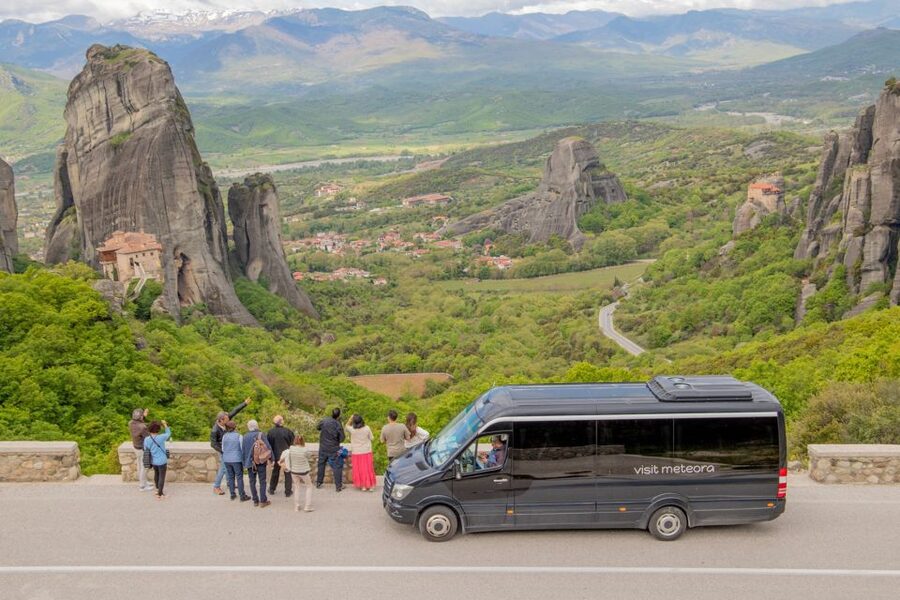
The local tour is done in a Mercedes luxury minibus rather than a large sightseeing coach. That matters on Meteora’s winding roads, where a smaller vehicle makes the local circuit feel more personal.
The guide’s role is central. Names found with this experience include Kate, Katerina, and Jim, though your guide may be someone else. Katerina was described as a local archaeologist with strong knowledge of the monuments, while Kate was praised for her detailed explanations. Jim was remembered for being witty and engaged.
The best guides on this route do more than recite dates. They explain why the monasteries were built where they were, connect the caves with the later monastic communities, and point out good places for photographs. They also leave you room to wander instead of talking at you every second.
Live guiding is available in English, Spanish, and French. A free audio guide is also listed in English, Spanish, French, German, Italian, Polish, Portuguese, Chinese, Japanese, Korean, Russian, and Greek. Check the option you book, since the meeting point and transport details can vary.
The tour can be booked as a private group, which may suit families or friends who want more control over the pace. The standard small-group format is likely the better value if you are watching the budget.
Is $44 a good price?
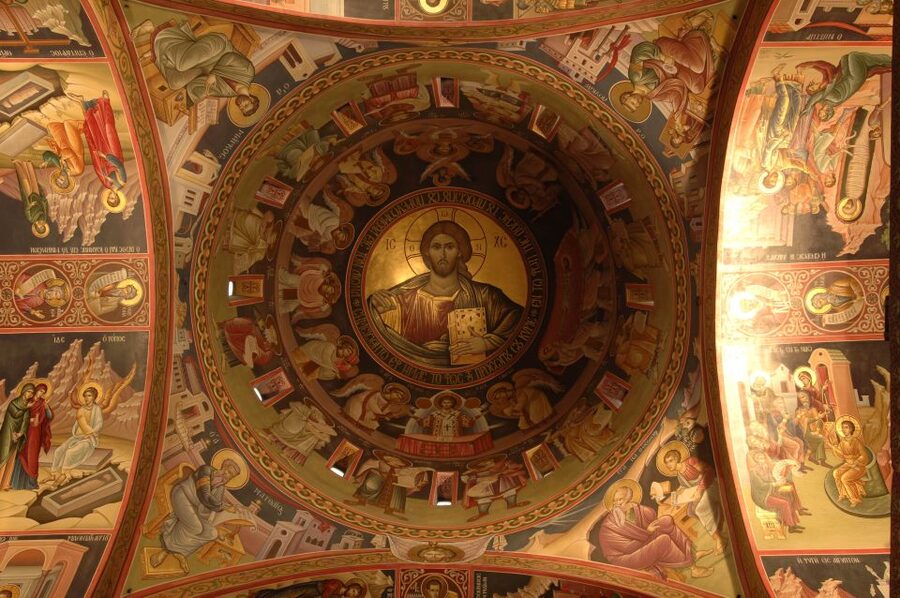
At $44 per person, the basic price is attractive for a long day that includes Athens to Meteora transport, the local minibus, an English-speaking guide, the cave visit, three monastery interiors, panoramic stops, water, Wi-Fi, and USB charging.
The price is not the complete cost. You need to add up to €15 for the three monastery entrances, plus your meals and snacks. The tour also does not include a state-licensed guide inside the monasteries.
Even with those extras, the value is strong if you have only one day available. Arranging the bus journey, local transport, viewpoints, and cave stop independently would take planning, and the route is much easier with a driver who knows where to stop.
The value is weaker if you can stay overnight. A longer visit would let you spend more time at individual monasteries, see the town without squeezing it between transport times, and avoid returning to Athens late at night.
For a day trip, I would judge the $44 as a good entry price, provided you understand that this is an efficient overview, not a relaxed two-day exploration.
Who should book this Meteora tour?
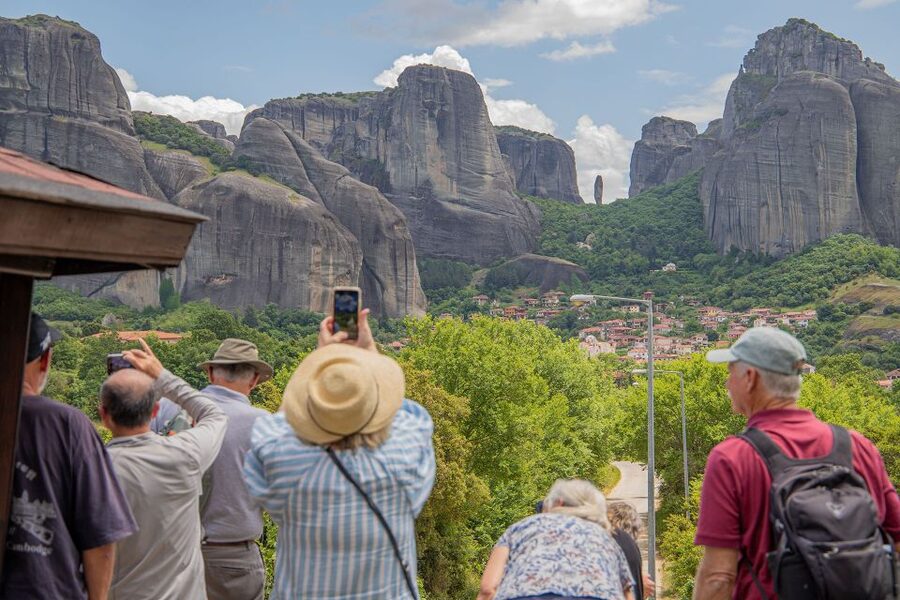
I would choose this tour if you are based in Athens and want to see Meteora without arranging an overnight stay. It suits first-time visitors who want the famous views, a sample of the interiors, and a guide to explain what they are seeing.
It is also useful for solo visitors. The small minibus, guide assistance with photos, and planned stops remove much of the awkwardness of handling a complicated day alone.
History fans should appreciate the combination of monasteries and caves. The experience gives you architecture, Orthodox tradition, legends, local stories, and the physical setting that shaped them.
I would hesitate if you need a slow pace, have trouble with stairs or uneven ground, or dislike long transport days. The route includes walking, monastery access, and cave exploration, and the schedule cannot bend much without affecting the return to Athens.
The tour has a 4.7 rating from 141 reviews, with especially strong praise for the guides, drivers, comfort, and views. The recurring practical concerns are the long day, limited meal time, extra entrance fees, and the feeling that some parts can be rushed.
Practical details worth knowing
The departure is at 8:00 in the morning from Larissis train station in Athens. Meet by 7:45 outside the Larissa metro station on Deligianni Street, directly opposite the Athens train station.
The return is expected around 10:00 at night. The Athens to Meteora bus transfer is currently being used because flooding has temporarily stopped train operations. The replacement bus keeps the stated stops and Meteora itinerary in place.
Bring cash, a camera, comfortable walking shoes, and clothing that covers your shoulders. Pets are not allowed, and the tour is not suitable for people with mobility impairments.
Free cancellation is available up to 24 hours before departure, and you can reserve now and pay later. Since the meeting point may change with the option selected, check your booking details carefully before leaving Athens.
Should you book it?
Book this tour if Meteora is a priority and you have only one free day from Athens. The Badovas caves, three monastery interiors, panoramic stops, and strong local guiding give you more than a quick photo stop.
Do not book it expecting a restful excursion. The five-hour ride each way is the price of keeping Athens as your base. If you can spend a night in Kalambaka or Kastraki, that is the better choice for time and comfort. If you cannot, this is a well-planned way to see one of Greece’s most remarkable places, with a useful balance of famous sights and less obvious corners.
FAQ
How long does the Athens to Meteora tour take?
The full day can last about 14 hours. The bus ride takes approximately five hours each way, including a 20-minute break, and the Meteora tour lasts about five hours.
Where does the bus leave from in Athens?
The bus departs from Larissis train station at 8:00 in the morning. You should meet by 7:45 at the exit of the Larissa metro station on Deligianni Street, directly opposite Athens train station.
How many monasteries can I visit?
You will see all six active Meteora monasteries during the route and enter three of them.
Are monastery entrance fees included?
No. Entrance costs €5 per person for each monastery and should be paid separately.
Is food included in the tour price?
No. The tour includes breaks for snacks and a restaurant stop, but you pay for your own food and drinks.
What languages are available?
Live guiding is available in English, Spanish, and French. The included audio guide is listed in English, Spanish, French, German, Italian, Polish, Portuguese, Chinese, Japanese, Korean, Russian, and Greek.
Is the tour running by train?
The tour is currently using an air-conditioned replacement bus because flooding has temporarily disrupted train services. The stated itinerary and stops remain unchanged.
Is the tour suitable for people with mobility impairments?
No. The activity is not suitable for people with mobility impairments. You should also wear appropriate clothing, since sleeveless shirts are not allowed at the monasteries.
Recently reviewed around Kalabaka
- Meteora Sunset Tour on E-bikes★ 5.0 · 54 reviews
- From Kalabaka/Kastraki: Meteora Monasteries Morning Tour★ 4.8 · 178 reviews
- Meteora Evening Tour with Breathtaking Sunset View★ 5.0 · 44 reviews
- Meteora: Sunset Small Size Tour with Monastery & Caves visit★ 4.9 · 171 reviews
- Meteora: Monasteries Tour, Lunch, and Athens Transfer Option★ 4.8 · 102 reviews
- Kalabaka: Meteora Private Day Tour with a Local Guide★ 4.8 · 26 reviews
- Kalabaka: Meteora Monasteries Minibus Tour with Photo Stops★ 5.0 · 74 reviews
- From Kalambaka or Kastraki: Midday Meteora Tour★ 4.8 · 34 reviews
Meteora Tours, compared.
Meteora Sunset with Monastery & Hermit Caves Tour in Small Group
Read our review →
Meteora Small Group Hiking tour with Transfer and Monastery Visit
Read our review →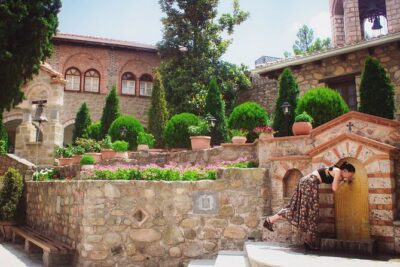
Morning Half Day Sightseeing and Monasteries Tour
Read our review →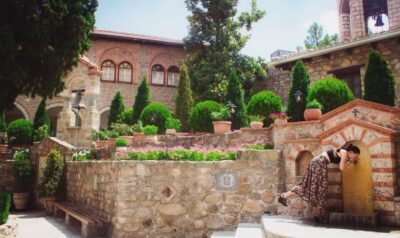
Guided Sunset Tour with Monasteries & Caves Visit
Read our review →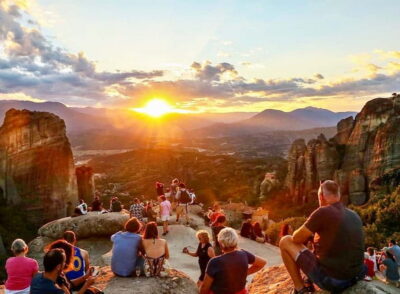
Majestic Sunset Tour & Monasteries with Local Guide
Read our review →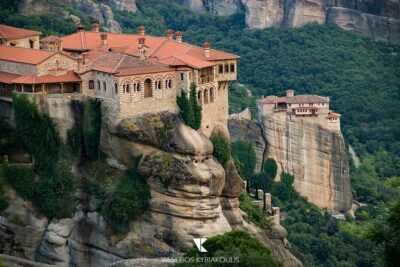
Panoramic Morning Small Group Tour with Local Guide
Read our review →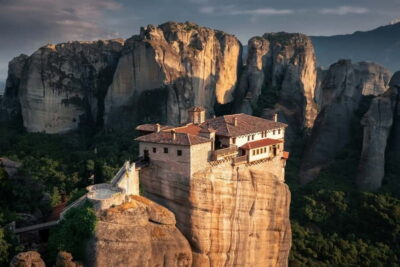
Guided Tour to Meteora Monasteries & Hermit Caves
Read our review →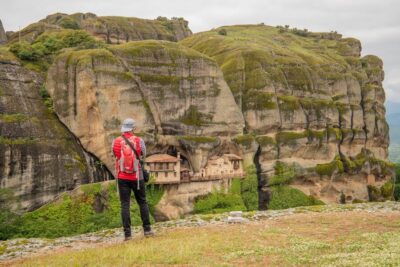
Meteora Small-Group Hiking Tour w/ Monastery Visit
Read our review →Browse the lists this tour appears in