
Reviewed · METEORA TOURS
Kastraki: Meteora Via Cordata Hiking Tour to the Great Saint
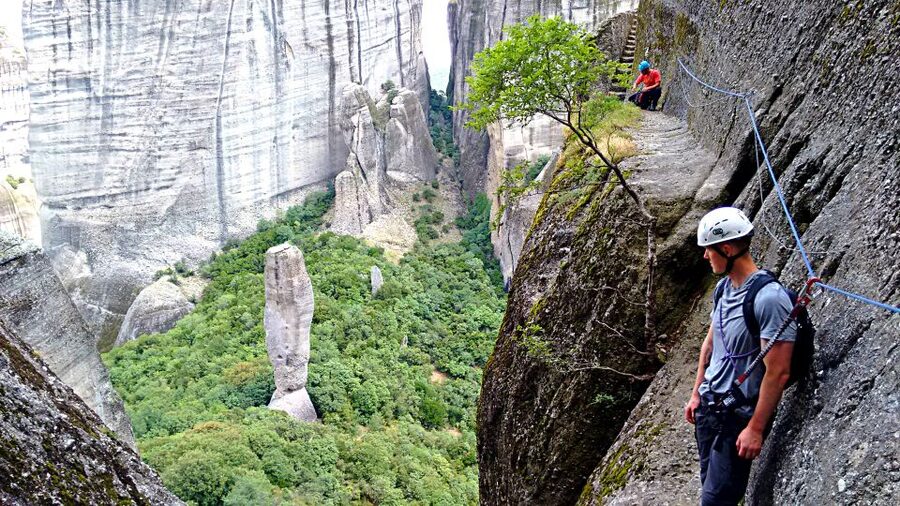
Meteora is famous for its monasteries perched on tall sandstone pillars, but this tour takes you into the rocks rather than simply viewing them from a road or monastery terrace. You’ll scramble, balance, and use a Via Cordata route toward Great Saint, following old paths cut into the stone and climbing with safety gear when needed.
I like the tiny group size, with up to six people and about three guests per guide. I also like the mix of physical challenge and local stories, especially when guides such as Kostas, Costa, and Evin explain the area while helping with technique and photos.
The main catch is that this is not a casual walk. The three-hour outing is rated moderate to challenging, and the route includes uphill scrambling and uneven rock. It suits you best if you have a good fitness level and feel comfortable wearing closed-toe shoes on steep ground.
In This Review
- Key points to know before you book
- Why this route shows you a different Meteora
- Meeting in old Kastraki and preparing for the climb
- Scrambling through Meteora’s sandstone towers
- Following paths carved by monks
- The Via Cordata section and what it feels like
- Reaching Great Saint for the 360-degree view
- Descending is part of the challenge
- The best time to go
- Is $88 a fair price?
- Who should book this Meteora hike?
- Practical tips for a smoother climb
- Should you book the Great Saint Via Cordata tour?
- FAQ
- Where does the Meteora Via Cordata tour meet?
- How long does the tour last?
- How much does the tour cost?
- What equipment is included?
- What should I wear?
- Is the tour suitable for children?
- How many people are in the group?
- Is hotel pickup included?
- What happens if it rains?
Key points to know before you book
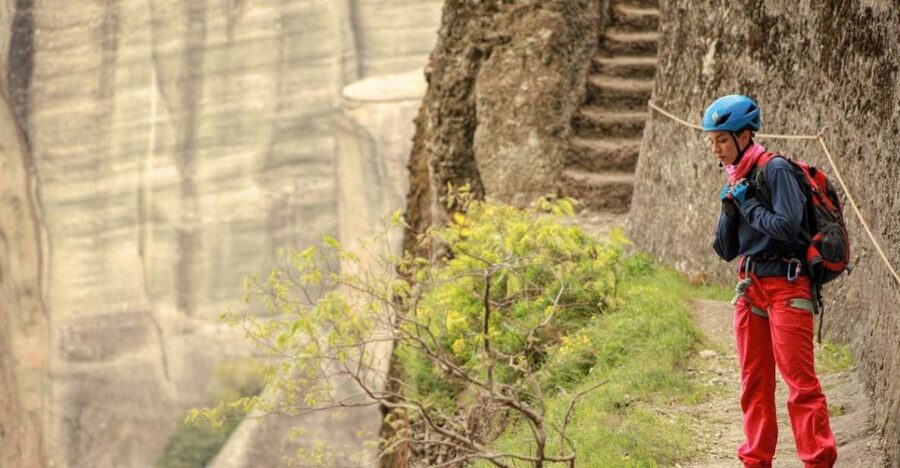
- You climb Great Saint by Via Cordata: Expect a protected route, scrambling, balancing, and sections where a helmet and harness help you move safely.
- The group stays small: A maximum of six people allows close guidance, with roughly three participants per mountain guide.
- The views are the reward: The summit offers broad 360-degree views of Meteora’s sandstone towers and monasteries.
- You avoid the busiest sights: This route reaches quieter rock paths instead of following the usual monastery sightseeing pattern.
- The outing lasts three hours: That includes the safety briefing, equipment setup, ascent, time at the top, and descent.
- Good shoes matter: Bring closed-toe footwear. Sandals and flip flops are not allowed, and gloves could make hand contact with the rock more comfortable.
Why this route shows you a different Meteora
Most first visits to Meteora focus on the monasteries. That makes sense, but it can leave you seeing the rocks from a distance, often alongside many other people. This hike gives you a closer look at the stone towers, narrow paths, and steep folds of the mountain.
You begin in the old habitation of Kastraki village, then move toward the rock on foot. The route includes a path carved by monks, a detail that gives the walk more meaning than a simple outdoor workout. You are not just climbing for a view. You are tracing one of the older ways people moved through this difficult terrain.
The Via Cordata section adds an unusual element. This is not presented as a full technical climbing trip, and it is less physical and less exposed than a Via Ferrata according to the route description. Still, you need to use your hands, find your balance, and pay attention to where you place your feet.
I like this middle ground. You get a taste of climbing without signing up for a serious mountaineering day. At the same time, the route is active enough to feel like an achievement when you reach Great Saint.
More Hiking Tours in Meteora
- Meteora Small Group Hiking tour with Transfer and Monastery Visit
★ 5.0 · 484 reviews - Kalabaka: Meteora Small-Group Hiking Tour w/ Monastery Visit
★ 4.9 · 205 reviews - Hiking Tour to Meteora from Kalambaka – Local Agency
★ 5.0 · 73 reviews
Meeting in old Kastraki and preparing for the climb
The meeting point is in the center of the old habitation of Kastraki village, at Qastiro Meteora. You meet your English-speaking mountain guide there, receive a safety briefing, and get the required equipment.
Helmets and harnesses are included. Water is also provided, which is useful on an uphill route, especially in the warmer months. Hotel pickup and drop-off from Kalambaka or Kastraki are not included, though an optional pickup service is available if you prefer not to arrange your own way to the meeting point.
The small group format matters right away. With no more than six participants and about three people per guide, the guide can watch your movement more closely than on a large walking tour. That is especially helpful when someone feels unsure on a rock step or wants clear instructions before using the safety line.
The briefing is also the time to ask questions about the route and equipment. You should arrive ready for activity, not dressed for a standard sightseeing stop. Closed-toe shoes are required, and sandals or flip flops are not suitable.
Scrambling through Meteora’s sandstone towers
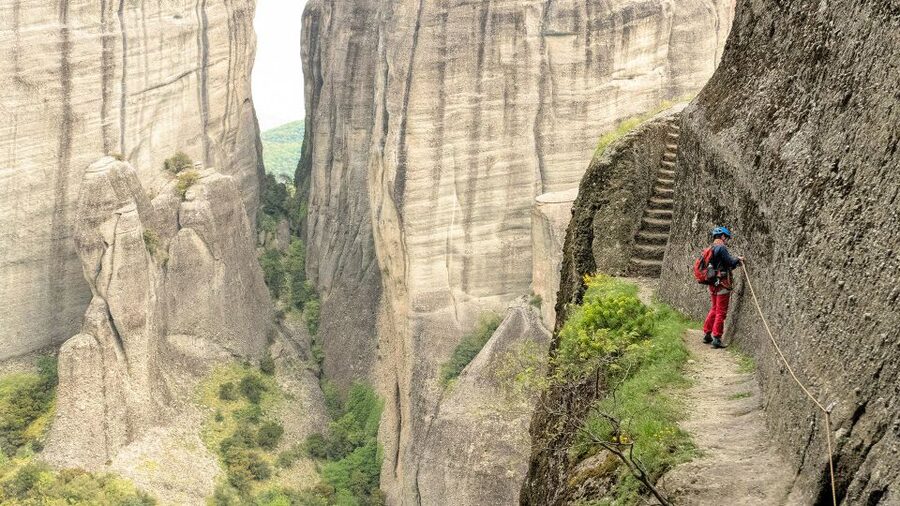
Once you leave the village, the route becomes more physical. You make your way through sandstone formations and encounter sections that call for scrambling and balancing. Scrambling sits between walking and climbing: you may use your hands for support, but the route is not described as a full rock-climbing ascent.
This is where fitness matters most. You do not need to be an expert climber, but you should be comfortable with an uphill walk that includes uneven surfaces and short, demanding moves. A good fitness level is required, and the activity is not suitable for children under eight or people with low fitness.
The rock itself is a major part of the experience. Meteora’s tall sandstone pillars create an unusual setting, with views opening and closing as you move between formations. You might find that the route feels more interesting than a steady trail because every section asks you to react to the surface in front of you.
Your guide stays with you and offers support through the trickier spots. Safety is not left to chance. The provided harness and helmet are part of the setup, and you may be attached to a rope for protection at times, as one participant described from the route.
That protection does not remove the need for care. You still need to place your feet well, listen to instructions, and move at a pace that works for you. If you are nervous, say so early. The guides are there to help you feel secure, not to push you into a move you cannot manage.
Following paths carved by monks
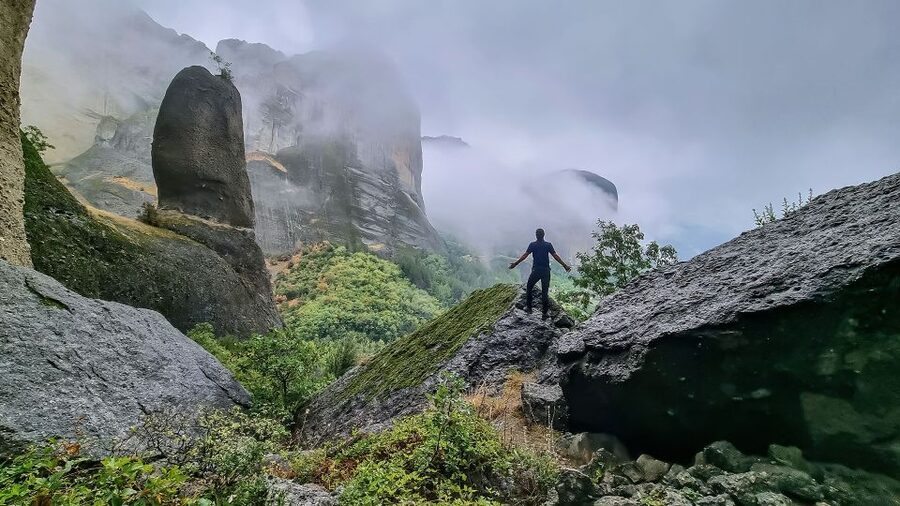
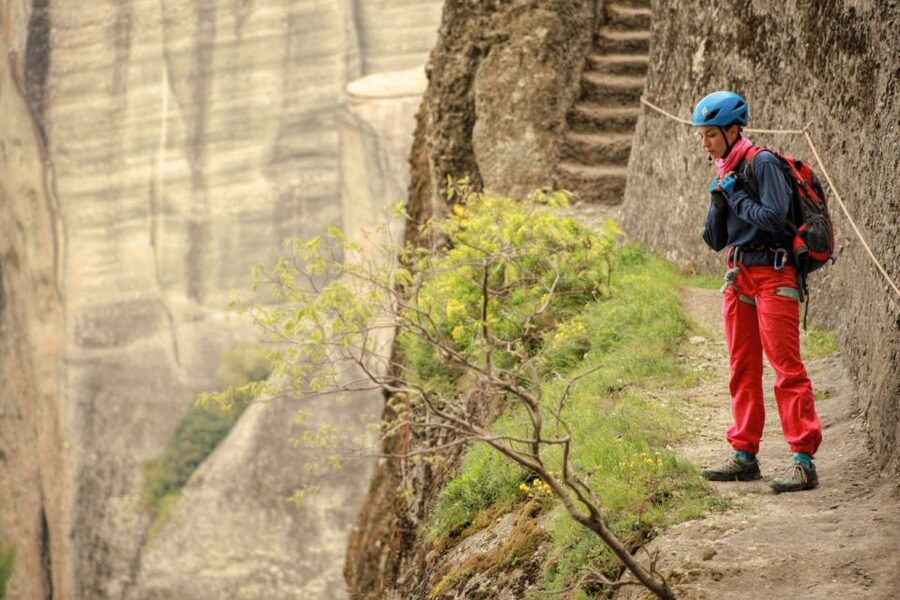
The old monk-carved path is one of the most memorable parts of the route. It connects the physical climb with Meteora’s religious past without turning the outing into a standard monastery tour.
You may hear stories about the area as you walk. Guides are not only managing the rope system and route. They also share local history, often with humor, which helps break up the more demanding sections. Kostas was praised for being patient, friendly, and willing to help with photographs, while Costa and Evin were singled out for giving clear support and making nervous participants feel safe.
The path also gives you a sense of how demanding movement through Meteora once was. The rock formations are dramatic from below, but walking along a route cut into them changes your scale. You notice the ledges, the steep drops, and the work needed to make passage possible.
This is not a long history lecture, and the tour lasts only three hours. Still, the combination of stories and movement gives you more context than simply stopping at a viewpoint for a quick photograph.
More Meteora trips worth a second look
- Meteora: Sunset Hike to Secret Caves
★ 4.9 · 56 reviews - From Chania: Full-Day Samaria Gorge Trek Excursion & Guide
★ 4.6 · 3,191 reviews - From Rethymno: Samaria Gorge Full-Day Trek, Pickup & Guide
★ 4.5 · 1,610 reviews - From Chania/Rethymno: Samariá Gorge Guided Hike with Pickup
★ 4.5 · 1,010 reviews
The Via Cordata section and what it feels like
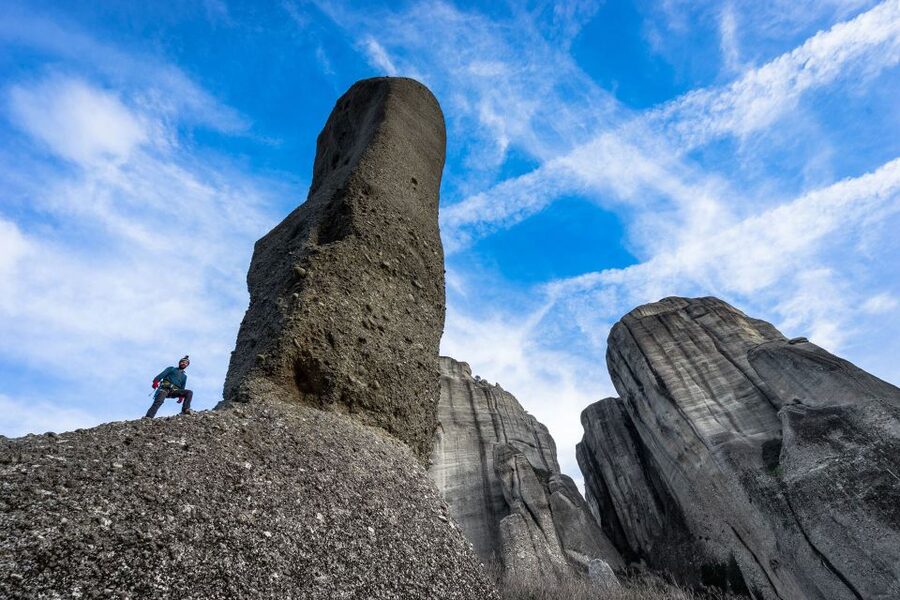
The Via Cordata is the signature feature. It uses climbing equipment and a protected route to help you negotiate parts of the rock. You may be roped in for safety at certain points, with the guide explaining how to move and where to put your hands or feet.
If you have done a Via Ferrata, you may find this route less physical and less vertiginous. That does not mean it is effortless. It still goes uphill, and the rock demands concentration. The difference is that the activity is designed to be accessible to a wider range of active participants rather than only experienced climbers.
I would think of it as a guided introduction to protected rock movement. You get the excitement of being on the sandstone itself, with professional support close by. You also avoid the pressure of having to know climbing systems before you arrive.
The route can feel easier to experienced climbers. One participant found it a little short and easy for non-beginners. That is useful to know. If you regularly climb or take technical mountain trips, you may want a longer or harder outing. If you are new to this style of activity, the moderate challenge is likely part of the appeal.
Reaching Great Saint for the 360-degree view
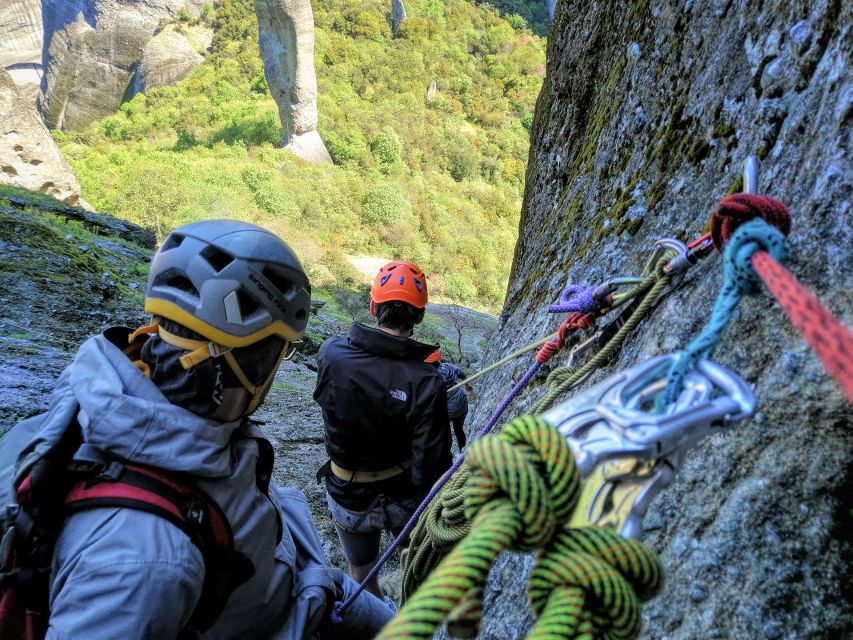
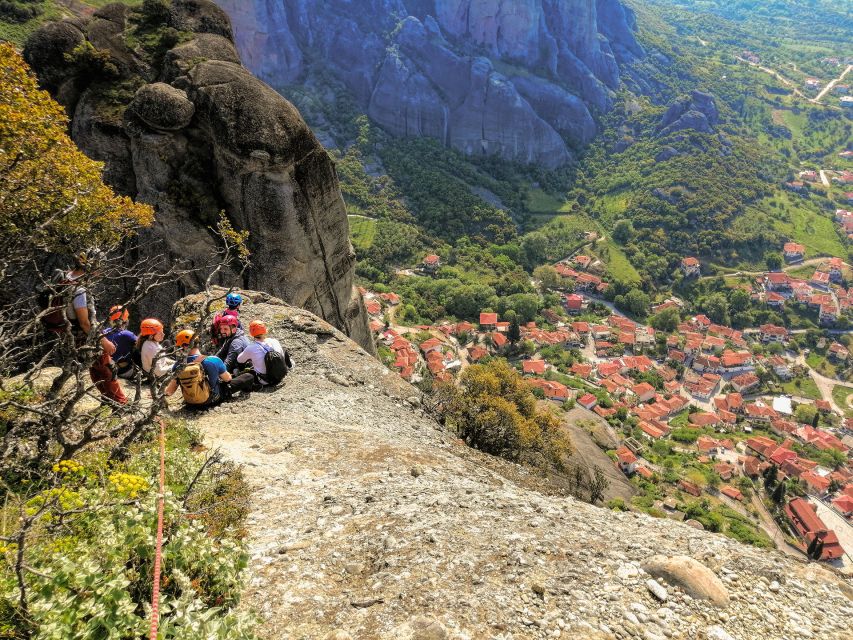
The climb ends at Great Saint, where the reward is a broad view over Meteora. From the top, you can look out across the sandstone towers and monasteries from a high position rather than from the usual road-level viewpoints.
The view is the reason to keep moving when the uphill sections become tiring. You have time at the top to catch your breath, take photographs, and enjoy the setting before starting down.
Bring a camera or phone, but do not let the photo stops turn into a scramble of their own. The guide can help take pictures, and the small group makes it easier to pause without holding up a large line. The open views also give you a clear sense of how the monasteries relate to the rock formations around them.
This is a particularly good choice if you want photographs that show more than a monastery facade. You can capture the sandstone pillars, the valley, and the high religious sites in one wide view. The exact view depends on weather and your position, but the tour is built around panoramic scenery.
Descending is part of the challenge
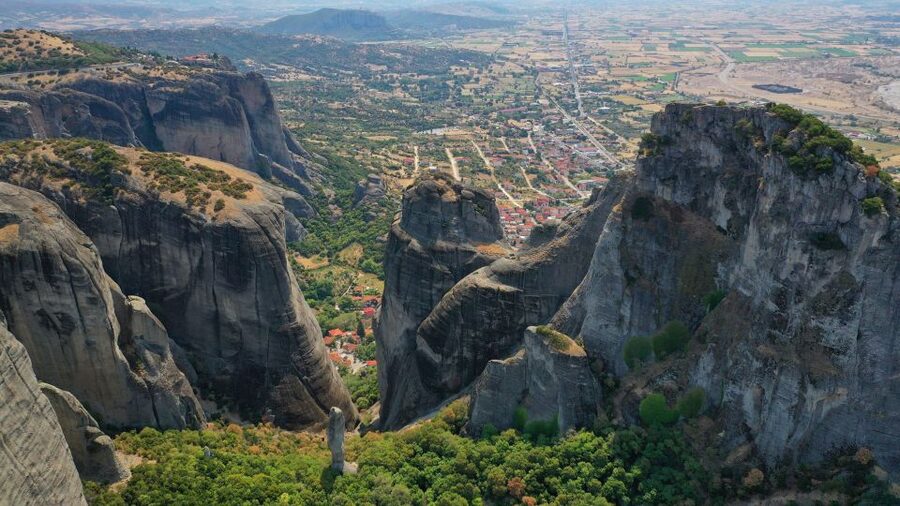
The descent follows the trail back down. Do not treat it as an easy afterthought. Downhill scrambling can require just as much focus as the ascent, especially when you are tired or your legs have had enough.
Keep your movements controlled and listen to the guide’s instructions. The harness and helmet remain useful reminders that this is an active route, not a paved viewpoint walk.
The three-hour duration is a good fit for a morning or afternoon in Meteora. It is long enough to feel substantial but short enough to leave room for a monastery visit, a meal, or more sightseeing in Kastraki and Kalambaka. If you want a full-day mountain outing, this tour will feel limited. If you want one focused adventure between other plans, the length works well.
The best time to go
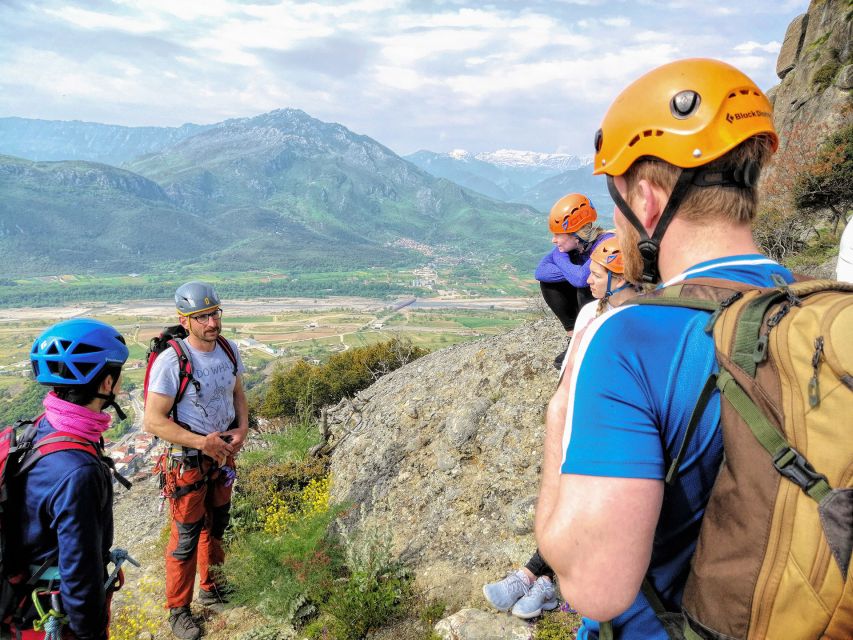
Early starts are worth considering in warm weather. A French participant found that setting out early helped avoid the strongest heat, and the route includes a fair amount of shade during the ascent.
The tour can be cancelled in rainy weather. That is a sensible safety rule for a route involving rock, scrambling, and climbing equipment. If rain affects your date, you are offered a full refund or an alternative date.
Weather can also affect how much you enjoy the views. Clear conditions will give you the best chance of seeing across Meteora, while hot conditions make water and an early start more important. Water is included, but you should still dress for an active outing and arrive prepared for sun or changing conditions.
Is $88 a fair price?
At $88 per person, this is not the cheapest way to see Meteora. You are paying more than you would for a self-guided walk or a simple viewpoint visit.
The price makes more sense when you consider what is included: an English-speaking mountain guide, helmets, harnesses, water, route support, and a small group capped at six people. You are also paying for access to a guided Via Cordata experience that would be difficult to arrange safely on your own.
The guide-to-participant ratio is the strongest value point. With roughly three people per guide, the instruction is more personal, and the safety support is closer at hand. That matters much more here than it would on a flat walking tour.
The value drops if you are already an experienced climber looking for a long or demanding route. The activity is only three hours, and an experienced participant found it a little short and easy. For a first protected scrambling experience, a family activity, or a visitor who wants active sightseeing without a full climbing day, the price is easier to justify.
Remember that food and drinks are not included, and transport from Kalambaka or Kastraki is not included unless you arrange the optional pickup service. Build those costs and details into your plan.
Who should book this Meteora hike?
I would recommend it to outdoor-minded adults and families with older children who meet the age and fitness rules. It is also a good fit if you have seen the monasteries already and want to experience the rocks from a more unusual angle.
Beginners can join if they are active and willing to follow directions. The route has enough support to make first-time participants feel secure, but it is not designed for someone who dislikes steep ground or struggles with uphill walking.
You should think twice if you have low fitness, want a gentle nature stroll, or dislike harnesses and exposed rock. The tour is not suitable for children under eight, and sandals are not permitted.
It can also work for mixed-experience groups. A nervous family member may receive close help from the guides, while a more active participant can still enjoy the scrambling and views. The small group helps keep the outing personal.
Practical tips for a smoother climb
Wear closed-toe shoes with a secure fit. Sandals and flip flops are not allowed, and loose footwear is a poor match for rock scrambling.
Bring water-friendly clothing only if the forecast calls for it, since rain can cancel the tour. The provider supplies water, helmets, and harnesses, so you do not need to bring technical climbing equipment.
Consider light gloves if your hands are sensitive on rough rock. Gloves are not listed as required, but they could make the scrambling more comfortable.
Arrive at the old Kastraki meeting point ready to begin. If you need transport, check the optional pickup service rather than assuming hotel transfers are part of the $88 price.
Keep your schedule flexible enough to allow for a weather change. You can cancel up to 24 hours ahead for a full refund, and a rainy-day cancellation offers either a refund or another date.
Should you book the Great Saint Via Cordata tour?
Book it if you want Meteora to feel physical, personal, and a little adventurous. The strongest reasons are the small group, close guide support, monk-carved route, and wide views from Great Saint.
The tour is especially worthwhile for first-time Via Cordata participants who want a protected introduction rather than a serious climbing day. Guides such as Kostas, Costa, and Evin bring safety help, local stories, and patience to the route.
Skip it if you want a slow walk, have low fitness, or already expect a demanding technical climb. For everyone else, $88 buys a focused three-hour experience that shows you a side of Meteora most road-based sightseeing cannot reach.
FAQ
Where does the Meteora Via Cordata tour meet?
You meet your guide at the center of the old habitation of Kastraki village, at Qastiro Meteora.
How long does the tour last?
The tour lasts three hours, including the guided hike, Via Cordata sections, time at Great Saint, and the return descent.
How much does the tour cost?
The listed price is $88 per person.
What equipment is included?
The tour includes all necessary equipment, including helmets and harnesses. Water is also provided.
What should I wear?
You must wear closed-toe shoes. Sandals and flip flops are not allowed.
Is the tour suitable for children?
Children under eight cannot join the tour. Participants should also have a good fitness level.
How many people are in the group?
The group is limited to six participants, with about three people per mountain guide.
Is hotel pickup included?
Hotel pickup and drop-off from Kalambaka or Kastraki are not included. An optional pickup service is available.
What happens if it rains?
The tour is cancelled in rainy weather. You can receive a full refund or choose an alternative date.
Recently reviewed around Meteora
- Kastraki: Meteora Morning Horse Riding with Monastery Visit★ 5.0 · 27 reviews
- Meteora Sunset Tour on E-bikes★ 5.0 · 54 reviews
- Meteora: Morning Monasteries Tour with Photo Stops★ 5.0 · 26 reviews
- From Kalabaka/Kastraki: Meteora Monasteries Morning Tour★ 4.8 · 178 reviews
- Meteora Evening Tour with Breathtaking Sunset View★ 5.0 · 44 reviews
- Meteora: Sunset Small Size Tour with Monastery & Caves visit★ 4.9 · 171 reviews
- Meteora: Monasteries Tour, Lunch, and Athens Transfer Option★ 4.8 · 102 reviews
- Kalabaka: Meteora Monasteries Minibus Tour with Photo Stops★ 5.0 · 74 reviews
Meteora Tours, compared.
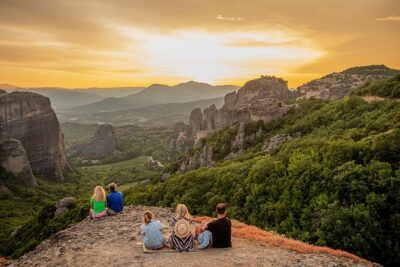
Meteora Sunset with Monastery & Hermit Caves Tour in Small Group
Read our review →
Meteora Small Group Hiking tour with Transfer and Monastery Visit
Read our review →
Morning Half Day Sightseeing and Monasteries Tour
Read our review →
Guided Sunset Tour with Monasteries & Caves Visit
Read our review →
Majestic Sunset Tour & Monasteries with Local Guide
Read our review →
Panoramic Morning Small Group Tour with Local Guide
Read our review →
Guided Tour to Meteora Monasteries & Hermit Caves
Read our review →
Meteora Small-Group Hiking Tour w/ Monastery Visit
Read our review →Browse the lists this tour appears in