
Reviewed · KNOSSOS PALACE TOURS
Knossos Palace Skip-the-Line Ticket & Private Guided Tour
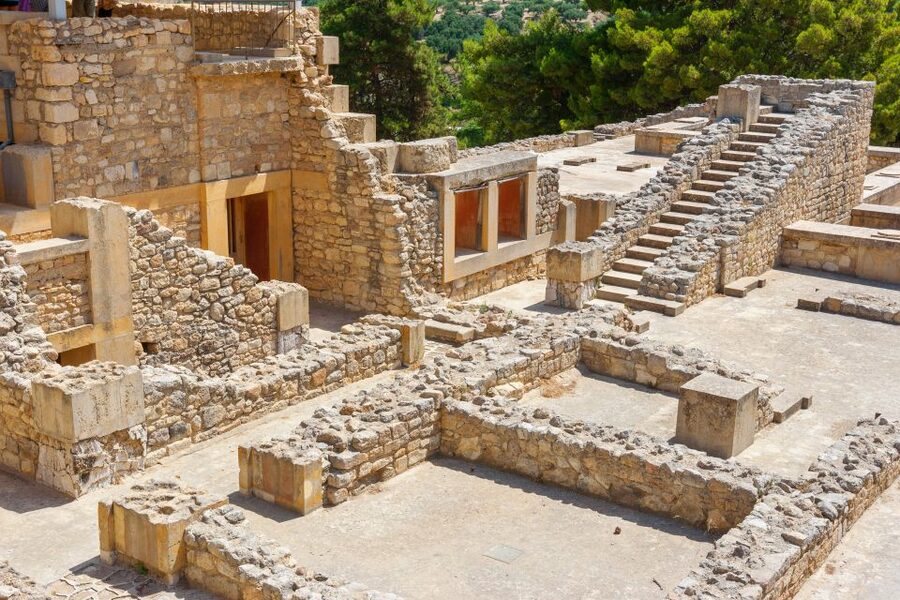
Knossos is not simply a pile of old stones. Its enormous palace once held about 1,300 rooms, connected by corridors and spread over several levels. This private tour helps you make sense of a site that can otherwise feel like a maze of walls, stairways, and restored concrete.
I especially like the pre-booked entry, which saves you from waiting at the ticket line, and the personal attention of a private guide. Vangelis Alefantinos is frequently praised for using photographs to show what the palace may have looked like, while guides such as Stella and Manos have also helped families and answered detailed questions. The main drawback is the price: $247 for a group of up to two is a serious splurge, and the 1.5-hour visit includes plenty of walking, stairs, and exposure to the Cretan sun.
In This Review
- Key points to know before booking
- Why Knossos makes more sense with a guide
- Meeting your guide at the front entrance
- The palace layout, from storerooms to ceremonial spaces
- Restored walls, ancient remains, and the value of visual aids
- Myth, Minoan culture, and the stories behind the stones
- Choosing the best time: 9 a.m. or late afternoon
- Heat, stairs, and the walking effort
- How much value do you get for $247?
- The guides and the tone of the visit
- Who should book this Knossos tour?
- Practical details before you go
- Should you book the private Knossos Palace tour?
- FAQ
- Where does the Knossos Palace tour meet?
- How long does the guided tour last?
- Is admission to Knossos Palace included?
- What languages are available?
- Is the tour suitable for wheelchair users?
- Can I cancel or pay later?
Key points to know before booking
- Meet at the palace entrance: You go directly to the front entrance of Knossos, where your licensed guide meets you.
- Private attention for $247: The price covers a group of up to two people, making it easier to ask questions and set your own pace.
- The early or late hours matter: A 9 a.m. start helps you beat crowds and heat. A late afternoon visit can offer softer light and fewer people.
- Expect visual help: Vangelis often brings photographs that compare the ruins with their original form, a big help at a partly restored archaeological site.
- Plan for stairs and sun: Comfortable shoes, water, a hat, sunglasses, and sunscreen are essential. The tour is not suitable for wheelchair users or people with mobility impairments.
- Choose your language carefully: Tours are offered in English, German, Italian, Russian, and Greek.
Why Knossos makes more sense with a guide
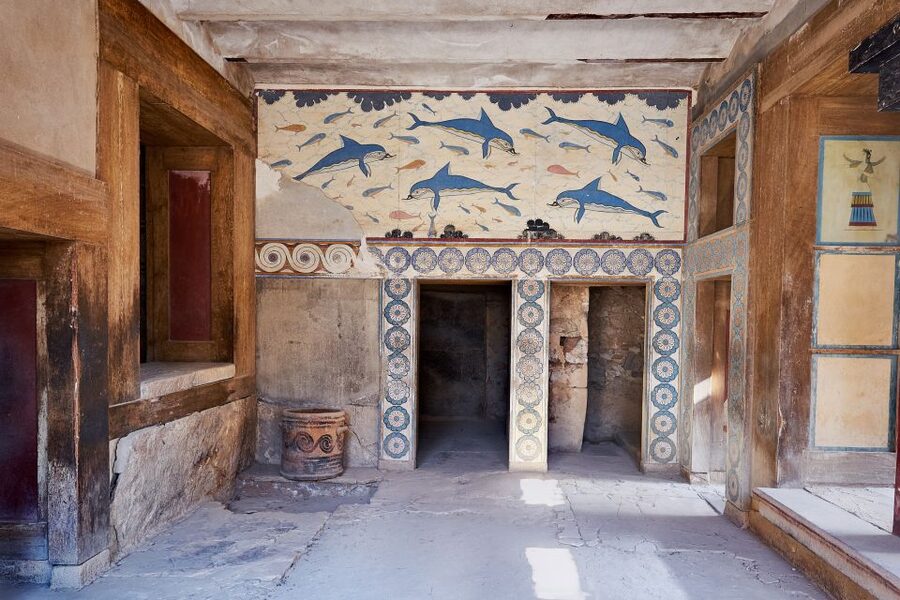
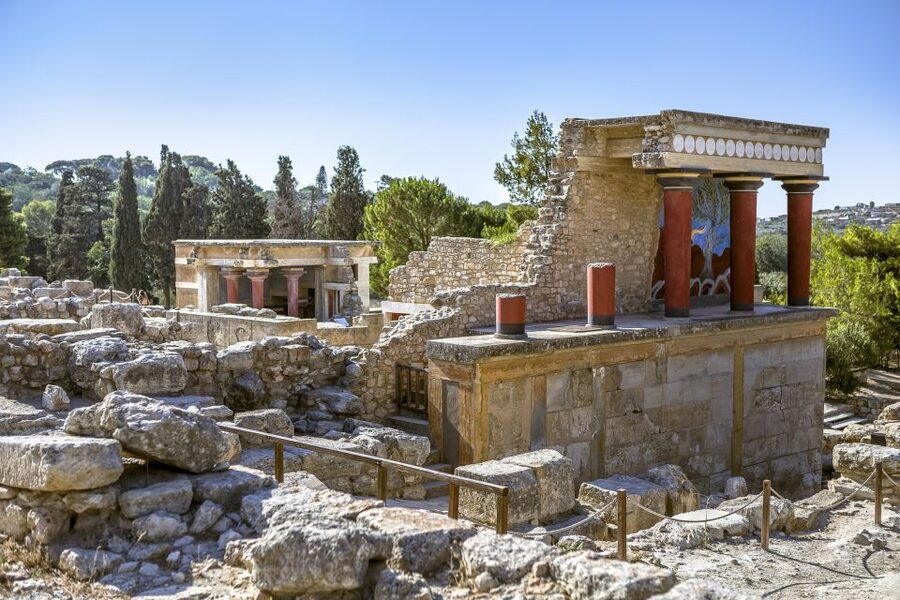
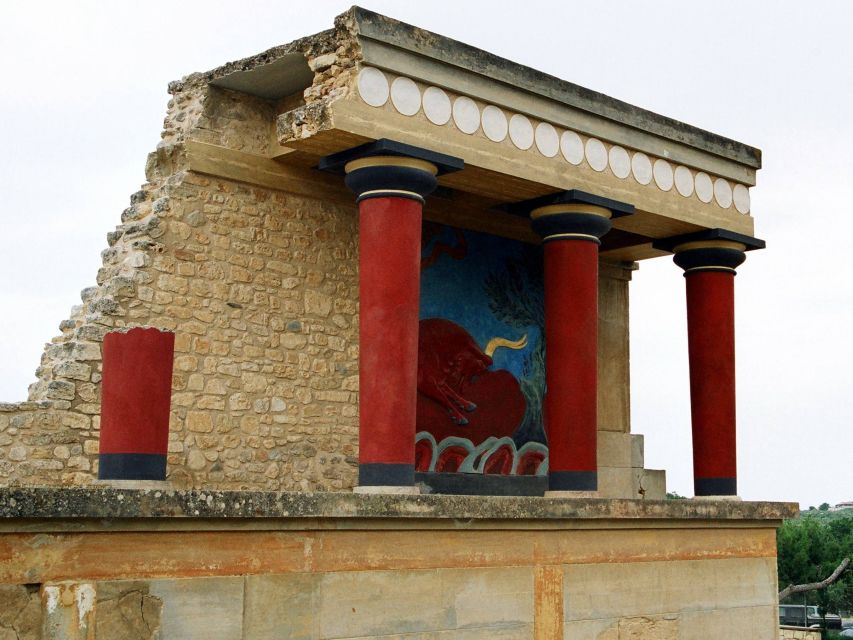
Knossos is one of those ancient sites where a guide can change the whole visit. Without context, you see red columns, low walls, large storage jars, staircases, and rooms with uncertain purposes. With an archaeologist or licensed guide, you can begin to picture how the palace worked as a political, religious, and economic center.
The site reaches back far beyond the classical Greek world. Settlements here date to the Neolithic period, with remains in Crete going back to around 7000 BC. The palace most visitors come to see was built between about 1700 and 1400 BC, during the height of the Minoan civilization.
That age difference matters. You are not touring a familiar marble temple from the era of Athens. You are looking at the remains of an earlier Cretan culture, one that developed complex buildings, large storage systems, decorated rooms, and impressive construction methods long before classical Greece.
I like that the guides explain the difference between what is original, what has been restored, and what is an interpretation. That distinction is especially useful at Knossos because the site was heavily reconstructed in the early 20th century. A good explanation keeps you from treating every bright column or rebuilt wall as untouched Bronze Age material.
More Knossos and Minoan palace days:
- Crete: Knossos Palace Entry Ticket with Optional Audio Guide
★ 3.9 · 2,251 reviews - Crete: Palace of Knossos E-Ticket and Audio Guide
★ 3.8 · 1,540 reviews - Knossos: Knossos Palace Skip-the-Line Guided Walking Tour
★ 4.8 · 1,380 reviews
Meeting your guide at the front entrance
The meeting point is the front entrance of Knossos Palace. You do not need to search through Heraklion or arrange a separate pickup. Bring your passport or identity card, since it may be needed for admission.
Your skip-the-line ticket is included. This does not mean you walk past every person at the archaeological site, but it does remove the need to buy an admission ticket at the entrance. That is particularly useful during the busy summer months, when Knossos can become crowded and hot.
The tour is private, so you are not joining a large coach group. The guide can respond to your questions directly, explain a point again if needed, and adjust the pace for your group. Families have found this useful, especially when children are involved. Vangelis has been praised for keeping children engaged, and German-speaking families have also found the explanations clear and accessible.
Arrive ready to walk. Large bags, oversize luggage, and pets are not allowed. There is no room here for rolling suitcases or a full beach-day loadout, so carry only what you need.
The palace layout, from storerooms to ceremonial spaces
The first challenge at Knossos is scale. The palace is not one grand building with a single dramatic entrance. It is a large complex of rooms and passageways built around an extensive central area.
Your guide will help connect the separate remains into a working place. The palace reportedly contained around 1,300 rooms, with corridors linking different sections. Some parts reached five stories, an astonishing feat for the Bronze Age and one reason the site feels more like a town than a simple royal residence.
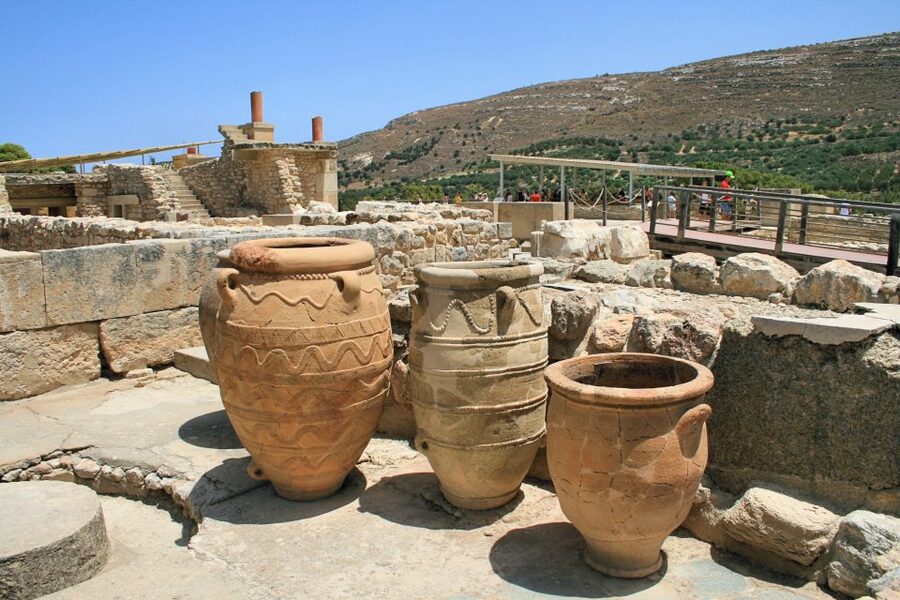
The storerooms are among the clearest reminders that Knossos was an organized center. Large clay containers held oil, grain, dried fish, beans, and olives. These rooms show the practical side of the palace: food collection, storage, administration, and distribution were just as important as ceremony.
The guide can also explain the unusual detail that gold was sometimes hidden beneath stored goods. That small fact helps you picture the palace not as an empty ruin, but as a place handling food, wealth, records, and political power.
You will also see the theater area and sections associated with formal activity. The exact purpose of some rooms remains open to interpretation, so a good guide should explain what is certain and what is debated rather than presenting every theory as fact.
Restored walls, ancient remains, and the value of visual aids
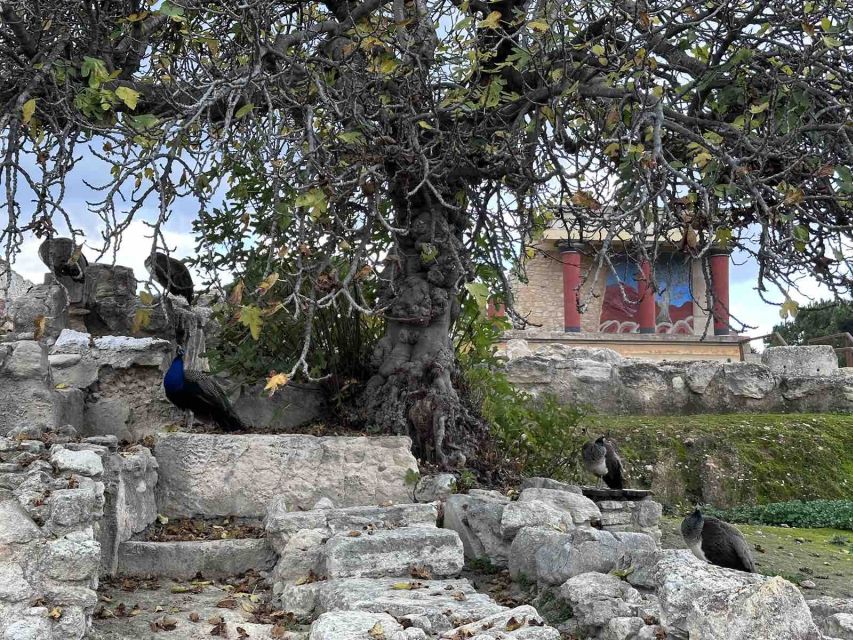
Knossos can be confusing because you are seeing two periods at once. There are ancient foundations and surviving fragments, but also restored elements intended to help visitors imagine the original palace.
Vangelis is often praised for bringing a folder or booklet of images. These photographs show how parts of the palace may have looked before decay and excavation, and they help you connect a low ruin to the larger, multi-level complex described in ancient context.
This is one of the strongest reasons to pay for the guided experience. You are not simply hearing dates and names. You are getting help with visual reconstruction. A corridor becomes part of a larger plan. A storage jar becomes evidence of how the palace was supplied. A restored column becomes a prompt to discuss modern reconstruction rather than a piece of Bronze Age architecture.
I also value the guides’ attention to distinctions between periods. Knossos has a long sequence of settlement and rebuilding, so it is easy to blend everything together. The tour is most useful when it explains which remains belong to which phase and how excavation shaped what you see today.
More Crete trips worth a second look
- Knossos Palace Skip-the-Line Ticket (Shared Tour Group)
★ 5.0 · 284 reviews - Heraklion: Knossos Private Guided Tour & Skip-the-Line Entry
★ 5.0 · 59 reviews - The Palace of Knossos with Skip-the-Line Ticket
★ 5.0 · 40 reviews - Knossos Palace Tour with Transfer & Skip-the-Line Entry Ticket
★ 5.0 · 26 reviews
Myth, Minoan culture, and the stories behind the stones
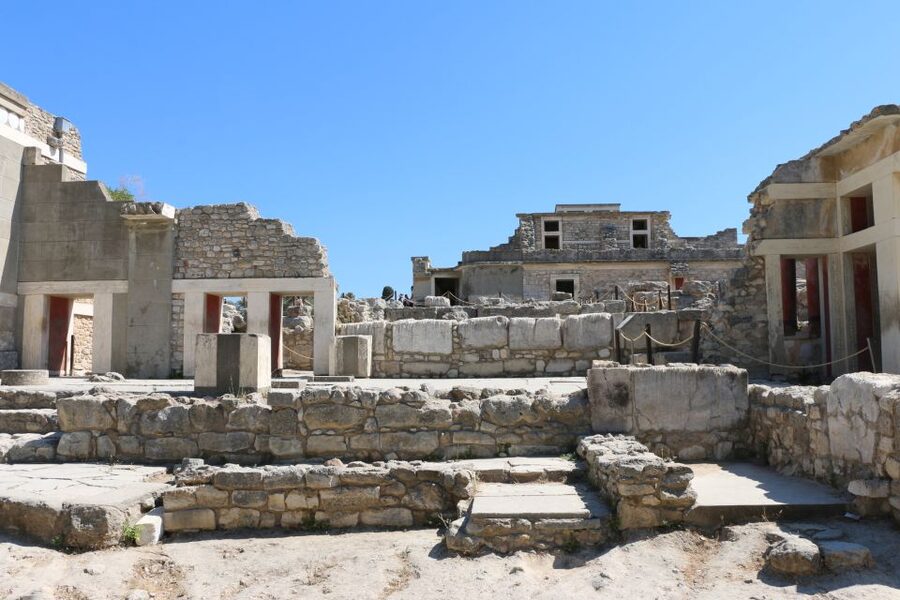
Knossos is linked with the Greek myth of the Labyrinth and the Minotaur. The tour connects those familiar stories with the actual archaeological site, while also explaining that mythology and historical evidence are not the same thing.
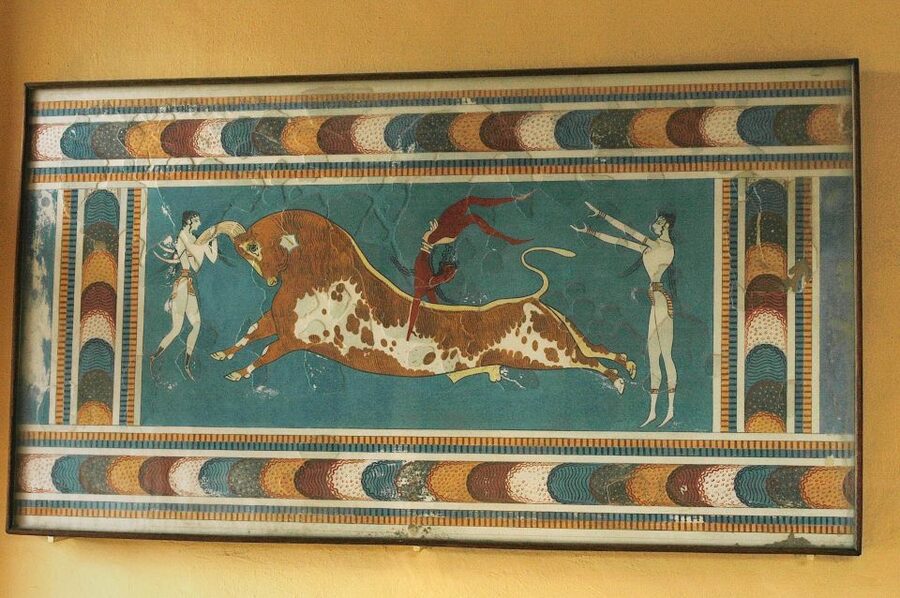
That balance matters. You can enjoy the legend of Theseus and Ariadne without assuming that a literal monster lived beneath the palace. The Minoans left behind evidence of a sophisticated culture, but many parts of their religion, language, and daily life remain uncertain.
Guides such as Vangelis are praised for adding stories and cultural details without making the tour feel like a classroom lecture. The best explanations give you a framework, then leave room for questions. That is particularly helpful if you have already visited the Archaeological Museum of Heraklion, where many objects from Knossos are displayed.
If you plan to visit the museum, do it before or after the palace as your schedule allows. The palace gives you the setting, while the museum gives you many of the original artifacts and artistic details. Together, they provide a far clearer picture than either visit alone.
Choosing the best time: 9 a.m. or late afternoon
Timing can make a major difference here. Several strong recommendations point to a 9 a.m. start, when the site is cooler and generally quieter. An early visit also gives you a better chance of moving comfortably through narrow areas before the main crowds build.
One visitor arrived around 9 a.m., completed the guided portion, and then had time to look around independently. By about 10:45, the site had become much fuller. That is a useful pattern to keep in mind if you want photographs or prefer to hear your guide without competing noise.
Late afternoon can also work well. A 5 p.m. start may find the palace nearly empty, while a 6:30 p.m. visit can bring cooler air, softer light, and fewer people. The tradeoff is time. If the site closes at 8 p.m., a 6:30 p.m. tour gives you a strict 1.5-hour window.
In summer, the late afternoon light can be beautiful, but do not assume it will always be cool. You still need sunscreen, water, and a hat. If your priority is the quietest possible visit, compare the available morning and afternoon times when booking.
Heat, stairs, and the walking effort
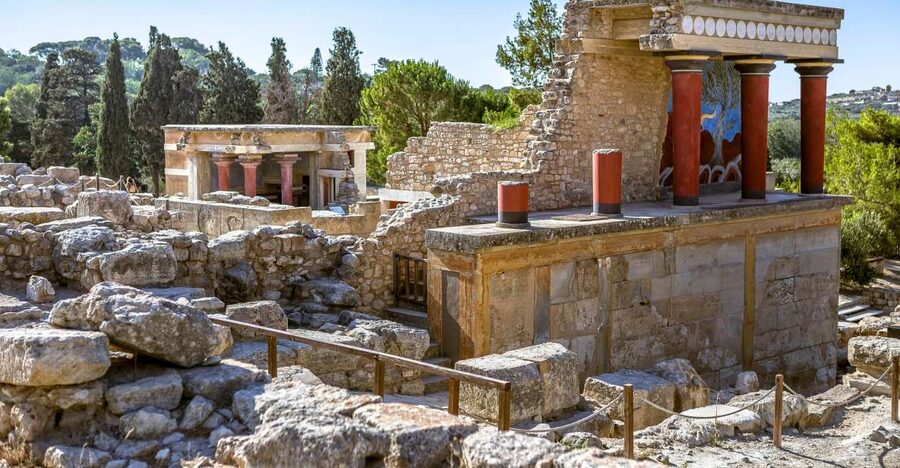
This is an outdoor archaeological site, and shade is limited. Guides have made a point of keeping groups in shaded areas when possible, but they cannot shade every path or room. Wear light, comfortable clothing and bring water.
You should also expect stairs and uneven surfaces. The tour is specifically not suitable for wheelchair users or people with mobility impairments. A stroller may be awkward because of the stairs, even though one family managed the site with a three-year-old.
Comfortable walking shoes are more important than fashionable footwear. Sunglasses, sunscreen, and a sun hat belong in your day bag. Large bags and luggage are not allowed, so keep your supplies compact.
The 1.5-hour duration is long enough to cover the main areas without turning into an exhausting half-day lecture. It is also short enough that you may want extra time afterward if you like to photograph details or revisit a favorite section. Ask your guide questions as you go, since the scheduled tour has a firm time limit.
How much value do you get for $247?
At $247 for up to two people, this is not a budget ticket. If you are traveling alone, the cost per person is high. For two people, the price becomes easier to justify, especially if you place a high value on a private guide and direct access through the ticket line.
The value comes from several things working together:
- You avoid spending time at the ticket queue.
- You get a licensed guide rather than relying on small signs.
- You can ask questions specific to your interests.
- You receive help distinguishing ancient material from restoration.
- You get a focused visit in a limited 1.5-hour period.
- You may receive practical help with photographs, shade, and pacing.
The tour is most worthwhile if Knossos is a major reason for your visit to Crete, or if you care about archaeology and want more than a quick walk through the ruins. It is less compelling if you are happy to explore independently, already know the Minoan period well, or are watching every euro.
A private tour also makes more sense for people who dislike large groups. At Knossos, a crowd can make it hard to hear and harder to linger at the places that interest you. A small private group keeps the exchange personal and makes it easier to move at a comfortable pace.
The guides and the tone of the visit

Vangelis Alefantinos is the main guide associated with this experience. His background as an archaeologist is a major asset because he can explain both the site and the excavation process. He is also praised for being patient, friendly, clear, and able to involve children.
He has been known to take group photographs and point out good picture locations. That is a modest but useful service, especially when you are traveling as a couple and do not want every photograph to be a selfie.
Other guides may lead the visit, including Stella and Manos. The available languages are English, German, Italian, Russian, and Greek. If language is important to you, confirm your preferred option when checking times.
The tone is informative but not meant to overwhelm you. Guides have been praised for giving a clear overview, then explaining details and answering questions. That balance suits most people better than a nonstop stream of dates and archaeological terms.
Who should book this Knossos tour?
I would recommend it most strongly to:
- First-time visitors to Knossos
- Couples who want a private experience
- Families with older children or teenagers
- Visitors interested in archaeology and ancient cultures
- Anyone visiting during the hot summer months
- People who want to connect the palace with the Heraklion Archaeological Museum
- Visitors who prefer a guide to explain restoration and uncertain evidence
It may not suit you if you have limited mobility, use a wheelchair, need to bring large luggage, or prefer a slow independent visit lasting several hours.
Children can enjoy the tour, especially when the guide uses stories and visual material. Still, the site includes stairs, sun, and uneven walking, so plan around your child’s comfort. The private format gives you a better chance of asking for pauses or keeping the pace manageable.
Practical details before you go
The tour lasts 1.5 hours and begins at the front entrance of Knossos Palace. Entry is included, and you can cancel up to 24 hours before the scheduled visit for a full refund. You can also reserve now and pay later, which helps if your Crete plans are still shifting.
Bring a passport or identity card, comfortable shoes, sunglasses, a sun hat, sunscreen, and water. Pets, oversize luggage, and large bags are not permitted.
Children from European countries receive free entry and a free guided tour. Free admission for children from outside European countries is not included, so check the applicable ticket arrangements before booking.
Should you book the private Knossos Palace tour?
If you want to understand Knossos rather than simply see it, I would book this tour, especially for a 9 a.m. start or a late afternoon time with good availability. The strongest reasons are the private format, the pre-booked entry, and the guide’s use of images and archaeological context.
The price is the one real hurdle. For one person, it is expensive. For two people who would otherwise pay for separate guides or lose time in a busy ticket line, it is easier to defend.
Choose this experience if you want a focused explanation of Minoan Crete, help sorting original remains from reconstruction, and a guide who can keep children and adults interested. Skip it if you are comfortable researching the site yourself and want to wander without a time limit.
FAQ
Where does the Knossos Palace tour meet?
The meeting point is at the front entrance of Knossos Palace, where you meet the licensed guide.
How long does the guided tour last?
The tour lasts 1.5 hours. Starting times vary, so you need to check availability when selecting your visit.
Is admission to Knossos Palace included?
Yes. The entry ticket is included, with skip-the-ticket-line access.
What languages are available?
The tour is offered in English, German, Italian, Russian, and Greek.
Is the tour suitable for wheelchair users?
No. The experience is not suitable for wheelchair users or people with mobility impairments. The site also includes stairs, so comfortable walking shoes are important.
Can I cancel or pay later?
You can cancel up to 24 hours in advance for a full refund. Reserve-now, pay-later booking is also available.
Recently reviewed around Crete
- Troy Dinner-Show★ 5.0 · 103 reviews
- Heraklion : Spinalonga, Agios Nikolaos , Elounda Boat Tour & BBQ★ 3.5 · 32 reviews
- Quad Safari Off-Road Evening Tour★ 5.0 · 69 reviews
- Knossos & Lasithi Plateau: Zeus Cave,Villages, Olive Oil Tour★ 5.0 · 328 reviews
- Knossos & lasithi plateau villages,Zeus’s cave,&olive oil Mill★ 5.0 · 90 reviews
- Sailing trip to the Top Coasts of Crete, Daily/Multi-day★ 5.0 · 221 reviews
- Cretan Wines & Olive oil tour – The treasures of Crete★ 5.0 · 147 reviews
- PRIVATE-Knossos Palace-Zeus Cave-Olive Oil Tasting-Old Villages★ 5.0 · 81 reviews
Knossos Palace Tours, compared.
Knossos Palace Entry Ticket with Optional Audio Guide
Read our review →
Knossos: Knossos Palace Skip-the-Line Guided Walking Tour
Read our review →
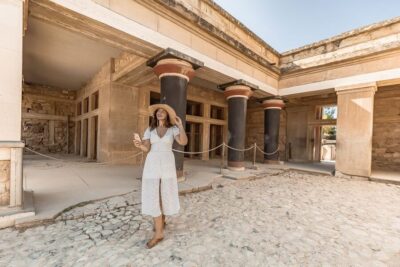
Knossos Palace and Museum E-Tickets with Audio Guides
Read our review →
Knossos-Zeus Cave -Old Traditional Villages-Olive Oil Factory
Read our review →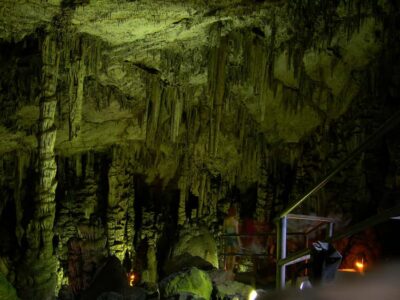
Knossos, Lasithi, Lasinthos and Olive Farm Combo Tour
Read our review →
Browse the lists this tour appears in