
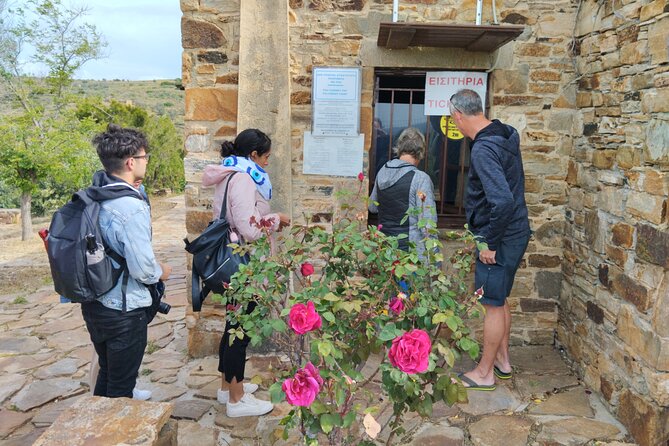
Reviewed · HISTORICAL TOURS
Naxos Half Day History and Culture Guided Tour
The best thing about this Naxos tour is that it gets you away from the port and beaches and into the island’s olive country, mountain villages, marble works, old churches, and farm roads. In four hours, you see a side of Naxos that is awkward to reach without a car.
I like the stop at Manolis’s pottery workshop, where the craft is shown rather than merely described. I also like the practical mix of history and village life: Demeter’s Temple, a coffee stop in Chalki, the Kouros statue, and a quick look at modern marble quarries. The drawback is pace. Seven stops mean plenty of variety, but some visits feel brief, and a few people have found the guide’s English hard to follow.
In This Review
- Key points
- Why this half-day tour works on Naxos
- Demeter’s Temple and the first taste of ancient Naxos
- Damalas pottery: a small workshop with real local character
- Chalki gives you the most freedom
- Panagia Drosiani and the limits of a group visit
- Kinidaros marble and the island’s working side
- Walking to the Melanes Kouros in Flerio Valley
- Filoti as the alternate stop
- Guides, drivers, and the group experience
- Timing, meeting point, and luggage advice
- Is $36.28 good value?
- Who should book this Naxos tour?
- Should you book it?
- FAQ
- Where does the Naxos tour begin and end?
- What time does the tour start?
- Is hotel pickup included?
- Is the entrance fee for Demeter’s Temple included?
- What happens if Demeter’s Temple is closed?
- Is the tour suitable for people with mobility impairments?
Key points
- A strong island overview in four hours: You see temples, villages, churches, quarries, and ancient marble without renting a car.
- The pottery stop feels personal: Local potter Manolis demonstrates traditional wheel work in Damalas and offers handmade items for sale.
- Chalki is your best free-time stop: You have about 50 minutes for alleys, cafés, souvenirs, or the Vallindras Kitron Distillery.
- The Kouros requires a short walk: Flerio Valley leads you through gardens to a striking unfinished marble figure.
- The schedule changes on certain days: Demeter’s Temple is replaced by Filoti on Tuesdays, May 1, and some very hot afternoons.
- Arrive early and plan for walking: The tour leaves from outside Naxos Port, does not normally provide hotel pickup, and cannot wait for late arrivals.
Why this half-day tour works on Naxos
Naxos is easy to enjoy from Chora, but the island’s character changes once you head inland. Olive groves replace waterfront cafés. Small villages cling to the hills. Marble appears everywhere, from ancient statues to active quarries cut into the mountains.
That is the reason I see value in this tour. At $36.28 per person, you are paying less for a deep visit to any one monument and more for a guided circuit through several parts of the island. The air-conditioned vehicle handles narrow, winding roads, while the guide explains what you are seeing along the way.
The experience is especially useful if you have only half a day, do not want to drive, or are uneasy about navigating Naxos’s steep roads. The tour begins and ends at the Naxos Bus Transfer office just outside the port, so it also works well around a ferry arrival or departure, provided your timing leaves enough room.
The advertised duration is about four hours. The regular afternoon departure is at 1:00 pm, while an 8:30 am departure may include pickup from set points in Naxos Town, Stelida, Agios Prokopios, Agia Anna, and Plaka. Morning pickup is pickup only, not a ride back to your accommodation.
More history-led days around Naxos:
- Historical Delphi One Day Tour with Arachova Stop & Expert Guide
★ 4.5 · 1,247 reviews - Historic Athens: Small Group Electric Bike Tour
★ 4.9 · 740 reviews - Naxos: Half-Day Guided History and Culture Sightseeing Tour
★ 4.7 · 435 reviews
Demeter’s Temple and the first taste of ancient Naxos
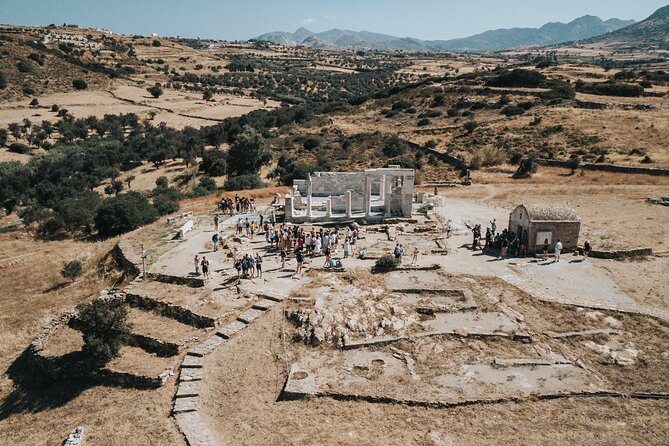
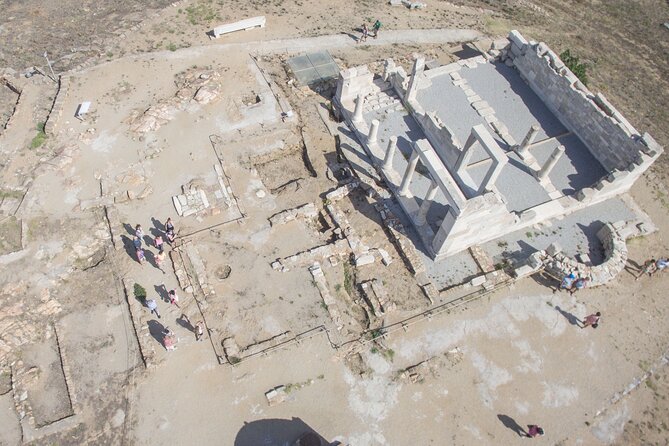
The first main stop is the Temple of Demeter, a restored sanctuary set away from the coast. You get around 40 minutes here, including time for photographs and the small museum on site.
The temple is important because it shows Naxos’s long connection with marble building and ancient worship. The visit is not just a quick roadside photograph. You walk uphill and climb steps to reach the monument, so sturdy shoes and water matter.
Admission is not included. Bring €5 in cash for the entrance fee. The guide can explain the site before you enter, but an important limitation is that the guide is not licensed to lead visitors inside Demeter’s Temple. You should expect an orientation outside, followed by time to look around on your own.
The temple closes on Tuesdays and May 1. It may also close at noon when a heat wave is predicted. If that happens, the afternoon tour visits Filoti instead. This is worth checking when you book, especially if Demeter’s Temple is the main reason you are interested.
Damalas pottery: a small workshop with real local character
Damalas is a tiny village in the Tragea area, surrounded by olive groves. The pottery workshop here is one of the more distinctive parts of the route because it gives you a direct look at a working local craft.
Potter Manolis demonstrates traditional techniques on the wheel and explains how the objects are made. You have roughly 30 minutes, which is enough for a demonstration and a look around, but not a long class or hands-on workshop.
The stop also gives you a chance to buy a useful souvenir rather than another mass-produced trinket. Pottery can be a good choice if you want something tied to the island’s everyday culture, though you should remember that any purchase is a personal expense and packing it for the journey is your responsibility.
This is a short stop, but it breaks up the ancient sites nicely. Instead of hearing about Naxos only through dates and monuments, you see a living skill still practiced in a village setting.
Chalki gives you the most freedom
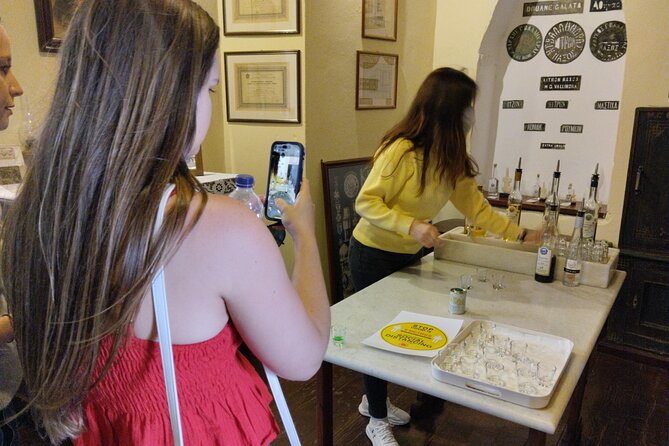
The former capital of Naxos, Chalki, is the tour’s main independent stop. You get about 50 minutes to walk through the lanes, browse handmade goods, sit in a café, or visit the Vallindras Kitron Distillery.
That free time is valuable because the rest of the outing follows a set schedule. Chalki lets you choose your own pace. You can focus on village architecture, stop for coffee, or look for a small bottle of kitron, the island’s citrus liqueur, at the historic distillery.
Do not expect enough time for a long meal here. The stop is better suited to a snack, coffee, or a quick wander. Some people would prefer more time in Chalki and fewer stops elsewhere, while others appreciate the brisk rhythm because it keeps the half-day moving.
If shopping matters to you, Chalki is one of the best places to use your free time. The pottery workshop and village shops offer several chances to buy something local, but the tour is not built around extended shopping.
More Naxos trips worth a second look
- Naxos Highlights Bus Tour with Free Time for Lunch at Apeiranthos
★ 5.0 · 1,215 reviews - Naxos: Half-Day Cooking Class at Basiliko Family Tavern
★ 5.0 · 887 reviews - Semi-private Antiparos & Caves Blue Lagoon OR Rina Cave & Small Cyclades
★ 4.5 · 500 reviews - Naxos:Half-day cooking class at Basiliko
★ 5.0 · 457 reviews
Panagia Drosiani and the limits of a group visit
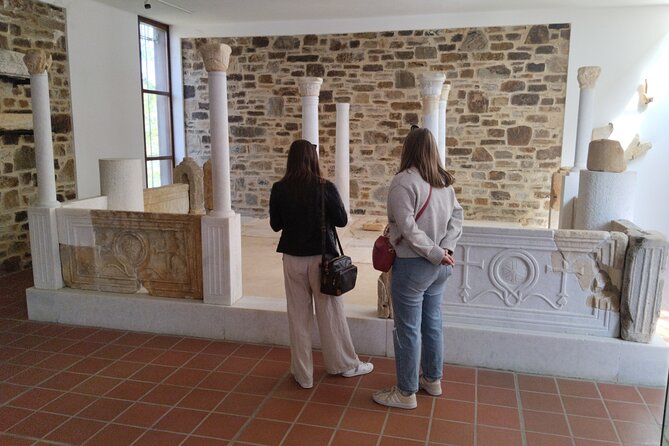
The road continues to Panagia Drosiani, a church devoted to the Virgin Mary and considered among the oldest in the Balkans. Its unusual form and old frescoes make it an important stop, even though the visit lasts only about 10 minutes.
You stop for photographs and may enter if the church is open. The guide cannot provide a guided explanation inside because the guide is not licensed to lead visitors into the church. You receive background information before entering, then make a short independent visit.
A small donation of €1 to €5 is customary when visiting a church. It is not an admission charge, and it is not obligatory, but carrying a few euro coins is a considerate idea.
The short timing is the main compromise here. If the frescoes are what you most want to study, you may wish for more time. Still, the stop works as a quick look at Naxos’s religious heritage rather than a full church tour.
Kinidaros marble and the island’s working side
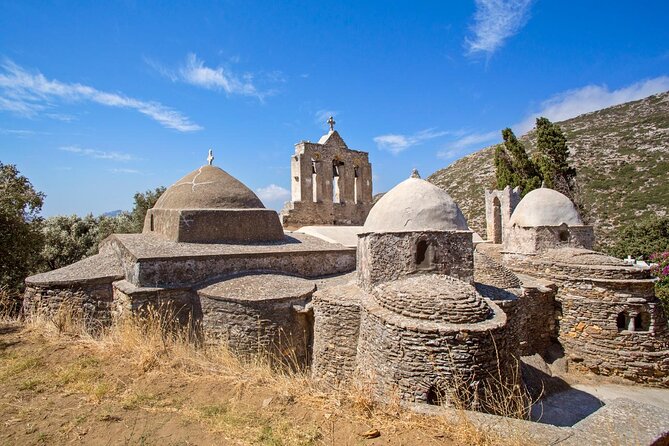
Near Kinidaros, the bus pauses by the road for about five minutes so you can photograph the contemporary marble quarries. This is a very short stop, but it adds useful context to the ancient marble sites.
Naxos is not only a place where marble was shaped thousands of years ago. Marble remains part of the island’s economy and visual identity. Seeing the active quarries after visiting ancient stonework connects the past with the present in a simple, clear way.
Do not expect a quarry tour or a walk through the site. This is a roadside photo stop. If you prefer long visits at fewer places, five minutes may feel too slight. If you enjoy seeing how an island works today, it is a worthwhile addition.
Walking to the Melanes Kouros in Flerio Valley
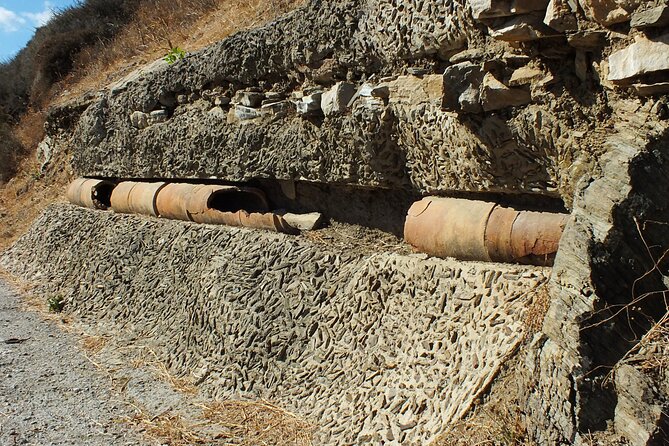
The Kouros statue near Melanes is one of the tour’s most memorable stops. You walk through the gardens of Flerio Valley to reach an unfinished marble figure, an impressive example of Naxian sculpture.
The statue remains connected to the landscape around it rather than being placed in a polished indoor museum. That setting helps you understand the scale and difficulty of ancient marble work. The figure is not simply an object on display. It is a piece of a much larger story about quarrying, transport, and unfinished ancient projects.
The visit takes about 30 minutes. Wear walking shoes because the route includes an outdoor walk through the valley. The tour moves at a fairly brisk pace, so anyone with mobility problems should think carefully before booking.
This is also a place where the guide’s skill matters. Guides including Thanos, Alex, and Dimitri have been praised for explaining both Naxian history and modern island life. Thanos, who grew up on Naxos and studies tourism, culture, and history, has been especially appreciated for adding personal detail about the island and its communities.
Filoti as the alternate stop
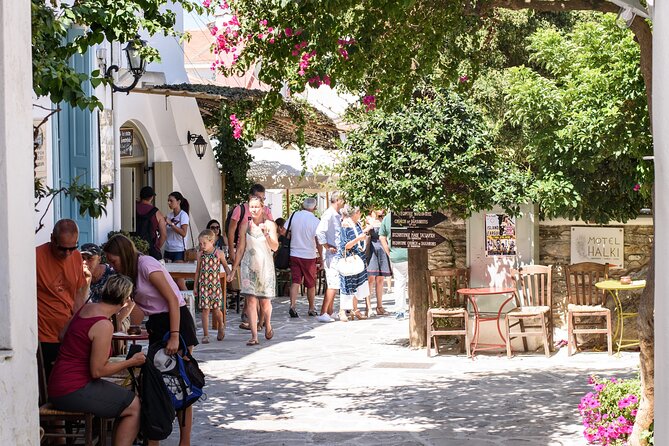
Filoti replaces Demeter’s Temple on Tuesdays and May 1. It may also replace the temple on an afternoon departure if the temple closes early during a predicted heat wave.
You get about 40 minutes to explore Filoti independently. The main church and nearby folklore museum, housed in an old traditional home, are the key places to look for. This change means the tour becomes more village-focused and less archaeological, but it still gives you a useful look at inland Naxos.
Because the schedule can change, do not book this outing assuming the temple visit is guaranteed. If you have already seen Filoti or are choosing the tour specifically for Demeter’s Temple, check the date and weather conditions before you commit.
Guides, drivers, and the group experience
The tour is offered in English and can have up to 40 people. That is a sizeable group, so the experience feels more like a guided bus circuit than a private cultural walk.
The strongest part of the operation is often the combination of guide and driver. Guides named in feedback include Thanos, Alex, and Dimitri. Their approaches vary, but the best moments come when they explain local customs, Greek Orthodox traditions, village life, and personal links to Naxos rather than simply reciting facts.
George has been praised for handling the island’s narrow and steep roads. That matters more than it may sound. Driving yourself gives you freedom, but it also means concentrating on mountain roads while trying to find parking and keep to a schedule. Here, you can watch the views instead.
There are limits. Some people have found certain guides difficult to understand because of a strong accent or fast delivery. At roadside stops, the guide may not use a microphone, which can make it harder to hear in a large group. Others have found the commentary flat or too much like a list of facts.
The bus is air-conditioned and generally described as comfortable, but one account found the air-conditioning weak and the vehicle hot. Bring water, even though water may be offered after the first stop. There may not be regular opportunities to refill.
Timing, meeting point, and luggage advice
The meeting point is the Naxos Bus Transfer office at Chora Naxos, directly outside Naxos Port. The tour returns to the same office. Free luggage storage is provided during the tour, which is a real benefit if you are between ferry connections or have checked out of your accommodation.
Do not treat the departure time casually. For the morning outing, arrive by 8:20 for an 8:30 departure. Parking near the port can be difficult, and the bus cannot hold for a group member who is still searching for a space. If two people arrive while others drive off to park, the bus may leave.
The afternoon start is listed as 1:00 pm. Hotel pickup and drop-off are not included for that departure. Morning pickup is available only from specific locations, and you need to provide your accommodation details after booking so the closest pickup point can be confirmed.
The tour runs in rain or shine. It can be canceled for poor weather or if the minimum number is not reached, in which case you are offered another date, another experience, or a full refund.
Is $36.28 good value?
For $36.28, I consider this good value if your aim is to see a broad sample of inland Naxos without hiring a car. Transport alone can make a self-guided day more costly, and you avoid the stress of narrow roads, navigation, and parking.
The price does not include the €5 entrance fee for Demeter’s Temple, personal purchases, or church donations. Those extras are modest, but you should carry cash. You also need to budget for your own coffee or snack in Chalki.
The trade-off is depth. You are not spending half a day at Demeter’s Temple, walking slowly through Chalki, or studying the Kouros from every angle. You are sampling several places in a short period.
The tour has a 4.8 rating from 491 ratings, with 95 percent recommending it. That strong overall result fits the experience: the route offers a lot for the price, but your enjoyment will depend on your tolerance for a brisk schedule and your ability to follow spoken English in a group setting.
Who should book this Naxos tour?
I would choose this tour if you are visiting Naxos for a short time, staying near Chora, or prefer not to drive. It is also a smart first outing because it shows you the inland villages and gives you ideas for places to revisit at a slower pace.
Families may like the four-hour format and steady movement between stops. You will need to keep children on schedule, though, and the walk to Demeter’s Temple and the Kouros may not suit every young child.
I would be more cautious if you have limited mobility, dislike uphill walks, or want long, quiet visits at archaeological sites. The tour includes steps, uneven outdoor walking, and a brisk pace. It is also not the best fit if you need a highly polished lecture with slow, amplified English at every stop.
Cancel at least 24 hours before the start time for a full refund. Changes made inside that 24-hour window are not accepted.
Should you book it?
Book this Naxos half-day tour if you want breadth, easy transport, and local villages for a modest price. The pottery demonstration, Chalki free time, Melanes Kouros, and views from the bus give the outing more texture than a simple monument shuttle.
Skip it if Demeter’s Temple is your one fixed priority on a Tuesday, May 1, or a potentially hot afternoon. Also skip it if you want a slow private tour. For most visitors who want a useful first look at inland Naxos without driving, this is a practical and well-priced choice. Arrive early, bring water and walking shoes, and keep your expectations set for a fast-moving overview rather than a leisurely day.
FAQ
Where does the Naxos tour begin and end?
It begins at the Naxos Bus Transfer office at Chora Naxos, directly outside Naxos Port. It ends at the same office.
What time does the tour start?
The listed afternoon departure starts at 1:00 pm. An 8:30 am departure is also offered, with pickup from selected points in Naxos Town, Stelida, Agios Prokopios, Agia Anna, and Plaka.
Is hotel pickup included?
Hotel pickup and drop-off are not included. Pickup only is available for the 8:30 am departure from preset locations. You must provide your accommodation details to receive the closest pickup point.
Is the entrance fee for Demeter’s Temple included?
No. The entrance fee is €5 per person and must be paid in cash on site.
What happens if Demeter’s Temple is closed?
The temple is closed on Tuesdays and May 1, and it can close at noon during a predicted heat wave. In those cases, the tour visits Filoti instead.
Is the tour suitable for people with mobility impairments?
The tour is not recommended for people with mobility impairments. You need to climb steps and walk uphill at Demeter’s Temple, and the overall pace is fairly brisk.
Recently reviewed around Naxos
- From Naxos: Full-Day Boat Trip to Santorini★ 3.8 · 192 reviews
- Naxos: Old Town, Castle & Portara Guided Sunset Tour★ 4.6 · 94 reviews
- Naxos: Food Walking Tour & Cooking Class with Meal & Drinks★ 4.9 · 86 reviews
- Naxos: Wine and Mythology Sunset Tour★ 4.8 · 99 reviews
- Naxos: Hike to the Top of Mount Zas with a Guide★ 5.0 · 56 reviews
- Naxos: Private E-Bike Tour with Farm Lunch★ 5.0 · 40 reviews
- Naxos: Discover Scuba Diving – Your first experience diving★ 5.0 · 27 reviews
- Naxos Castle Walking Tour and Sunset at the Portara★ 4.4 · 144 reviews
Historical Tours, compared.
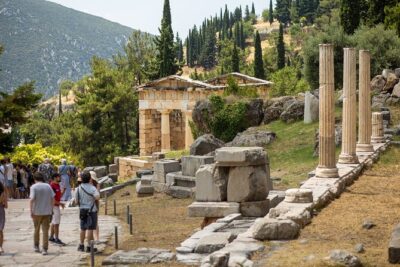
Historical Delphi One Day Tour with Arachova Stop & Expert Guide
Read our review →
Historic Athens: Small Group Electric Bike Tour
Read our review →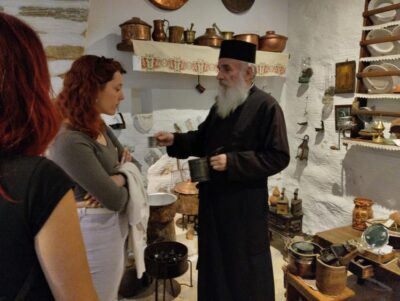
Half-Day Guided History and Culture Sightseeing Tour
Read our review →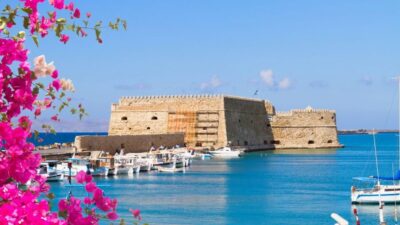


Throne of Helios: The History of Rhodes in 9D Experience
Read our review →
The History of Athens: Greek Mythology Private Tour
Read our review →
Athens Highlights by E-Bike: Small-Group Historic Tour
Read our review →Browse the lists this tour appears in