
Reviewed · RAFTING & CANYONING
Arachthos white water river Rafting: Plaka’s Bridge- Tzari
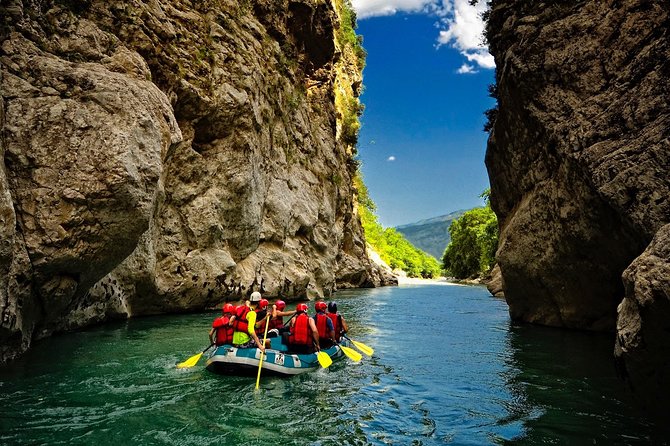
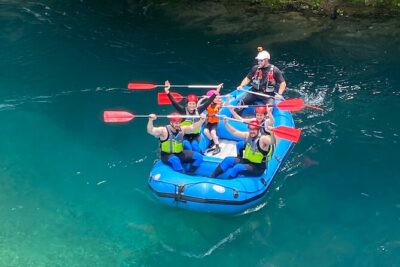
The best part of this Arachthos rafting trip is the setting: you begin beneath Plaka Bridge, a graceful stone arch above the river, then paddle through a gorge with walls rising as high as 700 meters. The ride mixes manageable Class II rapids with more spirited Class III sections, so you get real excitement without needing prior rafting experience.
I like that all safety equipment is supplied, including neoprene shoes, a wetsuit, helmet, life jacket, and extra layers when the weather is cool. I also like the practical photo service. You can leave your phone behind and receive pictures by email instead.
The main thing to consider is the river’s changing character. Winter brings fuller waterfalls and stronger water flow, while summer can leave shallow sections or even dry patches. The minibus ride on winding mountain roads may also feel less comfortable than the rafting itself.
In This Review
- Key details before you book
- Starting beneath the great Plaka Bridge
- Getting fitted for the Arachthos River
- What Class II and III rapids feel like
- The 9-kilometer route through Arachthos Gorge
- Klifki Waterfalls and the calmer moments
- Finishing at Tzari and returning to base
- How much value do you get for $69.51?
- Who will enjoy this rafting trip most?
- Practical advice for a smoother day
- Should you book the Arachthos rafting trip?
- FAQ
- Where does the rafting trip start?
- Where does the rafting trip finish?
- How long does the experience last?
- How far do you raft?
- Do I need previous rafting experience?
- What equipment is provided?
- Do I need to bring a swimsuit and towel?
- What happens if the weather is poor?
Key details before you book
- A 9-kilometer descent from Plaka Bridge to Tzari: The route combines river action with huge canyon walls and clear water.
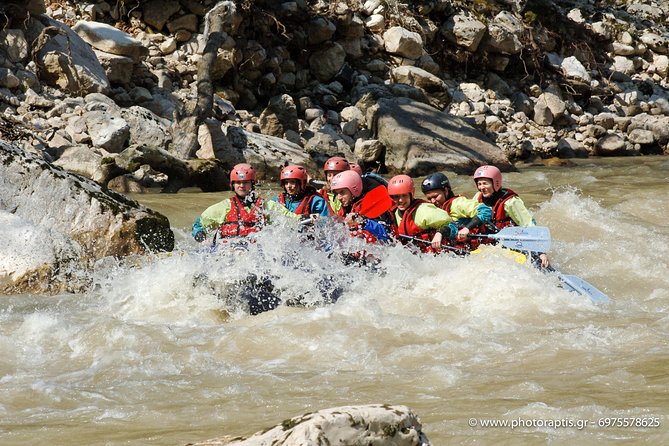
- Class II and III rapids: You receive instruction first, and no previous rafting experience is required.
- A full equipment package: Wetsuit, neoprene shoes, helmet, life jacket, and seasonal extra clothing are supplied.
- A waterfall and swimming stop: The exact feel depends on season and water levels, but the route includes access to the Klifki Waterfalls area.
- A small maximum group of 20: This is not a giant raft convoy, though the group can still feel lively.
- Photos arrive online: You can enjoy the river without risking your phone in the water.
Starting beneath the great Plaka Bridge
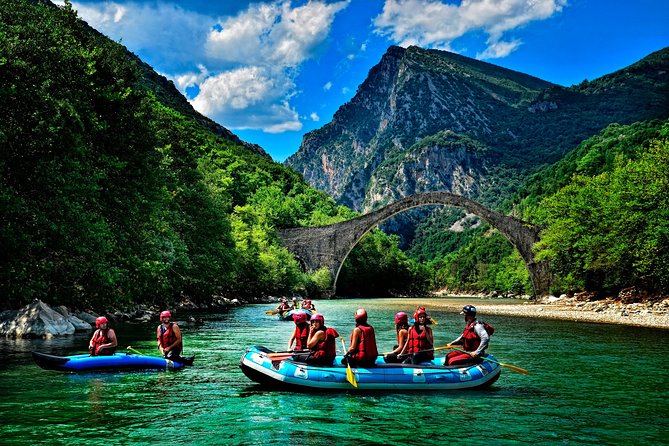
The trip begins at Plaka’s arched bridge in Voria Tzoumerka, Epirus. This is not just a convenient launch point. The bridge itself is an impressive sight, rising about 20 meters high and stretching roughly 40 meters across the river on a single stone arch.
It is described as the largest single-arch stone bridge of its kind in the Balkans. That gives the outing a memorable start: before the first rapid, you are already beside one of the region’s signature structures.
Alpine Zone’s base sits only a few meters past the bridge. You check in there, collect your equipment, and prepare for the water. The base has changing rooms and washing facilities, which matter more than they may sound after several hours in a wet suit and river shoes.
The meeting point is remote mountain country rather than central Athens, despite Athens appearing as the broad location in the booking information. Check your transport plans carefully and use the exact Plaka Bridge meeting point when arranging your day.
Other Greece trips readers weigh against this one:
- Athens: Acropolis & up to 5 Archaeological Sites Combo Pass
★ 4.4 · 12,619 reviews - Athens: Acropolis Ticket with Optional Audio or Live Guide
★ 4.2 · 11,055 reviews - Athens: Acropolis, Parthenon & Acropolis Museum Guided Tour
★ 4.8 · 9,316 reviews
Getting fitted for the Arachthos River
The equipment is one of the strong practical points of this outing. You receive a neoprene suit and shoes, a life jacket, and a helmet. During cooler periods, the team can also provide extra layers such as dry jackets and gloves.
You need to bring your own swimsuit and towel. That is easy to overlook, so pack both in a small bag along with dry clothes for after the ride. Bottled water and local syrupy sweets are supplied at the base, giving you something refreshing and distinctly Greek after the river.
The fitting stage is also where your instructor explains the basics. You do not need rafting experience, and the guide remains with the group on the river. That makes this a reasonable first rafting trip, provided you are comfortable with cold water, physical paddling, and Class III rapids.
The guides named in the feedback include Eleni, George, Vasilis, Thanos, and Kostas. The repeated pattern is clear: the guides combine safety work with a relaxed sense of humor. One guide, Vasilis, helped a participant back into the raft after a fall, which is exactly the sort of calm response you want on moving water.
What Class II and III rapids feel like
The rating matters, but it should not frighten beginners away. Class II rapids usually bring clear waves and some maneuvering. Class III sections are more active, with stronger waves and a greater need to follow paddle commands.
This is not a gentle sightseeing float. You will work as a team, listen to the instructor, and get wet. The guide gives you the commands and stays in the raft or with the group, helping everyone handle the river’s more demanding sections.
The most useful feature for a first-timer is the gradual mix of scenery and action. You have calmer water between rapids, giving you a chance to look around, adjust your paddling, and enjoy the reflections on the river. Then the pace picks up again.
The water time is commonly around two to two and a half hours, while the full experience lasts about five hours. The difference allows for equipment, instruction, stops, changing, and the return to base. Do not expect five straight hours of paddling.
The 9-kilometer route through Arachthos Gorge
After launching beneath Plaka Bridge, the raft heads downstream for about 9 kilometers. The Arachthos River cuts through a powerful mountain setting, with canyon walls reaching up to 700 meters in places.
The scale changes the experience. You are not simply bouncing through rapids on an isolated stretch of water. The route places you at the bottom of a long stone corridor, with steep walls, trees, clear water, and reflections above and around you.
The scenery is the main reason to choose this river over a more convenient rafting outing near a major city. The river feels wild and remote, yet the route remains suitable for people without previous rafting experience.
You should also keep expectations tied to the season. In winter, the Klifki Waterfalls can be full and roaring. In summer, water levels may fall enough that parts of the riverbed are barely covered, and some sections can even run dry. That does not make a summer trip worthless, but it can reduce the force of the rapids and change the look of the waterfalls.
Rain can also affect the plan. The river is assessed before the activity, and a trip may be canceled if conditions are poor. That is frustrating if you have built a day around it, but it is the right call for a river excursion.
A different kind of day out, same corner of Greece:
- Athens: Cape Sounion & Poseidon Temple Sunset Half-Day Trip
★ 4.8 · 8,241 reviews - From Kissamos Port: Boat Cruise to Balos Lagoon & Gramvousa
★ 4.2 · 6,755 reviews - Athens: Acropolis and Parthenon Guided Walking Tour
★ 4.6 · 5,882 reviews - From the Port of Kos: Full Day Boat Cruise to 3 Islands
★ 4.8 · 5,137 reviews
Klifki Waterfalls and the calmer moments
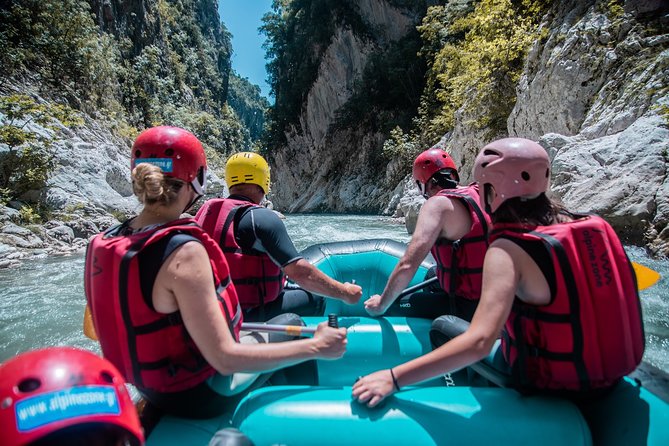
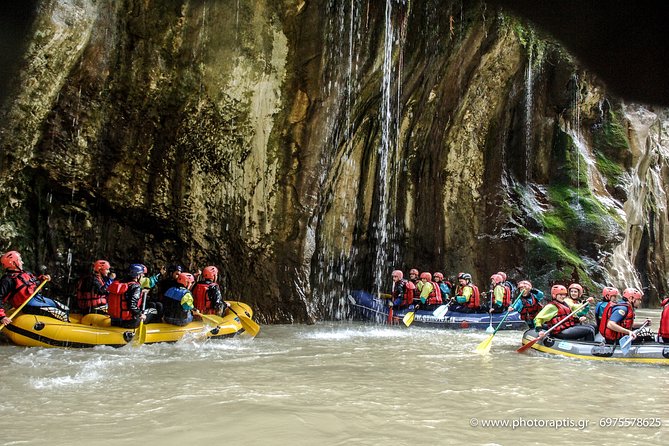
The Klifki Waterfalls are one of the route’s memorable natural features. Their character depends heavily on water levels. In the wetter, colder part of the year, the falls have much more force. During warmer months, the water may be less dramatic, but the surrounding gorge still gives the stop its appeal.
One excursion included a walk to the waterfall and a chance to cool off in cold water. That is a useful clue about the rhythm of the trip: the day is not only paddle, rapid, paddle. You may have a short break to stretch, look around, or swim, depending on the conditions and the guide’s plan.
The swimming stop is not guaranteed as a fixed, detailed program in the information provided, so treat it as a possible part of the outing rather than the main reason to book. The rafting and gorge remain the core experience.
Finishing at Tzari and returning to base
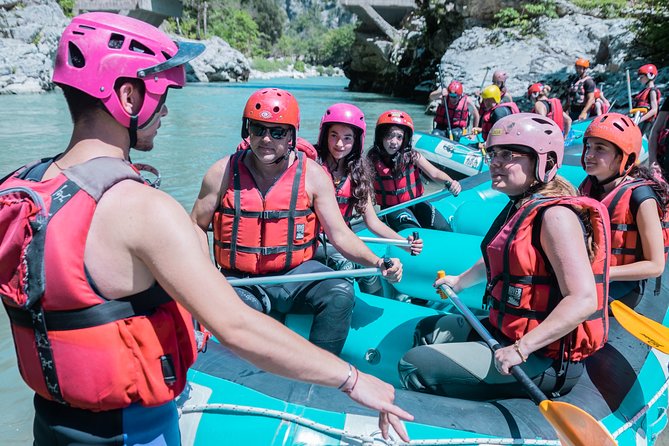
The rafting section ends in the Tzari area after the 9-kilometer descent. Buses then return the group to Alpine Zone’s base near Plaka Bridge.
That return transfer is useful because you do not need to arrange a second vehicle at the endpoint. One practical criticism concerned the comfort of the bus, especially on the winding mountain roads. It is a minor point for most people, but those prone to motion sickness should be prepared.
Back at base, you can use the changing rooms and washing facilities. The supplied water and local sweets are a welcome finish, especially after the cold river. Photos are sent over the internet after the trip, so you can remember the canyon and rapids without carrying a waterproof camera.
How much value do you get for $69.51?
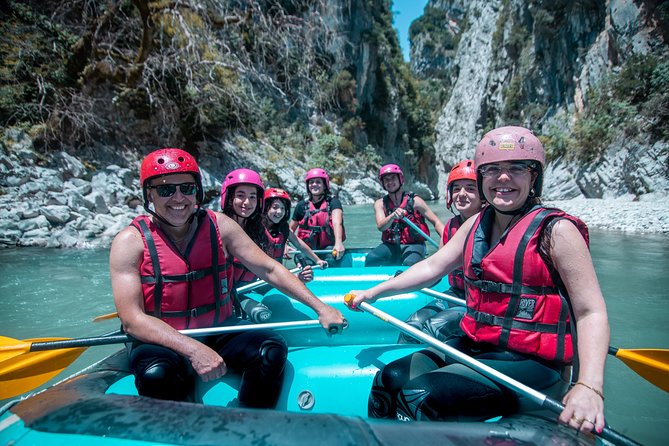
At $69.51 per person, the price is strong for a five-hour activity that includes an instructor, raft, safety equipment, seasonal clothing, return transport from the endpoint, water, sweets, and photos.
The value improves if you are already staying in the Tzoumerka region or planning to visit Epirus for its mountain scenery. You are paying not only for the rapids, but also for access to a difficult-to-reach river corridor and the staff needed to run the activity safely.
The price is less straightforward if you need a long transfer from elsewhere in Greece. The information gives the meeting point at Plaka Bridge, not a pickup from central Athens. Add your own transport, fuel, or taxi costs before comparing this with rafting trips closer to a large city.
Group discounts may be available, which makes the outing more attractive for families or friends. The maximum group size is 20, so the experience is not private, but it is also not designed for a huge crowd.
The included photos add modest value. You do not have to risk dropping your phone or spend the day protecting it from spray. The photos also let you focus on the guide’s instructions and the scenery.
Who will enjoy this rafting trip most?
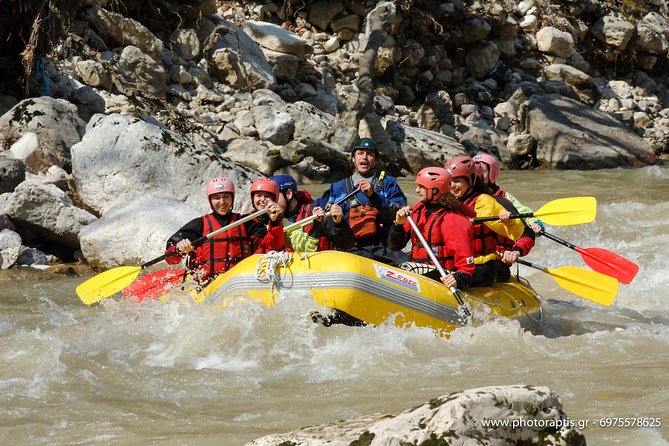
This is a good choice for first-time rafters who want more than a calm float. The Class II and III rating gives the day some bite, while the training and guide support keep the outing accessible.
It also suits active families and groups of friends, assuming everyone in the group can participate in the physical activity. Most people can take part, and service animals are allowed according to the supplied information.
You will get the most from it if you enjoy mountains, cold water, changing weather, and a little uncertainty in the river. The trip is less suitable if you want a dry sightseeing tour, a short city activity, or complete control over the schedule.
The route is also a good match for someone who values scenery as much as sport. The canyon, bridge, waterfalls, and clear river provide plenty to look at between the rapids.
Practical advice for a smoother day
Bring a swimsuit and towel because they are not supplied. Pack dry clothes for after the trip and keep them separate from anything you take to the river.
Wear gear that you do not mind getting wet before the staff fit you with the specialist equipment. The provided neoprene shoes and wetsuit are designed for the activity, so you do not need to bring your own rafting kit.
Allow the full five-hour window, even though the water portion may last about two to two and a half hours. Equipment fitting, safety instruction, transport back to base, and changing all take time.
If you are sensitive to winding roads, plan for the minibus transfer with care. The bus returns you to the meeting point, but comfort on the mountain road may be basic.
For the fullest waterfalls and stronger river conditions, the wetter season may offer the most dramatic outing. Summer can be warmer and pleasant, but lower water may make some sections much shallower. The operator makes the final call if weather or river conditions are unsafe.
The activity is usually booked about 31 days ahead, so reserve early if your schedule is fixed. Free cancellation is available up to 24 hours before the start time. A cancellation made inside that window is not refunded, and weather or minimum-group cancellations lead to a different date or a full refund.
Should you book the Arachthos rafting trip?
I would book this if you want a proper mountain adventure in Epirus and are happy to spend part of the day wet, active, and following a guide’s commands. The combination of Plaka Bridge, Class II and III rapids, the Arachthos Gorge, and the Klifki Waterfalls gives the trip more character than a standard rafting run.
The strongest reasons to go are the scenery, professional guide support, and useful equipment package. Eleni, George, Vasilis, Thanos, and Kostas are all associated with an experience that puts safety and good spirits at the center.
I would pause only if your transport to Plaka Bridge is difficult, you dislike winding roads, or you want guaranteed high water and roaring falls in summer. For everyone else, $69.51 is a fair price for a five-hour outing with about two to two and a half hours on the river, photos, facilities, and a memorable route through Tzoumerka.
FAQ
Where does the rafting trip start?
The activity starts at Plaka Arched Bridge on an unnamed road in Voria Tzoumerka, Greece. Alpine Zone’s base is located a few meters past the bridge.
Where does the rafting trip finish?
The rafting ends in the Tzari area, followed by a bus ride back to Alpine Zone’s base near Plaka Bridge. The overall activity ends at the original meeting point.
How long does the experience last?
The full experience lasts approximately five hours. The rafting portion in the water is about two to two and a half hours.
How far do you raft?
The route covers approximately 9 kilometers downstream on the Arachthos River.
Do I need previous rafting experience?
No. Previous rafting experience is not required. An instructor provides training and stays with the group during the activity.
What equipment is provided?
The activity provides a neoprene suit and shoes, life jacket, helmet, and extra clothing such as dry jackets and gloves when temperatures require it.
Do I need to bring a swimsuit and towel?
Yes. Swimsuits and towels are not provided, so you should bring both.
What happens if the weather is poor?
The activity requires suitable weather. If it is canceled because of poor weather, you can choose a different date or receive a full refund.
Recently reviewed around Greece
- All Day 4×4 Adventure / Lefkada / With Brunch★ 5.0 · 73 reviews
- Artemis Hamam and Spa with Hotel Transfers Kos Island★ 4.5 · 77 reviews
- Half day boat diving experience for beginners in Kos Greece★ 5.0 · 29 reviews
- Sunset in Zia★ 4.0 · 282 reviews
- Private Greek Cooking Class in Kos with Lunch★ 5.0 · 26 reviews
- Three Island Cruise from Kos★ 4.0 · 33 reviews
- Kos 4×4 Exploration: Views, Villages & Flavors★ 4.5 · 37 reviews
- Lets Go Diving with pickup from hotel★ 4.5 · 42 reviews
Rafting & Canyoning, compared.
River rafting at Voidomatis River !! Zagori area
Read our review →
Canyoning trip at Zagori area of Greece – Section A
Read our review →
Epirus: Easy Rafting Experience on the Voidomatis River
Read our review →
Browse the lists this tour appears in