
Reviewed · ACROPOLIS & ACROPOLIS MUSEUM TOURS
Athens: Acropolis, Parthenon & Acropolis Museum Guided Tour
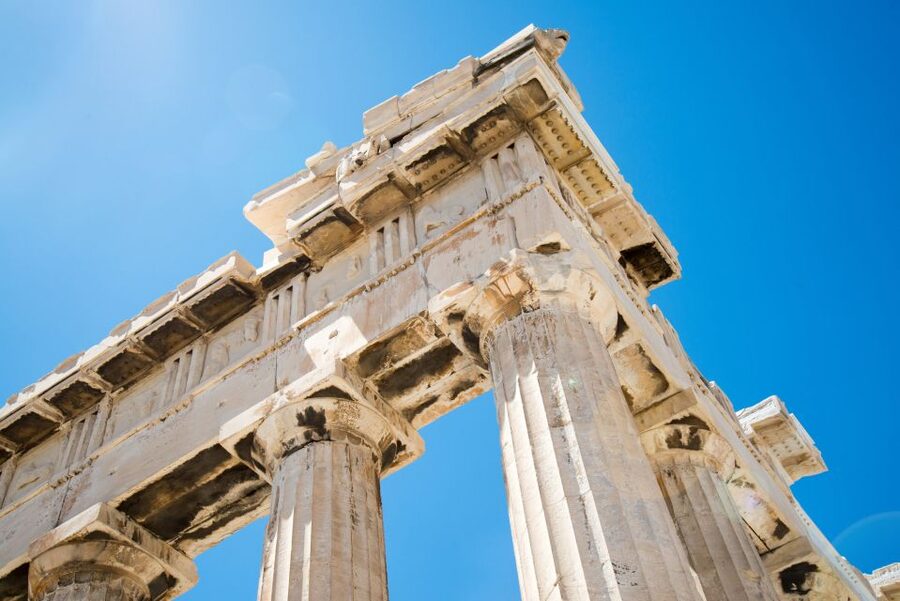
The best part of this Athens tour is the way it links the stone ruins on the hill with the original art displayed below at the Acropolis Museum. You see the Parthenon in place, then view the surviving sculpture, frieze, and Caryatids in a bright modern museum built for them.
I like the clear route through the Theater of Dionysus, Odeon of Herodes Atticus, and hilltop temples. I also like the guides’ storytelling: Sotos, Jason, Chrysa, Giota, Ioannis, and Julia are all praised for clear English, energy, and a knack for making ancient Athens easy to follow.
The main drawback is the pace and terrain. Expect three to four hours of walking over uneven stone, with little shade on the Acropolis. The museum adds a lot of value, but taking both sites in one tour can leave you full of facts by the end.
In This Review
- Key points to know before booking
- Why this Acropolis and museum pairing works
- Starting at the Theater of Dionysus
- The Odeon and sanctuary below the summit
- Reaching the Propylaea and Temple of Nike
- The Erechtheion and its famous Caryatids
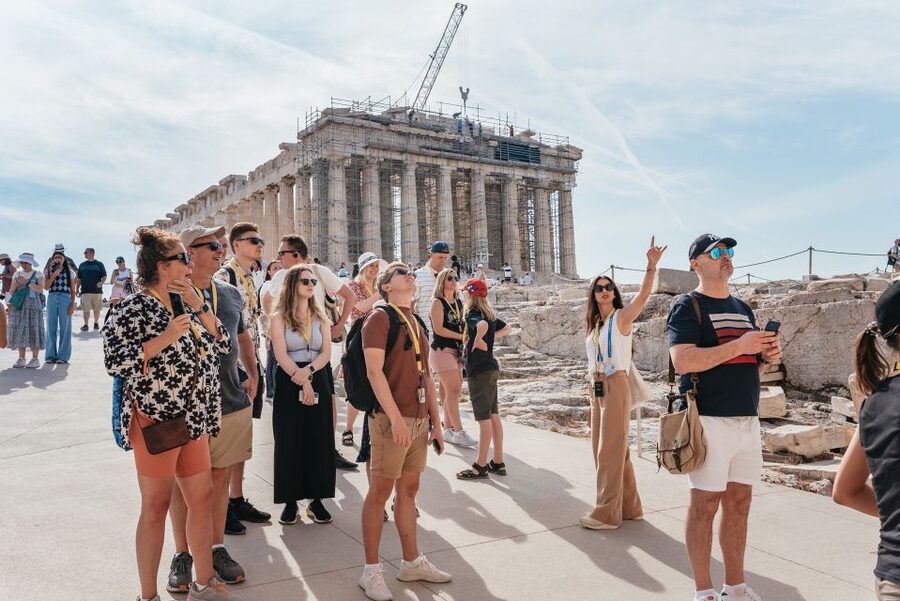
- The Parthenon and the Golden Age of Athens
- A short break before the museum
- Inside the New Acropolis Museum
- Group or private tour?
- Physical effort and practical preparation
- Who gets the best value from this tour?
- Should you book the Acropolis and museum tour?
- FAQ
- Does the tour include skip-the-line entry to the Acropolis?
- Does the tour include the Acropolis Museum?
- How long does the tour take?
- Is the tour private or shared?
- What should I bring?
- Is the tour suitable for wheelchair users or people with mobility issues?
Key points to know before booking
- The Acropolis ticket office is bypassed: Your ticket option lets you skip the ticket-office queue, but there is no separate skip-the-line entrance to the Acropolis itself.
- The museum has a separate entrance: This can save time, especially when the main ticket lines are long.
- The Theater of Dionysus comes first in the story: You see where ancient dramas and tragedies were performed before climbing toward the Parthenon.
- The guide makes the difference: Sotos, Jason, Chrysa, Giota, Ioannis, and Julia are praised for strong English, good pacing, and lively explanations.
- The tour is active: Comfortable shoes, water, a hat, and light clothing matter more here than fancy sightseeing clothes.
- A private option is available: Choose it if you want more room for questions or a pace shaped around your group.
Why this Acropolis and museum pairing works
Athens can make ancient history feel scattered. One temple is on a hill, another theater is below it, and the best surviving sculptures are in a separate building. This tour solves that problem by joining the Acropolis site with the Acropolis Museum in one guided visit.
You begin among the ruins, where the setting gives the monuments their power. Then you move indoors to see the sculpture and architectural pieces close up. I find that order useful because the museum becomes a visual explanation of what you have just seen, rather than a collection of objects without context.
The listed price is about $40 per person, depending on the option and ticket arrangement. That is a fair price for a licensed guide, a shared or private format, and two major Athens sights, especially if you want the ancient world explained as you go. The value is less obvious if you already know the Acropolis well or prefer to read at your own pace.
The advertised duration is two to four hours, but you should plan on roughly three to four hours for the full Acropolis and museum visit. Weather, crowd levels, and the group’s pace can change the timing. Build in a little breathing room afterward instead of scheduling a tight lunch or train connection.
More Museum Tours in Athens
- Athens: Mythology of Delphi, Museum and Arachova Guided Tour
★ 4.6 · 4,008 reviews - Athens: Acropolis, Parthenon & Acropolis Museum Guided Tour
★ 4.8 · 3,579 reviews - Acropolis monuments & Parthenon Walking Tour with Optional Acropolis Museum
★ 5.0 · 2,678 reviews
Starting at the Theater of Dionysus
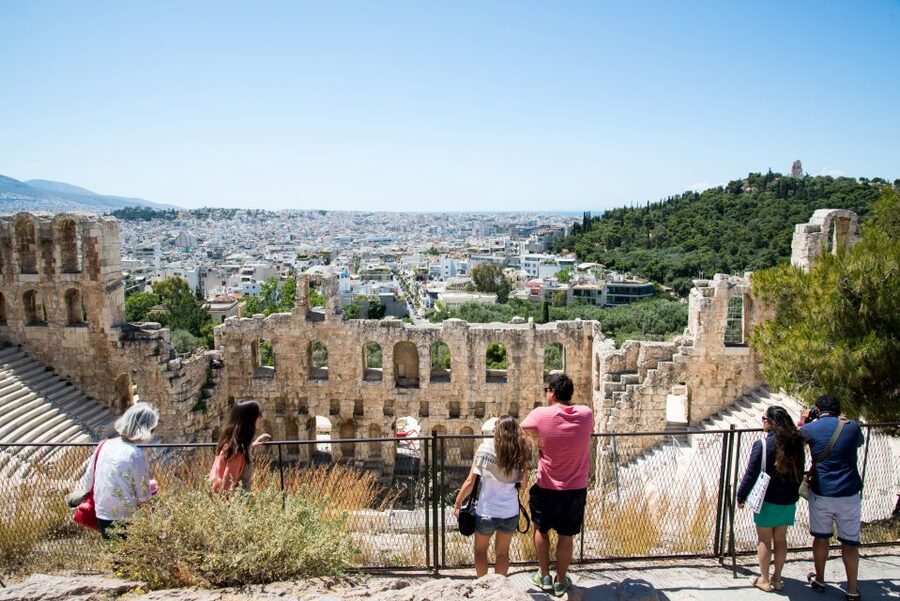
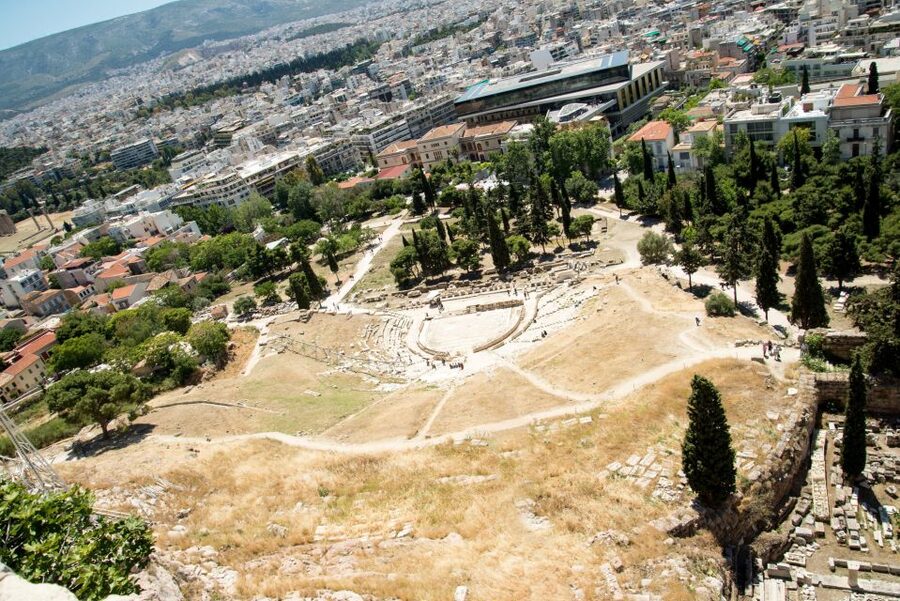
The route includes the Theater of Dionysus, often described as the first theater of humanity. This is where ancient Greek drama took shape, and the guide uses the site to explain the role of tragedy, comedy, and public performance in Athenian life.
The theater is more than a quick photo stop. It helps you understand that the Acropolis was not only a religious center. It was tied to civic life, festivals, performance, and the public identity of Athens.
You can expect to pause here for stories and orientation before continuing uphill. The stone surfaces are uneven, so watch your step and keep your shoes practical. If you have knee, heart, or balance concerns, this is one of the places to think carefully about the physical demands.
The Odeon and sanctuary below the summit
As you climb, the tour takes in the Odeon of Herodes Atticus. This large Roman-era theater sits against the Acropolis rock and remains one of the most striking structures on the approach.
The guide also points out the sanctuary of Asclepius, the healing god. These stops help fill in the spaces between the famous buildings. Instead of racing straight to the Parthenon, you get a sense of how the hill worked as a group of sacred and civic places.
This part of the walk can feel crowded, especially when several tour groups gather around the same monuments. Disposable earphones are provided for groups of more than eight people. They help you hear the guide, though the audio can be affected by nearby groups using similar equipment.
Reaching the Propylaea and Temple of Nike
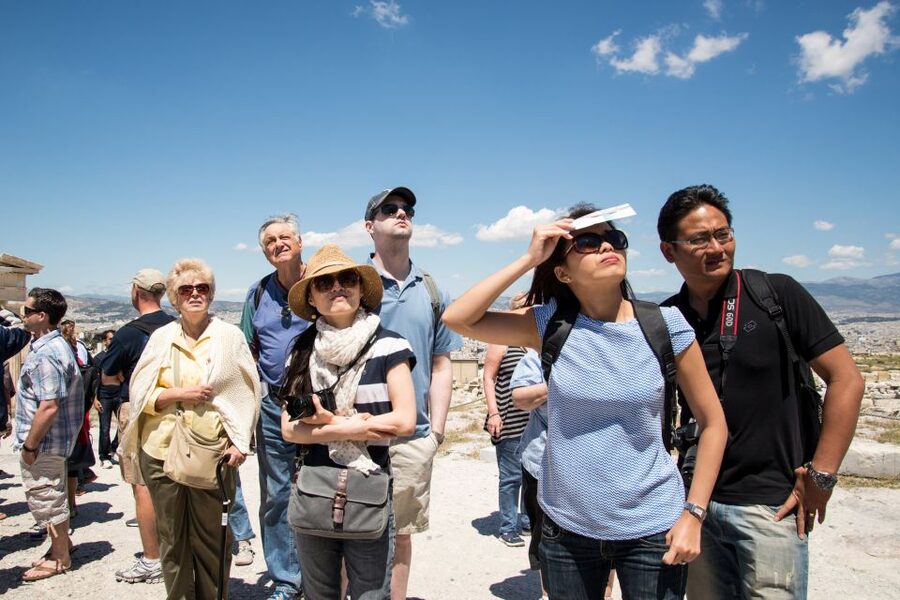
Near the top, the Propylaea forms the grand gateway to the Acropolis. Its columns and broad approach prepare you for the main monuments, though the surviving structure is only part of the ancient entrance.
The small Temple of Nike is another highlight. Its position near the entrance and its elegant proportions make it easy to miss if you are focused only on the Parthenon. A guide gives this compact monument a proper place in the larger story.
Your guide may change the order of the stops to cope with weather, crowds, or general comfort. That flexibility is sensible on a busy hill, even if your exact route does not match the order you imagined when booking.
There is no separate skip-the-line entrance to the Acropolis. The included skip-the-line ticket, when selected, means you avoid the ticket-office queue. You still enter through the regular access process, so do not expect to walk straight past every line.
More Athens museums and collections:
- Athens All Included: Acropolis and Museum Guided Tour with Ticket
★ 4.5 · 2,673 reviews - Athens: Acropolis Museum Ticket with optional Audio Guide
★ 4.4 · 2,652 reviews - From Athens: Small-Group Delphi, Museum & Arachova Day Trip
★ 4.8 · 2,476 reviews - Parthenon & Acropolis Museum with Audio or Live Tour Option
★ 4.1 · 2,446 reviews
The Erechtheion and its famous Caryatids
The Erechtheion is one of the most memorable buildings on the hill because of its unusual design and the Caryatids, the sculpted female figures used as architectural supports. The originals are protected in the Acropolis Museum, with five displayed there and the sixth in the British Museum.
That detail makes the museum visit more meaningful. On the hill, you see the building and its setting. Indoors, you see the surviving figures at close range and with better protection from the weather.
The Erechtheion also gives the guide a chance to explain that the Acropolis was not built as one simple block of monuments. Different temples and sacred areas carried different meanings. Clear timelines are especially useful here, and one guide, Giota, is praised for using a timeline that helped put the eras in order.
The Parthenon and the Golden Age of Athens
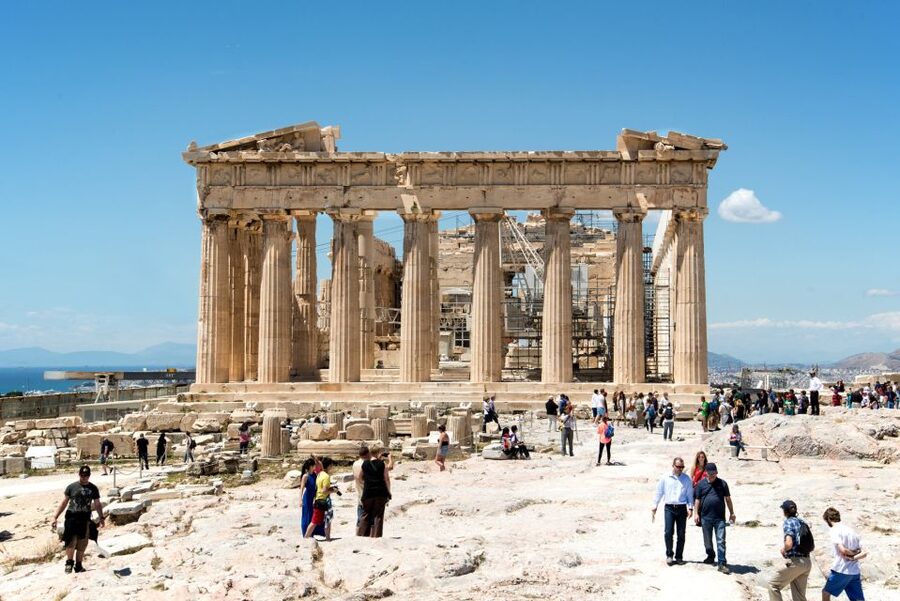
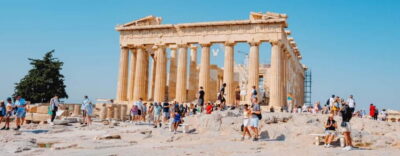
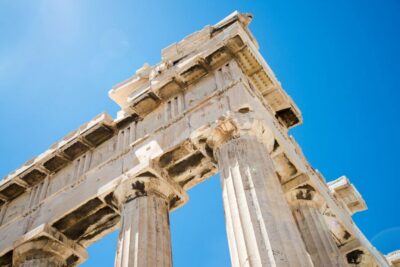
The Parthenon is the main event, and nothing replaces seeing it from the Acropolis itself. Dating from the fifth century BCE, it is linked with the Golden Age of Pericles and later became a symbol of democracy and Western civilization. (The Crete guide: thecretetraveler.com/.)
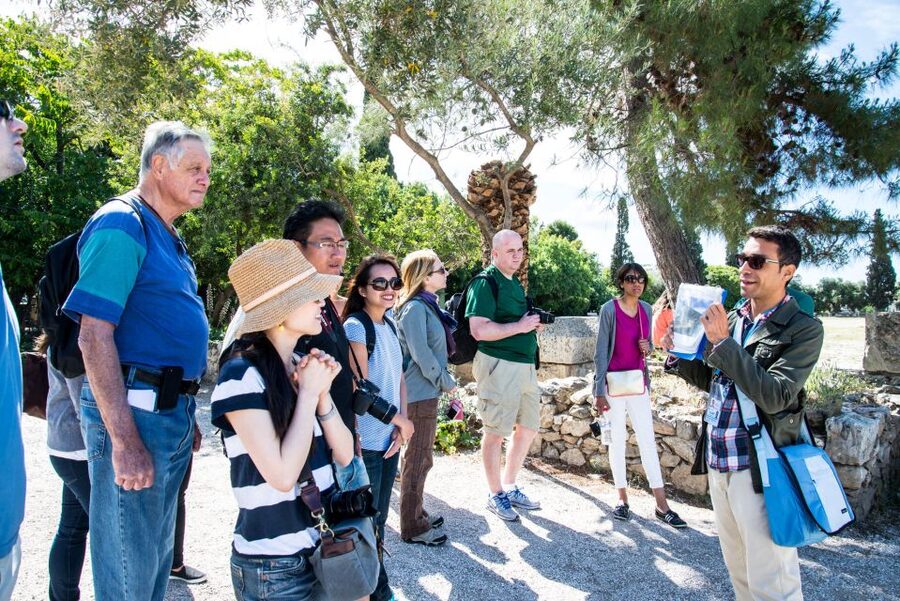
Your guide explains the building within the story of ancient Athens, rather than treating it as an isolated pile of columns. You learn why it mattered, how it fit into the Acropolis, and what its surviving remains can and cannot tell you.
Do not expect an intact temple. The Parthenon has suffered damage, removal of sculpture, and centuries of change. That is part of what you are seeing. A good guide helps you read the gaps, fragments, and reconstructed areas without pretending the monument is untouched.
This is also where you get your best views across Athens and toward the surrounding hills. Bring water and a hat. The open summit can be hot, and the pale stone reflects the sun. In wet weather, the surface may be slippery, so take the climb slowly.
Guides Sotos and Jason receive especially warm praise for making the history lively without losing the facts. Jason is also singled out for keeping attention through the full walk. That matters on the Acropolis, where a long lecture beside one ruin can quickly become tiring.
A short break before the museum
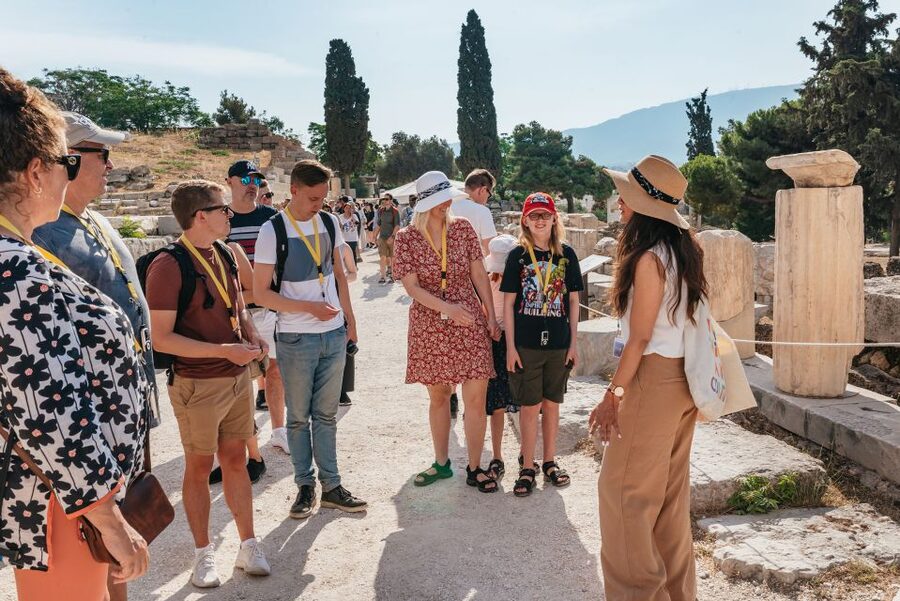
The tour includes a short pause before entering the museum. You can use the bathroom, catch your breath, and prepare for another stretch of standing and walking.
This break is useful because the Acropolis is not a gentle stroll. It gives you a chance to refill your water if possible and adjust your pace before the indoor portion.
Food and drinks are not included. If you need coffee or a snack, plan around the break and the museum’s own facilities rather than assuming the tour provides refreshments.
Inside the New Acropolis Museum
The Acropolis Museum is only a short walk from the archaeological site, and its contemporary glass-and-concrete design creates a sharp contrast with the ancient hill. Architects Fotiadis and Tschumi designed the building to display the finds with natural light and strong visual links to the Acropolis.
The ground floor offers glimpses into daily life and the excavation below. Glass floors and walkways let you look down at archaeological remains beneath the museum, adding another layer to the visit. You are not simply moving through display cases. The building itself keeps pointing you back to the ground and the hill outside.
On the first floor, the Caryatids are the star. Five of the original figures are here, close enough to study their carved clothing and posture. Seeing them indoors also makes it easier to compare the originals with the copies on the Erechtheion.
The top floor focuses on the Parthenon frieze and a recreation of the Parthenon. The placement gives you a direct view toward the Acropolis, so the museum and monument work together. This is the strongest reason to include the museum rather than stopping after the hill.
Some guides allow time for you to look around independently, get a coffee, or take your own photos. Sharon specifically praises the good balance between explanation and personal time. That balance is important because a museum can become exhausting if every object receives a long speech.
At the same time, the museum section may feel like a lot after the outdoor climb. John’s practical advice is worth following: if you have extra time in Athens, you may prefer to visit the Acropolis and museum on separate days or in separate sessions. One combined tour is efficient, but it asks you to stay focused for most of an afternoon.
Group or private tour?
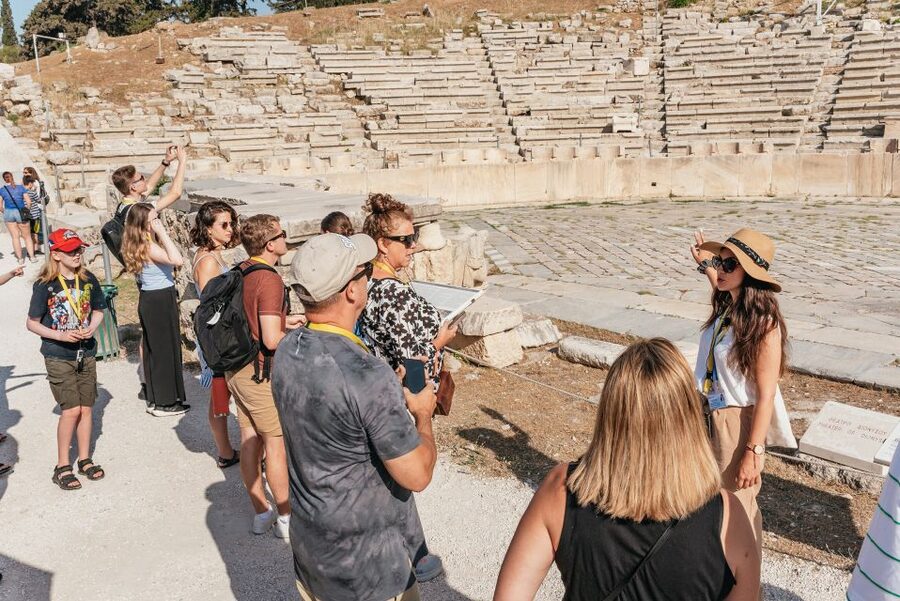
The shared tour is the best value if you want an expert guide at a moderate price. You benefit from the structure and company of a group, though you have less control over stops, questions, and pace.
A private group costs more than the basic shared option, but it can make sense for families, friends, or anyone who wants a more personal explanation. You can ask about specific interests, spend more time on a favorite monument, and avoid feeling rushed by an unfamiliar group.
For larger shared groups, earphones are supplied when more than eight people are present. Even so, crowded conditions can affect sound. Stay close enough to the guide to follow gestures and visual references, especially near the Parthenon and Erechtheion.
The strongest guide feedback centers on three qualities: clear English, a friendly manner, and stories that make the monuments easier to picture. Chrysa is praised for being fun and organized. Ioannis is noted for his enthusiasm for Athens. Julia kept the tour engaging even in poor weather. Those details suggest a good fit for you if you want interpretation rather than a silent escort between ruins.
Physical effort and practical preparation
You need comfortable shoes. The Acropolis includes slopes, steps, rough stone, and exposed areas, while the museum requires more walking and standing. The tour is not suitable for wheelchair users, people with mobility impairments, people with heart problems, or children under six.
That warning should not discourage every older visitor. One tour included an elderly couple who managed the route, but your own fitness and balance matter more than age. If you are unsure, ask before booking rather than relying on optimism on the day.
Leave pets, baby strollers, luggage, and large bags behind. Bring water, a hat, and comfortable clothing. A passport or ID is required for reduced or free tickets, and children using child tickets may have their identification checked.
The meeting point changes with the option you select, so read your booking details carefully. Hotel pickup and drop-off are not included. You make your own way to the meeting point in central Athens.
If you choose an option without tickets, buy the Acropolis and museum tickets at least one day ahead and confirm the correct time slots first. If you arrive without advance tickets, only full-price adult tickets may be available at the meeting point, paid in cash. Anyone seeking supplied tickets should notify the operator several days before the tour.
On free-entry days, the tour price is adjusted so you are not charged for tickets that are complimentary. That is a useful detail, but you still need to check the selected option and date carefully.
Who gets the best value from this tour?
I would choose this experience if you are visiting Athens for the first time and want the main ancient sights explained in a logical order. It suits you especially well if names such as Propylaea, Erechtheion, and Asclepius sound interesting but you do not yet know how they fit together.
It is also a good choice for anyone who dislikes standing at ticket offices or trying to decode a major archaeological site alone. The guide keeps the visit moving and points out details you might otherwise miss.
You may prefer a self-guided visit if you want long stretches of quiet viewing, detailed photography time, or the freedom to leave and return. The combined format is efficient, but it is not leisurely. Families with very young children and anyone with limited mobility should look for a gentler plan.
Should you book the Acropolis and museum tour?
Book it if you want the Parthenon, the wider Acropolis, and the museum to make sense as one connected story. At about $40, the shared option offers solid value for the guide, ticket-office queue bypass, and two major Athens attractions. The private option is worth considering when personal attention matters more than price.
Before paying, confirm whether your choice includes both admission tickets and check the meeting point. Then allow three to four hours, wear sensible shoes, and accept that the hill may be hot, crowded, or slippery.
I would skip this tour only if you already know the Acropolis well or strongly prefer an unhurried visit. For most first-time visitors, the combination of strong guides, original sculpture, and the view from the Parthenon makes this one of the more useful ways to meet ancient Athens.
FAQ
Does the tour include skip-the-line entry to the Acropolis?
The ticket option lets you skip the lines at the Acropolis ticket offices. There is no separate skip-the-line entrance to the Acropolis itself.
Does the tour include the Acropolis Museum?
Yes, the itinerary includes the New Acropolis Museum. A separate entrance is provided for the museum when that ticket option is selected.
How long does the tour take?
The full visit usually lasts three to four hours, depending on the group’s pace and weather. The stated duration range is two to four hours.
Is the tour private or shared?
You can select a shared group tour or a private group option. The available format depends on the option you book.
What should I bring?
Bring comfortable shoes, water, a hat, and comfortable clothing. A passport or ID is required for reduced or free tickets.
Is the tour suitable for wheelchair users or people with mobility issues?
No. The experience is not suitable for wheelchair users, people with mobility impairments, or people with heart problems. It is also not suitable for children under six.
Recently reviewed around Athens
- Small-Group Women History in Ancient Greece Walking Tour★ 5.0 · 38 reviews
- Ceramic and Pottery Creative Workshop with Two Local Artists★ 4.0 · 57 reviews
- Athens: Wine Workshop Create your Own Wine under the Acropolis★ 5.0 · 77 reviews
- Athens: Greek Wines Tasting with Sommelier and Acropolis Views★ 5.0 · 88 reviews
- Wine Trails Private Tour/ Nemea visit 3 wineries from Athens or Nafplion (10 h)★ 5.0 · 44 reviews
- Hydra Private Day Trip by Ferry from Athens with Transfers★ 4.0 · 30 reviews
- Small-Group Wine Tour in Athens with Tasting★ 5.0 · 33 reviews
- Private Athens Transfer Airport/Port -Greek Tours-Hourly service★ 5.0 · 88 reviews
Acropolis & Acropolis Museum Tours, compared.
Acropolis & up to 5 Archaeological Sites Combo Pass
Read our review →
Acropolis, Parthenon & Acropolis Museum Guided Tour
Read our review →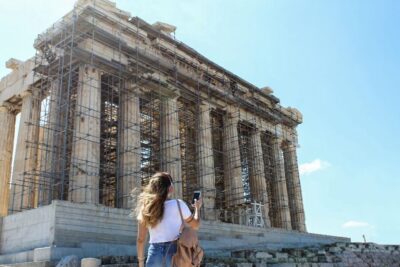


Acropolis monuments & Parthenon Walking Tour with Optional Acropolis Museum
Read our review →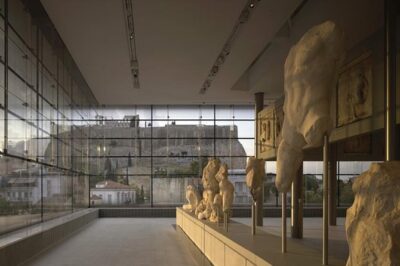
Athens All Included: Acropolis and Museum Guided Tour with Ticket
Read our review →Browse the lists this tour appears in