
Reviewed · ACROPOLIS & ACROPOLIS MUSEUM TOURS
Athens: Acropolis Museum Ticket with optional Audio Guide
The most useful way to see the Acropolis Museum is to visit it before the Acropolis itself. The museum gives names, faces, and daily life to the stones you will later see on the hill, making the Parthenon far easier to understand.
I like two things here: the mobile ticket can save you from a long outdoor wait, and the museum gives you freedom to set your own pace. The top floor, with its Parthenon sculptures and views toward the Acropolis, is the grand payoff.
The catch is that this is not a live guided tour. The optional audio guide runs through an app, so you need your own phone and headphones. It can be helpful, but the app may take a little patience to set up, and some visitors will want more explanation than its recorded segments provide.
In This Review
- Key points to know before you book
- Why the Acropolis Museum deserves its own visit
- Entering with a mobile ticket
- The first galleries: ancient life before the Parthenon
- The Caryatids and the museum’s essential sights
- The top floor and the Parthenon Marbles
- Using the app-based audio guide
- How much time should you allow?
- Food, rest, and practical comfort
- Who will get the most from this ticket?
- Is the $30 price worth it?
- Should you book the Acropolis Museum ticket?
- FAQ
- Is the Acropolis Hill ticket included?
- Where do I enter the museum?
- Is the audio guide included with every ticket?
- Is the audio guide a physical device?
- Which languages are available for the audio guide?
- How long is the ticket valid?
- Are reduced-price tickets available online?
Key points to know before you book
- See the Acropolis in context: The museum links sculptures, architecture, religious objects, and ordinary life to the hill above.
- Look for the Caryatids: These famous sculpted maidens are among the museum’s essential sights.
- Save time at the entrance: Scan your mobile barcode at the validating machines instead of buying a ticket on arrival.
- Use the top floor well: The Parthenon display is arranged to match the temple’s form and gives you clear views of the Acropolis.
- Plan at least two to three hours: Forty-five minutes is enough for a quick look, not a proper visit.
- Bring your own equipment: The audio guide is downloaded to your phone, and no device or headphones are supplied.
Why the Acropolis Museum deserves its own visit
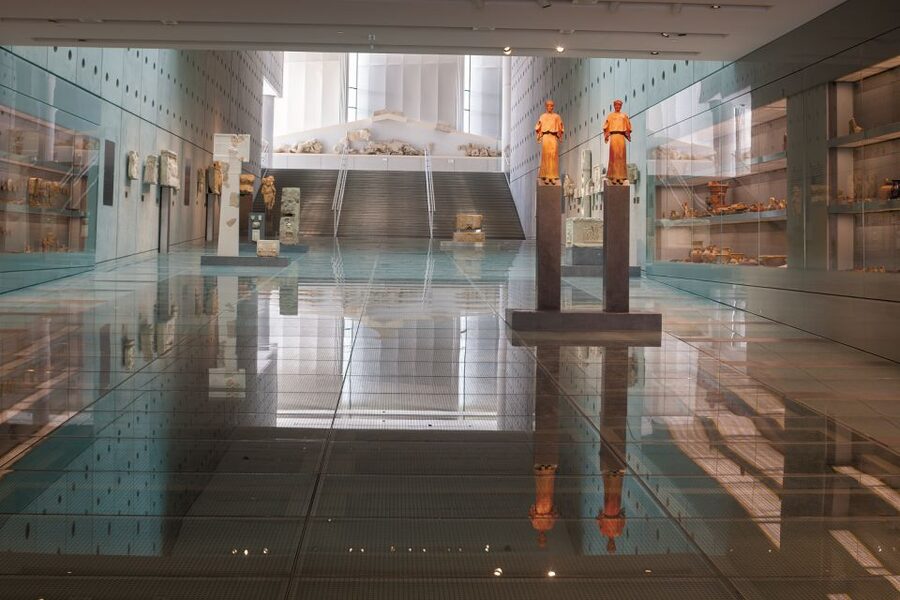
Athens has no shortage of ancient stones, but the Acropolis Museum helps you understand what those stones once meant. Its displays focus on finds from the Acropolis, moving from early settlements and religious offerings to the great monuments of classical Athens.
I find the museum especially useful because it does not treat the sculptures as isolated works of art. You see them alongside architectural fragments, inscriptions, household objects, and religious pieces. Together, these objects show how people worshipped, worked, decorated buildings, and moved through public life.
The museum also lets you look across to the Acropolis from inside. That connection matters. You are not simply studying objects in a closed room. You can compare the surviving pieces with the buildings still standing on the hill.
The building itself is spacious and easy to follow. Several visitors praise the generous room around the exhibits, which makes it possible to stop and look without being pressed against a display case. It can still become busy, particularly during popular visiting hours, but the layout handles crowds better than many older museums.
The lower excavated area is another strong point. Through the glass and open sections beneath the museum, you can see remains found below modern Athens. This gives you a quick reminder that the city’s ancient past is not confined to the Acropolis summit. It lies under streets, homes, and public buildings across the center of Athens.
More Museum Tours in Athens
- Athens: Acropolis, Parthenon & Acropolis Museum Guided Tour
★ 4.8 · 9,316 reviews - Athens: Mythology of Delphi, Museum and Arachova Guided Tour
★ 4.6 · 4,008 reviews - Athens: Acropolis, Parthenon & Acropolis Museum Guided Tour
★ 4.8 · 3,579 reviews
Entering with a mobile ticket
You go directly to the entrance of the Acropolis Museum. There is no separate meeting point and no hotel pickup. Open the voucher on your phone and scan its barcode at the validating machines.
The skip-the-line benefit is most useful during busy periods, rainy weather, and the warmer months. One person described how valuable it was to avoid the line when crowds headed indoors during a downpour. In quieter months, you may find little or no queue, so the time saving can vary.
Still, having the ticket ready removes one small decision from your day. You do not need to find the ticket desk, check prices there, or wait outside while your group decides what to do. Keep your phone charged and make sure the voucher is easy to open before reaching the entrance.
This ticket is intended for people over age 25. Reduced-price tickets are not available online through this option. Non-EU citizens under 25 can receive reduced admission from April through October by showing identification at the museum ticket booth, so younger visitors should check that option before buying the adult ticket.
The listed price is $30 per person. I see the value mainly in convenience and flexibility rather than in the admission alone. If the museum’s own ticket price is lower on your date, buying directly may make more sense. But if this mobile option costs less than the museum’s on-site price, or saves you a long wait, it is a sensible purchase.
The ticket is valid for one day, not for repeated visits over several days. Check the available starting time when booking, then plan the rest of your Athens sightseeing around it.
The first galleries: ancient life before the Parthenon

Start slowly on the lower levels. The early objects help you see that the Acropolis was important long before the classical temples that dominate most postcards.
You will encounter finds connected with worship, public life, and the people who used the hill. The point is not to rush from one famous statue to the next. Take time to notice the smaller pieces, since they often explain how the Acropolis functioned as a sacred center.
The museum’s strength is this combination of major art and ordinary evidence. Sculptures catch your eye, but smaller objects can tell you about custom, craft, dress, offerings, and the way ancient Athenians marked important moments.
The audio guide can help here if you want a basic route through the key objects. It focuses attention on selected pieces rather than trying to explain every item in the building. That approach suits visitors who want a clear introduction, though it may feel too brief if you want detailed academic background.
You can also explore without the audio. Labels and the museum arrangement provide enough structure for an independent visit, especially if you have read a little about the Acropolis beforehand. I would not treat the audio guide as essential for every visitor, but first-time visitors often appreciate having someone point out what deserves extra attention.
The Caryatids and the museum’s essential sights

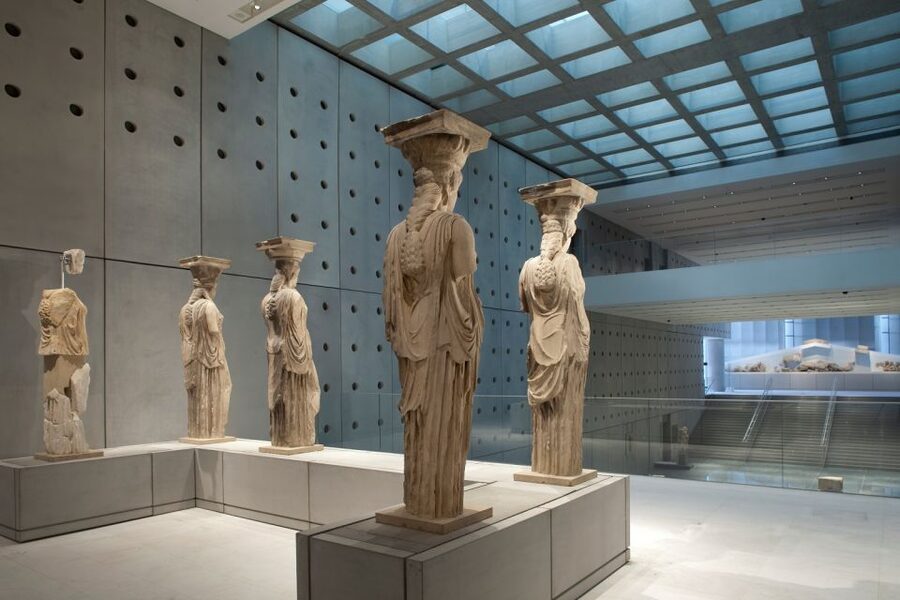
The Caryatids are among the museum’s most memorable stops. These sculpted female figures once served as architectural supports on the Erechtheion, a temple on the Acropolis with an unusually complex sacred history.
Seeing them inside lets you study their clothing, posture, hair, and carving at close range. On the hill, the copies in place protect the originals from the weather. In the museum, you can examine the surviving figures without the same distance and exposure.
This is the sort of display where I prefer to pause rather than simply take a photograph. Look at how each figure carries weight and how similar details vary from one sculpture to another. The visual effect is graceful, but the architectural function is just as important.
Continue through the other Acropolis sculptures and fragments. The museum presents them in relation to the buildings they decorated, so you can start to see how ancient temples used color, pattern, movement, and human figures to communicate meaning.
The collection includes some of the most important ancient Greek statues associated with the Acropolis. You will not need to know every name to enjoy them, but the audio guide can make the sequence easier to follow.
More Athens museums and collections:
- Acropolis monuments & Parthenon Walking Tour with Optional Acropolis Museum
★ 5.0 · 2,678 reviews - Athens All Included: Acropolis and Museum Guided Tour with Ticket
★ 4.5 · 2,673 reviews - From Athens: Small-Group Delphi, Museum & Arachova Day Trip
★ 4.8 · 2,476 reviews - Parthenon & Acropolis Museum with Audio or Live Tour Option
★ 4.1 · 2,446 reviews
The top floor and the Parthenon Marbles
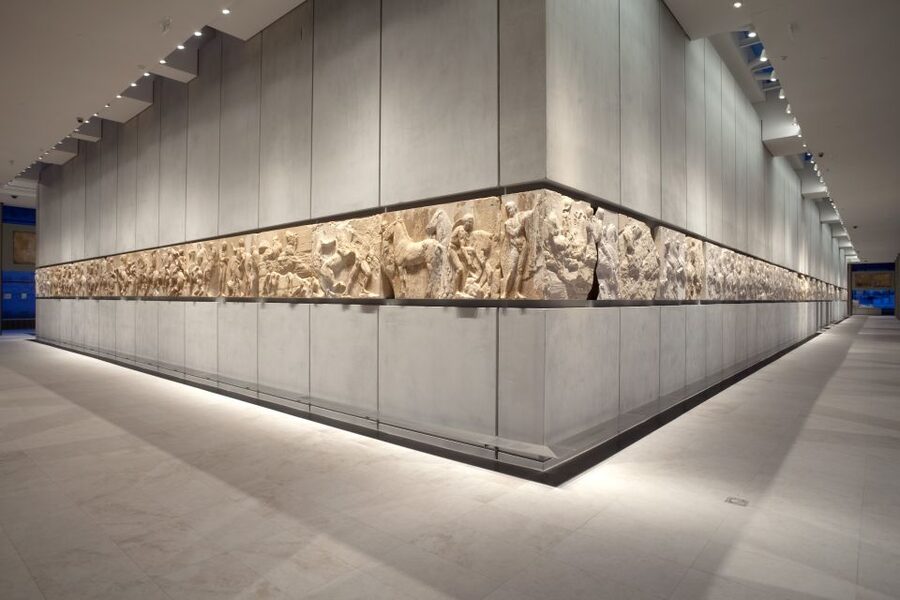
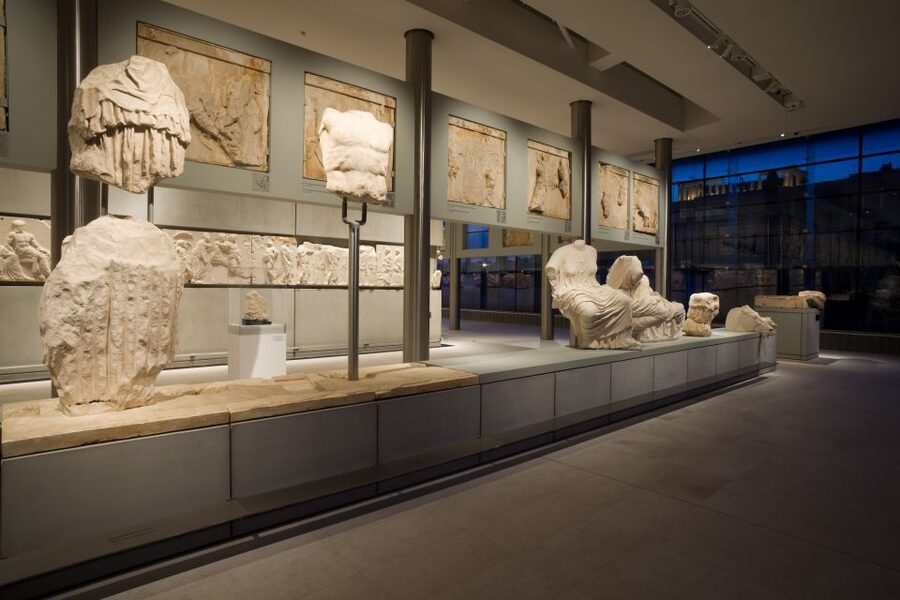
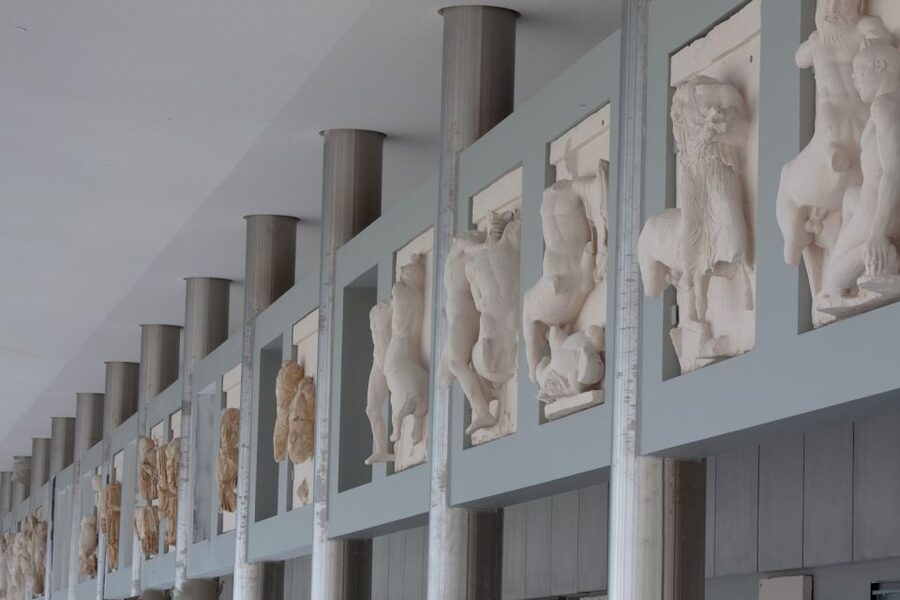
Save energy for the upper level. The top floor is designed around the Parthenon, and the sculptures are arranged in a way that reflects the temple’s original layout.
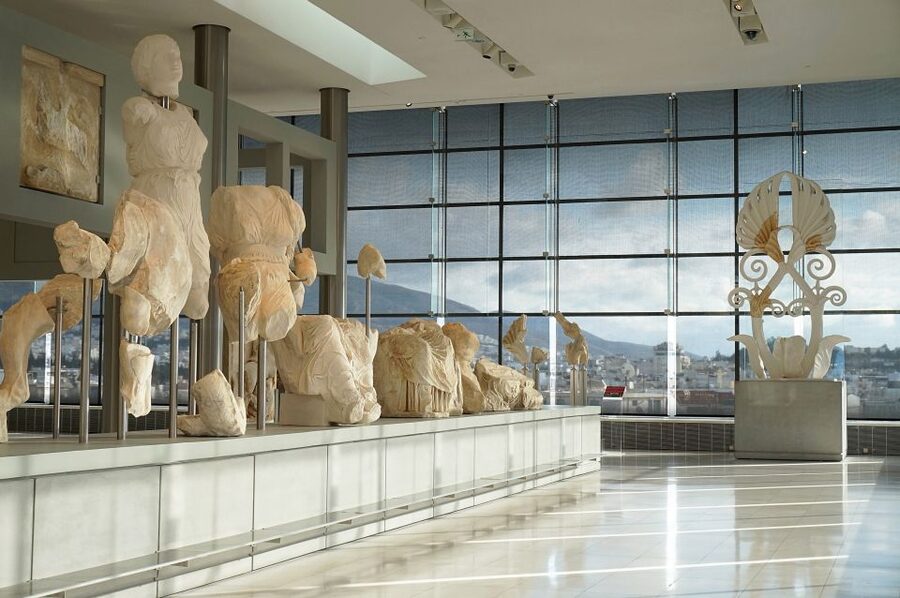
This arrangement is one of the museum’s most effective teaching tools. Instead of seeing a broken frieze as a line of unrelated marble, you can understand how the pieces once worked together around the building. The room also gives you a direct view toward the Parthenon, creating a strong link between the original setting and the museum display.
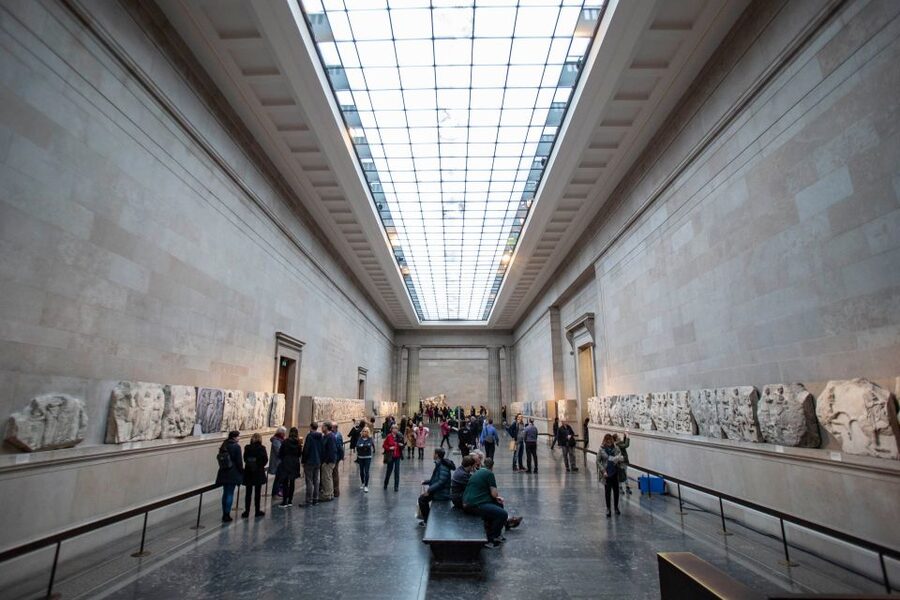
The Parthenon Marbles are the headline attraction, and rightly so. They are beautiful objects, but they also raise difficult questions about ownership, removal, and the return of cultural material. The museum’s presentation makes the absence of disputed pieces visible, and you may find yourself thinking about the long-running discussion involving the British Museum and Greece.
You can enjoy the art without turning the visit into a debate. Still, the setting encourages you to consider how ancient monuments survive, who controls their fragments, and what it means to display them near their original home.
The top floor is also one of the best places to look outward. The views toward Athens and the Acropolis help you connect the museum’s carefully arranged objects with the actual ruins above. If you visit the museum after climbing the hill, the air conditioning and indoor space can be a welcome break, particularly on a hot day.
Using the app-based audio guide
Select the audio guide option if you prefer some direction but do not want to follow a group. The available languages are English, Spanish, French, German, and Italian.
The guide is downloaded to your mobile phone. No physical audio device is provided, and the ticket does not include a phone or headphones. Bring your own headphones if you plan to listen comfortably, and allow enough time to download or open the app before entering the galleries.
The main advantage is control. You can stop the recording, look longer at an object, skip a section, or move ahead when a gallery becomes crowded. This works well for solo visitors and for couples who do not want to keep pace with a live guide.
The main weakness is also clear: an app cannot answer questions or adjust its explanation to your interests. Some audio segments are short, and the setup may not feel obvious at first. One practical approach is to test the audio near the entrance, before you reach the most popular exhibits.
If you like museums best when you can wander freely, skip the audio option and save the money. The museum itself is well labeled and easy to explore. If you want help identifying the most important pieces, the audio option is a reasonable middle ground between reading every label and joining a guided group.
How much time should you allow?
Do not squeeze this museum into a forty-five-minute gap. That is enough to see a few famous sculptures, but not enough to appreciate the building, excavation, lower galleries, Caryatids, and top-floor Parthenon display.
I would allow at least two hours, with two and a half to four hours better for a relaxed visit. Your ideal timing depends on how closely you read the labels and how much time you spend with the audio guide.
A short visit can work if you have already seen the Acropolis and only want the main highlights. For a first visit, go before the hill and give the museum room in your schedule. The museum’s information will make the ruins more legible, especially the architectural fragments and sculptures that can be hard to interpret outdoors.
The museum is open longer on some days. From November through March, Monday to Thursday hours are 9 AM to 5 PM, Friday hours extend to 10 PM, and Saturday and Sunday hours run until 8 PM. From April through October, Monday is 9 AM to 5 PM, Tuesday through Thursday are 9 AM to 8 PM, Friday is 9 AM to 10 PM, and Saturday and Sunday are 9 AM to 8 PM.
Last entry is 30 minutes before closing. Check the current hours for your date because seasonal schedules matter, especially if you hope to visit after the Acropolis.
Food, rest, and practical comfort

The museum includes a cafe and restaurant, which makes a longer visit easier. You can take a break without leaving the building, and the terrace offers a useful place to sit while looking toward the Acropolis.
The collection requires concentration, so a pause after the lower galleries can improve the rest of your visit. There are places to sit, though additional benches would make things easier for anyone arriving after the climb to the Acropolis.
The museum is wheelchair accessible. It is also a useful hot-weather stop because the indoor setting offers relief after time on the exposed hill. Even if you plan to visit the Acropolis first, keep water and comfortable shoes in mind for the full day.
Afterward, you can continue through Plaka using the included downloadable old-town audio guide if you selected that package. This is a separate self-guided aid for the neighborhood, not a live walking tour, so check that your booking includes it if you want to use it.
Who will get the most from this ticket?
This experience suits independent visitors who want a flexible schedule. You can enter with your phone, move at your own speed, and decide how much background information you need.
It also works well for solo visitors. You are not tied to a group’s pace, and the audio guide can provide a basic route through the most important objects. Families may prefer to use only selected audio stops, since younger children may not want to listen to every explanation.
History and art enthusiasts should allow several hours. The museum rewards patience, especially on the top floor, where the arrangement of the Parthenon material deserves more than a quick photograph.
You may want a live guide instead if you learn best through conversation or want detailed answers about mythology, architecture, and the disputed sculptures. This ticket includes no live guide, and the audio guide is not a substitute for a specialist who can respond to your questions.
Is the $30 price worth it?
At $30, the ticket is not a bargain-basement museum admission. Its value depends on the date and the line at the entrance.
I would book it when you are visiting in a busy season, have limited time, or want the convenience of a ready-to-scan mobile ticket. The skip-the-line feature has real value when the pavement outside is hot, wet, or crowded.
I would compare prices before booking if you are visiting in a quiet winter period. In February or other low-demand periods, the entrance may move quickly or have no meaningful queue, reducing the benefit of priority access. The audio guide may also add less value if you are happy reading labels or using the museum without assistance.
The ticket becomes a better deal when you use the museum properly. Plan two to three hours, visit before the Acropolis, and take advantage of the upper-level views and the excavation beneath the building. Treating it as a quick photo stop makes the price harder to justify.
Should you book the Acropolis Museum ticket?
Book this if you want an easy entry plan and an independent museum visit before or after the Acropolis. The museum’s Caryatids, Parthenon display, excavated remains, and views toward the hill make it one of Athens’ most useful cultural stops.
Choose the audio option if you want a guided route in English, Spanish, French, German, or Italian and you have your own phone and headphones. Skip it if you prefer to read, wander, and set your own interpretation.
My strongest advice is simple: do not rush. The Acropolis is the famous sight, but this museum explains why the hill matters. For many first-time visitors, that context turns a collection of ancient objects into a much clearer picture of Athens at its height.
FAQ
Is the Acropolis Hill ticket included?
No. This ticket includes entry to the Acropolis Museum only. Admission to the Acropolis Hill must be purchased separately.
Where do I enter the museum?
Go directly to the Acropolis Museum entrance and scan the barcode on your voucher at the validating machines.
Is the audio guide included with every ticket?
The museum audio guide is included only if you select the audio guide option. The package can also include a downloadable Plaka audio guide.
Is the audio guide a physical device?
No. The self-guided tour is accessed through an app on your mobile phone. You must provide your own phone and headphones.
Which languages are available for the audio guide?
The audio guide is available in English, Spanish, French, German, and Italian.
How long is the ticket valid?
The ticket is valid for one day. Check availability for the starting times offered on your date.
Are reduced-price tickets available online?
Reduced-price tickets are not available online through this option for travelers under 25. Non-EU citizens under 25 can receive reduced admission from April through October by showing identification at the museum ticket booth.
More Audio Tours in Athens
- Athens: Acropolis Ticket & Optional Self-Guided Audio Tours
★ 4.1 · 2,542 reviews - Athens: Peloponnese Highlights Day Trip and V.R. Audio Guide
★ 4.5 · 1,425 reviews - Athens: National Archaeological Museum Ticket & Audio Guide
★ 4.3 · 1,330 reviews - Athens: Acropolis Ticket with Multilingual Audio Guide
★ 3.9 · 926 reviews
More Self-Guided Tours in Athens
- Athens: Acropolis Ticket with Optional Audio or Live Guide
★ 4.2 · 11,055 reviews - Athens: Cape Sounio & Poseidon Temple Trip with Audio Guide
★ 4.4 · 4,521 reviews - Athens: Acropolis Ticket with Audio Guide
★ 4.0 · 3,575 reviews - From Athens: Delphi Full Day V.R. Audio Guided Tour
★ 4.6 · 3,028 reviews
Recently reviewed around Athens
- Small-Group Women History in Ancient Greece Walking Tour★ 5.0 · 38 reviews
- Ceramic and Pottery Creative Workshop with Two Local Artists★ 4.0 · 57 reviews
- Athens: Wine Workshop Create your Own Wine under the Acropolis★ 5.0 · 77 reviews
- Athens: Greek Wines Tasting with Sommelier and Acropolis Views★ 5.0 · 88 reviews
- Hydra Private Day Trip by Ferry from Athens with Transfers★ 4.0 · 30 reviews
- Small-Group Wine Tour in Athens with Tasting★ 5.0 · 33 reviews
- Wine Trails Private Tour/ Nemea visit 3 wineries from Athens or Nafplion (10 h)★ 5.0 · 44 reviews
- Private Athens Transfer Airport/Port -Greek Tours-Hourly service★ 5.0 · 88 reviews
Acropolis & Acropolis Museum Tours, compared.

Acropolis & up to 5 Archaeological Sites Combo Pass
Read our review →

Acropolis, Parthenon & Acropolis Museum Guided Tour
Read our review →
Acropolis, Parthenon & Acropolis Museum Guided Tour
Read our review →


Acropolis monuments & Parthenon Walking Tour with Optional Acropolis Museum
Read our review →Browse the lists this tour appears in