Reviewed · CRETE TOURS
Chania: Sightseeing & Tastings Tour
Chania’s best introduction may be found not at the harbor, but in the Municipal Market, where family-run stalls connect the modern city with Cretan farms, kitchens, and old habits. From there, this four-hour walk threads through Venetian, Ottoman, and Jewish neighborhoods before settling down to mezedes and drinks.
I like two things especially: the food is spread across the walk, so you are not simply sitting through one long meal, and the tour takes you into less obvious streets and local workshops. Guides such as Manos, Adonis, Yannis, and Yiorgos are praised for making the past easy to follow and for giving useful restaurant tips afterward.
The main thing to consider is the amount of food. Come hungry, and wear shoes suited to four hours on foot. Finding the Kydon Hotel meeting point has also caused some confusion, so arrive early and look for the guide holding a Crete Local Adventures sign.
In This Review
- Key points to know before you book
- Why this four-hour walk works so well in Chania
- Beginning at Kydon Hotel and entering the Municipal Market
- From market flavors to Greek coffee in the Old Town
- Ottoman and Jewish quarters, where Chania’s layers meet
- Meeting Cretan artisans and trying a traditional skill
- Along the Venetian Harbor to the final meze table
- What the $114 price gives you
- Who will enjoy this Chania experience most
- Small details that make the day easier
- Should you book this Chania food and sightseeing tour?
- FAQ
- Where does the Chania sightseeing and tasting tour start?
- How long does the tour last?
- What food and drinks are included?
- Is a full breakfast recommended before the tour?
- Can vegetarians or people with dietary restrictions join?
- Can children drink raki or wine on the tour?
- Is the tour conducted in English?
- Is hotel pickup included?
Key points to know before you book
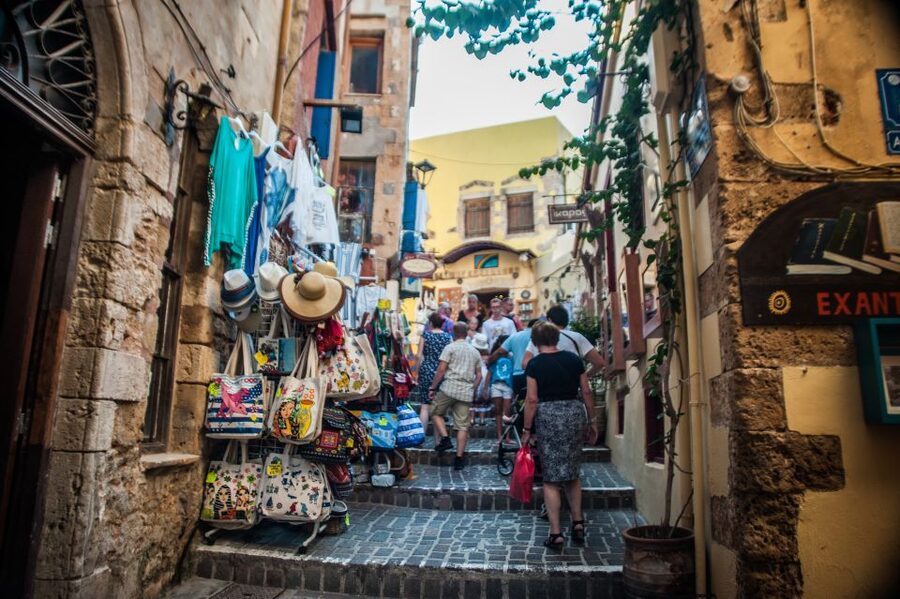
- Start with Cretan food at the 1913 Municipal Market: Taste products such as olives, honey, olive oil, local sweets, and other regional foods among family-owned stalls.
- Walk beyond the postcard harbor: The route includes old Ottoman and Jewish quarters, narrow lanes, monuments, gardens, and places many first-time visitors would miss.
- Meet a traditional knife maker: You may see one of the last remaining workshops producing handmade Cretan knives and try your own hand at an artisan skill.
- Expect a full tasting day: Greek coffee, sweets, village products, mezedes, wine, and raki are included, with extra food and drink available at your own cost.
- Finish with a proper social meal: The final Cretan meze spread gives you time to sit, talk, and ask for recommendations for the rest of your stay.
- Best for a first day in Chania: The tour gives you history, food, neighborhood orientation, and practical ideas for restaurants and activities.
Why this four-hour walk works so well in Chania
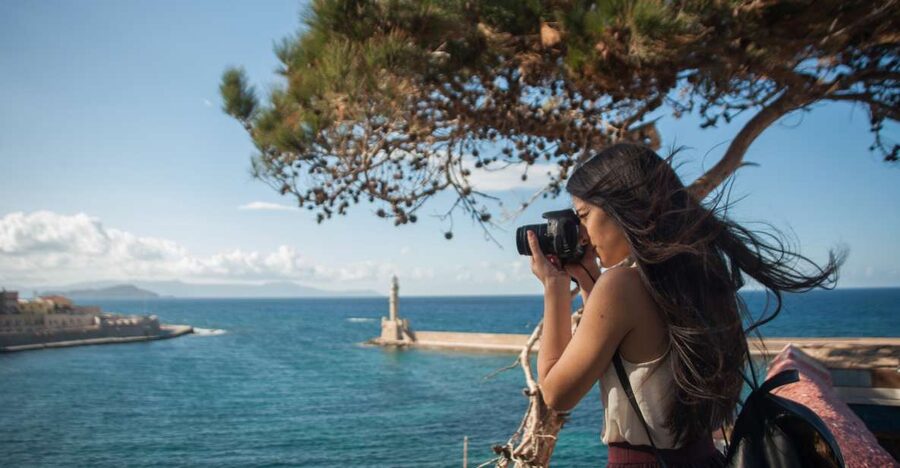
Chania has been settled since the Neolithic period, and its location has drawn Romans, Byzantines, Arabs, Venetians, Ottomans, and Germans. You do not need a history degree to enjoy the story, but you do need to look past the pretty harbor facades.
That is the strength of this tour. It treats Chania as a living town rather than a row of monuments. You see the famous parts, but you also turn into back streets, pass old neighborhoods, meet shopkeepers, and taste food tied to villages, farmers, and stock-breeders across Crete.
The pace is relaxed rather than rushed. The four hours include walking, food stops, a coffee break, artisan visits, and a final tasting meal. That makes this a useful first activity in Chania, since you begin learning where the market is, how the Old Town fits together, and which places you may want to revisit on your own.
The guide makes a big difference. Manos is repeatedly praised for his warm manner, clear English, and stories about current and past Chania. Adonis is described as cheerful, entertaining, and generous with restaurant advice. Yannis, Yiorgos, George, Michael, and other guides have also led this experience, so the personality and exact storytelling style can vary by date.
More Crete trips worth a second look
- From Kissamos Port: Boat Cruise to Balos Lagoon & Gramvousa
★ 4.2 · 6,755 reviews - Crete: Day Trip to Agios Nikolaos and Spinalonga Island
★ 4.6 · 4,416 reviews - From Chania: Full-Day Samaria Gorge Trek Excursion & Guide
★ 4.6 · 3,191 reviews
Beginning at Kydon Hotel and entering the Municipal Market
The meeting point is directly in front of Kydon, The Heart City Hotel, at the entrance. Your guide should be holding a Crete Local Adventures sign. This detail matters because one person had trouble finding the meeting place, and two couples arrived late after looking in the wrong spot.
Give yourself a few extra minutes. You are not meeting inside the hotel, and the guide is not collecting you from your accommodation. Hotel pickup and drop-off are not included, so plan to reach the Kydon Hotel independently.
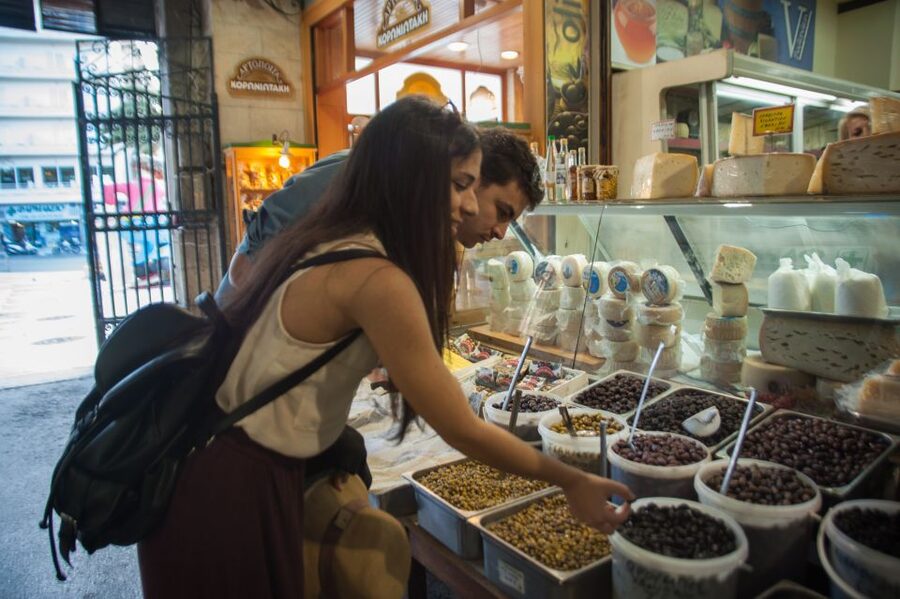
From there, the group heads to the Dimotiki Agora, or Municipal Market. Established in 1913, the market marks the boundary between Chania’s old and new town. More than 70 family-owned businesses sell local groceries and Cretan products here.
This is a better opening than a generic food stop because it gives you a basic map of Cretan cooking. You can sample olives, honey, olive oil, sweets, and other regional foods while learning why the island’s diet is so closely tied to simple ingredients and local production.
I like the market portion because it connects the tasting to real commerce. You are not just handed a polished sample with no context. You meet people selling Cretan products and get ideas about what to buy for a picnic, a gift, or your kitchen at home.
The market visit is listed as about two hours, though that time includes food tasting and the wider introduction to the city. Come without a large breakfast. The repeated practical advice from this experience is simple: there is plenty to eat, and you may not need a full meal afterward.
From market flavors to Greek coffee in the Old Town
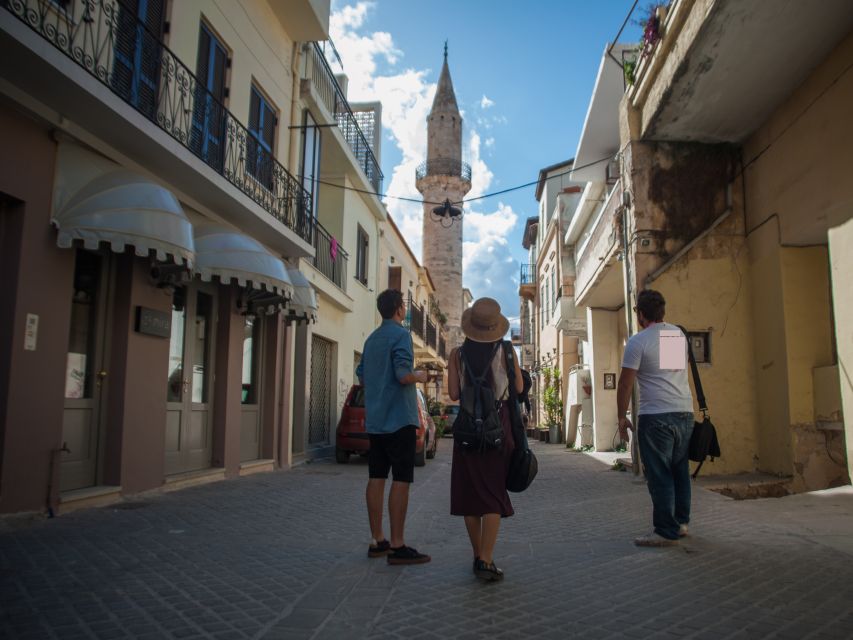
After the market, the walk moves into Old Chania. This part combines food with orientation, so you learn how the districts connect instead of treating each stop as an isolated sight.
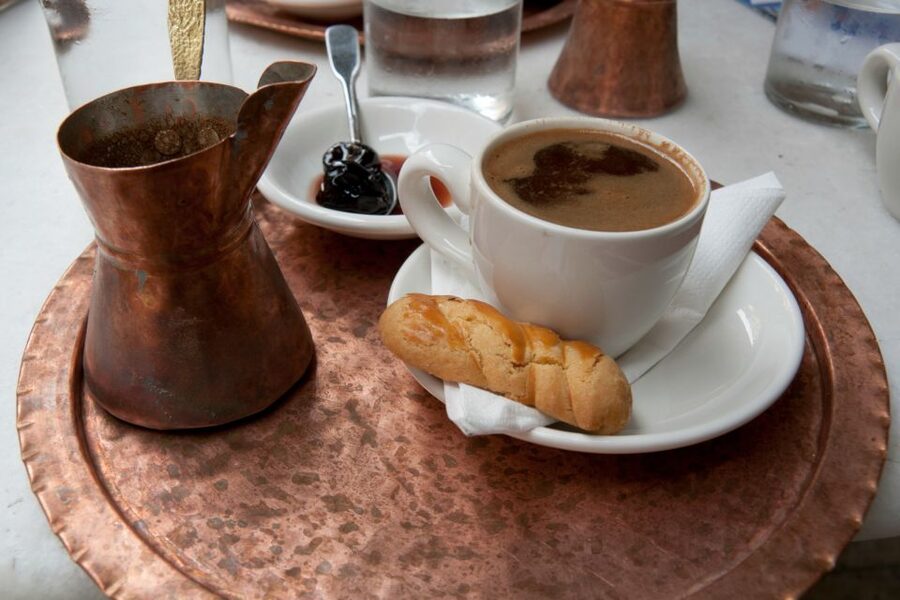
A Greek coffee break lasts about 30 minutes. It is a small but useful pause in a walking tour, especially during the hotter months. The included drink is Greek coffee, and local sweets are also part of the tasting program.
You will hear stories about rulers, sailors, merchants, heroes, lovers, and artists as you move through the lanes. The value here is not only the number of facts. A good guide can explain why the city looks and feels partly Venetian, partly Ottoman, and partly shaped by modern Greek life.
The Old Town is easy to enjoy at eye level. Look up at old facades, then look down side streets where the crowds thin. The tour is designed to show you both famous spots and quieter corners, including secret gardens and lesser-seen passages.
Do not expect a formal museum visit with long stops in front of every building. This is a moving history lesson, with food and conversation mixed in. If you want a tour devoted only to architecture or archaeology, a specialized walk may suit you better.
Ottoman and Jewish quarters, where Chania’s layers meet
One of the strongest parts of the route is the walk through the old Ottoman and Jewish quarters. These districts add context that the harbor alone cannot provide.
Chania’s position between East and West shaped its buildings, food, faiths, trade, and daily life. The route uses the old quarters to show how different communities helped shape the city over the centuries.
This is also where the walk feels most useful for independent sightseeing. You see the narrow streets and lesser-known corners with someone who can point out what you might otherwise pass without noticing. Several people have found places here that they would not have located on their own.
The Jewish quarter is not presented as a detached historical subject. Instead, it forms part of the wider story of multicultural Chania. The Ottoman quarter does the same, showing how the city changed hands and absorbed new customs without losing its Cretan character.
There are no claims that every building is perfectly preserved or that the route offers a full account of every period. The appeal is the broad sweep, told in a friendly way while you walk. Guides such as Manos and Adonis are especially valued for answering questions and adjusting the conversation to the interests of the group.
A different kind of day out, same corner of Greece:
- Agios Nikolaos: Boat Trip to Spinalonga with Swim Stop
★ 4.4 · 3,031 reviews - Heraklion: Dia Island Sailboat Cruise with Swimming and Meal
★ 4.8 · 2,579 reviews - Crete: Knossos Palace Entry Ticket with Optional Audio Guide
★ 3.9 · 2,251 reviews - Heraklion Area: CRETAquarium Admission Ticket
★ 4.4 · 2,055 reviews
Meeting Cretan artisans and trying a traditional skill

The artisan stop gives the tour a welcome change of rhythm. Instead of only eating and looking, you meet local craftsmen and hear how handmade goods are produced.
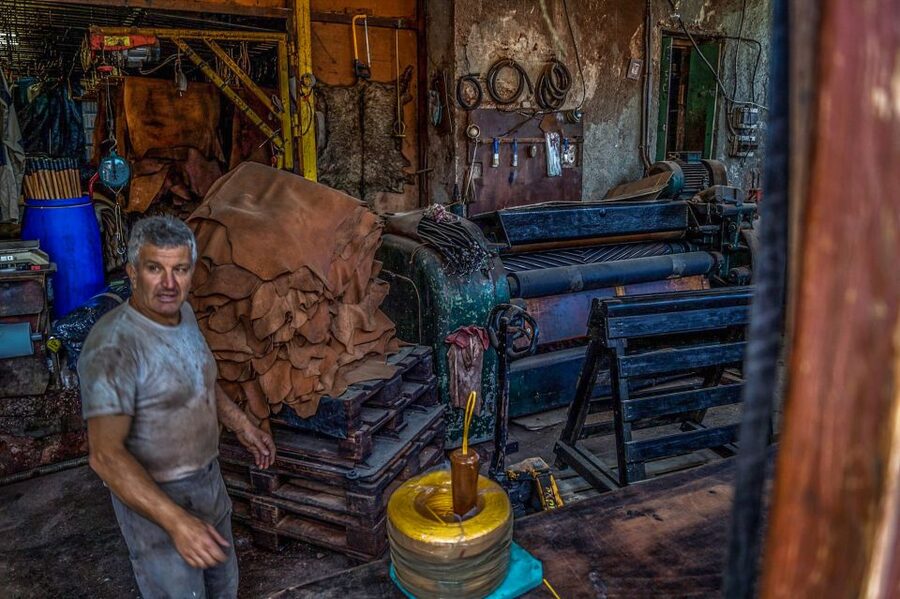
A particularly distinctive visit is to one of the last remaining workshops making traditional handmade Cretan knives. You can hear the knife maker’s story and may have the chance to test your own skill.
This local contact is important because it shows a trade that is easy to miss behind the restaurants and souvenir displays. You are seeing work connected to Cretan identity, not just buying a mass-produced keepsake.
The exact hands-on portion can depend on the workshop and the day’s conditions, so do not book this expecting a long craft class. Think of it as a short encounter with a local maker, with a chance to understand the work and perhaps try a small part of it.
For many people, this is the sort of stop that makes the tour more memorable than a standard food crawl. It gives the meal a cultural setting and introduces you to people who still make and sell products locally.
Along the Venetian Harbor to the final meze table
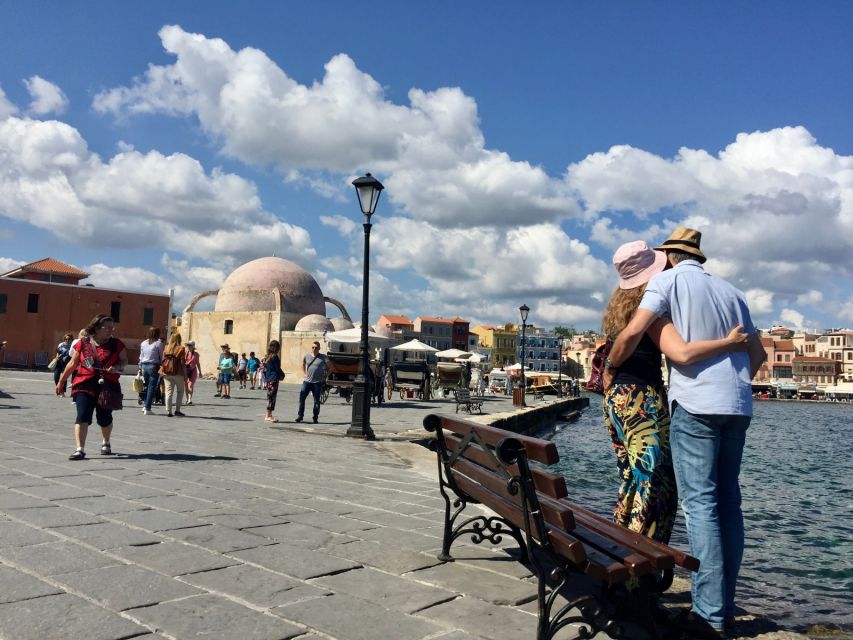
The route eventually reaches the historic harbor promenade. This is the familiar Chania view, but it comes after you have seen the market and side streets, so the harbor feels like part of a larger city rather than the whole show.
The experience then slows down at a local favorite spot for Cretan mezedes. Meze means small shared dishes, and this final table is meant to be enjoyed socially. You can expect a spread of local tapas, with drinks included in the program.
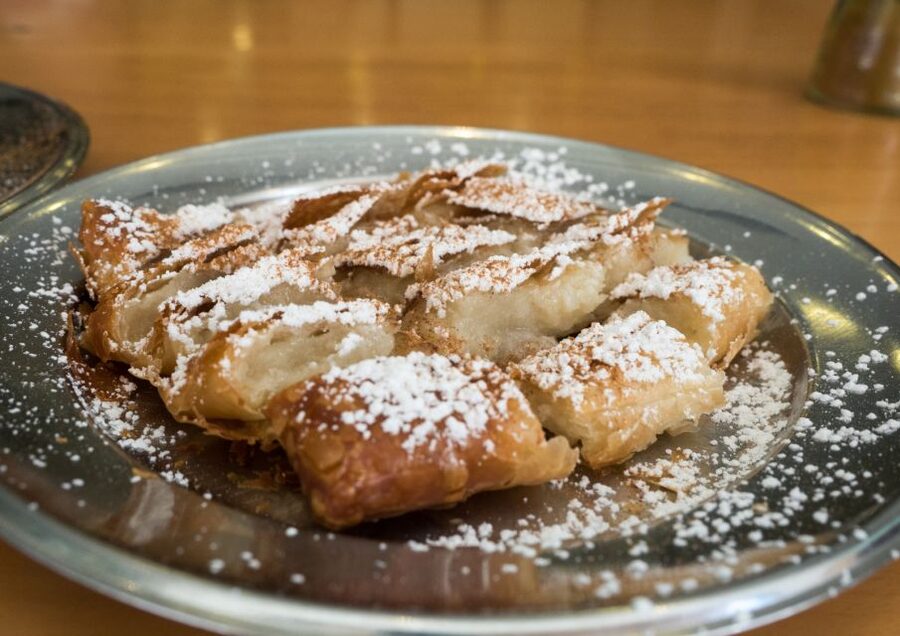
The included tastings cover olives, honey, olive oil, local sweets, Greek coffee, mezedes, and raki. The itinerary also includes wine and a wine-tasting portion of about one hour. The exact dishes can vary, but past menus have included items such as bougatsa, Cretan pies, local cheeses, and other island specialties.
Raki is part of the Cretan welcome, but alcoholic drinks are available only to participants aged 18 and older. Younger participants receive non-alcoholic beverages. Vegetarians and other dietary needs can be accommodated if you tell the local partner ahead of time.
This ending is more than a final snack. It gives you time to talk with the guide and the rest of the group, ask questions, and collect advice for the rest of your stay. Several guides have followed up with restaurant, beach, and activity suggestions, and this is a good moment to ask for them.
The drawback is that the food may be too much if you have already eaten. You can pace yourself, but the tour is clearly designed for people who enjoy tasting several things rather than picking one modest dish.
What the $114 price gives you
At $114 per person, this is not the cheapest way to see Chania. The price makes more sense if you value a small-group food experience, a four-hour guide-led walk, several tastings, artisan contact, and a sit-down meze meal.
You are paying for more than snacks. The tour combines a market visit, city orientation, historical storytelling, neighborhood walks, Greek coffee, local sweets, wine, raki, and food. If you bought comparable tastings and paid for a separate history walk, the total could approach the tour price, though the exact comparison depends on what you order independently.
The local angle also matters. The experience directs attention toward family-owned businesses, Cretan-only products, village ingredients, and a traditional knife workshop. That gives your spending a better connection to the people who live and work in Chania.
Still, value depends on how you travel. If you prefer to explore alone, eat a single large meal, and read about the city as you go, $114 may feel high. If you are in Chania for a short stay or want help finding good local food without guesswork, the price is easier to justify.
Additional food and drink are not included, and personal expenses are yours to cover. The included tastings are substantial, so budget extra only if you want to return to a shop or order more after the tour.
Who will enjoy this Chania experience most
I would choose this tour for a first or second day in Chania. You get a practical sense of the city, then have the rest of your stay to return to the market, revisit a cafe, or try one of the restaurants recommended by the guide.
It suits you if you enjoy walking, small plates, local products, and stories tied to real streets. Food lovers will appreciate the number of tastes, while history-minded visitors will like the way Venetian, Ottoman, Jewish, and modern Cretan influences are brought together.
It also works well for couples, families, and solo visitors who want an easy way to meet people. Some departures have become very small, even private, when other booked participants did not appear. That can make the experience feel personal, though you should not assume every departure will be private.
You should think twice if you dislike shared food, avoid alcohol without wanting non-alcoholic substitutes, or find four hours of walking tiring. Comfortable shoes are required, and the route includes narrow Old Town lanes.
The activity is listed as wheelchair accessible. If you use a wheelchair, confirm the practical route details with the local partner before booking, especially since the tour moves through older streets and workshops.
Small details that make the day easier
Wear comfortable shoes and arrive early at the Kydon Hotel entrance. Bring an appetite, but not a heavy breakfast.
Tell the local partner about vegetarian needs or other dietary restrictions in advance. Participants under 18 receive non-alcoholic drinks, while alcohol is limited to those aged 18 and above.
The live tour is in English. You can cancel up to 24 hours before the start for a full refund, and the reserve-now, pay-later option lets you hold a place without paying immediately.
The tour ends at the meze stop, where you can continue exploring Chania independently. If you prefer, the guide can escort you back to the starting point.
Should you book this Chania food and sightseeing tour?
Book it if you want your first look at Chania to include more than the harbor. The best reasons are the market opening, the Ottoman and Jewish quarters, the traditional knife workshop, and the generous range of food and drinks.
I would especially recommend it to anyone staying only a short time, since it combines orientation, history, dining, and local advice in one half-day. Come hungry and ask your guide for follow-up recommendations.
Skip it if you want a quiet museum-style tour, a short stroll, or complete control over every dish and stop. For most visitors who enjoy food and walking, though, this is a well-balanced way to meet Chania through its streets, kitchens, and people.
FAQ
Where does the Chania sightseeing and tasting tour start?
The meeting point is in front of Kydon, The Heart City Hotel, at the entrance. Your guide will be holding a Crete Local Adventures sign.
How long does the tour last?
The tour lasts four hours. The schedule includes about two hours at the Old Chania Market, 30 minutes for coffee in the Old Town, 30 minutes at another visit, and about one hour for wine and wine tasting.
What food and drinks are included?
Included items are Greek coffee, local sweets, olives, honey, olive oil, Cretan mezedes, and raki. The itinerary also includes wine and wine tasting.
Is a full breakfast recommended before the tour?
No. The tasting program includes plenty of food, and it is best to arrive hungry rather than eat a large breakfast beforehand.
Can vegetarians or people with dietary restrictions join?
Yes. Vegetarian diets and other dietary restrictions can be accommodated. You must notify the local partner in advance.
Can children drink raki or wine on the tour?
Alcoholic beverages are available only to participants aged 18 or older. Participants under 18 are provided with non-alcoholic beverages.
Is the tour conducted in English?
Yes. The activity includes a live English-speaking guide.
Is hotel pickup included?
No. Hotel pickup and drop-off are not included. You must make your own way to the Kydon Hotel meeting point, and the tour can either end at the final food stop or include an escort back to the start.
Recently reviewed around Crete
- Troy Dinner-Show★ 5.0 · 103 reviews
- Quad Safari Off-Road Evening Tour★ 5.0 · 69 reviews
- Heraklion : Spinalonga, Agios Nikolaos , Elounda Boat Tour & BBQ★ 3.5 · 32 reviews
- Knossos & Lasithi Plateau: Zeus Cave,Villages, Olive Oil Tour★ 5.0 · 328 reviews
- Knossos & lasithi plateau villages,Zeus’s cave,&olive oil Mill★ 5.0 · 90 reviews
- Sailing trip to the Top Coasts of Crete, Daily/Multi-day★ 5.0 · 221 reviews
- Cretan Wines & Olive oil tour – The treasures of Crete★ 5.0 · 147 reviews
- PRIVATE-Knossos Palace-Zeus Cave-Olive Oil Tasting-Old Villages★ 5.0 · 81 reviews
Crete Tours, compared.
From Kissamos Port: Boat Cruise to Balos Lagoon & Gramvousa
Read our review →
Day Trip to Agios Nikolaos and Spinalonga Island
Read our review →
Full-Day Samaria Gorge Trek Excursion & Guide
Read our review →

Dia Island Sailboat Cruise with Swimming and Meal
Read our review →
Knossos Palace Entry Ticket with Optional Audio Guide
Read our review →