
Reviewed · GREECE
Experience Marble Carving: Naxos Island
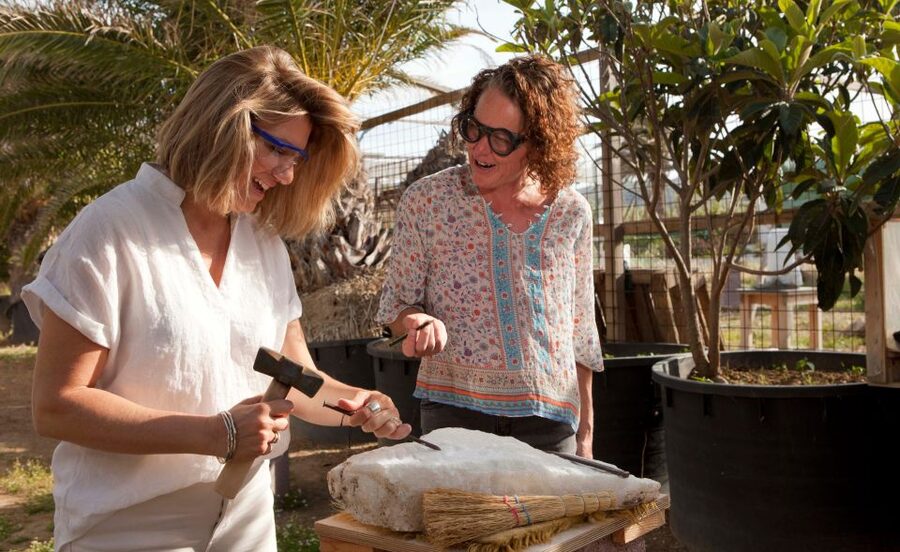
Naxos marble has been shaped into temples, statues, and household objects for centuries. At this outdoor workshop near Vivlos, you get the satisfying, dusty job of working it yourself, with artist Maggie Ross showing you how to turn a plain block into a personal souvenir. No carving experience is needed, and you can follow an Archaic Greek pattern or bring your own idea.
I like the slow, hands-on pace, especially the long practice period before you begin your final design. I also like the setting: a peaceful farm with views toward fields and the sea, rather than a polished shop built only for visitors. The main consideration is practical: your finished marble piece adds weight to your luggage, and three hours of hammering and holding metal tools can be tiring.
In This Review
- Key points to know before carving
- What makes this Naxos marble class different
- Arriving near Vivlos
- The first hour: tools, stone, and practice
- Planning a design you can actually finish
- Maggie’s teaching style
- Local food in a quiet farm setting
- A realistic look at the three and a half hours
- What you take home
- Is $94 a fair price?
- Who should book this experience
- Should you book Maggie Ross’s marble workshop?
- FAQ
- Where is the marble carving workshop?
- How long does the activity last?
- How much does the experience cost?
- Is transportation included?
- Do I need previous marble carving experience?
- What languages are spoken?
- How many people can join the class?
- What is included in the price?
- Can I cancel the booking?
Key points to know before carving
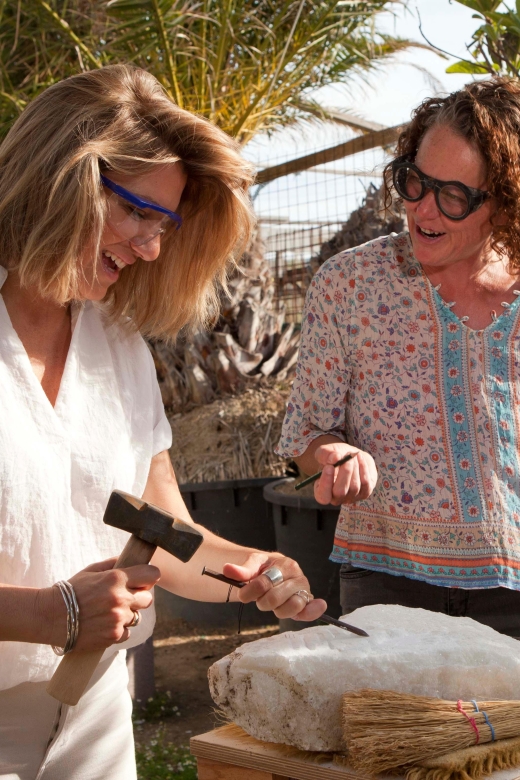
- Choose your marble and design carefully: You select a block of Naxos marble, then decide whether to use an Archaic Greek template or your own idea.
- Maggie Ross teaches beginners step by step: She explains the tools, demonstrates the hand technique, and gives personal help throughout the project.
- The setting is a working outdoor farm: Expect work tables, white stone, locally forged tools, fresh air, and views across the Naxos countryside toward the sea.
- Small groups keep the class personal: The maximum is 10 people, so you can get individual input without signing up for a private lesson.
- Food is part of the welcome: Fresh fruit and drinks are included, with some sessions also offering local cheese, bread, olives, tea, wine, or other homemade treats.
- Plan for a portable souvenir: Think about size before you start. A grand design may be harder to finish and much harder to carry home.
What makes this Naxos marble class different
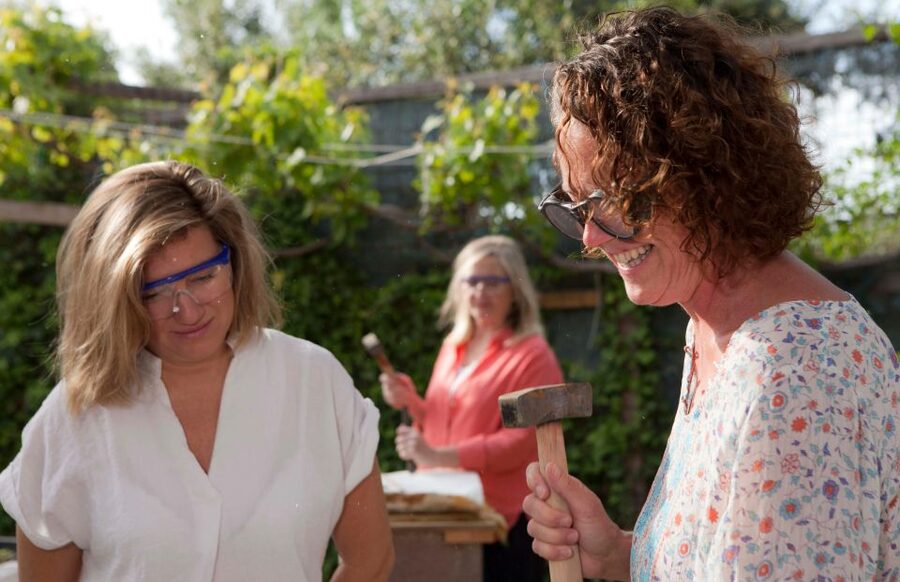
Many Naxos activities take you to see ancient marble. This one puts a chisel in your hand.
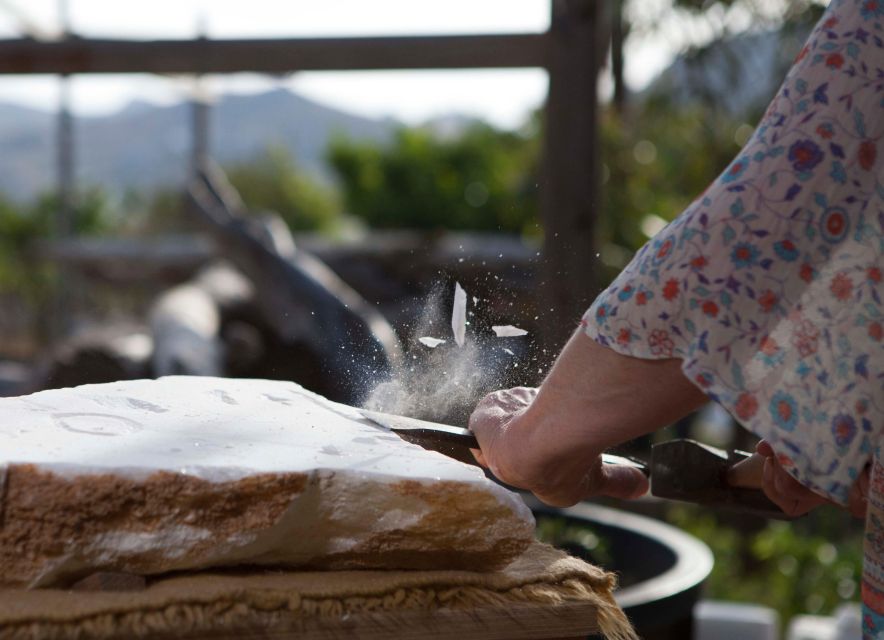
That change matters. You do not simply look at a statue and hear that marble is hard, durable, and difficult to shape. You feel the resistance as the tool meets the stone. You learn that each strike must be controlled, and you begin to notice the difference between knocking away material and damaging your design.
Maggie introduces the types of tools used in the workshop and explains the properties of marble and other stones. You then practice with the tools on a block for a set period before planning the piece you will take home. This practice is valuable for beginners because it removes some of the fear of making a mistake on the final object.
The experience is also pleasantly low-tech. There is no machine doing the work for you and no quick demonstration followed by a sales pitch. You sit at a table, hold the tool, use a hammer, and gradually see the surface change.
Other Greece trips readers weigh against this one:
- Athens: Acropolis & up to 5 Archaeological Sites Combo Pass
★ 4.4 · 12,619 reviews - Athens: Acropolis Ticket with Optional Audio or Live Guide
★ 4.2 · 11,055 reviews - Athens: Acropolis, Parthenon & Acropolis Museum Guided Tour
★ 4.8 · 9,316 reviews
Arriving near Vivlos
The workshop is a few minutes south of Vivlos on the main road. Watch for the Shell gas station on your left. About 30 meters later, turn right through a metal fence onto a paved drive, then park in front of the blue building.
This is useful information because the meeting point is not described as a central village shop or a major attraction with large signs. Give yourself enough time to spot the entrance, especially if you are driving and do not want to search for the property at the last minute.
Transportation is not included. If you need a taxi, the supplied contact is Dimitris at Radio Taxi, at (30) 697 661 1159. For workshop questions or help before arrival, Maggie can be reached at (30) 694 765 8462.
The farm setting is part of the appeal. You get work tables and the tools you need, but also the quieter feel of a rural property. Views include nearby farms and the sea, giving the class a strong sense of place. This is not just marble carving in an anonymous studio. It connects the craft to the island that supplies the stone.
The first hour: tools, stone, and practice
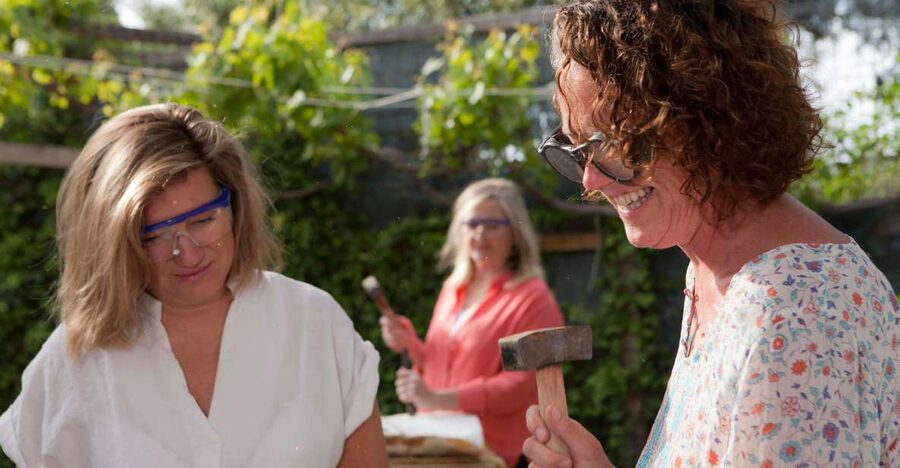
The class begins with an introduction to marble and the tools. Maggie explains how different tools behave and shows you the traditional hand-carving method for each one.
You then practice on a block of marble. This can sound basic, but it is one of the most important parts of the class. Beginners need time to learn how firmly to hold a tool, how to position it, and how much force to use with the hammer. The practice period also gives you a feel for the sound and texture of the stone.
Expect to work with metal tools and a hammer for several hours. Wear practical clothing and shoes, and avoid jewelry that could get scratched, chipped, or caught while you work. Wedding rings are best removed for the session, both to protect them and to avoid discomfort or blisters.
Safety gear is provided, along with the workstations, marble, tools, and other materials. You do not need to bring carving equipment or buy supplies separately.
Planning a design you can actually finish
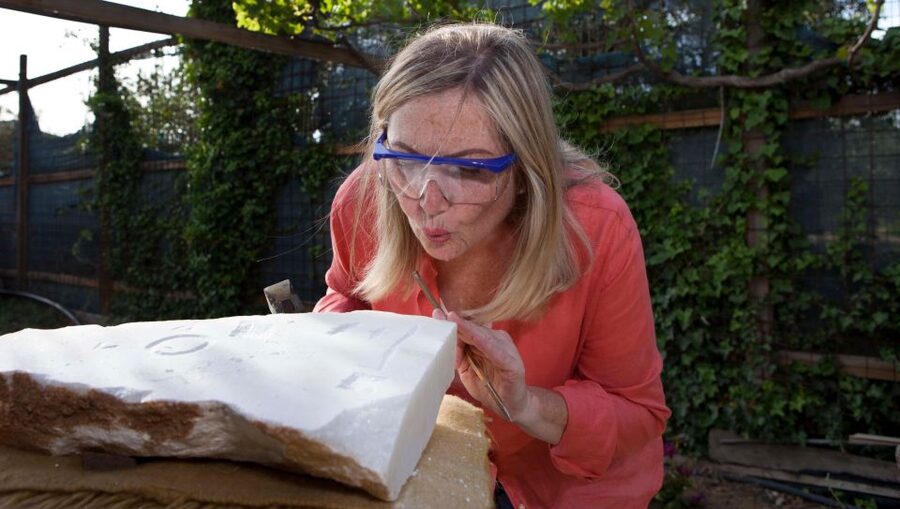
After practice, you choose the design for your project. You can use one of the Archaic Greek design templates or develop your own idea.
Maggie helps you plan the piece from concept through execution. She can draw or add detail to the design and guide you through each stage. The instruction is personal, but you still do the main work yourself. That balance is important: you receive help when the stone or design becomes difficult, without simply watching an artist make the souvenir for you.
You should think about size before selecting your marble. A small family group once chose an olive branch, an Ionic column, and the Portara ruin as their subjects. Those examples show how local themes can work well, but they also point to a practical issue: the larger or more ambitious the design, the more stone you will need to carry home.
A simple object may be the wiser choice for a first attempt. You have enough time to create something personal, but three and a half hours is not the same as a professional sculptor’s open-ended studio schedule. If you arrive with a complicated statue in mind, be ready to simplify it.
A different kind of day out, same corner of Greece:
- Athens: Cape Sounion & Poseidon Temple Sunset Half-Day Trip
★ 4.8 · 8,241 reviews - From Kissamos Port: Boat Cruise to Balos Lagoon & Gramvousa
★ 4.2 · 6,755 reviews - Athens: Acropolis and Parthenon Guided Walking Tour
★ 4.6 · 5,882 reviews - From the Port of Kos: Full Day Boat Cruise to 3 Islands
★ 4.8 · 5,137 reviews
Maggie’s teaching style
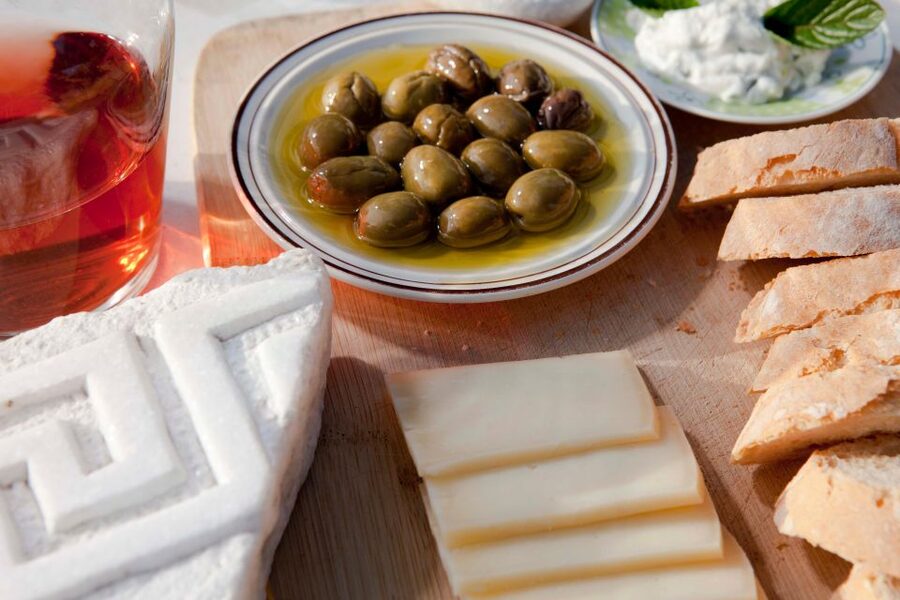
The strongest part of the class is the instruction from Maggie Ross. She teaches in English and Greek, and her approach suits complete beginners. Her role is part sculptor, part coach, and part problem solver.
You practice first, ask questions, and then work on your own design while Maggie checks in. She can return to your table as your piece develops, explain the next step, and help when a difficult cut needs extra care. This means the class does not feel like a lecture. You spend much of the time working with your hands.
Her patience is especially useful for families. The class has worked well for older children and teenagers, including a 13-year-old participant who received careful, kind instruction. Three older teenagers were also reported to have enjoyed the activity greatly. Since the group limit is 10, families can work together while still receiving individual help.
The class is not only for families. Couples, solo visitors, and friends can choose separate designs and work side by side. If you enjoy making things, learning a traditional craft, or taking a break from sightseeing, this is a good fit.
Local food in a quiet farm setting
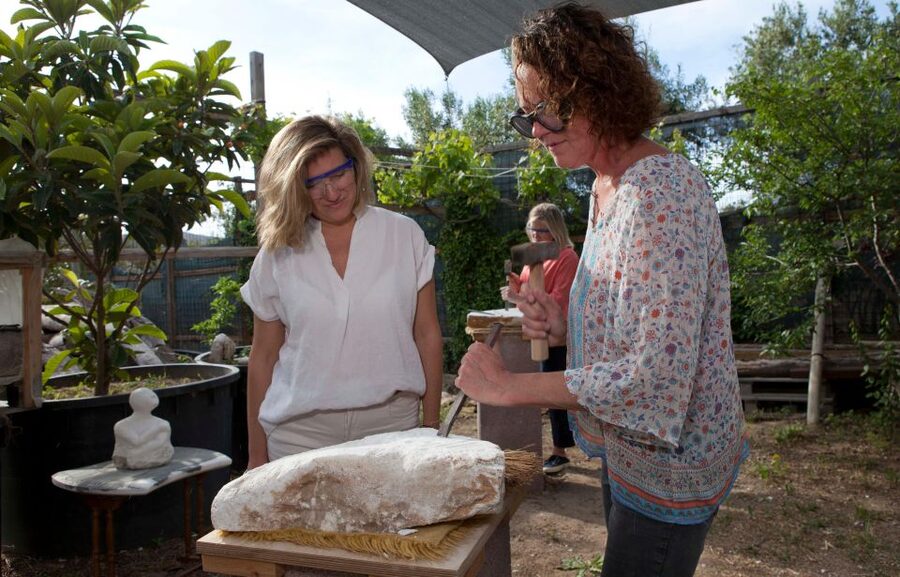
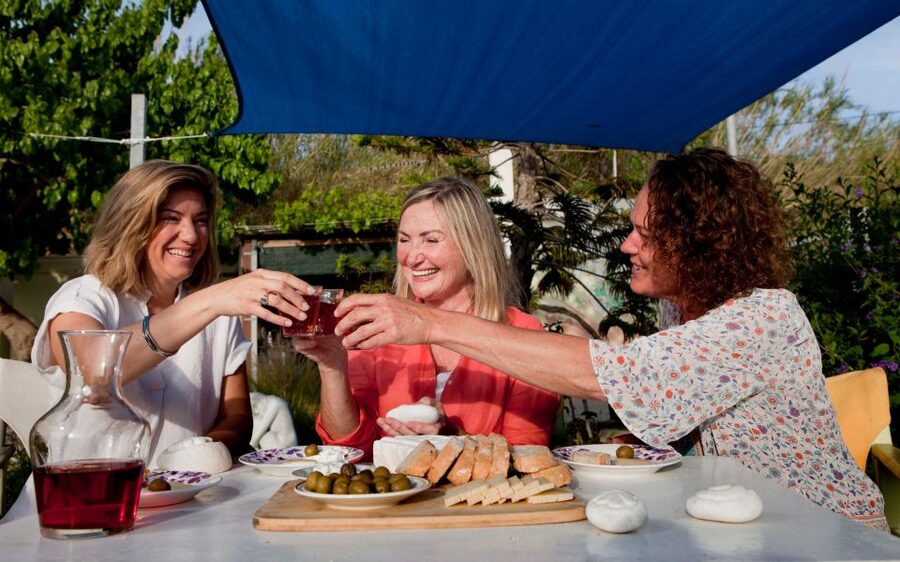
Fresh fruit and drinks are included. The exact spread can vary, but the food offered during sessions has included Naxian cheese, olives, tea, breadsticks, fresh lemonade, local wine, fresh squash salad, sweet bread, and fruit from the property. One session included food from Maggie’s own chicken coop.
This is not a separate cooking class, and you should not book it mainly for a meal. Still, the food makes the workshop feel generous and connected to the household and farm. It also gives you a welcome pause between stretches of carving.
The timing of drinks matters. One session included local wine and rakia after the tools had been put away, which is the sensible order when you have been working with hammers and sharp metal tools. Expect refreshments as part of the hospitality, not a formal restaurant service.
A realistic look at the three and a half hours
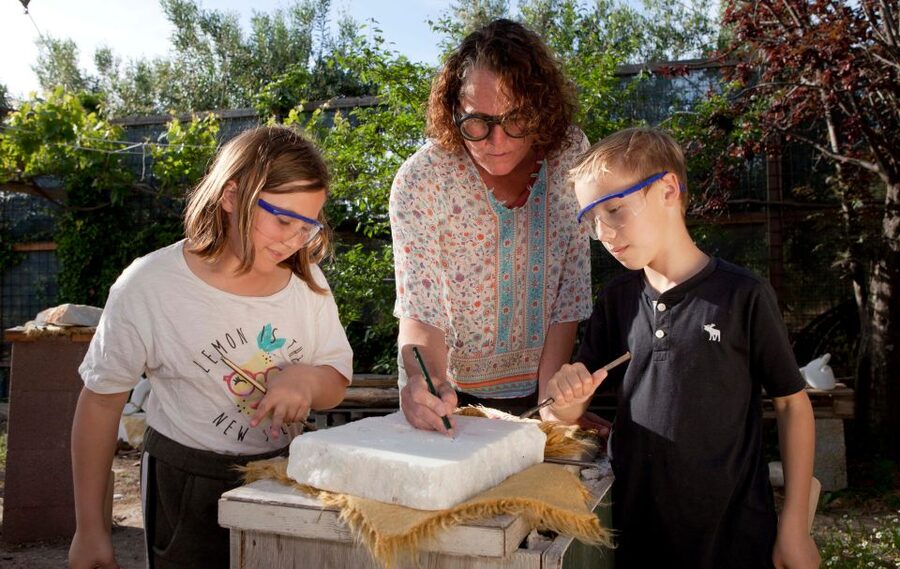
The activity is advertised as three and a half hours, with the core workshop described as three hours. In practice, the pace may be relaxed, and one session ran well beyond the booked time. Do not count on extra time, but it is wise not to schedule a tightly timed ferry, meal, or distant excursion immediately afterward.
A typical flow looks like this:
- Arrival at the farm and introduction to the setting
- Selection of marble and an explanation of its qualities
- Demonstration of the tools and traditional hand techniques
- Practice on a spare block
- Planning and marking your final design
- Guided carving with individual help from Maggie
- Finishing touches, photographs, refreshments, and taking your piece home
The order may vary. The key point is that you are not rushed straight into the final object. You get a chance to understand the material first.
The physical side deserves honest attention. You will be hammering and holding tools for a long period, so hands, wrists, and arms may become tired. That effort is part of the satisfaction, but it may not suit someone looking for a purely restful activity. The outdoor setting is peaceful, yet the work itself is active and repetitive.
What you take home
Your finished piece is the obvious souvenir, but the real value is the knowledge of how it was made. A shop-bought marble object may be smoother or more polished. Your piece will carry the marks of a first attempt, which is exactly why it can mean more.
You also leave with a new respect for marble artisans. After spending time removing small pieces of stone by hand, you can look at Naxos sculpture with a different eye. Ancient forms such as columns, branches, and simple figures stop looking effortless.
Pack with the final object in mind. Marble is heavy, and even a small piece can add noticeable weight to a suitcase. A compact design is easier to protect and carry. Ask for guidance on size at the beginning, before you commit to a block that may be awkward to transport.
Is $94 a fair price?
At $94 per person, the price is not a bargain activity in the usual quick-excursion sense. You are paying for three and a half hours, a small group of no more than 10, all tools and safety equipment, a block of Naxos marble, direct instruction, and a finished object.
The price also includes booking commission and 24 percent VAT, so there are no separate fees listed for those charges. Food and drinks are included as well, though transportation is not.
I think the value is strongest if you want an activity rather than another place to photograph. You are paying for access to an artist-led workshop, the chance to use traditional tools, and enough time to make something yourself. If your main goal is the cheapest possible souvenir, a market purchase will cost less and require no effort.
For families, the price can work well because adults and older children can share the setting while each makes an individual object. For visitors who enjoy craft, history, and local materials, the class offers more substance than a standard shopping stop.
Who should book this experience
You should consider it if you enjoy working with your hands, want a creative break from beaches and ruins, or prefer a personal souvenir to a mass-produced one. It is also a strong choice for families with older children and teenagers, couples, and anyone curious about traditional Greek craft.
The class is suitable for beginners. You do not need to know how to sculpt, and Maggie provides the instruction and equipment. English and Greek are available.
You may want to skip it if you dislike repetitive hand work, cannot comfortably hold tools for an extended period, or have no room for a heavy item in your luggage. It is also less suitable for a rushed day when you need to stay close to Naxos Town or make a fixed departure.
Book with free cancellation up to 24 hours before the activity if your plans are still shifting. You can also reserve now and pay later, which helps when arranging a Naxos itinerary around weather, ferries, and other island plans.
Should you book Maggie Ross’s marble workshop?
I would book this class if you want one memorable, hands-on day away from the usual Naxos circuit. The strongest reasons are Maggie’s patient one-on-one guidance, the chance to work with genuine Naxos marble, and the relaxed farm setting with local food and sea views.
Go in with a manageable design, comfortable clothing, no valuable jewelry, and a plan for carrying the finished piece. If those details sound fine, $94 buys more than a souvenir. It buys the time and instruction needed to make one.
FAQ
Where is the marble carving workshop?
The workshop is a few minutes south of Vivlos on the main road. After passing a Shell gas station on the left, turn right after about 30 meters through a metal fence and park in front of the blue building.
How long does the activity last?
The listed duration is 3.5 hours. The workshop itself is described as three hours, and the pace may sometimes be relaxed beyond the booked time.
How much does the experience cost?
The price is $94 per person. The listed cost includes the booking commission and 24 percent VAT.
Is transportation included?
No. Transportation and transfers are not included. You can drive to the workshop or arrange a taxi.
Do I need previous marble carving experience?
No. The class is designed for beginners, and Maggie explains the tools and techniques before you begin your project.
What languages are spoken?
The instructor teaches in English and Greek.
How many people can join the class?
The activity is a small-group experience limited to 10 participants.
What is included in the price?
Tools, marble, workstations, materials, safety gear, guided instruction, personal help with your design, fresh fruit, and drinks are included.
Can I cancel the booking?
Yes. You can cancel up to 24 hours in advance for a full refund. You can also reserve now and pay later.
Recently reviewed around Greece
- All Day 4×4 Adventure / Lefkada / With Brunch★ 5.0 · 73 reviews
- Artemis Hamam and Spa with Hotel Transfers Kos Island★ 4.5 · 77 reviews
- Half day boat diving experience for beginners in Kos Greece★ 5.0 · 29 reviews
- Sunset in Zia★ 4.0 · 282 reviews
- Private Greek Cooking Class in Kos with Lunch★ 5.0 · 26 reviews
- Three Island Cruise from Kos★ 4.0 · 33 reviews
- Kos 4×4 Exploration: Views, Villages & Flavors★ 4.5 · 37 reviews
- Lets Go Diving with pickup from hotel★ 4.5 · 42 reviews