
Reviewed · KNOSSOS PALACE TOURS
Knossos & Archaeological Museum Shared Guided Tour from Chania
Knossos is the star here, but the clever part is seeing the palace and Heraklion’s Archaeological Museum on the same day. The museum holds the Minoan objects that make sense of the painted walls, storage rooms, myths, and royal stories you encounter at the site. This is Crete’s big ancient-history day, not a quick photo stop.
I like the small maximum of 15 people and the useful ride from Chania, where the tour leader fills the long road trip with Cretan customs, food, culture, and even a little Greek. I also like the care shown by the team, especially Christine’s communication and the calm driving reported with Thanasis. The drawback is the early start and roughly two-hour drive each way, with no breakfast or toilet stop on the outbound trip.
In This Review
- Key points to know before booking
- Why this Chania day trip works
- Entering Knossos, the center of the Minoan world
- Heraklion Archaeological Museum puts the pieces together
- Two hours in Heraklion for a change of pace
- What the small group changes
- Food, comfort, and the long road home
- Who should book this Knossos tour
- Should you book it?
- FAQ
- How long does the tour last?
- How long is the drive from Chania to Knossos?
- Is hotel pickup available?
- Are entrance tickets included?
- What language is the tour offered in?
- How many people can join the group?
- Does the bus have WiFi and charging?
- When does this tour operate?
Key points to know before booking
- Knossos comes first: Spend about 90 minutes inside Crete’s most famous Bronze Age site with an English-speaking palace guide.
- The museum completes the story: One hour in Heraklion’s Archaeological Museum puts Minoan art and objects beside the ruins you have just seen.
- Your road time has a purpose: The bus presentation covers Cretan customs, food, culture, myths, and a few Greek words.
- The group stays small: The minibus carries no more than 15 people, making it easier to hear the commentary and ask questions.
- Budget for €40 in entrance fees: The advertised price of $108.13 does not include €20 for Knossos and €20 for the museum.
- The calendar is narrow: Departures operate every Monday in May and every Tuesday in September.
Why this Chania day trip works
This experience solves a common Crete problem: the island’s best ancient sites are not close together. If you base yourself in Chania, reaching Knossos and Heraklion by bus or rental car takes planning, parking, tickets, and a long day behind the wheel. Here, pickup and the return journey are arranged for you.
The tour starts at 8:00 a.m. and runs for about 10 hours. Pickup is available from island accommodations, though exact locations must be arranged with the operator. If you stay around Chania’s Venetian harbor or old town, a minibus cannot reach every narrow street, so you will be directed to the closest accessible bus stop.
The drive from central Chania to Knossos lasts about two hours. There is no breakfast or toilet break during that stretch, so I would eat beforehand and use the facilities before pickup. That small bit of preparation makes the early ride much more comfortable.
On board, you get air conditioning, WiFi, USB charging ports, and an audiovisual presentation about Cretan customs. A local tour leader speaks English and German, and the ride itself becomes part of the introduction to Crete. The strongest praise for this format has focused on Christine, who has handled complicated pickup arrangements, explained local food and customs, and kept solo passengers involved. Thanasis has also been singled out for safe, steady driving.
More Museum Tours in Crete
- Crete: Knossos Palace and Museum E-Tickets with Audio Guides
★ 4.0 · 828 reviews - Heraklion Archaeological Museum Ticket & Audio Guide
★ 4.3 · 396 reviews - Minoans World 3D Museum & 9D Cinema
★ 4.5 · 315 reviews
Entering Knossos, the center of the Minoan world
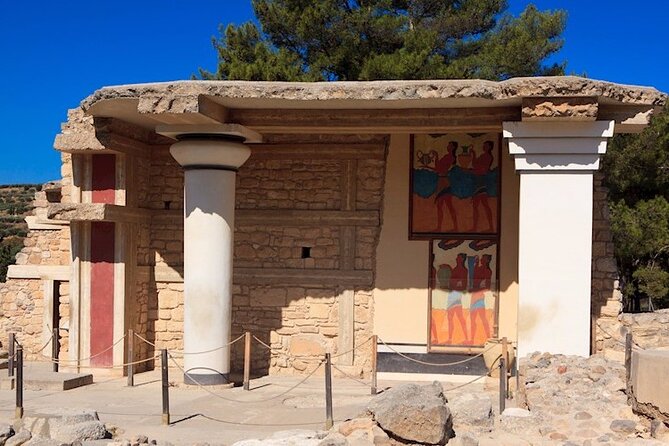
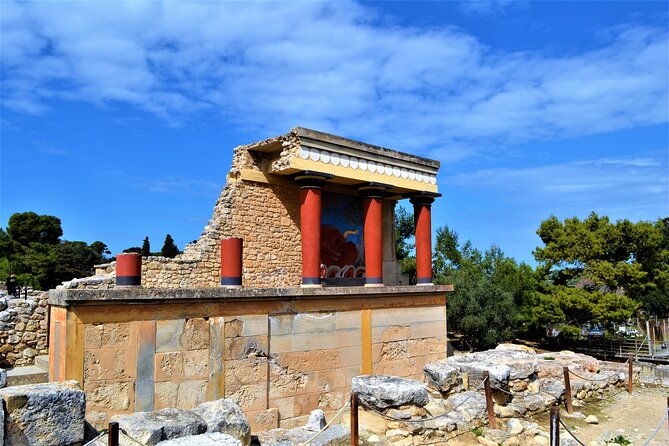
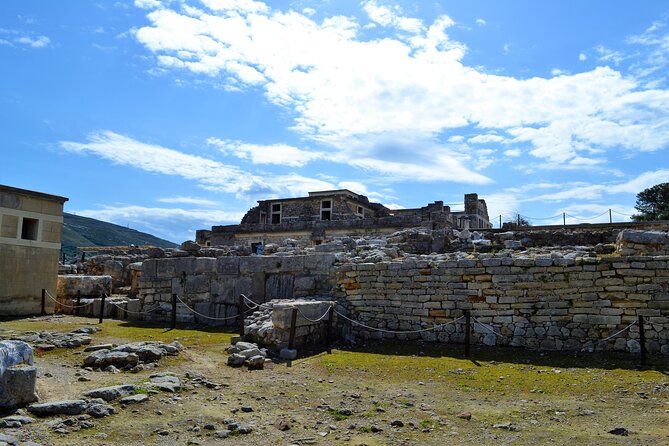
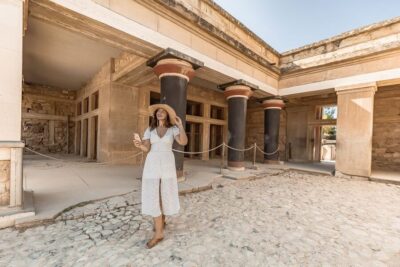
Knossos lies about 5 kilometers southeast of Heraklion in the valley of the Kairatos River. It is often called the oldest city in Europe, and it is considered the largest Bronze Age archaeological site on Crete. Those labels can sound grand, but the size and importance of the place become easier to grasp once you walk through its courtyards and palace remains.
The site was first occupied by a Neolithic settlement in the seventh century BC and remained in use for thousands of years. Its destruction and abandonment around 1375 BC marked the end of the Minoan civilization. The ruins you see are not a single frozen moment, but the remains of a long-lived center that changed over many centuries.
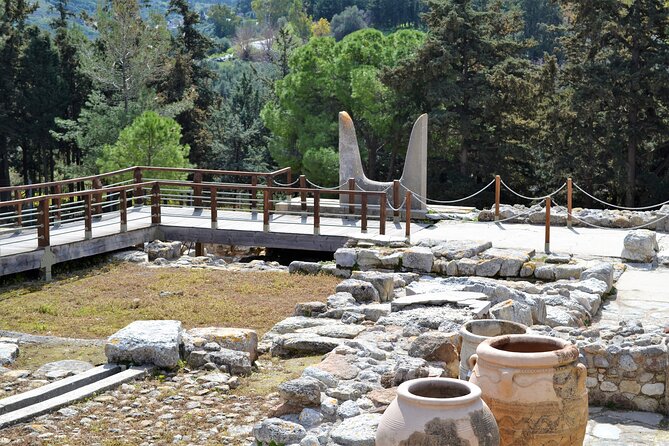
Your guided visit lasts about 1 hour and 30 minutes. An English-speaking guide leads the group through the palace and explains the myths connected with the site. This matters because Knossos can be confusing without help. Open courtyards, reconstructed sections, storage areas, stairways, and fragments of painted decoration do not automatically explain themselves.
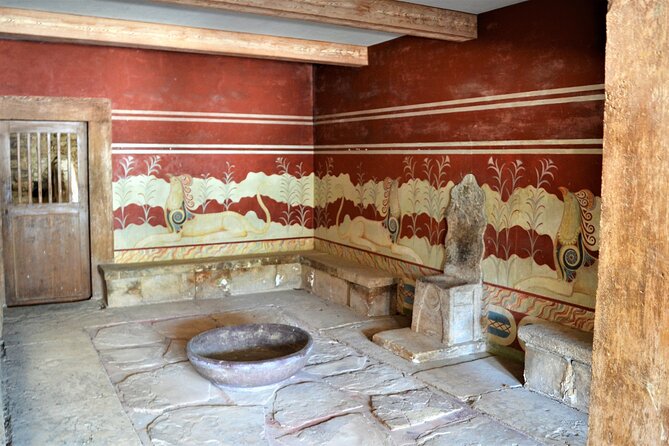
The Minotaur and labyrinth stories are closely tied to Knossos, and the palace tour gives those myths a physical setting. You learn where the stories fit into the ancient world, while also seeing the practical side of the complex. The palace was not simply a royal home. It was a major center of administration, religion, storage, craft, and power.
The site’s modern appearance also needs a little context. Sir Arthur Evans carried out long excavations from 1900 to 1913 and again from 1922 to 1930, after the first large-scale work by Minos Kalokairinos in 1878. Some areas were reconstructed during Evans’s work, so what you see combines ancient remains with early twentieth-century interpretations.
That is not a reason to skip Knossos. It is a reason to listen closely. A good guide helps you separate original archaeological evidence from reconstructed features and explains why the site looks different from a bare ruin.
The entrance fee is not included. Set aside €20 per person for Knossos. The listed tour price covers the guided visit, transport, and group services, but not admission.
Heraklion Archaeological Museum puts the pieces together
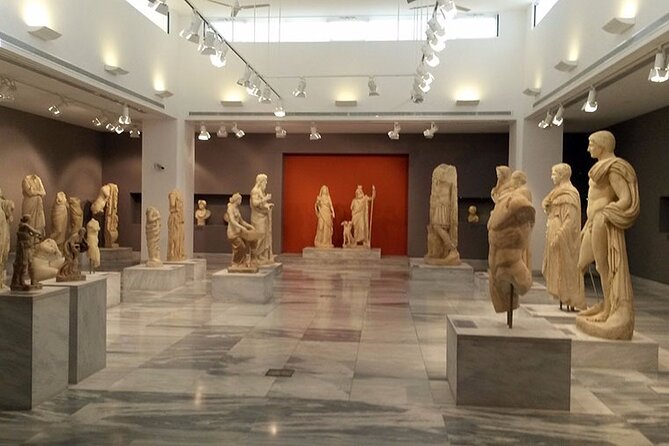
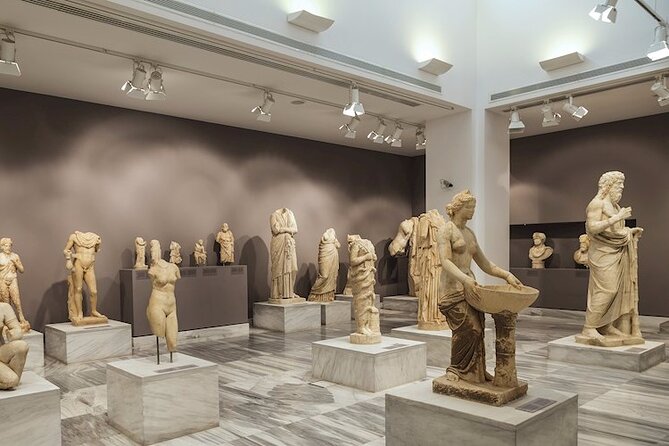
After Knossos, the tour continues to the Archaeological Museum of Heraklion for about one hour. The museum is in central Heraklion and covers more than 5,500 years, from the Neolithic period through Roman times.
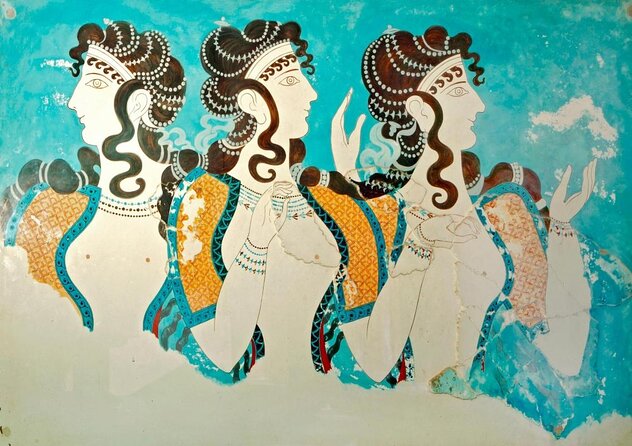
The Minoan collection is the main reason this stop belongs beside Knossos. At the palace, you see the setting. In the museum, you see the objects, artwork, and fine details that reveal how Minoan society worked. The collection includes unique examples of Minoan art, many considered masterpieces.
The museum was built between 1937 and 1940 by architect Patroklos Karantinos. Its colors and building materials echo elements found in Minoan wall paintings, giving the structure a deliberate link to the ancient collection inside. The site once held the Roman Catholic monastery of Saint Francis, destroyed by an earthquake in 1856.
One hour is enough for an introduction, but it is not enough to see every room at a leisurely pace. You will need to stay aware of the schedule and follow the tour leader’s instructions. If you are a serious museum fan, you may wish for more time here. One person who took this trip felt that two full days would have been easy to spend in the museum.
That is the central tradeoff of the combined tour. You get both essential sites in one organized day, but neither stop receives the time you would have with separate visits. For most first-time visitors based in Chania, the balance is sensible. For specialists or repeat visitors, a dedicated museum visit would be better.
The museum entrance fee is another €20 per person. Together, the two admissions add €40 to the $108.13 tour price. That brings the basic cost into a higher range, but the value depends on what you need. You are paying for a full-day transfer from Chania, an English palace tour, a local escort, and the convenience of combining two major sights without driving.
Two hours in Heraklion for a change of pace
The final listed stop gives you about two hours in Heraklion. This is not a full city tour, but it keeps the day from becoming only an archaeology outing.
Heraklion is Crete’s capital and Greece’s fifth-largest city. Its buildings show layers of Venetian, Byzantine, Ottoman, and modern influence. You can use the free time to walk through the central streets, look for Venetian details, or pause for food and coffee, depending on the schedule set by the guide.
The Venetian Fortress at the harbor entrance and the Venetian Loggia are among the city’s best-known landmarks. The Loggia now houses the Town Hall. You might also come across Byzantine churches, Venetian fountains, the Church of Saint Mark, and neoclassical buildings while walking around.
Heraklion also connects the ancient world with modern Cretan culture. The city is associated with artists El Greco and Nikos Kazantzakis, and the bus presentation helps explain the customs, food, and daily life that you see during the day.
The two-hour stop is useful, but keep your expectations reasonable. The tour does not promise a long, detailed city walk or admission to a specific Heraklion attraction. It gives you time to get your bearings and enjoy the center before the return trip to Chania.
More Knossos and Minoan palace days:
- Crete: Knossos Palace Entry Ticket with Optional Audio Guide
★ 3.9 · 2,251 reviews - Crete: Palace of Knossos E-Ticket and Audio Guide
★ 3.8 · 1,540 reviews - Knossos: Knossos Palace Skip-the-Line Guided Walking Tour
★ 4.8 · 1,380 reviews - Crete: Knossos Palace & Heraklion Guided Tour
★ 4.4 · 1,127 reviews
What the small group changes
A group limit of 15 people is one of the strongest practical features. Knossos is a place where a large crowd can make it hard to hear, especially when several guides are speaking nearby. A smaller group makes the palace commentary easier to follow and keeps movement more manageable.
It also makes the ride feel less like a standard coach transfer. You can ask about Cretan customs, food, and local life as you go. The tour leader’s presentation and reported Greek lesson add small but useful touches, especially if you want more than a history lecture.
Solo passengers should find this format comfortable. One solo participant received direct attention and did not feel left out, while families appreciated the warm handling of children and teenagers. The tour also suits older family members who prefer not to manage a long drive and several ticket lines alone.
The group size does not mean the day will feel private. You still follow a fixed timetable, and the visit to Knossos has its own palace guide. If you prefer to linger at one mosaic, take endless photographs, or read every museum label, an independent trip gives you more freedom.
Food, comfort, and the long road home
The bus has air conditioning, WiFi, and USB charging. Those details matter on a 10-hour outing, especially when the road portion takes about four hours in total. Bring your own breakfast because there is no breakfast stop before Knossos.
The operator has also provided cold water and a Cretan snack on some departures, with one account describing the snack as filling and drinks as plentiful. Treat that as a welcome extra rather than the main reason to book, since the formal inclusions list focuses on transport, WiFi, charging, insurance, the presentation, and guided entry at the palace.
The return journey follows a full day of walking and sightseeing. Wear comfortable shoes and carry water, even if refreshments are available. You should also keep your phone charged for meeting details and photographs, though the USB ports help.
The tour is offered in English, and the local tour leader also speaks German. The guided Knossos visit is specifically in English. Confirmation arrives when you book, and the activity is described as suitable for most people who can participate in a standard sightseeing day.
Who should book this Knossos tour
I would choose this trip if you are staying in Chania and want to see Knossos without renting a car. It is especially useful for a first visit to Crete, since the guide connects the palace, Minoan objects, Cretan customs, and Heraklion in one continuous day.
Families with teenagers may find the myths and palace stories more memorable than a self-guided visit. The small group, clear structure, and local explanations also help if you want history presented in plain language rather than through a thick guidebook.
Solo visitors can benefit from the social setup and personal attention. The trip also suits anyone who values safe driving and a prepared schedule over spontaneous stops.
I would hesitate if you have already spent time at Knossos and the Heraklion museum, or if you want a slow, detailed museum visit. The fixed Monday and Tuesday schedule also limits flexibility: departures operate every Monday in May and every Tuesday in September. Check your dates carefully before building your Crete plans around it.
Free cancellation is available up to 24 hours before the local start time. Cancellations or changes made later are not accepted for a refund, and the tour requires a minimum number of participants. If that minimum is not reached, you are offered another date or experience, or a full refund.
Should you book it?
Book this tour if you want the main Minoan sights handled in one day from Chania, with a small group, a local escort, and an English palace guide. The strongest reasons are the smooth transport, Christine’s attentive trip handling, the calm work of drivers such as Thanasis, and the useful link between Knossos and the museum.
Skip it if the two-hour drive each way sounds tiring, if you dislike early starts, or if the extra €40 in entrance fees pushes the cost too high. For most first-time visitors with limited time, this is a practical and well-shaped introduction to Knossos, Heraklion, and the Minoan world.
FAQ
How long does the tour last?
The experience lasts approximately 10 hours, starting at 8:00 a.m.
How long is the drive from Chania to Knossos?
The drive from Chania city center to Knossos takes about two hours. There are no breakfast or toilet stops during that part of the journey.
Is hotel pickup available?
Pickup is offered from island accommodations, but you must contact the operator to confirm the exact location. People staying near the Venetian harbor or old town of Chania are collected from the closest bus stop accessible to the minibus.
Are entrance tickets included?
No. Knossos costs €20 per person, and the Heraklion Archaeological Museum costs €20 per person. The two admission fees are paid separately.
What language is the tour offered in?
The tour is offered in English. The local tour leader speaks English and German, and the guided visit inside Knossos is in English.
How many people can join the group?
The tour has a maximum of 15 participants.
Does the bus have WiFi and charging?
Yes. The air-conditioned vehicle has WiFi and USB charging ports.
When does this tour operate?
It operates every Monday in May and every Tuesday in September.
Recently reviewed around Crete
- Troy Dinner-Show★ 5.0 · 103 reviews
- Heraklion : Spinalonga, Agios Nikolaos , Elounda Boat Tour & BBQ★ 3.5 · 32 reviews
- Quad Safari Off-Road Evening Tour★ 5.0 · 69 reviews
- Knossos & Lasithi Plateau: Zeus Cave,Villages, Olive Oil Tour★ 5.0 · 328 reviews
- Knossos & lasithi plateau villages,Zeus’s cave,&olive oil Mill★ 5.0 · 90 reviews
- Sailing trip to the Top Coasts of Crete, Daily/Multi-day★ 5.0 · 221 reviews
- Cretan Wines & Olive oil tour – The treasures of Crete★ 5.0 · 147 reviews
- PRIVATE-Knossos Palace-Zeus Cave-Olive Oil Tasting-Old Villages★ 5.0 · 81 reviews
Knossos Palace Tours, compared.
Knossos Palace Entry Ticket with Optional Audio Guide
Read our review →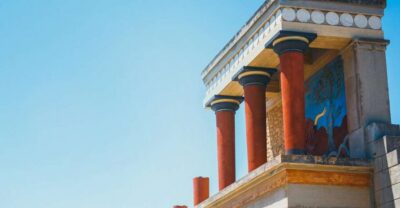
Knossos: Knossos Palace Skip-the-Line Guided Walking Tour
Read our review →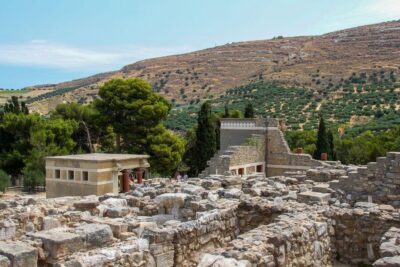
Knossos Palace and Museum E-Tickets with Audio Guides
Read our review →
Knossos-Zeus Cave -Old Traditional Villages-Olive Oil Factory
Read our review →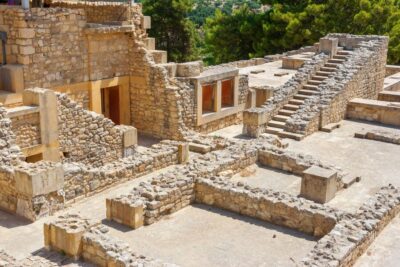
Knossos Palace Skip-the-Line Ticket & Private Guided Tour
Read our review →
Knossos, Lasithi, Lasinthos and Olive Farm Combo Tour
Read our review →Browse the lists this tour appears in