
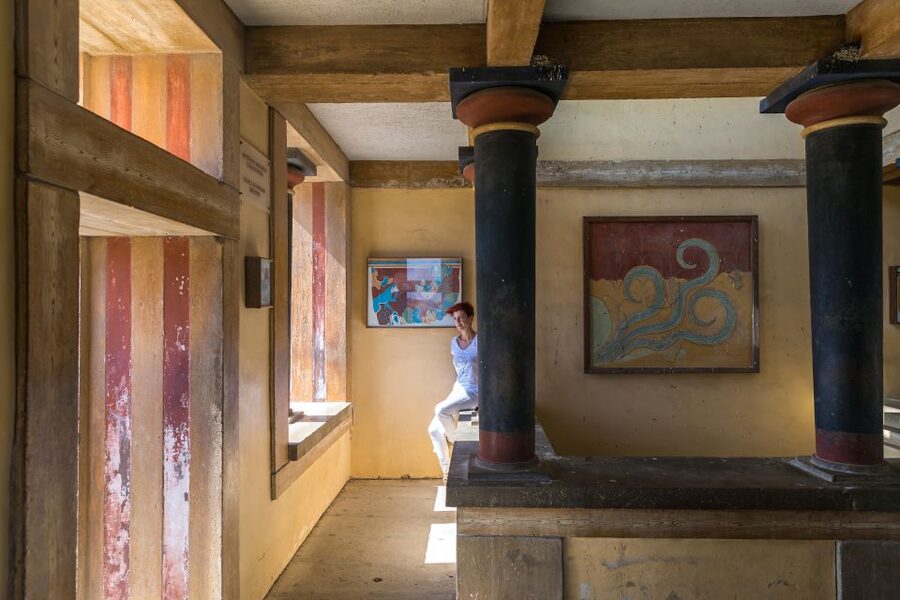
Reviewed · KNOSSOS PALACE TOURS
Knossos Palace Guided Walking Tour (Without Tickets)
Knossos is where Bronze Age archaeology and the Minotaur legend meet. This 1.5-hour guided walk takes you through the palace complex, from the throne room and sanctuaries to royal quarters, storage rooms, workshops, and ancient water systems. It is a far better way to make sense of scattered walls than wandering alone with no context.
I like the small group limit of 16 and the use of a licensed English-speaking guide. I also like that you can avoid the ticket-counter queue, which matters at a major site with limited shade. The catch is simple: the advertised $70 price does not include admission, so you must bring cash to pay the separate 20 EUR adult entry fee onsite.
In This Review
- Key points at a glance
- Why Knossos makes more sense with a guide
- Meeting at the main entrance
- Walking into the palace of Minos
- The throne room, sanctuaries, and royal quarters
- What the myths add to the ruins
- Frescoes, storehouses, and ancient water systems
- Group size, headsets, and guide quality
- Timing, heat, and the physical effort
- Who will get the most from this visit
- Is the $70 tour a good value?
- Should you book the Knossos guided walk?
- FAQ
- How long does the Knossos Palace tour last?
- What is the price of the tour?
- Is the Knossos entry ticket included?
- Where does the tour meet?
- What language is the tour in?
- How large is the group?
- Do I need identification for entry?
- Is the tour suitable for wheelchair users?
Key points at a glance
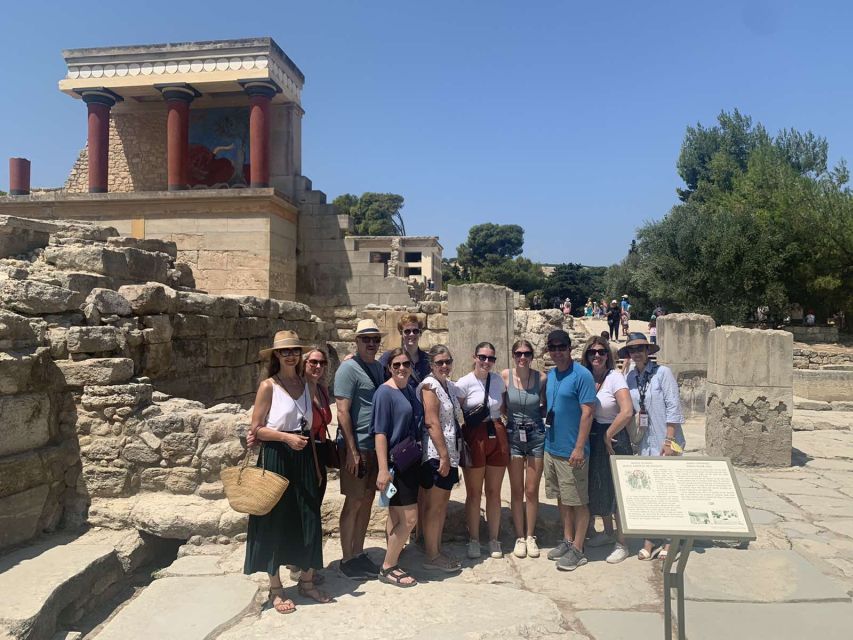
- See the palace of Minos: Follow a route through more than 1,500 interlocking rooms and several layers of Minoan history.
- Hear the myths with context: The guide connects the Minotaur and Labyrinth stories with the actual palace ruins.
- Keep the group manageable: Tours run with up to 16 people, and headsets are supplied when the group has more than five or six participants.
- Pay admission separately: The 20 EUR adult entry fee is not included, and payment is made in cash at the site.
- Start early for a calmer visit: The 9:00am departure was especially useful for one small group, before the site became busier.
- Plan for uneven walking: Comfortable shoes, water, sunscreen, sunglasses, and a hat are important in Crete’s strong sun.
Why Knossos makes more sense with a guide
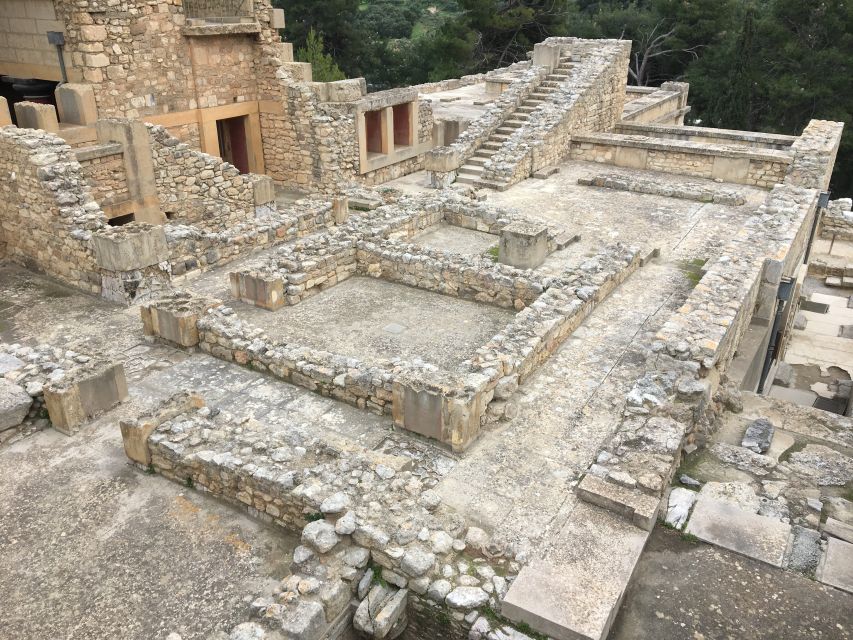
Knossos is not a tidy ruin with one obvious path through it. It is a broad, complicated palace site with rooms, courtyards, stairways, storage areas, wall fragments, and reconstructed sections spread across a large area. Without help, you can see the stones but miss the reason they matter.
A guide gives those remains a human shape. You hear how the palace developed, how people moved through it, and how the complex functioned as a political, religious, and economic center. The best guides also help you picture the original colors, ceremonies, storage systems, and domestic life without pretending that every detail is certain.
This is especially helpful for first-time visitors. The story of King Minos and the Minotaur is famous, but Knossos is more than a myth site. It was the center of a powerful Bronze Age society, and the tour explains how the palace fit into Minoan life.
The guides praised most warmly in the available feedback were Akrivi Chatzigeorgiou and Katerina. Akrivi was singled out for clear English, warmth, and strong explanations of both the myths and the archaeology. Katerina was appreciated for using imagination to help visitors picture Minoan society. One family with three children found the archaeological background engaging enough to keep the children interested.
That is the real value here. You are not simply paying for someone to point at a wall. You are paying for a story, a route through a confusing site, and the chance to ask questions while you are looking at the ruins.
More Walking Tours in Crete
- Knossos: Knossos Palace Skip-the-Line Guided Walking Tour
★ 4.8 · 1,380 reviews - Walking “Food tasting tour” in the town of Chania
★ 5.0 · 297 reviews - Heraklion: Food Tastings Walking Tour
★ 5.0 · 136 reviews
Meeting at the main entrance
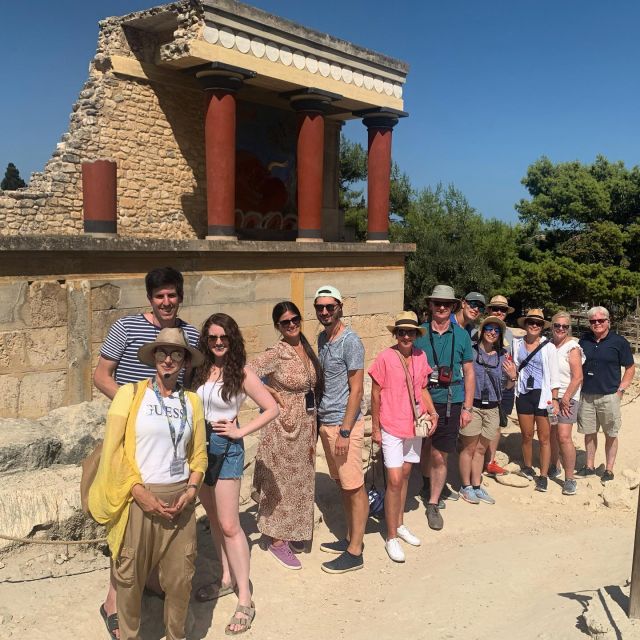
The meeting point is at the main entrance to Knossos Palace, in front of the ticket office. Look for the WeGuide.gr Meeting Point sign held by the check-in operator.
This arrangement is convenient because you do not need hotel pickup or a separate transfer. You make your own way to the archaeological site and meet the group there. It also means you should allow enough time to find the entrance and locate the sign before the scheduled start.
The ticket arrangement deserves close attention. The tour price covers the guide and the skip-the-ticket-line service, but not the palace admission. Adults pay 20 EUR in cash onsite for the entry ticket, with the guide helping at the ticket area. If you qualify for a free or reduced fare, bring your ID card or passport. Do not assume that showing up without identification will be enough.
The phrase skip the ticket line can be misunderstood. It means you avoid the regular ticket-counter queue through the group arrangement. You still need to obtain admission, and you still need to pay the separate fee unless you qualify for another rate.
Walking into the palace of Minos
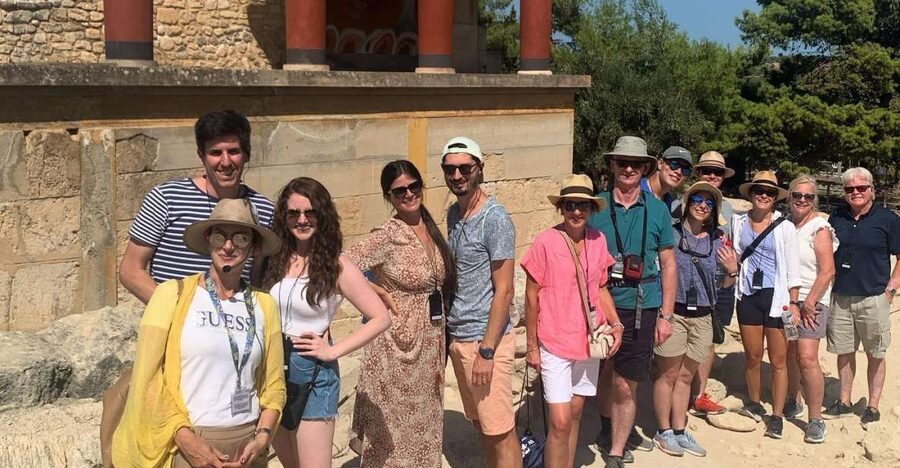
The visit begins at the Palace of Knossos, traditionally linked with King Minos and the Labyrinth. The ruins spread across a complex of more than 1,500 connected rooms, an astonishing size for a Bronze Age center.
The first palace was built soon after 2000 BC. An earthquake destroyed it around 1700 BC, and a larger palace was built in its place. That second palace lasted for more than 300 years and became the main seat of power in Bronze Age Crete.
Your guide explains the palace as a working center, not just a royal residence. Its design included broad courts for ceremonies and feasts, storage rooms for supplies, workshops for specialist work, and domestic areas for the royal family. You may also hear about the systems used to manage water, a practical feature that shows how advanced the builders were.
The palace had rooms distributed across four storeys and included major architectural changes for its time. Some areas feel grand, while others are intimate and functional. That contrast helps you understand that Knossos was a city-like complex with many jobs and social roles, not a single hall surrounded by empty rooms.
The throne room, sanctuaries, and royal quarters
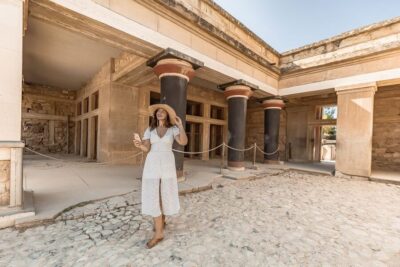
One of the most memorable stops is the original throne of Minos, or at least the room traditionally identified with it. The throne room is a place where a guide matters. You need context to understand how the room was arranged and why it has such a strong connection to the palace’s royal identity.
The tour also visits sanctuaries and ceremonial spaces. These areas connect the palace to Minoan religious practice and to the myths that later grew around Crete. A good explanation lets you separate what archaeology can show from what later storytelling added.
The royal domestic quarters offer another useful change of pace. Here, you get a sense of rooms designed for daily life rather than public ceremony. Luxurious spaces, storage areas, and the remains of domestic systems suggest a palace that had to support a large household and an administrative machine.
The palace’s pantries and storage rooms are among the most practical parts of the visit. Large vessels and storage areas point to the collection and distribution of food and other goods. These details can seem less dramatic than the Minotaur story, but they reveal how power worked. A ruler needed supplies, records, workers, and a way to feed people during ceremonies and ordinary days.
More Knossos and Minoan palace days:
- Crete: Knossos Palace Entry Ticket with Optional Audio Guide
★ 3.9 · 2,251 reviews - Crete: Palace of Knossos E-Ticket and Audio Guide
★ 3.8 · 1,540 reviews - Crete: Knossos Palace & Heraklion Guided Tour
★ 4.4 · 1,127 reviews - Crete: Knossos Palace and Museum E-Tickets with Audio Guides
★ 4.0 · 828 reviews
What the myths add to the ruins
The Minotaur and Labyrinth story gives Knossos an instant sense of drama. The tour does not treat the legend as a simple fact. Instead, it helps you see how a real palace complex may have inspired later stories about confusing corridors, kings, monsters, and hidden chambers.
That balance is important. You can enjoy the myth while also learning about Minoan society, architecture, religion, and engineering. The site becomes more interesting when you understand both the imaginative story and the physical evidence.
Guides such as Akrivi have been praised for making the myths feel lively without losing the historical thread. That approach suits Knossos well. The palace has enough atmosphere to fire your imagination, but it needs a careful guide to keep the visit grounded.
If you bring children, the legends can provide a useful entry point. The palace’s size and archaeological details may be hard for younger visitors to follow, but a guide who turns the site into a story can make the rooms easier to remember. The family-friendly feedback here is encouraging, though the walk still requires attention and steady movement.
Frescoes, storehouses, and ancient water systems
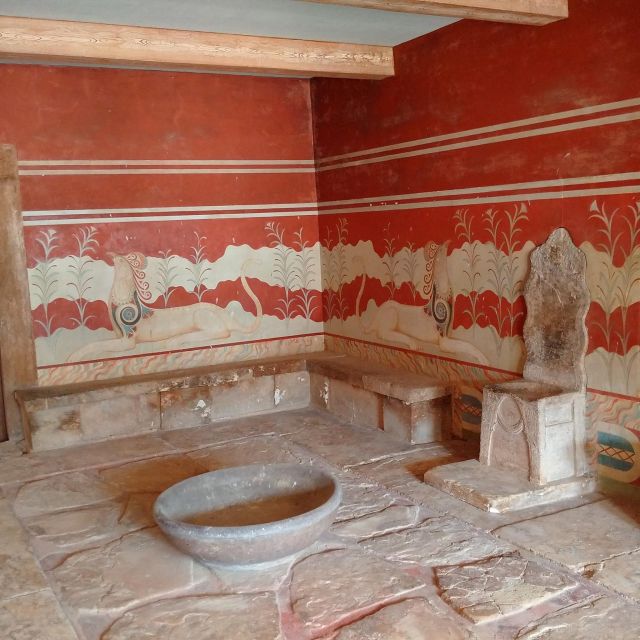
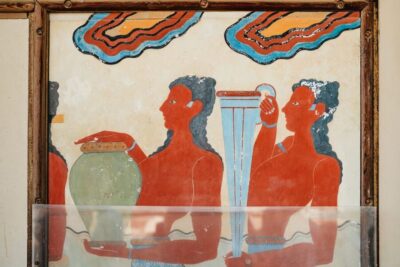
Knossos is famous for its wall paintings and fresco fragments. The tour points out the artistic remains and explains how frescoes once helped decorate the palace. You should remember that the site includes reconstruction, restored elements, and surviving archaeological material, so the guide’s explanation is useful in understanding what you are seeing.
The workshops and storage areas reveal another side of Minoan life. A palace could not function on ceremony alone. It needed craftsmen, supplies, administration, and systems for moving goods. The guide helps connect these separate areas into one working center.
The water-management systems are also worth your attention. They show that the builders were solving everyday problems as well as creating impressive public rooms. Look beyond the famous throne and mythical associations. The practical infrastructure often gives you the clearest sense of how people lived.
A 1.5-hour visit is long enough for a solid introduction but not long enough to examine every corner at leisure. One visitor felt the tour did not cover everything and recommended exploring more of the site independently afterward. I agree with that advice. Treat the guided walk as your foundation, not necessarily your entire Knossos visit.
Group size, headsets, and guide quality
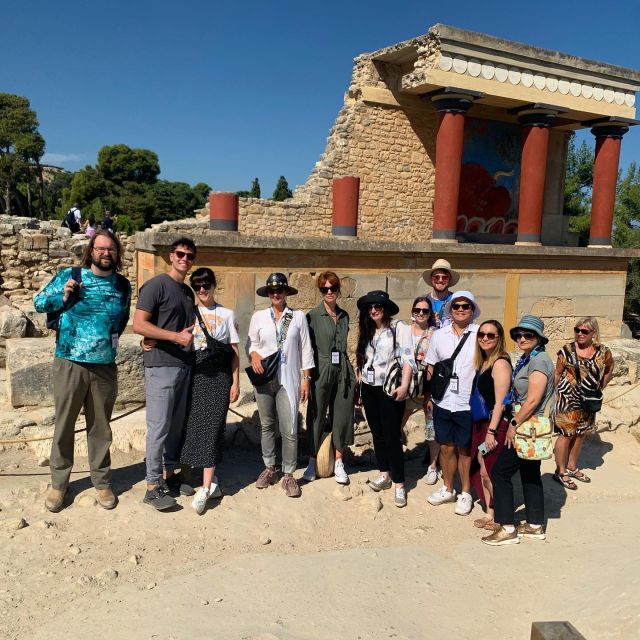
The group is limited to 16 people, which is a useful middle ground. You get the structure of a guided visit without the scale of a large crowd. Several people had groups of only two or three, and those visits felt almost private. That smaller group size will depend on the date and bookings, so do not count on personal service every time.
Headsets are supplied when the group is larger than five or six people, with the stated provision applying to groups of seven to 16. This matters because Knossos is open, spread out, and often exposed to other groups. Clear audio lets you look at the ruins instead of standing shoulder to shoulder with the guide.
The strongest part of the experience is the human guide. The most praised qualities are enthusiasm, clear English, humor, and the ability to answer questions. Akrivi was repeatedly appreciated for her warmth and archaeological understanding. Katerina was praised for helping visitors imagine how the Minoans lived.
There is one fair point to keep in mind: a 4.6 rating from 32 reviews is very good, but not every person considered the cost a bargain. At $70 per person, plus the 20 EUR adult entrance fee, the total is substantial for a 90-minute visit. You are paying for access handling, a licensed guide, a small group, and interpretation. If you mainly want to walk around and take photographs, this may feel expensive. If you want the site explained properly, the price becomes easier to justify.
Timing, heat, and the physical effort
The tour lasts 1.5 hours, and starting times vary, so check availability when you book. An early start, especially around 9:00am, can be a smart choice. One early group found Knossos relatively quiet, which made the visit calmer and helped them enjoy the guide’s explanations.
Crete can be hot, and much of this experience takes place outdoors. Bring water, sunscreen, sunglasses, and a sun hat. Wear proper walking shoes rather than casual sandals that offer little support.
Large bags and luggage are not allowed, and pets are not permitted. There is no hotel pickup or drop-off, and food and drinks are not included. These are small details, but they affect how smoothly the morning goes.
The tour is not suitable for people with back problems, mobility impairments, or wheelchair users. The uneven archaeological ground and the amount of walking are the main concerns. If you need an accessible route, this is not the right choice based on the stated restrictions.
Who will get the most from this visit
I would choose this tour if you are visiting Knossos for the first time and want the site explained in plain English. It is particularly useful for anyone interested in archaeology, ancient religion, Bronze Age society, or the connection between myth and physical place.
Families can also benefit, especially when the guide uses stories and questions to hold young attention. The small group format helps, and the headset is useful when more people join.
This is less suitable if you want a slow photographic session or a private, self-paced examination of every room. The fixed 1.5-hour route gives you a strong overview, but you may want to remain onsite afterward to see sections not covered by the guide.
The tour is also a good fit for visitors who dislike standing in ticket lines. Remember, though, that you must still bring cash for admission. That extra step is easy to manage if you know about it in advance.
Is the $70 tour a good value?
The answer depends on what you want from Knossos. The total cost is not cheap once you add the 20 EUR adult admission fee. For a short tour, that can feel high, and one person specifically found the experience expensive for its length.
Still, Knossos is a confusing site, and a strong guide can change the visit completely. You get a licensed English-speaking guide, a group capped at 16, help with the entry process, and headsets for larger groups. You also get a clear account of the palace’s construction, destruction, religious spaces, royal rooms, storage areas, and myths.
I see the value in the guide rather than the queue service. The skip-the-counter entry saves time, but the interpretation is what makes the fee worthwhile. If you already know Minoan archaeology or prefer reading site signs on your own, you may decide the price is too high. If you want the palace to make sense, the cost is more reasonable.
Should you book the Knossos guided walk?
Book it if you want a focused first visit, especially with an early start and a guide such as Akrivi or Katerina if available. Bring your passport or ID if you may qualify for a reduced or free ticket, and carry cash for the separate 20 EUR adult admission.
I would also plan a little extra time after the tour to explore on your own. The guided route gives you the story and the main sights, while an independent wander lets you pause at places that catch your eye.
Skip it if you need wheelchair access, cannot manage uneven walking, or want a completely unstructured visit. For most first-time visitors who value clear explanations, small groups, and a lively connection between Minoan archaeology and the Minotaur legend, this is a sensible way to meet Knossos.
FAQ
How long does the Knossos Palace tour last?
The guided walking tour lasts 1.5 hours.
What is the price of the tour?
The listed price is $70 per person. The general adult admission ticket to Knossos is separate and costs 20 EUR, paid in cash onsite.
Is the Knossos entry ticket included?
No. The admission ticket is not included in the tour price. The guide helps arrange the skip-the-ticket-line entry, and you pay the admission fee onsite.
Where does the tour meet?
The meeting point is at the main entrance to the Palace of Knossos, in front of the ticket office. Look for the WeGuide.gr Meeting Point sign.
What language is the tour in?
The live guided tour is in English.
How large is the group?
The group can include up to 16 people. Headsets are provided for larger groups, listed as more than five or six participants.
Do I need identification for entry?
Bring an ID card or passport if you want to claim a free or reduced admission fare.
Is the tour suitable for wheelchair users?
No. The experience is not suitable for wheelchair users or people with mobility impairments. It is also not recommended for people with back problems.
Recently reviewed around Crete
- Troy Dinner-Show★ 5.0 · 103 reviews
- Heraklion : Spinalonga, Agios Nikolaos , Elounda Boat Tour & BBQ★ 3.5 · 32 reviews
- Quad Safari Off-Road Evening Tour★ 5.0 · 69 reviews
- Knossos & Lasithi Plateau: Zeus Cave,Villages, Olive Oil Tour★ 5.0 · 328 reviews
- Knossos & lasithi plateau villages,Zeus’s cave,&olive oil Mill★ 5.0 · 90 reviews
- Sailing trip to the Top Coasts of Crete, Daily/Multi-day★ 5.0 · 221 reviews
- Cretan Wines & Olive oil tour – The treasures of Crete★ 5.0 · 147 reviews
- PRIVATE-Knossos Palace-Zeus Cave-Olive Oil Tasting-Old Villages★ 5.0 · 81 reviews
Knossos Palace Tours, compared.
Knossos Palace Entry Ticket with Optional Audio Guide
Read our review →
Knossos: Knossos Palace Skip-the-Line Guided Walking Tour
Read our review →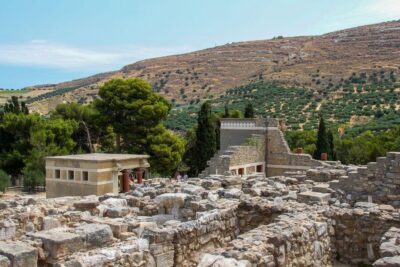
Knossos Palace and Museum E-Tickets with Audio Guides
Read our review →
Knossos-Zeus Cave -Old Traditional Villages-Olive Oil Factory
Read our review →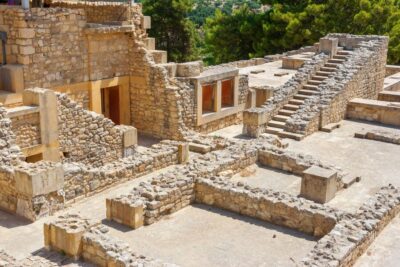
Knossos Palace Skip-the-Line Ticket & Private Guided Tour
Read our review →
Knossos, Lasithi, Lasinthos and Olive Farm Combo Tour
Read our review →Browse the lists this tour appears in