
Reviewed · OLIVE OIL TASTINGS
Organic Olive Grove tour & Olive oil tasting & lunch in Kalamata!
Kalamata’s olive culture makes sense only after you’ve walked among its old trees and tasted the oil with someone who can explain what is in your glass. This three-hour experience takes you from an organic grove near town to a working mill, then finishes with four Greek extra virgin olive oils at one of Kalamata’s oldest olive oil shops.
I like the ancient olive trees, including trees said to be about 800 years old, and I like the way Maria connects farming, machinery, harvest timing, and everyday Greek cooking. The tasting is practical rather than decorative: you learn to notice aromas, flavors, faults, and which oil suits different foods.
The main drawback is transportation. The grove and mill are about 10 minutes from central Kalamata, and getting there is not included. You’ll need your own vehicle or a taxi arranged at extra cost. Lunch is also an optional add-on, not part of the listed base price.
In This Review
- Key points at a glance
- Why Kalamata is the right place for an olive oil tour
- Walking among old olive trees
- Seeing how olives become oil
- Tasting four Greek extra virgin olive oils
- Adding a Greek lunch at a taverna
- Price, transport, and what the $144.82 covers
- Who will enjoy this experience most
- Timing your visit through the year
- Is this olive oil tour worth booking?
- FAQ
- Where does the olive oil experience begin?
- How long does the experience last?
- Is transportation included?
- What does the tasting include?
- Is lunch included in the price?
- When is the olive oil mill open for visits?
- Is the experience suitable for children?
- What should I wear?
- What happens if bad weather cancels the tour?
Key points at a glance
- Ancient trees near Kalamata: Walk through a traditional organic grove with olive trees of different ages, shapes, and varieties.
- From fruit to bottle: Visit a certified olive oil mill and see how harvested olives become oil.
- Four oils to compare: Taste four Greek extra virgin varieties with a professional olive oil taster.
- Maria’s personal touch: Guide Maria brings energy, clear explanations, and a strong connection to local farming and food.
- Optional Greek lunch: Add local pies, cheese, vegetarian dishes, split pea balls, seasonal foods, and drinks for an extra charge.
- Private format: Your own group participates, making it easier to ask questions and move at a comfortable pace.
Why Kalamata is the right place for an olive oil tour
Kalamata is known far beyond Greece for its olives, but the name can create a slightly misleading picture. Kalamata olives are a table variety, while much of the area’s oil comes from other varieties, especially Koroneiki.
That distinction is one reason this tour works well. You are not simply shown a few bottles and told that Greek olive oil is good. You get a look at the trees, the harvest, the mill, and the tasting process. Each part fills in a missing piece.
I especially like that the experience begins outside the city, only about 10 minutes from Kalamata’s center. You do not need to give up a full day or travel deep into the Peloponnese. At the same time, you get beyond the usual old-town stroll and see a working part of local life.
The activity runs for about three hours. It is available in the morning or afternoon, including a 5:30 p.m. start. That later option can suit a hot-weather day, though the grove portion still means time outdoors. Bring a hat, wear comfortable shoes, and expect a walk rather than a sit-down tasting from start to finish.
More olive oil tastings around Peloponnese:
- Kalamata: The Olive Oil Routes Tour
★ 5.0 · 73 reviews - Traditional Food tour, Olive oil Tasting with Lunch in Kalamata, Messinia!
★ 5.0 · 30 reviews - Knossos-Zeus Cave -Old Traditional Villages-Olive Oil Factory
★ 5.0 · 694 reviews
Walking among old olive trees
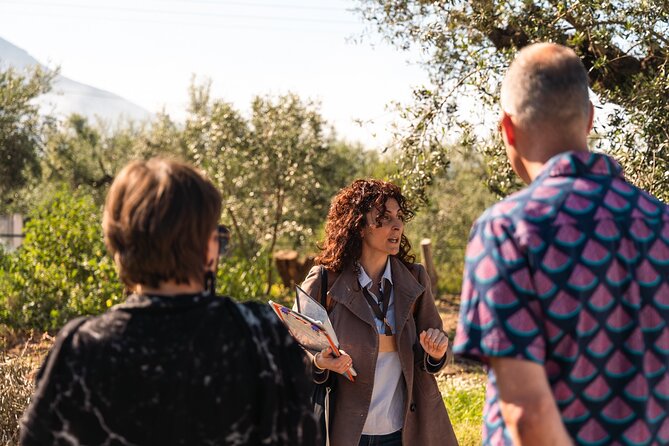
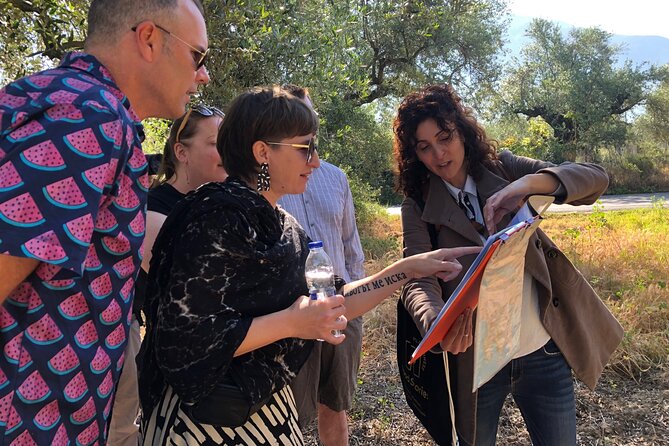
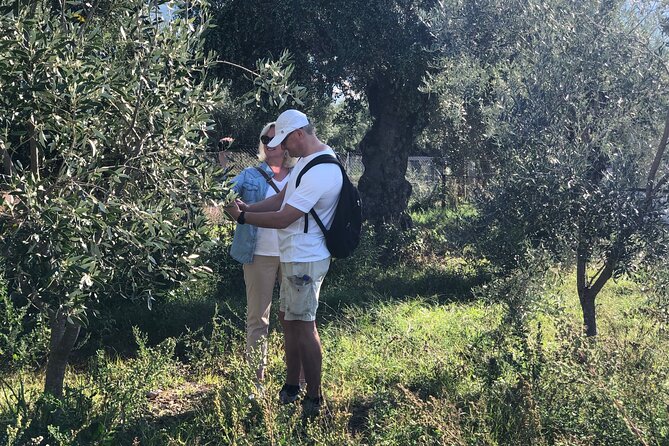
The first part takes place in a traditional organic olive grove close to Kalamata. You walk through perennial trees in different shapes and stages of growth while learning how olive trees are cultivated and why they have such a lasting place in Greek life.
The trees are the real draw here. Some are described as roughly 800 years old, which gives the walk a sense of time that a modern mill alone cannot provide. These are not just crops arranged in neat rows. Their age and form help you see olive farming as a long relationship between people, land, and trees.
Maria leads the walk and explains the long story of the olive tree, along with present-day farming. Her strength, based on the way the experience is structured, is linking broad cultural ideas with useful facts. You learn about varieties, tree growth, and harvesting rather than hearing only a general speech about Greek tradition.
Families should find this part approachable. Children can see the trees, walk outdoors, and ask questions instead of sitting through a long lecture. Maria has a reputation for keeping both younger children and teenagers involved, which matters when an olive oil lesson is competing with every other sight in Greece.
There are limits. The grove is outdoors, so weather affects the experience. The tour requires good weather, and the provider may offer another date or a full refund if poor conditions force a cancellation. You should also be comfortable walking on uneven ground, though the information does not specify the exact surface or distance.
Seeing how olives become oil
Next comes the certified olive oil mill, located close to the grove. The visit is valuable because it turns an abstract food lesson into a visible process. You learn how olives move from the grove through extraction and eventually to bottling.
The mill visit is not guaranteed in exactly the same way throughout the year. From March through October, visits are available Monday through Sunday. From November through February, access depends on coordination and availability, partly because this period overlaps with olive harvesting.
That seasonal detail is worth taking seriously. If you book during the harvest period, ask in advance what the mill visit will look like on your date. The tour is offered all year in some form, but the working mill portion may need more planning in winter.
The mill also gives you useful context for judging oil at the shop later. You can connect harvest timing and handling with the final taste. One family’s discussion included machinery, older methods, the choices farmers make about harvest timing, and the costs involved. That is the sort of practical information that helps you understand why two bottles of extra virgin olive oil may cost different amounts.
The experience does not promise that you will see active pressing every day. Mill operations depend on the season and schedule. Think of this stop as a visit to a certified facility with an explanation of the extraction process, not as a guaranteed live production show.
Tasting four Greek extra virgin olive oils
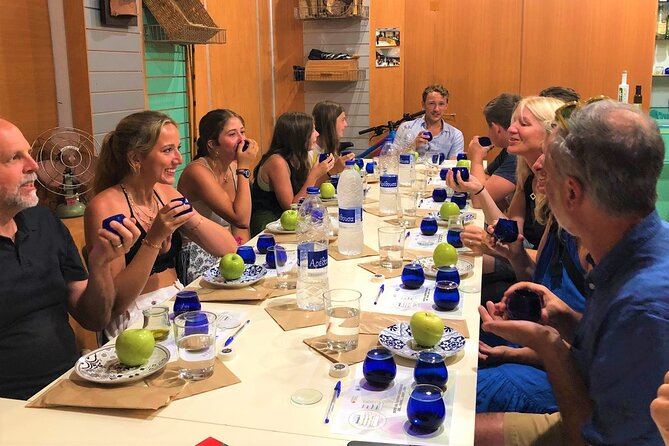
After the grove and mill, you head into Kalamata’s historic center for the tasting. The setting is one of the city’s oldest olive oil shops, which gives the final section a local retail connection rather than placing you in a generic tasting room.
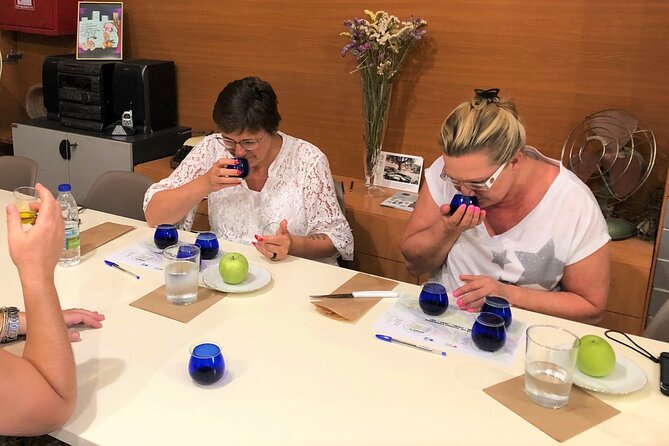
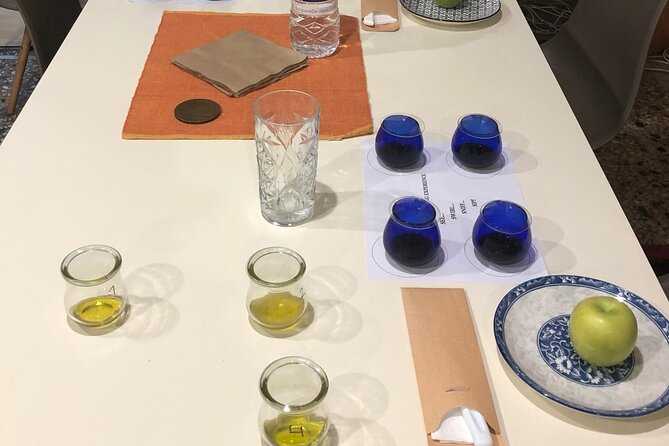
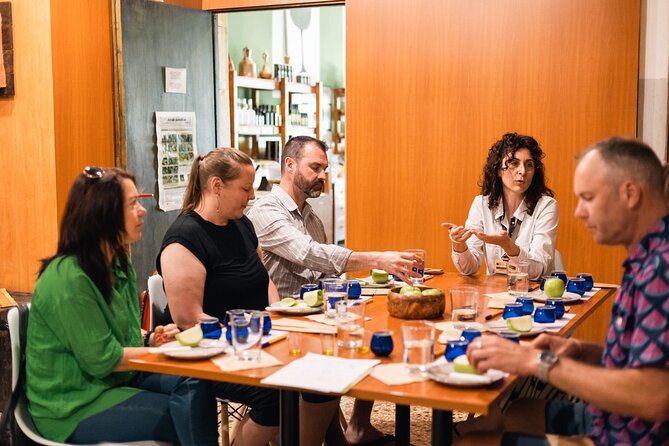
A professional olive oil taster leads the session. You taste four Greek extra virgin olive oils and learn to compare their aromas, flavors, and defining traits. The focus includes Greek varieties such as Koroneiki, plus the health benefits associated with extra virgin olive oil.
The most useful part is learning how to choose oil for food. You can ask which variety pairs best with the dishes you cook or order. A delicate oil may suit one meal, while a stronger, more peppery style may work better with another. The point is not to memorize a list of tasting terms. It is to leave with a better sense of what you like and why.
The tasting can also change the way you shop. You learn to use smell and taste rather than relying only on a label or a picturesque bottle. That is especially handy in Greece, where olive oil is sold in markets, shops, farms, and restaurants throughout the country.
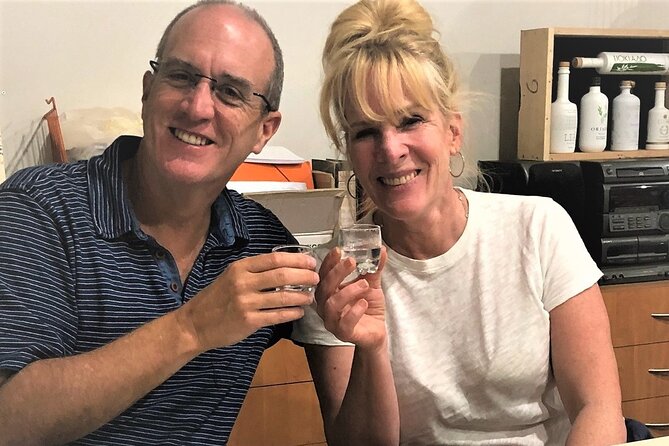
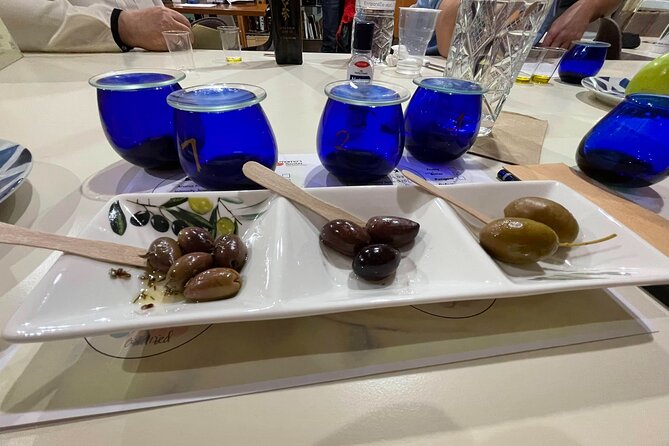
Greek local delicacies and bottled water are included with the tasting. The exact snack selection can vary, but the experience mentions local treats, and the optional lunch can include Greek pies, cheese, vegetarian food, split pea balls, and other seasonal dishes.
The activity ends at the olive oil shop according to the provider’s note. The meeting information also refers to returning to the meeting point, so I would confirm the end point and return arrangements before booking. This is particularly important if you arrive by taxi or need to get back to Kalamata Port.
More Peloponnese trips worth a second look
- Kardamyli: Sea Kayaking With Lunch
★ 4.9 · 69 reviews - Navarino Bay: Sea Kayaking with Lunch
★ 4.7 · 31 reviews - All Day Cruise -3 Islands to Agistri,Moni, Aegina with lunch and drinks included
★ 5.0 · 4,958 reviews - From Athens: Hydra, Poros, and Aegina Day Cruise with Lunch
★ 4.1 · 4,305 reviews
Adding a Greek lunch at a taverna
Lunch is optional and costs extra, but it may be a sensible addition if you want the food side of the experience to continue after the tasting. You can request either a light or full lunch at a local taverna.
The meal includes local delicacies such as Greek pies, cheese, vegetarian dishes, split pea balls, and other seasonal foods. Local wine or other drinks can be provided with lunch for an additional charge.
I would not assume that the word light means a token snack. One hosted meal was described as filling enough to leave the group satisfied, with traditional Greek dishes and generous hospitality. Still, ask what is included in the lunch price, especially if you have a large group or particular dietary needs.
Tell the provider about vegetarian, vegan, pescatarian, flexitarian, or other dietary preferences when you book. You should also mention food allergies and allergies to bees. This is not merely a formality when part of the visit takes place in an olive grove and the meal is based on seasonal local food.
Adding lunch changes the feel of the day. Without it, the experience is a focused olive oil lesson that ends at the shop. With it, you get more time around Greek food and hospitality. If your schedule is tight, the three-hour base experience is enough. If you want a slower food outing, lunch adds value.
Price, transport, and what the $144.82 covers
The listed price is $144.82 per person. That is not a bargain-priced tasting, so the value depends on how much you want from the experience.
You are paying for more than four small samples. The price includes a local host and certified tour leader, a professional olive oil taster, visits to the grove and mill, Greek snacks, water, and taxes and fees. The private format is another important part of the calculation because only your group participates.
For a solo visitor, the per-person cost may feel high. For a family or small private group that wants focused attention, it can make more sense. Group discounts are available, though you should check the final rate for your party before booking.
Transportation is the largest practical catch. You meet at the Kalamata Port Authority at Mpoumpoulinas 4, but the grove and mill are about 10 minutes away from the city center and meeting point. Transport is necessary, yet private transportation is not included.
If you have your own car, tell the provider. If not, taxi service can be arranged through partners for an additional fee. Confirm that cost in advance, along with the exact end point. The activity is described as ending at the olive oil shop, even though the meeting details refer to the meeting point, so clear communication will save you a needless bit of Greek-style logistical suspense.
The mobile ticket and nearby public transportation make the starting point easier to manage, but they do not remove the need to reach the grove and mill. Plan the transport as part of the booking, not as a detail to solve five minutes before departure.
Who will enjoy this experience most
I would choose this tour if you want to understand a local product from the ground up. It suits anyone who cooks with olive oil, enjoys food education, or wants a closer look at rural life near Kalamata.
Families are a good match. The outdoor walk breaks up the tasting, and Maria makes an effort to involve children. The experience can help young people understand that olive oil begins with trees and harvesting, not with a supermarket shelf.
It also suits curious food lovers who want to compare styles rather than simply buy a bottle. The four-oil tasting gives you a useful frame of reference, especially if Greek olive oil is new to you.
You may want to skip it if you dislike food tastings, have difficulty walking outdoors, or want a tour with no extra costs beyond the advertised price. Lunch and transport can add to the total. You should also be careful with winter dates if the mill visit is your main reason for booking.
The private arrangement is a strong choice for couples, families, or friends who prefer asking questions without keeping pace with a large group. It is less compelling if you only want a quick taste of olive oil and already know a great deal about production and tasting.
Timing your visit through the year
The grove visit and olive oil tasting are offered all year, Monday through Sunday, in the morning or afternoon. The 5:30 p.m. option gives you another way to fit the tour around sightseeing in Kalamata.
The mill has a more limited schedule. March through October is the most straightforward period, with visits available every day subject to the provider’s arrangements. From November through February, ask about availability before you commit.
Autumn can be an appealing time for the grove. The trees may carry small green olives, and harvesting has begun in parts of Greece. That does not guarantee a particular sight on your date, but the season can add useful context to the discussion of picking and pressing.
Summer calls for sun protection and practical clothing. A hat and comfortable shoes are specifically advised. The tour does not require formal dress, and you will be more comfortable in clothes suited to a warm outdoor walk.
The provider requires good weather. If rain or other poor conditions lead to cancellation, you are offered a different date or a full refund. In normal circumstances, however, the experience is non-refundable and cannot be changed for any reason, so check your schedule carefully before paying.
Is this olive oil tour worth booking?
I would book this experience if you want a personal, food-centered look at Kalamata rather than a quick tasting at a shop. The strongest elements work together: old olive trees give you a sense of place, the mill explains production, and the final tasting teaches you how to judge what you are drinking.
Maria is central to the experience. Her style is warm, upbeat, and focused on sharing Greek farming and food culture. The addition of Kelly during one hosted lunch also points to the generous, social character of the food side of the outing.
Before booking, confirm three things: transport costs, the exact end point, and mill availability for your date. Then decide if the optional lunch fits your plans and budget.
For families, food lovers, and first-time olive oil tasters, this is a strong choice. If you only want a low-cost sample or a guaranteed look at active pressing in winter, choose carefully. For everyone else, this is a thoughtful way to understand why olive oil is not just an ingredient in Kalamata, but part of the town’s identity.
FAQ
Where does the olive oil experience begin?
It begins at the Kalamata Port Authority, at Mpoumpoulinas 4, Kalamata 241 00, Greece.
How long does the experience last?
The activity lasts approximately three hours.
Is transportation included?
No. Transportation is necessary to reach the olive grove and mill, which are about 10 minutes from Kalamata city center and the meeting point. You can use your own vehicle or ask the provider to arrange taxi service for an extra charge.
What does the tasting include?
You taste four Greek extra virgin olive oils with a professional olive oil taster. The session covers Greek varieties such as Koroneiki, along with aromas, flavors, characteristics, health benefits, and food pairings.
Is lunch included in the price?
No. A light or full Greek lunch can be requested for an additional charge. It may include Greek pies, cheese, vegetarian dishes, split pea balls, or other seasonal local foods.
When is the olive oil mill open for visits?
The mill is available from March through October, Monday through Sunday, depending on availability. From November through February, visits require coordination and depend on availability during the harvesting period.
Is the experience suitable for children?
Yes. It is described as family-friendly, and children and teenagers can take part. The outdoor grove walk and tasting are included in the experience.
What should I wear?
Wear comfortable shoes and a hat because you will spend considerable time outdoors.
What happens if bad weather cancels the tour?
You will be offered a different date or a full refund if poor weather causes the provider to cancel the experience. In other circumstances, the activity is non-refundable and cannot be changed.
More Food Tours in Peloponnese
- 3in1; Cycling, sightseeing, tasting
★ 5.0 · 46 reviews - Greek Food Walking Tour in Athens
★ 5.0 · 4,740 reviews - Athens: Street Food Tasting Tour
★ 4.9 · 2,557 reviews - Small Group Greek Traditional Food Tour in Athens 20+ Tastings
★ 5.0 · 1,759 reviews
Recently reviewed around Peloponnese
- Rafting Lousios river★ 5.0 · 36 reviews
- Explore Mani by boat – rent a boat in Kardamili (no licence)★ 5.0 · 27 reviews
- Traditional Food tour, Olive oil Tasting with Lunch in Kalamata, Messinia!★ 5.0 · 30 reviews
- Rock Climbing at Kardamili- West Mani★ 5.0 · 192 reviews
- Boat Tour with Snorkeling in Kardamili – Mani★ 5.0 · 30 reviews
- Savor Nafplio Cooking Class★ 5.0 · 68 reviews
- Epidavros sea kayak at the Ancient sunken city tour, small ancient theater★ 5.0 · 96 reviews
- Ancient Corinth Private Tour from Corinth★ 5.0 · 56 reviews
Olive Oil Tastings, compared.

Knossos-Zeus Cave -Old Traditional Villages-Olive Oil Factory
Read our review →
The Governor’s Olive Mill Tour with Olive Oil Tasting
Read our review →
Zeus Cave, Lassithi Plateau, Olive Oil Factory, Kritza, Pottery
Read our review →
Knossos & Lasithi Plateau: Zeus Cave,Villages, Olive Oil Tour
Read our review →
Browse the lists this tour appears in