Reviewed · CRETE TOURS
WWII – The Battle of Crete Day Tour
The most moving part of this tour is the chance to walk the ground where the Battle of Crete unfolded, rather than study the campaign only from a book. Around Maleme, Tavronitis, and Souda Bay, your guide connects roads, hills, bridges, and cemeteries to the German airborne assault, Allied defense, and Cretan resistance of 1941.
I like the small-group minivan format, which makes it easy to ask questions and reach places that are awkward without a car. I also like the human touch: guides such as Yannis, Babis, Giannis, and Ioannis explain the battle alongside the experience of Cretan civilians and soldiers. The main caution is that six hours is a short time for a complicated campaign, so the military movements can feel hard to follow if you arrive without some background reading.
In This Review
- Key points to know before booking
- Why the Battle of Crete makes a powerful day trip
- Starting at Maleme, where the attack took shape
- Tavronitis Bridge and the physical shape of the battle
- The German Military Cemetery and the cost of remembrance
- Souda Bay War Cemetery and the Allied story
- The private WWII collection, an unusual bonus
- What the guides add to the day
- Six hours, transport, and what to expect
- Is $114.89 a fair price?
- Who should book this Crete history tour?
- My verdict on the Battle of Crete day tour
- FAQ
- How long does the Battle of Crete tour last?
- Where does the tour start and end?
- Which sites are included?
- Is transportation included?
- Is the tour offered in English?
- Are entrance fees and refreshments included?
- How large is the group?
- Can I cancel for a full refund?
Key points to know before booking
- Battlefield geography: Maleme and Tavronitis help you understand why the western end of Crete mattered so much in the opening attack.
- Two contrasting cemeteries: Visit the German Military Cemetery and the British Commonwealth War Cemetery at Souda Bay.
- Guides who teach, not just drive: The English-speaking escort explains strategy, local resistance, and the island’s wartime experience.
- A rare personal collection: Some tours include a visit to a local collector’s private WWII museum, one of the day’s most unusual moments.
- Comfort in the Cretan heat: Air conditioning, bottled water, snacks, and hotel pickup keep the day practical.
- Good value for serious history fans: At $114.89 per person, the price covers transport, guiding, entrance fees, refreshments, and pickup in the Chania region.
Why the Battle of Crete makes a powerful day trip
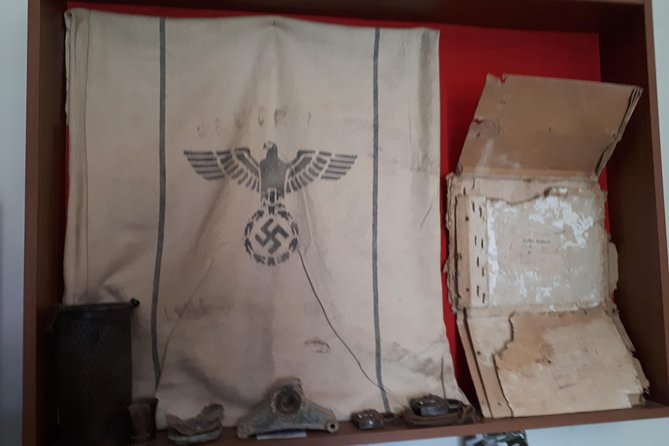
The Battle of Crete was not a single clash at one monument. It spread across villages, airfields, roads, ports, and rough ground, with German airborne forces attacking in May 1941 against Allied troops, Greek forces, and local Cretan resistance.
That scattered nature is exactly why a guided tour helps. You can look at a bridge or cemetery and see only a quiet corner of western Crete. A good escort gives the place its wartime meaning, then shows how each position fitted into the larger fight.
This tour is especially useful if you have read about the battle but still struggle to picture its movement. Several visitors with a strong interest in WWII found that standing at the sites clarified details that maps and books left abstract. At the same time, you do not need to be a military specialist. The guides explain the setting before moving into tactics and troop movements, so a newcomer can follow the main story.
The best guides also place the battle in a wider Cretan setting. You hear about Greek and Allied troops, German and Italian involvement, local resistance, and the effect of the invasion on Cretan communities. That wider view keeps the tour from becoming a list of military dates.
More Crete trips worth a second look
- From Kissamos Port: Boat Cruise to Balos Lagoon & Gramvousa
★ 4.2 · 6,755 reviews - Crete: Day Trip to Agios Nikolaos and Spinalonga Island
★ 4.6 · 4,416 reviews - From Chania: Full-Day Samaria Gorge Trek Excursion & Guide
★ 4.6 · 3,191 reviews
Starting at Maleme, where the attack took shape
Maleme is the natural starting point because it was central to the German assault. The tour spends about 50 minutes in the area, using the location to explain the opening phase of the invasion and the importance of the nearby airfield and high ground.
The value here is visual. Your guide can use the surrounding terrain and maps to show why the area mattered, how forces tried to hold it, and how control of Maleme affected the wider battle. You begin to see that the campaign was shaped not only by bravery but also by position, communication, and access.
For someone new to the subject, this is where careful explanation matters most. The Battle of Crete involved several places and forces at once. Ask your guide to repeat the sequence if needed, especially if you want to understand what happened during the first days rather than simply remember the names of locations.
The stop is not presented as a polished museum visit. It is a real place with ordinary modern life around it. That can make the experience more affecting, but it also means you should not expect a large interpretive center at every stop.
Tavronitis Bridge and the physical shape of the battle
The visit to Tavronitis Bridge lasts about 40 minutes and gives the day a more focused battlefield setting. Bridges are easy to overlook on a normal sightseeing route, yet this one helps show how movement through western Crete depended on a small number of crossings and roads.
Here, the guide can explain how the battle moved across the area and why control of transport routes mattered. This is one of the places where maps are useful, but do not hesitate to ask your escort to point out the direction of the main actions. A past visitor found the flow of the battle difficult to grasp from elevated viewpoints, and that is a fair concern for anyone who wants a detailed military reconstruction.
The tour does visit actual battle areas, but it is not a full walking expedition across open combat zones. Much of the interpretation happens beside the minivan, at viewpoints, or around historic sites. You get context without spending the whole day hiking.
That balance suits most people. If you want a strenuous battlefield walk with long periods on foot, this is probably not the right format. If you want to see several important places without renting a car, Tavronitis is a useful and efficient stop.
The German Military Cemetery and the cost of remembrance
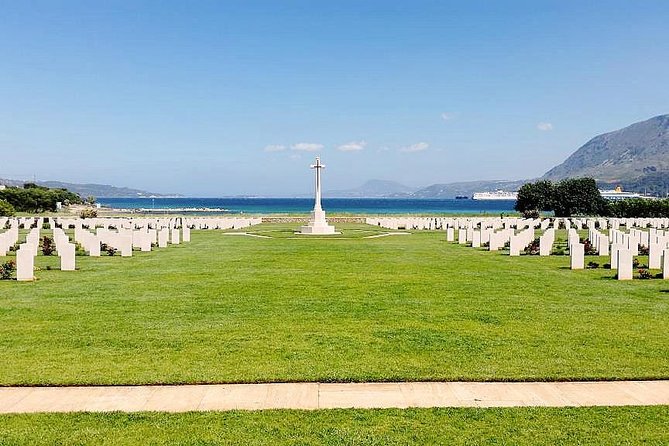
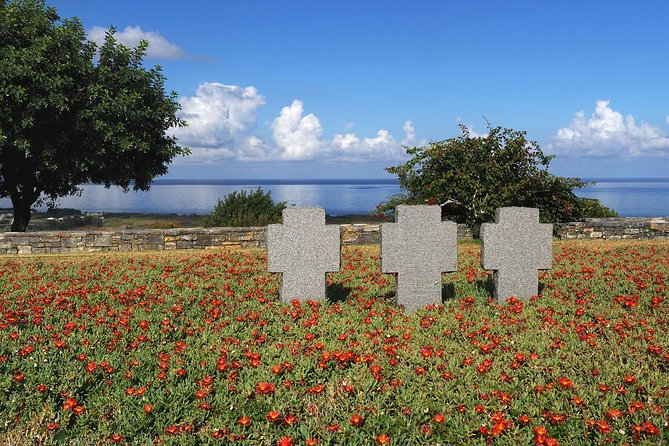
The German Military Cemetery offers a quiet change of pace. The visit lasts about 30 minutes, enough time to enter, look around, and listen to the guide without rushing through the grounds.
This stop is valuable because it puts names and individual lives behind the campaign. The battle was fought by German, Allied, Greek, and Cretan forces, and the cemetery gives you a direct reminder of the human cost on the German side. A thoughtful guide handles that subject with care, without turning the visit into military pageantry.
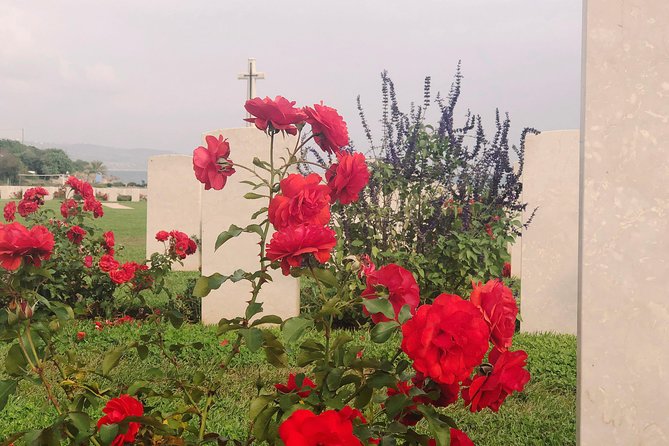
I recommend treating both cemeteries as places for reflection rather than quick photo stops. Your guide may be able to answer questions about the forces involved and the events that brought the cemetery into the story. The calm setting can feel far removed from the violence described earlier, which is part of what makes the visit effective.
Entrance fees are included, so you do not need to budget separately for this stop. The main practical point is to follow the escort’s instructions and allow the full time for the explanation. If you rush ahead, you may miss the connection between the cemetery and the battle sites already visited.
A different kind of day out, same corner of Greece:
- Agios Nikolaos: Boat Trip to Spinalonga with Swim Stop
★ 4.4 · 3,031 reviews - Heraklion: Dia Island Sailboat Cruise with Swimming and Meal
★ 4.8 · 2,579 reviews - Crete: Knossos Palace Entry Ticket with Optional Audio Guide
★ 3.9 · 2,251 reviews - Heraklion Area: CRETAquarium Admission Ticket
★ 4.4 · 2,055 reviews
Souda Bay War Cemetery and the Allied story
At Souda Bay War Cemetery, the focus shifts to the British Commonwealth forces. The half-hour visit gives you a contrasting place of remembrance and helps widen the story beyond the German attack.
The cemetery is also important for understanding evacuation and the fate of Allied personnel after the fighting. One particularly meaningful experience described on this tour involved tracing the area connected with New Zealand forces and an Allied soldier who reached a ship at Souda Bay and survived evacuation. Personal family connections like this can make the site more than a military footnote.
A guide such as Giannis or Babis can help you connect the cemetery to the broader campaign and answer questions about British, Australian, New Zealand, Greek, and other Commonwealth involvement. The tour does not treat the Allied side as a simple victory story. It also addresses retreat, capture, loss, and the difficult conditions faced by people on the island.
The cemetery is a strong final stop because it leaves you with a quieter understanding of the battle. In one unusual instance, a Greek air force flypast added a striking moment at Souda Bay, but that is not something you should count on or expect as a scheduled feature.
The private WWII collection, an unusual bonus
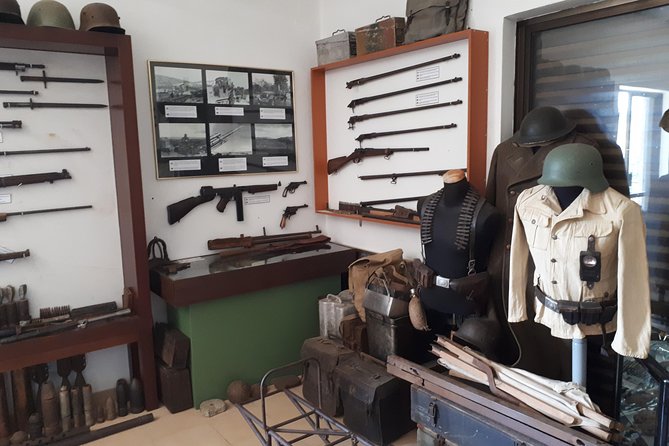
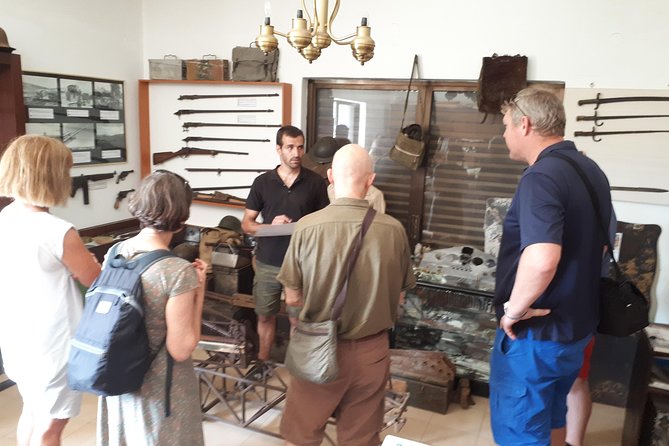
A visit to a local collector’s home and private museum has been a highlight of this experience. It is an unusual addition to a battlefield tour and gives the day a personal, hands-on quality that formal memorials cannot provide.
The collection includes military artifacts connected with the battle. Previous outings have included close views of weapons such as Lee-Enfield rifles with bayonets and Tommy guns. You should listen carefully to the guide and collector, since the value lies in the stories and explanation, not simply in seeing old equipment.
This stop also helps bridge the gap between military history and family history. People have used the guide’s help to piece together where relatives served, were captured, or were evacuated. If you have a parent, grandparent, or regiment connected with Crete, bring any names, dates, units, or family notes you have. The guide may be able to help place them in the story, though no individual research service is promised.
Because the supplied schedule names four main stops while several accounts describe a private collection visit as well, I would confirm whether it is included on your particular departure. It may depend on the day, route, or group arrangements.
What the guides add to the day
The strongest feature of this experience is the English-speaking local escort. Names associated with the tour include Yannis, Giannis, Ioannis, Babis, Stelios, and Nikos. The exact guide depends on the departure, but the feedback consistently points to strong subject knowledge, clear English, warmth, and a talent for answering questions.
That last quality matters. A guide who simply recites dates can make the Battle of Crete feel like a school lecture. The better approach used here is conversational. You can ask about a particular unit, a family connection, Cretan resistance, the German airborne attack, or the island’s wartime experience in general.
Some outings use one person as both guide and driver, while others include a separate driver. Either way, the transport is an air-conditioned minibus or minivan, with a maximum group size of 15. Groups may be smaller, and a very small party allows the route and explanations to respond more closely to your interests.
The guides also bring a local point of view. They explain Crete beyond the battle itself, including how the island’s people experienced occupation and resistance. That makes the day suitable for someone who wants to understand Cretan character and modern identity, not just military operations.
Six hours, transport, and what to expect
The tour begins at 9:00 a.m. and lasts about six hours. Pickup and drop-off are provided from specific places in the Chania region, and the activity ends back at the meeting point or your arranged pickup location.
The minivan is a major practical advantage. Crete’s historic sites are spread out, and arranging Maleme, Tavronitis, the two cemeteries, and any collection visit independently would take more planning. You avoid driving, route-finding, and trying to understand the sites from short information panels.
Snacks and bottled water are included for each person. A light lunch has also been part of some outings, but the stated inclusions specifically promise snacks and water, so you should not rely on a full meal unless your booking confirms it.
Wear comfortable shoes and bring sun protection. The tour is not described as a long hike, but you will be getting in and out of the vehicle and spending time outdoors. The air conditioning matters in hot weather, especially during a day focused on cemeteries and open historic sites.
The tour is offered in English and is near public transportation. Most people can participate, but the exact pickup point matters, since pickup is limited to specified places in the Chania region.
Is $114.89 a fair price?
At $114.89 per person, this is not a budget bus outing, but it offers more than simple transport. The price includes an English-speaking local driver or escort, air-conditioned transportation, entrance fees, bottled water, snacks, taxes, and hotel pickup and drop-off in eligible parts of the Chania region.
I see the best value in the time saved and the interpretation. The key sites are spread across western Crete, and a rental car would still leave you needing to research the battle, locate the cemeteries, and work out how the places fit together.
The value is strongest for a small group with a real interest in WWII, family history, or Cretan resistance. It is also a good choice if you want a serious cultural day but do not want to plan every stop yourself.
The value is less clear if you only want scenic sightseeing or a relaxed drive through the countryside. Much of the day involves listening, looking at maps, and thinking about events that are difficult and sometimes tragic. You are paying for explanation and access, not entertainment at every minute.
The tour is recommended by 99 percent of its booking audience and carries a 4.9 rating from 103 reviews. Those figures suggest a very reliable experience, but they do not remove the need to match the format to your interests. The one recurring reservation is useful: some military history fans may want more time physically down on the battlefield and a clearer step-by-step map of the three-day campaign.
Who should book this Crete history tour?
You should book it if you want to:
- Understand the Battle of Crete through real locations rather than a textbook alone.
- Visit both German and Commonwealth cemeteries in one day.
- Ask detailed questions about units, strategy, resistance, and family connections.
- Travel comfortably without renting a car.
- Meet a guide who can discuss WWII and Crete’s wider story.
- See a private military collection if that element is confirmed for your departure.
You may want another type of excursion if you prefer long walks, a formal museum with extensive displays, or a strictly chronological battlefield program. The tour covers a lot in six hours, and the story can move quickly.
If you have already read Anthony Beevor or accounts of Patrick Leigh Fermor’s work, the sites may give extra meaning to what you know. If you have not read anything beforehand, spend a little time learning the basic outline of the invasion. Even a short introduction will help you follow the maps and place names.
My verdict on the Battle of Crete day tour
I recommend this tour for history-minded visitors staying in Chania, especially anyone with a family or military connection to Crete. The mix of Maleme, Tavronitis Bridge, the two cemeteries, and the possible private collection visit gives you both battlefield context and personal remembrance.
The guides are the main reason to book. Yannis, Babis, Giannis, Ioannis, Stelios, and Nikos are described as warm, clear, and passionate about the subject. That enthusiasm helps the battle make sense without making the day feel like a dry lecture.
Book it if you value local interpretation, small-group transport, and a serious look at the island’s wartime past. Before paying, ask whether the private collection is included and tell the operator if you have a relative or regiment connected with the battle. With that small check, the $114.89 cost is reasonable for a focused six-hour tour that would be difficult to arrange well on your own.
FAQ
How long does the Battle of Crete tour last?
The tour lasts about six hours and begins at 9:00 a.m.
Where does the tour start and end?
The tour offers pickup and drop-off from specific places in the Chania region and ends back at the meeting point or arranged return location.
Which sites are included?
The stated route includes Maleme, Tavronitis Bridge, the German Military Cemetery, and Souda Bay War Cemetery, the British Commonwealth cemetery.
Is transportation included?
Yes. Transport is provided in an air-conditioned minibus or minivan.
Is the tour offered in English?
Yes. The experience is offered in English with a local English-speaking driver or escort.
Are entrance fees and refreshments included?
Yes. Entrance fees, bottled water, snacks, taxes, and handling charges are included.
How large is the group?
The maximum group size is 15 people. Some departures may be smaller.
Can I cancel for a full refund?
Yes, if you cancel at least 24 hours before the local start time. Cancellations or changes made less than 24 hours before the start are not refunded or accepted. If poor weather or an insufficient minimum group causes cancellation, you can choose another date or experience, or receive a full refund.
Recently reviewed around Crete
- Troy Dinner-Show★ 5.0 · 103 reviews
- Heraklion : Spinalonga, Agios Nikolaos , Elounda Boat Tour & BBQ★ 3.5 · 32 reviews
- Quad Safari Off-Road Evening Tour★ 5.0 · 69 reviews
- Knossos & Lasithi Plateau: Zeus Cave,Villages, Olive Oil Tour★ 5.0 · 328 reviews
- Knossos & lasithi plateau villages,Zeus’s cave,&olive oil Mill★ 5.0 · 90 reviews
- Sailing trip to the Top Coasts of Crete, Daily/Multi-day★ 5.0 · 221 reviews
- Cretan Wines & Olive oil tour – The treasures of Crete★ 5.0 · 147 reviews
- PRIVATE-Knossos Palace-Zeus Cave-Olive Oil Tasting-Old Villages★ 5.0 · 81 reviews
Crete Tours, compared.
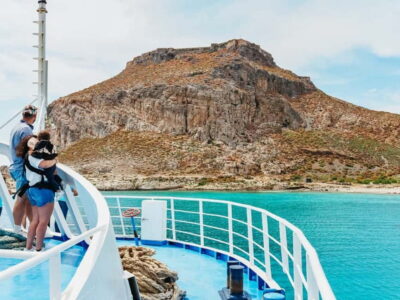
From Kissamos Port: Boat Cruise to Balos Lagoon & Gramvousa
Read our review →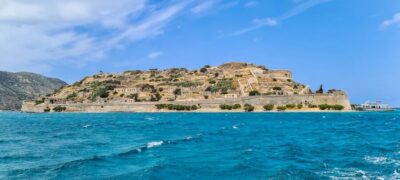
Day Trip to Agios Nikolaos and Spinalonga Island
Read our review →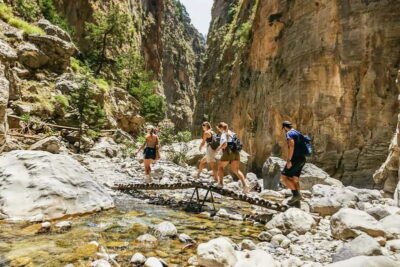
Full-Day Samaria Gorge Trek Excursion & Guide
Read our review →

Dia Island Sailboat Cruise with Swimming and Meal
Read our review →
Knossos Palace Entry Ticket with Optional Audio Guide
Read our review →