
Reviewed · 3-DAY EXPERIENCES
3-Day Ancient Greek Archaeological Sites Tour from Athens
The best thing about this three-day trip is its reach. In one well-packed circuit from Athens, you see Mycenae, Olympia, and Delphi, the great archaeological names that are awkward to connect by public transport. You also get Epidaurus, the Corinth Canal, Arachova, and the striking bridge over the Corinthian Gulf.
I like the way the guides turn scattered ruins into a story, especially when they connect the myths of Agamemnon, Apollo, and the Olympic Games. I also like that transport, entrance fees, two hotel nights, breakfasts, and dinners are bundled together. The tradeoff is clear: this is a busy schedule with long drives, hot open-air sites, and limited time to wander alone.
In This Review
- Key points at a glance
- Why this route works in only three days
- Day one: Corinth Canal, Epidaurus, and Mycenae
- Epidaurus and its remarkable theater
- Nafplio and the Argos plain
- Mycenae and the Tomb of Agamemnon
- Day two: Olympia and the road to Delphi
- Crossing the Corinthian Gulf
- Arachova before Delphi
- Day three: Delphi, the ancient center of the world
- The guiding makes the difference
- Food, rooms, and the practical rhythm
- Who should book this three-day circuit?
- Should you book it?
- FAQ
- How long is the tour?
- Which archaeological sites are included?
- Is transportation included?
- Is a guide included?
- Are hotel stays included?
- Are meals included?
- Are entrance fees included?
- Is hotel pickup available in Athens?
- Is the hotel tax included?
- Can I book a single room?
- Is the tour suitable for wheelchair users?
Key points at a glance
- Three major ancient centers: Visit Mycenae, Olympia, and Delphi in one organized route from Athens.
- A powerful mix of sites: Add the theater of Epidaurus, the Corinth Canal, the Rion to Antirion bridge, and Arachova.
- Strong guiding: Guides including Anna, Marianna, Dimitris, Evan, and Christina have brought mythology, archaeology, and modern Greek life into the journey.
- Meals and hotels included: Breakfast and dinner are covered, with a choice of three-star or four-star accommodation.
- Comfortable long-distance travel: Transfers use an air-conditioned bus or minibus, with some groups reporting charging ports and regular stops.
- A heat-sensitive itinerary: Olympia and Delphi can require around three hours outdoors, so spring and autumn are easier than the hottest summer days.
Why this route works in only three days
Greece rewards slow travel, but the main ancient sites around Athens are spread over a wide area. Mycenae and Epidaurus are in the northeastern Peloponnese, Olympia is farther west, and Delphi sits north of the Gulf of Corinth. Connecting them independently in three days would require careful hotel planning, a rental car, and confidence on winding roads.
This tour removes that puzzle. You leave Athens, follow a logical loop, sleep near Olympia and Delphi, then return to Athens on the third afternoon. You are not simply ticking off ruins. The roads link different parts of Greek history and scenery, from the Saronic Gulf to mountain villages and olive-covered hills.
The price is $506 per person. That is not a bargain bus ride, but it covers a lot: a live English-speaking guide, air-conditioned transfers, entrance fees, two nights in selected hotels, two breakfasts, and two dinners. You still pay for lunches, drinks, personal purchases, and hotel tax. At four-star properties, the stated hotel tax is €10 per room per night. At three-star properties, it is €5 per room per night.
I see the value mainly in the transport and guiding. The distance between sites is the hard part, and a good guide adds context that a signboard cannot. If you prefer to spend half a day at one ruin, the schedule will feel too tight. If you want a strong first look at classical Greece without arranging every road and reservation, the cost is easier to justify.
More Athens trips worth a second look
- 3-Day Classical Greece Tour: Epidaurus, Mycenae, Nafplion, Olympia, Delphi
★ 4.5 · 342 reviews - From Athens: 3 Days in Meteora & Delphi with Tours & Hotel
★ 4.6 · 97 reviews - Meteora & Delphi 3 Days Semi Private Tour
★ 4.5 · 80 reviews
Day one: Corinth Canal, Epidaurus, and Mycenae
The first stop is the Corinth Canal, reached after leaving Athens. This narrow waterway cuts through the Isthmus of Corinth and was completed in the nineteenth century. The stop is brief, but it gives you a clear sense of the engineering challenge: steep rock walls drop toward a thin strip of water far below.
Do not expect a full visit to Corinth itself. The canal is a viewpoint stop, not an archaeological tour. It works well as an opening pause and a chance to stretch before the ancient sites begin.
Epidaurus and its remarkable theater
At Epidaurus, the focus is the ancient theater, famous for its acoustics. From the upper seats, even a quiet voice can carry toward the stage. The theater is beautifully proportioned, and its setting among the hills makes the visit feel calmer than the larger sites later in the trip.
Your guide will usually explain the theater’s role in ancient festivals and performances before giving you time to look around. Bring a hat and water. Much of the appeal is in the open air, with little shade where you may want it.
Epidaurus is also a useful reminder that ancient Greek sites were not only temples and political centers. Theater, healing, worship, and public gatherings were closely connected. The visit gives the tour a change of pace before the more monumental ruins at Mycenae.
Nafplio and the Argos plain
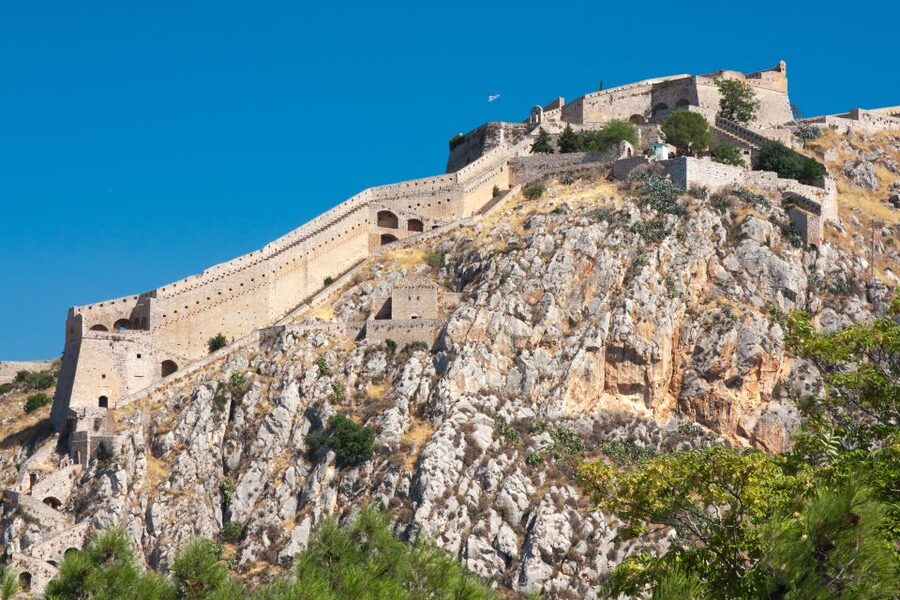
The route continues through Nafplio, once the capital of the First Hellenic Republic. The description of the day includes a stop or drive through this attractive harbor town, followed by views across the plain of Argos.
The time here is limited, so think of Nafplio as a taste rather than a proper city visit. You may have time to stretch, look around, or make a quick lunch stop, but this is not the tour for lingering by the waterfront. If Nafplio is a priority, plan a separate stay on another trip.
A different kind of day out, same corner of Greece:
- Athens: Acropolis & up to 5 Archaeological Sites Combo Pass
★ 4.4 · 12,619 reviews - Athens: Acropolis Ticket with Optional Audio or Live Guide
★ 4.2 · 11,055 reviews - Athens: Acropolis, Parthenon & Acropolis Museum Guided Tour
★ 4.8 · 9,316 reviews - Athens: Cape Sounion & Poseidon Temple Sunset Half-Day Trip
★ 4.8 · 8,241 reviews
Mycenae and the Tomb of Agamemnon
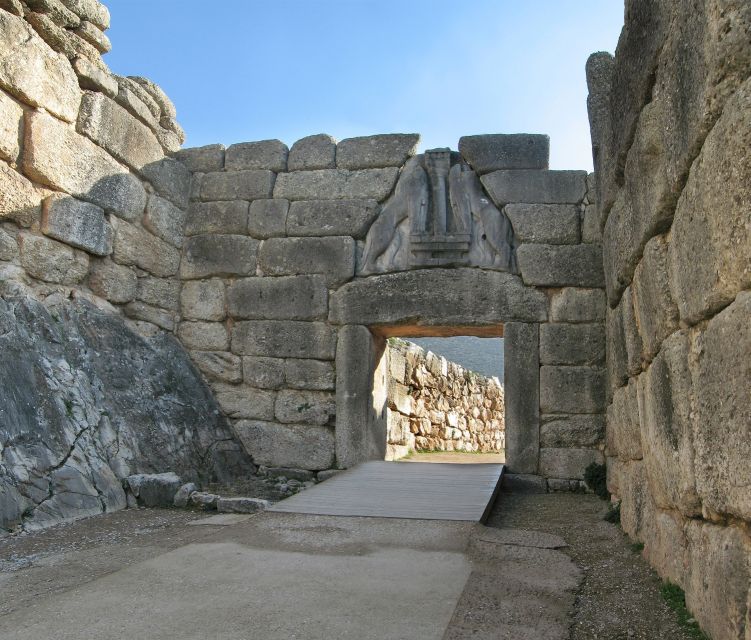
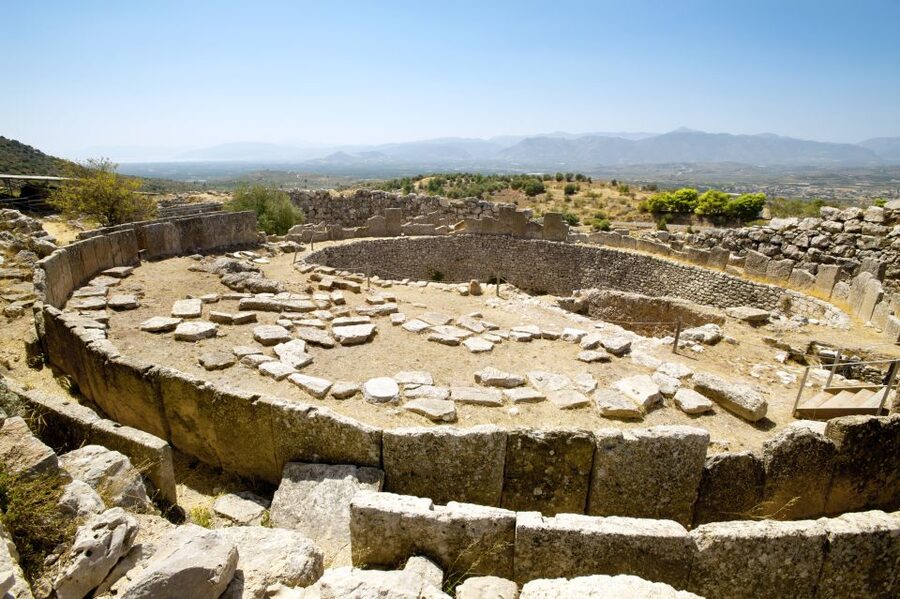
Mycenae is the day’s dramatic finish. The citadel sits high above the surrounding plain, and the approach through the famous Lion Gate gives the ruins a strong sense of arrival. You will see the remains of the fortified center and visit the large beehive-shaped tomb traditionally linked with Agamemnon.
The site belongs to the Mycenaean world, much earlier than the classical period associated with Athens and the later temples of Delphi. That makes it an important part of the route. You are not looking at one single chapter of Greece, but at several different eras layered across the country.
Mycenae can be hard to read without help. Walls, stones, and foundations do not always explain themselves. Guides have used reconstruction images and books to show how the ruins may once have looked, a useful aid when the remains seem bare.
After Mycenae, the bus heads toward Olympia by way of Tripolis and Megalopolis. These are mainly short stops for rest, snacks, or souvenirs. The day covers a lot of ground, so the evening hotel stay near Olympia matters. It breaks up the driving and puts you close to the next morning’s archaeological visit.
Day two: Olympia and the road to Delphi
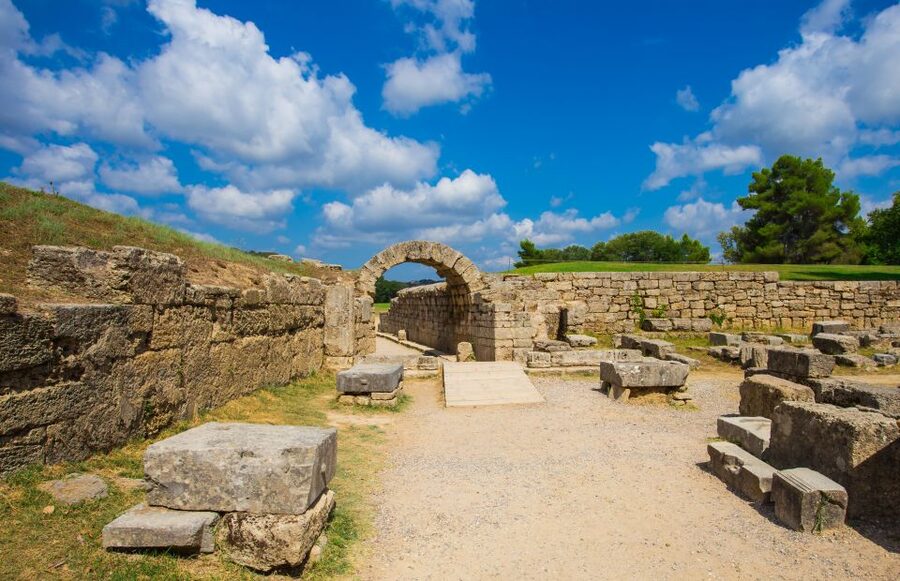
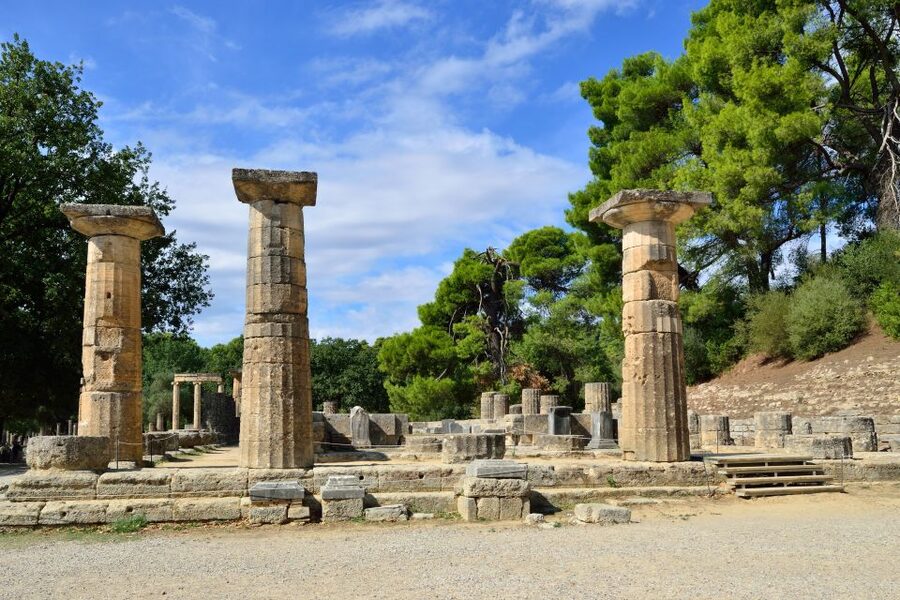
Olympia is one of the most meaningful stops on the route because the place is both archaeological site and living symbol. This was the sacred center of the ancient Olympic Games, and you will see the remains of the stadium, the temples of Zeus and Hera, and the altar connected with the Olympic flame.
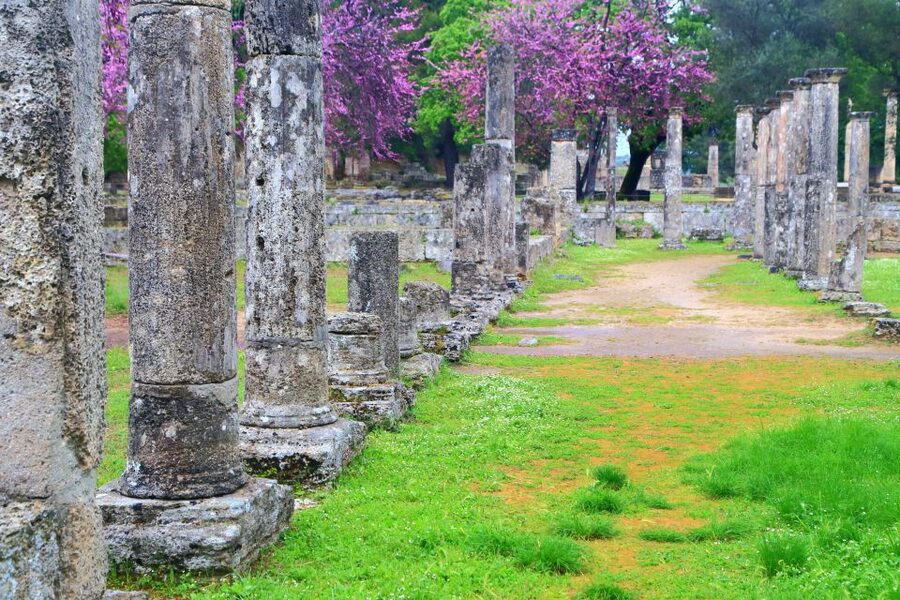
The site is spread out. Expect a walk between columns, foundations, and open grassy areas rather than one intact monument. The Temple of Zeus is particularly impressive in scale, even though only parts of its Doric columns remain. Your guide helps you understand how the sanctuary functioned and how the sporting contests fitted into its religious setting.
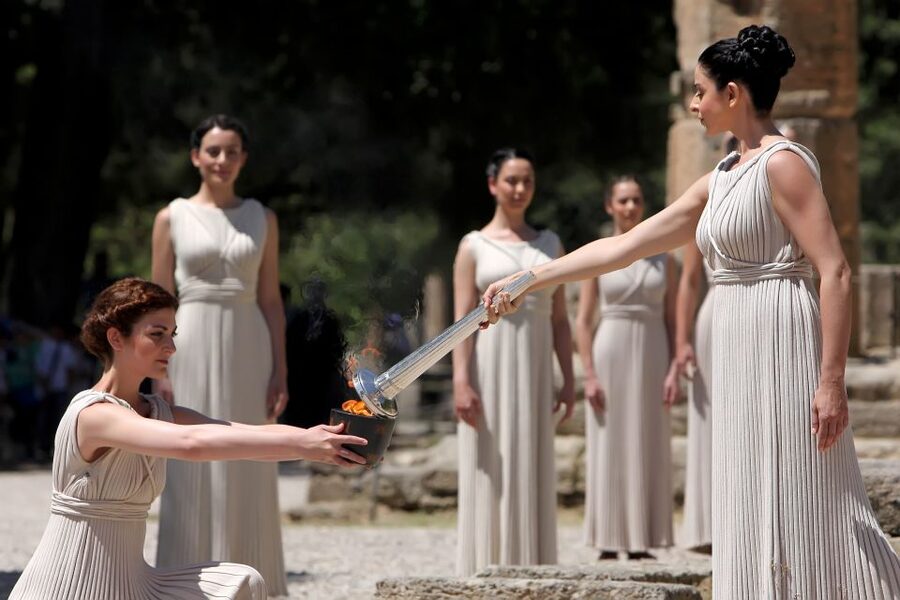
The altar of the Olympic flame is a simple but memorable stop. It connects the ancient sanctuary with the modern ceremony known around the world. The Archaeological Museum of Olympia, directly opposite the ruins, adds the detail that the stones cannot provide. Sculptures, architectural pieces, and excavated objects help you picture the original buildings.
Set aside energy for this visit. One guide led a group through Olympia and its museum for about three hours, with regular efforts to find shade. In summer, especially around 35 degrees Celsius, the heat can become the main challenge. A broad hat, sunglasses, sunscreen, water, and a small umbrella are sensible equipment, not overpacking.
Crossing the Corinthian Gulf
After Olympia, the route heads toward Rion and crosses the Corinthian Gulf on the bridge to Antirion. This is one of the trip’s modern engineering highlights, balancing the ancient structures with a major contemporary crossing.
The coastal road then leads toward Nafpaktos, a small harbor city with a different feel from the archaeological sites. The stop or drive-by gives you a glimpse of the coast and provides another break from ruins. The route is scenic, but the time is still controlled by the need to reach Delphi.
This is also where the bus becomes an important part of the experience. The roads can be winding, and the route passes through small towns. Several guides and drivers have been praised for handling tight roads calmly. Some groups have used a mid-sized minibus with air-conditioning and charging ports, though the exact vehicle depends on the departure.
Arachova before Delphi
In the afternoon, you visit Arachova, a mountain village on the slopes of Mount Parnassus. It is a pleasant contrast to the open sanctuaries of Olympia and Epidaurus, with a chance to see a lived-in mountain community rather than another ancient ruin.
The stop is short, but it helps break up the journey. You will then spend the night in Delphi, which is far more convenient than returning to Athens after the site visit. Having a hotel in the area means you can wake up close to the archaeological site on day three.
Hotel quality can vary with the selected option and availability. Three-star accommodation has been described as generally comfortable, with one especially well-liked hotel in Olympia. The Delphi property has received less favorable comments, including concerns about worn areas and a faulty toilet. Treat the hotel category as practical rather than luxurious, and check the chosen option before booking if room standards matter greatly to you.
Day three: Delphi, the ancient center of the world
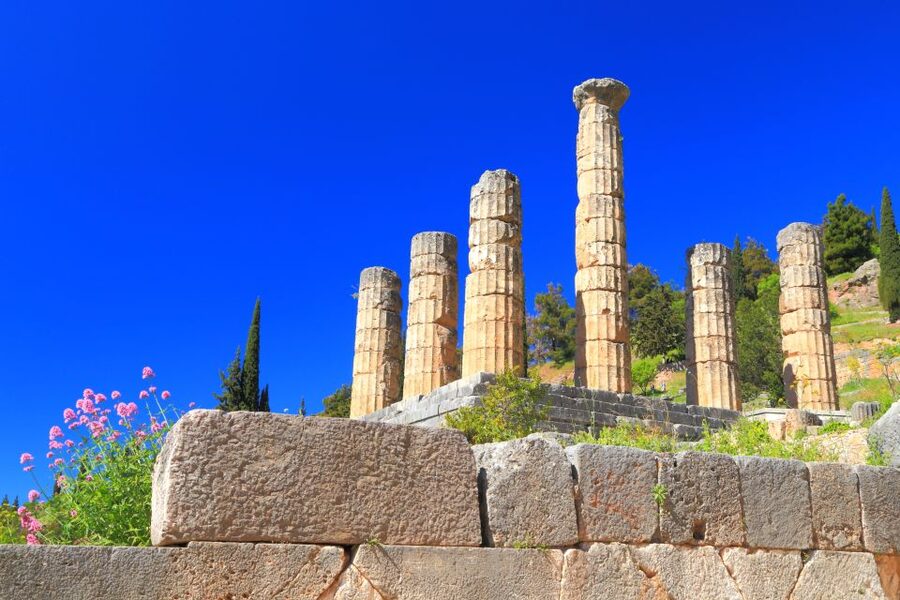
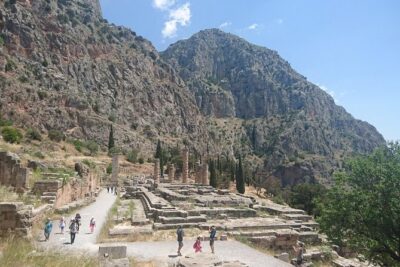
Delphi is the emotional high point for many people on this route. The sanctuary climbs the slope of Mount Parnassus, with views over the valley below. Ancient Greeks regarded Delphi as the center of the world, and the site’s myths connect it with Gaia, the earth mother, the Python, and Apollo.
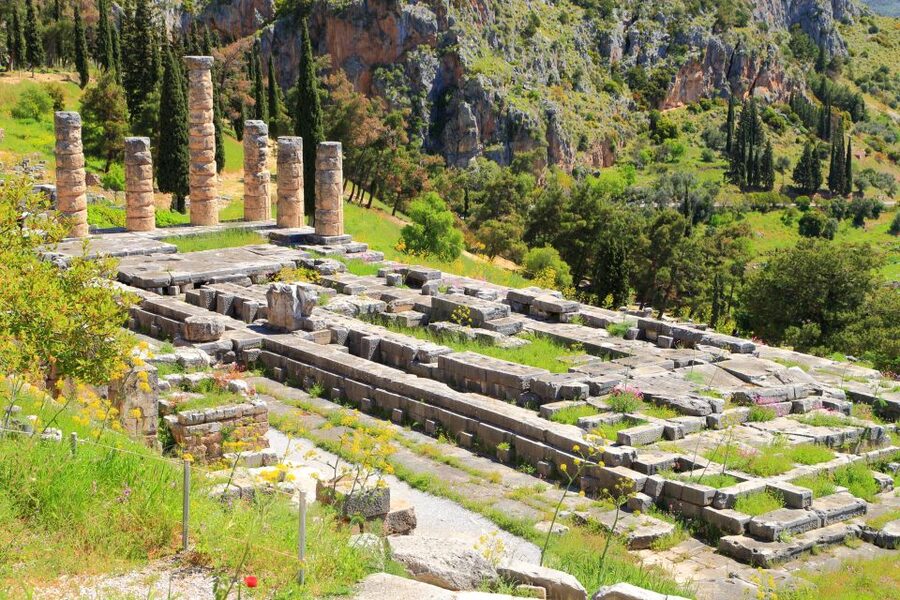
The guide is especially useful here. Without context, Delphi can look like a steep collection of broken columns. With the story in place, the Sanctuary of Apollo, the Oracle, the theater, and the surrounding monuments begin to form a working religious center.
You will visit the Temple of Apollo, where the Oracle delivered prophecies that shaped decisions across the Greek world. The account is not a simple fortune-teller story. It opens a window onto how religion, politics, pilgrimage, and power mixed in the ancient world.
The theater sits higher on the slope and could hold up to 5,000 spectators. From its seats, you get a broad view across the sanctuary and the valley. The climb is part of the experience, but it can be tiring, especially in summer. Wear shoes with a firm grip and expect uneven ground.
The Archaeological Museum of Delphi follows the outdoor visit. It contains objects and sculptures found at the sanctuary, giving you a closer look at details that are easy to miss among the ruins. A guide who combines the museum with the site can make the morning feel much more coherent.
Delphi is not a flat or effortless stop. The sanctuary is perched on a mountainside, and wheelchair users are not considered suitable for this activity. You should also be comfortable standing and walking for extended periods on uneven archaeological ground.
The guiding makes the difference
The strongest part of this tour is the guide-led interpretation. Guides named Anna, Marianna Tsigaridou, Evan, Dimitris, Christina, and others have been described as clear, warm, energetic, and strong with Greek mythology. The guide assigned to your departure may be different, but the tour depends heavily on this role.
A good guide does three jobs. First, the guide explains what you are seeing. Second, the guide gives you a meeting point and return time, which matters when the bus cannot wait indefinitely. Third, the guide ties one site to the next, showing how Mycenae, Olympia, and Delphi differ instead of treating them as three piles of old stone.
Several guides also add information about modern Greece during the drives. That helps the long road stretches feel less empty. You get stories about the regions you pass through, along with myths and historical connections at the stops.
The group format has advantages and limits. A small group, such as nine people in a mid-sized vehicle, can feel friendly and easy to manage. Larger departures may involve transfers between groups, and one account found the switching confusing. Guided visits at Mycenae and Delphi can also become large, so stay alert to the meeting instructions and take your own photographs as you go. You may not have time to retrace your steps.
Food, rooms, and the practical rhythm
Breakfast and dinner are included, while lunch is not. This is useful on a tightly timed route because you do not need to find dinner after arriving at the hotel. Dinners have generally been considered good, with one Olympia hotel earning special praise for rooftop meals.
Lunch stops are part of the day, but you pay separately. Carry a little food if you dislike rushed meals or have specific dietary needs. One gluten-free diner was accommodated at each meal, but you should still alert the operator before departure rather than rely on a last-minute request.
Room bookings are arranged as double or triple rooms. A single room requires a separate booking for one person. The hotel tax is paid directly to the property and is not included in the headline price.
Pickup is available from most centrally located Athens hotels on request. It generally begins about an hour before departure, so do not plan a last-minute breakfast or museum visit that morning. You can also meet at the supplier’s office 15 minutes before departure if that is easier. Confirm the exact pickup time and location with Key Tours before the trip.
The activity is offered in English. Free cancellation is available up to 24 hours before departure, and you can reserve now and pay later, useful if your Athens plans are still shifting.
Who should book this three-day circuit?
I would choose this tour if you have only a few days and want the major ancient sites explained properly. It suits first-time visitors, history enthusiasts, and anyone who would rather watch the road than drive winding routes through the Peloponnese.
It also suits you if you like a social trip. Three days on the same bus gives you time to get to know the group, while regular stops keep the long drives manageable. Families with older children can benefit from the mix of myths, theaters, temples, museums, and modern engineering.
I would hesitate if you need lots of free time, dislike fixed meal arrangements, or want a quiet, private visit at each sanctuary. The schedule is efficient because it is full. Summer heat is another real concern, especially at Olympia and Delphi.
Should you book it?
Book this tour if your goal is a well-explained overview of ancient Greece, not a leisurely stay in one town. The route is ambitious, the guide can make a major difference, and the included transport and admissions solve the hardest planning problems.
Choose the four-star option if hotel comfort is important, and confirm the property details before paying. If you can travel in spring or autumn, you will likely find the outdoor visits easier than under the strong summer sun.
Skip it if you want to set your own pace. But for $506 per person, with two nights, meals, a guide, entrance fees, and transport across a wide section of Greece, this is a practical way to connect Mycenae, Olympia, and Delphi in one carefully arranged trip.
FAQ
How long is the tour?
The tour lasts three days, with departure from Athens and return to Athens on the third day.
Which archaeological sites are included?
The route includes Epidaurus, Mycenae, Olympia, and Delphi. It also includes visits or stops at the Corinth Canal, Nafplio, Arachova, and Nafpaktos.
Is transportation included?
Yes. Transfers are provided by a luxury air-conditioned bus or minibus.
Is a guide included?
Yes. An English-speaking live tour guide leads the experience.
Are hotel stays included?
Yes. Two nights of accommodation are included in a selected three-star or four-star hotel option.
Are meals included?
Breakfast and dinner are included. Lunch, drinks, and personal expenses are not included.
Are entrance fees included?
Yes. Entrance fees for the included archaeological sites are covered.
Is hotel pickup available in Athens?
Free pickup is available from most centrally located Athens hotels on request. Confirm the exact pickup point and time with Key Tours.
Is the hotel tax included?
No. The hotel tax is paid directly to the hotel. It is listed as €10 per room per night for four-star hotels and €5 per room per night for three-star hotels.
Can I book a single room?
Each booking is for a double or triple room. A person requesting a single room must make a separate booking for one person.
Is the tour suitable for wheelchair users?
No. The activity is not suitable for wheelchair users.
Recently reviewed around Athens
- Small-Group Women History in Ancient Greece Walking Tour★ 5.0 · 38 reviews
- Ceramic and Pottery Creative Workshop with Two Local Artists★ 4.0 · 57 reviews
- Athens: Wine Workshop Create your Own Wine under the Acropolis★ 5.0 · 77 reviews
- Athens: Greek Wines Tasting with Sommelier and Acropolis Views★ 5.0 · 88 reviews
- Hydra Private Day Trip by Ferry from Athens with Transfers★ 4.0 · 30 reviews
- Small-Group Wine Tour in Athens with Tasting★ 5.0 · 33 reviews
- Wine Trails Private Tour/ Nemea visit 3 wineries from Athens or Nafplion (10 h)★ 5.0 · 44 reviews
- Private Athens Transfer Airport/Port -Greek Tours-Hourly service★ 5.0 · 88 reviews
3-Day Experiences, compared.
3-Day Classical Greece Tour: Epidaurus, Mycenae, Nafplion, Olympia, Delphi
Read our review →

3 days 2 nights Meteora with small size tours & hotel
Read our review →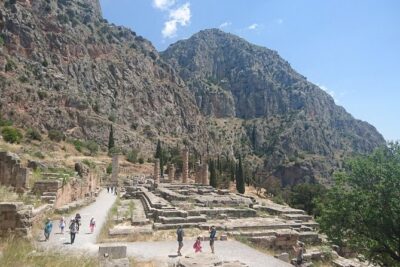
Browse the lists this tour appears in