
Reviewed · GREEK COOKING CLASSES
Athens: Greek Souvlaki Pita Gyros Cooking Class with a Local
The best part of this Athens cooking class is that you do not simply watch someone assemble a gyro. You make the soft pita, season the meat in several ways, prepare the extras, and sit down to eat the whole meal with Dionysia and her family. It feels more like being welcomed into a Greek kitchen than attending a formal culinary lesson.
I especially like the from-scratch pita dough and the chance to try five different gyro preparations. I also like the hosts’ relaxed approach: you can take a beer or wine from the fridge, ask about Greek food and daily life, and learn about the family’s zero-waste habits while you cook. The main consideration is practical: at $129 per person, this is a serious food experience, and the three-hour class may be less appealing if you want a quick, inexpensive street-food snack or have mobility limitations.
In This Review
- Key points to know before booking
- What the three-hour Athens cooking class feels like
- Starting with homemade pita dough
- Five ways to season and cook the gyros
- Stories, Greek food traditions, and zero-waste habits
- Dessert: patsabouropita or Greek-style cheesecake
- Sitting down to eat what you made
- The hosts make the difference
- Location, timing, and practical concerns
- Who will enjoy this class most
- Is the $129 price good value?
- Should you book the Athens souvlaki class?
- FAQ
- Where does the cooking class take place?
- How long does the experience last?
- What language does the instructor speak?
- Who leads the class?
- What food will I prepare?
- Which dessert is included?
- Are food and drinks included?
- Do I receive the recipes?
- Is pickup available?
- Can I cancel for a full refund?
Key points to know before booking
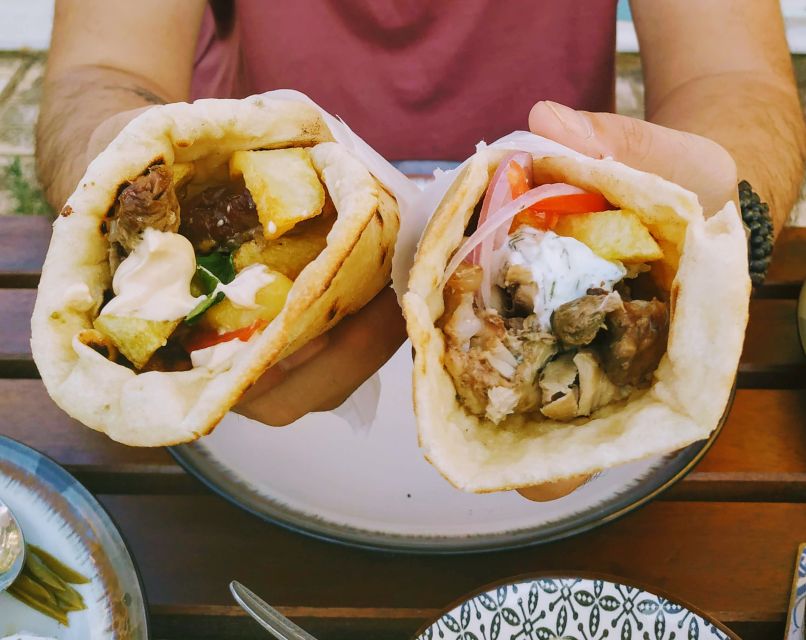
- Pita starts with the dough: You prepare the bread yourself instead of relying on pre-made pitas.
- Five gyro styles: Dionysia explains different seasoning and cooking approaches so you can shape the meal to your taste.
- A family kitchen in central Athens: The setting is designed to feel like the hosts’ own home, not a formal restaurant classroom.
- Food and drinks are unlimited: Come hungry, because the meal is substantial and includes beer, wine, and other drinks.
- Dessert changes: The sweet finish is either patsabouropita or Greek-style cheesecake.
- You leave with recipes: The class is useful beyond Athens because you can recreate the meal at home.
What the three-hour Athens cooking class feels like
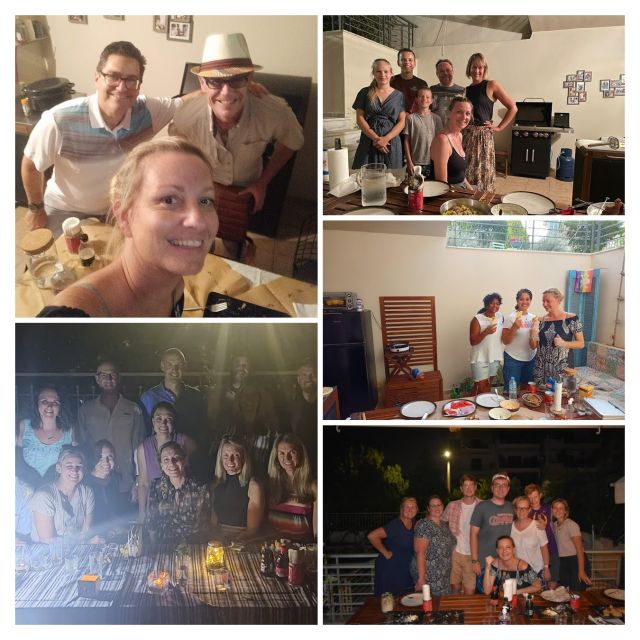
This experience takes place in central Athens, in a cozy kitchen created to resemble the hosts’ home kitchen. Dionysia leads the class in English, with help from her husband and family.
The tone is deliberately informal. You are encouraged to take a drink from the refrigerator and settle into the kitchen rather than sit quietly while someone gives a long demonstration. That matters because Greek food is closely tied to conversation, hospitality, and generous portions. The social side is part of the lesson.
The class lasts about three hours, so it has enough time for preparation, cooking, conversation, and a proper meal. You are not racing through a list of small samples. You are working toward a complete pita gyro feast, then eating what you helped prepare.
The class has earned a perfect rating from 38 published bookings, with repeated praise for the warm hosts, easy instructions, hands-on tasks, and food. I would not use a rating alone to choose a cooking class, but here the same strengths keep appearing: Dionysia makes the process approachable, her husband keeps things lively, and the meal is served in a relaxed family setting.
More Cooking Classes in Athens
- Athens: Classic Cooking Class with Market Visit and Wine
★ 5.0 · 1,101 reviews - Athens: Food Market Visit and Cooking Class with Wine
★ 4.9 · 1,087 reviews - Greek Cooking Class in Athens Including Rooftop Dinner with Acropolis View
★ 5.0 · 826 reviews
Starting with homemade pita dough
The first major task is preparing pita bread from scratch. This is one of the most useful parts of the class because pita is easy to take for granted when you buy a gyro from a shop. Here, you see what goes into making bread that is soft, flexible, and sturdy enough to hold meat, sauces, and vegetables.
You will work with the dough and learn how it becomes the pillowy bread used for the meal. The hands-on approach gives you something practical to repeat at home. You do not need to be an experienced cook. The instructions are designed to be easy to follow, and past participants have described the tasks as approachable and fun.
This is also where the class moves beyond a standard food tasting. A tasting gives you a finished bite. Here, you learn one of the building blocks of Greek street food and gain a better sense of why a good gyro depends on more than the filling.
The exact pace can vary with the group, but the class is intended to keep everyone involved. If you enjoy learning by doing, this should be more rewarding than a demonstration where you spend most of the time watching.
Five ways to season and cook the gyros
The centerpiece is the gyro preparation. Dionysia explains how to season and cook gyros in five different ways, giving you several routes to the final filling.
That variety is useful for two reasons. First, it shows that gyro flavor is not one fixed formula. Seasoning changes the character of the meat, and small decisions can make the finished pita lighter, stronger, richer, or more herbal. Second, it gives you ideas for cooking at home when you do not have access to the exact equipment found in a Greek street-food shop.
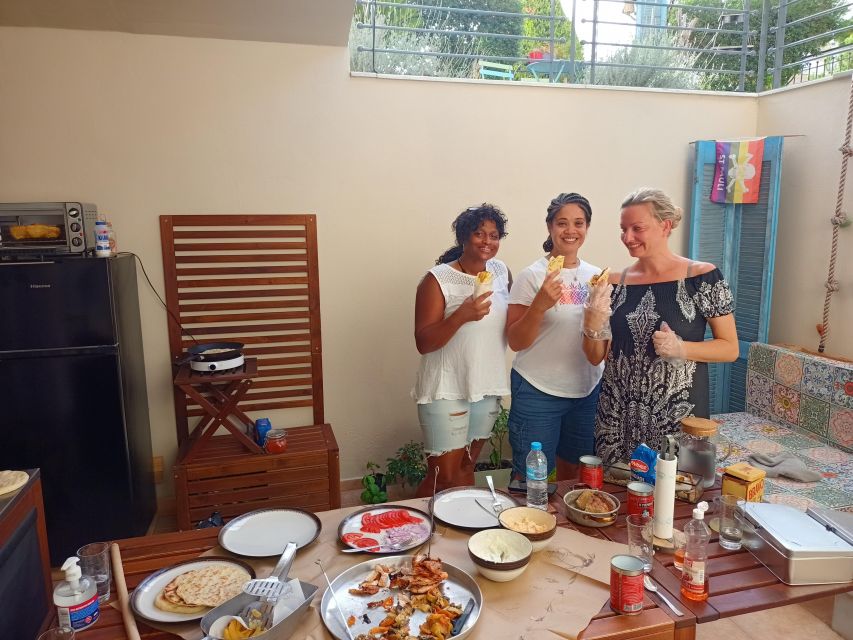
You help prepare the ingredients rather than simply receiving a plate. You can then assemble your pita to your own liking, adding the fillings and accompaniments in the proportions you prefer. This is a small but important advantage for families and mixed groups. One person can load up on meat and sauce, while another can keep the pita simpler.
The class also includes dips and other components of the meal. The supplied details do not promise a fixed list of every side dish, so expect the focus to remain on the pita gyro rather than a broad survey of Greek cooking.
If you have a favorite gyro shop in Athens, this class will not replace it. A street-food counter gives you speed, a hot meal, and the atmosphere of eating on the move. This class gives you the slower pleasure of understanding how the food comes together.
Stories, Greek food traditions, and zero-waste habits
Cooking is only one part of the experience. Dionysia shares the story behind the recipes and talks about Greek traditions, food, travel, and life in Athens.
I like this format because the cultural information arrives while you are handling ingredients. You learn why a dish matters in the same space where you are preparing it. That tends to be more memorable than a detached lecture about Greek cuisine.
The class also introduces the Greek zero-waste culture. The point is practical rather than abstract. If someone does not eat a certain dish or cannot finish everything, food can be taken away, used by the family, or donated. This approach is built into the hospitality of the class and helps avoid the careless waste that can come with generous portions.
You should still arrive with a good appetite. The promise of unlimited food and drinks means this is not a light cooking workshop. It is a full meal, and the hosts clearly want you to eat comfortably and generously.
Conversation is likely to be a major part of the evening. The hosts have welcomed many people into their kitchen, first in their seaside home and later in central Athens. Their move into the city center means you can combine the class with sightseeing without arranging a long trip outside Athens.
More Athens trips worth a second look
- Greek Small-Group Athens Cooking Class & Dinner
★ 5.0 · 574 reviews - Athens: Greek Cooking Class & Dinner on a Rooftop
★ 5.0 · 383 reviews - Athens: Greek Cuisine Cooking Class and 3-Course Dinner
★ 4.8 · 270 reviews - Traditional Greek cooking class and lunch or dinner with an Acropolis view
★ 5.0 · 250 reviews
Dessert: patsabouropita or Greek-style cheesecake
After the savory course, the meal ends with one of two Greek sweets: patsabouropita or a Greek-style cheesecake.
Patsabouropita is a traditional Greek dessert made with pastry, while the cheesecake offers a more familiar finish with a Greek touch. The specific dessert is not fixed in the supplied details, so do not book this expecting to choose between both at every session.
The sweet course helps make the experience feel like a family meal rather than a narrow lesson in grilled meat. You have worked through dough, seasoning, cooking, assembly, and dessert before sitting down to enjoy the results.
For anyone with food allergies or a strict diet, ask the provider before booking. The available information does not list allergy substitutions or a set menu for dietary restrictions.
Sitting down to eat what you made
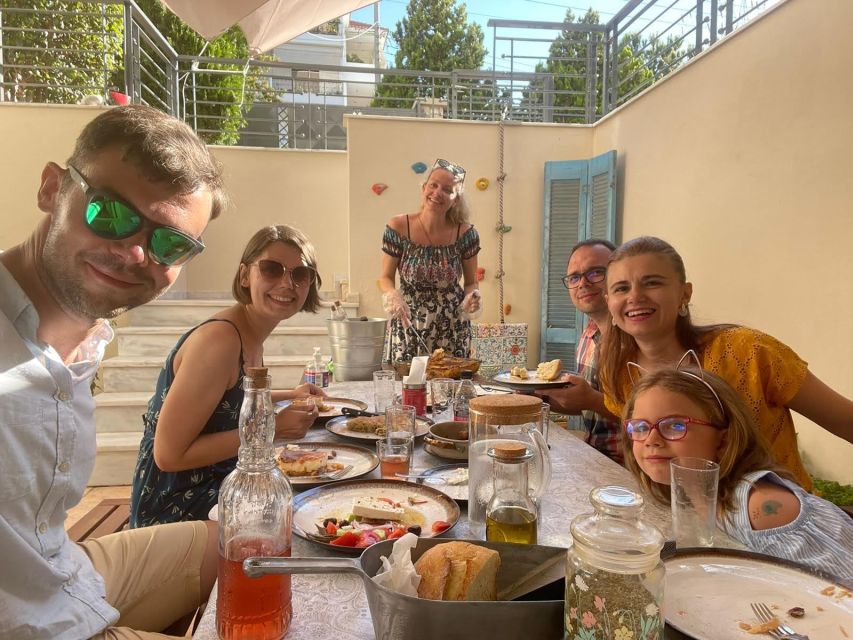
The final stage is the reward: you sit down and eat the meal prepared during the class. Food and drinks are unlimited, and the informal setup encourages you to linger rather than hurry out after the last instruction.
This is where the $129 price needs to be judged carefully. You are paying for three hours of instruction, an English-speaking host, kitchen equipment, ingredients, a full meal, unlimited drinks, dessert, recipes, and the personal setting of a family-run class.
That is not cheap compared with buying a gyro at a neighborhood shop. If your goal is simply to eat Greek street food, spend a few euros at a casual counter. If you want a social activity, practical recipes, and a deeper connection to the people preparing your meal, the price makes more sense.
The unlimited food and drinks add value for anyone who enjoys a long dinner. They matter less if you eat lightly or do not drink alcohol. The recipes add lasting value because they give you a way to repeat the experience once you are home.
Families have found the hands-on format especially useful. A family of five described enjoying the fact that everyone could take part, while a parent and daughter enjoyed the class together. Couples can also fit comfortably into the experience, as can solo visitors who like meeting people around a shared meal.
The hosts make the difference
Dionysia is the main instructor, and her husband helps keep the session moving. Their style is warm and casual rather than formal or chef-centered.
The most consistent strength is the way Dionysia makes cooking feel manageable. You are not expected to know Greek techniques before you arrive. She explains the process, answers questions, and keeps the work moving without making the class feel rushed.
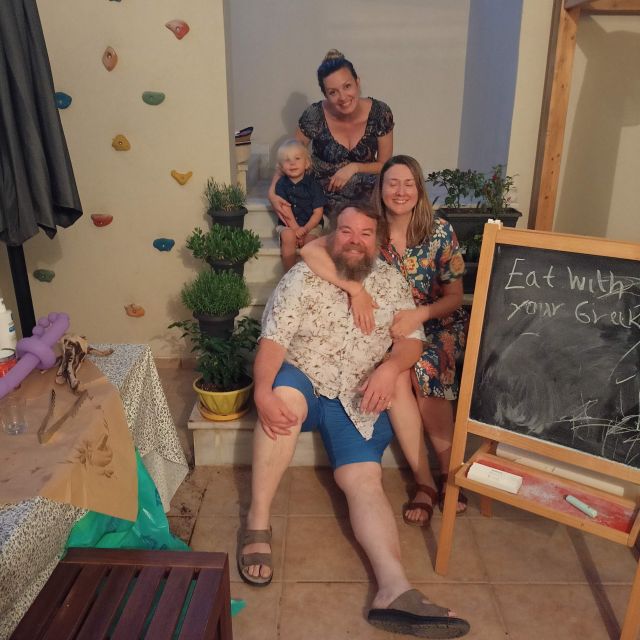
Her husband adds to the social atmosphere, and the family setting gives the meal a personal quality. A small helper from the family has even been part of the kitchen atmosphere during a past class, which gives you a sense of how home-based the experience can feel.
This is not the right choice if you want a silent, highly structured professional cooking course. It is better suited to someone who enjoys conversation, shared food, and a bit of friendly disorder. You are joining a family kitchen, not training for a restaurant job.
Location, timing, and practical concerns
The class is in central Athens, which is helpful if you are staying in the city center and want to fit the activity around sightseeing. The meeting point is provided when you book, and pickup can be arranged if needed. Ask about this in advance rather than assuming transportation is included.
The class runs for three hours, with starting times based on availability. An evening session can work well after a day around Athens, but remember that cooking and eating a large meal may make it a poor fit immediately before another timed activity.
The language is English. The provider does not list the class as suitable for people with mobility impairments, so this is an important restriction. The physical demands are not described in detail, but the activity takes place in a working kitchen and includes hands-on preparation.
Wear something comfortable enough for cooking and expect to spend part of the session actively preparing food. No special cooking equipment is required because the instructor provides the kitchen equipment.
Cancellation is free up to 24 hours before the activity for a full refund. You can also reserve now and pay later, which helps if your Athens schedule is still shifting.
Who will enjoy this class most
I would recommend this class to you if you meet several of these conditions:
- You want a hands-on food experience rather than a restaurant meal.
- You enjoy learning recipes you can use at home.
- You like informal conversation and family hospitality.
- You are comfortable eating a large meal over several hours.
- You are visiting Athens with children or family members who need an active role.
- You want to learn more about Greek food traditions through personal stories.
- You appreciate the practical zero-waste message.
It is less suitable if you are looking for a quick activity, a low-cost lunch, or a strictly professional cooking course. It may also be a poor fit if you have mobility limitations, since the provider specifically lists the class as unsuitable for people with mobility impairments.
The experience is also food-focused. If you want a broad tour of Athens or a long walking route through historic sites, choose another activity and save this for a day when you can give your attention to the kitchen.
Is the $129 price good value?
At $129 per person, this class belongs in the special-activity category rather than the casual-meal category. You should compare it with other three-hour cooking and dining experiences, not with the price of a takeaway gyro.
The value comes from the combination of instruction and hospitality. You learn to make pita dough, work through five gyro methods, prepare accompaniments, enjoy dessert, drink as much as you wish, and receive recipes for later use. You also get direct time with Dionysia and her family, which is the part a restaurant cannot provide.
The price is easier to justify for a couple, family, or small group that wants a shared memory. It is harder to justify if you are traveling on a tight food budget or mainly want to sample Athens street food.
One practical tip: skip a large meal beforehand. The class is designed for a strong appetite, and you will get more from it if you can taste each stage and still enjoy the final spread.
Should you book the Athens souvlaki class?
Book it if you want to cook, talk, eat, and leave with something useful. The homemade pita, five gyro preparations, unlimited food and drinks, family setting, and take-home recipes make this one of the more personal food activities available in central Athens.
I would be especially keen to book it for a family, a couple celebrating a trip, or anyone who plans to cook Greek food at home. Dionysia’s relaxed teaching style suits beginners, and the zero-waste approach adds a thoughtful touch without turning the evening into a lecture.
Skip it if you only want a cheap gyro, have limited mobility, or prefer a formal class with a fixed professional curriculum. For everyone else, this is a generous, sociable way to understand an Athens favorite by making it yourself.
FAQ
Where does the cooking class take place?
The class takes place in a cozy kitchen in central Athens, Greece.
How long does the experience last?
The cooking class lasts three hours.
What language does the instructor speak?
The instructor teaches in English.
Who leads the class?
Dionysia leads the cooking class, with help from her husband and family.
What food will I prepare?
You will prepare pita dough, pita gyros, dips and other meal components, and a dessert. The gyros are seasoned and cooked in five different ways.
Which dessert is included?
The dessert is either patsabouropita or Greek-style cheesecake. The available details do not specify which dessert will be served at each session.
Are food and drinks included?
Yes. The experience includes unlimited food and drinks, including beer and wine.
Do I receive the recipes?
Yes. Recipes are included, so you can recreate the dishes at home.
Is pickup available?
Pickup can be arranged if needed. Contact the provider about this when making your plans.
Can I cancel for a full refund?
Yes. You can cancel up to 24 hours in advance for a full refund. You can also reserve now and pay later.
More Workshops in Athens
- Athens Airport Private Transfer by Mercedes-Benz E Class Wagon to City Center
★ 5.0 · 232 reviews - Athens Greek Cooking Class Pita Gyros from Scratch with a Local
★ 5.0 · 175 reviews - Athens: Greek Cooking Class with Meal and Drinks
★ 4.9 · 171 reviews - Athens: Kerameikos Stone House Cooking Class
★ 5.0 · 165 reviews
Recently reviewed around Athens
- Small-Group Women History in Ancient Greece Walking Tour★ 5.0 · 38 reviews
- Ceramic and Pottery Creative Workshop with Two Local Artists★ 4.0 · 57 reviews
- Athens: Wine Workshop Create your Own Wine under the Acropolis★ 5.0 · 77 reviews
- Athens: Greek Wines Tasting with Sommelier and Acropolis Views★ 5.0 · 88 reviews
- Hydra Private Day Trip by Ferry from Athens with Transfers★ 4.0 · 30 reviews
- Small-Group Wine Tour in Athens with Tasting★ 5.0 · 33 reviews
- Wine Trails Private Tour/ Nemea visit 3 wineries from Athens or Nafplion (10 h)★ 5.0 · 44 reviews
- Private Athens Transfer Airport/Port -Greek Tours-Hourly service★ 5.0 · 88 reviews
Greek Cooking Classes, compared.
Classic Cooking Class with Market Visit and Wine
Read our review →
Food Market Visit and Cooking Class with Wine
Read our review →
Greek Cuisine Cooking Class in Santorini with Recipes and Wine
Read our review →
Half-Day Cooking Class at Basiliko Family Tavern
Read our review →
Greek Cooking Class in Athens Including Rooftop Dinner with Acropolis View
Read our review →
Greek Small-Group Athens Cooking Class & Dinner
Read our review →
Authentic Cooking Class in the White Mountains
Read our review →
Browse the lists this tour appears in