
Reviewed · WALKING TOURS
Athens: Guided Mythological Walking Tour & Creation Stories
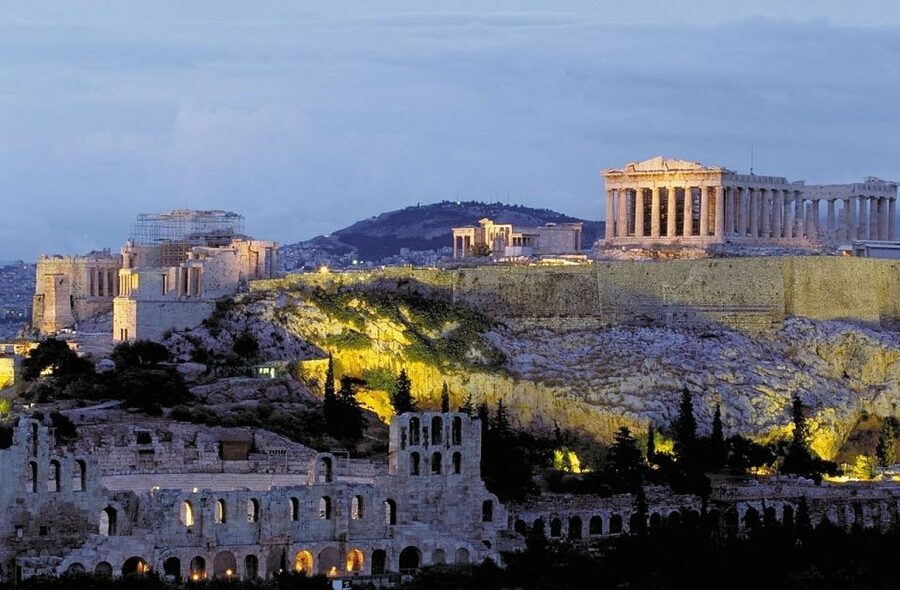
Athens is more than temples and marble ruins. It is also the city where Athena and Poseidon competed for power, where Theseus became tied to the city’s identity, and where old myths still echo in street names and building details. This two-hour mythology walk gives you a story-led way to see the Greek capital.
I like the focus on Athena, Poseidon, and Theseus, and I like that the guide connects myths with daily life, from trade to romance. The Spanish-speaking guides Juan Pablo and Pablo have been praised for their energy, humor, and ability to make the subject interactive. The main consideration is language: this tour is in Spanish only, so it is not a good fit if you need English commentary.
In This Review
- Key points to know before booking
- Why mythology gives Athens a fresh shape
- Starting at the Academy stairs
- Athena and Poseidon: the city’s founding story
- Theseus and the making of an Athenian hero
- Gods in building details and street names
- Ancient religion in everyday Greek life
- What the two-hour format means for you
- Spanish language and guide style
- Is $28 a fair price?
- Who should book this Athens walk?
- Practical verdict on the mythology tour
- FAQ
- Where does the Athens mythology tour meet?
- How long does the walking tour last?
- What language is the tour in?
- Which mythological figures are covered?
- Is this a small-group experience?
- Can I cancel for a full refund?
Key points to know before booking
- Start at the Academy stairs: The meeting point is in front of the Academy, giving you a clear central location to begin.
- Athena and Poseidon take center stage: You learn why the city is linked so closely with the goddess Athena and the sea god Poseidon.
- Theseus connects myth with Athens: The hero’s stories help explain his lasting place in the city’s identity.
- Mythology meets everyday life: The guide shows how religion shaped commerce, love, language, decoration, and public life.
- Spanish-speaking and guided: A live heritage interpreter leads the walk, with guides including Juan Pablo and Pablo.
- Small-group format: The tour is designed for small groups, though the exact group size is not stated.
Why mythology gives Athens a fresh shape
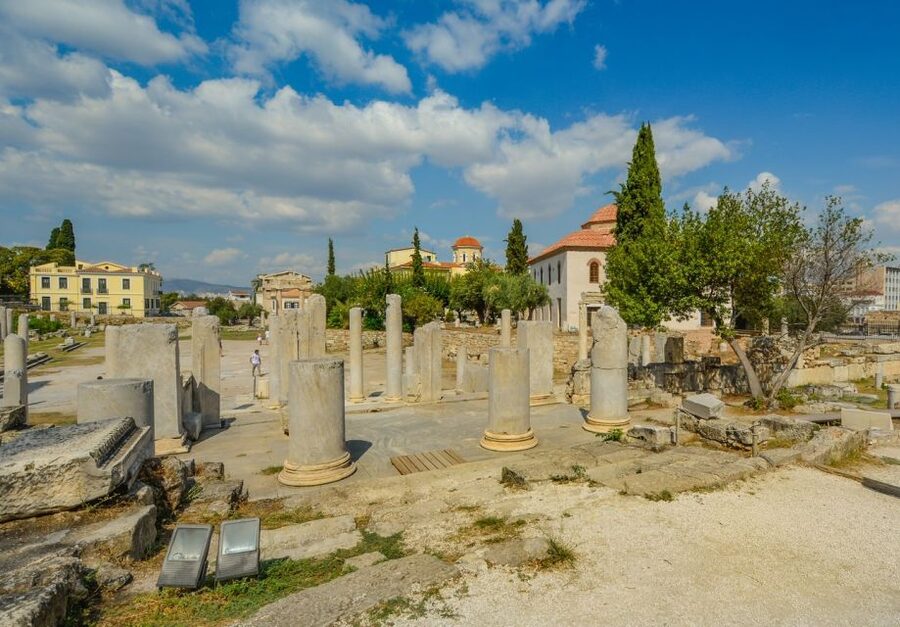
I find Athens easier to understand when I look at it through stories rather than dates alone. A conventional city walk may point out a building, explain its age, and move on. This one asks what the city meant to the people who created it.
That difference matters. Greek mythology was not just a collection of entertaining tales. Religion touched almost every part of ancient life, including commerce, love, family, public duty, and political identity. As you walk, the guide uses myths to show how those beliefs shaped the city and how some ideas still appear in modern expressions.
The tour also helps you connect separate pieces of Athens. A goddess on a building, a street name, or an old public space can feel random if you do not know the story behind it. With the myths in place, those details become easier to notice and remember.
I would not choose this walk as a substitute for a full archaeological tour. The focus is not on a long technical account of architecture or excavation. Instead, it gives you a cultural key for reading the city, which can make later visits to Athens’ major ancient sites more meaningful.
More Walking Tours in Athens
- Athens: Acropolis and Parthenon Guided Walking Tour
★ 4.6 · 5,882 reviews - Greek Food Walking Tour in Athens
★ 5.0 · 4,740 reviews - Acropolis: Acropolis and Parthenon Guided Walking Tour
★ 4.7 · 3,442 reviews
Starting at the Academy stairs
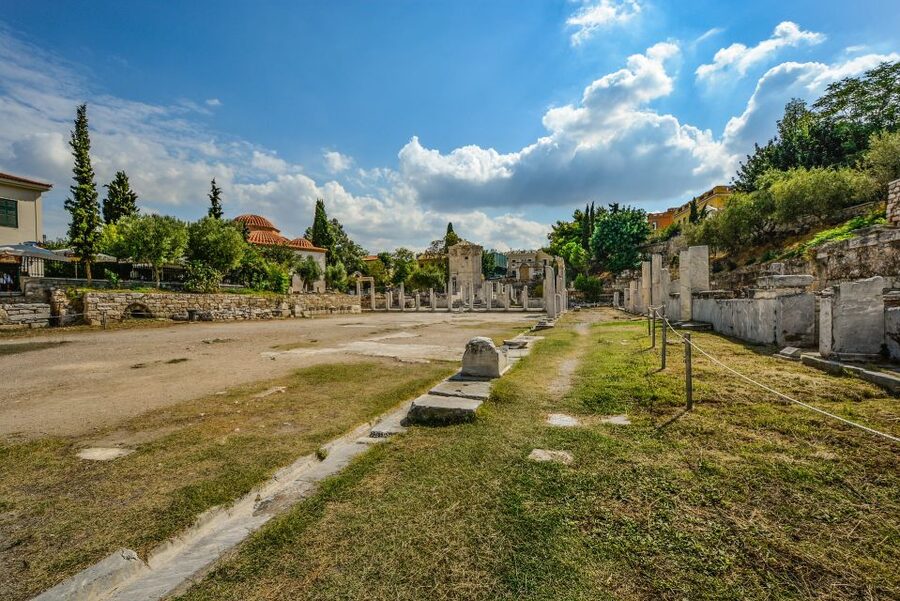
The meeting point is on the stairs in front of the Academy. This is the practical first detail to get right, since a central meeting place can still be confusing in a large city. Give yourself enough time to locate the steps before the scheduled start.
The Academy is a fitting place to begin. Even without turning the opening into a lecture about architecture, the setting puts you near one of Athens’ important public buildings and its tradition of learning. From there, the walk moves into a city where ancient stories are not locked away inside a museum.
Your guide is a heritage interpreter and leads the tour in Spanish. That role is important here. Mythology can become a list of names very quickly, especially when several gods have overlapping powers and complicated family ties. A good guide gives the stories a clear order and explains why each one matters to Athens.
The strongest guide names connected with this experience are Juan Pablo and Pablo. Juan Pablo, in particular, has been described as friendly, funny, well prepared, and passionate about both mythology and his city. That gives you a useful picture of the tone to expect: less formal classroom lecture, more lively conversation led by someone who enjoys the subject.
Athena and Poseidon: the city’s founding story
One of the central episodes is the famous contest between Athena and Poseidon. The story explains why Athens is linked to Athena and why the goddess became such a powerful symbol of the city.
You will hear how the two deities competed to offer the city a gift. Poseidon’s connection with the sea and Athena’s wisdom make the contest more than a simple battle between characters. It presents two different kinds of power and asks which one a city should value.
This is where a mythology guide can add something a guidebook often cannot. The story is easy to remember, but the cultural meaning takes more explanation. Athena is not simply a character from a childhood tale. She represents the identity Athens wanted to claim for itself, including wisdom, skill, strategy, and civic life.
Poseidon remains important too. His place in the story shows that Greek myths often preserve tension rather than offering a neat, simple answer. The guide can use that rivalry to explain how gods represented forces that shaped ancient life, from the sea and travel to planning and public order.
Do not expect a theatrical performance or a staged reenactment. The appeal comes from hearing the story in the city connected with it, then noticing how the myth appears in art, names, and public symbols.
Theseus and the making of an Athenian hero
The tour also follows the connection between Theseus and Athens. Theseus is one of the best-known heroes in Greek mythology, and his place in the city’s story is not accidental.
His tales bring together the ideas of courage, identity, kingship, and civic belonging. The point is not only what Theseus did as a hero, but why Athens kept linking itself to him. Cities use heroic figures to explain their values and to give their past a memorable human face.
I like this part of the walk because Theseus helps bridge the gap between gods and ordinary people. Athena and Poseidon belong to the world of divine power. Theseus operates closer to the human scale, even when his adventures are clearly legendary.
The guide’s job is to separate the basic story from the wider meaning without draining away the fun. You may already know pieces of the Theseus legend from school, books, or films. Hearing it in relation to Athens gives those familiar episodes a more specific setting.
The available details do not identify every exact stop connected with Theseus, so you should not book this expecting a fixed list of named monuments. Think of the hero’s story as one of the main threads running through the walk.
More Athens walks with a guide:
- Acropolis monuments & Parthenon Walking Tour with Optional Acropolis Museum
★ 5.0 · 2,678 reviews - Athens Acropolis and Parthenon Walking Tour
★ 4.5 · 1,355 reviews - Athens Authentic Greek Food Walking Tour (Small Group)
★ 5.0 · 809 reviews - Early Morning Acropolis & Old Athens Guided Walking Tour
★ 4.4 · 748 reviews
Gods in building details and street names
One of the most useful promises of this experience is its attention to the marks mythology has left around modern Athens. The guide points out how the gods appear in building decoration and in the names of streets.
That approach keeps the walk grounded in what you can actually see. You are not only listening to a story about Mount Olympus. You are being encouraged to look up, check the details on a facade, and notice names that might otherwise pass without meaning.
This is also where the tour can work well early in your Athens visit. A mythology walk gives you a set of visual clues for the rest of your stay. Later, when you see a god represented in sculpture or architectural ornament, you will have a better idea of what to look for.
The information provided does not list each building or street included. That is worth noting if you prefer a tightly defined sightseeing route. The strength is the theme rather than a guaranteed checklist of monuments.
I would bring a small notebook or use your phone for names, especially if Greek mythology is new to you. There are many gods, heroes, rivalries, and family connections. A few quick notes can help you keep Athena, Poseidon, and Theseus in their proper places.
Ancient religion in everyday Greek life
The most valuable part of the experience may be its wider explanation of religion. The guide does not treat mythology as a separate fantasy world. Instead, the stories are used to explain how people in Ancient Greece understood daily life.
Commerce and love affairs are specifically part of the discussion. That makes the tour more useful than a simple parade of famous gods. You learn that religion shaped practical decisions and social ideas, not just ceremonies at temples.
This also explains why ancient Greek concepts still appear in modern language and expressions. The walk links old stories with ideas that have reached the present day. You may come away with a better sense of why Greek mythology remains so present in art, speech, education, and popular culture.
I appreciate that the tour appears aimed at understanding rather than memorizing. You do not need a degree in classics, and you do not need to arrive knowing the family tree of Zeus. The guide’s role is to make the stories clear and show you why they mattered.
For children and teenagers, this angle can make Athens more approachable. For adults, it offers a useful correction to the simplified versions of myths many of us learned long ago. The stories remain dramatic, but the cultural background gives them more weight.
What the two-hour format means for you
Two hours is a sensible length for this subject. It gives the guide time to explain several major stories without turning the walk into an all-day study session.
You should expect a steady city walk with stops for explanation, though the exact route and number of stops are not specified. Wear comfortable shoes and be ready to listen while standing outdoors. The tour is not described as a vehicle ride, and the meeting point is on foot at the Academy.
The small-group setup is another plus. Smaller groups generally make it easier to hear the guide, ask questions, and keep the discussion interactive. The exact maximum number of people is not provided, so I would not assume an especially intimate private-tour setting.
The experience is also short enough to fit beside other Athens plans. You could use it near the start of a visit to get a cultural frame for the city, or later as a lighter change from museums and archaeological sites.
The guide’s energy matters more on a mythology walk than on a simple transfer between sights. The strongest praise connected with this tour focuses on interactivity, humor, preparation, and enthusiasm. Those qualities help keep two hours of names and stories from becoming a blur.
Spanish language and guide style
This is a Spanish-language experience from beginning to end. The live guide and heritage interpretation are offered in Spanish, and Spanish fluency should be your first booking test.
If you understand Spanish well, the format should feel natural and conversational. Juan Pablo has been noted for making the walk feel like a discussion between people who share an interest in mythology. Pablo has also been described as informative and clearly committed to his work.
Those details suggest a tour with personality rather than a dry recitation. Still, individual guide style can vary, and the supplied information does not promise that every departure will have the same guide.
If you are traveling with a mixed-language group, consider this carefully. The experience is not advertised as bilingual, and there is no English option stated. A Spanish speaker who enjoys history, stories, and cultural context is likely to get much more from it than someone who only knows a few Spanish phrases.
Is $28 a fair price?
At $28 per person, the tour offers reasonable value if you want a guided introduction to Athens with a clear theme. You are paying for two hours with a live Spanish-speaking heritage interpreter, not simply for access to a monument.
That distinction is important. No entry ticket to an archaeological site is included in the information provided, so the value rests on the guide’s explanations and the route through the city. If you want photographs inside a major ruin or a formal museum visit, this is not the right product by itself.
For the right audience, the price is easier to justify because mythology can sharpen your experience for the rest of the trip. You are gaining a framework that helps you read symbols, names, and stories in other parts of Athens.
Free cancellation up to 24 hours before the start adds a useful degree of flexibility, and you can reserve now and pay later. Those terms help if your schedule is still shifting, though you should check the available starting times before committing.
Who should book this Athens walk?
I would recommend it most strongly to:
- Spanish-speaking first-time visitors who want a story-based introduction to Athens
- Families or students who already enjoy Greek gods and heroes
- Anyone who finds mythology more memorable than a list of dates
- Repeat visitors who want a different angle on central Athens
- Travelers who prefer small-group walks to large guide-led crowds
I would be more cautious if you want detailed archaeology, interior access, or a long architectural study. The walk covers ancient places and cultural ideas, but the emphasis is mythology and its influence on the city.
It is also not ideal for anyone who needs English commentary. The language choice is firm, not a minor detail.
Practical verdict on the mythology tour
I would book this for a Spanish-speaking visitor who wants Athens to feel more connected and more human. The Athena and Poseidon story gives the city a memorable starting point, Theseus adds a heroic thread, and the links to religion, commerce, love, street names, and decoration give the walk useful depth.
At $28, it is a fair add-on for two hours, especially early in your stay. Just keep your expectations precise: this is a mythology-focused city walk, not a full archaeological tour, and the exact stops are not all specified.
Book it if you want an animated guide to turn familiar gods into a way of reading Athens. Skip it if you need English, a monument-by-monument itinerary, or admission to major ancient sites.
FAQ
Where does the Athens mythology tour meet?
The tour meets on the stairs in front of the Academy in central Athens.
How long does the walking tour last?
The tour lasts two hours.
What language is the tour in?
The live tour is conducted in Spanish by a Spanish-speaking guide.
Which mythological figures are covered?
The tour focuses on Athena, Poseidon, and Theseus, along with other stories connected to Greek mythology.
Is this a small-group experience?
Yes. The experience is described as taking place in small groups, but the exact group size is not stated.
Can I cancel for a full refund?
Yes. You can cancel up to 24 hours in advance for a full refund. You can also reserve now and pay later.
Recently reviewed around Athens
- Small-Group Women History in Ancient Greece Walking Tour★ 5.0 · 38 reviews
- Ceramic and Pottery Creative Workshop with Two Local Artists★ 4.0 · 57 reviews
- Athens: Wine Workshop Create your Own Wine under the Acropolis★ 5.0 · 77 reviews
- Athens: Greek Wines Tasting with Sommelier and Acropolis Views★ 5.0 · 88 reviews
- Wine Trails Private Tour/ Nemea visit 3 wineries from Athens or Nafplion (10 h)★ 5.0 · 44 reviews
- Hydra Private Day Trip by Ferry from Athens with Transfers★ 4.0 · 30 reviews
- Small-Group Wine Tour in Athens with Tasting★ 5.0 · 33 reviews
- Private Athens Transfer Airport/Port -Greek Tours-Hourly service★ 5.0 · 88 reviews
Walking Tours, compared.




Acropolis monuments & Parthenon Walking Tour with Optional Acropolis Museum
Read our review →
Knossos: Knossos Palace Skip-the-Line Guided Walking Tour
Read our review →

Athens Authentic Greek Food Walking Tour (Small Group)
Read our review →
Early Morning Acropolis & Old Athens Guided Walking Tour
Read our review →Browse the lists this tour appears in