
Reviewed · WALKING TOURS
Athens Highlights: Myths & Philosophers Private Walking Tour
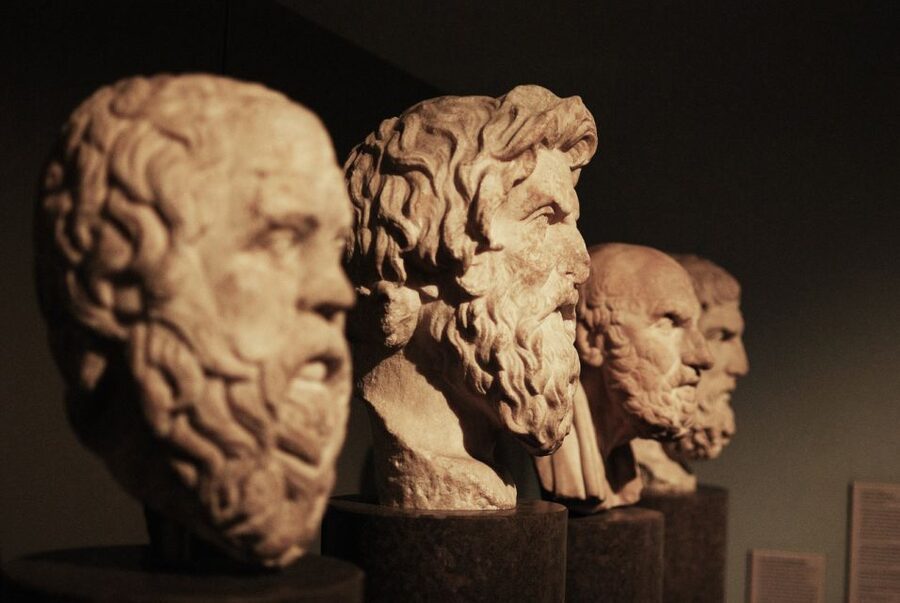
Athens makes more sense when you connect its stones with its ideas. This private walk links the Academy of Athens, Parliament, Ermou Street, Monastiraki, Plaka, and Areopagus Hill with the philosophers and gods who shaped Western thought. You are not just looking at old buildings. You are asking why people here began to question the world in such a lasting way.
I like the way the tour turns philosophy into a walking conversation, especially when guides such as Bianca and John adjust the discussion to your interests. I also like the built-in Greek coffee stop, which gives you time to talk rather than simply march from one sight to the next. The main drawback is the amount of walking, often in the Athens sun, and the tour is not suitable for people with mobility impairments.
In This Review
- Key points at a glance
- Why this Athens walk feels different
- Beginning at the Academy of Athens
- The Numismatic Museum and Athens’s formal center
- Ermou Street, Kapnikarea, and Aristotle
- Monastiraki and a coffee in Thissio
- Stoicism beside the Ancient Agora
- Plaka, Anafiotika, and the Tower of Winds
- Finishing on Areopagus Hill
- How the guides shape the experience
- Is $100 per person a good value?
- Who should book this walk?
- FAQ
- Where does the Athens philosophy tour begin?
- Where does the tour finish?
- How long does the experience last?
- Is the tour private?
- What language is the tour conducted in?
- Is coffee included?
- Are entrance fees included?
- Is the walk suitable for people with mobility impairments?
- Should you book it?
Key points at a glance

- Socrates and Plato beside the Academy of Athens: Start with the roots of philosophical questioning among grand 19th-century buildings and statues.
- Epicurus in the National Garden: Hear how the Garden offered a practical view of happiness, friendship, and a good life.
- Aristotle near Ermou Street: Link an 11th-century church and modern shopping street with the Lyceum and Aristotle’s approach to learning.
- Coffee and conversation in Thissio: Pause with a Greek coffee or another traditional drink while discussing the Pre-Socratic thinkers.
- Stoicism at the Poikile Stoa: Stand near the Ancient Agora, where Stoic philosophy first took shape.
- Mythology above Plaka: Finish at Areopagus Hill with Acropolis views, Olympic gods, the Tower of Winds, and Aiolos.
Why this Athens walk feels different
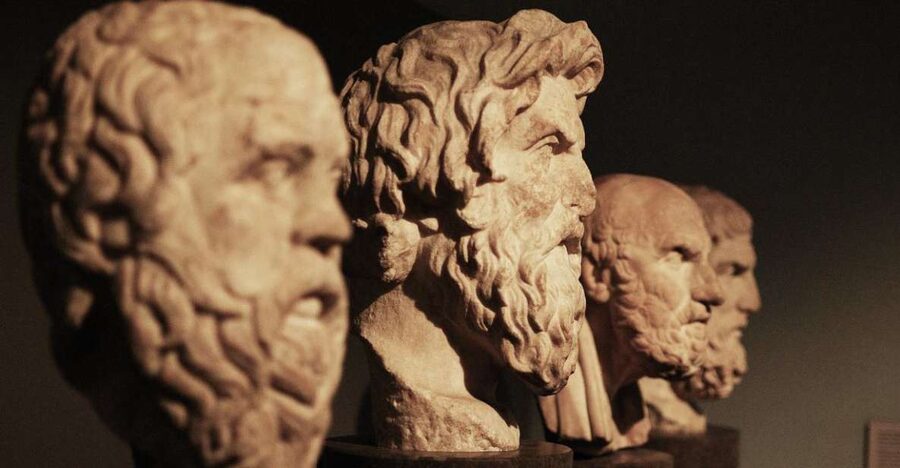
Many Athens walking tours focus on monuments. This one uses monuments as prompts for conversation. The Academy leads to Socrates and Plato. The National Garden opens a discussion about Epicurus. The Ancient Agora brings in Stoicism. Plaka and Anafiotika provide a setting for myths and Cynic philosophers.
That structure works well if you want more than dates and building names. You get a moving lesson in ideas, but it is not presented like a classroom lecture. The best guides keep the exchange open, ask what interests you, and relate ancient questions to daily life.
The four-hour format matters. Philosophy needs time for questions, and the private setting lets you stop when a subject catches your attention. Bianca has been praised for making the tour feel warm and personal, while John has a background translating philosophy books and has adapted the walk for people with serious academic interests. Effie has also led the experience.
The tour has received a 5 out of 5 rating from 34 bookings, with especially strong praise for the guides’ storytelling, clear explanations, and ability to adjust the conversation. That does not mean every guide will teach in exactly the same way, so it is worth sharing your interests at the start.
More Walking Tours in Athens
- Athens: Acropolis and Parthenon Guided Walking Tour
★ 4.6 · 5,882 reviews - Greek Food Walking Tour in Athens
★ 5.0 · 4,740 reviews - Acropolis: Acropolis and Parthenon Guided Walking Tour
★ 4.7 · 3,442 reviews
Beginning at the Academy of Athens
Meet outside Panepistimio Metro Station, although the exact meeting point can vary with the option you book. From there, you begin with Athens’s famous neoclassical Trilogy, linked to architect Theofilus Hansen.
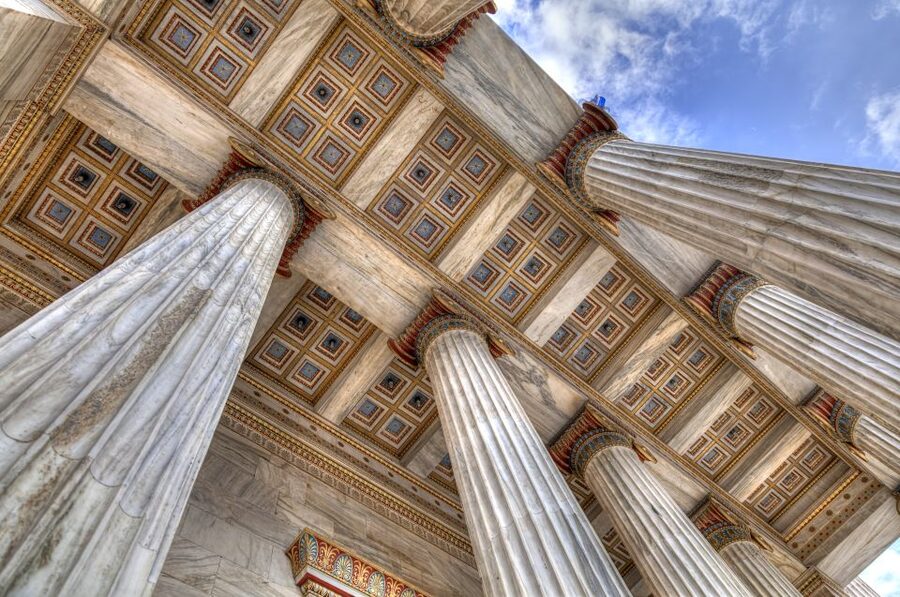
The Academy of Athens is the visual star of this opening section. Its facade, columns, and sculpted figures give you an impressive setting for talking about the city’s intellectual identity. The statues also introduce the work of major 19th-century sculptors, so the first part of the walk is not limited to antiquity.
This is a smart starting point because Socrates and Plato are easier to understand when you first consider the city that produced them. The guide can explain how Socrates used questions to challenge accepted ideas, then show how Plato carried those questions into written philosophy and the Academy.
Greek mythology enters early, too, through Apollo and Athena. They represent very different qualities, yet the discussion looks at their shared links as gods tied to civilization, order, knowledge, and the life of the city. You get mythology as a way of understanding Greek values, not just a list of family connections among the Olympians.
The Numismatic Museum and Athens’s formal center
The route continues toward the Numismatic Museum. No entrance fee is included, and the experience is mainly an outdoor walking tour, so do not book it expecting a museum visit unless your guide confirms otherwise.
The walk then moves toward the Hellenic Parliament. This part of Athens gives you a change of scale. You leave the intellectual grandeur of the Academy area and enter the political center of modern Greece.
The setting is useful for discussing Epicurus, whose philosophical school was known as the Garden. Epicurean thought is often reduced to luxury and pleasure, but the conversation can point you toward a more practical idea of happiness, built around friendship, moderation, and freedom from needless fear.
The National Garden provides a welcome change from hard pavement. It is also an apt place to discuss a school that took its name from a garden and treated philosophy as something connected to ordinary life. The tour is at its best here when you can pause, ask questions, and consider how an ancient idea might apply today.
Ermou Street, Kapnikarea, and Aristotle
Ermou Street is Athens’s main commercial street, so expect modern shops and plenty of city movement as you cross through it. The street is named after Hermes, the god associated with merchants and trade.
That name gives the guide another chance to show how mythology remains woven into everyday Athens. The gods are not only statues in an archaeological site. Their names still appear in streets, places, and cultural references.
Along Ermou, you can admire Kapnikarea, an 11th-century church. Its age and position among modern commercial buildings make it an especially striking stop. The contrast is part of the pleasure: an old Byzantine temple sits amid the daily business of central Athens.
This is where Aristotle and his Lyceum enter the conversation. Aristotle’s approach was broad and practical, with attention to politics, nature, ethics, and the way people organize society. The guide can connect his school to the wider development of philosophical thought without requiring you to arrive with a background in the subject.
You will notice that the tour does not take you to every ancient school’s original site. Instead, it uses the city’s surviving streets and buildings to explain the ideas. That makes the experience more accessible, but it also means you should not expect a strict archaeological tour of philosophical ruins.
More Athens walks with a guide:
- Acropolis monuments & Parthenon Walking Tour with Optional Acropolis Museum
★ 5.0 · 2,678 reviews - Athens Acropolis and Parthenon Walking Tour
★ 4.5 · 1,355 reviews - Athens Authentic Greek Food Walking Tour (Small Group)
★ 5.0 · 809 reviews - Early Morning Acropolis & Old Athens Guided Walking Tour
★ 4.4 · 748 reviews
Monastiraki and a coffee in Thissio
The route continues through Monastiraki toward the Thissio area. This section helps the experience feel like a walk through present-day Athens rather than a trip between isolated monuments.
A Greek coffee or another traditional refreshment is included for each person. The break is more than a small perk. After several hours of walking and discussion, sitting down gives you space to return to an idea, ask a follow-up question, or change the subject entirely.
The exact cafe setting can vary, but the supplied experience information places the stop in a cozy Thissio cafe and mentions a rooftop terrace with a view in one account. Do not treat a specific terrace as guaranteed. The useful point is that you get a proper pause, often with a sightline toward the Acropolis.
This is also the place to discuss the Pre-Socratic philosophers. They came before Socrates and asked basic questions about matter, nature, change, and the structure of the universe. Their theories can sound strange now, but their habit of seeking explanations beyond myth helped set the stage for later philosophical inquiry.
For me, this is one of the tour’s strongest sections. A coffee table gives philosophy a human scale. You can talk about ancient thinkers as people wrestling with problems, not as names to memorize.
Stoicism beside the Ancient Agora
Near the Ancient Agora, the guide introduces the Poikile Stoa, the Painted Porch associated with the birth of Stoic philosophy. The stoa itself is tied to the Agora, where public discussion, trade, and civic life came together.
Stoicism is particularly well suited to a walking tour because its ideas concern control, judgment, hardship, and daily conduct. The conversation can help you separate the ancient school from the modern use of the word stoic to mean someone who shows no emotion.
The stop also shows why location matters. Philosophy developed in public settings where people could meet, argue, teach, and listen. You are not simply hearing that Stoicism began in Athens. You are standing near the kind of civic space that made such exchanges possible.
The Ancient Agora is not listed as an included entrance stop, and entrance fees to points of interest are not part of the $100 price. You may see parts of the area from the route, but plan a separate visit if you want to explore the archaeological site in detail.
Plaka, Anafiotika, and the Tower of Winds
From Monastiraki, the walk heads into Plaka and Anafiotika, at the foot of the Acropolis. These neighborhoods bring a more intimate feel, with narrow lanes and small-scale buildings replacing the broad avenues of central Athens.
The subject turns toward the Cynic philosophers. Cynicism in its ancient form was not simply negative or sarcastic. It challenged social convention and questioned how much people really need to live well. The setting below the Acropolis creates a good contrast between public glory and the philosophers’ suspicion of status and excess.
The Tower of Winds adds another mythological stop. The guide explains Aiolos, keeper of the winds, while also pointing out the tower’s role as a practical ancient time and weather structure. This is a fine example of the tour’s method: mythology and observation share the same place.
The route through Plaka can be uneven and crowded at times, and the full walk is not suited to anyone with mobility limitations. Comfortable shoes are essential. Bring sunglasses and sunscreen, especially during the warmer months. You may also want water, although the supplied information specifically includes only the coffee or traditional refreshment.
Finishing on Areopagus Hill
The final stop is Areopagus Hill, also called Mars Hill. From here, you get a memorable view toward the Acropolis and a natural place to gather the tour’s themes.
The ending returns to the Olympian gods and the myths surrounding them. After discussing philosophers who questioned tradition, you finish by considering the stories that shaped the religious and cultural world around them.
The hill is also a practical endpoint. You can continue exploring central Athens from here, or use the view as a pause before heading elsewhere. The drop-off point is Areopagus Hill, not a return to the metro station, so plan your next move in advance.
The stone surface and climb make this final stop difficult for people with mobility impairments. Even able walkers should take care on the uneven ground and allow time for the walk to catch up with the conversation.
How the guides shape the experience
The guide is the key part of this tour. The route has plenty of strong sights, but the experience depends on someone who can explain difficult ideas in plain language and respond to your questions.
Bianca receives especially strong praise for her storytelling, warmth, and ability to connect philosophy with modern life. She has helped people understand Socrates, Plato, Aristotle, and other thinkers without making the discussion feel like a school lesson.
John is a strong match if you want more academic depth. One booking was made by someone preparing a high school philosophy class, and John adapted the walk to that purpose. Another person described him as a translator of philosophy books and appreciated his ability to shape the discussion around personal interests.
Effie has also led the four-hour experience. Since the tour is private and offered in English, tell the guide if you prefer mythology, ancient history, ethics, rhetoric, politics, or practical applications of philosophy. The more specific you are, the more useful the conversation can become.
Is $100 per person a good value?
The price is $100 per person. At first glance, that is more than a standard group walking tour, but you are paying for a private group, four hours with a live English-speaking guide, a tailored conversation, and a traditional drink.
The value is strongest for two kinds of people. First, it suits anyone who already enjoys philosophy and wants to discuss it rather than hear a basic introduction. Second, it works for someone who wants an unusual overview of Athens that links the city’s famous sights through one clear theme.
The value is weaker if you mainly want entry to archaeological sites. No entrance fees are included, and the walk does not replace a full visit to the Acropolis or Ancient Agora. You are paying for interpretation, context, and conversation rather than admission tickets.
A private format can also make sense for couples, families, or a small group with different interests. One person can ask about mythology while another asks about politics or ethics. In a large group, that kind of exchange would be harder.
Who should book this walk?
I would choose this tour if you enjoy asking questions and want Athens explained through ideas. It is a particularly good fit for philosophy students, teachers, curious first-time visitors, and anyone who likes connecting ancient subjects to modern life.
It also makes a strong first activity in Athens. One person used it as the first outing after landing and found it a useful introduction to Greek culture, mythology, and social norms. Starting with a local guide can help you recognize names and themes during the rest of your stay.
I would think twice if you dislike long walks, prefer quiet indoor sightseeing, or want detailed access to archaeological sites. The route covers a lot of ground, includes busy city streets, and spends much of its time outdoors.
Book with comfortable shoes, sunscreen, sunglasses, and an open question or two. You do not need formal training in philosophy. You only need to be willing to stop at a street corner, church, garden, or hill and ask why people have been thinking about the same human problems for more than two thousand years.
FAQ
Where does the Athens philosophy tour begin?
The tour begins outside Panepistimio Metro Station, also called University. The exact meeting point may vary depending on the booking option.
Where does the tour finish?
The tour finishes at Areopagus Hill, also known as Mars Hill or Λόφος Αρείου Πάγου.
How long does the experience last?
The walking tour lasts four hours. Starting times vary, so check availability when booking.
Is the tour private?
Yes. It is offered as a private group experience with a live English-speaking guide.
What language is the tour conducted in?
The tour is conducted in English.
Is coffee included?
Yes. Each person receives one Greek coffee or another traditional refreshment.
Are entrance fees included?
No. Entrance fees to points of interest are not included. Personal expenses, such as souvenirs, are also separate.
Is the walk suitable for people with mobility impairments?
No. The experience is not suitable for people with mobility impairments. Comfortable shoes are recommended, along with sunglasses and sunscreen.
Should you book it?
Book this walk if you want Athens to become a conversation rather than a checklist. The strongest parts are the personal guides, the links between real streets and ancient ideas, the coffee pause in Thissio, and the final Acropolis view from Areopagus Hill.
Skip it if your priority is entering major archaeological sites or avoiding a long outdoor walk. For curious minds, though, $100 buys more than four hours of sightseeing. It gives you a way to understand why Athens became a city where questioning the world was itself a way of life.
Recently reviewed around Athens
- Small-Group Women History in Ancient Greece Walking Tour★ 5.0 · 38 reviews
- Ceramic and Pottery Creative Workshop with Two Local Artists★ 4.0 · 57 reviews
- Athens: Wine Workshop Create your Own Wine under the Acropolis★ 5.0 · 77 reviews
- Athens: Greek Wines Tasting with Sommelier and Acropolis Views★ 5.0 · 88 reviews
- Hydra Private Day Trip by Ferry from Athens with Transfers★ 4.0 · 30 reviews
- Small-Group Wine Tour in Athens with Tasting★ 5.0 · 33 reviews
- Wine Trails Private Tour/ Nemea visit 3 wineries from Athens or Nafplion (10 h)★ 5.0 · 44 reviews
- Private Athens Transfer Airport/Port -Greek Tours-Hourly service★ 5.0 · 88 reviews
Walking Tours, compared.



Acropolis monuments & Parthenon Walking Tour with Optional Acropolis Museum
Read our review →
Knossos: Knossos Palace Skip-the-Line Guided Walking Tour
Read our review →

Athens Authentic Greek Food Walking Tour (Small Group)
Read our review →
Early Morning Acropolis & Old Athens Guided Walking Tour
Read our review →Browse the lists this tour appears in