

Reviewed · WALKING TOURS
Athens Social and Political Walk
Athens reveals more than ancient stones. On this walk, political scientist Isaac uses central Athens as a living classroom, linking government buildings and public spaces to Greek independence, the military junta, democratic reform, economic crisis, and today’s political tensions. You get a useful explanation of the country behind the postcards.
I like the small-group limit of 15, which gives you room to ask about history and current events. I also like the route’s clear progression, from the Prime Minister’s office and Presidential Mansion to Parliament and the Athens Polytechnic, where the 1973 uprising still carries strong meaning.
The main consideration is focus. This is not a classic sightseeing walk built around grand interiors, archaeological sites, or photo stops. It is best for you if politics, modern history, and social questions matter as much as monuments, and if you are comfortable walking for about two and a half hours.
In This Review
- Key points for your Athens planning
- Why this walk changes the way you read Athens
- Starting beside the Prime Minister’s office
- The Presidential Mansion and the meaning of ceremony
- Parliament, where history meets the present
- Old Parliament House and the early modern state
- Athens Polytechnic and the November 17 uprising
- Isaac’s guiding style and the value of a specialist
- Is $47.92 a fair price?
- Practical details before you go
- Who should book this Athens walk?
- Should you book the Athens Social and Political Walk?
- FAQ
- How long is the Athens Social and Political Walk?
- What language is the tour offered in?
- Where does the tour begin?
- Where does the tour end?
- How many people can join the tour?
- Can I cancel for a full refund?
Key points for your Athens planning

- Isaac leads with political context: Expect an English-language walk shaped by his work as a political scientist and his perspective as someone living in Greece who is not Greek.
- The route links power to protest: You pass the Prime Minister’s office, Presidential Mansion, Parliament, Old Parliament House, and Athens Polytechnic.
- The story reaches from independence to today: The discussion covers early modern Greece, the junta, democratic reform, social divisions, and the recent economic crisis.
- The group is capped at 15 people: That is a useful size for questions without making the walk feel like a private tour.
- The walk ends at Athens Polytechnic: The final stop is tied to the November 17, 1973 uprising, one of the defining events in the institution’s history.
- The price is $47.92 per person: For 2 hours and 30 minutes of specialist guiding, the value depends on how much you want explanation rather than landmark access.
Why this walk changes the way you read Athens
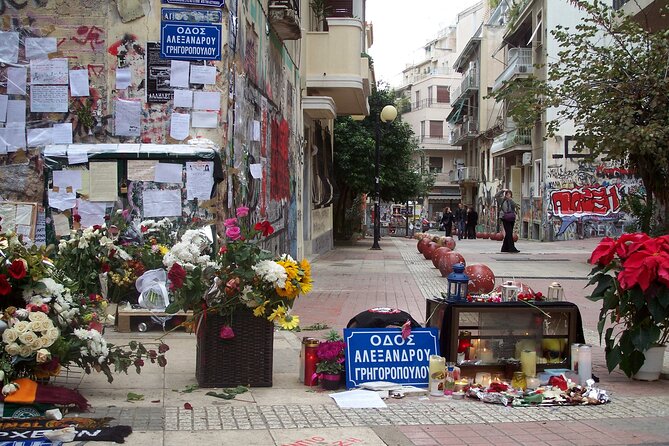
I like tours that help you understand what you are seeing after the guide has gone. This one aims to do exactly that. Instead of treating Athens as a string of famous buildings, it uses those buildings to explain how authority, protest, memory, and public life have shaped modern Greece.
You begin on Leoforos Vasilissis Sofias, near the formal center of national power. From there, Isaac builds a story that reaches from the Greek War of Independence through the modern state, the military dictatorship, the return to democracy, and the political and economic pressures of recent decades.
That broad time span is useful because Greek politics can seem hard to place if you only hear isolated facts. A discussion of the economic crisis, for example, makes more sense when connected to earlier political development and the divisions that still affect Greek society.
You do not need a background in Greek history to follow the walk. Isaac’s explanations are described as clear and well structured, with comparisons to other countries’ politics used to make unfamiliar ideas easier to grasp. If you already know Greece well, the value comes from seeing separate events fitted into one larger explanation.
The tone also appears balanced rather than party-political. That matters on a subject where easy slogans can quickly replace careful explanation. You should still expect a point of view, as you would from any guide, but the emphasis is on context, evidence, and questions.
More Walking Tours in Athens
- Athens: Acropolis and Parthenon Guided Walking Tour
★ 4.6 · 5,882 reviews - Greek Food Walking Tour in Athens
★ 5.0 · 4,740 reviews - Acropolis: Acropolis and Parthenon Guided Walking Tour
★ 4.7 · 3,442 reviews
Starting beside the Prime Minister’s office
The meeting point is at Leoforos Vasilissis Sofias 2 to 4, Athens 106 74. The walk begins near the official seat of the Prime Minister of Greece, giving Isaac a natural place to explain how the modern state is governed.
This first stop is less about entering a building and more about understanding what the building represents. You can expect discussion of executive power, political leadership, and the way national decisions connect to everyday life.
That approach is one of the tour’s strengths. A government office may look like just another formal facade if you pass it alone. With the right explanation, it becomes part of a story about institutions and public trust.
The meeting area is near public transportation, which makes it practical for a morning or afternoon plan. You should still allow a little extra time to find the exact point, especially if you are not familiar with central Athens.
The Presidential Mansion and the meaning of ceremony
The next stop is the official residence of the President of the Hellenic Republic. Here, the focus shifts from the Prime Minister’s political role to the presidency and the symbolic side of the Greek state.
This is a good place to consider the difference between formal national representation and day-to-day government. Isaac can use the contrast to explain how Greek political institutions fit together, rather than presenting each building as an isolated sight.
The residence also gives the walk a chance to discuss ceremony, public identity, and the way a country presents its institutions. You might find this especially useful if your knowledge of Greece comes mainly from ancient history or island travel. Modern Greece is not only temples and tavernas. It is also a functioning state shaped by conflict, reform, and argument.
The route is city walking, not a sequence of indoor visits. That means the experience depends on listening outdoors and keeping pace with the group. If you want extensive time inside official buildings, this is not the right choice.
Parliament, where history meets the present
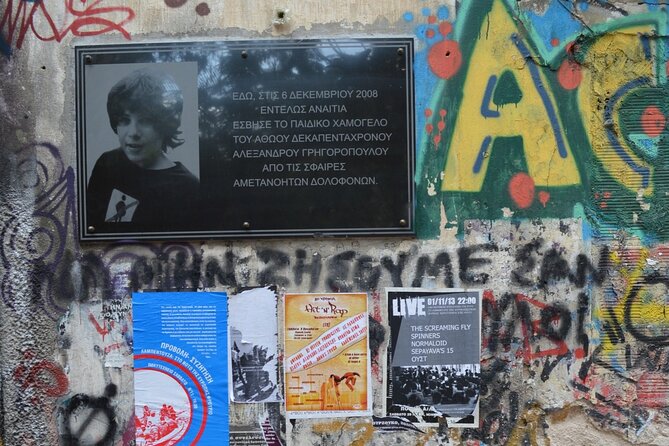
The Parliament of Greece is one of the route’s central stops. It offers a direct setting for discussion of elections, political parties, representation, and the pressures placed on democratic institutions.
Here, you can ask questions about current events as well as the past. That is an important feature because the tour is not limited to a prepared lecture about old political milestones. The stated focus includes present-day Greek politics, and the guide draws on recent news to add practical detail to the larger story.
I would use this stop to ask about anything that has puzzled you during your time in Greece. You might ask how the economic crisis changed public attitudes, why Greek society can feel politically polarized, or how the country’s modern political development compares with your own.
The small group should help. With no more than 15 people, the walk has a better chance of allowing real questions than a large coach tour. It is not a private discussion, but it should feel more personal than a standard crowd-based city tour.
More Athens walks with a guide:
- Acropolis monuments & Parthenon Walking Tour with Optional Acropolis Museum
★ 5.0 · 2,678 reviews - Athens Acropolis and Parthenon Walking Tour
★ 4.5 · 1,355 reviews - Athens Authentic Greek Food Walking Tour (Small Group)
★ 5.0 · 809 reviews - Early Morning Acropolis & Old Athens Guided Walking Tour
★ 4.4 · 748 reviews
Old Parliament House and the early modern state

Old Parliament House adds historical depth to the route. This stop helps move the story beyond current political arguments and back toward the formation of modern Greece.
Isaac’s account covers the period after independence and the political development of the early modern country. That matters because Greece’s institutions did not appear fully formed. They grew through changing leadership, outside pressures, social divisions, and efforts to establish democratic government.
You can expect this section to connect architecture and political memory. The building is not simply an older version of Parliament. It marks an earlier stage in the development of the Greek state and gives the guide a place to explain how political life changed over time.
The walk’s strength is synthesis. You are not just collecting dates about independence, dictatorship, or elections. You are being shown how one period helped create conditions for the next. That can make later stops, especially the Polytechnic, easier to understand.
Athens Polytechnic and the November 17 uprising
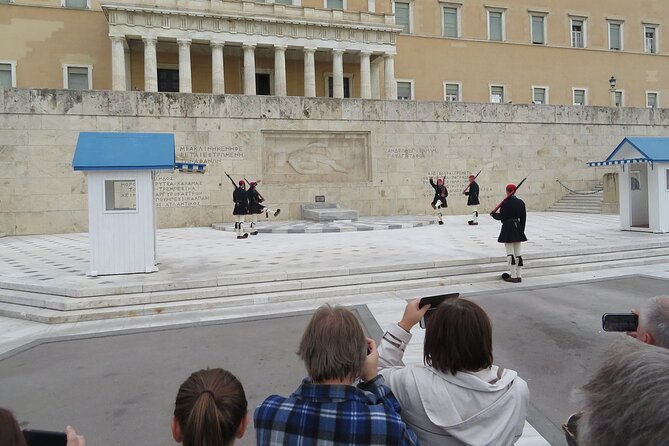
The route ends at the main entrance of the National Technical University of Athens, also called Athens Polytechnic, on Patision Avenue. The final stop focuses on the Athens Polytechnic uprising of November 17, 1973.
This event is a key part of modern Greek political memory. It took place during the military junta, and its place in the country’s move toward democratic reform gives the end of the walk a strong sense of purpose.
Rather than finishing with a general view of the city, the tour ends at a site tied to protest, students, political change, and national remembrance. That gives the route a clear arc: formal institutions at the beginning, public resistance and democratic struggle at the end.
I would pay close attention here, even if your main interest is not student politics. The uprising helps explain why the junta and the return to democracy remain important reference points in conversations about Greece today.
The tour ends at the university’s main entrance. This is useful if you want to continue exploring the area, but it is not the same place where you began. Plan your next move from Patision Avenue rather than assuming you will return to Syntagma.
Isaac’s guiding style and the value of a specialist

A guide can make or break a politics-focused walk. The strongest descriptions of Isaac point to an engaging, passionate, and well-informed speaker who explains difficult subjects through anecdotes and comparisons.
That does not mean you should expect a lecture with no room for conversation. The format is built around questions about history and current events. Isaac’s perspective as a non-Greek person living in Greece may also help him explain local politics to an international audience without assuming you already understand every reference.
One useful feature is the way recent news fits into the older narrative. Anecdotes from current events can give the walk a sense of immediacy, while the historical material keeps those examples from becoming disconnected headlines.
The tone appears to suit both beginners and people who have already read about Greece. If you know little about the country, you get a structured introduction. If you have read several histories, you may appreciate the effort to connect the Greek independence period, the junta, democratic reform, and the recent crisis in one fast-moving account.
Still, a specialist guide’s interpretation is not a substitute for reading every side of a political debate. I would treat the walk as a strong starting point and a chance to ask better questions, not as the final word on Greece.
Is $47.92 a fair price?

At $47.92 per person, this is not the cheapest way to spend two and a half hours in Athens. You are paying for a specialist subject, a small group, and a guide who can explain modern politics rather than simply identify buildings.
The value is strongest if you would otherwise spend your first days in Athens wondering how the country reached its current political position. The walk can save you time by giving you a framework for understanding later conversations, museum visits, news stories, and public memorials.
The value is weaker if you mainly want major ancient sights, interior access, or a relaxed stroll with little concentration. The tour’s subject requires attention. You will get more from it if you arrive ready to listen, think, and ask questions.
With an average booking lead time of 14 days, I would reserve ahead if the date matters to you. The maximum group size is 15, so availability can be tighter than on large city walks.
Practical details before you go
The experience is offered in English and comes with a mobile ticket. It lasts approximately 2 hours and 30 minutes, so wear comfortable shoes and prepare for sustained city walking.
A moderate level of physical fitness is recommended. The information does not specify the exact number of stops beyond the main locations, nor does it promise indoor access, so plan for an outdoor walking experience rather than a building tour.
Service animals are allowed, and the meeting point is near public transportation. The tour requires good weather and a minimum number of participants. If poor weather or low enrollment causes cancellation, you are offered another date or experience, or a full refund.
You can cancel for a full refund up to 24 hours before the start time. Changes or cancellations made less than 24 hours before the start are not accepted for a refund.
Who should book this Athens walk?
I would recommend it to you if you want to understand Greece beyond ancient monuments and holiday images. It is especially suitable for people interested in modern history, elections, social divisions, the military junta, democratic reform, and the economic crisis.
It also works well early in an Athens stay. The route can give you a better frame for what you see afterward, from public buildings to memorials and political demonstrations, though the tour itself is not described as a protest or event experience.
You may want to skip it if your main goal is archaeological sightseeing or a low-effort orientation walk. The subject is focused, and two and a half hours of political discussion will feel long if modern Greek affairs do not interest you.
Should you book the Athens Social and Political Walk?
Book this walk if you want the story behind present-day Athens. Isaac’s route links government offices, Parliament, Old Parliament House, and Athens Polytechnic into a clear account of how Greece moved from independence through dictatorship and democratic reform to its current political debates.
At $47.92, it makes the most sense as a specialist experience rather than a general introduction to the city. You pay for interpretation, questions, and connections that are hard to get from a guidebook alone. For a curious visitor who wants the country behind the sightseeing, this is one of the more focused ways to spend an afternoon in Athens.
FAQ
How long is the Athens Social and Political Walk?
The walk lasts approximately 2 hours and 30 minutes.
What language is the tour offered in?
The experience is offered in English.
Where does the tour begin?
It begins at Leoforos Vasilissis Sofias 2 to 4, Athens 106 74, Greece.
Where does the tour end?
It ends at the main entrance of the National Technical University of Athens, also called Athens Polytechnic, on Patision Avenue.
How many people can join the tour?
The maximum group size is 15 travelers.
Can I cancel for a full refund?
Yes. You can cancel at least 24 hours before the experience start time for a full refund. Less than 24 hours before the start, cancellations and changes are not accepted for a refund.
Recently reviewed around Athens
- Small-Group Women History in Ancient Greece Walking Tour★ 5.0 · 38 reviews
- Ceramic and Pottery Creative Workshop with Two Local Artists★ 4.0 · 57 reviews
- Athens: Wine Workshop Create your Own Wine under the Acropolis★ 5.0 · 77 reviews
- Athens: Greek Wines Tasting with Sommelier and Acropolis Views★ 5.0 · 88 reviews
- Wine Trails Private Tour/ Nemea visit 3 wineries from Athens or Nafplion (10 h)★ 5.0 · 44 reviews
- Hydra Private Day Trip by Ferry from Athens with Transfers★ 4.0 · 30 reviews
- Small-Group Wine Tour in Athens with Tasting★ 5.0 · 33 reviews
- Private Athens Transfer Airport/Port -Greek Tours-Hourly service★ 5.0 · 88 reviews
Walking Tours, compared.




Acropolis monuments & Parthenon Walking Tour with Optional Acropolis Museum
Read our review →
Knossos: Knossos Palace Skip-the-Line Guided Walking Tour
Read our review →

Athens Authentic Greek Food Walking Tour (Small Group)
Read our review →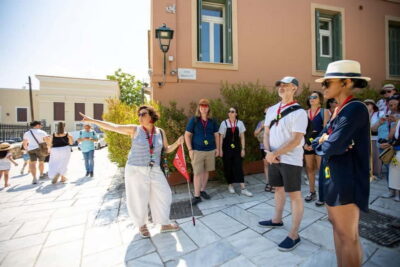
Early Morning Acropolis & Old Athens Guided Walking Tour
Read our review →Browse the lists this tour appears in