

Reviewed · WALKING TOURS
Athens Social and Political Walk
Athens is more than ancient temples. This walk uses the city’s government buildings, memorials, universities, and public spaces to explain how modern Greece was shaped by independence, religion, war, party politics, Europe, migration, and the financial crisis. The result is a useful counterpoint to the usual Acropolis visit.
I especially like the documentary-style storytelling and the chance to ask questions as you go. I also like that the tour covers everyday Greek society, not just famous political figures. The main consideration is its serious subject matter: it suits curious adults who enjoy history and current affairs more than anyone seeking a light sightseeing stroll.
In This Review
- Key points to know before booking
- Why this Athens walk is different
- Starting near the center of political power
- The Presidential Palace and the modern state
- Walking through the National Garden
- Reading the Hellenic Parliament
- From the National Historical Museum to less obvious stops
- Korai 4 and the memory of occupation
- Panepistimiou and the public face of Athens
- The Polytechnic and the story of student protest
- What you will learn along the way
- Group feel, language, and accessibility
- What the $47 price gets you
- Who should book this walk
- Should you book the Athens Social and Political Walk?
- FAQ
- How long does the Athens Social and Political Walk last?
- How much does the experience cost?
- Which languages are available?
- Is the walk wheelchair accessible?
- Where does the walk start?
- Where does the walk finish?
- What places are included on the route?
- Is anything included after the walk?
Key points to know before booking

- Modern Greece takes center stage: The story begins with independence in 1821 and reaches the present day.
- The city becomes your classroom: Maximos Mansion, the Presidential Palace, Parliament, Korai 4, Panepistimiou, and the Polytechnic all have a role.
- Isaac leads with clarity and humor: He is a political scientist who links Greece to wider European and global events.
- Expect discussion, not a scripted lecture: The format is interactive, with room for questions and different viewpoints.
- The walk ends near the National Technical University: It covers central Athens on foot over about two and a half hours.
- Useful extras are included: You receive a slideshow with photos and additional information about the subjects covered.
Why this Athens walk is different
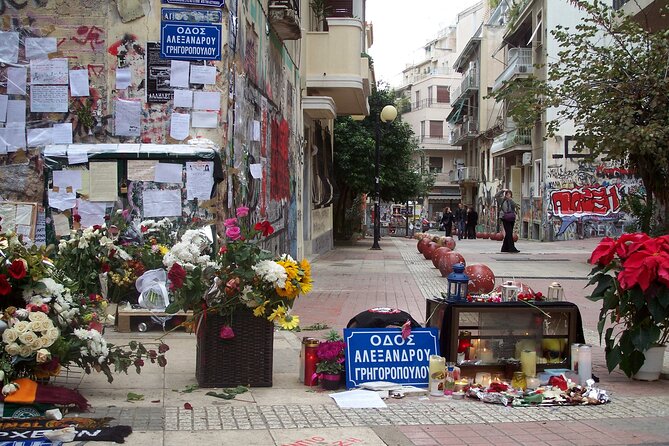
Many city walks explain what you can see. This one asks why the city and country work as they do.
The central question is blunt: how did the birthplace of democracy become associated with economic failure during the eurozone crisis? The tour does not offer a simple answer. Instead, it traces the forces that shaped the modern state, then lets you form your own view.
That approach matters in Greece. Ancient Athens is often presented as a neat starting point for democracy, but modern Greek society has its own complicated story. Independence, the Ottoman period, the monarchy, military rule, religion, language, European integration, austerity, immigration, and gentrification all help explain present-day Athens.
You will not just stand outside buildings and hear dates. You will move through central Athens while Isaac connects places to arguments and events. His style, based on the available information, is clear and conversational, with humor used to make difficult subjects easier to follow.
The pace also gives you room to look around. You may pass a government building, then shift to a memorial or university site where the political story feels more immediate. That change from official institutions to places linked with protest and public memory is one of the strongest parts of the experience.
More Walking Tours in Athens
- Athens: Acropolis and Parthenon Guided Walking Tour
★ 4.6 · 5,882 reviews - Greek Food Walking Tour in Athens
★ 5.0 · 4,740 reviews - Acropolis: Acropolis and Parthenon Guided Walking Tour
★ 4.7 · 3,442 reviews
Starting near the center of political power
The meeting point is Planetwonk’s Athens Social and Political Walk in central Athens. From there, the route moves toward the Maximos Mansion, the official office of the Greek prime minister.
The stop helps set the tone. You are looking at a working center of national power rather than a historic ruin. The guide can use it to explain how the modern Greek state is governed and how political authority has changed over time.
This is also a good early reminder that the walk is about institutions as much as personalities. The point is not simply who occupies an office today. It is how power is organized, how leaders are held to account, and how public trust has been shaped by past events.
The Presidential Palace and the modern state
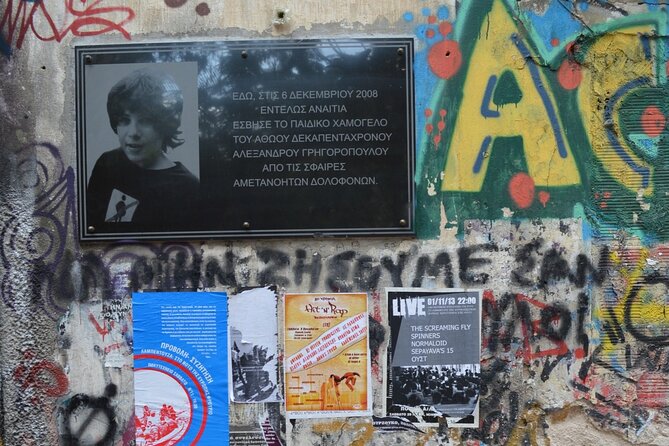
The Presidential Palace follows on foot. Greece’s president has a different role from the prime minister, so this stop gives the guide a natural way to explain the country’s political structure.
For you, the value is context. A building that might otherwise seem like another formal state residence becomes part of a larger discussion about monarchy, republican government, military rule, and the development of modern Greece.
The tour traces the country from the independence war in 1821 onward. It also reaches back to the Byzantine and Ottoman periods, which helps explain why modern Greek identity is tied to more than one era. Expect the guide to connect religion, language, national identity, and Europe rather than treat them as separate subjects.
Walking through the National Garden

The National Garden provides a change of pace from official buildings and broad avenues. The route remains in central Athens, but the setting becomes less formal and more suited to conversation.
The garden is useful because politics is not only about parliament or elections. It also concerns how a city is planned, who has access to public space, and how national symbols appear in ordinary life. The garden stop gives the guide a place to discuss society beyond government offices.
Do not expect a long botanical tour. The walk is not designed as a garden visit, and the available details do not promise extended free time there. Think of it as part of the route’s rhythm, a pause between major institutions.
More Athens walks with a guide:
- Acropolis monuments & Parthenon Walking Tour with Optional Acropolis Museum
★ 5.0 · 2,678 reviews - Athens Acropolis and Parthenon Walking Tour
★ 4.5 · 1,355 reviews - Athens Authentic Greek Food Walking Tour (Small Group)
★ 5.0 · 809 reviews - Early Morning Acropolis & Old Athens Guided Walking Tour
★ 4.4 · 748 reviews
Reading the Hellenic Parliament
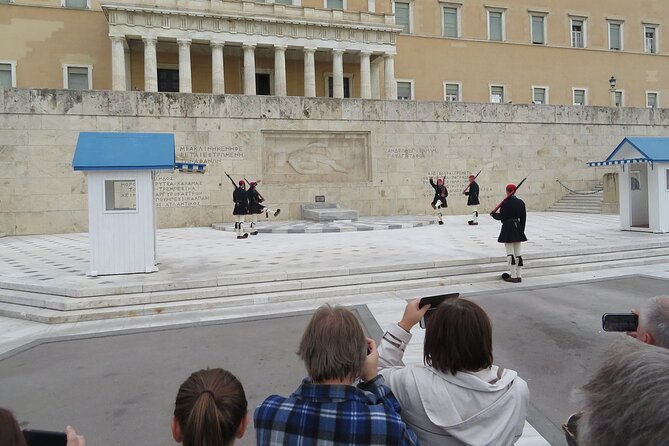
The Hellenic Parliament is one of the key stops. Here, the discussion can turn directly to party politics, democracy, public protest, and the pressures placed on Greece during the financial crisis.
This is where the title’s big question becomes more concrete. You may hear about the tension between national decision-making and European economic rules, along with the effect of austerity on Greek society. The guide’s job is not to tell you which side to choose. It is to make the competing pressures easier to understand.
That balance is important. Political tours can quickly become personal or partisan. This experience promises an unbiased approach, and the strongest feedback points to a guide who welcomes questions and explains complex issues in plain language.
From the National Historical Museum to less obvious stops
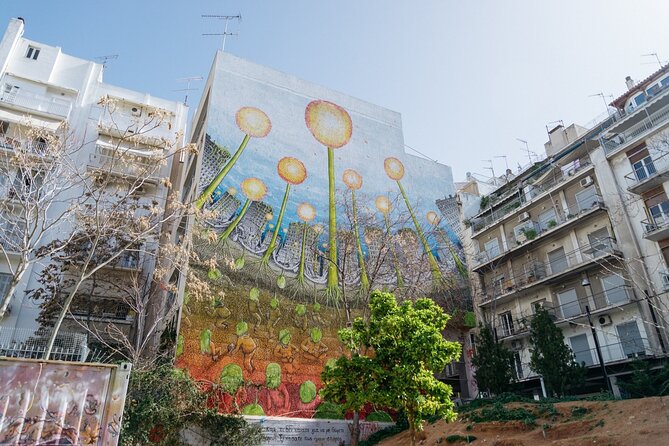
The National Historical Museum comes next. Its presence on the route helps anchor the discussion in the story of the Greek state, especially the period after independence.
You should not assume that the tour includes a full museum visit. The itinerary presents the museum as a walking stop, and the main activity is an outdoor route. If you want several hours inside museum galleries, this is not the right format.
After the museum, the route includes two less obvious places. Their exact names are not provided, but that lack of a standard tourist label is part of the appeal. The guide uses smaller or less familiar city spaces to keep the story grounded in Athens rather than limiting it to headline attractions.
These stops may be especially useful if you have already seen the Acropolis, Syntagma Square, and the main archaeological sites. You will be taken into a different version of the city, one built around memory, institutions, conflict, and public life.
Korai 4 and the memory of occupation
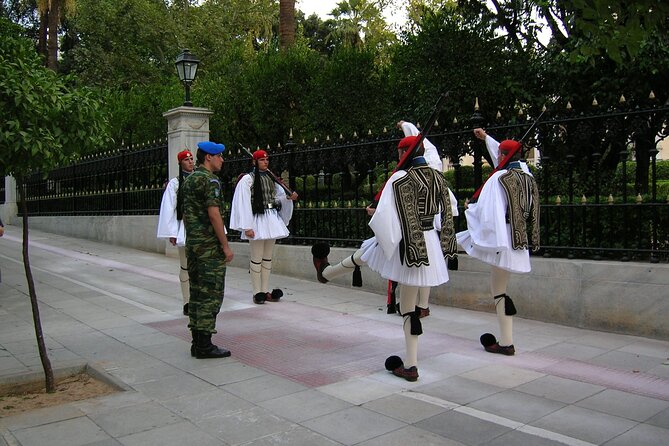
Korai 4, marked as a memorial site for 1941 to 1944, brings the Second World War and occupation into the route.
This is one of the tour’s more powerful shifts. Modern Greek politics cannot be understood through independence and the financial crisis alone. War, occupation, resistance, and the difficult postwar period left lasting marks on society and political life.
A memorial site also changes the way history is presented. You are not simply receiving a timeline. You are standing at a place linked to suffering and remembrance. That can make the discussion more direct, though it may also feel weightier than a standard city walk.
The tour later moves through subjects such as postwar politics, religion, neoliberal economics, immigration, and gentrification. Korai 4 helps show how these issues grew from earlier events rather than appearing suddenly in recent decades.
Panepistimiou and the public face of Athens
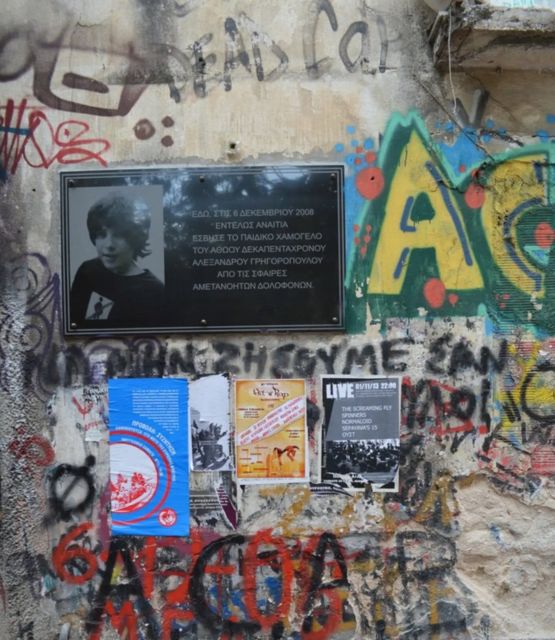
Panepistimiou is a major central avenue and another useful outdoor setting for the tour. The route here can connect public architecture with the political and social life of the capital.
Athens often presents two images at once. There are grand institutions and formal avenues, but also demonstrations, economic strain, commercial change, and sharp debates about the country’s future. Panepistimiou gives the guide room to explain that contrast in a place where city life is visible around you.
I like this kind of stop because it keeps the discussion from becoming too abstract. You can hear about social change while standing in the middle of the city. The walk’s documentary feel comes from that combination of narration and street observation.
The Polytechnic and the story of student protest
The National Technical University of Athens, often called the Polytechnic, is a major final stop. It is linked with one of the most important episodes in modern Greek political memory, the student uprising and massacre of November 1973 during the military dictatorship.
The provided information specifically identifies the student massacre as one of the subjects covered. That makes the Polytechnic more than a university building on the route. It represents protest, repression, political memory, and the struggle to restore democracy.
This stop should interest anyone who wants to understand how historical events remain active in public life. It also shows why a walk can add something that a museum display may not. The setting itself becomes part of the explanation.
From here, the experience finishes at 28is Oktovriou 42, near the National Technical University area. The ending is practical if you want to continue exploring central Athens, though the activity does not include a return transfer to the starting point.
What you will learn along the way
The scope is broad for two and a half hours. The tour can touch on:
- Greece’s independence in 1821
- Byzantine and Ottoman rule
- Religion and the Greek Orthodox tradition
- Language and national identity
- Relations with Europe
- The economy and the financial crisis
- Party politics and political tensions
- The Second World War and the postwar period
- Military dictatorship and student protest
- Immigration and the refugee crisis
- Gentrification and everyday life in Athens
That is a lot to cover. You will not receive a detailed academic course on every topic. Instead, you get a connected framework that helps you understand how the subjects relate to one another.
The strongest reason to book is the guide’s ability to simplify difficult issues without making them childish. Isaac is described as a political scientist who draws comparisons with other countries, which can help you place Greece in a wider setting.
His sense of humor is another practical benefit. Two and a half hours of economics, political conflict, and twentieth-century trauma could feel heavy. Humor does not remove the seriousness, but it can keep the conversation open and easier to follow.
Group feel, language, and accessibility
The tour is offered in English and Spanish. If you need one of those languages, confirm the available language when choosing your time.
One account describes a small group of seven people. Group size can change, and no fixed maximum is provided, but a small group would suit this format well. You need room to ask questions, and a crowded group would make discussion harder.
The experience is listed as wheelchair accessible. Since the route moves through central streets and public areas, you should still confirm any personal mobility needs with Planetwonk before booking. The available information does not give a detailed surface or step-by-step access report.
You should also plan for a full walking period of about 2.5 hours. Wear practical shoes and bring water, especially in warm weather. That is ordinary Athens advice, but it matters more here because the value comes from staying with the route and conversation rather than rushing from stop to stop.
What the $47 price gets you
At $47 per person, this costs more than a basic historical walking tour, but it offers a different kind of value.
You are paying for a specialist-led interpretation of modern Greece, not entry to a museum or a long list of monuments. The experience includes a slideshow with photos and extra information about the subjects discussed, which gives you something to revisit after the walk.
The price makes the most sense if you want context. If you already know Greek political history, the tour may feel like a useful discussion with a specialist. If you are new to the subject, it can give you a clear starting point for the rest of your Athens stay.
It is less suitable if your priority is ancient history, archaeological sites, panoramic views, or free time for photos. The route includes important central buildings, but the main product is explanation.
Flexible booking also adds value. You can reserve now and pay later, and cancellation is free up to 24 hours in advance for a full refund. Starting times vary, so you need to check availability for your date.
Who should book this walk
I would recommend it to you if you want to understand present-day Greece rather than only admire its ancient past.
It is a good match for:
- Politics and international affairs enthusiasts
- Students and teachers interested in modern Europe
- First-time visitors who want context before exploring on their own
- People curious about the financial crisis and its social effects
- Anyone interested in migration, protest, religion, or national identity
- Long-stay visitors who want to understand everyday Athens better
It can also work well early in your visit. Once you know more about the country’s political story, later conversations, news reports, museums, and street scenes may make more sense.
I would think twice if you want a relaxed, purely scenic outing. The subjects include war, dictatorship, economic hardship, and political conflict. The tone is accessible, but the material is not always easy.
Planetwonk also offers experiences focused on the refugee crisis and on difficult aspects of Athens. If those subjects interest you, this walk may be a useful starting point before choosing one of the more focused options.
Should you book the Athens Social and Political Walk?
Book it if you want a thoughtful look at modern Greece and enjoy asking why things happened, not just when.
The combination of central Athens streets, political buildings, memorial sites, universities, and a specialist guide gives you a view that a standard sightseeing route cannot provide. Isaac’s clear explanations, international comparisons, and humor are especially valuable when the subject becomes complicated.
Skip it if you mainly want ancient monuments or a quick introduction to Athens. But if the financial crisis, democracy, migration, religion, protest, and Greek society interest you, $47 is a fair price for two and a half hours of focused discussion, local context, and a better grasp of the country beyond the postcard.
FAQ
How long does the Athens Social and Political Walk last?
The walk lasts 2.5 hours.
How much does the experience cost?
The price is $47 per person.
Which languages are available?
The tour is offered in English and Spanish.
Is the walk wheelchair accessible?
Yes, the activity is listed as wheelchair accessible.
Where does the walk start?
It starts at Athens Social and Political Walk, Planetwonk, in central Athens.
Where does the walk finish?
It finishes at 28is Oktovriou 42, Athina 106 82, Greece.
What places are included on the route?
The route includes Maximos Mansion, the Presidential Palace, the National Garden, the Hellenic Parliament, the National Historical Museum, Korai 4 memorial site, Panepistimiou, and the National Technical University of Athens, along with several less familiar stops.
Is anything included after the walk?
You receive a slideshow with photos and extra information about the issues discussed during the experience.
Recently reviewed around Athens
- Small-Group Women History in Ancient Greece Walking Tour★ 5.0 · 38 reviews
- Ceramic and Pottery Creative Workshop with Two Local Artists★ 4.0 · 57 reviews
- Athens: Wine Workshop Create your Own Wine under the Acropolis★ 5.0 · 77 reviews
- Athens: Greek Wines Tasting with Sommelier and Acropolis Views★ 5.0 · 88 reviews
- Hydra Private Day Trip by Ferry from Athens with Transfers★ 4.0 · 30 reviews
- Small-Group Wine Tour in Athens with Tasting★ 5.0 · 33 reviews
- Wine Trails Private Tour/ Nemea visit 3 wineries from Athens or Nafplion (10 h)★ 5.0 · 44 reviews
- Private Athens Transfer Airport/Port -Greek Tours-Hourly service★ 5.0 · 88 reviews
Walking Tours, compared.




Acropolis monuments & Parthenon Walking Tour with Optional Acropolis Museum
Read our review →
Knossos: Knossos Palace Skip-the-Line Guided Walking Tour
Read our review →

Athens Authentic Greek Food Walking Tour (Small Group)
Read our review →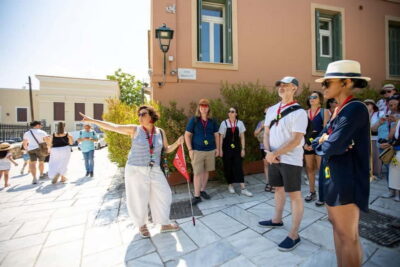
Early Morning Acropolis & Old Athens Guided Walking Tour
Read our review →Browse the lists this tour appears in