
Reviewed · WALKING TOURS
Athens: Women in Ancient Greece Guided Walking Tour
Ancient Athens is often told through its male philosophers, generals, and lawmakers. This tour changes the angle. Starting in Monastiraki, you follow stories of women whose lives were shaped by marriage, myth, work, religion, politics, and strict social rules, then finish with views toward the Acropolis from Filopappou Hill.
I like the way the walk connects famous places to ordinary life. The Ancient Agora and Pnyx become more than photo stops, because your guide explains who was allowed to speak, vote, work, or simply move freely in Athenian society. I also like the mix of well-known figures such as Sappho and Aspasia with less familiar stories, including Agnodice and the mysterious women’s festival in Athens.
The main consideration is physical. This is a two-hour city walk with steps and sloping ground, and it is not suitable for wheelchair users or people with mobility or heart difficulties. Archaeological sites are viewed from outside, so you are paying for interpretation and conversation rather than entry to the monuments.
In This Review
- Key points at a glance
- Why this Athens walk feels different
- Monastiraki begins the story
- Monastiraki and Hadrian’s Library
- Plaka, the Gate of Athena, and a secret stop
- The Ancient Agora through a female lens
- Sappho, Aspasia, and Agnodice
- The Pnyx and the limits of democracy
- The Acropolis view and Filopappou Hill
- What the $44.04 price covers
- Who should book this walk
- Practical advice for a better morning
- Should you book it?
- FAQ
- How long is the Women in Ancient Greece walking tour?
- Where does the tour start?
- Where does the tour end?
- Which languages are available?
- Is this a private tour?
- Are archaeological-site tickets included?
- Does the tour include food or drinks?
- What should I bring?
- Is the route suitable for wheelchair users?
- Can I cancel for a refund?
Key points at a glance
- Women are the main story: Learn about daily duties, rights, myths, and social limits rather than hearing another standard tour of male Athenian leaders.
- The route links major sights: Walk from Monastiraki through Hadrian’s Library, Plaka, the Ancient Agora, Pnyx, and Filopappou Hill.
- Myth meets real life: Athena, Penelope, Demeter, and Pandora help explain how Greek ideas about women shaped society.
- A conversational guide matters: Maelle is praised for asking questions, welcoming discussion, and handling wider questions about Athens.
- You get a viewpoint, not an archaeological-site ticket: Entrance fees are not included, and the monuments are seen from the outside.
- Plan for sun and steps: Bring water, sunscreen, and a hat, and wear shoes suited to uneven streets.
Why this Athens walk feels different
Most first visits to Athens focus on the Acropolis, temples, and the birth of democracy. Those subjects matter, but they can leave half the population in the shadows. This walk asks a sharper question: what did these institutions and beliefs mean for women who could not take part in public life in the same way as men?
That question gives familiar streets a fresh purpose. At the Pnyx, where the first democratic votes were cast, you consider not only the achievement of democracy but also who was left out. At the Agora, you hear about the social and domestic world surrounding public debate. The result is less a parade of stones and more a guided conversation about power, family, religion, and memory.
The tour also avoids treating women as a single group. The stories touch on different social positions and different kinds of lives. Mythical figures, poets, doctors, wives, girls, and women who challenged accepted roles all have a place.
The guide is central to the experience. Maelle is repeatedly praised for her command of the subject, warmth, humor, and ability to make the walk conversational. She asks questions rather than delivering a stiff speech, and she is also able to answer broader questions about Ancient Greece. That is useful if you want more than a narrow lecture on women.
More Walking Tours in Athens
- Athens: Acropolis and Parthenon Guided Walking Tour
★ 4.6 · 5,882 reviews - Greek Food Walking Tour in Athens
★ 5.0 · 4,740 reviews - Acropolis: Acropolis and Parthenon Guided Walking Tour
★ 4.7 · 3,442 reviews
Monastiraki begins the story
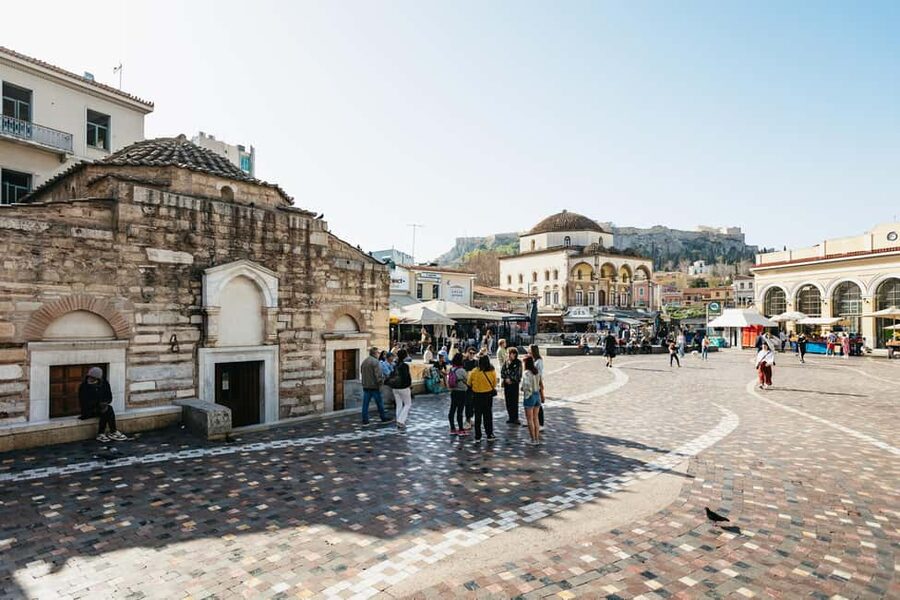
Meet your guide on Monastiraki Square, in front of the Holy Church of the Virgin Mary Pantanassa. Look for the sign reading Women in Ancient Greece. This is a practical meeting point in central Athens, but allow a few minutes to locate the church among the square’s activity.
The tour begins in a part of the city where modern Athens and ancient remains sit close together. That contrast suits the theme. You are not entering a museum lecture detached from daily life. You are walking through a living city while considering women who once moved through the same broad urban area under very different rules.
The opening stories include the kidnapping of Spartan girls and an unusual women’s festival in Athens. These subjects help establish the tour’s tone: mythology and ritual are not treated as decorative tales. They are used to ask how Greek society understood women’s bodies, duties, sexuality, family role, and religious importance.
Monastiraki and Hadrian’s Library
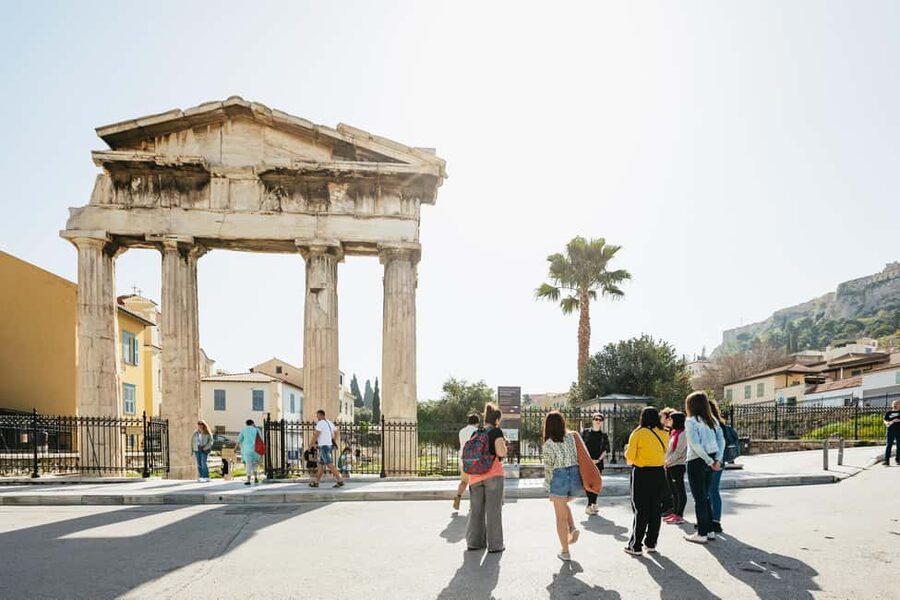
The short stop in Monastiraki provides the first orientation, then the route moves to Hadrian’s Library. You see the monument from the outside, with around five minutes set aside for explanation and sightseeing.
Hadrian’s Library is a useful place to discuss the public image of learning and culture in Athens. The tour’s focus is not simply on the building itself, but on who had access to education, public discussion, and written intellectual life. It also helps explain why famous male thinkers are easier to find in traditional accounts than women whose work was lost, ignored, or preserved only through later writers.
Do not expect an extended archaeological visit here. The ticket is not included, and this walk uses the site as a setting for interpretation. If you plan to enter archaeological attractions on another day, this tour can give those visits more social context.
Plaka, the Gate of Athena, and a secret stop
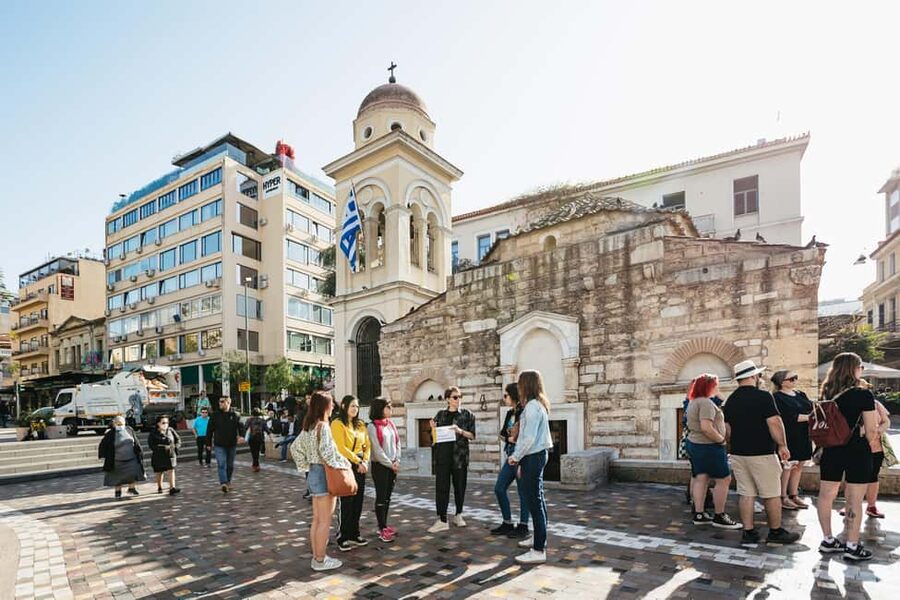
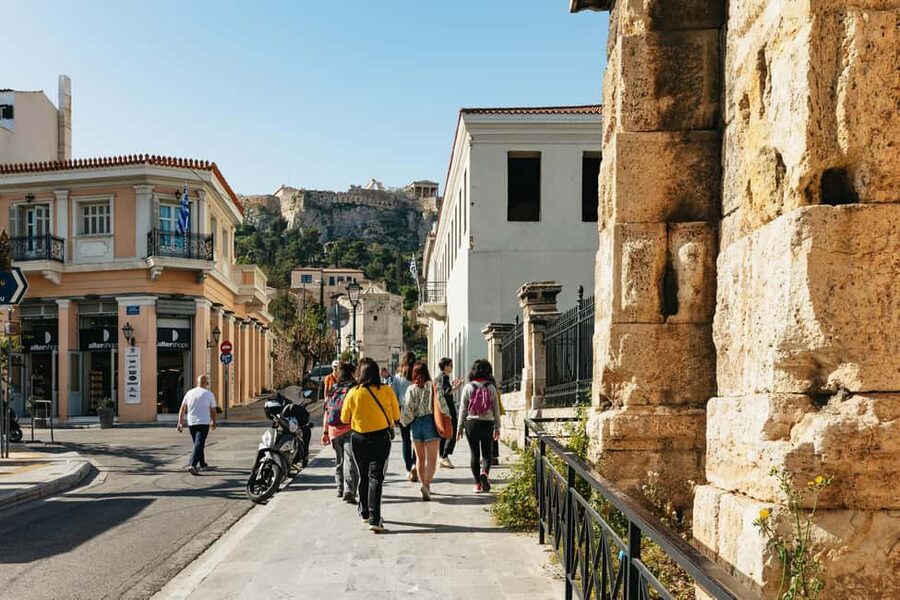
From Hadrian’s Library, the walk continues through Plaka for about ten minutes. Plaka is one of Athens’ best-known historic districts, so this part combines familiar scenery with a less familiar subject.
Here, the emphasis turns toward everyday experience. You may hear about domestic work, marriage expectations, family duties, and the different ways women’s lives could change depending on status and circumstance. The value lies in connecting abstract rules to human routines. Ancient society was not only built in temples and assembly grounds. It was also maintained in homes, workshops, households, and religious ceremonies.
The Gate of Athena Archegetis receives a longer stop of about ten minutes. This is one of the route’s useful reminders that women’s place in Athens cannot be separated from religion. Goddesses such as Athena and Demeter shaped the stories Greeks told about wisdom, fertility, protection, labor, and social order.
The tour then includes a secret stop. Its exact location is not specified, which means you should treat it as a small surprise rather than plan around a particular monument. It receives roughly ten minutes of guided sightseeing and adds variety to a route that otherwise follows some of Athens’ main historic areas.
More Athens walks with a guide:
- Acropolis monuments & Parthenon Walking Tour with Optional Acropolis Museum
★ 5.0 · 2,678 reviews - Athens Acropolis and Parthenon Walking Tour
★ 4.5 · 1,355 reviews - Athens Authentic Greek Food Walking Tour (Small Group)
★ 5.0 · 809 reviews - Early Morning Acropolis & Old Athens Guided Walking Tour
★ 4.4 · 748 reviews
The Ancient Agora through a female lens
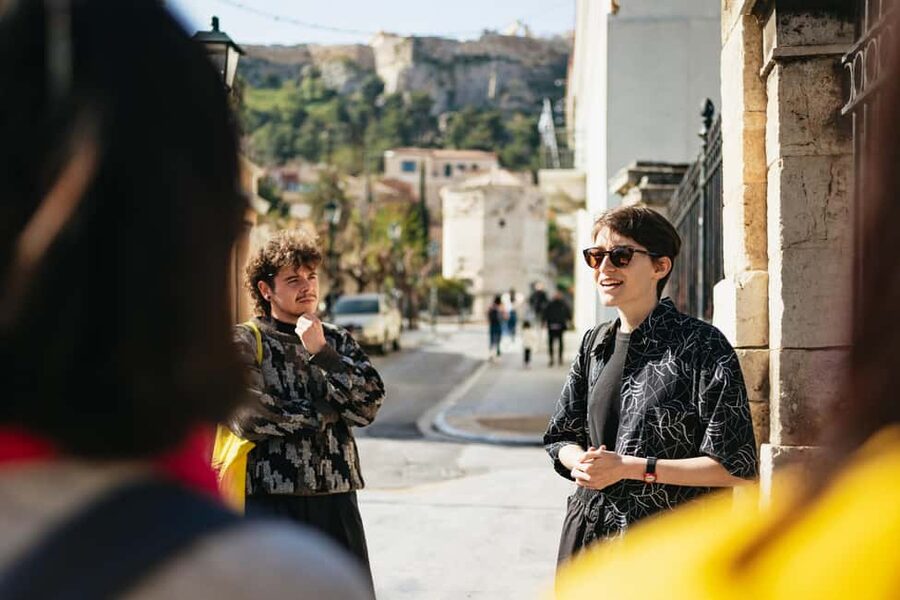
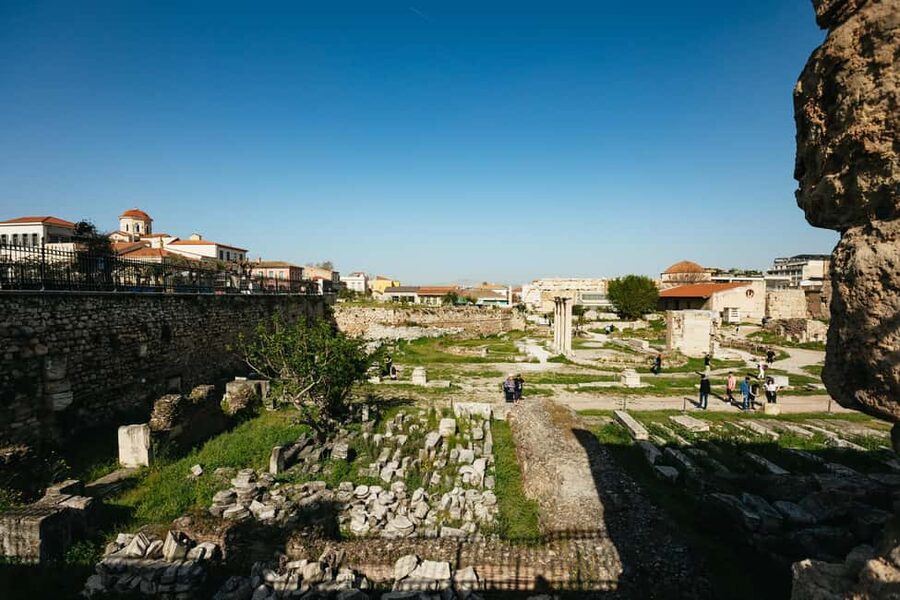
The Ancient Agora is one of the most meaningful stops because it was a center of public, commercial, legal, and civic life. The tour uses the area to examine the difference between being part of a city and having a voice in its public decisions.
Traditional Athens sightseeing often celebrates the Agora as a place where democracy and philosophy took shape. This walk asks you to notice the limits of that system. The public world was largely structured around male citizens, while women’s responsibilities and movement were governed by other expectations.
That does not mean women were absent from Athenian life. Far from it. Women contributed to households, religious practices, family alliances, and the continuation of the city itself. The point is that their influence often took forms that official political history did not record well.
The stop lasts about ten minutes, so expect a focused explanation rather than a full archaeological tour. If you have already seen the Agora, the female perspective should give the ruins a new set of questions. If you have not, this brief outside viewing can serve as a useful introduction before a separate site visit.
Sappho, Aspasia, and Agnodice
The tour’s strongest human element comes from its portraits of women who broke, bent, or simply survived the rules around them. Sappho represents poetry and intellectual achievement. Aspasia raises questions about women, public influence, and the way later accounts remember powerful people. Agnodice is associated with medicine and the challenge of entering a field controlled by men.
These are not presented as proof that Ancient Greece was secretly equal. Their exceptional stories are valuable partly because they were exceptional. The tour helps you see the gap between the limits placed on most women and the rare individuals who found ways around them.
I find this part especially useful for families, students, and anyone tired of history being reduced to a list of male names. The stories give you people to remember, but they also encourage caution. A celebrated woman is not the same as evidence that society welcomed women into public life.
The guide’s conversational style is important here. Maelle is praised for inviting questions and making room for discussion, including links between ancient social rules and challenges that still exist today. That modern connection is present, but the focus remains on understanding the ancient setting rather than forcing every story into a present-day comparison.
The Pnyx and the limits of democracy

The route reaches the Pnyx, with about fifteen minutes devoted to guided sightseeing. This is one of the tour’s clearest stops because the place itself represents public participation. From here, you can consider the meaning of democracy while remembering that Athenian citizenship was limited.
The stop works best if you enjoy history with complications. You will not hear democracy presented as a finished ideal that served everyone equally. Instead, the site becomes a prompt to ask who could vote, who could speak, and who was expected to remain outside formal political life.
The Pnyx also offers a physical change from the tighter streets around Monastiraki and Plaka. You should expect steps and uneven sections. Bring water, especially in warm weather, and use the shady pauses when available. The guide has been praised for finding more comfortable places to stand on hot days, but Athens sun can still be demanding.
The Acropolis view and Filopappou Hill
After the Pnyx, the walk includes a viewpoint stop of about five minutes before continuing to Filopappou Hill. The hill is the final major sightseeing area, with around ten minutes for explanation and views.
This ending makes good sense. You look toward the Acropolis, the monument most closely tied to many visitors’ image of Athens, while carrying a fuller understanding of the society that built and worshipped around it. The view is not just a reward at the end of a walk. It gives you a final chance to reconsider whose stories are usually attached to the city’s most famous places.
The route information also names a kiosk at Rovertou Galli 69 among the drop-off locations, while the meeting details say the activity ends back at the starting point. Confirm the exact end arrangement when booking, particularly if you have a timed museum entry or restaurant reservation afterward.
What the $44.04 price covers

At $44.04 per person, this is priced as a specialist guided walk rather than a simple orientation stroll. You are paying for a focused theme, a live guide in English or French, route planning, and a small gift. A private group option is available if you want the conversation to stay within your own party.
The price does not include food, drinks, or tickets to archaeological sites. The monuments are viewed from outside, so compare this tour with a standard Acropolis or Agora visit carefully. If you want to go inside the major sites, budget for separate admission and time.
I see the value here in the subject matter. A general Athens walk can show you the same districts, but it may not spend much time on women’s legal status, daily duties, mythology, or overlooked historical figures. If that gap matters to you, the extra focus makes the cost easier to justify.
The tour lasts two hours, which is long enough for a clear theme without taking over your day. I would pair it with a separate Acropolis visit, as one participant specifically found the two experiences complementary. The walk can also fit well near the start of an Athens stay, since it may help you read other monuments with more care.
Who should book this walk
I would recommend it to anyone interested in women’s history, mythology, social rules, literature, medicine, or the origins and limits of democracy. It also suits repeat visitors who have already seen the headline monuments and want a more thoughtful route through central Athens.
Families with older children and teenagers may appreciate the story-based format, especially if they ask questions and enjoy connecting ancient life with present-day issues. Students can use it as a compact introduction to the difference between political history and social history.
You should think twice if you want a fast checklist of interiors, formal archaeological detail, or a completely level walk. This is not an Acropolis ticket, and it is not designed for wheelchair users or people with mobility or heart difficulties. Steps are part of the route.
The tour has a 5 out of 5 rating from 86 reviews, and the praise centers on the guide’s subject knowledge, friendly manner, enthusiasm, and ability to make the walk interactive. Maelle is the guide named most often in the supplied feedback. That consistency matters because a theme this specialized depends heavily on the person telling it.
Practical advice for a better morning
Wear comfortable shoes and bring a sun hat, sunscreen, and water. The walk includes open areas, steps, and uphill sections, so do not treat it as a casual flat stroll through the shopping streets.
Choose a starting time that leaves you comfortable in the heat. The available start times vary, so check the schedule before you plan meals, museum visits, or an Acropolis entry.
The tour is offered in English and French. If you prefer a smaller setting, select the private group option when available. A private walk may be especially useful if your party has many questions or wants to connect the subject with a particular interest.
You can cancel up to 24 hours before the activity for a full refund, and the reserve-now, pay-later option lets you keep plans flexible. Those terms are useful in Athens, where weather, ferry schedules, and changing sightseeing plans can affect a short city visit.
Should you book it?
Book this tour if you want Athens to be more than temples, statues, and famous men. Its route is short, its theme is clear, and its best moments come from linking women’s daily lives with mythology, religion, public space, and democracy.
Skip it if your priority is entering archaeological sites or avoiding steps. For the right audience, though, the $44.04 fee buys something a standard sightseeing route often misses: a way to see familiar Athens while asking who was allowed to shape its story.
FAQ
How long is the Women in Ancient Greece walking tour?
The tour lasts two hours. Starting times vary, so check availability for the date you want.
Where does the tour start?
Meet your guide on Monastiraki Square, in front of the Holy Church of the Virgin Mary Pantanassa. The guide will hold a sign reading Women in Ancient Greece.
Where does the tour end?
The meeting information says the activity ends back at the meeting point. The route details also name a kiosk at Rovertou Galli 69 as a drop-off location, so confirm the exact arrangement when booking.
Which languages are available?
The live tour guide is available in English or French.
Is this a private tour?
A private group option is available. The standard booking details do not specify that every departure is private.
Are archaeological-site tickets included?
No. Tickets are not included, and the archaeological sites are viewed from outside during the walk.
Does the tour include food or drinks?
No. Food and drinks are not included.
What should I bring?
Bring water, sunscreen, and a sun hat. Comfortable shoes are also a sensible choice because the route includes steps.
Is the route suitable for wheelchair users?
No. The tour is not suitable for wheelchair users or people with mobility impairments.
Can I cancel for a refund?
You can cancel up to 24 hours in advance for a full refund. A reserve-now, pay-later option is also available.
Recently reviewed around Athens
- Small-Group Women History in Ancient Greece Walking Tour★ 5.0 · 38 reviews
- Ceramic and Pottery Creative Workshop with Two Local Artists★ 4.0 · 57 reviews
- Athens: Greek Wines Tasting with Sommelier and Acropolis Views★ 5.0 · 88 reviews
- Athens: Wine Workshop Create your Own Wine under the Acropolis★ 5.0 · 77 reviews
- Hydra Private Day Trip by Ferry from Athens with Transfers★ 4.0 · 30 reviews
- Small-Group Wine Tour in Athens with Tasting★ 5.0 · 33 reviews
- Wine Trails Private Tour/ Nemea visit 3 wineries from Athens or Nafplion (10 h)★ 5.0 · 44 reviews
- Private Athens Transfer Airport/Port -Greek Tours-Hourly service★ 5.0 · 88 reviews
Walking Tours, compared.




Acropolis monuments & Parthenon Walking Tour with Optional Acropolis Museum
Read our review →
Knossos: Knossos Palace Skip-the-Line Guided Walking Tour
Read our review →

Athens Authentic Greek Food Walking Tour (Small Group)
Read our review →
Early Morning Acropolis & Old Athens Guided Walking Tour
Read our review →Browse the lists this tour appears in