
Reviewed · OLIVE OIL TASTINGS
Chania Sourdough Bread Class – Olive Oil Tasting
The best part of this Chania sourdough class is that bread making is only the beginning. You mix and shape your own loaf, then walk through the family olive grove, pick vegetables, and sit down to a generous Cretan meal with herb-flavored olive oils. I like the warm family setting and the chance to eat food you helped prepare. The main drawback is location: the class is in Nerokouros, outside central Chania, and transport can cost extra.
I also like that the four-hour visit has a natural pace. While your dough rests and bakes in an outdoor brick oven, you have time for olive oil, garden, and cooking activities rather than standing over a bowl all afternoon. Nikos, Alex, Veerna, and Kostas help create a personal welcome, but this is a food-focused outing, not a formal sightseeing tour.
In This Review
- Key points to know before booking
- A bread class that turns into a Cretan supper
- Mixing dough and choosing your loaf
- Walking among the olive trees
- Picking vegetables for a real Cretan salad
- The outdoor oven and your finished bread
- What reaches the table
- The family welcome and teaching style
- Price, transport, and time value
- Who will enjoy this most
- My booking advice
- FAQ
- Where does the Chania sourdough bread class take place?
- How long does the experience last?
- Is pickup available from Chania?
- What do you make during the class?
- What food and drinks are included?
- Is the class offered in English?
- What is the cancellation policy?
Key points to know before booking
- Your own sourdough loaf: Mix the ingredients, shape an individual loaf, and add olives, sun-dried tomatoes, seeds, or another preferred filling.
- Olive grove visit: Learn how the family cares for its trees and how olive oil is harvested and combined with herbs.
- Farm-to-table meal: Pick vegetables for Cretan salad and enjoy fava, ash-roasted potatoes, pork, wine, and dessert.
- Family-run setting: Nikos, Alex, Veerna, and Kostas share the work, stories, cooking space, and meal.
- About four hours near Chania: The activity begins and ends in Nerokouros, with pickup available for an extra charge.
- Small maximum group: The class accepts no more than 16 people, though transportation may be shared in a nine-seat van or electric vehicle.
A bread class that turns into a Cretan supper
Many cooking classes give you a recipe, a few tasks, and a plate of food at the end. This one feels more like an afternoon at a rural family home, with bread as the thread connecting everything else.
You begin with a homemade refreshment or Greek coffee, along with cookies. That small opening matters. It gives you time to settle in, meet the hosts, and hear how sourdough works before your hands get covered in flour.
The setting is Chania Cooking Class in Nerokouros, roughly outside the center of Chania. The class lasts about four hours, so you are not rushing from one demonstration to the next. The mood is social and hands-on, with the meal developing as the afternoon goes on.
I would choose this experience if you want food, conversation, and a local setting more than a polished cooking school. It suits couples, families, and anyone who enjoys making something with their hands. A 14-year-old participant was able to take part alongside a grandparent, which gives you a good sense of its broad appeal.
More Food Tours in Crete
- Crete: Sunset or Morning Quad with Local Products Tasting
★ 4.9 · 1,135 reviews - Crete: Quad Safari, Olive Mill with Tasting & Ghost Village
★ 4.9 · 1,004 reviews - From Chania: Olive Oil, Wine, Cheese & Honey Tasting Tour
★ 4.6 · 490 reviews
Mixing dough and choosing your loaf
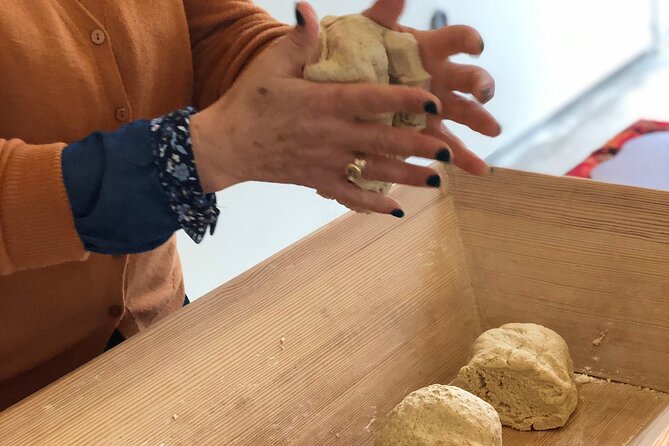
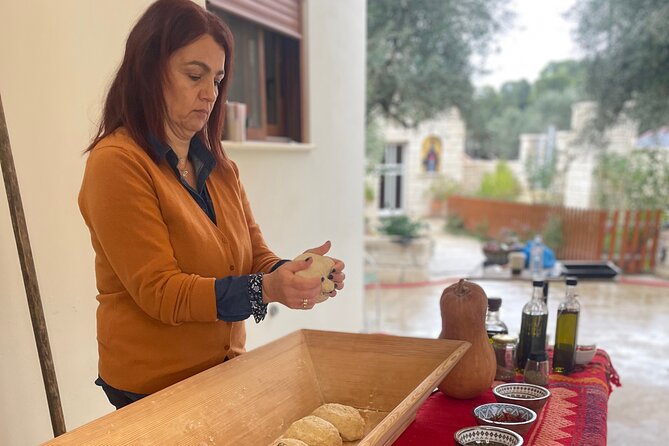
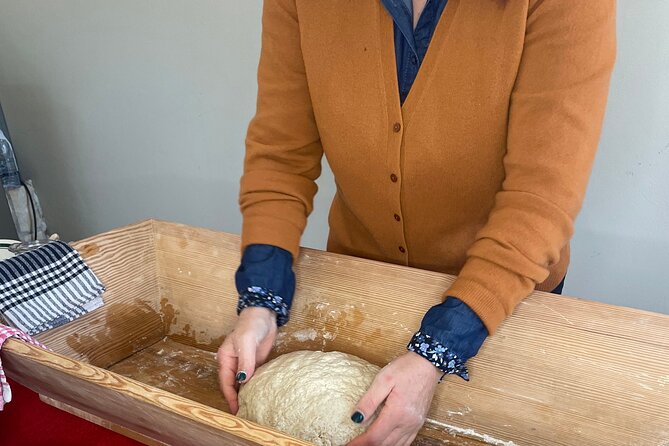
The first practical lesson is sourdough bread making. You mix the ingredients together and prepare the dough, with the hosts explaining the steps as you work.
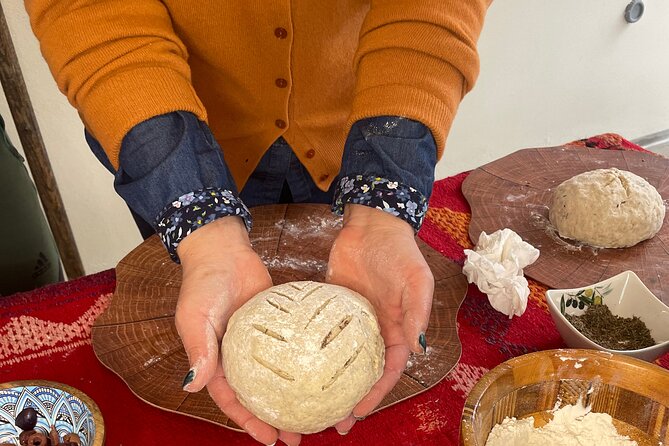
The most useful feature is that you do not make one shared loaf for the whole group. Each person prepares an individual bread loaf. You can add extras such as olives, sun-dried tomatoes, or seeds, creating a loaf that is your own rather than a standard sample.
That choice makes the class more satisfying for families and mixed groups. One person can keep the bread plain, while another can add bold Cretan flavors. It also gives you something specific to remember from the day, instead of only watching someone else bake.
You should not expect a technical baking seminar covering every part of sourdough science. The supplied details focus on the basic procedure, mixing, shaping, resting, and baking. If you want exact measurements or a professional lesson on starter maintenance, ask the hosts while you work.
Once the loaves are shaped, they need time to rest. That pause is used well, since you move outside to learn about olive oil and the family farm.
Walking among the olive trees
The olive grove is not a quick photo stop added at the end. It fills the waiting time while your dough rests and adds context to the meal you are about to eat.
Nikos explains how the olive trees are harvested and how the family keeps them healthy and productive. You also learn about mountain herbs transplanted into the garden and the ways olive oil can be mixed with herbs for different flavors.
This is a useful part of the experience because olive oil is not treated as a side condiment. In Crete, it is part of everyday cooking, farming, and hospitality. Here you see its connection to the trees, the garden, and the table.
The tasting includes several types of olive oil. One detailed account of the meal included four different olive oils, along with herb combinations. The exact selection can vary, so think of this as a guided sampling rather than a formal professional tasting with technical scoring.
You will get more from this section if you pay attention to aroma and flavor, then compare the oils with your bread and the other dishes. The bread is still baking, but you are already building the meal that will surround it.
Picking vegetables for a real Cretan salad
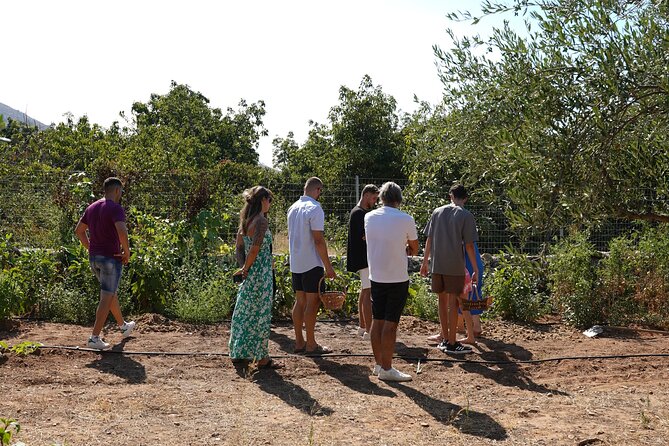
After the olive grove, you visit the farm and harvest vegetables for the meal. This is a simple activity, but it changes the way you see the food on the table. You are not just handed a prepared salad. You help collect some of its ingredients.
The Cretan salad includes tomato, cucumber, pepper, olives, rusks, capers, and soft goat cheese. It is a substantial salad, not merely a garnish. The rusks add crunch and heft, while the capers and olives bring the salty edge that makes the dish work well with olive oil.
You also prepare Greek fava, a smooth legume dish that adds a creamy contrast to the salad and bread. Seasonal appetizers may join the meal, depending on what is available.
I like this part because it connects the cooking lesson to the farm without turning the visit into a long agricultural tour. You get enough time to see and pick ingredients, then return to the kitchen and table.
More Olive Oil Tastings in Crete
- Knossos-Zeus Cave -Old Traditional Villages-Olive Oil Factory
★ 5.0 · 694 reviews - Zeus Cave, Lassithi Plateau, Olive Oil Factory, Kritza, Pottery
★ 5.0 · 362 reviews - From Chania: Wine and Olive Oil Tasting Tour with Snacks
★ 4.8 · 354 reviews - The Terra Creta Olive Oil Experience Tour
★ 4.7 · 344 reviews
The outdoor oven and your finished bread
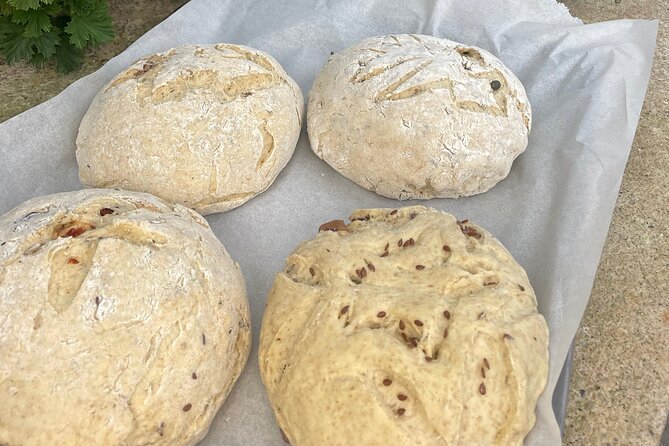
The individual loaves go into an outdoor brick oven. The class information describes the bread as baked in an outdoor oven, while the meal also includes potatoes roasted in ash. Both details give the food a strong rural character.
The waiting period is part of the pleasure. You have already mixed the dough, selected the additions, and watched it rest. When the bread comes out, you can connect the smell and texture to the work you did earlier.
You then eat your own loaf with the herb-flavored extra-virgin olive oil. Since each person can choose different additions, sharing pieces around the table becomes part of the experience. It is a better way to taste the bread than taking it home untouched.
The class does not appear to provide a take-home baking kit or a packaged loaf as a separate inclusion, so do not book it expecting a bakery-style takeaway. The point is to bake, cut, and eat it during the shared meal.
What reaches the table
The meal is generous enough to count as lunch, and alcoholic beverages and soft drinks are included. Local wine is served in ample amounts, so this is not the right choice if you want a quick activity before driving yourself onward.
The listed menu includes:
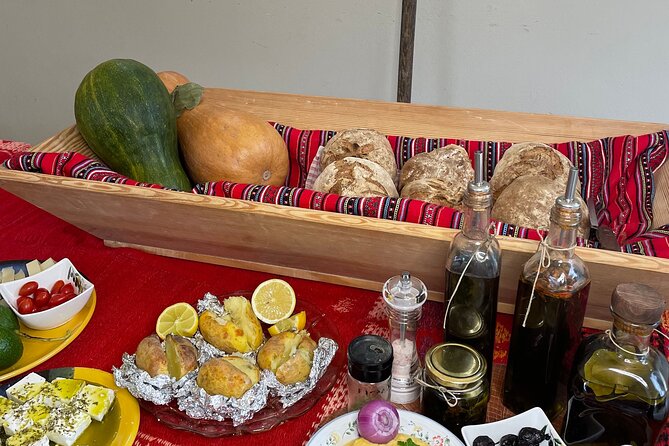
- Cretan salad with tomato, cucumber, pepper, olives, rusks, caper, and soft goat cheese
- Greek fava
- Your own sourdough loaf
- Whole potatoes roasted in ash
- Pork meat
- Greek yogurt with spoon sweet
The food has a clear Cretan shape: vegetables, legumes, olive oil, rustic bread, potatoes, meat, and a simple sweet finish. You are not only learning one recipe. You are seeing how several everyday foods fit together into a relaxed home meal.
The ash-roasted potatoes are a particularly nice touch. They are not a complicated dish, but cooking them in the embers gives the meal a direct connection to the outdoor oven and fire.
Dessert is Greek yogurt with spoon sweet. You should leave room for it, especially if you have been eating bread and potatoes throughout the meal. The sweet preserves provide a bright finish without turning the meal into a long pastry demonstration.
The family welcome and teaching style
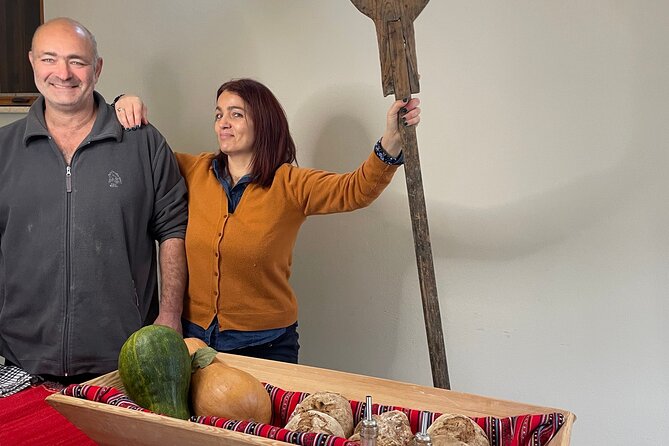
The people are a major part of this experience. Nikos and Alex lead the cooking and food activities, while Veerna and Kostas may add to the family atmosphere. Kostas renovated the building and outdoor cooking and dining area, and Veerna created Veerna’s Kitchen.
That family involvement helps explain why the day feels informal. You are likely to spend time talking about food, family, farming, and daily life rather than listening to a fixed script.
The hosts are described as friendly and welcoming, but the important practical point is that they also take part in the meal. You sit down together, share the loaves, taste the oils, and talk over the food. That is different from a class where the instructor disappears once the dishes are finished.
The group maximum is 16 people. That is small enough for a personal setting, though it is not an intimate private lesson. If all places are filled, you will share the cooking space and meal with a fairly large group.
Price, transport, and time value
The price is $108.13 per person. For about four hours, that includes the bread class, olive grove visit, farm activity, lunch, alcoholic beverages, soft drinks, dessert, and olive oil tasting.
I consider that fair value if you plan to eat a full meal and want a hosted cultural experience rather than only a recipe lesson. Buying lunch separately in Chania would cost less, but it would not include access to a family farm, the bread you make, the olive grove, or the guided olive oil tasting.
Transport requires careful planning. The meeting point is Chania Cooking Class at Nerokouros 731 00 or Nerokouros 733 00, Greece. Pickup is offered for an extra fee based on your location. The transportation is semi-private, using a nine-seat van and an electric vehicle, and you may share the ride with other people attending the class.
Public transportation is listed at €10 per person and is not included. Since the experience ends back at the meeting point, check the return plan before booking. If you are staying in central Chania and do not have a car, the paid pickup may be worth the extra cost simply because it removes the guesswork.
The class is offered in English and provides a mobile ticket. Confirmation is received at booking. Service animals are allowed, and the meeting point is near public transportation.
Who will enjoy this most
I would recommend this to you if you want:
- A hands-on food activity rather than a standard restaurant meal
- A family-run setting with plenty of conversation
- A gentle introduction to sourdough bread
- A taste of olive oil beyond simply pouring it over a salad
- A rural break from central Chania
- An activity that works for adults and older children
- A long meal with wine and several shared dishes
It is also a good choice for someone who wants an easy cultural activity without a packed sightseeing schedule. You are doing real tasks, but none of the listed activities require advanced cooking skills.
You may want to skip it if you are looking for a short class, a strictly timed professional workshop, or a downtown Chania experience. The additional transport fee can also affect the final cost. People who do not drink alcohol should know that wine is part of the meal, though the included soft drinks offer another option.
Because the activity requires good weather, outdoor conditions can affect the date. If poor weather forces a cancellation, you are offered another date or a full refund. The same applies if the minimum number of participants is not reached.
My booking advice
I like this class because it gives you several connected experiences without feeling like a checklist. You make bread, learn about olive trees and herbs, pick vegetables, taste olive oils, and eat a meal built around your work.
The strongest reason to book is the family table. Nikos, Alex, Veerna, and Kostas make the day feel personal, and the outdoor cooking area adds to the sense that you are being welcomed into a working family space.
Book it if you have half a day to spare near Chania and want food with a story behind it. Before paying, confirm the pickup price from your accommodation and decide if the rural setting suits your plans. If it does, this is one of the better-value ways to spend an afternoon in Crete.
FAQ
Where does the Chania sourdough bread class take place?
The activity begins and ends at Chania Cooking Class in Nerokouros, Crete. The listed address is Nerokouros 731 00 or Nerokouros 733 00, Greece.
How long does the experience last?
The class lasts approximately four hours.
Is pickup available from Chania?
Yes. Transfer service can be arranged for an extra fee based on your location. The transport is semi-private, using a nine-seat van and an electric vehicle, and you may share the vehicle with other people attending the class.
What do you make during the class?
You mix and prepare sourdough, then shape your own individual loaf. You can add ingredients such as olives, sun-dried tomatoes, or seeds. You also help prepare Cretan salad and Greek fava.
What food and drinks are included?
Lunch, alcoholic beverages, and soft drinks are included. The meal includes your bread, Cretan salad, Greek fava, ash-roasted potatoes, pork, and Greek yogurt with spoon sweet.
Is the class offered in English?
Yes, the experience is offered in English.
What is the cancellation policy?
You can cancel at least 24 hours before the start time for a full refund. Changes or cancellations made less than 24 hours before the start time are not accepted for a refund. Poor weather or failure to reach the minimum number of participants may lead to a different date or a full refund.
More Workshops in Crete
- Chania: Authentic Cooking Class in the White Mountains
★ 4.9 · 529 reviews - Heraklion: Beginner Scuba Diving Lesson with PADI Instructor
★ 4.9 · 355 reviews - Chania Cooking Class-The Authentic Enjoy traditional Cretan meal
★ 5.0 · 339 reviews - Full-Day Jeep Safari Tour with Cooking Lesson
★ 5.0 · 284 reviews
Recently reviewed around Crete
- Troy Dinner-Show★ 5.0 · 103 reviews
- Heraklion : Spinalonga, Agios Nikolaos , Elounda Boat Tour & BBQ★ 3.5 · 32 reviews
- Quad Safari Off-Road Evening Tour★ 5.0 · 69 reviews
- Knossos & Lasithi Plateau: Zeus Cave,Villages, Olive Oil Tour★ 5.0 · 328 reviews
- Knossos & lasithi plateau villages,Zeus’s cave,&olive oil Mill★ 5.0 · 90 reviews
- Sailing trip to the Top Coasts of Crete, Daily/Multi-day★ 5.0 · 221 reviews
- Cretan Wines & Olive oil tour – The treasures of Crete★ 5.0 · 147 reviews
- PRIVATE-Knossos Palace-Zeus Cave-Olive Oil Tasting-Old Villages★ 5.0 · 81 reviews
Olive Oil Tastings, compared.
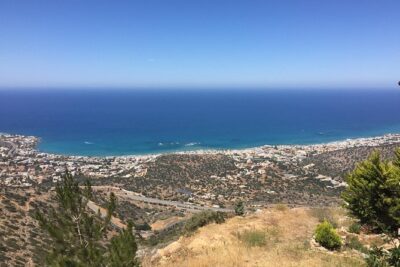
Knossos-Zeus Cave -Old Traditional Villages-Olive Oil Factory
Read our review →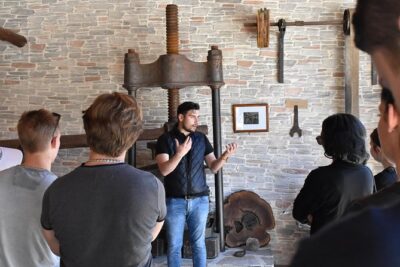
The Governor’s Olive Mill Tour with Olive Oil Tasting
Read our review →
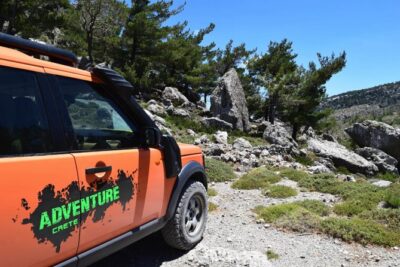
Zeus Cave, Lassithi Plateau, Olive Oil Factory, Kritza, Pottery
Read our review →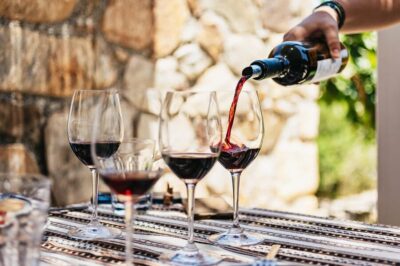
Knossos & Lasithi Plateau: Zeus Cave,Villages, Olive Oil Tour
Read our review →
Browse the lists this tour appears in