
Reviewed · GREEK COOKING CLASSES
Chania Cooking Class-The Authentic Enjoy traditional Cretan meal
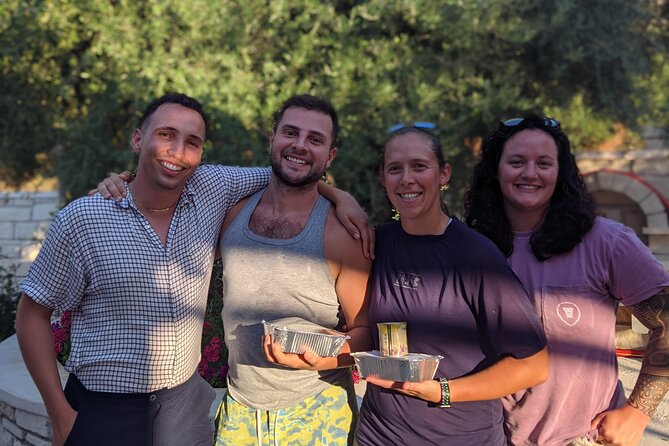
The best part of this Chania cooking class is that you do not simply watch a chef prepare Cretan food. You help make a full meal, from rolling pastry for kalitsounia to stuffing grape leaves and preparing the lamb pouch known as kleftiko, or thieves dinner. The meal is served afterward in a warm, family-style setting near an olive grove.
I like the hands-on pace, and I like the way Veerna and her family connect each dish to Cretan life. The shady outdoor kitchen, homemade welcome drink, local wine, and recipes sent afterward add real value. One consideration: you may not eat until roughly three hours into the class, so have a light meal beforehand.
In This Review
- Key points to know before booking
- A welcoming start with coffee, cookies, and Cretan context
- Making kleftiko, stuffed vegetables, and dolmades
- Rolling pastry for savory and sweet kalitsounia
- Dakos, tzatziki, and salad come last, but eat first
- Sitting down to a generous Cretan meal
- Why the family hosts matter
- The Chania location and optional pickup
- Price, group size, and what you receive
- Who will enjoy this class most
- Practical details before you go
- Should you book the Chania Cooking Class?
- FAQ
- Where does the Chania cooking class take place?
- How long does the cooking class last?
- Is transportation included?
- What food will I prepare?
- Are drinks and the meal included?
- Can children and solo participants join?
Key points to know before booking
- You prepare a full Cretan feast: Lamb kleftiko, stuffed vegetables, dolmades, savory and sweet kalitsounia, dakos, tzatziki, salad, and yogurt dessert are all part of the meal.
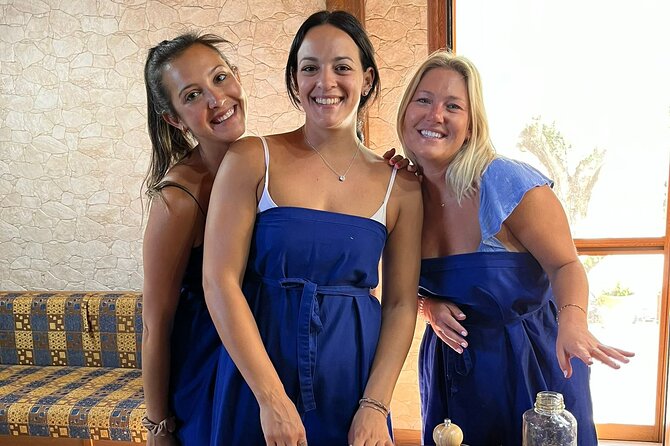
- Veerna leads the cooking: She teaches with help from family members, including Costas and Alex, creating a personal and social class rather than a formal demonstration.
- The setting is part of the experience: Cooking takes place around a shady outdoor kitchen and seating area near olive trees and gardens.
- The class lasts about four to five hours: You can choose a lunch session from 10:00 to 14:00 or a dinner session from 16:00 to 20:00, with the exact duration depending on group size.
- Transfers cost extra: Pickup may be arranged from your location using a nine-seat van or electric vehicle, but transportation is not included in the listed price.
- Solo participants can ask to join a group: Individual bookings and groups of fewer than four should send a message to check availability.
A welcoming start with coffee, cookies, and Cretan context
Your visit begins with a homemade refreshment or Greek coffee, along with homemade cookies. It is a small touch, but it sets the tone. You are welcomed before you are asked to chop, roll, or stir.
Veerna then introduces the Mediterranean-based menu and explains what you will be making. This matters because the dishes are not presented as random recipes. The class gives you a sense of how Cretan cooking uses vegetables, herbs, cheese, bread, yogurt, olive oil, and meat in a single long meal.
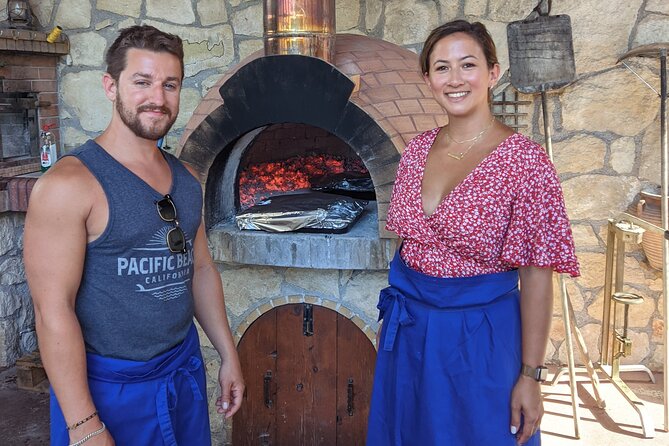
The first cultural lesson centers on kleftiko, the main lamb dish. The name is often translated as thieves dinner. Its story is tied to cooking lamb in a sealed pouch, a method associated with hiding food and slow cooking. Here, you prepare lamb with goat cheese and vegetables in a sealed packet.
That detail gives the dish a little more meaning than simply calling it roasted lamb. You learn why the preparation looks the way it does, then take part in making it. The process also gives the class a useful rhythm: some jobs are quick, while the lamb needs time to cook.
More Cooking Classes in Crete
- Chania: Authentic Cooking Class in the White Mountains
★ 4.9 · 529 reviews - Full-Day Jeep Safari Tour with Cooking Lesson
★ 5.0 · 284 reviews - Cretan Cooking Class and Olive Oil Tasting
★ 5.0 · 178 reviews
Making kleftiko, stuffed vegetables, and dolmades
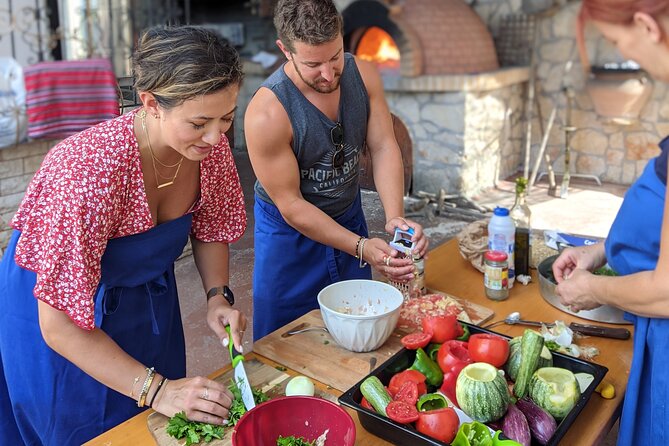
The lamb is only one part of the cooking. You also prepare tomatoes, peppers, and zucchini stuffed with rice and herbs. These vegetables are familiar to anyone who has eaten Greek food, but making them yourself helps you understand the work behind their soft texture and seasoned filling.
The same idea carries into dolmades, stuffed grape leaves filled with rice and herbs. Rolling each leaf takes a little care, especially if you have never done it before. The task is simple enough for beginners, but it gives your hands something useful to do while you talk with the people around you.
This is not a class built around one complicated centerpiece. Instead, you contribute to a broad Cretan meal by taking on many small preparations. I like that approach because it reflects how shared home cooking works. You are not waiting for one finished dish. You are helping build the table.
The class can accommodate a large number of people, with a stated maximum of 40. Some sessions may be smaller, while past classes have included around 20 or 27 people. If close personal instruction is important to you, ask about the group size before booking. The teaching is described as hands-on, but a larger class naturally means you may share tasks and spend less one-on-one time with Veerna.
Rolling pastry for savory and sweet kalitsounia
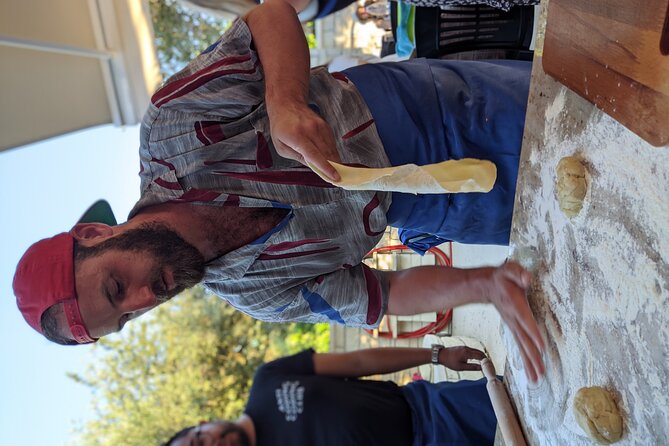
Kalitsounia gives the class its most tactile task. These traditional Cretan pies are made with dough and cheese, with savory versions filled with cheese, wild greens, and herbs from the organic garden.
You use rolling pins to roll out the dough. That is a practical skill, not a staged photo opportunity. It also gives you a chance to see how thin pastry is made by hand. One particularly useful detail is that some participants receive the recipes after the class, so you have a chance to attempt the dishes at home.
The sweet kalitsounia use cheese and honey. They arrive as dessert, but the pastry work earlier in the class makes them more satisfying. You have seen the dough, handled the filling, and helped prepare the dish. The final bite connects directly to the work you did.
The menu also includes yogurt with spoon sweet. Spoon sweets are fruits processed with sugar until they become a preserve, then served in a small portion with Greek yogurt. The exact fruit is seasonal, so the dessert can vary.
Dakos, tzatziki, and salad come last, but eat first
The appetizers are prepared toward the end of the cooking session, even though they are eaten first. This is a useful reminder that the class is organized around the final meal rather than a strict restaurant-style sequence.
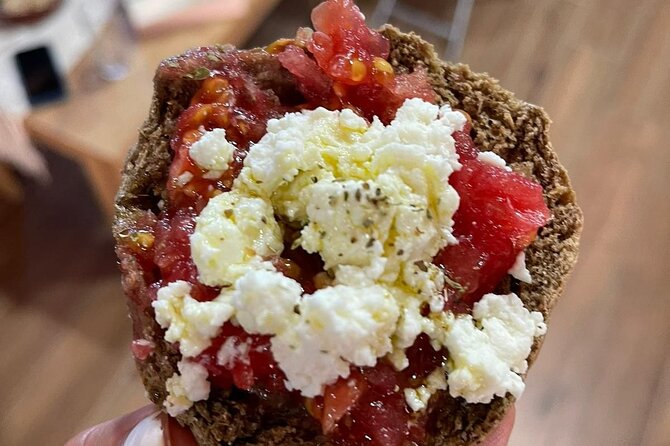
Dakos, also spelled ntakos, uses traditional Cretan baked bread with grated tomato and goat cheese. The bread gives the dish a firm base, while the tomato softens it. Some descriptions also include olives or other toppings, but the core preparation centers on the rusk, tomato, and cheese.
You also make tzatziki with yogurt, cucumber, and garlic. The Cretan salad rounds out the opening dishes. These are familiar flavors, yet the class explains how simple ingredients carry much of the meal.
The appetizers are a good break before the main courses arrive. By this point, however, you may be hungry. One practical tip is worth taking seriously: eat something light before you arrive. The class may run for several hours, and the first proper food comes late in the session.
More Crete trips worth a second look
- The Real Cretan Cooking Experience
★ 5.0 · 528 reviews - Moires: Cooking Class and Olive Oil Tasting at a Family Farm
★ 5.0 · 93 reviews - Crete: Sightseeing Day Trip with Cooking Lesson and Lunch
★ 4.8 · 77 reviews - Chania: Authentic Cooking Class
★ 5.0 · 74 reviews
Sitting down to a generous Cretan meal
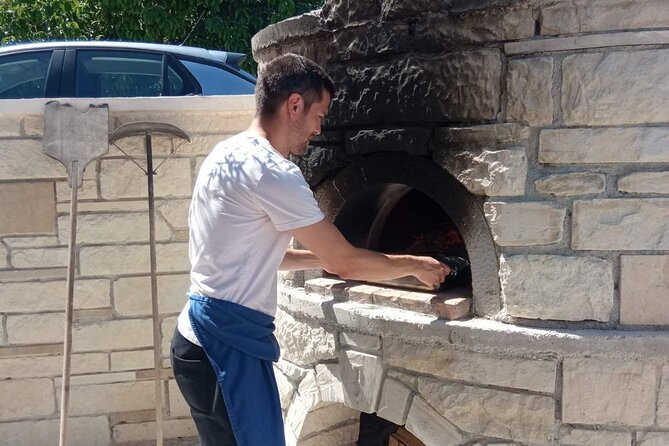
When the cooking is finished, you sit down to eat the food you helped prepare. Lunch or dinner includes the appetizers, stuffed vegetables, dolmades, lamb kleftiko, kalitsounia, and dessert.
Local wine is included, along with soft drinks. Alcoholic beverages are part of the price, so you do not need to treat the meal as a separate restaurant bill. Still, drink sensibly if you are using your own transportation or have a long trip afterward.
The portions sound generous, and the menu is broad enough to suit people who are not keen on lamb. You have vegetables, rice, cheese, yogurt, bread, herbs, pastry, and sweet preserves alongside the meat. That variety is helpful for families and mixed groups with different tastes.
The shared meal is also where the social side of the class pays off. You meet other people while working, then sit together once the food is ready. The setting is described as picturesque, with garden seating and olive trees, and the outdoor cooking area provides shade even on hot days.
This is a meal with conversation built into it. If you prefer to eat quickly and move on to your next sight, the long format may feel excessive. If you enjoy food as a way to meet people and understand local customs, the time feels better spent.
Why the family hosts matter
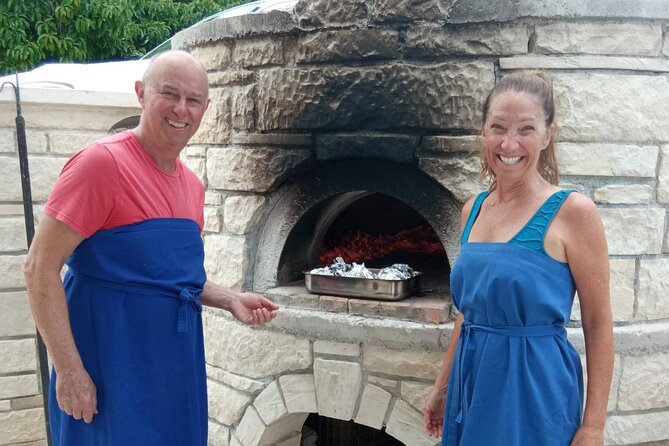
Veerna is the main teacher and host. She is joined by family members, including Costas and Alex. Alex may also handle transfers, while Costas has been involved with the outdoor wood oven used for the lamb.
The family approach is central to the character of the experience. The cooking is organized, but it does not sound like a stiff professional demonstration. You are shown techniques, given tasks, and encouraged to take part. Family stories and conversation add a personal layer to the food.
That warmth can be a major reason to choose this class over a standard cooking school. You are not only learning how to fold a grape leaf or roll pastry. You are also spending time in a Cretan setting where food, family, and hospitality overlap.
The tradeoff is that a family-run class can feel less predictable than a tightly timed culinary workshop. The session lasts about four to five hours, and the exact length depends on the number of participants. I would choose it for the human contact, not for a clockwork schedule.
The Chania location and optional pickup
The starting point is in Nerokouros, near Chania, at the address provided after booking. The exact location is emailed after confirmation. The activity ends at the same meeting point.
Transportation is not included in the listed price. A transfer service can be arranged for an extra fee based on your location. The transport is semi-private, using a nine-seat van and an electric vehicle, and you may share the ride with other people attending the class.
This option is useful if you are staying in Chania, arriving at the port, or do not want to arrange your own route to Nerokouros. Ask for the transfer cost in your booking form rather than assuming it is included. The extra charge changes the total value, especially for solo participants or couples.
If you drive yourself, remember that the published meeting point is outside the main Chania center. You should have the confirmed location and arrival details before setting out.
Price, group size, and what you receive
The listed price is $133.08 per person. The separate pricing information gives an adult price of 105 EUR, with children aged 5 to 12 charged 50 EUR and children aged 0 to 4 admitted free. Since the two figures use different currencies, confirm the current amount at booking.
For that price, you receive the cooking class, all ingredients, lunch or dinner, local wine, soft drinks, and dessert. The value is strongest if you compare it with the cost of a meal plus a guided cultural activity. You are not paying only for instruction. You are also paying for a long meal, food supplies, drinks, the setting, and time with the hosting family.
Transportation is the main extra. Larger groups may also ask about discounts, as a reduced rate may be available for groups of more than 10. Solo participants and groups smaller than four should contact the provider to see if they can join another group.
The maximum capacity is 40, though individual sessions may be much smaller. I would ask two questions before finalizing: how many people are booked for your date, and whether the session will be lunch or dinner. Those answers will help you judge how personal the instruction is likely to feel.
Who will enjoy this class most
I would choose this experience if you want to do more than photograph food. It suits you if you enjoy hands-on activities, long meals, local wine, and meeting people from different places.
It is also a strong choice for families with older children. The cooking offers several kinds of work, and the menu has enough variety for different appetites. Children aged 0 to 4 are free, while those aged 5 to 12 have a reduced price.
Solo participants are welcome, though you should contact the provider first to check availability and possible group placement. The social format can make a solo booking feel easy, but it may not suit someone who wants a private class.
The class is less suitable if you need a quick activity, dislike group cooking, or cannot wait several hours for the main meal. It is also worth checking ahead about dietary needs, since the supplied information describes the menu but does not spell out special-diet substitutions.
Practical details before you go
Confirmation is received at booking, and the exact meeting location arrives by email afterward. Keep that message available on the day, since the general address and the final location may not be identical.
The experience is offered in English and includes a mobile ticket. Service animals are allowed. Free cancellation is available if you cancel at least 24 hours before the start time. Cancellations within 24 hours are not refunded, and changes inside that window are not accepted.
Plan on four hours at a minimum, with some sessions running closer to five. Wear something comfortable for cooking and arrive ready to work, not just watch. Since the menu is large, leave room for dessert and do not expect to finish in a hurry.
Should you book the Chania Cooking Class?
I would book this class if authentic food preparation, family hospitality, and a generous shared meal matter more to you than a small class or a short schedule. The strongest features are the full menu, the outdoor setting, Veerna’s personal instruction, and the chance to make dishes that are difficult to understand from a restaurant table alone.
Before booking, check the group size, confirm the adult price in the correct currency, and ask about the optional transfer fee. Eat lightly beforehand, especially if you choose the lunch session.
This is a particularly good pick for food lovers, families with older children, solo participants open to meeting people, and anyone looking for one memorable activity near Chania. If that sounds like your kind of afternoon or evening, the class offers far more than a recipe lesson. You help prepare a Cretan meal, then share it in the place where it was made.
FAQ
Where does the Chania cooking class take place?
The class begins at Chania Cooking Class in Nerokouros, near Chania, Crete. The exact location is emailed after confirmation, and the activity ends back at the meeting point.
How long does the cooking class last?
The class lasts about four to five hours. The exact duration depends on the number of participants.
Is transportation included?
No. Pickup and return transfers are available for an extra fee based on your location. Transportation uses a nine-seat van or an electric vehicle, and you may share the vehicle with other people attending the class.
What food will I prepare?
You will prepare dakos, tzatziki, Cretan salad, lamb kleftiko, stuffed vegetables, dolmades, savory kalitsounia, sweet kalitsounia, and yogurt with seasonal spoon sweet.
Are drinks and the meal included?
Yes. Ingredients, lunch or dinner, local wine, alcoholic beverages, soft drinks, and dessert are included.
Can children and solo participants join?
Children aged 0 to 4 are free, and children aged 5 to 12 pay 50 EUR. Individual participants and groups of fewer than four should contact the provider to check availability and possible placement with another group.
More Workshops in Crete
- Heraklion: Beginner Scuba Diving Lesson with PADI Instructor
★ 4.9 · 355 reviews - Rethymno: Traditional Cooking Class in a Cretan Village
★ 5.0 · 58 reviews - Heraklion: Cretan Cooking Lesson with Lunch in Arolithos
★ 4.9 · 54 reviews - Cooking Lesson in Heraclion
★ 5.0 · 32 reviews
Recently reviewed around Crete
- Troy Dinner-Show★ 5.0 · 103 reviews
- Heraklion : Spinalonga, Agios Nikolaos , Elounda Boat Tour & BBQ★ 3.5 · 32 reviews
- Quad Safari Off-Road Evening Tour★ 5.0 · 69 reviews
- Knossos & Lasithi Plateau: Zeus Cave,Villages, Olive Oil Tour★ 5.0 · 328 reviews
- Knossos & lasithi plateau villages,Zeus’s cave,&olive oil Mill★ 5.0 · 90 reviews
- Sailing trip to the Top Coasts of Crete, Daily/Multi-day★ 5.0 · 221 reviews
- Cretan Wines & Olive oil tour – The treasures of Crete★ 5.0 · 147 reviews
- PRIVATE-Knossos Palace-Zeus Cave-Olive Oil Tasting-Old Villages★ 5.0 · 81 reviews
Greek Cooking Classes, compared.
Classic Cooking Class with Market Visit and Wine
Read our review →
Food Market Visit and Cooking Class with Wine
Read our review →
Greek Cuisine Cooking Class in Santorini with Recipes and Wine
Read our review →
Half-Day Cooking Class at Basiliko Family Tavern
Read our review →
Greek Cooking Class in Athens Including Rooftop Dinner with Acropolis View
Read our review →
Greek Small-Group Athens Cooking Class & Dinner
Read our review →
Authentic Cooking Class in the White Mountains
Read our review →
Browse the lists this tour appears in