
Reviewed · WALKING TOURS
Hills Of Athens Walking Tour
Athens is best understood on foot, and this tour turns the city’s hills into one long, rewarding route. You climb from Mount Lycabettus through central Athens, then cross the historic heart before finishing at Pnyx, where ancient Athenians gathered to debate and vote. I like the mix of exercise and archaeology, and I like that the route uses high viewpoints that many first-time visitors miss.
The price is $52.16 per person, which is fair if you value a guide, a small group, photos, videos, and a snack. The main catch is the walking itself: several hills and roughly four to five hours can feel demanding in hot weather, even with morning and afternoon departure choices.
In This Review
- Key points to know before booking
- Why this Athens walk is different
- Mount Lycabettus gives you the big picture
- Kolonaki and the Presidential Mansion
- The National Garden offers a welcome pause
- Zeus, Hadrian, and the road toward the Acropolis
- Herod Atticus Odeon from the outside
- Areopagus is short, steep, and memorable
- Filopappou Hill brings the best walking
- Pnyx explains Athens’ civic idea
- What the $52.16 price covers
- Who will enjoy this route most
- Aegean Outdoors and the guiding style
- Should you book the Hills of Athens Walking Tour?
- FAQ
- How long does the Hills of Athens Walking Tour last?
- Where does the tour begin?
- Where does the tour finish?
- Is the tour offered in English?
- Are entrance fees to archaeological sites included?
- How large is the group?
Key points to know before booking
- Lycabettus begins the climb: Start with one of Athens’ best city views from a limestone hill.
- The route links old and modern Athens: You pass Kolonaki, the Presidential Mansion, Parliament, the National Garden, Hadrian’s Arch, and major ancient sites.
- The final hills have the most character: Areopagus, Filopappou, and Pnyx offer stone paths, open views, and a strong sense of place.
- You do not enter the major monuments: The Temple of Olympian Zeus and Herod Atticus Odeon are viewed from outside, so plan separate visits if you want interior access.
- Small groups keep the walk personal: The maximum is 12 people, with an English-speaking Aegean Outdoors guide.
- The finish is handy for sightseeing: The walk ends in front of the Acropolis Museum, on Dionysiou Areopagitou Street.
Why this Athens walk is different
Many Athens tours move from monument to monument by vehicle or follow the busiest central streets. This one gives you a more physical way to understand the city. The climbs are not just exercise added to an ordinary sightseeing route. They explain Athens.
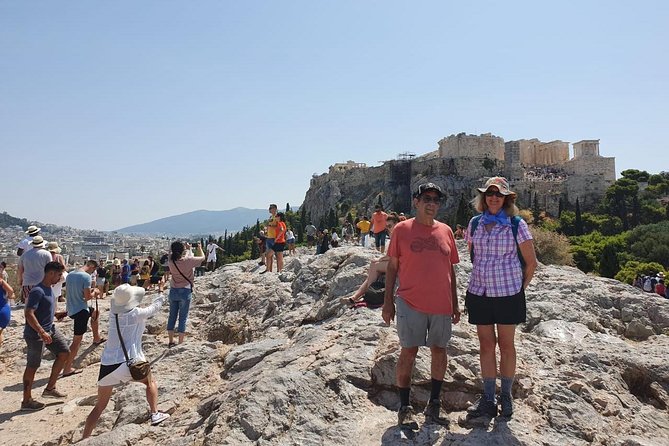
From the hills, you see how the Acropolis sits at the center of the modern city. You also get a feel for the way Athens rises and falls around its ancient core. The route moves from polished Kolonaki and government buildings to gardens, ruins, rocky hills, and the pedestrian area beside the Acropolis.
I especially like the way the tour connects places that can feel separate on a standard city map. Lycabettus gives you a broad view at the start. The National Garden provides a quieter middle stretch. Areopagus, Filopappou, and Pnyx then bring you closer to the city’s ancient civic and religious setting.
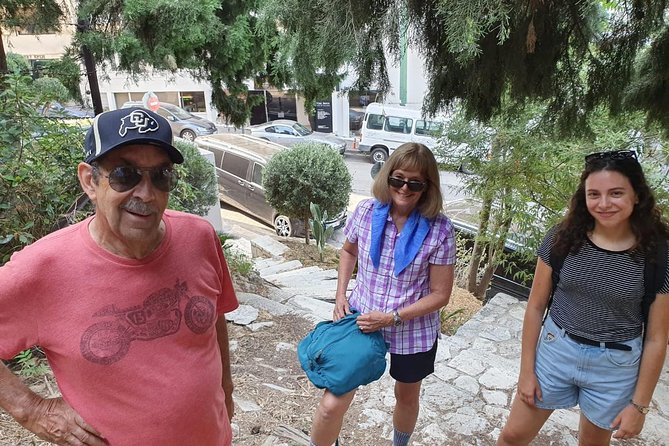
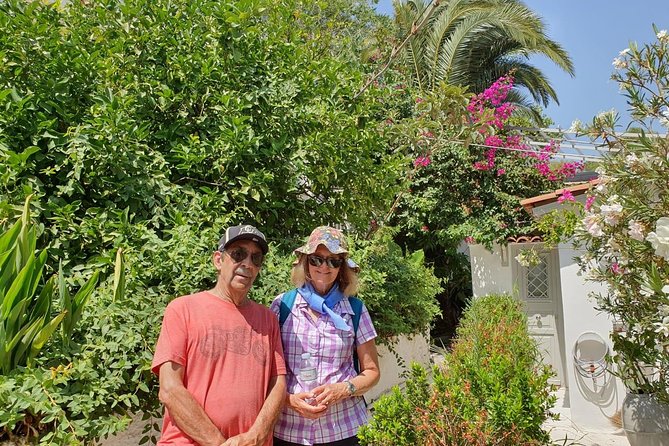
This is a guide-led experience, so you can watch your footing and your surroundings instead of stopping every few minutes to check a map. The small group limit also matters. Twelve people is large enough to have company but small enough for questions and a more direct exchange with your guide.
More Walking Tours in Athens
- Athens: Acropolis and Parthenon Guided Walking Tour
★ 4.6 · 5,882 reviews - Greek Food Walking Tour in Athens
★ 5.0 · 4,740 reviews - Acropolis: Acropolis and Parthenon Guided Walking Tour
★ 4.7 · 3,442 reviews
Mount Lycabettus gives you the big picture
The tour starts near Evangelismos Station and heads toward Lycabettus, also called Lykavittos. This Cretaceous limestone hill rises above Athens and gives you a wide view of the city.
The listed stop is short, about 10 minutes, but that does not mean the hill is effortless. You are climbing at the start of a long walking tour, so wear shoes with a firm grip and keep water close. The exact pace can depend on the group, but the route is built around reaching the hill rather than simply looking at it from below.
This opening viewpoint helps you place the rest of the day. You can see the urban spread of Athens before walking into its central districts. It is a useful contrast to later views from the Acropolis area, where the focus shifts toward ancient monuments and the surrounding hills.
The morning departure is probably the better choice for the clearest, coolest start, while the afternoon option gives you a different feel as the day progresses. The tour specifically offers both choices to help you avoid the strongest midday sun.
Kolonaki and the Presidential Mansion
After Lycabettus, the route passes through Kolonaki, one of central Athens’ more polished districts. This is a good change of pace after the hill. Cafes and drink spots show you the everyday side of the city, where local life continues just beyond the main ancient sights.
You then reach the Presidential Mansion and see the Greek Parliament from the outside. The stop is brief, around five minutes, so treat it as a look and a short explanation rather than a full government-building visit.
If timing works, you may see the change of guards. It is not guaranteed, and the tour does not promise a formal ceremony, but the possibility adds interest to this part of the walk. The key point is that you are passing through the civic center of modern Greece, not just checking off ruins.
The National Garden offers a welcome pause
The National Garden is one of the route’s most useful stops. After city streets and the first major climb, a walk through greenery gives your legs and attention a break.
The scheduled time here is about 10 minutes. That is enough for a short stroll and orientation, but not enough for a leisurely exploration of every path. I would think of it as a pleasant passage through central Athens rather than a separate garden tour.
This section also helps the day feel varied. You move from a high urban viewpoint to a fashionable neighborhood, then to government buildings and a garden. That range is part of the tour’s value. You are not spending four hours seeing only ruins.
More Athens walks with a guide:
- Acropolis monuments & Parthenon Walking Tour with Optional Acropolis Museum
★ 5.0 · 2,678 reviews - Athens Acropolis and Parthenon Walking Tour
★ 4.5 · 1,355 reviews - Athens Authentic Greek Food Walking Tour (Small Group)
★ 5.0 · 809 reviews - Early Morning Acropolis & Old Athens Guided Walking Tour
★ 4.4 · 748 reviews
Zeus, Hadrian, and the road toward the Acropolis
The Temple of Olympian Zeus is viewed from outside, with about five minutes planned for the stop. The massive columns are easy to appreciate even without entering, and the scale of the site gives you a quick sense of how ambitious ancient Athens could be.
Your admission to the archaeological site is not included because the route does not go inside. The same applies to the Herod Atticus Odeon later in the tour. If you want time among the ruins rather than a passing view, plan a separate visit and budget for the entrance fee.
The walk also passes Hadrian’s Arch. This is a quick but useful marker between different eras of Athens. It shows how the Roman period added its own grand gateway to a city already shaped by classical Greek monuments.
These brief stops are a strength for someone who wants a broad introduction. They are a limitation for anyone hoping for detailed exploration of each site. The tour gives you connections and context, not a replacement for an Acropolis or archaeology-focused visit.
Herod Atticus Odeon from the outside
The route continues toward the Acropolis and passes the Odeon of Herod Atticus. The theater is one of the most recognizable structures on the southern side of the Acropolis, with its curving stone seating and dramatic setting.
Again, you do not enter. The scheduled stop is about five minutes, enough to see the building and take photos. If a concert or performance is part of your Athens plans, you will need a separate ticket and separate timing.
This short stop works well in the overall route because it brings you close to the Acropolis without making the Acropolis itself the entire focus. You get the setting, the surrounding paths, and the approach from below before moving to the hills.
Areopagus is short, steep, and memorable
The climb to Areopagus Hill is one of the most distinctive parts of the walk. The hill is rocky and exposed, and the view reaches across the Acropolis area and central Athens.
The stop is listed at about 10 minutes, though the climb and the time needed to move carefully may shape the pace. Good footwear matters here. Smooth or uneven stone can be awkward, especially if you are tired or the surface is warm.
Areopagus is also a place where the city’s ancient and modern layers sit close together. From this small rise, you can look toward the Acropolis while seeing the city extend beyond it. The guide’s role is useful here because a short explanation can make the site mean more than a photo stop.
Do not expect a long seated break. This is a hill walk, and the route keeps moving.
Filopappou Hill brings the best walking
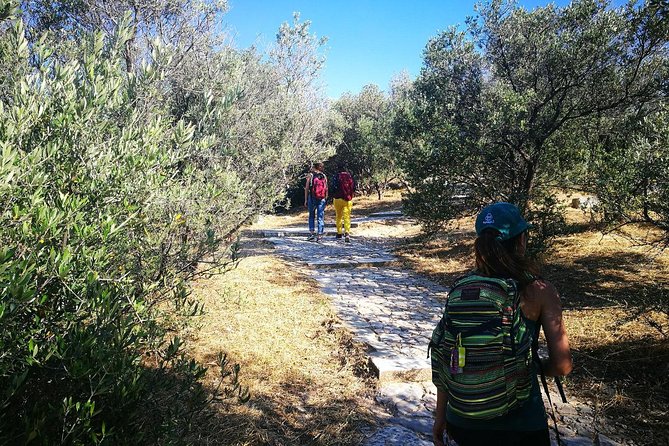
Filopappou Hill is where the experience feels most like an urban hike. You climb through one of the large hill areas near the Acropolis, leaving behind much of the street traffic and moving along paths with open views.
The listed time is about 10 minutes, but this part may feel longer because it includes the climb. The reward is a different angle on the Acropolis and Athens. Instead of looking up at the ancient citadel from a crowded approach, you see it as part of a wider setting.
This is also one of the places where the tour’s exercise element becomes clear. You should be ready for uphill walking, uneven ground, and a steady route. Most people can participate, but the experience is not the right pick if you want a flat, gentle stroll with frequent long breaks.
A guide can make a real difference on Filopappou. Paths may feel simple once you know them, but having someone lead the route lets you focus on the views and the physical surroundings.
Pnyx explains Athens’ civic idea
The final hill is Pnyx, a site tied to the democratic life of ancient Athens. This is where citizens assembled to discuss important matters and vote.
The setting makes the stop more powerful than a simple monument visit. Pnyx is not a grand temple with a tall facade. Its importance comes from what happened there and from the open space itself. You can better understand the connection between the city, the Acropolis, and public debate.
The climb to Pnyx completes the tour’s pattern. You begin with a citywide view from Lycabettus, pass through modern Athens and several ancient landmarks, then finish among the hills near the Acropolis. The route ends on Dionysiou Areopagitou Street, in front of the Acropolis Museum.
That ending is practical. You can continue sightseeing nearby, visit the museum if you have a ticket, or walk on through the Acropolis area. Transfers are not included, so you will arrange your own way to the start and onward from the finish.
What the $52.16 price covers
At $52.16, this is not the cheapest way to see Athens, but the cost is reasonable for a half-day guided walk with a maximum of 12 people. You are paying for route planning, an English-speaking guide, a light snack, and photos and videos from the experience.
The value is strongest if you want more than a list of monuments. A guide helps explain why the hills matter and keeps the route moving through several different parts of the city. The price is less compelling if you prefer to explore slowly on your own or already know Athens well.
You should also factor in what is not covered. Transport to and from the meeting points is your responsibility, though private transfers can be arranged on request. Entrance fees to archaeological sites and museums are not included, and the itinerary does not enter the Temple of Olympian Zeus or the Odeon.
The tour is commonly booked well ahead, with an average booking point around 75 days before the date. That is useful to know if your Athens schedule is fixed. Confirmation is sent within 48 hours, subject to availability.
Who will enjoy this route most
I would choose this tour if you want to see Athens actively and you enjoy moving between major sights rather than staying in one complex. It suits couples, families with older children, and visitors who want a guided introduction before exploring the Acropolis area on their own.
It is also a good choice if you have already seen the headline monuments and want a fresh angle. The hills and viewpoints give you a stronger sense of how Athens fits together.
The tour may not suit you if you have limited stamina, dislike uneven paths, or want extensive time inside archaeological sites. Children must be accompanied by an adult, and the experience is described as suitable for most people, but that does not remove the need for a realistic assessment of the climbs.
A morning or afternoon departure helps with heat, but Athens can still be sunny. Bring water, sun protection, and shoes suited to hill paths. The light snack is useful, but it should not be treated as a full meal.
Aegean Outdoors and the guiding style
Aegean Outdoors uses English-speaking guides for this experience, and other languages may be arranged by contacting the company. Guides connected with the company include Helena, Archelaos, Nondas, and Joanna, though your assigned guide is not specified in advance here.
The strongest pattern in the company’s feedback is personal attention, good organization, and guides who enjoy working with people. One family experience singled out Helena for an easygoing and fun approach, while Archelaos and Nondas were praised for keeping activities well organized and personal.
That matters on a walking tour. A dry lecture can make a long climb feel longer. A guide who explains, checks the group, and keeps the mood light can turn the hills into part of the fun.
The company also provides photos and videos, a nice extra if you want to remember the route without constantly stopping to take pictures yourself.
Should you book the Hills of Athens Walking Tour?
Book it if you want views, movement, and context in one half-day. The route gives you more than a central Athens checklist, and the finish near the Acropolis Museum makes it easy to continue your day.
Skip it if you want full visits to the Temple of Olympian Zeus, the Odeon, or other archaeological sites. This experience is about seeing how Athens fits together from its hills and streets, not spending long periods inside monuments.
For most active first-time visitors, $52.16 is a sensible price for a small guided group, especially if you value the route planning and added photos. Choose the departure time that avoids the harshest heat, wear solid shoes, and leave room afterward for the museum or Acropolis area.
FAQ
How long does the Hills of Athens Walking Tour last?
The tour lasts approximately four to five hours.
Where does the tour begin?
It begins at Evangelismos Station in Athens.
Where does the tour finish?
The tour ends at Dionysiou Areopagitou 17, in front of the Acropolis Museum.
Is the tour offered in English?
Yes. An English-speaking Aegean Outdoors guide is included. Other languages may be arranged by contacting the provider.
Are entrance fees to archaeological sites included?
No. Entrance fees and visits to archaeological sites and museums are not included. The route passes the Temple of Olympian Zeus and Herod Atticus Odeon without entering them.
How large is the group?
The tour has a maximum of 12 people. Children must be accompanied by an adult, and most people can participate.
Recently reviewed around Athens
- Small-Group Women History in Ancient Greece Walking Tour★ 5.0 · 38 reviews
- Ceramic and Pottery Creative Workshop with Two Local Artists★ 4.0 · 57 reviews
- Athens: Wine Workshop Create your Own Wine under the Acropolis★ 5.0 · 77 reviews
- Athens: Greek Wines Tasting with Sommelier and Acropolis Views★ 5.0 · 88 reviews
- Hydra Private Day Trip by Ferry from Athens with Transfers★ 4.0 · 30 reviews
- Small-Group Wine Tour in Athens with Tasting★ 5.0 · 33 reviews
- Wine Trails Private Tour/ Nemea visit 3 wineries from Athens or Nafplion (10 h)★ 5.0 · 44 reviews
- Private Athens Transfer Airport/Port -Greek Tours-Hourly service★ 5.0 · 88 reviews
Walking Tours, compared.




Acropolis monuments & Parthenon Walking Tour with Optional Acropolis Museum
Read our review →
Knossos: Knossos Palace Skip-the-Line Guided Walking Tour
Read our review →

Athens Authentic Greek Food Walking Tour (Small Group)
Read our review →
Early Morning Acropolis & Old Athens Guided Walking Tour
Read our review →Browse the lists this tour appears in