
Reviewed · WALKING TOURS
Karpathos Valley Walk in Pigadia – easy guided walking tour
Karpathos reveals its quieter side just beyond Pigadia, where goat paths and olive fields replace the waterfront streets. This easy morning walk leads you past abandoned houses, old trees, a small chapel, and a partly wet river bed before returning to town.
I like the early start, which helps you avoid the strongest summer heat. I also like the local focus: Renate and Thom explain plants, customs, island life, and history rather than simply pointing out scenery. The main drawback is that the start time needs checking, since the tour details mention both 8am and 8:30am.
In This Review
- Key points
- Leaving Pigadia for the olive fields
- Old houses and the quieter side of Karpathos
- Following goat bells beneath the olive trees
- Tea and a chapel below Menetes
- The river bed, old olives, and fossil shells
- Returning to Pigadia by late morning
- What the guides add to the experience
- How much value you get for $43.14
- Who should book this walk
- Timing, weather, and booking details
- Should you book the Pigadia Valley Walk?
- FAQ
- How long is the Karpathos Valley Walk?
- Is the walk difficult?
- What time does the tour start?
- Where does the walk begin and end?
- Is herbal tea included?
- Is a walking stick available?
- What happens if the weather is poor?
Key points
- A gentle 7-kilometer route: The walk is mainly flat and takes about three to four hours at a relaxed pace.
- A real countryside setting: Follow goat paths through olive fields, flower-filled spring meadows, and high summer grass.
- A chapel below Menetes: Pause in the shade, sample local herbal tea, and see how islanders pray.
- Plant and island knowledge: Renate is especially good at explaining herbs, their uses, and Karpathian customs.
- A cooler morning plan: The early departure is designed to reduce exposure to the summer heat.
- A small-group feel: The maximum group size is 20 people, with a guide leading the way.
Leaving Pigadia for the olive fields
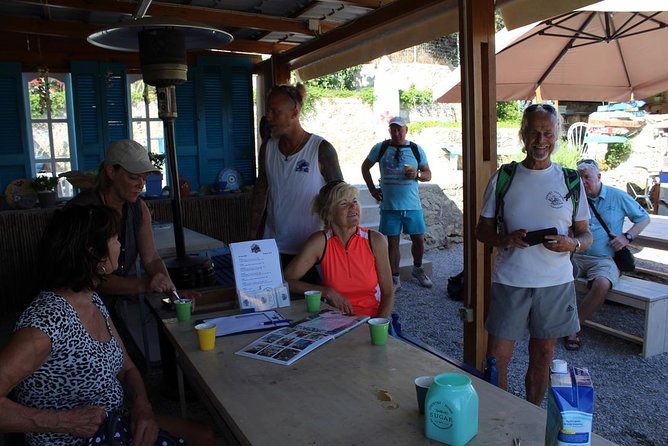
The walk begins at the Auto Tour Karpathos car-rental office on the main street of Pigadia. The published meeting time is 8:30am, while the route description says 8am, so confirm the exact time when you book. That small detail matters on an island morning, especially if you are staying outside central Pigadia.
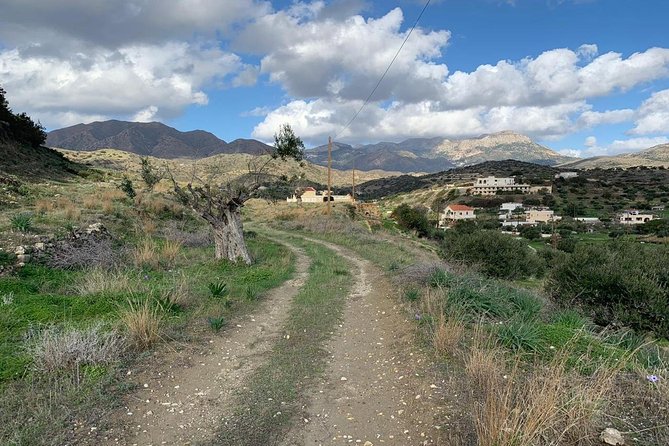
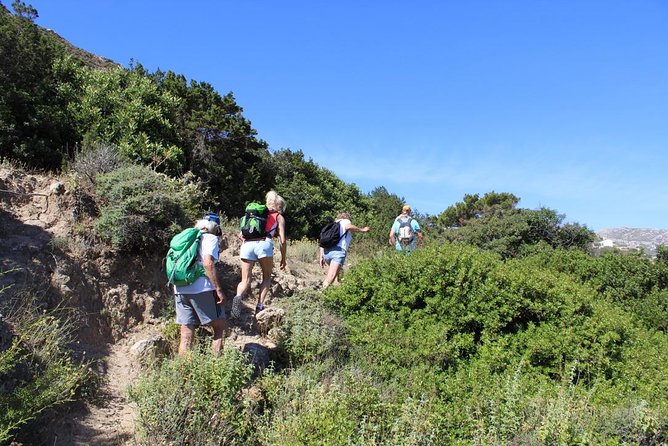
From town, you head toward the valley and follow narrow goat paths through olive fields. This is not a polished park trail with signs and railings. It is a simple countryside route, shaped by farming, walking, and daily island life.
That makes the opening section useful for getting beyond the resort side of Karpathos. You see the land in a practical setting, with olive trees, rough paths, old field boundaries, and the sound of goat bells helping set the pace.
The route is mostly flat. There is not much height change, so you are walking rather than climbing. Still, a goat path can be uneven, and the river bed later in the walk may be slightly wet. Comfortable walking shoes are a sensible choice, even though this is described as an easy outing.
More Greece walks with a guide:
- Athens: Acropolis and Parthenon Guided Walking Tour
★ 4.6 · 5,882 reviews - Greek Food Walking Tour in Athens
★ 5.0 · 4,740 reviews - Acropolis: Acropolis and Parthenon Guided Walking Tour
★ 4.7 · 3,442 reviews
Old houses and the quieter side of Karpathos
One of the more striking details along the route is the presence of abandoned houses connected with Greek-Americans. These buildings add a human layer to the walk. They suggest the movement of island families abroad and the way rural homes can fall quiet when work and opportunity pull people away.
The guide helps place these sights in context. Thom and Renate do more than lead from one point to the next. Their tours cover local culture, customs, wine, plants, and the lives of people on Karpathos. On this walk, those explanations turn an old house or field into part of the island story.
You should not expect a formal museum visit or a long stop at each building. The value comes from seeing these places in their setting and being able to ask questions as you walk.
The route changes with the season. In spring, the fields can have many flowers. In summer, the grass is higher, and the olive trees provide welcome patches of shade. The colors and feel of the walk will therefore depend on when you visit.
Following goat bells beneath the olive trees
The olive trees are not just scenery. They shape the rhythm of the outing, offering shade for short water breaks and giving you a close look at one of the island’s familiar crops.
The walk is designed for a calm pace. You are not being pushed to finish quickly, and the three to four hour duration includes stops for conversation, shade, the chapel, and tea. That makes it a good match for someone who wants a morning outdoors without signing up for a strenuous mountain hike.
I would still bring water. The early hour reduces the heat, but it does not remove it, especially in August. Sun protection also makes sense, since the shade is intermittent rather than continuous.
The route’s simplicity is part of its appeal. You hear goat bells, smell plants in the fields, and walk through a working rural area rather than a staged attraction. If you want dramatic peaks or a hard physical challenge, this is probably too gentle. If you want a calm introduction to the countryside around Pigadia, it fits well.
Tea and a chapel below Menetes
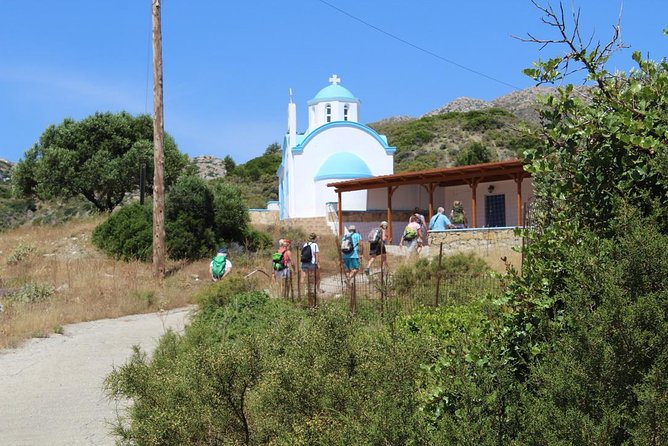
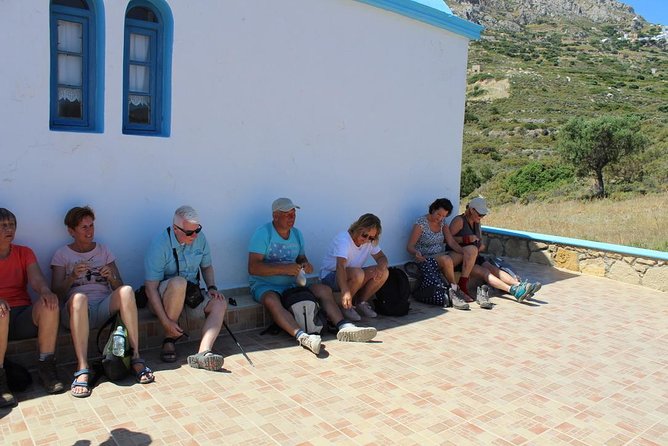
A key stop comes at a chapel below Menetes. The group pauses in the shade and shares a fresh cup of locally made herbal tea. Sage tea is specifically associated with the guide’s preparation, although the supplied details describe the offering more broadly as herbal tea.
This is a small moment, but it gives the tour character. You are not just stopping to rest. You are tasting a local plant product while learning how herbs fit into island life. Renate is particularly strong at explaining the processing and uses of plants encountered along the route.
You also enter the chapel to see how local people pray. Visitors should treat this as a place of worship, not simply a photo stop. The visit offers a glimpse into everyday religious practice in a way that a large sightseeing circuit often cannot.
The chapel break is also practical. By this point, you have been walking through open fields, so sitting in the shade with tea gives your legs and feet a pause before the route continues.
More Greece trips worth a second look
- Athens: Acropolis Ticket with Optional Audio or Live Guide
★ 4.2 · 11,055 reviews - Athens: Acropolis, Parthenon & Acropolis Museum Guided Tour
★ 4.8 · 9,316 reviews - Athens: Cape Sounio & Poseidon Temple Trip with Audio Guide
★ 4.4 · 4,521 reviews - Athens: Mythology of Delphi, Museum and Arachova Guided Tour
★ 4.6 · 4,008 reviews
The river bed, old olives, and fossil shells
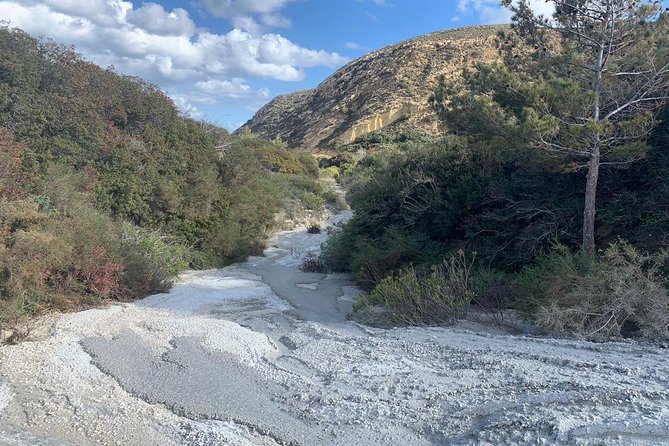
After leaving the chapel, the walk heads into a slightly wet river bed. The wording matters here. This is not presented as a major water crossing, but conditions can be damp, and the surface may be rough. Wear shoes that can handle a little moisture and dirt.
The river-bed section leads to historical olive trees and fossilized shells. These details give the final part of the route a different feel. The old trees connect you to long-running agricultural life, while the shells point to the area’s natural past.
One description of the experience also mentions Poseidon cave as one of the beautiful places along the way. Since the main route details do not set out a separate cave visit, ask your guide how this feature fits into the walk on your chosen date.
This section is best appreciated slowly. Look down at the ground, notice the older trees, and let the guide explain what you are seeing. The walk rewards attention more than speed.
Returning to Pigadia by late morning
After leaving the valley, you return to Pigadia at about 11:30am. Depending on the exact start time and pace, the outing lasts roughly three to four hours.
That timing makes the walk easy to pair with the rest of your day. You can have lunch in town, spend the afternoon at the beach, or plan another activity without giving up the whole day. It also keeps the most exposed walking in the cooler part of the morning.
The end point is the original meeting point at Auto Tour Karpathos. There is no separate transport segment listed, so you should plan to finish where you started.
What the guides add to the experience
The guides are a major part of the tour’s appeal. Renate leads with warmth, humor, and a strong interest in local plants. She can explain how herbs are processed and used, and she connects those details with island customs and daily life.
Thom brings a broad understanding of Karpathos and creates a friendly group atmosphere. He also guides other walking experiences, including routes connected with wine and the Lastos area. If you are interested in more than one outing, Art and Walk Karpathos offers a way to build a fuller picture of the island through different themes.
You can ask questions as you go. That is valuable on a small rural route, where the significance of a house, plant, chapel, or field is not always obvious at first glance.
The stated maximum is 20 people. That is not an especially tiny group, but it is still manageable for a walking tour. The actual group may be smaller, and the relaxed pace should help keep conversation possible.
How much value you get for $43.14
At $43.14 per person, this is not a bargain-priced self-guided walk. You are paying for the guide, local interpretation, the organized route, and the tea stop rather than for an expensive attraction or transport service.
I think the price is reasonable if you value context. Without a guide, you could walk near Pigadia, but you might pass the old houses, plants, olive trees, and chapel without understanding their place in Karpathian life.
The strongest value comes from the combination of nature and explanation. You receive a gentle outdoor activity, a look at the countryside, a taste of local herbal tea, and access to someone who can answer questions about culture and island customs.
The value is weaker if you only want exercise. Seven kilometers over mostly flat ground will not satisfy someone seeking a demanding hike. It is also not the right choice if your priority is a long beach stop, sweeping mountain views, or a packed list of major monuments.
Who should book this walk
This tour suits people who want a low-pressure morning outside Pigadia. It works well for couples, friends, solo walkers, and anyone curious about plants, village customs, farming, and the quieter parts of Karpathos.
Most participants can take part, and the route is described as easy. Still, easy does not mean fully paved or completely effortless. Expect goat paths, fields, uneven ground, and a slightly wet river bed. Ask for a walking stick if you would find extra support useful. It is available on request.
The walk is also a good choice for people who prefer a guide with personality. Renate and Thom bring storytelling and local detail, and the experience is less formal than a standard sightseeing tour.
Service animals are allowed, and the meeting point is near public transportation. The activity is offered in English. If you need a particular pace or have concerns about the river-bed section, ask before booking.
Timing, weather, and booking details
The early departure is one of the tour’s smartest features. Summer heat can make even a flat walk tiring, so beginning in the morning is practical. In August, the route remains feasible according to the published experience, but you should still carry water and protect yourself from the sun.
The tour requires good weather. If poor conditions lead to cancellation, you can choose another date or receive a full refund. The activity also requires a minimum number of participants, so a cancellation for that reason brings the same choice of another date or a refund.
You can cancel for a full refund up to 24 hours before the start time. Changes or cancellations inside that 24-hour window are not accepted, and the cut-off uses local time.
Should you book the Pigadia Valley Walk?
Book it if you want to understand Karpathos through its fields, plants, old homes, religious customs, and olive trees. The route is easy, the morning timing is sensible, and the guide-led storytelling gives meaning to places you could easily overlook.
Skip it if you want a strenuous hike, a long mountain route, or a major archaeological site. Also confirm the start time and ask about the exact route, including the possible Poseidon cave mention, before you set out.
For a gentle half-day introduction to the countryside around Pigadia, this is a strong choice. The herbal tea, chapel visit, fossil shells, and conversations with Renate or Thom give the walk enough substance to be more than a simple stroll.
FAQ
How long is the Karpathos Valley Walk?
The walk covers about 7 kilometers and takes approximately three to four hours at a calm, relaxed pace.
Is the walk difficult?
It is described as an easy walk with little height difference and mainly flat terrain. The route includes goat paths, fields, and a slightly wet river bed, so comfortable walking shoes are advisable.
What time does the tour start?
The meeting information gives a start time of 8:30am, while the route description says the group meets at 8am to avoid the heat. Confirm the exact start time with the provider before the day of the tour.
Where does the walk begin and end?
It begins at the Auto Tour Karpathos car-rental office on the main street of Pigadia and ends back at the same meeting point.
Is herbal tea included?
Yes. Coffee and/or tea is included, with a break at a chapel below Menetes to enjoy locally made herbal tea.
Is a walking stick available?
Yes. A walking stick is available on request.
What happens if the weather is poor?
If the activity is canceled because of poor weather, you will be offered a different date or a full refund. A different date, another experience, or a full refund is also offered if the minimum number of participants is not met.
Recently reviewed around Greece
- All Day 4×4 Adventure / Lefkada / With Brunch★ 5.0 · 73 reviews
- Artemis Hamam and Spa with Hotel Transfers Kos Island★ 4.5 · 77 reviews
- Half day boat diving experience for beginners in Kos Greece★ 5.0 · 29 reviews
- Sunset in Zia★ 4.0 · 282 reviews
- Private Greek Cooking Class in Kos with Lunch★ 5.0 · 26 reviews
- Three Island Cruise from Kos★ 4.0 · 33 reviews
- Kos 4×4 Exploration: Views, Villages & Flavors★ 4.5 · 37 reviews
- Lets Go Diving with pickup from hotel★ 4.5 · 42 reviews
Walking Tours, compared.



Acropolis monuments & Parthenon Walking Tour with Optional Acropolis Museum
Read our review →
Knossos: Knossos Palace Skip-the-Line Guided Walking Tour
Read our review →

Athens Authentic Greek Food Walking Tour (Small Group)
Read our review →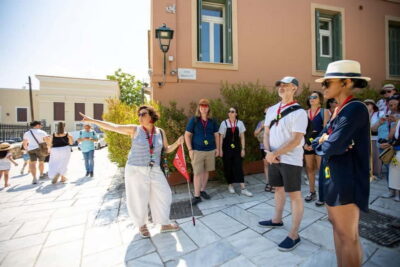
Early Morning Acropolis & Old Athens Guided Walking Tour
Read our review →Browse the lists this tour appears in