
Reviewed · METEORA MONASTERY TOURS
Meteora Monasteries Half-Day Small Group Tour with Transport
Meteora’s monasteries seem to grow straight out of the cliffs, and this four-hour small-group tour gives you a practical way to reach them without wrestling with steep roads or figuring out the route yourself. You travel by vehicle from Kalambaka or Kastraki, visit three monasteries inside, and stop at viewpoints for the big, jaw-dropping photographs.
I like the local guides, especially guides such as Apostolis, Vasilis, Vaggelis, and Lidia, who explain the area with personal feeling rather than reading a dry script. I also like the balance between transport, walking, monastery visits, and photo stops. The drawback is clear: this is not a full guided tour inside each monastery, and the admission fees are extra.
In This Review
- Key points to know before booking
- Why this half-day tour works well at Meteora
- The world of Meteora above the cliffs
- Saint Nicholas of Anapafsas and the first climb
- Roussanou Monastery, lower and easier to reach
- Varlaam, a monastery with scale and craftsmanship
- Great Meteoron, the essential stop
- Holy Trinity and the price of the view
- Agios Stephanos, the easiest monastery to enter
- Photo stops are not filler
- What the $36.30 price really covers
- Clothing, steps, and useful planning advice
- Who should book this Meteora tour
- Should you book it?
- FAQ
- How long does the Meteora monastery tour last?
- Where does pickup take place?
- How many monasteries can I visit inside?
- Are monastery entrance fees included?
- What language is the tour offered in?
- What clothing should I wear?
Key points to know before booking
- Three monasteries inside: The advertised visit includes Great Meteoron, Varlaam, and Roussanou, with the other monasteries seen from the outside.
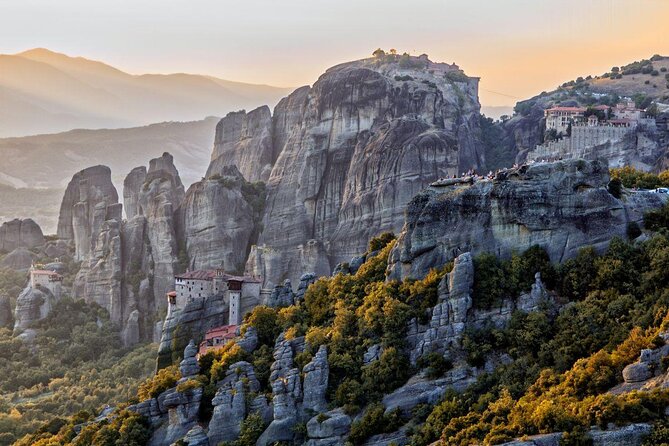
- The best part is often between stops: The drive includes broad views of Meteora’s cliffs and planned photo stops.
- Local English-speaking guide: Guides including Apostolis and Vasilis have been praised for clear explanations, humor, and personal knowledge of the area.
- Small group, not private: The vehicle holds a maximum of 18 people, so the tour is social but still more manageable than a large coach outing.
- Bring cash and proper clothing: Entry fees are separate, and the monasteries require trousers and long sleeves for men and a long skirt for women.
- Good value at $36.30: Transport, bottled water, onboard WiFi, hotel pickup, and the guide are included, but monastery admissions and food are not.
Why this half-day tour works well at Meteora
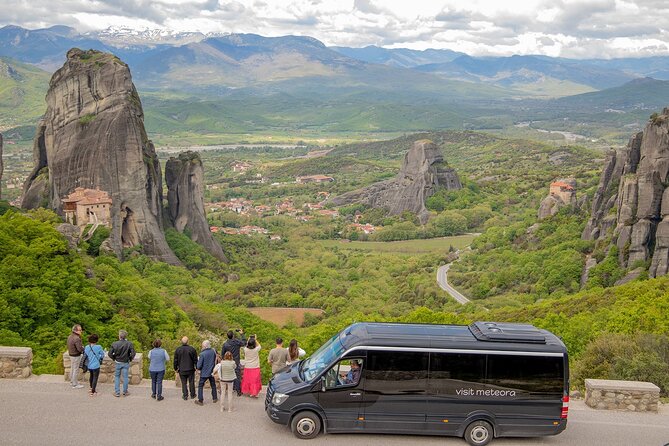
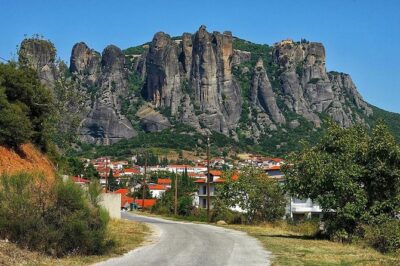
Meteora is one of those places where getting there is only half the problem. The monasteries sit high on isolated rocks, and the roads climb, twist, and narrow around the formations. If you are staying in Kalambaka or Kastraki, pickup from your hotel or Airbnb removes the morning hassle and gets you quickly into the main sightseeing area.
The tour starts at 9:00 a.m. and lasts about four hours, usually finishing around 1:00 p.m. That timing is useful if you want an afternoon for lunch, a walk through town, or a train connection. It also gives you a morning visit, which can help you avoid the worst crowds, though the exact level of congestion depends on the day.
You travel with a driver and an English-speaking local guide. The strongest part of the experience is the commentary during the drive and at the viewpoints. Guides explain what you are seeing before you climb, point out details to look for inside, and fill in the story of monasteries you do not enter.
The group limit is 18 people. That is small enough for a more personal feel, though one account described a full van where the guide stood in the middle while speaking. If you want a quiet, private pace or detailed instruction inside every church, a private tour will suit you better.
More Meteora trips worth a second look
- Athens: Cape Sounion & Poseidon Temple Sunset Half-Day Trip
★ 4.8 · 8,241 reviews - Cape Sounion and Temple of Poseidon Half-Day Small-Group Tour from Athens
★ 4.5 · 3,205 reviews - Half-Day Exclusive Catamaran Cruise in Santorini with Meal and Open Bar
★ 5.0 · 2,975 reviews
The world of Meteora above the cliffs
Meteora means suspended in the air, a fitting name for monasteries built on tall rock pillars above the plain. Twenty-four monasteries were established across these summits from the 14th through the 16th centuries. Six remain active and open to exploration today.
The monasteries became major centers of Orthodox Christianity during the Byzantine era. Their churches hold religious paintings, handmade objects, manuscripts, and museum collections. You are not simply looking at dramatic buildings on rocks. You are seeing a place shaped by prayer, isolation, craftsmanship, and the determination needed to build and maintain communities in such hard-to-reach positions.
The surrounding Meteora and Antichassia region is also protected as a Natura 2000 ecological zone. That designation helps protect rare birds and flowers. The tour does not focus on wildlife, but the protected setting adds another reason to pay attention during the drive. The cliffs are not just a backdrop for the monasteries.
The guide gives you the larger picture before you enter the buildings. This matters because the interiors can be modest in size, and you may otherwise rush from frescoes to relics without understanding why the monastery was founded or how it functioned.
Saint Nicholas of Anapafsas and the first climb
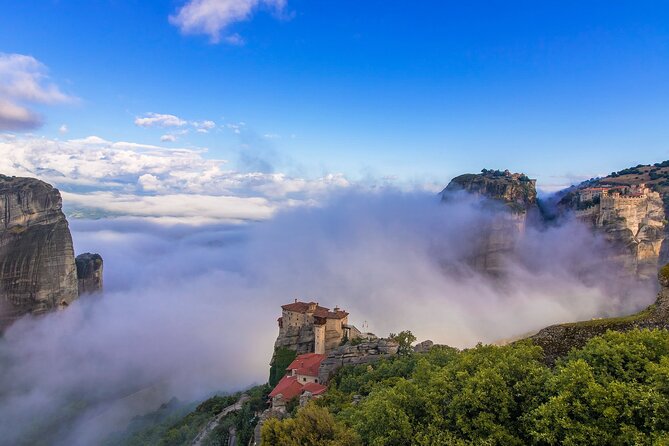
Saint Nicholas of Anapafsas is the first monastery encountered on the route up into Meteora. It was founded at the end of the 14th century and is linked to several explanations for its name.
The most practical explanation connects Anapafsas with a resting place. As the first monastery on the ascent, it may have offered pilgrims a pause before continuing higher. That small detail helps you picture the old route as a demanding journey rather than a sightseeing circuit.
The monastery is not always one of the three interiors included in this tour. It is generally part of the views and exterior commentary, so ask your guide on the day how much time is planned there. The value here is the setting and the introduction to the wider monastic complex.
Roussanou Monastery, lower and easier to reach
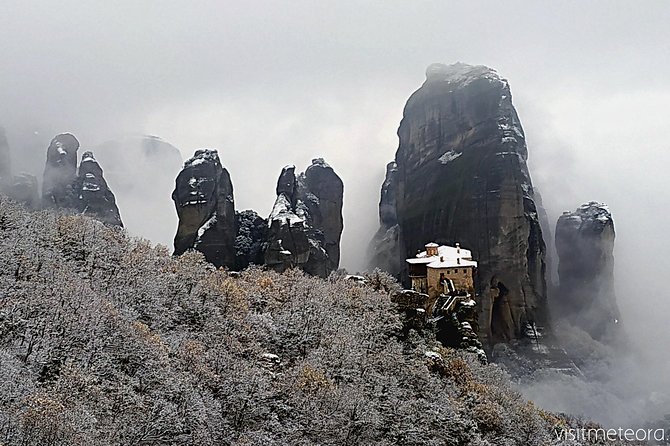
Roussanou is one of the more accessible monasteries because its rock is lower than many of the others. The main church was founded at the end of the 16th century and decorated about thirty years later.
The monastery took its name from the first likely hermit to settle on the rock. It was founded by monks and suffered serious damage during World War II. Since 1988, it has been a convent, giving it a different character from the male monasteries on the route.
The tour allows about 45 minutes here when it is included as an interior visit. That is enough to enter, see the church and museum areas available to the public, and take in the position above the surrounding cliffs. It is also a useful stop for anyone concerned about the physical effort, since Roussanou is less demanding than Holy Trinity.
The admission charge is not included. The listed fee is €5 per booking, and some monasteries do not accept cards, so carry cash. Clothing rules apply inside, and skirts or trousers may be provided if your outfit does not meet the requirements.
A different kind of day out, same corner of Greece:
- Meteora Sunset with Monastery & Hermit Caves Tour in Small Group
★ 5.0 · 706 reviews - Meteora Small Group Hiking tour with Transfer and Monastery Visit
★ 5.0 · 484 reviews - Meteora: Morning Half Day Sightseeing and Monasteries Tour
★ 4.7 · 478 reviews - Meteora: Guided Sunset Tour with Monasteries & Caves Visit
★ 4.7 · 409 reviews
Varlaam, a monastery with scale and craftsmanship
Varlaam is the second-largest monastery and sits opposite Great Meteoron. It was founded in the mid-14th century by the hermit Hosios Varlaam, then developed further by the priest-monks Theophanes and Nectarios Apsarades from Ioannina.
Its main church was built in 1541 and 1542 and decorated in 1548. The wall paintings are linked, on stylistic grounds, to the Theban painter Frago Catelano. You do not need to remember every name to appreciate the point: Varlaam is a place where architecture and religious art are closely tied together.
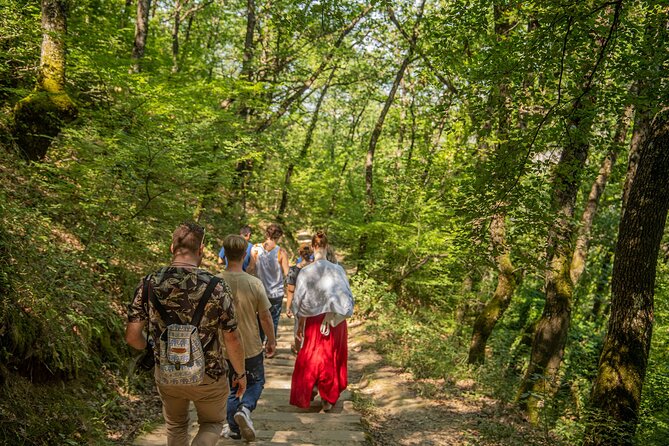
The planned visit lasts around 45 minutes. Your guide explains the key features before you go in, then you explore the interior on your own because the tour guide does not serve as a state-licensed guide inside the monasteries. That arrangement works well if you want a broad introduction and freedom to look around, but it will feel brief if you want a detailed explanation of every fresco.
Varlaam also requires an extra €5 admission charge as listed. Budget for the entrance fees before you set out, and keep small cash handy.
Great Meteoron, the essential stop
Great Meteoron is the largest and oldest monastery in Meteora. Its position on top of a huge rock explains the name Meteoro, meaning suspended in the air. The monastery was founded by Saint Athanasios the Meteorite, who organized a more systematic communal form of monastic life.
That development is important. Great Meteoron is often treated as the main stop because its size and age make it a key part of the story of organized monasticism at Meteora. The buildings, church, museum collections, and views give you the clearest sense of how a substantial religious community operated above the plain.
The tour allows about one hour here, longer than at Roussanou or Varlaam. You will need that extra time for the approach, the interior spaces, and the steps. The monastery’s size also means that you should resist spending the entire hour taking photographs outside. The interiors contain the objects and paintings that explain why Meteora matters beyond its dramatic cliffs.
The entrance charge is €5 per person, separate from the tour price. Comfortable shoes are essential. The steps can be tiring, and the surfaces may feel demanding if you are not used to walking uphill.
Holy Trinity and the price of the view
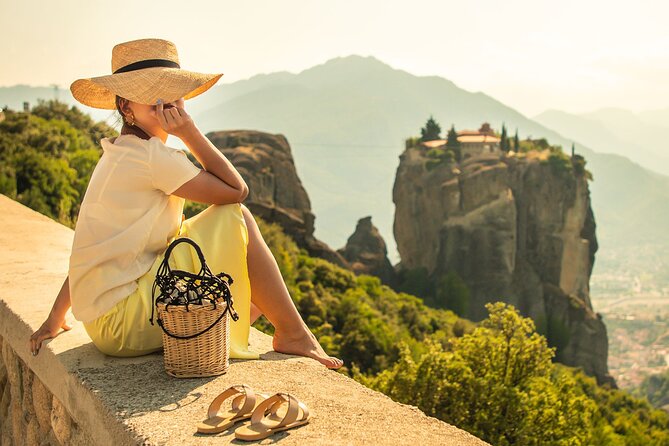
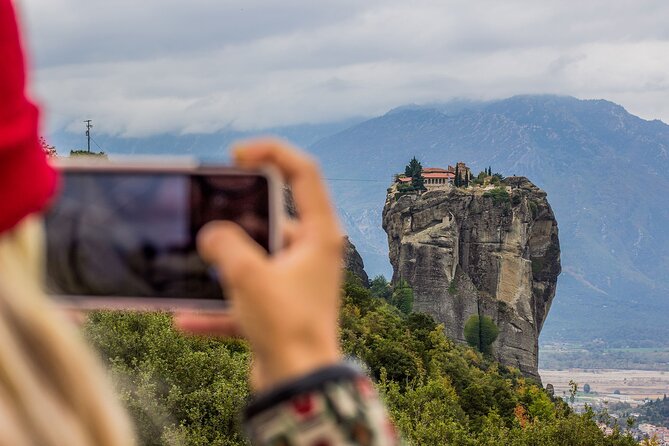
Holy Trinity, or Agia Triada, is the most difficult monastery on the listed route to reach. The path first takes you to the base of the rock, followed by about 140 steps to the top.
The effort pays off with a wide view over the surrounding area. This is the kind of stop where the physical work is part of the experience. You feel the isolation of the monastery more clearly when you have climbed to it rather than simply stepped out of a vehicle beside an entrance.
The tour includes Holy Trinity among the monasteries you see, but the advertised three interior visits are Great Meteoron, Roussanou, and Varlaam. You may see Holy Trinity from outside or from a viewpoint rather than enter it. Confirm the precise order with your guide, since monastery opening arrangements and the day’s route can affect the schedule.
If you have mobility concerns, discuss them before booking. The company has helped arrange visits for people with mobility problems, and Agios Stephanos is the easier alternative, but Holy Trinity itself is not a gentle stop.
Agios Stephanos, the easiest monastery to enter
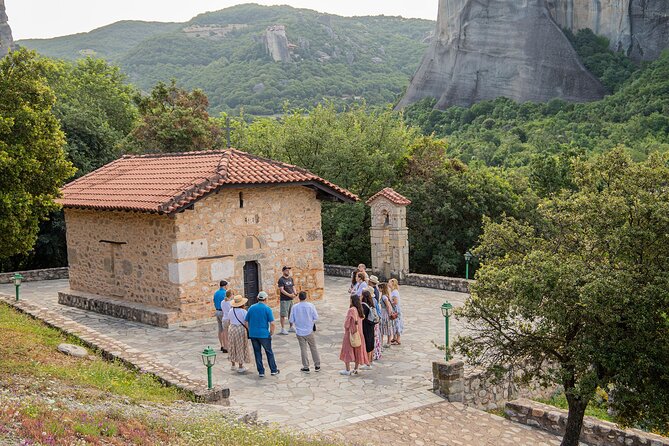
Agios Stephanos is the most accessible monastery in the group described here. Instead of climbing a long staircase, you cross a small bridge to reach the entrance. That makes it the best choice for anyone who cannot manage many steps but still wants to enter a Meteora monastery.
Monastic life on this rock dates to the early 12th century. Hosios Antonios and Hosios Philotheos are associated with its development, and Philotheos rebuilt the present church in 1545.
The monastery sits close to Holy Trinity, so you can appreciate the contrast between them. Holy Trinity demands a steep climb, while Agios Stephanos offers a far simpler approach. The tour may include Agios Stephanos as an exterior sight rather than one of the three interior visits, so check the day’s plan if accessibility is your main reason for booking.
Even when you do not enter, the guide can explain how its position differs from the other monasteries and point out the route across the rocks.
Photo stops are not filler
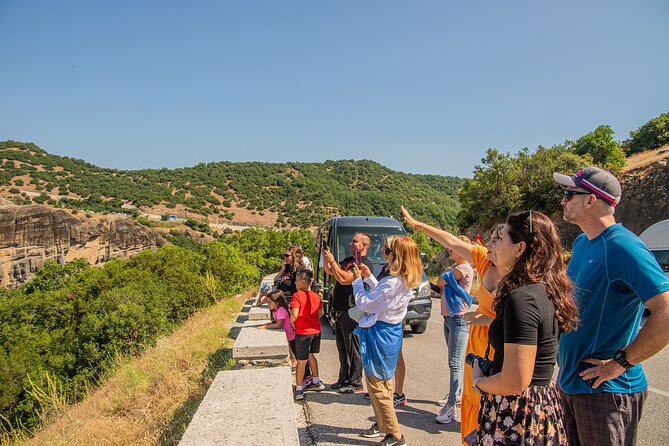
The drive between monasteries is part of the experience, not just a transfer. The guide uses that time to explain the cliffs, the monasteries, and the wider area. Several stops are made at major viewpoints so you can see the whole formation from a distance.
This is especially useful for solo visitors. Guides and drivers have helped people take photographs, and the driver may choose practical drop-off and pickup points near the walking routes. You should still bring your own phone or camera fully charged, since the best views can appear quickly as the van rounds a bend.
The views from inside a monastery are impressive, but the classic Meteora image usually comes from outside, where you can see the building perched on its rock. The tour’s mix of interior visits and panoramic stops gives you both sides of the story.
What the $36.30 price really covers
At $36.30 per person, this is a low-cost way to cover a difficult area in a short time. The price includes round-trip pickup and drop-off in Kalambaka or Kastraki, bottled water, WiFi on board, an English-speaking guide, and visits inside three monasteries.
The separate admission fees are the main extra cost. The listed charges are €5 for Great Meteoron, €5 for Roussanou, and €5 for Varlaam. Food and drinks are also excluded. That is not unusual for a transport-focused sightseeing tour, but you should add the monastery fees to the advertised price when comparing options.
You also receive a free smart audio guide in French, Spanish, German, Italian, Portuguese, Chinese, Japanese, Polish, and other listed languages. The live tour itself is in English. The audio guide helps if you do not follow English easily, but it is not the same as having a live guide answer questions in your language.
For the money, I see this as a strong introduction to Meteora. You get the hard-to-arrange transport and the main sites without paying for a full private service. The value drops if you expect a licensed expert to accompany you through every interior room.
Clothing, steps, and useful planning advice
Meteora’s monasteries enforce a strict dress code. Men need trousers and long sleeves. Women need a long skirt. If you arrive in shorts or unsuitable clothing, trousers and skirts may be provided, but dressing properly from the start is more comfortable and respectful.
Wear shoes made for walking. The route includes steps, slopes, and uneven approaches, with Holy Trinity requiring about 140 steps. Even the easier monasteries involve movement between the vehicle and the entrance.
Bring cash for admission. Some monasteries do not accept credit cards, and relying on a card could leave you unable to enter. Carry water as well, although a bottle is supplied on the tour.
Pickup is offered from hotels and Airbnbs in Kalambaka and Kastraki. Confirmation is received at booking, and the tour is offered in English. Free cancellation is available until 24 hours before the 9:00 a.m. start time. Changes or cancellations inside that window are not accepted.
Who should book this Meteora tour
I would choose this tour if you have limited time, want a morning visit, and prefer someone else to handle the steep driving. It is also a good fit if you want a clear introduction before deciding if you need a longer or private visit.
It suits people who can manage moderate walking and stairs, but it can still work for some visitors with mobility limits, especially if the route includes Agios Stephanos and the company is told in advance. Do not book it assuming every monastery will be easy to enter.
I would choose a different format if your main goal is detailed study of Orthodox art, manuscripts, and church interiors. The guide provides useful explanations before you enter, but the guide and driver do not accompany you as state-licensed guides inside the monasteries.
The strongest guide experiences have come from local personalities such as Apostolis, Vasilis, and Vaggelis, who explain the area with warmth and humor. Guide quality can vary on any scheduled departure, and one less positive experience felt too much like a car ride. That is the fair warning to keep in mind.
Should you book it?
Yes, if you want efficient access to Meteora’s main monasteries at a sensible price. The combination of local commentary, three interior visits, broad photo stops, and hotel transport covers the essentials in four hours.
Book it with realistic expectations. You are paying for a well-organized introduction, not a private art-history lesson. Bring cash, dress for the monasteries, prepare for stairs, and ask which three interiors are planned that morning. If those points suit you, this is a practical and memorable way to see Meteora.
FAQ
How long does the Meteora monastery tour last?
The tour lasts approximately four hours. It starts at 9:00 a.m. and typically finishes around 1:00 p.m.
Where does pickup take place?
Pickup and drop-off are offered from hotels and Airbnbs located in Kalambaka and Kastraki village.
How many monasteries can I visit inside?
The tour includes visits inside three monasteries. The other monasteries are seen from outside and explained by the guide. The listed interior stops are Great Meteoron, Roussanou, and Varlaam.
Are monastery entrance fees included?
No. The listed admission charges are €5 for Great Meteoron, €5 for Roussanou, and €5 for Varlaam. Bring cash because some monasteries do not accept credit cards.
What language is the tour offered in?
The live tour is guided in English. A free audio guide is available in several languages, including Spanish, French, German, Italian, Portuguese, Polish, Russian, Chinese, Japanese, and Korean.
What clothing should I wear?
Men must wear trousers and long sleeves. Women must wear a long skirt. Trousers and skirts may be provided if your clothing does not meet the monastery dress code.
Recently reviewed around Meteora
- Meteora Motorized or Footlaunch Flight Experience★ 5.0 · 54 reviews
- Majestic Sunset Meteora Tour with Local Guide★ 5.0 · 237 reviews
- Truffle Hunting at Meteora★ 5.0 · 171 reviews
- Meteora: Morning Half Day Sightseeing and Monasteries Tour★ 5.0 · 165 reviews
- Secret Caves of Meteora – Sunset Hike★ 5.0 · 29 reviews
- Sunset Meteora Tour on E-Bike★ 5.0 · 46 reviews
- 3-Hour Hiking and Scramble Guided Tour of Great Saint in Meteora★ 5.0 · 28 reviews
- Private Tour: Meteora Tour with Transport from Kalambaka★ 5.0 · 50 reviews
Meteora Monastery Tours, compared.
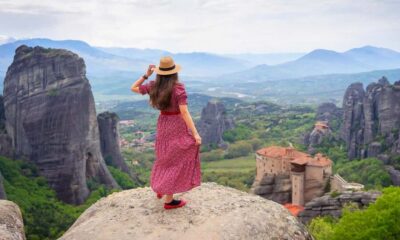
Meteora Monasteries Day Trip with Caves and Lunch
Read our review →
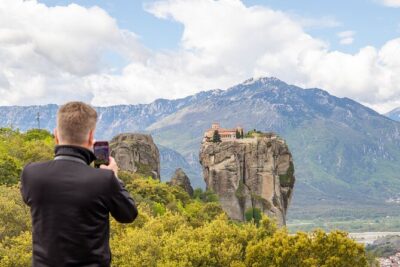
Meteora Monasteries, Caves & Coastal Stopovers with Lunch
Read our review →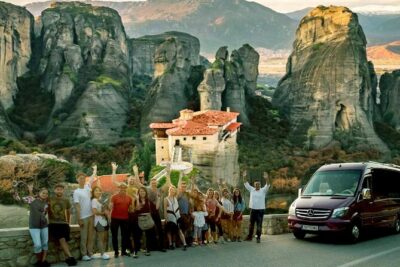
Meteora Monasteries & Caves DayTrip from Athens with Greek Lunch
Read our review →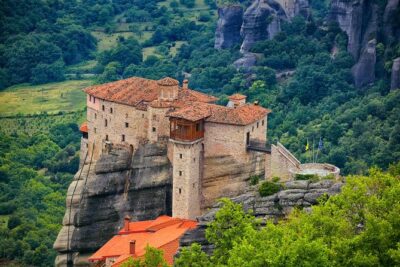
Meteora Monasteries, Hermit Caves Tour with Pickup
Read our review →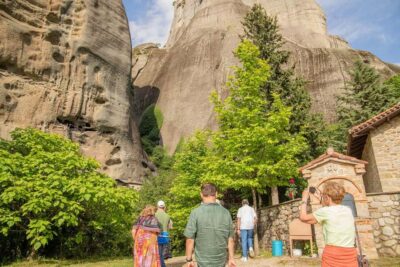
Meteora Monasteries Private Full Day Trip From Athens
Read our review →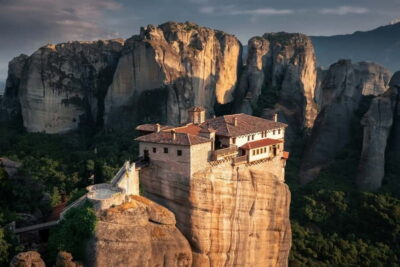
Guided Tour to Meteora Monasteries & Hermit Caves
Read our review →Browse the lists this tour appears in