
Reviewed · METEORA TOURS
Meteora: Morning Half Day Sightseeing and Monasteries Tour
Meteora is at its best when you can look up instead of worrying about hairpin roads, crowded pull-offs, and scarce parking. This four-hour morning tour takes you around all six monasteries, with time to enter three, while a local guide explains how hermits lived in these caves and how monks built monasteries on cliffs that seem impossible to reach.
I like the hotel pickup in Kalabaka or Kastraki, and I like the small VIP minibus, which makes the route far easier than driving yourself. Free Wi-Fi is useful for sending photos as you go, and guides such as Nikolas, Vasili, Bill, Maria, and Katerina have been singled out for their friendly, clear explanations.
The main consideration is simple: the guide does not lead you inside the monasteries. You receive an introduction outside, then explore on your own. You also pay €5 cash for each monastery you enter, and the tour moves at a brisk pace.
In This Review
- Key points to know before you book
- Why a minibus makes sense at Meteora
- Kastraki and the first views of the rock forest
- Saint Nicholas of Anapafsas, a compact first visit
- Roussanou, the monastery on the steep cliff
- Great Meteoron, the oldest and most important monastery
- Varlaam, a strong counterpart to Great Meteoron
- Holy Trinity and the cost of the climb
- Saint Stephen, the easiest entrance
- What the four hours really give you
- Price, entrance fees, and overall value
- Dress, fitness, and what to carry
- Who should book this Meteora morning tour?
- Should you book it?
- FAQ
- How long is the Meteora morning tour?
- Where does pickup take place?
- How many monasteries can I visit?
- Are monastery entrance fees included?
- Is a guided tour inside the monasteries included?
- What languages are available?
- What is the maximum group size?
Key points to know before you book
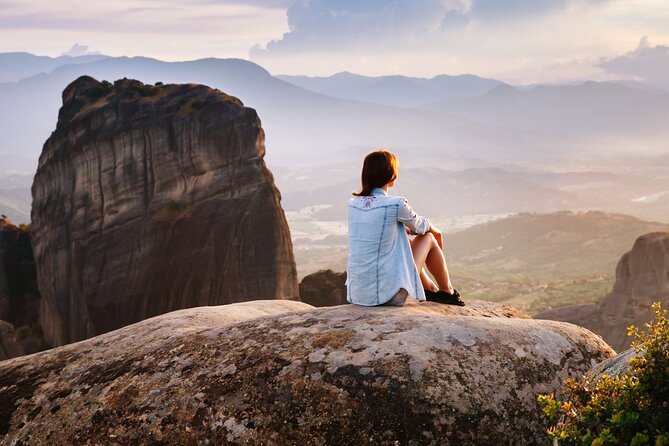
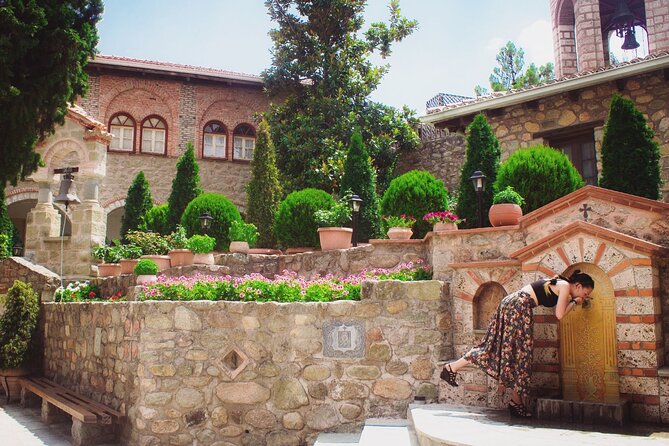
- See all six monasteries in four hours: You get a broad view of Meteora, with interior visits to three monasteries and shorter stops at the others.
- Skip the parking headache: Pickup from your Kalabaka or Kastraki accommodation takes you into the rock formations in a minibus built for the narrow, busy mountain roads.
- Hear the human story of Meteora: The guide explains why hermits settled in the caves and how monks carried materials up to the cliffs.
- Plan for extra cash: Entrance costs €5 per monastery, payable in cash only. These fees are not included in the tour price.
- Dress for the monasteries: Men need long trousers and sleeved shirts. Women need a below-the-knee skirt and covered shoulders. A long scarf around the waist can help meet the rule.
- Expect a small group, not a private tour: The minibus holds no more than 15 people, a useful middle ground between a large coach and a costly private guide.
Why a minibus makes sense at Meteora
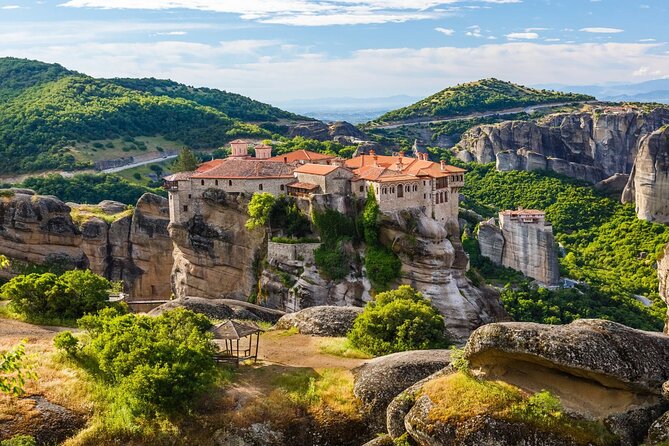
Meteora is not hard to find, but visiting it by car can be awkward. The roads climb through a dramatic collection of rock pillars, and parking near the monasteries is limited. Once several coaches and rental cars arrive, stopping in the right place for a photograph becomes part of the problem.
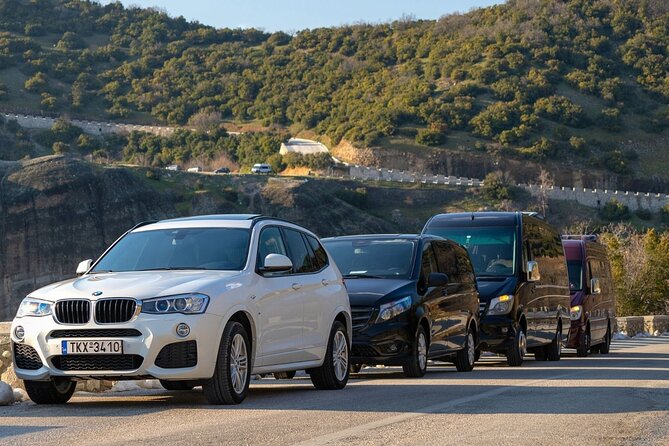
This tour removes that worry. A driver handles the mountain road while you watch the cliffs, listen to the guide, and prepare your camera. The pickup window is 8:45 to 9:00 a.m. in Kalabaka and 9:00 to 9:15 a.m. in Kastraki, with the main tour beginning around 9:00.
The vehicle is described as a luxury VIP minibus, and the positive comments about its comfort, smooth driving, bottled water, and well-handled mountain roads make the transport a real part of the value. You also get free Wi-Fi in the minibus. Bring your phone and earphones if you want to use the audio guide system.
With a maximum of 15 people, the group remains fairly manageable. You should still expect a shared outing, but it is much easier to hear the guide and get in and out than it would be with a full-size bus.
More Meteora trips worth a second look
- Meteora: Morning Half Day Sightseeing and Monasteries Tour
★ 4.7 · 478 reviews - Meteora: Panoramic Morning Small Group Tour with Local Guide
★ 4.7 · 334 reviews - Meteora Panoramic Morning Small Group Tour with Local Guide
★ 5.0 · 311 reviews
Kastraki and the first views of the rock forest
The route begins around Kastraki, the village below Meteora. Its name means small castle, a reference to a Byzantine fort whose ruins remain nearby. Kastraki gives you an immediate sense of the setting: a small settlement pressed against huge stone formations, with the monasteries perched above.
This part of the trip is not simply a transfer. The guide begins to explain the religious communities that formed here and points out places that are easy to miss when you are concentrating on the road. The ancient Chapel of Doupiani and the St. George Mandilas cave are two such stops.
The chapel and cave help widen your understanding of Meteora. The famous monasteries are only part of the story. Long before visitors climbed steps to see painted churches and museums, hermits sought out the caves and led solitary religious lives among the rocks.
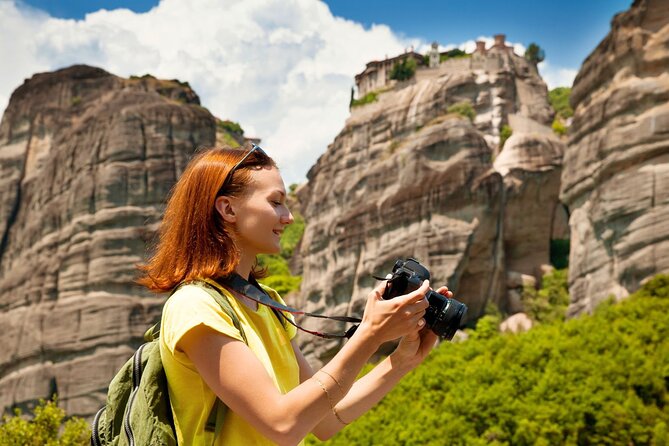
You will also have chances to stop for photographs. The timing of those stops depends on traffic and the group, but the route is designed to include panoramic views rather than rushing from one entrance to the next.
Saint Nicholas of Anapafsas, a compact first visit
Saint Nicholas of Anapafsas is the first monastery encountered on the climb from Kastraki. It is built on a small rock and appears almost suspended above the road, which makes it a striking introduction to the site.
The planned stop is about 20 minutes. That is enough for a brief look and photographs, but it is not a long, slow visit. If Saint Nicholas is one of the three monasteries open for interior exploration on your departure, you will need to use the time carefully. If not, the stop works mainly as a viewpoint and an introduction to the scale of the cliffs.
This is a useful reminder that the morning is designed to cover a great deal. You are not settling into one monastery for half a day. You are building a complete first impression of Meteora, with the guide filling in the background between stops.
Roussanou, the monastery on the steep cliff
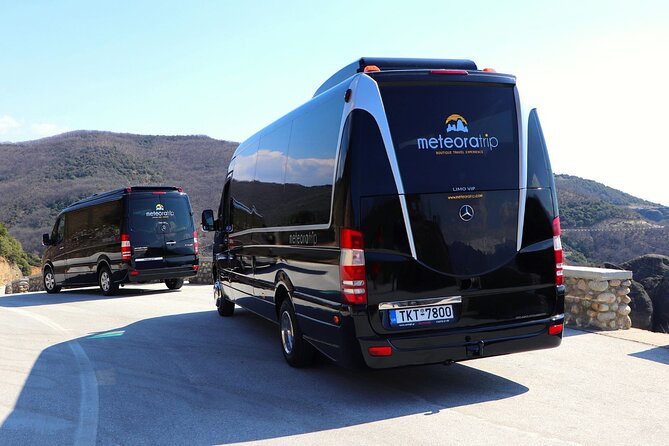
Roussanou Monastery, also known as Arsani, occupies a dramatic cliff between Saint Nicholas and Varlaam. Its position gives it a particularly photogenic profile, with the rock dropping sharply around the building.
The scheduled stop is about an hour, giving you much more breathing room than at Saint Nicholas. You can look around the monastery, visit its museum if open as part of the visit, and take in the views without spending the entire stop in a queue or on the stairs.
The physical effort varies by monastery, but you should not assume this is a no-walking sightseeing ride. The monasteries are reached by paths and steps, and the terrain can be demanding. One of the clearest practical lessons from the experience is to wear shoes with a good grip and leave room in your morning for climbing.
A different kind of day out, same corner of Greece:
- Meteora Sunset with Monastery & Hermit Caves Tour in Small Group
★ 5.0 · 706 reviews - Meteora Small Group Hiking tour with Transfer and Monastery Visit
★ 5.0 · 484 reviews - Meteora: Guided Sunset Tour with Monasteries & Caves Visit
★ 4.7 · 409 reviews - Meteora: Majestic Sunset Tour & Monasteries with Local Guide
★ 4.7 · 359 reviews
Great Meteoron, the oldest and most important monastery
Great Meteoron, also called the Monastery of the Transfiguration of Christ, is the largest and oldest of the Meteora monasteries. It is the place that best expresses the scale and importance of the monastic center.
Allow about an hour here. That makes it one of the main interior visits, though the exact combination of three monasteries visited inside can depend on the day and operating arrangements. Inside, you can explore independently after the guide gives the group its orientation.
The monastery is valuable not only for its dramatic setting but also for the sense of effort behind its construction. The guide explains how the monks managed to move supplies and building materials to places that appear unreachable from the valley. Those stories make the stone walls and stairways easier to understand.
If you want a detailed explanation of every fresco, object, and chapel, this format may feel limited. The guide does not provide a full guided tour inside the monasteries. Instead, you get context before entering and personal time once inside.
Varlaam, a strong counterpart to Great Meteoron
Varlaam Monastery sits on a rock opposite Great Meteoron and is the second-largest monastery at Meteora. Its position creates one of the most useful visual comparisons of the morning. From here, you can see how the religious buildings relate to one another across the cliffs.
The planned visit lasts about an hour. That is enough time to explore the monastery and its grounds at a reasonable pace, though you should keep an eye on the meeting time. The group needs to continue to the other side of the site.
Varlaam is also a good stop for appreciating the engineering of Meteora. The monasteries are not scattered randomly across the rocks. Each one reflects a long period of work, adaptation, and persistence in a place where ordinary construction would have been difficult.
The tour’s English-speaking guide adds the broader explanation, while the free audio guides provide an option in Spanish, French, German, Italian, Japanese, Chinese, or Korean. You need to bring your own smartphone and earphones. The audio guides are a helpful backup, but they do not change the fact that the main guide speaks in English.
Holy Trinity and the cost of the climb
Holy Trinity is the most demanding monastery to reach on this route. The path goes downhill first and then up 145 steps cut into the rock. Older accounts describe rope ladders and nets used by the first hermits, and the story of carrying supplies up over decades gives the climb some perspective.
The scheduled stop is about 20 minutes, which is short for a monastery requiring this much effort. That does not make the visit impossible, but it does mean you should move steadily and avoid lingering too long at the first viewpoint.
If stairs are difficult for you, pay close attention to this stop. The tour information says most people can participate, but the route still includes substantial walking and steps. Holy Trinity may be viewed from outside if you prefer not to make the climb, but the tour does not promise a special alternative route.
The reward is a remarkable view over Kalabaka and the surrounding rocks. It is also one of the clearest places to feel how remote the early monastic communities must have been.
Saint Stephen, the easiest entrance
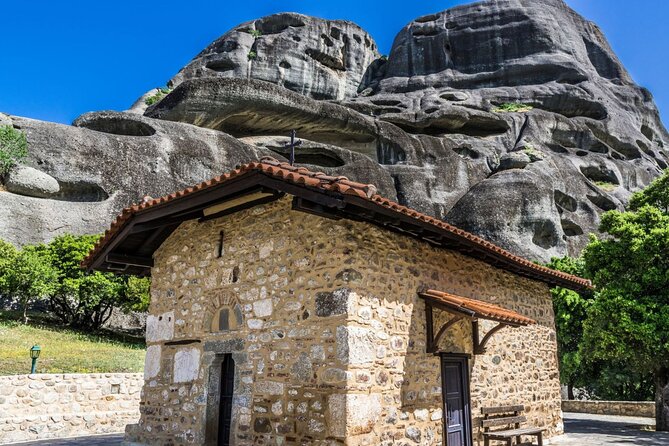
Saint Stephen, or Agios Stefanos, sits above Kalabaka and is the most accessible of the six monasteries described on the route. There are no steps to the entrance. You cross a small stone bridge, making this stop far easier than Holy Trinity.
The scheduled time is about 20 minutes. That is enough to see the setting, enter if it is part of the day’s three interior visits, and take photographs, but it is not a long museum visit.
Its easy access makes Saint Stephen useful for people who want to see Meteora but worry about the more strenuous climbs. Still, the overall tour includes several monastery approaches, so I would not book it expecting a completely step-free morning.
What the four hours really give you
The strongest feature of this tour is coverage. In roughly four hours, you see all six monasteries from the route, visit three from the inside, stop at lesser-known religious sites, and get multiple wide views of the rocks.
The trade-off is depth. You will not have a full hour at every monastery, and you will not receive a guided explanation inside each building. Instead, the tour gives you a well-organized introduction, then lets you explore selected interiors independently.
That balance works well for a first visit. The guide handles the route and provides the story, while you decide where to spend your attention once inside. Several guides, including Nikolas and Vasili, have been praised for keeping explanations clear and engaging without burying the group in facts.
The morning schedule also leaves part of your day open. You can have lunch in Kalabaka or Kastraki afterward, continue sightseeing, or return to a monastery that caught your attention.
Price, entrance fees, and overall value
The tour costs $36.30 per person. For that price, you receive accommodation pickup and drop-off in Kalabaka or Kastraki, four hours of transport, an English-speaking local guide, multilingual audio guides, and Wi-Fi in the minibus.
The entrance fees are extra. Each monastery charges €5 per person, and the monasteries accept cash only. Since the plan is to enter three monasteries, budget €15 in cash if all three charge the standard fee. Bring a little more if you want flexibility, since the route covers all six and the exact interior stops can vary.
The price is good if you would otherwise rent a car mainly to solve the parking and mountain-road problem. It is also a reasonable choice if you want local explanation but do not need a private guide or a detailed lecture inside every monastery.
The value is weaker if you already have a car, know the route well, and only want a ride between entrances. The tour’s purpose is not merely transport, but its guided portion happens mainly outdoors and between buildings. If your priority is a guide inside the churches and museums, look for a more expensive option that specifically includes interior guiding.
Dress, fitness, and what to carry
Dress rules are not optional at Meteora. Men need long trousers and shirts with sleeves. Women need skirts below the knee and covered shoulders, and trousers are not permitted under the stated rules. A long scarf wrapped around the waist can help meet the requirement.
Wear comfortable shoes. The route includes stairs, uneven paths, and the 145-step approach at Holy Trinity. Even at the easier monasteries, you will be getting in and out of the minibus and walking around elevated sites.
Bring:
- Cash for the €5 monastery entrance fees
- Your smartphone and earphones for the audio guides
- Water, though water may be provided in the vehicle
- A camera or phone with enough battery for the many photo stops
- Clothing that meets the monastery rules
The tour requires good weather. If poor weather forces cancellation, you are offered another date or a full refund. You can cancel for a full refund up to 24 hours before the start time, but changes or cancellations inside that window are not accepted.
Who should book this Meteora morning tour?
I would choose this tour for a first visit, especially if you are staying in Kalabaka or Kastraki and want a simple way to see the full group of monasteries. It suits you if you value scenery, local stories, and efficient transport more than a slow, specialist visit inside each building.
It is also a good fit for couples, families, and solo visitors who want a small shared group rather than a large coach. The short duration leaves room for lunch and more sightseeing, while the pickup removes the need to arrange an early taxi or find a parking place.
You may want a different experience if you have limited mobility, dislike stairs, or want extensive time at every monastery. You should also think twice if you expect the guide to accompany you inside and explain each chapel in detail. That is not part of this tour.
Should you book it?
Book it if you want a well-priced introduction to Meteora that covers all six monasteries, includes three interior visits, and takes care of the driving. The combination of a small minibus, photo stops, local stories, and hotel pickup makes the morning practical and enjoyable.
Skip it if you only want a transfer, or if your main goal is a formal guided visit inside the monasteries. For most first-time visitors staying nearby, though, this is an efficient way to understand the place before deciding where to spend more time later.
FAQ
How long is the Meteora morning tour?
The tour lasts approximately four hours and begins around 9:00 a.m.
Where does pickup take place?
Pickup is offered from accommodations in Kalabaka or Kastraki. Pickup in Kalabaka is scheduled between 8:45 and 9:00 a.m., and pickup in Kastraki between 9:00 and 9:15 a.m.
How many monasteries can I visit?
The route takes you past all six Meteora monasteries and provides time to enter three of them.
Are monastery entrance fees included?
No. Each monastery charges an entrance fee of €5 per person. The monasteries accept cash only.
Is a guided tour inside the monasteries included?
No. An English-speaking local guide provides explanations during the route and before visits, but guided tours inside the monasteries are not included.
What languages are available?
The main tour is offered in English. Free audio guides are available in Spanish, French, German, Italian, Japanese, Chinese, and Korean. Bring your own smartphone and earphones.
What is the maximum group size?
The tour has a maximum of 15 people and uses a VIP minibus.
Recently reviewed around Meteora
- Meteora Motorized or Footlaunch Flight Experience★ 5.0 · 54 reviews
- Majestic Sunset Meteora Tour with Local Guide★ 5.0 · 237 reviews
- Truffle Hunting at Meteora★ 5.0 · 171 reviews
- Secret Caves of Meteora – Sunset Hike★ 5.0 · 29 reviews
- Sunset Meteora Tour on E-Bike★ 5.0 · 46 reviews
- Private Tour: Meteora Tour with Transport from Kalambaka★ 5.0 · 50 reviews
- 3-Hour Hiking and Scramble Guided Tour of Great Saint in Meteora★ 5.0 · 28 reviews
- Meteora: Monasteries Tour with Lunch and Athens Transfer Option★ 5.0 · 64 reviews
Meteora Tours, compared.
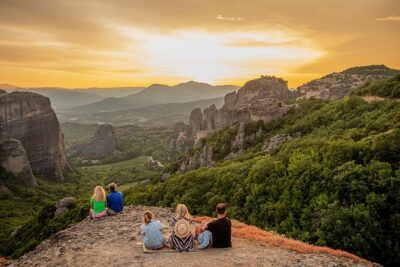
Meteora Sunset with Monastery & Hermit Caves Tour in Small Group
Read our review →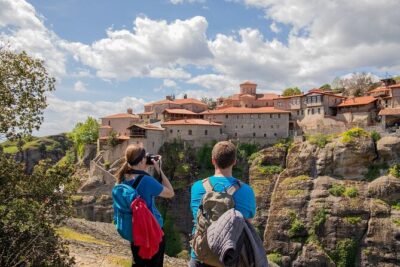
Meteora Small Group Hiking tour with Transfer and Monastery Visit
Read our review →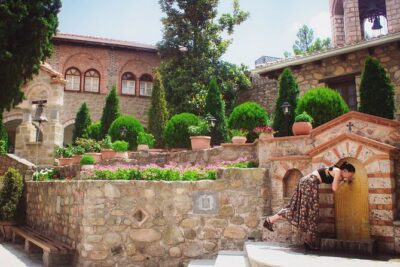
Morning Half Day Sightseeing and Monasteries Tour
Read our review →
Guided Sunset Tour with Monasteries & Caves Visit
Read our review →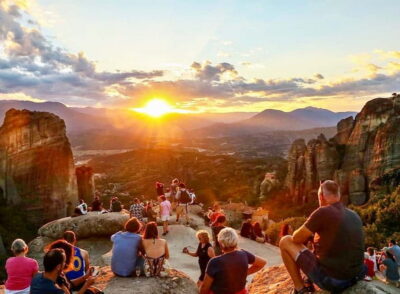
Majestic Sunset Tour & Monasteries with Local Guide
Read our review →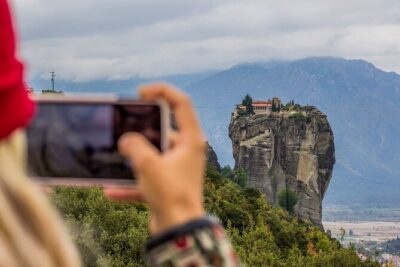
Meteora Monasteries Half-Day Small Group Tour with Transport
Read our review →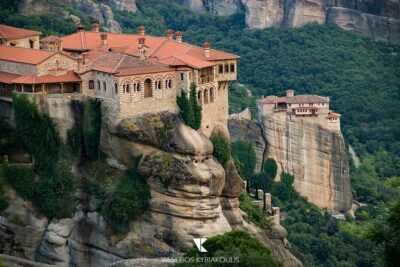
Panoramic Morning Small Group Tour with Local Guide
Read our review →Meteora Panoramic Morning Small Group Tour with Local Guide
Read our review →Browse the lists this tour appears in