
Reviewed · METEORA TOURS
3-Hour Hiking and Scramble Guided Tour of Great Saint in Meteora
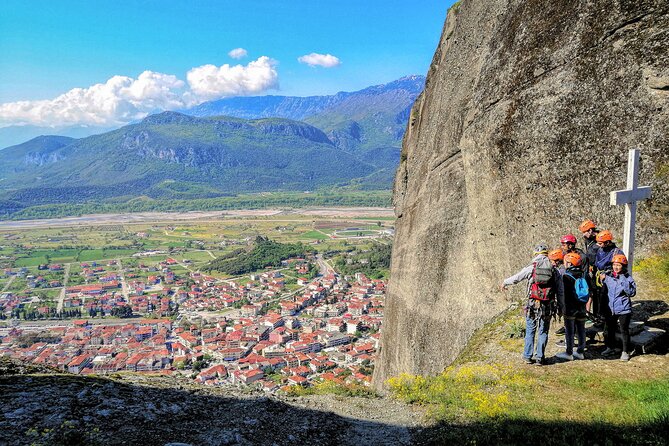
Great Saint gives you a side of Meteora that a viewpoint beside the road cannot provide. You’ll hike and scramble over rock, use a harness and helmet where needed, and reach a high point with 360-degree views of the cliffs and monasteries.
I like the small group size of six and the calm, safety-minded approach described by the guides, including Chris and Costas. I also like that this is an active route rather than a simple lookout stop. The main catch is clear: you need strong physical fitness, and rocky scrambling may not suit anyone uneasy with heights or uneven ground.
In This Review
- Key Points
- Why Great Saint Is More Than a Viewpoint
- Meeting in Kastraki at 8:30 am
- The First 30 Minutes: Getting Ready in the Village
- Two Hours on the Rock Holy Spirit Route
- The Great Saint Summit and Its 360-Degree Reward
- The Descent: Where Care Still Matters
- What the $90.36 Price Buys You
- Who Will Enjoy This Active Morning
- Practical Preparation for Great Saint
- Why the Guide Makes the Difference
- Should You Book the Great Saint Scramble?
- FAQ
- How long does the Great Saint tour take?
- What time does the tour begin?
- Where does the experience start and finish?
- Is hotel pickup included?
- What safety equipment is provided?
- How fit do I need to be?
- What happens if the weather is poor?
Key Points
- A real scramble, not just a hillside walk: Expect rock formations that call for balance, hand use, and careful footwork.
- Safety equipment is supplied: You receive a climbing harness, helmet, and via ferrata equipment, along with bottled water.
- Small groups keep the pace personal: The maximum is six people, so the guide can offer closer support on tricky sections.
- Great Saint delivers the payoff: The top offers broad views over Meteora’s rock towers and monasteries.
- Kastraki is the practical starting point: Meet at 8:30 am in the old part of the village, with optional pickup available.
- Good for a wide age range, but not every fitness level: An 11-year-old and people in their 60s have enjoyed it, yet the stated requirement is strong physical fitness.
Why Great Saint Is More Than a Viewpoint
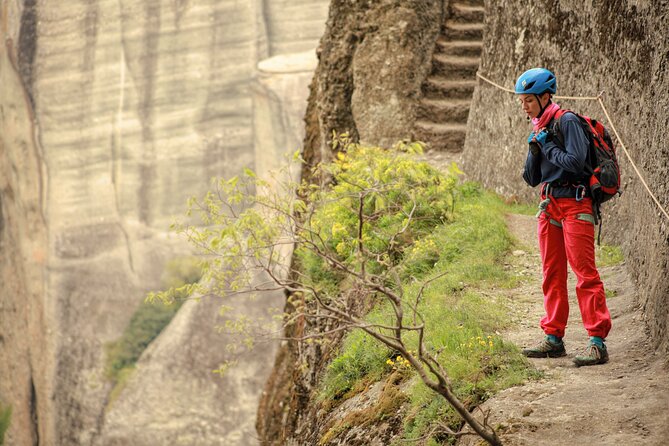
Meteora is famous for its monasteries perched on tall rock pillars, but the usual road stops can make the setting feel almost too easy to reach. The Great Saint hike changes that rhythm. You work your way upward, deal with rough rock, and earn the view through movement.
This is not a long mountain expedition. The active portion lasts about two hours, with the full experience taking roughly three hours. Still, the route asks more of you than a standard walking tour. You may need to balance across uneven rock, use your hands for stability, and move carefully through sections where scrambling is part of the fun.
That effort matters because it puts you into the rock formations rather than keeping you at a distance. You are not simply looking at Meteora from a marked photo stop. You are moving through a setting shaped by steep stone, narrow trails, and exposed viewpoints.
The experience also keeps the group small. With no more than six people, you are less likely to feel rushed through a difficult section or lost in a crowd. The guide can watch how you move, explain where to place your feet, and provide support when the rock becomes more demanding.
More Hiking Tours in Meteora
- Meteora Small Group Hiking tour with Transfer and Monastery Visit
★ 5.0 · 484 reviews - Kalabaka: Meteora Small-Group Hiking Tour w/ Monastery Visit
★ 4.9 · 205 reviews - Hiking Tour to Meteora from Kalambaka – Local Agency
★ 5.0 · 73 reviews
Meeting in Kastraki at 8:30 am
You begin in the center of the old habitation of Kastraki village. The meeting point is listed as Qastiro Meteoramesohori, Kastraki 422 00, Greece. The early start is useful in practical terms. You can complete the hike before the hottest part of the day and still have much of your day left for monasteries, sightseeing, or a quiet meal in the village.
At the start, your English-speaking mountain guide gives you a safety briefing. This is the moment to ask questions, admit if you are nervous about heights, and make sure your footwear and clothing are suitable for active movement. The tour provides the main safety equipment, but you remain responsible for following instructions and judging your own comfort.
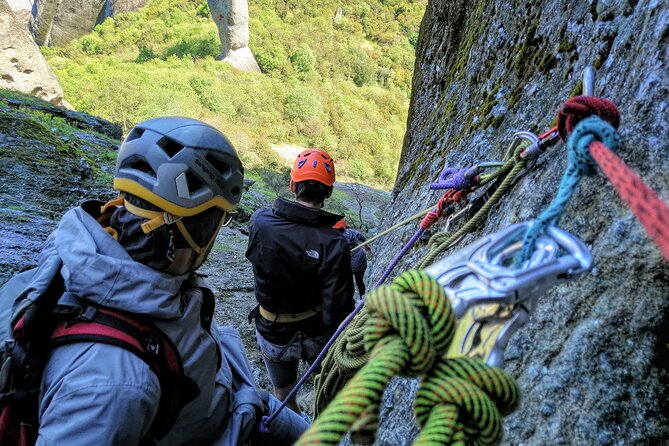
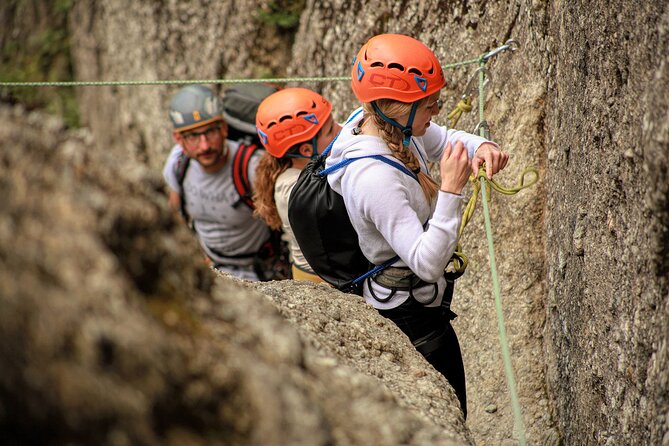
You receive a climbing harness, helmet, and via ferrata equipment. Bottled water is also included. These items are important because they show that the route is treated as a proper mountain activity, not as a casual walk with a dramatic name.
Optional pickup is available if you prefer not to make your own way to Kastraki. Hotel drop-off is not included, so you should plan for your return from the meeting point after the activity. The tour ends where it begins.
The First 30 Minutes: Getting Ready in the Village
The opening half hour is set aside for meeting the guide, receiving equipment, and going through the safety instructions. It may sound like a slow start, but this preparation is part of what makes the rest of the climb work well.
A good briefing helps you understand how the harness and via ferrata equipment are used. It also gives the guide a chance to set expectations for the rocky sections ahead. If you have never done a scramble before, pay close attention to advice about balance, pacing, and how to move one step at a time.
The guide team has included Chris and Costas, both praised for being kind, engaged, and careful with safety. You may meet one of them, depending on the day and the group arrangement. The important point is that the experience is guide-led from the moment you arrive, not a route where you are handed equipment and sent off alone.
This is also a good time to be honest about your ability. The activity asks for a strong level of physical fitness. You do not need to be a technical climber based on the information provided, but you should be comfortable with a demanding hike and hands-on movement over rock.
Two Hours on the Rock Holy Spirit Route
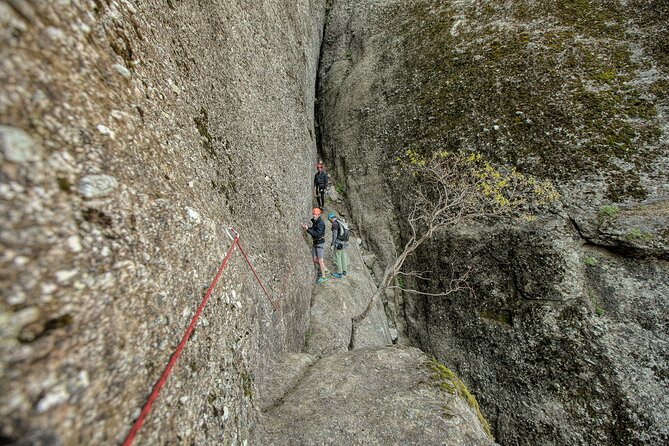
The main section leads toward the Rock Holy Spirit and the top of Great Saint. The trail includes challenging rock formations that require scrambling and balancing skills. Here, the word scramble matters. You are not only walking uphill on a smooth path. You may need to use your hands, shift your weight carefully, and choose stable places for your feet.
Your guide remains with you throughout the route. That is a major benefit of booking this as a guided activity. Instead of guessing which line across the rock is safest, you can follow direct instructions and receive help when the terrain feels awkward.
The supplied harness, helmet, and via ferrata equipment add another layer of protection. They do not remove the need for care, and they do not turn the route into a risk-free outing. They do give the guide a proper way to support you through the more exposed or technical parts of the route.
The pace should feel more personal than it would in a large group. A maximum of six people allows the guide to keep an eye on everyone, including the strongest member and the person who needs a little more time. That is especially useful when one section feels easy for one person but intimidating for another.
The route takes about two hours before the descent. That duration makes the tour a manageable choice if you want an active morning without giving up the rest of your day. At the same time, two hours of uneven uphill movement can feel substantial. Bring a steady attitude, listen to the guide, and do not treat the short total duration as proof that the activity is easy.
More Meteora trips worth a second look
- Meteora: Sunset Hike to Secret Caves
★ 4.9 · 56 reviews - Secret Caves of Meteora – Sunset Hike
★ 5.0 · 29 reviews - Kastraki: Meteora Via Cordata Hiking Tour to the Great Saint
★ 5.0 · 27 reviews - From Chania: Full-Day Samaria Gorge Trek Excursion & Guide
★ 4.6 · 3,191 reviews
The Great Saint Summit and Its 360-Degree Reward
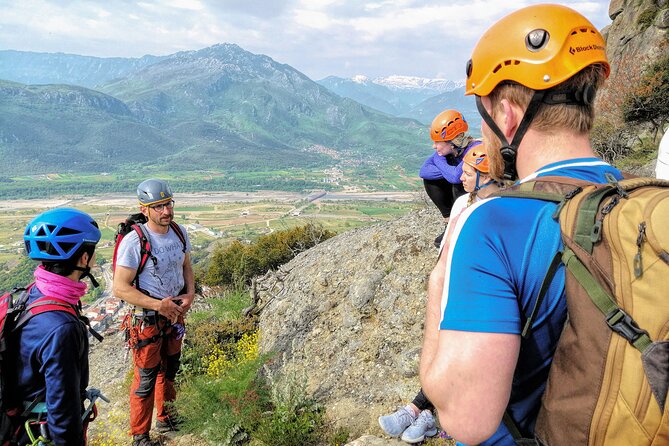
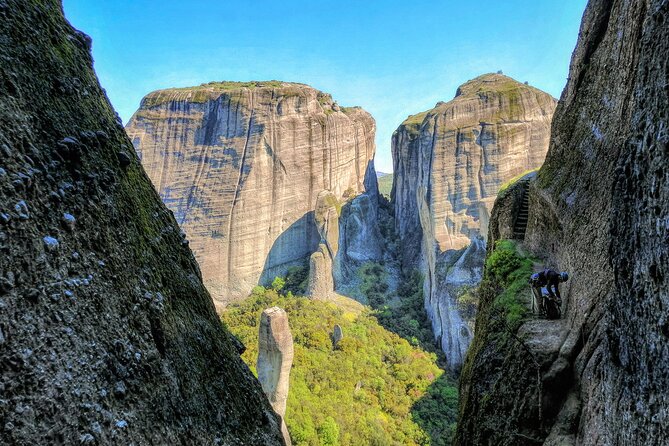
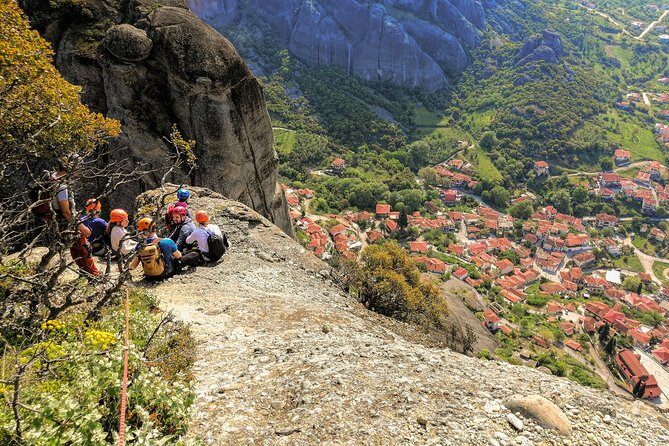
At the top, the main reward is the view. You can take in the Meteora rocks and monasteries across a full 360-degree sweep. This is the point where the physical work pays off, but it is also the place to slow down.
After the scramble, you will want time to catch your breath. The plan allows for a pause at the top, giving you a chance to take in the scenery before heading back down. Bring your camera if you like, but keep your attention on your footing and the instructions from the guide, especially around uneven edges and exposed rock.
The view is valuable because it connects the separate pieces of Meteora. From a high position, the cliffs and monasteries read as one dramatic setting rather than a series of isolated stops. You get the visual reward of the region, but you also remember the route that brought you there.
The summit pause is not just for photographs. It gives your body a break after the climb and lets the group regroup before descending. If you tend to hurry when going downhill, resist that habit. Scrambling down can require as much concentration as going up, since loose or awkward footholds can feel less predictable from above.
The Descent: Where Care Still Matters
The return follows the trail back toward Kastraki. The descent is shorter in emotional terms for many people because the goal has been reached, but the terrain still requires attention. Tired legs and the temptation to move quickly can make downhill rock tricky.
Your guide stays with the group and continues to provide support. Use the equipment as instructed, keep a sensible distance from the person ahead, and place each foot carefully. The small group limit is useful here because the descent can be handled at a pace that suits the people present.
The activity ends back at the original meeting point. Since hotel drop-off is not included, arrange your onward plans around returning to Kastraki. If you use the optional pickup service at the start, confirm how that arrangement works when booking so your morning begins without confusion.
What the $90.36 Price Buys You
At $90.36 per person, this is not the cheapest way to see Meteora. But the value is easier to understand when you look at what is included: an English-speaking mountain guide, climbing harness, helmet, via ferrata equipment, bottled water, and a three-hour guided route with a maximum of six people.
The fee also pays for judgment and supervision. On a route involving scrambling, the guide’s role is more than pointing out scenery. You are paying for route management, safety instructions, equipment use, and help on difficult rock. That matters more here than it would on a simple village walk.
The small group is another part of the value. A larger group might reduce the price per person, but it could also mean more waiting and less direct help. With six people or fewer, the guide can give practical advice rather than delivering a broad speech to a crowd.
You should still decide based on your interests. If you only want photographs of the monasteries and do not enjoy physical effort, the price will not feel worthwhile. If you want a hands-on way to experience Meteora and value expert support on the rock, the cost is easier to justify.
Who Will Enjoy This Active Morning
This tour suits you if you like hiking, are comfortable with a challenge, and want to see Meteora from a less conventional route. It is especially appealing if you have already seen the main monastery roads and want to add an active experience to your time in the area.
The age range described for the activity is encouraging. An 11-year-old enjoyed it, as did people in their 60s. That does not mean age determines suitability. Fitness, balance, confidence, and comfort with rocky ground matter more than the number on your passport.
You should think twice if you have difficulty walking for extended periods, dislike scrambling, or feel very uneasy around steep rock. The tour information specifically calls for strong physical fitness. Do not book it simply because the duration is three hours.
The activity is also a good fit for families with active members, couples who want something beyond sightseeing, and small groups that prefer direct contact with a guide. The maximum of six keeps the outing from feeling like a mass excursion.
Practical Preparation for Great Saint
Wear clothing that lets you move freely. You will be hiking, balancing, and possibly using your hands, so restrictive clothes are a poor choice. Shoes should give you confidence on uneven ground, though the provided information does not specify a required footwear type.
Start the morning ready to listen. The safety briefing is not a formality to rush through. Pay attention to how the harness and via ferrata equipment work, and follow the guide’s instructions whenever the route becomes difficult.
Bottled water is included, but you should still arrive ready for an active outing. The experience takes place outdoors and depends on suitable weather. If poor weather forces a cancellation, you will be offered another date or a full refund.
The cancellation policy is generous if your plans change early. You can cancel at least 24 hours before the local start time for a full refund. Changes or cancellations made within 24 hours are not accepted for a refund, so watch the deadline closely.
Why the Guide Makes the Difference
The best part of a scramble is often not the summit. It is knowing which move to make when the rock stops looking obvious. A guide turns that uncertainty into a manageable challenge by showing you where to step, when to slow down, and how to use the equipment.
Chris and Costas have been specifically associated with warm, engaged guidance and careful attention to safety. That combination suits this route. You want a guide who can share information about the area without distracting from the practical work of getting everyone over the rock safely.
The English-language format also makes instructions easier to follow if English is your main travel language. Since the group is small, you can ask questions as they arise rather than waiting for a formal stop.
The experience has received a 5 out of 5 rating from 28 ratings, with 100 percent recommending it. That supports the idea that the tour delivers what active visitors are looking for, especially strong views, kind staff, and an off-the-beaten-path route. It should not override your own fitness assessment, but it is a solid sign of consistent satisfaction.
Should You Book the Great Saint Scramble?
Book this tour if you want to work for your Meteora views. The route combines a short commitment, a small group, proper safety equipment, and a guide-led scramble that takes you closer to the rock than a standard sightseeing stop.
Skip it if you want an easy walk, dislike uneven surfaces, or are looking for a full-day monastery tour. Great Saint is best for active people who see the physical challenge as part of the reward.
For the right person, the $90.36 price is fair because it covers more than transport and photographs. You receive guidance, equipment, and a carefully managed route in one of Greece’s most dramatic settings. Set aside the morning, arrive ready to move, and you’ll have a memorable way to experience Meteora from above and within the rock itself.
FAQ
How long does the Great Saint tour take?
The activity lasts approximately three hours. About 30 minutes are used in Kastraki for meeting the guide, receiving equipment, and attending the safety briefing. The route itself takes about two hours, followed by the descent back to the meeting point.
What time does the tour begin?
The scheduled start time is 8:30 am.
Where does the experience start and finish?
You meet at Qastiro Meteoramesohori in Kastraki, Greece. The activity ends back at the same meeting point.
Is hotel pickup included?
Hotel pickup and drop-off are not included. Optional pickup is available, so you should check that arrangement when booking if you need it.
What safety equipment is provided?
The tour includes a climbing harness, helmet, and via ferrata equipment. Bottled water is also provided.
How fit do I need to be?
The activity requires a strong level of physical fitness. The route includes challenging rock formations, scrambling, balancing, hiking, and a descent.
What happens if the weather is poor?
The activity requires good weather. If it is canceled because of poor conditions, you will be offered a different date or a full refund. You can also cancel at least 24 hours before the start time for a full refund.
More 3-Hour Experiences in Meteora
- Sun & Sea All Inclusive 3 Hour Swimming Cruise (WITH PICK UP SERVICE)
★ 5.0 · 817 reviews - Santorini Port: 3 Hour Cruise to Volcano and Hot Springs
★ 4.4 · 512 reviews - Tuk Tuk Athens Complete City Center Tour – 100% Electric (3 hour)
★ 5.0 · 252 reviews - Athens: Private 3-Hour City Tour on Eco-Friendly Tuk Tuk
★ 4.8 · 248 reviews
Recently reviewed around Meteora
- Meteora Motorized or Footlaunch Flight Experience★ 5.0 · 54 reviews
- Majestic Sunset Meteora Tour with Local Guide★ 5.0 · 237 reviews
- Truffle Hunting at Meteora★ 5.0 · 171 reviews
- Meteora: Morning Half Day Sightseeing and Monasteries Tour★ 5.0 · 165 reviews
- Secret Caves of Meteora – Sunset Hike★ 5.0 · 29 reviews
- Sunset Meteora Tour on E-Bike★ 5.0 · 46 reviews
- Private Tour: Meteora Tour with Transport from Kalambaka★ 5.0 · 50 reviews
- Discover Meteora’s Monastic Heritage: Personalized Private Tour★ 5.0 · 122 reviews
Meteora Tours, compared.
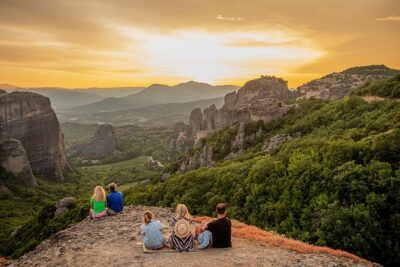
Meteora Sunset with Monastery & Hermit Caves Tour in Small Group
Read our review →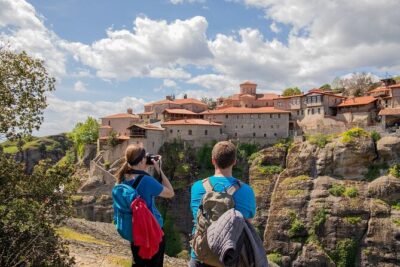
Meteora Small Group Hiking tour with Transfer and Monastery Visit
Read our review →
Morning Half Day Sightseeing and Monasteries Tour
Read our review →
Guided Sunset Tour with Monasteries & Caves Visit
Read our review →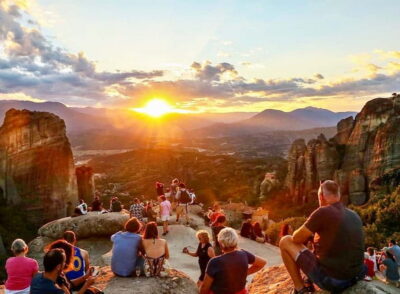
Majestic Sunset Tour & Monasteries with Local Guide
Read our review →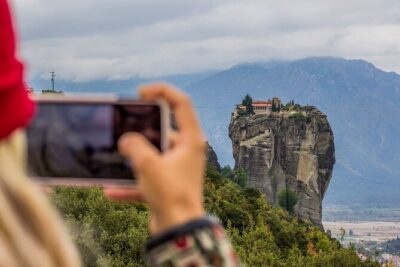
Meteora Monasteries Half-Day Small Group Tour with Transport
Read our review →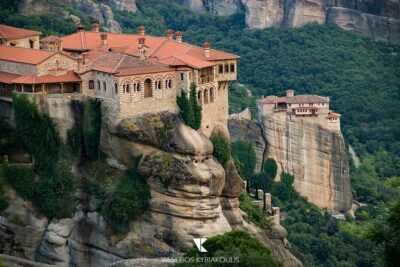
Panoramic Morning Small Group Tour with Local Guide
Read our review →Meteora Panoramic Morning Small Group Tour with Local Guide
Read our review →Browse the lists this tour appears in