
Reviewed · ANCIENT CORINTH TOURS
Mycenae, Epidaurus, Nafplio Full Day Private Tour from Athens
Mycenae, Epidaurus, and Nafplio make a fine one-day escape from Athens because they give you three very different views of Greece: a Bronze Age citadel, a sanctuary built around healing and theater, and a handsome Venetian harbor town. The stop at the Corinth Canal adds a sharp change of scenery before the ruins begin.
I like the private car, which lets you adjust the pace and make sensible choices about lunch, photos, and free time. I also like the drivers’ easy historical commentary, with names such as Spiros, George, Notis, Petros, and Michael repeatedly praised for being friendly and flexible. The catch is simple: this is a long day with several hours on the road, and your driver is not licensed to guide you inside the archaeological sites.
In This Review
- Key points at a glance
- Why this private day trip works from Athens
- Crossing the Corinth Canal
- Entering the Bronze Age citadel at Mycenae
- Tombs, museum pieces, and the Treasury of Atreus
- Hearing the perfect theater at Epidaurus
- Lunch and free time in Nafplio
- Palamidi Castle and the choice to climb
- The driver-led format: its real strengths and limits
- Comfort, timing, and who should book
- Cancellation and booking details
- Should you book this Mycenae and Epidaurus tour?
- FAQ
- How long does the private tour last?
- What destinations are included?
- Is hotel pickup included?
- Is this a private tour?
- Is lunch included?
- Are entrance fees included?
- Is a licensed tour guide included?
- What is included in the vehicle?
- Can I cancel for a full refund?
Key points at a glance
- Four major stops in one day: See the Corinth Canal, Mycenae, Epidaurus, and Nafplio without changing hotels.
- A private vehicle for your group: Pickup and return are arranged from a hotel, apartment, airport, or port.
- Ancient sites with different moods: Mycenae feels stern and defensive, while Epidaurus is graceful and theatrical.
- A flexible driver-led format: Your English-speaking driver can explain the sites, but does not enter them as an official guide.
- Lunch is included: Nafplio provides about 90 minutes for a Greek meal, coffee, shopping, or a walk by the harbor.
- Budget for entrance fees: Mycenae and its museum cost €20 per person, and Epidaurus and its museum cost another €20.
Why this private day trip works from Athens
The main strength here is range. In roughly eight to nine hours, you move from the engineering feat of the Corinth Canal to the world of Agamemnon, then onward to the theater and healing sanctuary at Epidaurus. You finish in Nafplio, a town that feels almost like a reward after a morning of stones and excavations.
A private tour also solves a common Peloponnese problem: seeing these places independently takes planning, a car, and confidence with long drives. You can be collected at your Athens address and returned there, or finish at another requested point. Airport and port pickup are also offered, which makes the trip useful at the beginning or end of a Greek holiday.
The price is $229.14 per person. That is not a cheap bus excursion, but the value improves with a small group. You are paying for private transport, an air-conditioned vehicle, Wi-Fi, bottled water, a driver with strong English, and lunch. If four people share the vehicle, the cost can compare well with separate transfers, meals, and transport arrangements.
Remember to add up to €40 per person for the two archaeological areas and their museums. Those fees are not included, though they can be paid on site. If you want detailed interpretation inside the ruins, request a licensed guide in advance, subject to availability.
More Ancient Corinth, Mycenae and canal trips:
- From Athens: Mycenae, Epidaurus & Nafplio Full Day Trip
★ 4.8 · 2,438 reviews - From Athens: Mycenae, Epidaurus & Nafplio Full-Day Tour
★ 4.5 · 1,580 reviews - From Athens: Ancient Corinth Day Trip with Canal & VR Guide
★ 4.6 · 1,073 reviews
Crossing the Corinth Canal
The Corinth Canal is a quick stop, usually about 15 minutes, but it earns its place. From above, you look down between steep limestone walls at a narrow ribbon of water. The canal cuts across the Isthmus of Corinth, separating the Peloponnese from mainland Greece in a way that makes the peninsula seem almost like an island.
It is 6.4 kilometers long and only about 21.4 meters wide at its base. The canal has no locks because it was cut at sea level. Modern ships often cannot use it, but you may see smaller vessels passing far below.
This is mainly a photo and orientation stop, not a full historical visit. Fifteen minutes is enough for the view, though a windy or crowded viewpoint could make the pause feel brief. Your driver can explain the geography before you continue toward Mycenae.
Entering the Bronze Age citadel at Mycenae
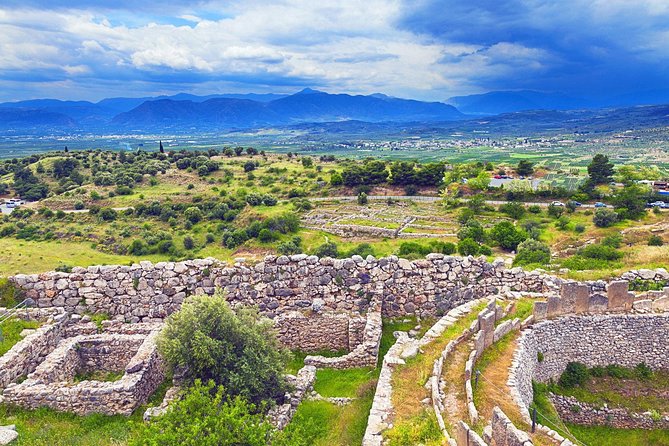
Mycenae is the dramatic heart of the day. Built on high ground and ringed by huge Cyclopean walls, the citadel feels more like a fortress than a graceful classical city. The Greeks later imagined that only the Cyclopes could have moved such enormous stones, which tells you something about the effect the site has even now.
Mycenae gave its name to the Mycenaean civilization, which flourished roughly from 1600 to 1100 BC. At its height around 1350 BC, the citadel and lower town may have held about 30,000 people across roughly 32 hectares. The site is tied to the mythical King Agamemnon, but its real importance is just as striking: it was a major military and political center controlling much of southern Greece and nearby regions.
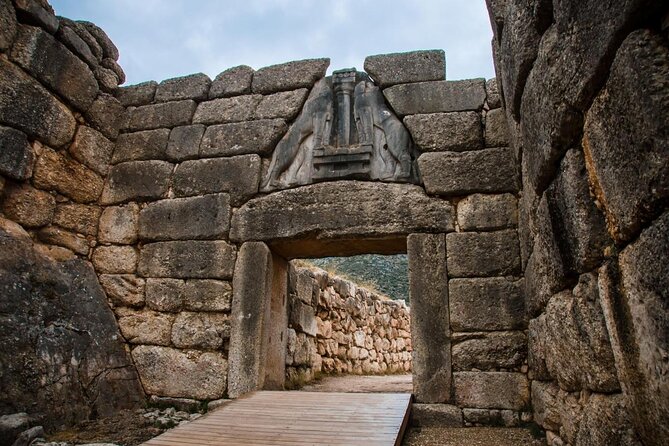
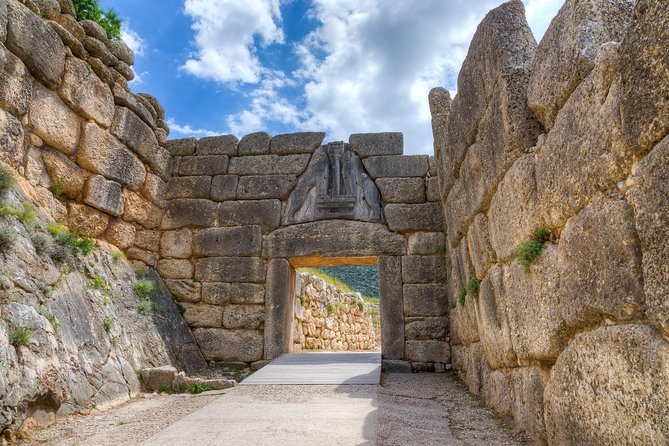
The approach through the Lion Gate is the moment to watch for. Built around 1250 BC, it has two lions or lionesses carved above the entrance in a heraldic pose. The relief is the largest surviving sculpture from the prehistoric Aegean and the only monumental Mycenaean sculpture that remains above ground in this form.
Give yourself time to notice how the gate works. The carved animals occupy the relieving triangle above the doorway, a clever architectural feature that reduces pressure on the lintel. Mycenae is not a site where every wall is intact, so the power comes from reading the plan, the setting, and the scale of the masonry together.
The scheduled visit to the wider archaeological area is about 40 minutes, with additional short pauses at the Lion Gate and nearby monuments. That is enough for the major sights, but not enough for a slow archaeological study. Wear sturdy shoes. The stone paths can be slippery, and the ground is uneven in places.
Tombs, museum pieces, and the Treasury of Atreus
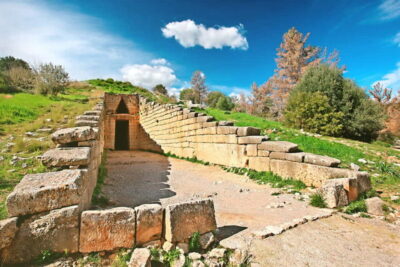
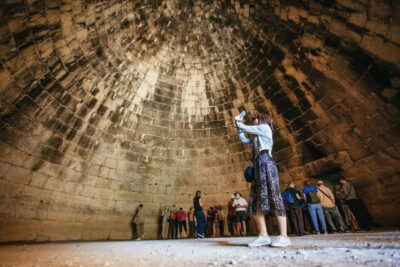
The Tomb of Clytemnestra and the other funerary areas help explain the role of death and royal display at Mycenae. The most memorable structure is the Treasury of Atreus, also called the Tomb of Agamemnon, a large beehive-shaped tholos tomb dating to about 1250 BC.
The entrance alone is astonishing. Its stone lintel weighs about 120 tons, with dimensions of roughly 8.3 by 5.2 by 1.2 meters. The tomb was known in antiquity and was still visible when Heinrich Schliemann worked at Mycenae in 1879.
The archaeological museum sits near the entrance to the site. It displays objects found at Mycenae and helps fill in what the bare walls cannot show. I would make time for it if you enjoy pottery, burial objects, inscriptions, and the small details of daily life. If you prefer open-air ruins, you may want to keep the museum visit short and save energy for Epidaurus.
Mycenae and its museum, including the Treasury of Atreus, require a combined entrance fee of €20 per person according to the tour information. Your driver can explain the sequence, but you explore the site independently unless you have arranged a licensed guide.
More Athens trips worth a second look
- All Day Cruise -3 Islands to Agistri,Moni, Aegina with lunch and drinks included
★ 5.0 · 4,958 reviews - From Athens: Delphi Full Day V.R. Audio Guided Tour
★ 4.6 · 3,028 reviews - Athens Full Day Private Tour
★ 5.0 · 2,903 reviews - Athens Greece Full Day private tour
★ 5.0 · 785 reviews
Hearing the perfect theater at Epidaurus
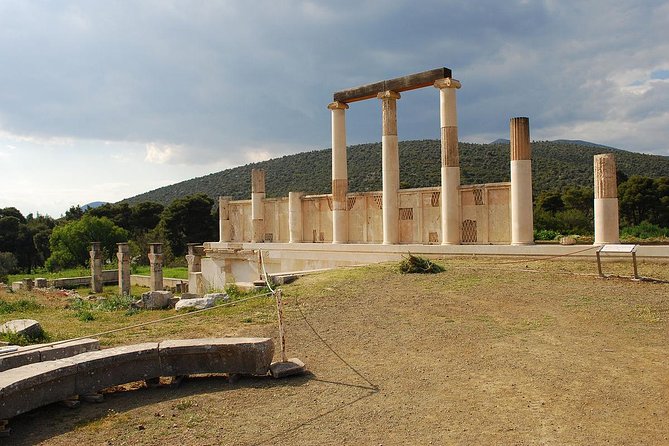
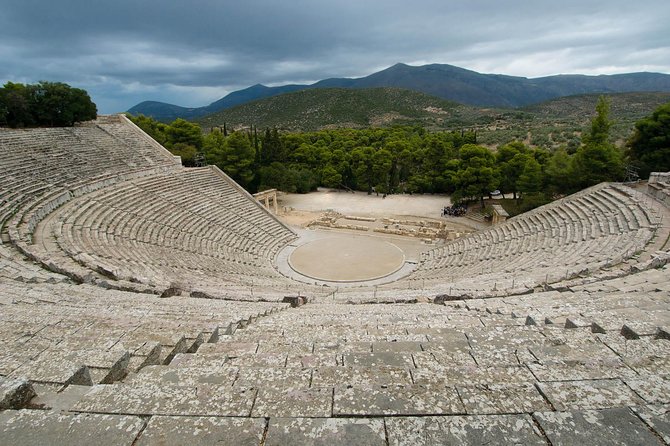
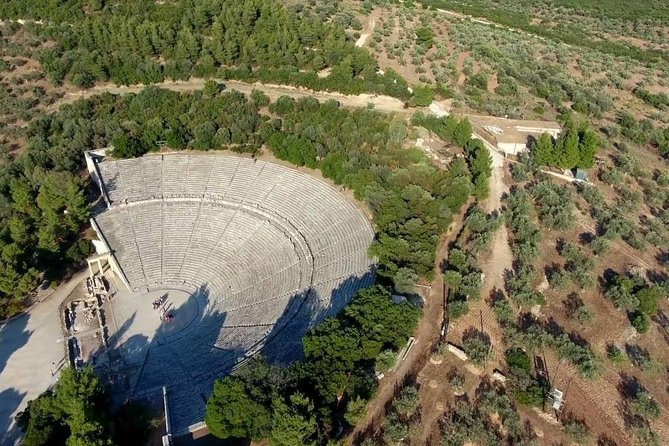
Epidaurus changes the tone completely. The Ancient Theatre of Epidaurus was part of a sanctuary dedicated to Asclepius, the Greek god of medicine. It is famous for its balance of form and sound, and it remains one of the best-preserved ancient Greek theaters.
The theater has the classic three-part design: the seating area, the circular orchestra, and the stage building. Unlike many Greek theaters, it was not substantially altered during the Roman period. Stand in the orchestra and speak toward the seats if conditions allow. The design carries sound with remarkable clarity, though the familiar demonstrations depend on how many people are present and where you stand.
The theater is only one part of Epidaurus. The Sanctuary of Asklepios once drew people seeking cures and divine help, and it rivaled major religious centers at Olympia and Delphi. The Temple of Asclepius was built in the early fourth century BC. The remaining columns, foundations, and scattered structures require more imagination than the theater, but they reveal how broad the healing complex once was.
Plan on about 30 minutes at the theater, 15 minutes at the sanctuary, and 30 minutes in the archaeological museum. That is a brisk visit. If the theater is your main reason for coming, you may want to linger there and accept a shorter look at the less complete buildings.
The museum is useful for seeing architectural pieces, inscriptions, and reconstructions from the sanctuary. Like the Mycenae museum, it has a separate entrance charge. Epidaurus and its museum cost €20 per person.
Lunch and free time in Nafplio
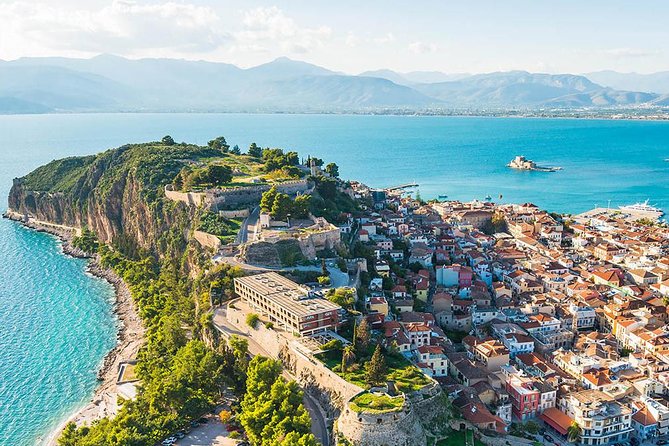
Nafplio is the most relaxed part of the day. This former capital of Greece sits around the Argolic Gulf, with cobbled squares, Venetian buildings, a waterfront, and narrow streets climbing toward old fortifications. After the scale and age of Mycenae and Epidaurus, Nafplio gives you a chance to sit down and enjoy modern Greece.
You have about 90 minutes for lunch, coffee, shopping, or a stroll. Lunch is included, with a Greek traditional food option, and the drivers can suggest a restaurant. Seafood by the sailboat-filled harbor is one possibility, but the exact meal and restaurant can vary.
Use the time deliberately. If lunch matters most, sit down early. If you want photographs, walk along the harbor toward views of Bourtzi. If you prefer local atmosphere, wander the back streets and squares rather than trying to add another major monument.
Bourtzi is the small Venetian water castle sitting in the harbor. You view it from the waterfront on this tour, with about ten minutes set aside for photographs. The castle’s position makes it one of Nafplio’s most recognizable sights, but this itinerary does not include a boat ride or an interior visit.
Acronauplia, the oldest part of Nafplio, rises above the town. Its fortifications were shaped by Franks and Venetians, and the area later served partly as a prison. The modern town grew around this older stronghold, so even a short look upward helps you understand Nafplio’s layered past.
Palamidi Castle and the choice to climb
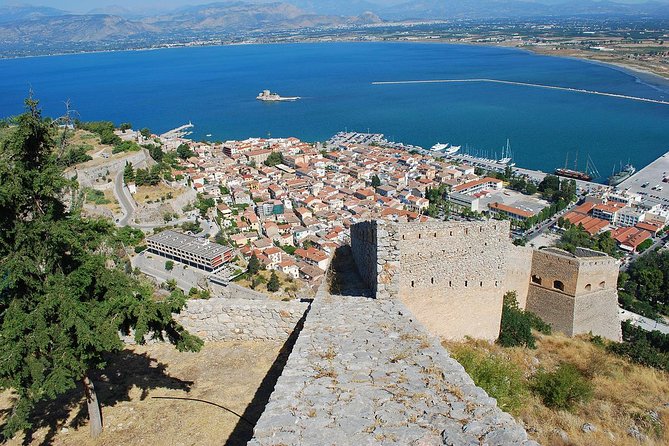
Palamidi Castle crowns a 216-meter hill east of Acronauplia. The Venetians built the fortress during their second period of rule, from 1686 to 1715. From the top, you get broad views over Nafplio, the Argolic Gulf, and the surrounding countryside.
The approach is the practical issue. The stairway from town is commonly counted as 913 steps, while local tradition speaks of 999, and reaching the upper sections involves more than the main stair count suggests. The itinerary allows about 30 minutes, so this is not a leisurely fortress exploration from the waterfront.
If you arrive by vehicle near the entrance, you can see more of the fortress without making the full climb from town. Ask your driver exactly what access is planned and how much time you have. Good shoes matter here too. This is one of the day’s more demanding stops, especially after walking around Mycenae and Epidaurus.
The driver-led format: its real strengths and limits
Your driver is the person who connects the day. Drivers such as Spiros, George, Notis, Petros, Michael, Fotis, Alex, and Costas have been praised for clear English, historical context, punctuality, and an easy manner. Several have suggested lunch spots, extra photo stops, or small changes to suit the group.
The best part of this format is the conversation between sites. You can ask about Greek myths, local farming, olive and orange groves, daily life, and the history of the places ahead. The drive becomes useful time instead of dead time, especially when the road stretches between Athens and the Peloponnese.
But keep the job description clear. The drivers are not official archaeological guides and do not accompany you into the monuments. They can explain what you are about to see and answer questions in English, but the detailed interpretation inside each site is up to you unless you arrange a licensed guide.
The private setup gives you room to adjust. You can ask for more time at Mycenae, shorten the museum visit, or protect your lunch break. Still, the main route covers a lot in one day, so flexibility is practical rather than unlimited.
Comfort, timing, and who should book
Pickup is available from your Athens hotel or apartment, as well as the airport and port. At a hotel, the driver waits in the lobby. At an apartment, pickup is at the building entrance. Airport pickup includes flight tracking and a name sign in the arrival hall, while port pickup takes place at the gate as you disembark.
The vehicle is air-conditioned and includes Wi-Fi and bottled water. This matters because the day involves substantial driving. One honest point to consider is that you will spend a lot of time in the vehicle. I think the countryside views, including olive and orange groves, make the drive worthwhile, but this is not the right choice if you want a slow, single-site day.
The tour suits couples, families, and small groups who value privacy and want to see beyond Athens without arranging a rental car. It is also useful if you are moving between hotels or finishing near the airport, since drop-off can be arranged at a preferred point.
Most people can take part, but you should expect uneven paths at Mycenae and steps at Palamidi. Wear shoes with a good grip, carry sun protection, and keep water close even though bottled water is supplied.
Cancellation and booking details
Confirmation is provided at booking, and the tour is offered in English. Pickup time can be adjusted on request, which is helpful if you have a flight, cruise arrival, or a specific Athens schedule.
Free cancellation is available up to 24 hours before the start time for a full refund. Changes made less than 24 hours before departure are not accepted, and cancellations inside that period are not refunded.
Should you book this Mycenae and Epidaurus tour?
Book it if you want a private, history-heavy day outside Athens and prefer a driver who can handle the roads, explain the region, and let you set the pace. Mycenae supplies the ancient drama, Epidaurus delivers the best-preserved theater, and Nafplio keeps the day from becoming one long march through ruins.
Think twice if you need a slow itinerary, extensive guided commentary inside every monument, or a short drive. You will cover a large part of the Argolis region in eight to nine hours. For a first visit to mainland Greece, though, the combination is unusually effective, especially when shared by several people and paired with the included lunch.
FAQ
How long does the private tour last?
The tour lasts approximately eight to nine hours.
What destinations are included?
The route includes the Corinth Canal, Mycenae, the Archaeological Museum of Mycenae, the Treasury of Atreus, Epidaurus, the Epidaurus Archaeological Museum, Nafplio, Bourtzi views, Acronauplia, and Palamidi Castle.
Is hotel pickup included?
Yes. Pickup and drop-off are included from a hotel, apartment, airport, or port. You can request return to the same place or another preferred point.
Is this a private tour?
Yes. Only your group participates.
Is lunch included?
Yes. Lunch is included, with a Greek traditional food option available.
Are entrance fees included?
No. Mycenae, its archaeological museum, and the Treasury of Atreus cost €20 per person. Epidaurus and its archaeological museum cost another €20 per person.
Is a licensed tour guide included?
No. The professional drivers provide historical commentary but are not licensed to accompany you inside the archaeological sites. A licensed guide may be requested, subject to availability.
What is included in the vehicle?
The tour includes private transportation in an air-conditioned vehicle, Wi-Fi on board, and bottled water.
Can I cancel for a full refund?
Yes, if you cancel at least 24 hours before the experience start time. Cancellations made less than 24 hours before the start time are not refunded.
Recently reviewed around Athens
- Small-Group Women History in Ancient Greece Walking Tour★ 5.0 · 38 reviews
- Ceramic and Pottery Creative Workshop with Two Local Artists★ 4.0 · 57 reviews
- Athens: Wine Workshop Create your Own Wine under the Acropolis★ 5.0 · 77 reviews
- Athens: Greek Wines Tasting with Sommelier and Acropolis Views★ 5.0 · 88 reviews
- Hydra Private Day Trip by Ferry from Athens with Transfers★ 4.0 · 30 reviews
- Small-Group Wine Tour in Athens with Tasting★ 5.0 · 33 reviews
- Wine Trails Private Tour/ Nemea visit 3 wineries from Athens or Nafplion (10 h)★ 5.0 · 44 reviews
- Private Athens Transfer Airport/Port -Greek Tours-Hourly service★ 5.0 · 88 reviews
Ancient Corinth Tours, compared.
Ancient Corinth Day Trip with Canal & VR Guide
Read our review →
Private Biblical Tour Ancient Corinth & Isthmus Canal from Athens
Read our review →
4-Day Classical Greece Tour: Epidaurus, Mycenae, Olympia, Delphi, Meteora
Read our review →
Ancient Corinth & Nafplio Full Day Trip with Swim
Read our review →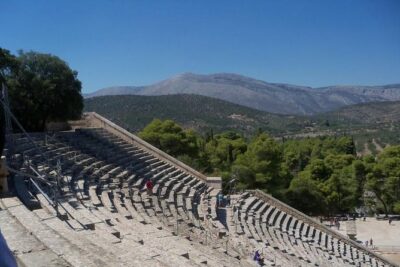
Mycenae and Nafplion Day Trip from Athens with Official guide
Read our review →
Browse the lists this tour appears in