
Reviewed · ANCIENT CORINTH TOURS
4-Day Classical Greece Tour: Epidaurus, Mycenae, Olympia, Delphi, Meteora
The boldest thing about this four-day Classical Greece tour is its reach. Starting in Athens, you cover the Corinth Canal, Mycenae, Epidaurus, Olympia, Delphi, Meteora, and Thermopylae, with about 2,500 kilometers of Greek countryside and mountain roads between the major stops.
I like that the tour includes entrance fees, hotels, breakfasts, and dinners, so much of the trip is paid for in advance. I also like the serious site coverage: you are not simply taking photos from a coach window, but walking through five major UNESCO World Heritage settings with a guide.
The trade-off is time. This is an ambitious route, not a restful holiday. You will spend long hours on the bus, lunch is usually at your own expense, and the advertised four-star accommodation may feel closer to comfortable tourist-class lodging by North American standards.
In This Review
- Key points to know before booking
- Why this route works for serious history fans
- Day 1: Corinth Canal, Epidaurus, and Mycenae
- Day 2: Olympia and the bridge to western Greece
- Day 3: Delphi, Apollo, and Athena Pronaia
- Day 4: Meteora monasteries and Thermopylae
- Hotels, meals, and the real meaning of tourist-class
- Transport, group size, and the pace of the trip
- Is $766.70 a good value?
- Who should book this Classical Greece tour?
- FAQ
- How long is the tour?
- Which sites are included?
- Are hotels and meals included?
- Is pickup available from any Athens address?
- What type of clothing should I bring?
- Is the tour always in English?
- How many people are in each group?
Key points to know before booking
- Five major ancient sites in four days: Epidaurus, Mycenae, Olympia, Delphi, and Meteora form the core of the route.
- Long driving days: Departures begin around 7:30 to 8:30 a.m., with the return to Athens on Day 4 around 7 p.m.
- Hotels and dinner are included: Three hotel nights, three breakfasts, and three dinners are part of the package.
- Hotel standards vary in practice: Amalia properties are clean and comfortable, but some rooms and public areas look dated.
- Group size is not fixed: The maximum is 40 people, though some departures operate with 9 to 26 people and smaller buses.
- Bring proper clothing and shoes: Ancient sites involve uneven ground, marble, cobbles, steps, and strong sun.
Why this route works for serious history fans
Mainland Greece is easier to appreciate when the sites are connected. Mycenae introduces the Bronze Age world of Agamemnon. Olympia links religion, sport, and civic life. Delphi shows how prophecy shaped ancient politics. Meteora shifts the story into the Christian Byzantine era, with monasteries perched above the plain.
You get a useful sweep across several periods rather than four days devoted to one type of ruin. The guides usually provide commentary on the bus as well as at the sites, which helps the long transfers feel less empty. Guide assignments vary, but names associated with departures include Joy, Xenia, Maria, Emilia, Sophia, Dimitra, Foteini, Eleni, and Jordan.
The strongest guides make a real difference. Joy and Xenia, in particular, are praised for combining site knowledge with good group management, while guides such as Maria, Emilia, and Foteini are noted for clear English and lively explanations. You should not book on the assumption that one particular guide will lead your departure, but the operation clearly depends heavily on the person assigned to your group.
This is best for adults, older children, and teenagers who enjoy mythology, archaeology, architecture, and long days outdoors. Small children may struggle with the amount of walking and the extended bus rides unless they already have a strong interest in Greek myths.
More Ancient Corinth, Mycenae and canal trips:
- From Athens: Mycenae, Epidaurus & Nafplio Full Day Trip
★ 4.8 · 2,438 reviews - From Athens: Mycenae, Epidaurus & Nafplio Full-Day Tour
★ 4.5 · 1,580 reviews - From Athens: Ancient Corinth Day Trip with Canal & VR Guide
★ 4.6 · 1,073 reviews
Day 1: Corinth Canal, Epidaurus, and Mycenae
Pickup runs from selected Athens hotels between 7:30 and 8:15 a.m. The formal departure point is at Leoforos Vasilisis Amalias 10, near public transport, with departure at 8:30. Airport, port, Airbnb, and private apartment pickup are not available, so check your hotel location carefully before booking.
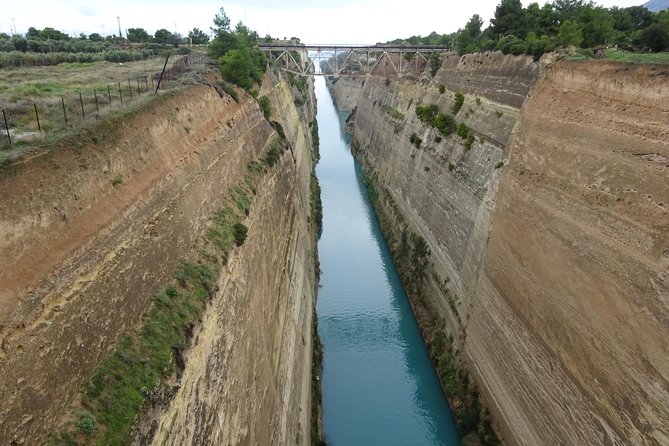
The Corinth Canal is the first useful photo stop. Cut through the narrow Isthmus of Corinth, it links the Gulf of Corinth with the Saronic Gulf and separates the Peloponnese from mainland Greece. You get about 20 minutes here, enough to see the steep channel and understand why this crossing mattered to ancient and modern Greece.
Next comes Epidaurus, one of the tour’s most satisfying stops. The ancient theatre is famous for its near-perfect acoustics and graceful semicircle of seats. You get about an hour, with admission included. Stand near the center of the orchestra and listen for voices or small sounds from above, but do not expect a leisurely visit. The schedule keeps you moving.
Epidaurus was not only a theatre. It formed part of a healing sanctuary dedicated to Asklepios, the ancient Greek god of medicine. The setting helps explain the link between drama, ritual, and health in the ancient world. Your guide can give the ruins a human purpose that a quick independent visit might miss.
A brief visit to the Epidaurus Archaeological Museum follows, listed at about 15 minutes. That is enough for a quick look at architectural fragments and sculptures, but not enough for a slow museum visit. If museums are your priority, take notes as you go and accept that this tour favors breadth over extended time at individual collections.
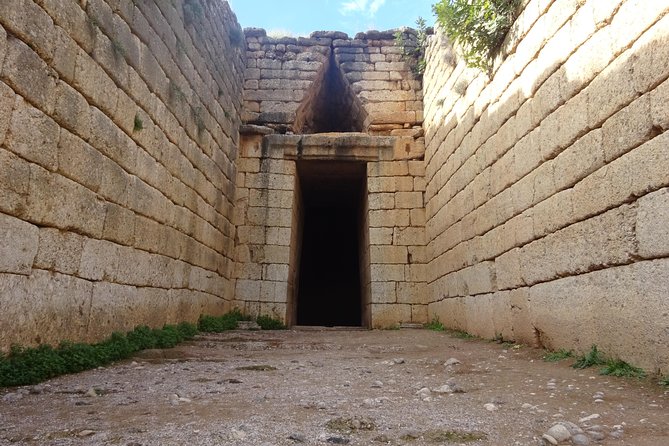
Mycenae is the day’s dramatic climax. The fortified citadel rises above the Argolid plain, with massive stone walls, the Lion Gate, royal tombs, and the remains associated with the legendary Agamemnon. Homer’s stories are not a simple historical record, but the site gives those Bronze Age legends a powerful setting.
You have around 90 minutes at the archaeological site. Expect uneven paths, stone surfaces, sun exposure, and some uphill walking. The Treasury of Atreus, often called the Tomb of Agamemnon, adds a second major monument beyond the citadel itself.
The first overnight may be in Nauplia or Olympia. That variation matters because the hotel location and the next day’s drive can change. Dinner at the hotel is included, while lunch is not. Lunch stops are generally organized for the group, but you should expect tourist-oriented restaurants and prices higher than a simple local meal.
Day 2: Olympia and the bridge to western Greece
Olympia is more than the birthplace of the modern Olympic Games. In antiquity, it was a major religious sanctuary where athletes, pilgrims, city-states, and political figures gathered under the protection of Zeus.
The archaeological site receives about 90 minutes of guided time. You will see the remains of temples, athletic facilities, and the stadium area. The ruins are spread over open ground, so a hat, water, sunscreen, and comfortable shoes are practical rather than optional.
The Archaeological Museum of Olympia gets about an hour. This is one of the tour’s best indoor stops because it gives shape to the broken columns and foundations outside. Look for the Hermes of Praxiteles, architectural sculpture from the Temple of Zeus, and the famous charioteer statue, often identified as the Charioteer of Delphi in another museum, not Olympia. Your guide can help you separate the museum’s major works from the many fragments.
Lunch is again at your own expense. After Olympia, the route crosses a spectacular sea bridge toward the mainland. The bridge itself is a scenic travel moment rather than a formal sightseeing stop, but it helps break up the drive and gives you a sense of the route’s scale.
The second hotel night is generally in the Delphi area or along the route, depending on the operating plan. Hotel dinners and breakfasts are buffet-style. You can expect a useful range of Greek and international dishes, though the menus may feel similar from one Amalia hotel to the next.
Day 3: Delphi, Apollo, and Athena Pronaia
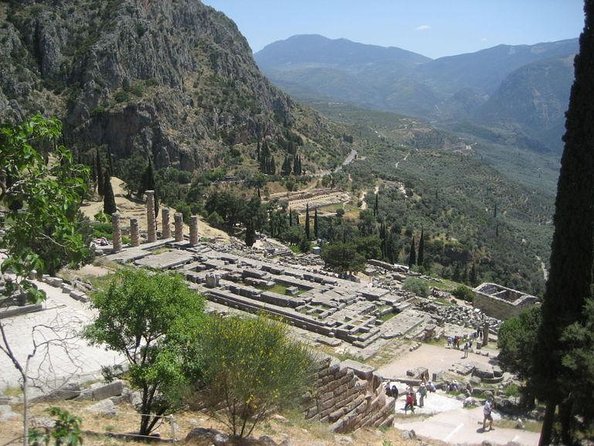
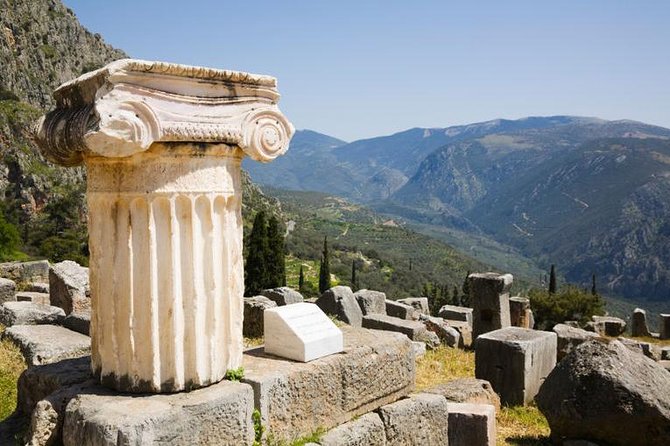
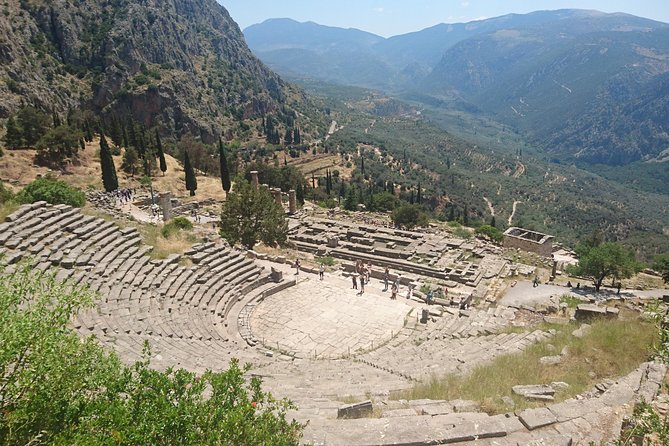
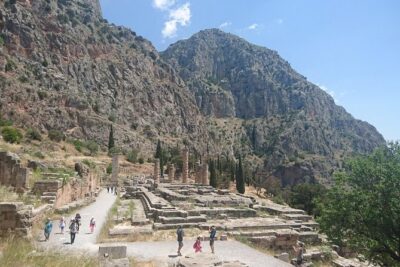
Delphi has a different mood from Olympia. Set on the slopes of Mount Parnassus, the sanctuary was considered the center of the ancient Greek world. City-states came here to consult Apollo’s oracle before wars, migrations, political decisions, and major public projects.
The main archaeological site receives about 90 minutes. The climb and uneven stone paths require moderate fitness, and the route can feel exposed in hot weather. The reward is the mountain setting, the Temple of Apollo, the Sacred Way, and views across the valley.
Your guide is especially valuable here because the remaining stones do not explain themselves. You will hear about the oracle, the treasuries built by competing Greek communities, and the way Delphi functioned as both a religious center and a place of international diplomacy.
The Delphi Archaeological Museum follows for about an hour. It contains some of the finest surviving works connected with the sanctuary, including the bronze Charioteer of Delphi and the statues of the dancers. The museum is compact enough to visit in the allotted time, but you may wish for more space to return to pieces that catch your eye.
The Tholos of Athena Pronaia is a separate stop, scheduled for about 30 minutes. Its circular form is one of the most recognizable views in the Delphi area, even though only part of the structure survives. This stop is free according to the tour details, while the main Delphi entrance is included.
Lunch is not included. Plan for another organized stop, and do not count on having much independent time in Delphi town. One benefit of the tight schedule is that you see both the main sanctuary and Athena Pronaia without having to arrange local transport. The drawback is that photography, museum browsing, and bathroom breaks can compete with the guided timetable.
This is often the day when the group arrangement changes. Some departures begin with a smaller English-speaking group and later combine with other passengers for the onward route. A larger coach and bilingual commentary can make the latter part of the tour feel less personal. French is available only on Mondays, and winter departures operate in English only.
More Athens trips worth a second look
- 4-Day Tour of Mycenae, Epidaurus, Olympia, Delphi & Meteora
★ 4.8 · 168 reviews - 4-Day Greece Highlights Tour: Epidaurus, Mycenae, Olympia, Delphi and Meteora
★ 5.0 · 79 reviews - From Athens: Explore Ancient Greece 4-Day Tour
★ 4.7 · 73 reviews - 4day Spanish tour in Epidaurus Mycenae Olympia Delphi and Meteora
★ 4.5 · 27 reviews
Day 4: Meteora monasteries and Thermopylae
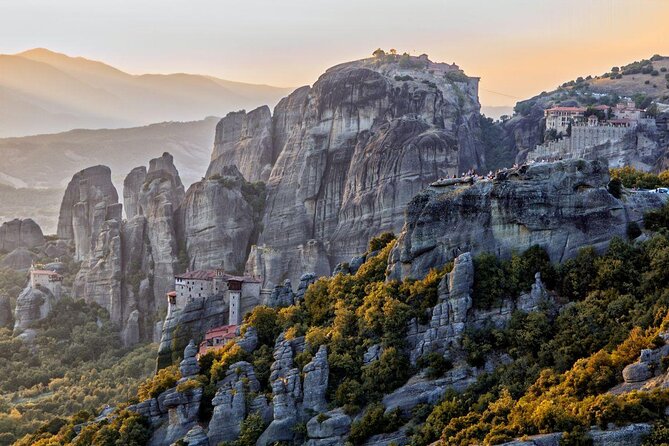
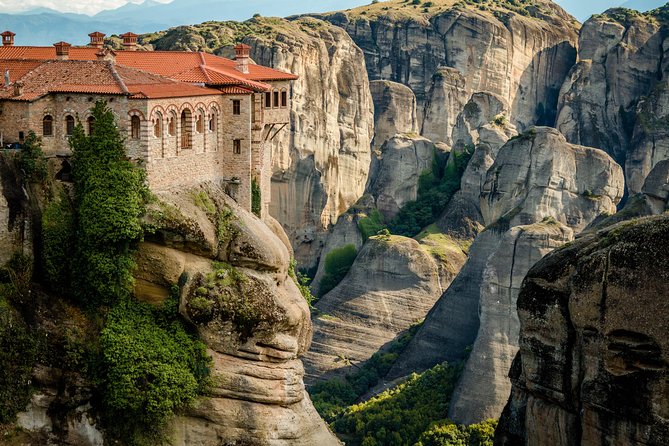
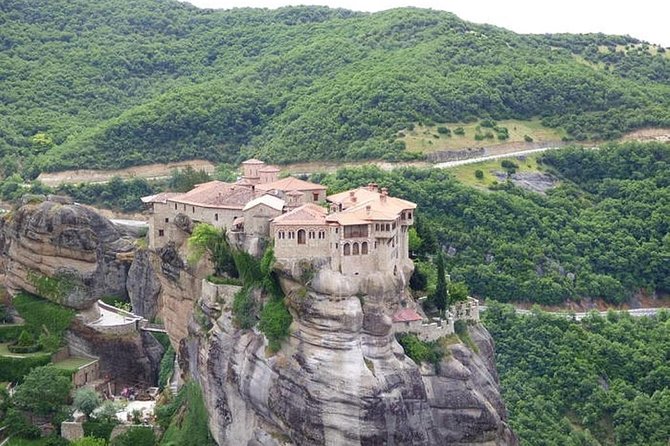
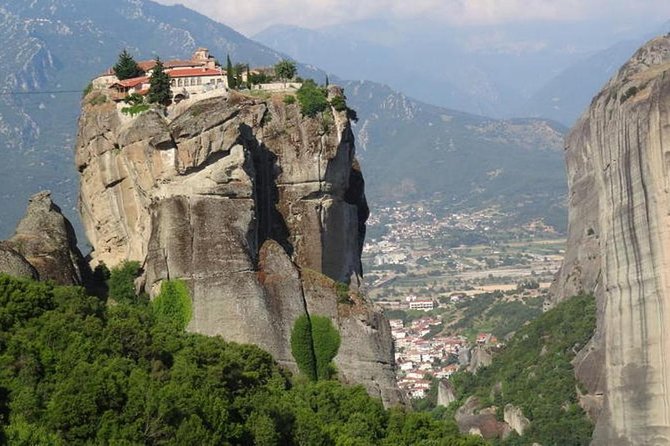
Meteora is the visual high point of the trip. Monasteries sit on tall rock pillars above Kalambaka, creating a setting unlike any other stop on the route. The tour includes entrance to two monasteries.
You get about an hour in the Meteora area, which is enough for a focused visit but not a full exploration of every monastery. Access involves steps and uneven surfaces. Religious sites enforce a dress code: men and women must cover shoulders and knees, and shorts or sleeveless tops can result in refused entry. Pack a light cover-up even if the weather is hot.
Meteora also changes the historical rhythm of the tour. After several days centered on ancient Greek religion and civic life, you encounter Orthodox monastic traditions and a medieval world shaped by retreat, worship, and isolation. The view is spectacular, but listen to the explanation of why the monasteries were built in such hard-to-reach places.
The final stop is the Leonidas Monument at Thermopylae, a brief 15-minute visit. The statue recalls the Spartan defense against the Persian army in 480 BC. It is a short roadside stop, not a full archaeological visit, but it gives the return journey a memorable closing note.
The coach then returns to Athens, usually around 7 p.m., depending on traffic. Drop-off is at the same meeting point or the same selected hotel used for pickup. Do not schedule a flight or an important evening reservation too tightly around the arrival time.
Hotels, meals, and the real meaning of tourist-class
The tour offers a choice of tourist-class or four-star accommodation. This is the area where you should keep expectations in check.
Many departures use Amalia hotels. They are generally described as clean, comfortable, and serviceable, with pools at some properties and attractive views, especially around Delphi. At the same time, several rooms and public spaces are dated, air-conditioning may struggle during hot weather, and the four-star label does not always match what you would expect in the United States or Canada.
The meals included are three breakfasts and three dinners. Breakfast and dinner are usually hotel buffets, with Greek dishes, fruit, vegetables, desserts, and familiar international choices. This arrangement saves time and removes the need to search for dinner after a long day.
The food is practical rather than a major reason to book. Some departures report very good buffet meals, while others find the dinners repetitive or ordinary. If you care more about small tavernas and regional cooking than convenience, you may prefer arranging an independent trip.
Lunch is always your expense. The chosen restaurants are convenient for a coach group, but prices can be higher than in a neighborhood restaurant and the experience may feel geared to organized tours. Carry snacks and water so you are not forced to order a full meal at every stop.
Transport, group size, and the pace of the trip
An air-conditioned vehicle, professional driver, and guide are included. Drivers such as Costa, Peter, Nick, Yannis, Socrates, Spiro, and Fanasis have been singled out for safe handling of narrow roads, tight parking areas, and mountain turns, but assignments vary.
The maximum group size is 40. That does not mean every departure reaches the limit. Some groups have operated with 9, 12, 14, 17, or 26 people, using a smaller and more comfortable coach. Other departures have combined with larger groups for part of the journey, particularly after Delphi.
The difference is significant. With a small group, boarding is quicker, questions are easier, and the guide can keep a closer eye on everyone. With a large group, site commentary can feel less personal and moving through entrances takes longer.
You should expect early starts, long stretches on the highway, scheduled comfort breaks, and limited free time. The bus rides are not dead time, though. You will pass olive groves, farmland, seaside towns, and mountain roads, and a good guide can connect modern Greece with the places you are seeing.
Moderate physical fitness is required. Wear shoes with a firm sole, bring a refillable water bottle, and carry sun protection. An umbrella can help at exposed ruins, especially in the hottest months.
Is $766.70 a good value?
At $766.70 per person, the price is strong for a four-day escorted circuit that includes transport, three hotel nights, three breakfasts, three dinners, five major archaeological destinations, and two Meteora monastery entrances.
You would pay separately for intercity transport, accommodation, site tickets, and a guide if you arranged the same route yourself. The tour also handles the difficult connections between western Peloponnese, Delphi, Meteora, and Athens, where public transport would take more planning and often more time.
The value is strongest if your priority is coverage. You see a remarkable amount of mainland Greece without renting a car or managing hotel changes. The value is weaker if you expect polished four-star rooms, long museum visits, free afternoons, or carefully selected local meals.
There is also a €10 environmental fee per room per night, paid at the hotel reception. For the three included nights, the stated total is €30 per booking, though the exact charge is based on the room and nights used. A single supplement applies when one person occupies a room alone.
Who should book this Classical Greece tour?
I would choose this trip if you have limited time in Greece and want the major mainland sites in one organized sweep. It suits history fans, first-time visitors, families with older children, and solo travelers who value a guide and built-in transportation.
I would be cautious if you dislike long bus rides, hot open-air ruins, group dining, or hotel changes. You may also want another option if your main goal is luxury. The tour’s best features are its route, site access, and guide service, not boutique accommodation.
Book with the correct clothing, realistic hotel expectations, and a willingness to follow a timetable. Children aged 5 to 12 need a passport or ID to receive the discounted price, otherwise they may have to pay the standard entrance charges. Free cancellation is available up to 24 hours before the start time, subject to the stated minimum-group condition.
For most visitors, this is a very efficient way to meet Classical Greece. You will not see everything, and you will not linger everywhere, but you will leave with a clear sense of how the country’s major ancient centers fit together. That is a good exchange for four busy days.
FAQ
How long is the tour?
The tour lasts approximately four days. It departs Athens at 8:30 a.m., with pickup service running from 7:30 to 8:15 a.m. The return to Athens on Day 4 is expected around 7 p.m., depending on traffic.
Which sites are included?
The route includes the Corinth Canal, Epidaurus, Mycenae, Olympia, Delphi, Meteora, and the Leonidas Monument at Thermopylae. Entrance fees are included for Mycenae, Epidaurus, Olympia, Delphi, and two Meteora monasteries.
Are hotels and meals included?
Yes. Accommodation for three nights, three breakfasts, and three dinners are included. Lunches, tips, and the environmental hotel fee are not included.
Is pickup available from any Athens address?
Pickup is available only from selected hotels. Pickup from the airport, port, private apartments, and Airbnb properties is not available.
What type of clothing should I bring?
You need clothing that covers your knees and shoulders for places of worship and selected museums. Shorts and sleeveless tops may lead to refused entry. Comfortable walking shoes are also important because the sites have uneven ground, marble, rocks, and cobblestones.
Is the tour always in English?
The tour is offered in English. French is available only on Mondays, and during winter the tours operate in English only.
How many people are in each group?
The maximum group size is 40 people. Actual group sizes vary, and some departures use smaller groups and smaller buses. A group change or larger vehicle may occur during the route, especially between Delphi and Meteora.
Recently reviewed around Athens
- Small-Group Women History in Ancient Greece Walking Tour★ 5.0 · 38 reviews
- Ceramic and Pottery Creative Workshop with Two Local Artists★ 4.0 · 57 reviews
- Athens: Wine Workshop Create your Own Wine under the Acropolis★ 5.0 · 77 reviews
- Athens: Greek Wines Tasting with Sommelier and Acropolis Views★ 5.0 · 88 reviews
- Hydra Private Day Trip by Ferry from Athens with Transfers★ 4.0 · 30 reviews
- Small-Group Wine Tour in Athens with Tasting★ 5.0 · 33 reviews
- Wine Trails Private Tour/ Nemea visit 3 wineries from Athens or Nafplion (10 h)★ 5.0 · 44 reviews
- FLYING DRESS Photoshoot in Athens – Greece★ 5.0 · 47 reviews
Ancient Corinth Tours, compared.
Ancient Corinth Day Trip with Canal & VR Guide
Read our review →
Private Biblical Tour Ancient Corinth & Isthmus Canal from Athens
Read our review →
Ancient Corinth & Nafplio Full Day Trip with Swim
Read our review →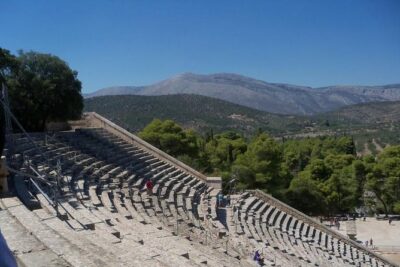
Mycenae and Nafplion Day Trip from Athens with Official guide
Read our review →
3-Day Classical Greece Tour: Epidaurus, Mycenae, Nafplion, Olympia, Delphi
Read our review →Browse the lists this tour appears in