
Reviewed · ANCIENT CORINTH TOURS
4-Day Greece Highlights Tour: Epidaurus, Mycenae, Olympia, Delphi and Meteora
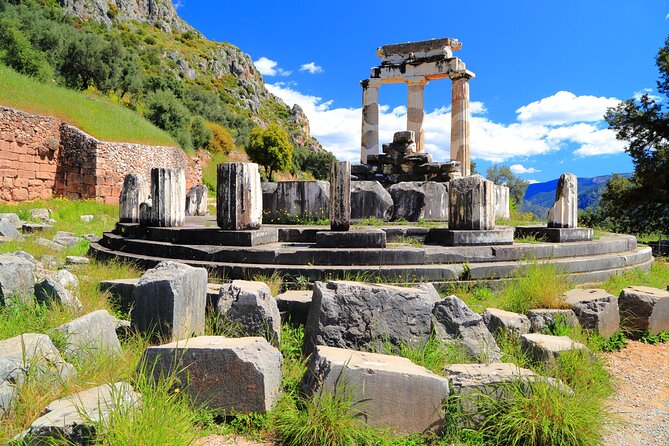
This four-day route takes you from the theater at Epidaurus to the monasteries of Meteora, with Ancient Olympia, Delphi, Mycenae, and the Corinth Canal along the way. It is a fast, useful answer for anyone who wants to see far more than Athens without arranging several hotels, entrance tickets, and long-distance transfers.
I like the way the tour joins famous ruins with smaller stops such as Arachova, Nafplion, the Rion-Antirion Bridge, and Thermopylae. I also like the strong guiding, with guides such as Marianna, Christina, Sofia, and Angel praised for bringing mythology and history to life. The tradeoff is clear: you cover a huge stretch of Greece in four days, so expect long rides, early starts, stairs, and little free time.
In This Review
- Key points to know before booking
- Why this Greece road trip works
- Day one: Corinth Canal, Epidaurus, and Mycenae
- Day two: Ancient Olympia and the bridge to Delphi
- Day three: Delphi, Apollo, and the road to Kalambaka
- Day four: Meteora and Leonidas at Thermopylae
- Hotels, meals, and what the price really covers
- Walking, luggage, and daily comfort
- Who should book this four-day tour
- FAQ
- Where does the tour start?
- Is hotel pickup available in Athens?
- Where does the tour finish?
- What meals are included?
- Are entrance fees included?
- What hotel choices are available?
- What is the hotel tax?
- What should I wear at Meteora?
- How far in advance can I cancel?
- Should you book it?
Key points to know before booking
- Six major ancient sites in four days: Corinth, Epidaurus, Mycenae, Olympia, Delphi, and Meteora all fit into one road trip.
- Guided visits make the ruins easier to understand: Guides explain Greek myths, temples, museums, and the places you pass on the bus.
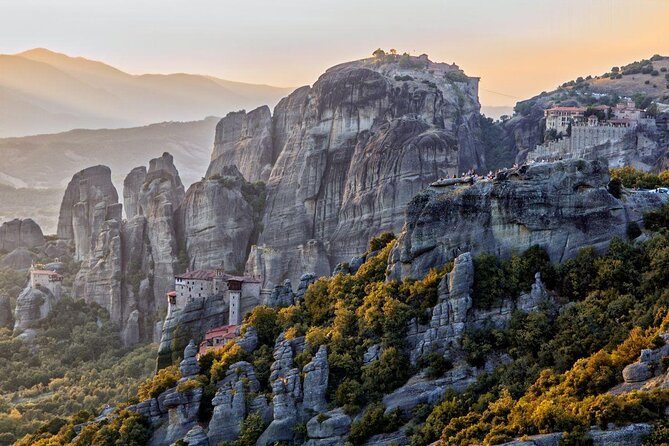
- Meteora is the visual high point: The monasteries seem to grow from tall gray rock pillars, but access includes steps and a strict dress code.
- Half-board keeps costs more predictable: Three breakfasts and three dinners are included, but lunches, drinks, and hotel tax are extra.
- This is an active sightseeing trip: Bring sturdy walking shoes for uneven ground, museum visits, and monastery stairs.
- Hotel quality can vary: You choose a 3-star tourist class or 4-star A class option, but the actual properties may differ by town.
Why this Greece road trip works
At $760.28 per person, this is not a cheap day tour, but it covers a lot of ground and several costs. You get three hotel nights, a licensed guide, an air-conditioned coach, entrance fees, three breakfasts, three dinners, and selected hotel pickup and drop-off.
The real value comes from the route. Reaching Olympia, Delphi, and Meteora independently means planning separate transport connections and overnight stays. Here, the bus carries you across the Peloponnese and central Greece while your guide fills the long stretches with geography, mythology, and local history.
You should still think carefully about pace. The route covers roughly 1,200 kilometers according to one detailed account of the trip. That means this is a highlights tour, not a slow village holiday. You see the major places, but you do not linger at every one.
The group can hold up to 42 people, although some departures may be much smaller. One group had only 15 people before joining a larger party after Delphi, so the feel of the tour can change during the trip. Your guide and driver matter a great deal here. Strong guides such as Marianna, Christina, Sofia, and Youli have been singled out for clear explanations, calm organization, and a good sense of humor.
More Ancient Corinth, Mycenae and canal trips:
- From Athens: Mycenae, Epidaurus & Nafplio Full Day Trip
★ 4.8 · 2,438 reviews - From Athens: Mycenae, Epidaurus & Nafplio Full-Day Tour
★ 4.5 · 1,580 reviews - From Athens: Ancient Corinth Day Trip with Canal & VR Guide
★ 4.6 · 1,073 reviews
Day one: Corinth Canal, Epidaurus, and Mycenae
The morning begins in Athens at 8:15 a.m. from Athanasiou Diakou 26, near the Acropolis area. Pickup is offered from selected central hotels, usually about an hour before departure. Check the supplier email closely, since a hotel listed as eligible may still require you to walk to a specific pickup point.
Your first stop is the Corinth Canal, a quick 15-minute look at the narrow waterway cut through the isthmus. It is a short stop, but it breaks up the first drive and gives you a clear sense of why Corinth mattered. There are toilets, a small market, and souvenir options, so you can also use the pause practically.
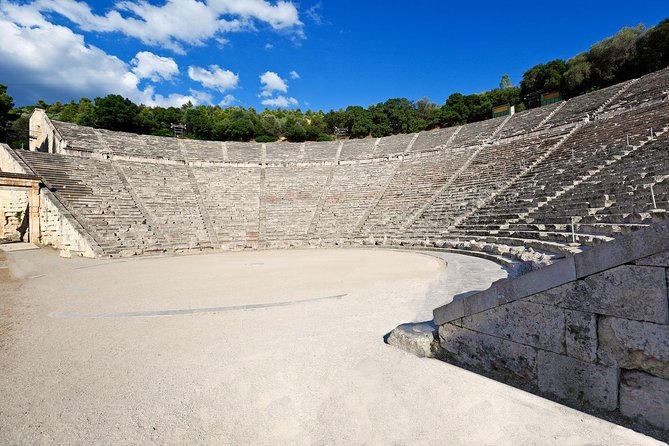
Next comes Epidaurus, home to one of the best-preserved ancient theaters in Greece. You get about an hour here, with the theater’s famous acoustics as the main event. Stand near the center and listen as your guide demonstrates how clearly sound carries through the stone seating.
The site includes more than the theater. You might also want to see the remains connected with the sanctuary and its ancient healing center, but the schedule can feel tight. One visitor had enough time for the theater but not the old hospital and wished for another half hour. If Epidaurus matters most to you, stay focused and keep an eye on the meeting time.
The road then continues through the Argos plain toward Mycenae, with a short stop in Nafplion along the way. The itinerary describes this as a short stop, while some departures include time for lunch there. Treat lunch as your own expense and do not count on a long wander through the old town.
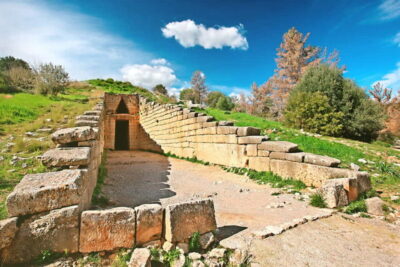
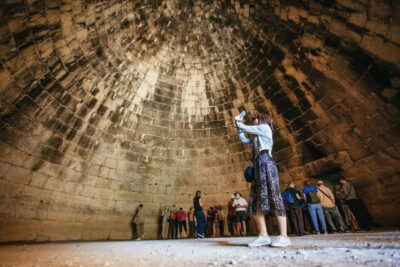
Mycenae gives the first day its strongest sense of legend. You visit the archaeological site and the Tomb of Agamemnon, also called the Treasury of Atreus, along with the famous Lion Gate and museum area. Your guide helps connect the stones to the stories of Agamemnon and the Mycenaean world, rather than leaving you to decode a field of ruins on your own.
The terrain is uneven, and the day includes plenty of walking. After Mycenae, the coach continues to Olympia for the overnight stay. An optional souvenir stop may be offered, but the main point of the evening is rest before the next morning’s major site.
Day two: Ancient Olympia and the bridge to Delphi
Olympia deserves time, and the schedule gives you about two and a half hours. That is enough to see the main ruins and museum without racing from one column to the next.
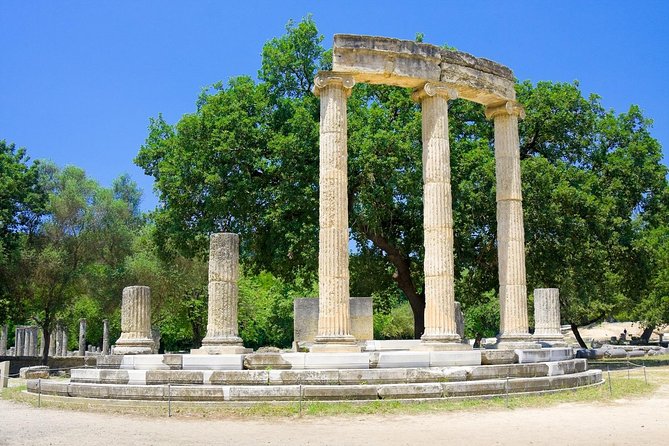
The archaeological site includes the Temple of Zeus, the Temple of Hera, the altar associated with the Olympic flame, the stadium, and other remains tied to the ancient games. The stadium is especially useful for putting the scale of the contests into perspective. You can walk where athletes once competed, though the site is about more than sport. Olympia was also a major religious center dedicated to Zeus.
The archaeological museum adds the sculpture and objects that make the ruins easier to picture. A cafe and gift shop are available at the site, which can help with a drink or small snack, but lunch is not included in the tour price.
After Olympia, the bus passes through Patras and crosses the Corinthian Gulf by the Rion-Antirion Bridge. This is one of the trip’s useful modern contrasts: ancient sanctuaries in the morning, a major piece of modern engineering later in the day. The route continues past Nafpaktos and along the coast toward Delphi.
This is a long transfer day, but the scenery helps. Guides often explain the places you pass, which makes the bus time more useful. There are also stops for toilets and snacks, including a pause around the bridge route.
You spend the night in or near Delphi, with a visit to the mountain village of Arachova in the afternoon. Arachova is a picturesque stop with a mountain setting and a different feel from the archaeological sites. It gives you a chance to see a living Greek town rather than another ruin.
Hotel standards are uneven on this route. The A class option has been very good in Olympia and Kalambaka for some departures, while the Delphi property can feel dated or worn. One hotel often associated with Delphi has drawn complaints about old carpeting and limited dinner choices, while other departures have found the stay acceptable and appreciated the pool and sunset views. If hotel comfort matters greatly, ask which properties are planned before paying extra for the higher category.
Day three: Delphi, Apollo, and the road to Kalambaka
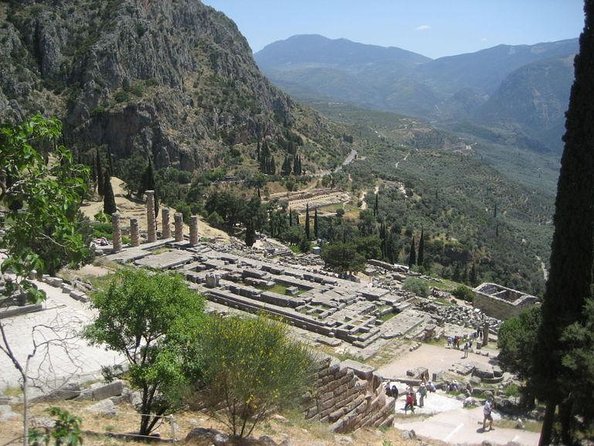
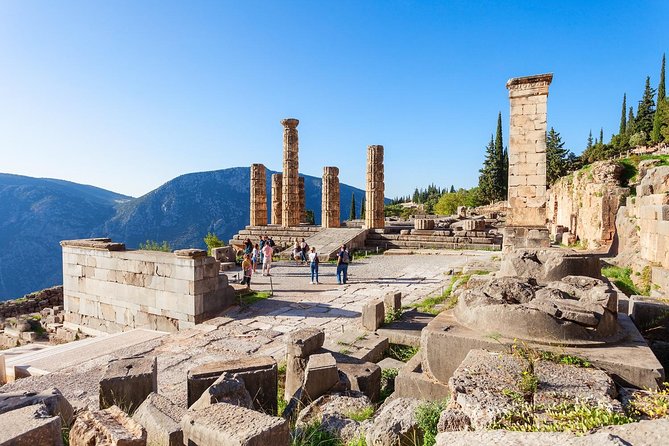
Delphi is one of the tour’s most rewarding stops, but it starts early. You visit the archaeological site for about three hours, including the Temple of Apollo and the sanctuary built into the mountainside.
Ancient Greeks regarded Delphi as the navel of the world, and the setting explains some of its power. The ruins stretch along a rising slope with views across the surrounding valley. You will walk uphill over uneven stones, so this is a poor place for flimsy sandals.
The guide is especially valuable here. Delphi can look like scattered foundations until someone explains how the treasuries, processional route, theater, and temple fit together. The oracle and the myths surrounding Apollo give the site a human story, while the remains show how pilgrims approached the sanctuary.
You then spend about an hour in the Delphi Archaeological Museum. It contains objects dating as far back as the 15th century BC, along with sculpture and architectural pieces from the sanctuary. The museum is not an optional extra. It supplies the details that the open-air ruins can no longer provide.
There is also a mention of a natural spring and other points around the Delphi site, but time is structured around the main archaeological visit and museum. You should not expect an open-ended afternoon to explore the town independently.
After Delphi, some three-day tour participants leave and another group may join for the Meteora portion. This can make the bus fuller and change the group dynamic. It may also give you a fresh social mix for the final day, but do not assume the small group feeling will last throughout the whole trip.
The coach then heads to Kalambaka, a small town beneath the gray rocks of Meteora. This is another long drive, so use the evening to prepare for the monastery visit. Lay out appropriate clothing and keep your walking shoes handy.
More Athens trips worth a second look
- 4-Day Classical Greece Tour: Epidaurus, Mycenae, Olympia, Delphi, Meteora
★ 4.5 · 732 reviews - 4-Day Tour of Mycenae, Epidaurus, Olympia, Delphi & Meteora
★ 4.8 · 168 reviews - From Athens: Explore Ancient Greece 4-Day Tour
★ 4.7 · 73 reviews - 4day Spanish tour in Epidaurus Mycenae Olympia Delphi and Meteora
★ 4.5 · 27 reviews
Day four: Meteora and Leonidas at Thermopylae
Meteora is the visual payoff of the route. More than 20 monasteries were built among the tall rock formations, though the exact monasteries open to visitors can vary. The tour allows about two and a half hours in the area.
The monasteries combine Byzantine religious art with an extraordinary setting. You see buildings perched high above the town, linked to a history of monks seeking solitude in hard-to-reach places. Even from outside, the views are memorable. One practical frustration is that the coach may not stop at every ideal photo point, so take pictures whenever the schedule and traffic allow.
To enter the monasteries, clothing rules are enforced. Women need long sleeves and must avoid short skirts, while men cannot wear shorts. Covering skirts are supplied for women at the monasteries, but it is easier to arrive prepared with a scarf, light trousers, or a long skirt.
Meteora is not stroller-friendly in all areas. The Delphi site and at least one monastery involve many stairs, and uneven surfaces can make a visit difficult with a small child. A one-year-old was accommodated on one departure, but families should plan for carrying and waiting rather than relying on a stroller.
After Meteora, the coach returns to Athens, stopping at Thermopylae for about 20 minutes. The Leonidas Monument marks the famous stand of the Spartans. It is a brief roadside visit, but it adds one last layer of Greek legend before the late-afternoon return to Athens.
Hotels, meals, and what the price really covers
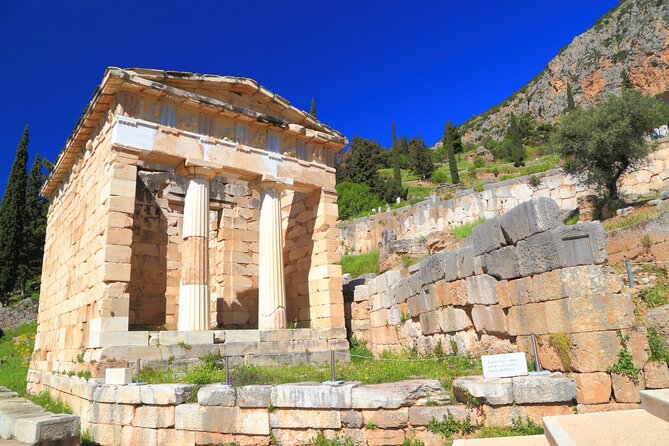
You choose between T class 3-star and A class 4-star accommodations. The category can affect comfort, but it does not guarantee that every hotel will feel equally modern. The Delphi night is the most variable part of the hotel package, while Olympia and Kalambaka have received especially favorable impressions on some departures.
Breakfast and dinner are included each day. Meals are generally buffet-style, which makes them practical after a full day on the road. Food quality can vary by hotel, and dinner choices in Delphi may be limited, so do not expect restaurant-level variety every night.
Lunch is not included. You will have opportunities to buy food at stops and near sites, but bring some small snacks and water for the coach. Drinks are also extra.
A hotel accommodation tax is paid directly to the property. The published amount is €10 per room per night for 4-star hotels and €5 per room per night for 3-star hotels. Because taxes and hotel arrangements can change, confirm the current amount before departure.
At the listed price, the package makes the most sense if you value organization. You pay for the coach, guide, admission fees, hotels, breakfasts, and dinners in one booking. If you prefer to spend three hours at one ruin, choose your own tavernas, or select every hotel yourself, an independent route may suit you better.
Walking, luggage, and daily comfort
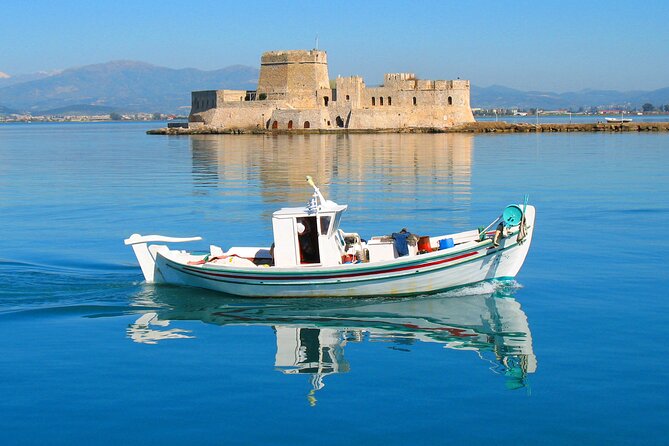
This is not a strenuous hiking tour, but it is an active sightseeing trip. Mycenae, Delphi, and Meteora all involve uneven ground or stairs. Bring sturdy walking shoes, and consider hiking boots if you already use them comfortably.
You should also expect to handle your own day bag and be ready for frequent boarding and unloading. The driver may help with larger luggage, but pack so you can quickly reach water, medication, a light layer, and your phone or camera.
The bus is air-conditioned and described as a luxury coach. Breaks are built into the longer drives, though the journey still takes up a large part of the trip. Guides such as Marianna and Christina have been praised for talking about the countryside and passing towns, which makes those hours more than dead time.
The weather can shape your comfort at the ruins. Good conditions make the outdoor sites far easier, but you should carry sun protection and a light layer for exposed archaeological areas and cooler mountain stops.
Who should book this four-day tour
I would choose this trip if you are visiting Greece for the first time and want a strong introduction to mainland history beyond Athens. It is particularly good for people who care about mythology, ancient architecture, museums, and seeing how different parts of the country fit together.
It also suits solo visitors and couples who do not want to rent a car or manage Greek intercity transport. The included dinners and planned hotels reduce daily decisions, while the guide gives context you might miss on your own.
Families can make it work, but young children will need patience during long bus rides and help on stairs. Anyone with limited mobility should ask detailed questions before booking, since the main sites include uneven surfaces and steps.
I would hesitate if your ideal holiday means slow mornings, long meals, and spontaneous stops. The itinerary is packed, and Epidaurus and Nafplion can feel short. The tour gives you breadth, not deep time in each place.
FAQ
Where does the tour start?
The tour starts at Athanasiou Diakou 26, Athens 117 43, at 8:15 a.m.
Is hotel pickup available in Athens?
Complimentary pickup is available from selected centrally located hotels. Pickup generally takes place about one hour before departure, and the supplier sends the exact location and time before the tour.
Where does the tour finish?
The activity ends back at the starting meeting point in Athens.
What meals are included?
Three breakfasts and three dinners are included. Lunches and drinks are not included.
Are entrance fees included?
Yes. Entrance fees for the listed archaeological sites and museums are included. Meteora admission is listed as free, though individual monastery arrangements can vary.
What hotel choices are available?
You can choose between 3-star T class and 4-star A class hotel accommodation. Hotel accommodation tax is paid directly to the hotel.
What is the hotel tax?
The published tax is €5 per room per night for 3-star hotels and €10 per room per night for 4-star hotels.
What should I wear at Meteora?
Women should wear long sleeves and avoid short skirts. Men are not allowed to wear shorts. Covering skirts are provided for women at the monasteries.
How far in advance can I cancel?
You can cancel for a full refund if you cancel at least 24 hours before the local start time. Cancellations or changes made less than 24 hours before departure are not refunded or accepted.
Should you book it?
Book this tour if you want the major mainland Greek sites handled in one efficient package. The guides are the key advantage, especially when they connect Delphi, Mycenae, Olympia, and Meteora to the myths and events behind the stones.
Go in with realistic expectations about long drives, basic-to-variable hotel quality, limited lunch time, and plenty of walking. Bring sturdy shoes, modest clothing for Meteora, and a willingness to trade leisurely exploration for an impressive sweep of Greece. For a first visit focused on ancient sites, that is a fair exchange.
Recently reviewed around Athens
- Small-Group Women History in Ancient Greece Walking Tour★ 5.0 · 38 reviews
- Ceramic and Pottery Creative Workshop with Two Local Artists★ 4.0 · 57 reviews
- Athens: Wine Workshop Create your Own Wine under the Acropolis★ 5.0 · 77 reviews
- Athens: Greek Wines Tasting with Sommelier and Acropolis Views★ 5.0 · 88 reviews
- Hydra Private Day Trip by Ferry from Athens with Transfers★ 4.0 · 30 reviews
- Small-Group Wine Tour in Athens with Tasting★ 5.0 · 33 reviews
- Wine Trails Private Tour/ Nemea visit 3 wineries from Athens or Nafplion (10 h)★ 5.0 · 44 reviews
- Private Athens Transfer Airport/Port -Greek Tours-Hourly service★ 5.0 · 88 reviews
Ancient Corinth Tours, compared.
Ancient Corinth Day Trip with Canal & VR Guide
Read our review →
Private Biblical Tour Ancient Corinth & Isthmus Canal from Athens
Read our review →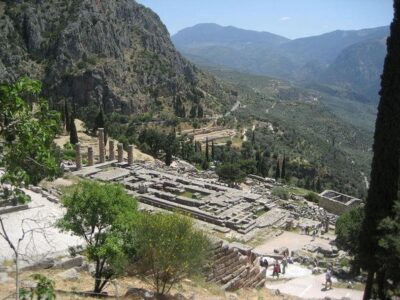
4-Day Classical Greece Tour: Epidaurus, Mycenae, Olympia, Delphi, Meteora
Read our review →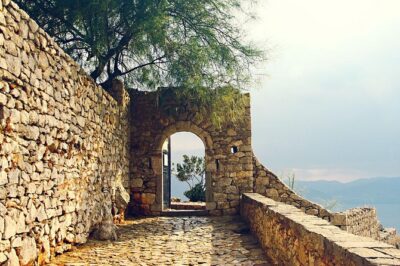
Ancient Corinth & Nafplio Full Day Trip with Swim
Read our review →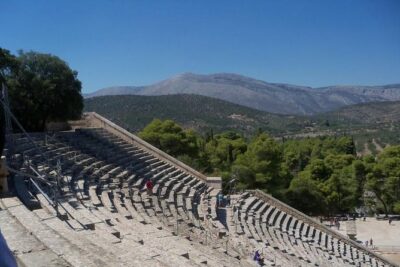
Mycenae and Nafplion Day Trip from Athens with Official guide
Read our review →
Browse the lists this tour appears in