

Reviewed · SELF-GUIDED TOURS
Ancient Agora: Audiovisual self-guided tour with 3D models
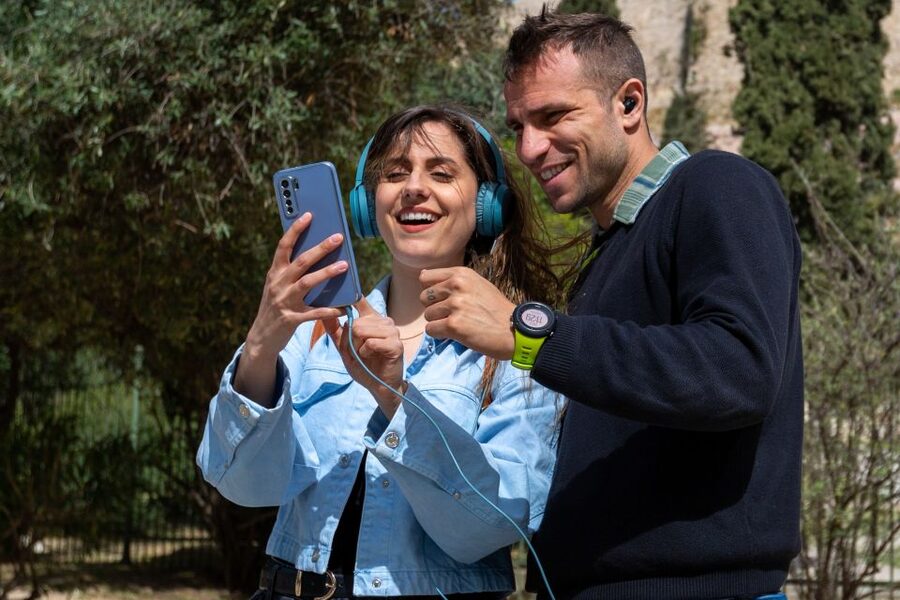
The most important thing to understand about this experience is that it turns the Ancient Agora from a field of ruins into a readable picture of ancient Athens. As you walk among temples, stoas, courts, workshops, and administrative buildings, the Culture App shows what these places may have looked like and explains how the city worked.
I like the 3D models and 360-degree views, which help you make sense of foundations and scattered columns. I also like the five-day validity, since you can activate the tour when it suits your schedule rather than rushing through the site. The main drawback is simple: this is an app, not a human guide, and you must pay the €10 full or €5 reduced entrance fee separately.
In This Review
- Key points to know before you go
- Why the Ancient Agora matters
- Using the app among the ruins
- Sixteen monuments, with more than one way to understand them
- The political and administrative heart of Athens
- Stoas, workshops, fountains, and everyday life
- Temple of Hephaistos deserves extra time
- Socrates, philosophy, and the human side of the site
- What the €7.89 price really buys
- Practical setup before you enter
- Who should choose this self-guided visit
- Should you book the Ancient Agora audiovisual tour?
- FAQ
- Is the entrance ticket included?
- How long is the audiovisual tour valid?
- Can I use the tour before or after visiting the Agora?
- Which languages are available?
- How many monuments are covered?
- Do I need internet access?
- What phone and equipment do I need?
Key points to know before you go
- The birthplace of democracy: See the setting where Athens developed its early democratic institutions.
- Sixteen monuments explained: Written and audio information covers the main remains across the Agora.
- Fourteen digital reconstructions: Use 3D models, videos, and 360-degree views to picture lost buildings.
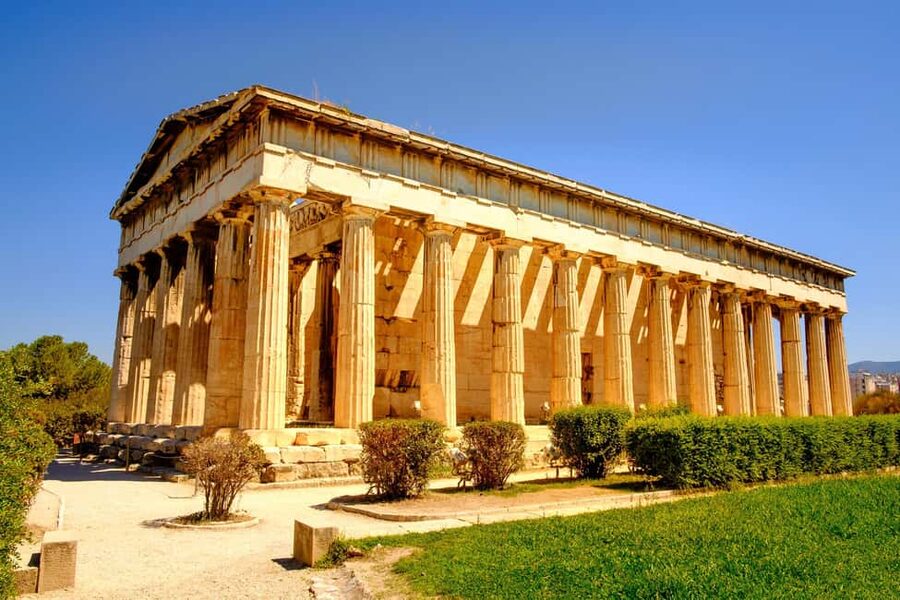
- Temple of Hephaistos: Give special time to one of Greece’s best-preserved ancient temples.
- Five days from activation: Start the tour before, during, or after your visit, then return to the material as needed.
- Bring your own equipment: You need a charged smartphone, earphones, internet access, and about 200MB of storage.
Why the Ancient Agora matters
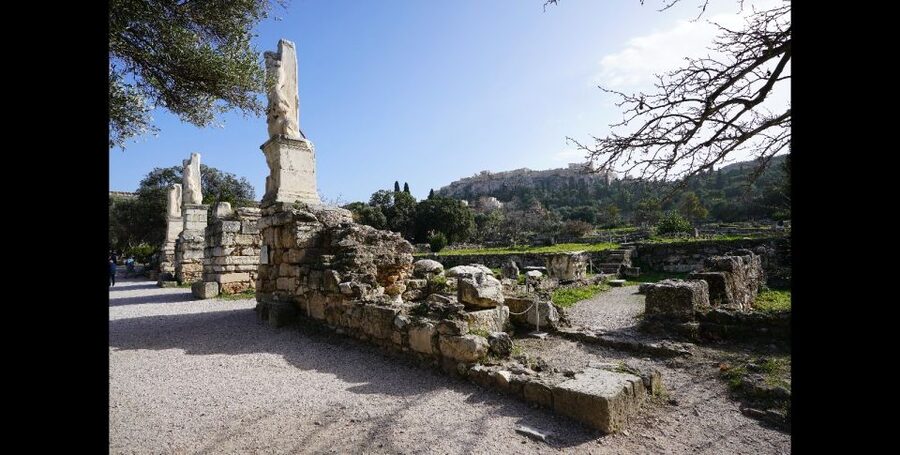
The Ancient Agora was not merely a market. It was the center of public life in Athens, a place for commerce, religious festivals, social meetings, courts, administration, and political debate.
That broad role is what makes the site worth your time. The Acropolis shows the religious and symbolic power of Athens. The Agora shows the daily machinery of the city below it. Here, citizens handled business, met friends, worshipped, argued cases, and took part in the early development of democracy.
The site reaches back to the 6th century BC. Its importance grew because so many parts of public life came together in one area. The app helps you connect those separate functions, so the Agora feels less like a collection of stones and more like a working civic district.
You also get a link to the intellectual life of Athens. Socrates and other philosophers taught and debated in this part of the city. The experience does not promise a staged recreation or a live performance. Instead, it gives you historical context while you stand in the actual setting associated with those discussions.
More Athens trips worth a second look
- Athens: Acropolis Ticket with Optional Audio or Live Guide
★ 4.2 · 11,055 reviews - Athens: Cape Sounio & Poseidon Temple Trip with Audio Guide
★ 4.4 · 4,521 reviews - Athens: Acropolis Ticket with Audio Guide
★ 4.0 · 3,575 reviews
Using the app among the ruins
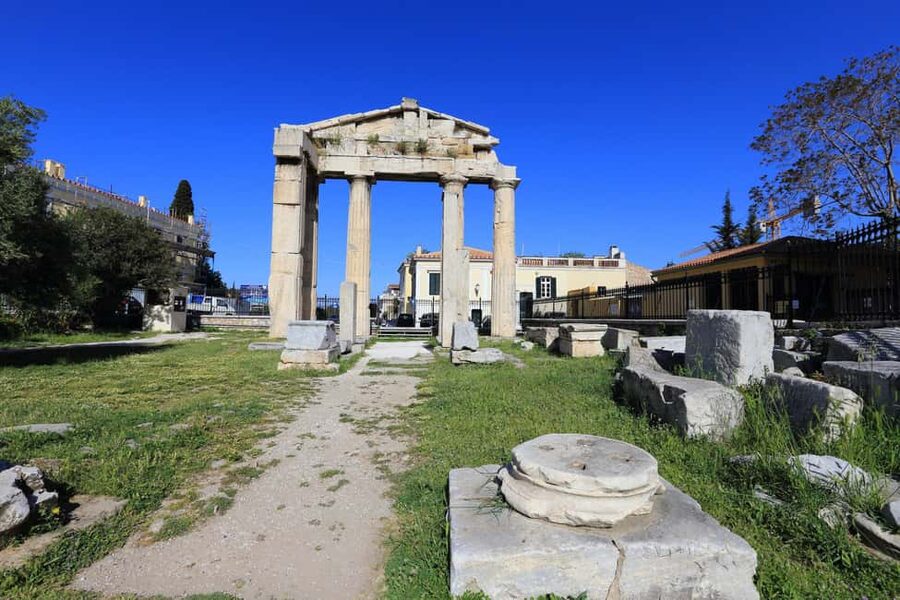
The tour is self-guided, so you decide the pace. An integrated map identifies the monuments and helps you locate the relevant points around the site. That matters because an open archaeological area can be hard to read at first. You may see foundations, partial walls, columns, and uneven ground without immediately knowing what each part once did.
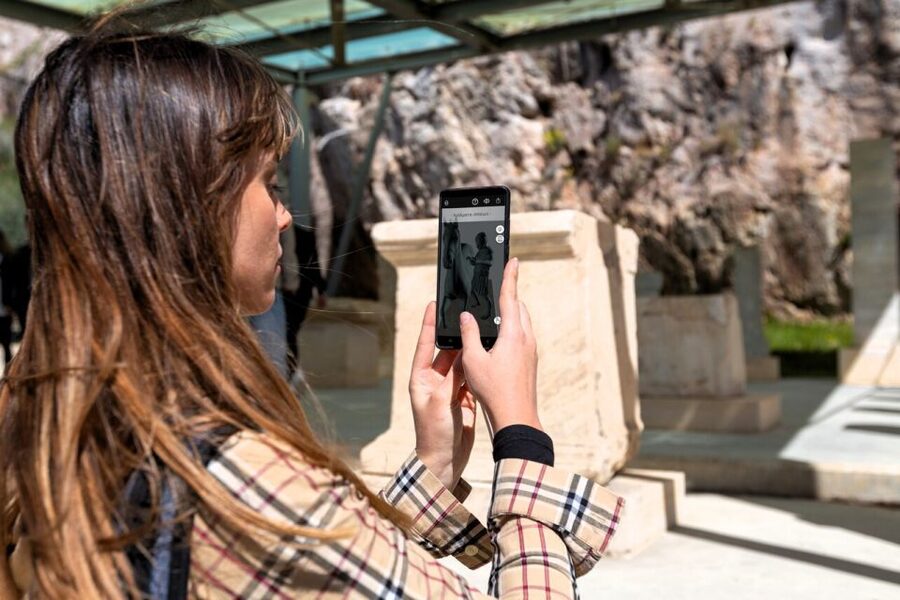
The app gives you several ways to approach the information. You can read the historical material, listen to the audio, study a model, watch an immersive video, or look around a 360-degree panorama. You do not need to use every format at every stop.
I would begin with the map and take the tour in the order that fits your movement through the site. At a complex ruin, read the short material first, then use the model or panoramic view to orient yourself. Save the longer audio and related stories for the monuments that interest you most.
Because the content can be used before, during, or after your visit, you have useful flexibility. You can prepare at your hotel, use the app on site, and revisit the material later. The five-day period begins with your first activation, not simply with the booking.
Sixteen monuments, with more than one way to understand them
Written and audio information is available for 16 monuments. This is the main historical layer of the tour. It should help you understand the purpose of individual structures and how they fit into the Agora as a whole.
Fourteen monuments also have 3D models, 360-degree views, and immersive videos. These features are especially useful when the surviving remains are hard to visualize. A model can show the full shape of a building, while a 360-degree view gives you a better sense of its position within the ancient district.
Thirteen monuments include related stories. These may help connect a building to a person, practice, or event in ancient Greek culture. The supplied information does not specify the exact subject of every story, so you should see these as added context rather than a fixed sequence of episodes.
The quantity of material is generous for the price, but it also creates a small risk. If you try to play every audio track and watch every video, the visit could become screen-heavy. I would use the phone as a tool, then look up often. The Agora is best understood with the remains in front of you, not only through a display.
The political and administrative heart of Athens
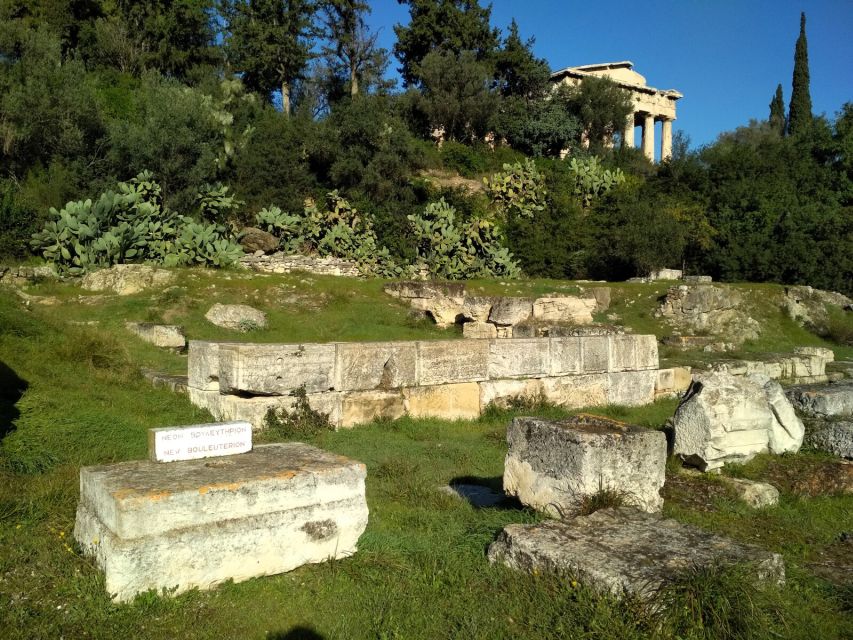
The Agora’s political role is one of the strongest reasons to choose this tour. Ancient democracy was not an abstract idea floating above the city. It depended on real public spaces, officials, courts, procedures, and citizens gathering to handle civic matters.
The app introduces the monuments connected with civil administration and public decision-making. This gives you a clearer sense of how the city operated. You are not simply hearing that Athens had democracy. You are seeing the setting where civic life took place.
That distinction matters. Modern visitors often arrive with a simplified image of democracy as a grand debate among famous thinkers. The Agora adds the less glamorous but essential side: administration, legal business, public meetings, and the practical work of running a city.
The app’s map and monument descriptions are most useful here. They let you connect the political idea with the physical remains. Even if a building survives only in part, its location within the public center helps explain its role.
A different kind of day out, same corner of Greece:
- Athens: Acropolis & up to 5 Archaeological Sites Combo Pass
★ 4.4 · 12,619 reviews - Athens: Acropolis, Parthenon & Acropolis Museum Guided Tour
★ 4.8 · 9,316 reviews - Athens: Cape Sounion & Poseidon Temple Sunset Half-Day Trip
★ 4.8 · 8,241 reviews - Athens: Acropolis and Parthenon Guided Walking Tour
★ 4.6 · 5,882 reviews
Stoas, workshops, fountains, and everyday life

The Agora also covers the ordinary activities that made the city function. Stoas provided covered public space. Fountains supplied water. Workshops supported production and trade. Courts and administrative buildings handled civic business.
These details are valuable because they keep the visit from becoming a parade of famous names. The Agora was a place where people bought and sold goods, met others, attended festivals, followed religious practices, and carried out daily work.
You may find that the less famous structures are among the most revealing. A temple tells you about worship. A public building tells you about government. A workshop or fountain shows how people used the district from morning to evening.
The Culture App’s broader explanations about ancient Greek culture add another layer. The included gift contains 68 written and audio entries about culture and facts in ancient Greece. This material can help if you want more than a monument-by-monument walk, though it may be better used before or after the site rather than all at once.
Temple of Hephaistos deserves extra time
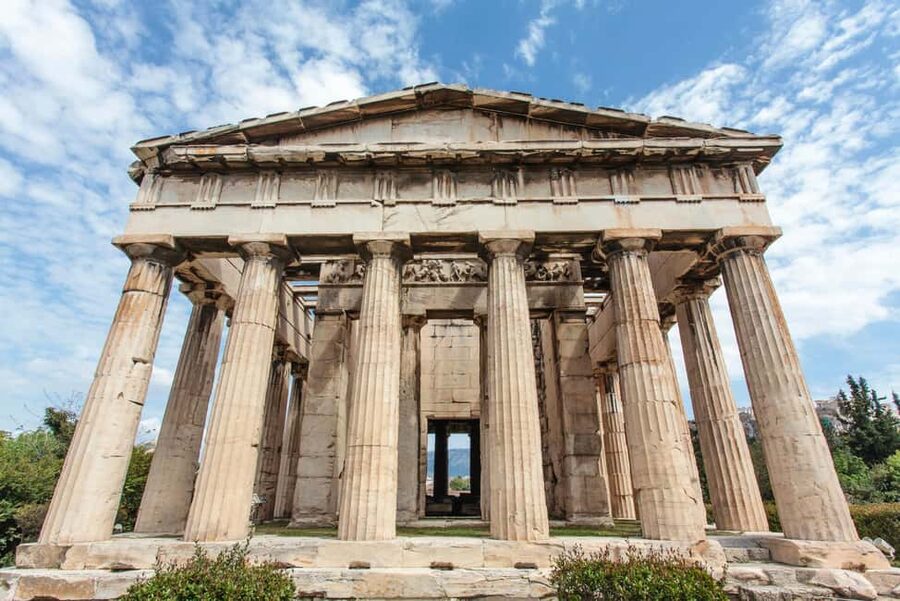
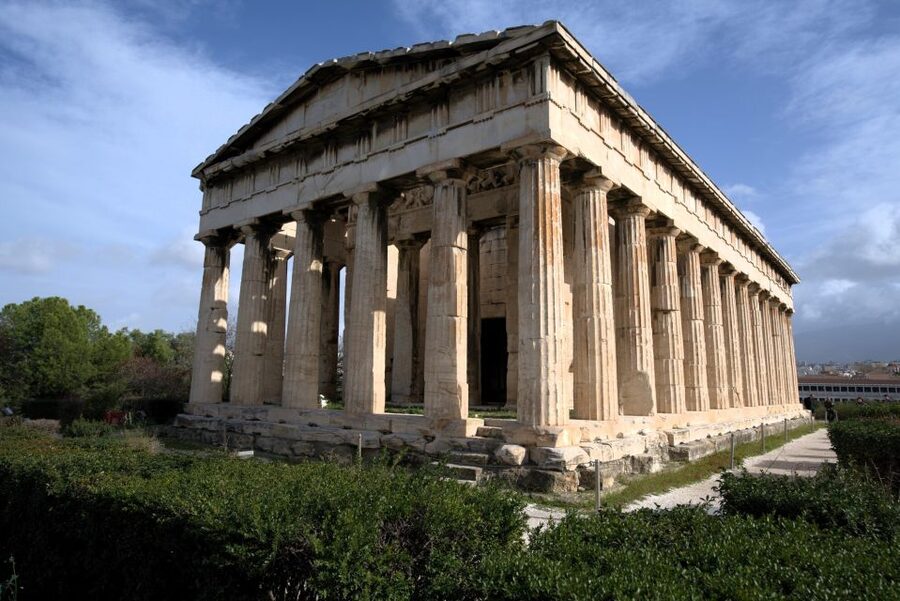
The Temple of Hephaistos is the visual highlight named for this experience. It is described as one of Greece’s finest-preserved ancient temples, and its condition makes it easier to understand than many ruined structures nearby.
Use the app’s digital material here to compare the temple you see with its original form. A 3D model or video can help you read the proportions, architectural details, and overall design. The point is not to replace the real temple. It is to make the surviving building easier to interpret.
Give yourself time at this stop instead of treating it as one more marker on the map. The temple offers a useful contrast with the Agora’s political and commercial remains. It shows the religious side of the district and gives you a strong visual anchor for the rest of the visit.
The supplied information does not give a separate stop duration, so plan according to your own interest. The five-day access means you can return to the material later, but your entrance to the archaeological site still depends on its opening days and hours.
Socrates, philosophy, and the human side of the site
The Agora is connected with Socrates and other philosophers who taught and debated here. That connection can be powerful, but it is best approached with some care. The site is not presented as a theatrical reconstruction, and no live philosopher or guide is included.
Instead, the app helps place philosophical activity within the same public world as trade, law, religion, and politics. This is important context. Ideas did not develop in isolation. They were discussed in a city where citizens were also managing courts, markets, festivals, and public duties.
I like this part of the experience because it links famous individuals to a real urban setting. You can think about philosophy while looking at the public spaces where people met and argued. The digital stories and audio tracks should help you make that connection without requiring you to read a long guidebook before arrival.
What the €7.89 price really buys
At $7.89 per person, the app is a modest extra cost beside the site admission. The full entrance fee is €10, with a reduced price of €5 for eligible visitors. Since the ticket is not included, you should add that cost when comparing the total price with a guided tour.
The value comes from the amount of material and the length of access. You receive monument identification, 16 written and audio entries, 14 sets of 3D models, 360-degree views, and videos, plus 13 related stories and 68 additional cultural entries.
This is a good fit if you want control over your time or if you are visiting as a family or small group with different interests. One person can listen while another studies the model, and you can skip material without holding up a group.
The value is weaker if you want conversation, personal interpretation, or help with spontaneous questions. There is no guide service, and the app cannot react to your interests in the way a good human guide can. The overall rating supplied for the experience is 3.9 from 31 reviews, which suggests a useful but not universally perfect tool. I would treat it as a site companion, not a full substitute for personal guiding.
Practical setup before you enter
After booking, Culture App sends instructions for downloading the tour. Check your spam folder if the message does not arrive. Download the content over Wi-Fi before visiting unless you have enough mobile data.
Internet access is required for effective use, so do not assume that every feature will work without a connection. The tour needs about 200MB of storage, and you should arrive with your phone fully charged and your earphones ready.
The app supports iOS 11.0 or later and Android 5.1 or later. Your smartphone and headphones are not provided. Food, drinks, transport, pickup, and drop-off are also not included.
You can access the tour anywhere before, during, or after the visit. You can also delete or retrieve the purchased content from your device later. Once you download the paid content, the price is no longer refundable, so complete your cancellation decision before downloading.
Free cancellation is available up to 24 hours in advance, and you can reserve now and pay later. For opening days, hours, and current entrance information, check the official archaeological site website before setting out.
Who should choose this self-guided visit
I would recommend it to independent visitors who like to stop when something catches their attention. It also suits anyone who wants more visual help than a printed guide provides, especially at buildings that survive only as foundations.
History students, families, and repeat visitors may get good value from the five-day access. You can use the material before arrival for preparation and later for review. The eight audio languages are another practical advantage: English, Greek, German, Spanish, Italian, French, Dutch, and Chinese.
It is less suitable if your phone battery is unreliable, your data connection is limited, or you strongly prefer a personal guide. You should also think twice if you dislike listening through earphones while walking outdoors.
Should you book the Ancient Agora audiovisual tour?
Book it if you want a flexible, low-cost way to make sense of the Agora’s political, religious, commercial, and intellectual roles. The strongest features are the monument map, the 3D reconstructions, and the ability to use the material for five days after activation.
Skip it if you only want a quick walk through the ruins or if you already have a detailed human-led tour arranged. Remember to budget separately for the €10 or €5 entrance ticket, download the content before visiting, and bring your own charged phone and earphones. For most independent visitors, it is a useful layer of context at a reasonable price, as long as you understand that the app is the guide.
FAQ
Is the entrance ticket included?
No. The archaeological site entrance costs €10 for a full ticket and €5 for a reduced ticket. The audiovisual tour is purchased separately.
How long is the audiovisual tour valid?
The tour is valid for five days from the moment you first activate it.
Can I use the tour before or after visiting the Agora?
Yes. The self-guided tour can be used anywhere and at any time before, during, or after your visit.
Which languages are available?
Audio guidance is available in English, Greek, German, Spanish, Italian, French, Dutch, and Chinese.
How many monuments are covered?
Written and audio historical information is provided for 16 monuments. Fourteen monuments include 3D models, 360-degree panoramic views, and immersive videos. Thirteen monuments include related stories.
Do I need internet access?
Yes. Internet access is required to use the tours effectively. Download the content over Wi-Fi before visiting unless you have enough mobile data.
What phone and equipment do I need?
You need an iPhone or Android phone meeting the listed operating system requirements, about 200MB of free storage, a fully charged battery, and your own earphones. A smartphone and headphones are not included.
Recently reviewed around Athens
- Small-Group Women History in Ancient Greece Walking Tour★ 5.0 · 38 reviews
- Ceramic and Pottery Creative Workshop with Two Local Artists★ 4.0 · 57 reviews
- Athens: Wine Workshop Create your Own Wine under the Acropolis★ 5.0 · 77 reviews
- Athens: Greek Wines Tasting with Sommelier and Acropolis Views★ 5.0 · 88 reviews
- Wine Trails Private Tour/ Nemea visit 3 wineries from Athens or Nafplion (10 h)★ 5.0 · 44 reviews
- Hydra Private Day Trip by Ferry from Athens with Transfers★ 4.0 · 30 reviews
- Small-Group Wine Tour in Athens with Tasting★ 5.0 · 33 reviews
- Private Athens Transfer Airport/Port -Greek Tours-Hourly service★ 5.0 · 88 reviews
Self-Guided Tours, compared.


Cape Sounio & Poseidon Temple Trip with Audio Guide
Read our review →
Acropolis Museum Ticket with optional Audio Guide
Read our review →
Acropolis Ticket & Optional Self-Guided Audio Tours
Read our review →
Parthenon & Acropolis Museum with Audio or Live Tour Option
Read our review →
Knossos Palace Entry Ticket with Optional Audio Guide
Read our review →Browse the lists this tour appears in