
Reviewed · ACROPOLIS & ACROPOLIS MUSEUM TOURS
Athens: Acropolis Guided Walking Tour without Entry Ticket
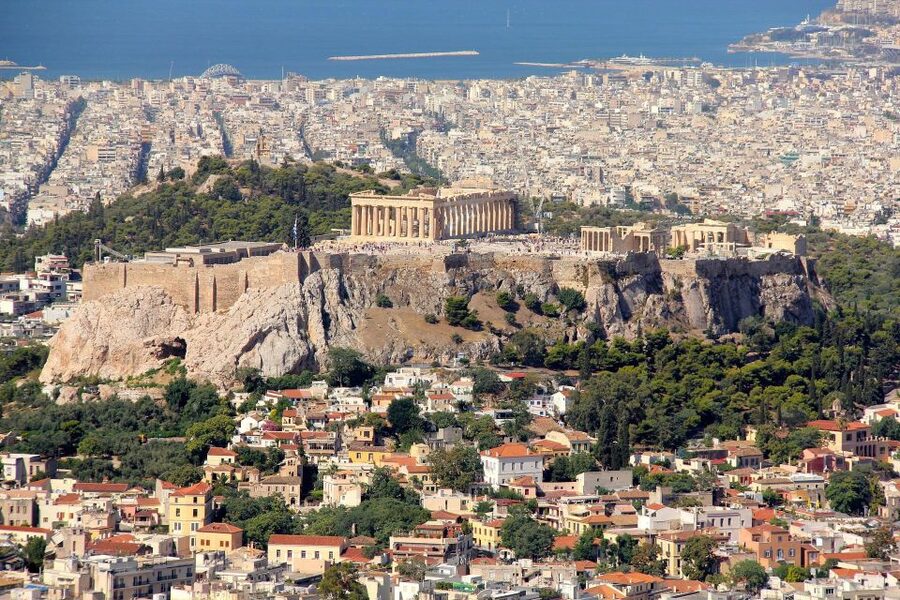
The best part of this tour is the way it turns a pile of ancient stones into a story about gods, festivals, rulers, and daily life. You walk through the Acropolis with a licensed Spanish-speaking guide, seeing the Parthenon, Propylaea, Caryatids, and ancient theaters in one focused two-hour visit.
I like the small-group format, which gives you a better chance to ask questions, and I like the strong mix of mythology and archaeology. A guide such as Juan has made the history lively with stories and local details. The main drawback is important: your Acropolis entry ticket is not included, so you must buy it separately and match it to the tour time.
In This Review
- Key points to know before you book
- Why a guided Acropolis walk helps
- Meeting at Acropolis Metro station
- Walking through the Theater of Dionysus
- Asclepius and the sacred side of the Acropolis
- Entering through the Propylaea
- The Parthenon and Athena’s city
- Caryatids at the Erechtheion
- The small Temple of Athena Nike
- The Odeon of Herodes Atticus
- What the Spanish commentary adds
- Timing, heat, and crowds
- Free time after the guided visit
- Who should book this Acropolis tour?
- Is the $32.75 tour worth it?
- FAQ
- Is the Acropolis entry ticket included?
- Where does the tour meet?
- How early should I arrive?
- What language is the tour in?
- How long does the tour last?
- What monuments are included?
- Can I stay at the Acropolis after the tour?
- Does the tour include hotel pickup?
- Are strollers and wheelchairs allowed?
- Can I cancel the booking?
Key points to know before you book
- The ticket is separate: Buy your Acropolis entry ticket before the tour, or allow extra time to purchase it at the South Entrance ticket office.
- The tour is in Spanish: The live guide provides commentary in Spanish.
- You see the major monuments: The route includes the Parthenon, Propylaea, Erechtheion, Caryatids, Temple of Athena Nike, Theater of Dionysus, Asclepius sanctuary, and Odeon of Herodes Atticus.
- It lasts two hours: The schedule gives you a clear introduction without taking up the whole day.
- You can stay afterward: Once the guided portion ends, you have free time to continue exploring the Acropolis at your own pace.
- The meeting point is easy to find: Meet at street level by the entrance to Acropolis Metro station, 10 to 5 minutes before departure.
Why a guided Acropolis walk helps
The Acropolis is not difficult to recognize. The Parthenon dominates the hill, the views over Athens are broad, and the marble monuments make an instant impression. The challenge is understanding what you are looking at.
That is where this tour earns its price. A guide explains why the hill mattered to ancient Athenians, how Athena became the city’s protector, and how myths connect to the temples and theaters around you. Without that context, it is easy to spend your time taking photographs without noticing the purpose of each building.
The tour also gives you a sensible route through a site that can feel confusing on your own. You are not simply led to the Parthenon and sent away. The visit begins with major structures around the Acropolis and includes several places that are easy to overlook, such as the Temple of Athena Nike and the sanctuary connected with Asclepius.
The advertised price is $32.75 per person, which is reasonable for a two-hour guided visit if you want historical explanation in Spanish. But it is not the full cost of entering the Acropolis, because the admission ticket must be purchased separately. Check the combined cost before booking so the low tour price does not catch you by surprise.
More Walking Tours in Athens
- Athens: Acropolis and Parthenon Guided Walking Tour
★ 4.6 · 5,882 reviews - Greek Food Walking Tour in Athens
★ 5.0 · 4,740 reviews - Acropolis: Acropolis and Parthenon Guided Walking Tour
★ 4.7 · 3,442 reviews
Meeting at Acropolis Metro station
The meeting point is at the entrance of Acropolis Metro station, on street level. This is a practical location in central Athens and is far easier than trying to find a guide somewhere inside the archaeological site.
Arrive 10 to 5 minutes before the starting time. Do not cut this close if you still need to buy your ticket. The guide meets you outside the Metro entrance, and the activity ends back at the same meeting point.
The ticket issue needs careful planning. In the low season, from November 1 through March 31, a 9:15 tour requires an Acropolis ticket for the 9:00 to 10:00 time slot. For the 2:30 tour, choose the 2:00 to 3:00 slot.
In the high season, from April 1 through October 31, an 8:15 tour requires the 8:00 to 9:00 entry slot. For the 5:00 tour, choose the 5:00 to 6:00 slot. These details matter because the Acropolis uses timed admission.
If you buy your ticket at the ticket office instead of online, go to the South Entrance ticket office about 30 minutes before the tour. After buying the ticket, walk to the meeting point, which is stated to be less than two minutes away. The ticket office queue can add stress, so online purchase is the cleaner choice when tickets are available.
If the online ticket appears unavailable, the tour provider says it will help. Still, do not treat that as a reason to wait until the last minute. The ticket and the tour booking are separate parts of your plan.
Walking through the Theater of Dionysus
The Theater of Dionysus is one of the first major stops to put ancient Athens into human terms. It could hold about 17,000 spectators and hosted festivals connected with Dionysus, the Greek god associated with theater and celebration.
This is not just a pretty ruin. It helps you picture how drama worked in the ancient city. Large crowds gathered here for public performances and religious events, making theater part of civic life rather than a small evening pastime.
Your guide brings in the myths tied to the site and explains how the theater fits into the wider religious life of Athens. That storytelling is especially useful if you know the names of Greek gods but not how they shaped the city’s customs.
The uneven ancient ground and exposed setting mean you should wear sensible shoes. Strollers, non-folding wheelchairs, and electric wheelchairs are not allowed on this activity, so families and visitors with mobility concerns should check the restrictions before reserving.
Asclepius and the sacred side of the Acropolis
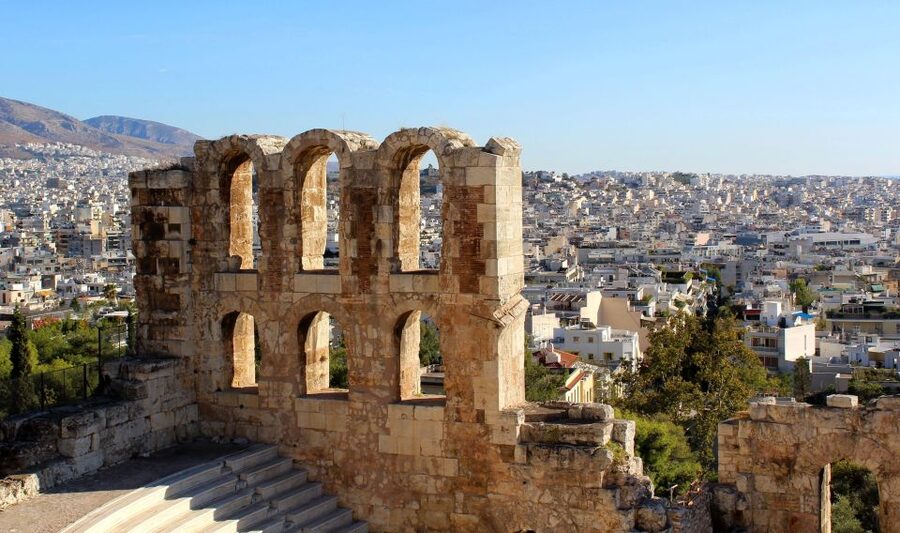
The tour also includes the temple area of Asclepius. Asclepius was linked with healing, and this part of the site adds a different layer to the Acropolis story.
Many people think only of war, power, and grand temples when they picture ancient Greece. The Asclepius stop points toward health, prayer, and the practical needs of people who came to sacred places seeking help. It gives the visit a more personal angle.
The guide’s role is useful here because the remains may not explain themselves. You are likely to see less immediately recognizable architecture than at the Parthenon, so a clear account of the site’s purpose makes the stop worthwhile.
This is one reason I prefer the guided format for a first visit. You get the famous monument, but you also hear why less prominent areas mattered.
More Athens walks with a guide:
- Acropolis monuments & Parthenon Walking Tour with Optional Acropolis Museum
★ 5.0 · 2,678 reviews - Athens Acropolis and Parthenon Walking Tour
★ 4.5 · 1,355 reviews - Athens Authentic Greek Food Walking Tour (Small Group)
★ 5.0 · 809 reviews - Early Morning Acropolis & Old Athens Guided Walking Tour
★ 4.4 · 748 reviews
Entering through the Propylaea
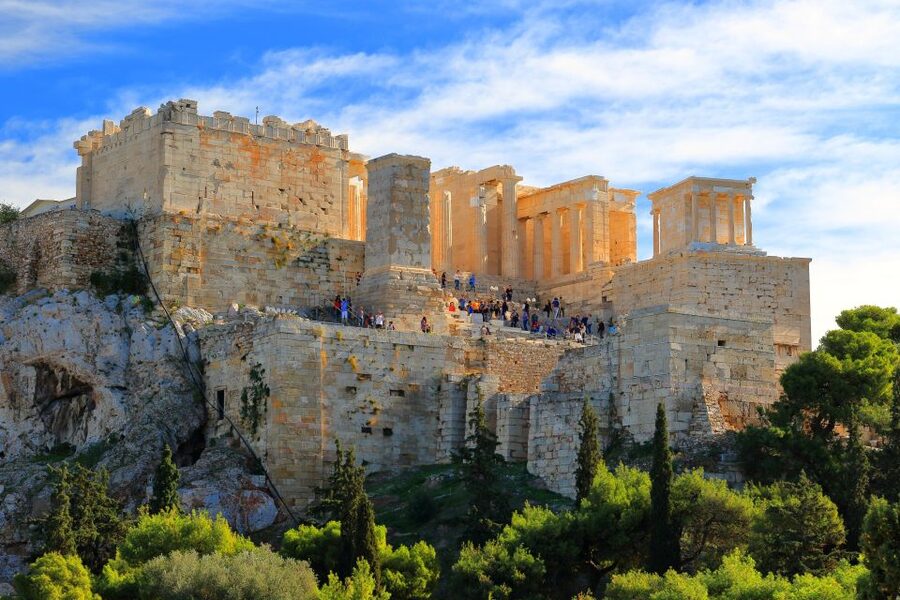
The Propylaea was the monumental gateway into the Acropolis. Passing through it gives the route a natural sense of arrival. You move from the lower approach into the rocky citadel, where the major temples sit above the city.
The structure is impressive even in partial ruin. Its scale tells you that this was meant to feel like a formal threshold, not a casual entrance. The guide explains the role of the gateway and helps you understand how architecture shaped the visitor’s movement.
The climb and stone surfaces deserve attention. The tour is a walking visit on an ancient hill, not a flat museum route. You should expect some uphill movement and exposed conditions, although the supplied details do not specify the exact amount of climbing or any rest facilities.
Once inside, the setting opens up. You can look back toward Athens and then turn toward the temples dedicated to the city’s gods.
The Parthenon and Athena’s city
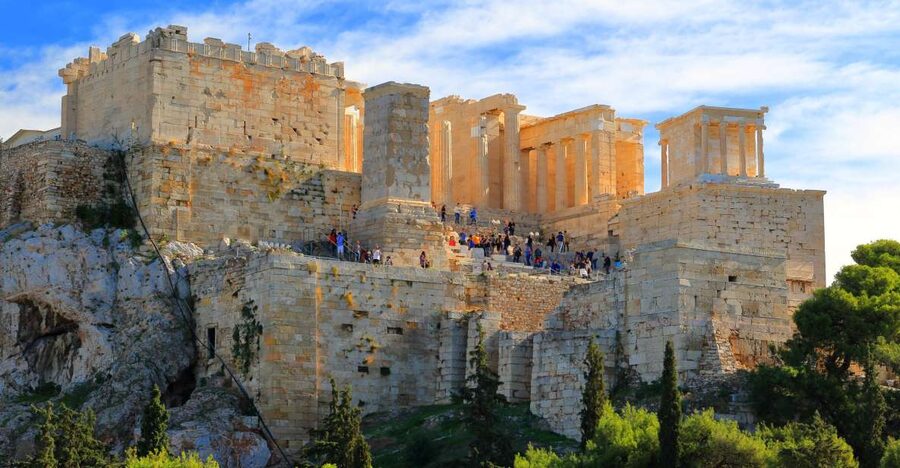
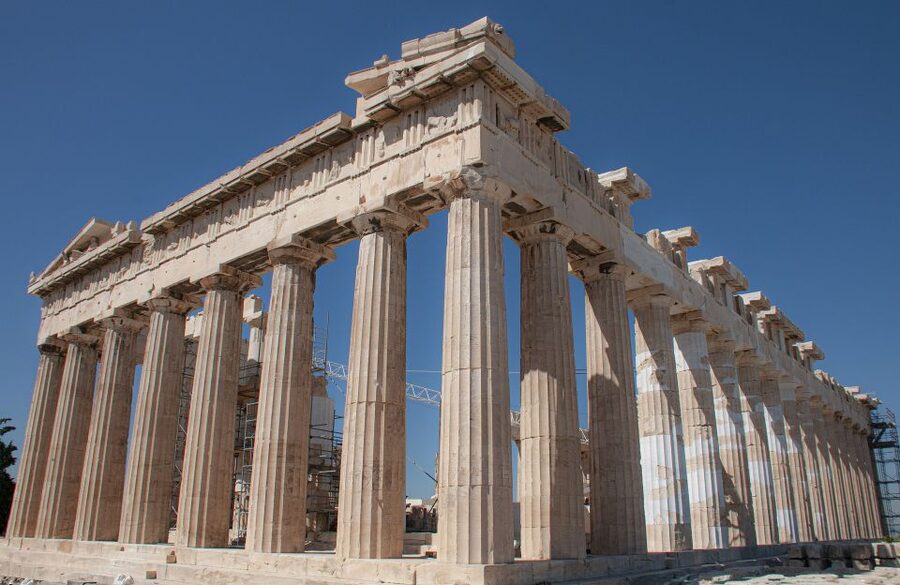
The Parthenon is the obvious star, but a good guide keeps it from becoming just a famous backdrop. The temple was dedicated to Athena, the goddess who protected Athens, and the tour connects the building to the city’s religious identity.
You will hear about the myths and beliefs linked to Athena and the Acropolis. That matters because the site was not built simply to impress modern sightseers. It was a sacred center tied to festivals, worship, and the story Athenians told about their city.
The Parthenon is also a place where expectations need adjusting. You will see an extraordinary ancient monument, but also scaffolding, missing sections, and the effects of time and restoration. A guide can help separate the original design from later damage without asking you to pretend the building is complete.
The tour gives you the main explanation, then leaves free time afterward. That arrangement works well: you get a clear introduction first, then you can return to the views and photographs that matter most to you.
Caryatids at the Erechtheion
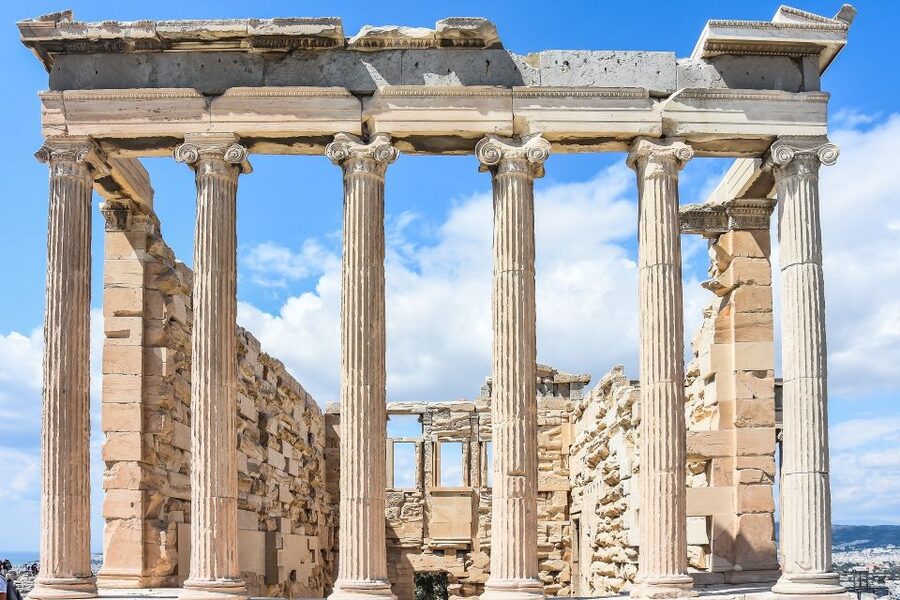
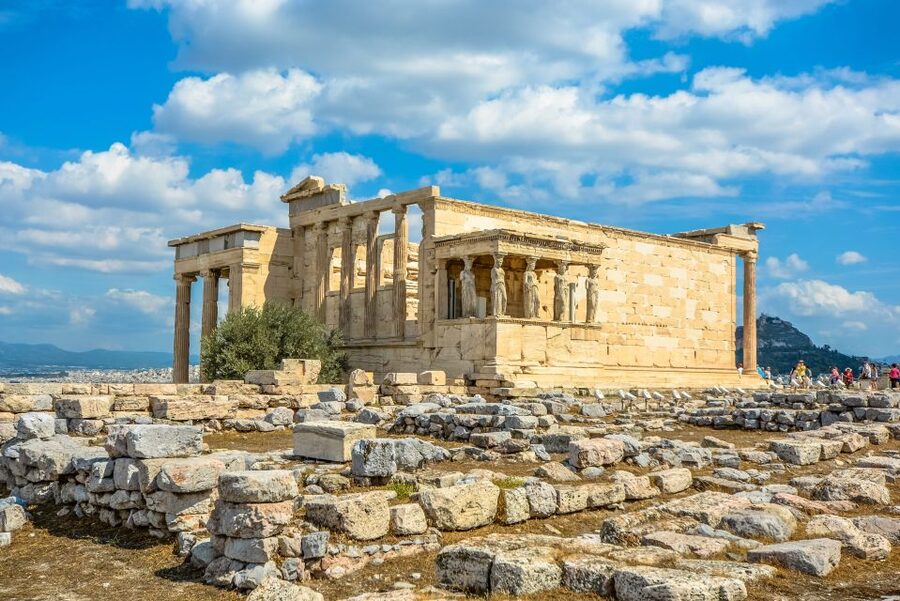
The Erechtheion is named after the demigod Erechtheus and is one of the most visually memorable parts of the Acropolis. Its unusual design reflects the complicated religious traditions attached to the hill.
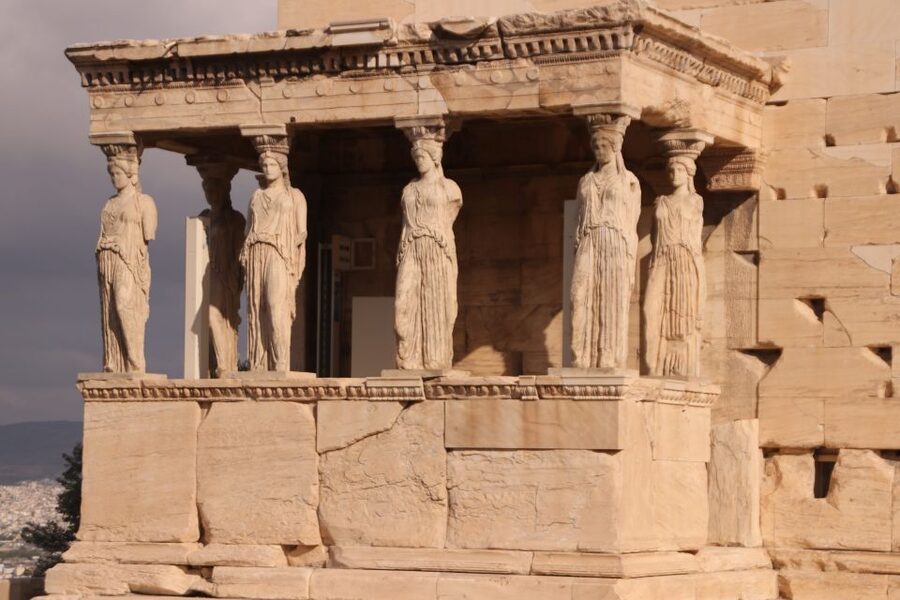
The Caryatids are the famous stone female figures used as architectural supports. Their graceful appearance can make them seem decorative, but they are part of the building’s structure and symbolism. Your guide explains the figures and the myths associated with the Erechtheion.
This is a place where a Spanish-language explanation can add real value. Names such as Erechtheus, Athena, and Asclepius can blur together when you are trying to read signs and follow a crowded route. Hearing the story in your own language makes the relationships easier to follow.
You may not be able to walk freely around every side of the monuments. Ancient sites have protected areas and controlled paths, so expect to view important details from designated positions.
The small Temple of Athena Nike
The Temple of Athena Nike is described as the smallest temple on the Acropolis. Its compact size makes a useful contrast with the Parthenon and the Propylaea.
Because it is smaller, it is easy to overlook when you focus on the larger buildings. The guide points it out and explains its connection to Athena, giving you a better sense of how several sacred buildings worked together across the hill.
This stop also shows why a guided route can be more useful than a quick self-guided circuit. You are less likely to miss a small structure simply because it does not dominate the skyline.
The Odeon of Herodes Atticus
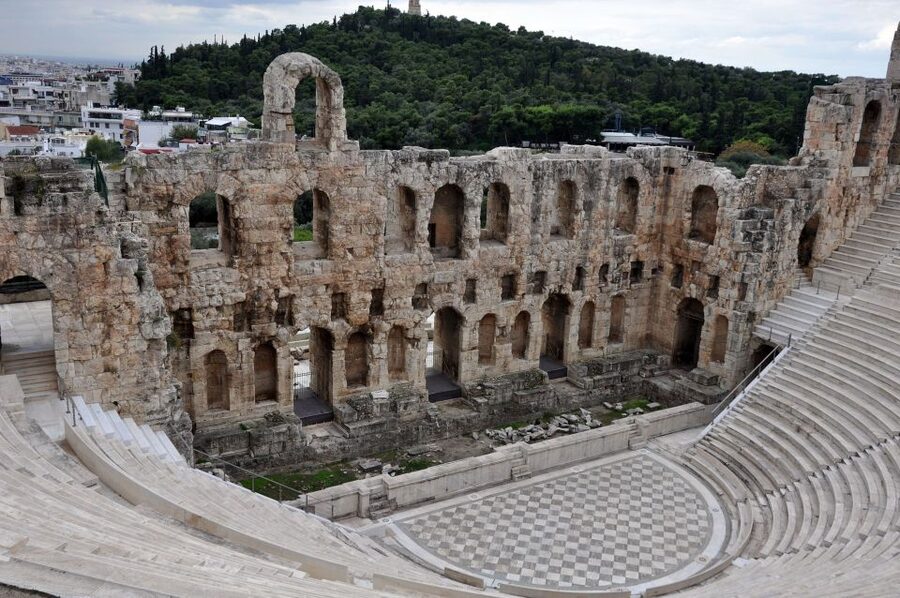
The Odeon of Herodes Atticus is a large stone theater on the Acropolis site. Its scale and preserved form give you another way to imagine public performance in ancient Athens.
Unlike the open Theater of Dionysus, the Odeon’s stone architecture creates a powerful visual impression. The guide explains its place in the history of the Acropolis and adds the myths and human stories that connect the ruins.
You should not expect a separate performance during this tour. The attraction here is the theater itself, its construction, and the way it fits into the hillside setting.
For many visitors, the Odeon is one of the most photogenic views on the route. Still, the value is not only visual. Seeing both theaters helps you understand that performance, festivals, and public gathering were central parts of ancient Athenian life.
What the Spanish commentary adds
The live tour language is Spanish. That makes this a natural pick for Spanish-speaking visitors who want more than short labels or an audio guide.
The strongest part of the commentary is the combination of historical explanation and mythology. You hear about the capital of modern Greece as well as the ancient city, and the guide ties the remains to the gods and legends connected with the site.
A guide named Juan is specifically associated with this tour, and his approach has been described as detailed, clear, and entertaining even in heat and heavy crowds. Do not assume he will lead every departure, but the example gives you a useful picture of the tone to expect: plenty of history, anecdotes, and stories rather than a bare list of dates.
The small-group setup should also make it easier to ask questions. That is valuable at the Acropolis, where the difference between a temple, theater, sanctuary, and gateway is not always obvious at first glance.
Timing, heat, and crowds
The tour lasts two hours, with several starting times depending on the season. The early high-season departure at 8:15 is the most appealing option if you want to begin before the strongest heat and potentially avoid some of the busiest conditions.
The late high-season option starts at 5:00. In the low season, departures are listed for 9:15 and 2:30. Check availability because the exact schedule can change.
The Acropolis is an exposed archaeological site, and the tour takes place outdoors. Heat and crowds can affect the pace, especially during the warmer months. The two-hour length is a practical compromise: long enough to cover the main monuments, but short enough that you still have energy to continue your Athens day.
Bring water and sun protection as sensible preparation, although these items are not listed as included services. Wear shoes suited to uneven stone surfaces. The information provided does not include hotel pickup, so plan your own way to the Acropolis Metro meeting point.
Free time after the guided visit
The activity ends back at the original meeting point, but you are allowed free time to stay longer and explore the outstanding site at your own pace.
That is a useful feature. A guide-led visit can feel fast when you want to stop for photographs, listen closely, and keep moving with the group. Free time gives you a chance to revisit the Parthenon, look again at the Caryatids, or pause at a viewpoint after the formal commentary ends.
The details do not specify exactly how long you may remain or how re-entry works, so ask the guide about the practical arrangement on the day. Your ticket is still the key document, and you should keep it with you.
Who should book this Acropolis tour?
I would choose this tour if you want a Spanish-language introduction to the Acropolis and prefer human explanation over reading every sign yourself. It fits first-time visitors who want the main monuments, the mythology, and a sensible two-hour route.
It also suits anyone who enjoys asking questions. The small-group format is more personal than a large procession, and the licensed guide can explain why a lesser-known ruin matters instead of rushing only toward the Parthenon.
Families with young children should think about the length, heat, and uneven ground. Strollers are not allowed, and non-folding and electric wheelchairs are excluded. Visitors who need a fully accessible route should not book without confirming that the restrictions work for their needs.
Independent history fans may prefer visiting alone, especially if they already know the Acropolis well. The tour’s value is the guide’s storytelling, so it makes less sense if you want complete control over your pace from the first minute.
Cancellation is flexible up to 24 hours before the start for a full refund, and you can reserve now and pay later. Those terms help if your Athens schedule is still shifting, but they do not remove the need to secure the separate Acropolis ticket.
Is the $32.75 tour worth it?
At $32.75 per person, this is a fair guiding fee for a two-hour walk through one of Europe’s most important archaeological sites. The price becomes better value if you make good use of the Spanish commentary, ask questions, and stay afterward for your own look around.
The separate entry ticket is the main cost to factor in. Since its price is not provided here, I would check the total before committing. Also confirm the timed ticket window that matches your selected departure.
Book it if you want mythology, history, and the major Acropolis buildings explained in Spanish, with a small group and free time afterward. Skip it if you already have strong knowledge of the site or prefer to explore without a set route. For most Spanish-speaking first-time visitors, the clear structure and detailed storytelling make it a sensible way to begin an Athens visit.
FAQ
Is the Acropolis entry ticket included?
No. You must buy the Acropolis entry ticket separately, either online or at the ticket office.
Where does the tour meet?
Meet your guide at street level by the entrance of Acropolis Metro station.
How early should I arrive?
Arrive between 10 and 5 minutes before the tour starts. If you still need to buy your ticket at the South Entrance ticket office, go there about 30 minutes before the tour.
What language is the tour in?
The live guide provides the tour in Spanish.
How long does the tour last?
The guided walking tour lasts two hours.
What monuments are included?
The route includes the Acropolis, Parthenon, Propylaea, Theater of Dionysus, Temple of Athena Nike, Erechtheion, Caryatids, Asclepius site, and Odeon of Herodes Atticus.
Can I stay at the Acropolis after the tour?
Yes. After the guided portion, you have free time to remain and explore the site at your own pace.
Does the tour include hotel pickup?
No. Hotel pickup and drop-off are not included.
Are strollers and wheelchairs allowed?
Baby strollers, non-folding wheelchairs, and electric wheelchairs are not allowed.
Can I cancel the booking?
Yes. You can cancel up to 24 hours in advance for a full refund. You can also reserve now and pay later.
Recently reviewed around Athens
- Small-Group Women History in Ancient Greece Walking Tour★ 5.0 · 38 reviews
- Ceramic and Pottery Creative Workshop with Two Local Artists★ 4.0 · 57 reviews
- Athens: Wine Workshop Create your Own Wine under the Acropolis★ 5.0 · 77 reviews
- Athens: Greek Wines Tasting with Sommelier and Acropolis Views★ 5.0 · 88 reviews
- Hydra Private Day Trip by Ferry from Athens with Transfers★ 4.0 · 30 reviews
- Small-Group Wine Tour in Athens with Tasting★ 5.0 · 33 reviews
- Wine Trails Private Tour/ Nemea visit 3 wineries from Athens or Nafplion (10 h)★ 5.0 · 44 reviews
- Private Athens Transfer Airport/Port -Greek Tours-Hourly service★ 5.0 · 88 reviews
Acropolis & Acropolis Museum Tours, compared.
Acropolis & up to 5 Archaeological Sites Combo Pass
Read our review →
Acropolis, Parthenon & Acropolis Museum Guided Tour
Read our review →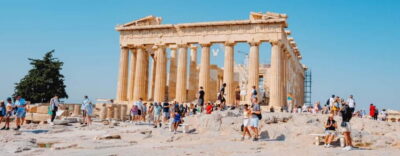
Acropolis, Parthenon & Acropolis Museum Guided Tour
Read our review →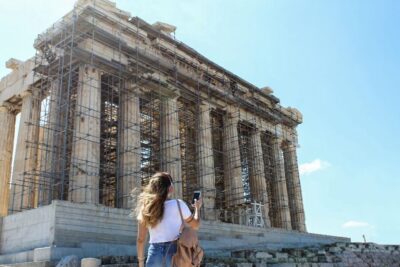


Acropolis monuments & Parthenon Walking Tour with Optional Acropolis Museum
Read our review →Browse the lists this tour appears in