
Reviewed · ACROPOLIS & ACROPOLIS MUSEUM TOURS
Athens: Acropolis, Parthenon Guided Walking Tour
The best thing about this Acropolis walking tour is that it turns a famous pile of ancient stones into a readable story. You move from the Theater of Dionysus to the Propylaea, Parthenon, and Erechtheion while a guide explains what you are seeing, where to pause, and how to handle the steep climb.
I like two things here: the guide helps you use your limited time well, and the route includes more than just the Parthenon. The Theater of Dionysus, Herodion, Temple of Athena Nike, and Erechtheion give you a fuller sense of the hill. The main drawback is physical: this is a climb over slippery, uneven stone, not an easy stroll.
In This Review
- Key points at a glance
- What this Athens Acropolis tour is really like
- Starting near Mitseon Street
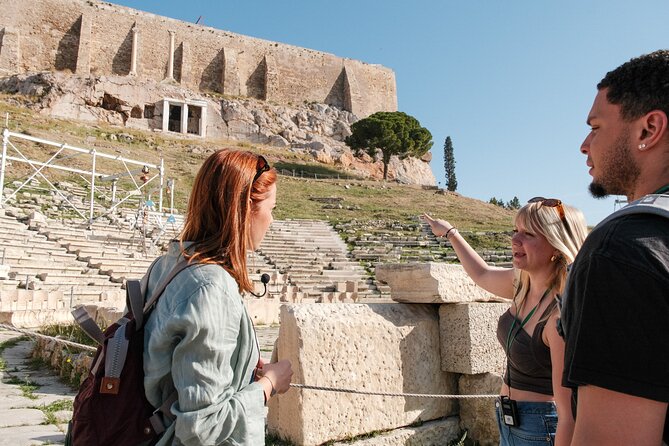
- The Theater of Dionysus and Herodion
- Climbing through the Propylaea
- The Parthenon, Athens’ great headline
- The Erechtheion and its Caryatids
- How the guides shape the experience
- Admission choices and the $41.13 price
- Heat, crowds, and the two-hour pace
- Who should book this experience?
- Should you add the Acropolis Museum?
- Cancellation and practical booking notes
- Final verdict: a strong choice with one big warning
- FAQ
- How long does the Acropolis guided walking tour last?
- Is admission to the Acropolis included?
- Can I avoid the Acropolis entrance line?
- Is the Acropolis Museum included?
- Where does the tour begin?
- Where does the tour end?
- Is the tour offered in English?
- Is the tour suitable for people with mobility impairments?
- Can I bring a stroller?
- Are tickets to the Acropolis elevator included?
- What should I bring?
- How large is the group?
- Is the tour suitable for children?
- Can I cancel for a refund?
Key points at a glance
- The route covers the main Acropolis sights: You see the Theater of Dionysus, Herodion, Propylaea, Temple of Athena Nike, Parthenon, and Erechtheion.
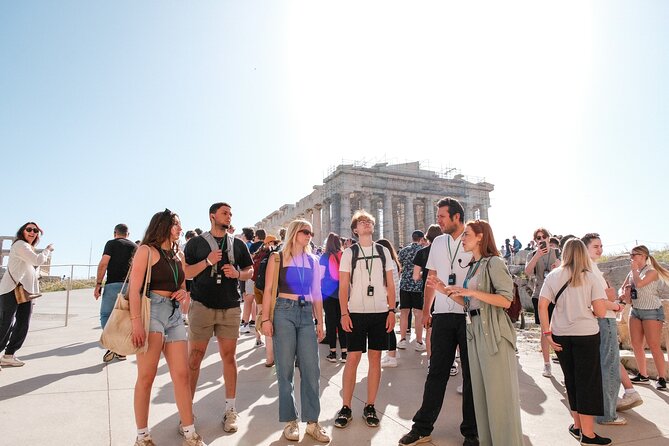
- The guide adds the missing context: Guides such as Dimitri, Iris, Angel, Orestes, John, and Sissy have been praised for clear explanations, humor, pacing, and strong knowledge of the site.
- Admission is an option, not automatic: The base price is listed at $41.13 per person, but check carefully to see if your selected version includes the Acropolis ticket.
- The climb can be demanding: Expect hills, steps, open sun, uneven ground, and slick stone, especially after rain.
- Small groups are easier to follow: The maximum is 24 people, and groups larger than five receive disposable earphones.
- An early or late start can help: Morning avoids some heat but can be crowded, especially when cruise ships arrive. Late afternoon may offer a calmer visit.
What this Athens Acropolis tour is really like
This is a two-hour guided visit to Athens’ hilltop citadel, with the Parthenon as its centerpiece. You meet at Mitseon 2, near the Acropolis, then walk toward the entrance and begin climbing through one of the world’s most famous ancient sites.
The tour is offered in English. It is a group experience unless you select the private option, which can have a starting time arranged on request. The group cap of 24 is not tiny, but it is manageable if the guide keeps people together. A few guides have been praised for doing exactly that, while still allowing time for photographs and short rests.
The experience works best if you want more than a quick photo at the Parthenon. You receive explanations about the buildings, the gods and civic life connected with them, and the way the Acropolis developed over time. You also avoid wasting your visit trying to work out which path leads where.
If you are only after independent sightseeing, the guide may feel restrictive. The Acropolis is crowded, and groups must keep moving and stay together. But at a site this large and busy, a clear route is often a blessing.
More Walking Tours in Athens
- Athens: Acropolis and Parthenon Guided Walking Tour
★ 4.6 · 5,882 reviews - Greek Food Walking Tour in Athens
★ 5.0 · 4,740 reviews - Acropolis: Acropolis and Parthenon Guided Walking Tour
★ 4.7 · 3,442 reviews
Starting near Mitseon Street
The meeting point is Mitseon 2, Athens 117 42. It is near public transportation, and the tour ends at the Acropolis itself rather than returning you to a hotel or transport hub.
Arrive ready to walk. Before the uphill section, it is sensible to use the restroom and fill your bottle. One guide, Simon, was specifically praised for making sure the group had that chance before going up. That small bit of planning matters because there is no cafe-bar inside the archaeological site. There is a water fountain, but you should not count on finding food or a cold drink once you are inside.
The provider advises carrying water, a hat, and sunglasses. On a rainy day, bring an umbrella, though take care on the stone surfaces. There is no private transportation included, so you make your own way to the meeting point.
The Theater of Dionysus and Herodion
The first major sights are connected with performance. The Theater of Dionysus is where many famous ancient comedies and tragedies were first performed. Seeing it before the upper citadel gives you a useful reminder that the Acropolis was not simply a collection of temples. It was tied to public life, ceremony, drama, and the identity of Athens.
The route then continues to the Roman Herodion theater, built in memory of the wife of Herodes Atticus. Its curved seating and stone structure provide a striking contrast with the older Greek buildings above.
These stops are easy to rush past if you visit alone. A guide can point out why each theater matters and place the buildings in a broader timeline. The tradeoff is that the tour does not linger everywhere for long. Two hours goes quickly, and the upper Acropolis receives the most attention.
Climbing through the Propylaea
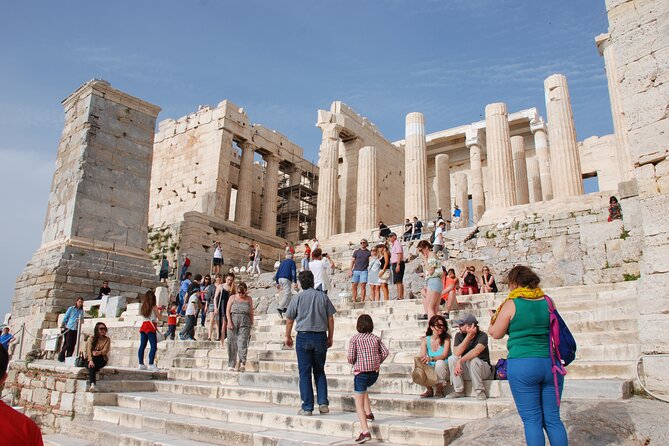
The Propylaea is the monumental gateway to the Acropolis. Reaching it means beginning the serious uphill part of the visit, with steps and uneven stone underfoot.
This is where your footwear matters most. Several people have stressed that the Acropolis feels more like a climbing tour than a level walking tour. Wear shoes with a firm grip, and do not bring anything that makes balancing harder.
The guide may change the order of the sights to reduce discomfort or handle crowd conditions. That flexibility is useful because the site can become packed, and some paths are exposed to the sun. Several guides have built in shaded pauses and rest points, which can make a major difference on a hot day.
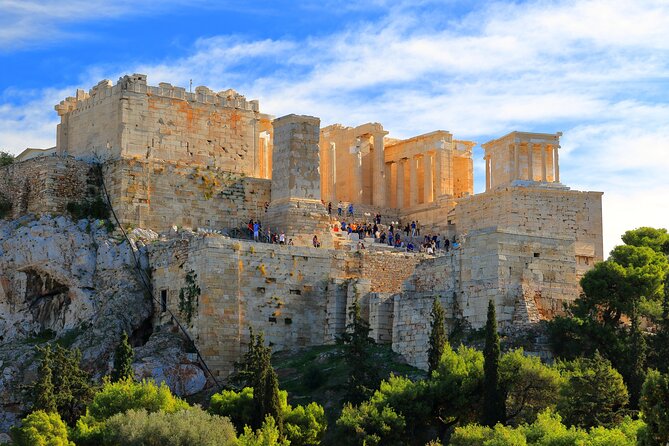
At the Propylaea, you also take in views of the Temple of Athena Nike. The small temple sits near the entrance and is dedicated to Athena Nike, the aspect of Athena associated with victory. It is easy to miss when your attention is fixed on the larger buildings ahead, so having it called out is valuable.
More Athens walks with a guide:
- Acropolis monuments & Parthenon Walking Tour with Optional Acropolis Museum
★ 5.0 · 2,678 reviews - Athens Acropolis and Parthenon Walking Tour
★ 4.5 · 1,355 reviews - Athens Authentic Greek Food Walking Tour (Small Group)
★ 5.0 · 809 reviews - Early Morning Acropolis & Old Athens Guided Walking Tour
★ 4.4 · 748 reviews
The Parthenon, Athens’ great headline
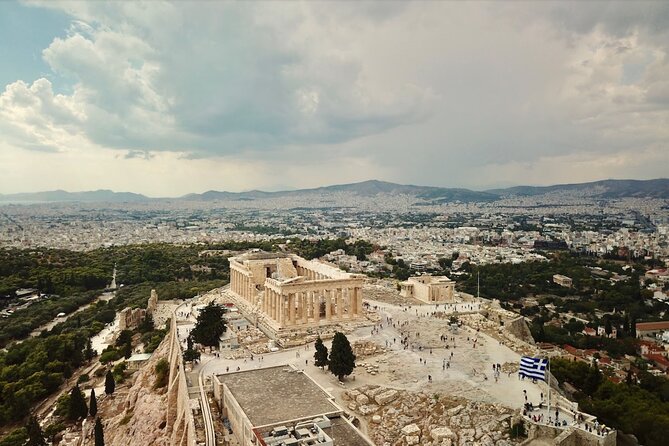
The Parthenon receives about 30 minutes on the route. That is enough time to hear the main story, study its Doric design, take photographs, and appreciate the scale of the building without turning the tour into a full architectural seminar.
Dedicated to Athena, patron goddess of Athens, the Parthenon represents the high point of fifth-century BCE Doric architecture. The structure you see is incomplete and weathered, but its scale remains impressive. Columns, carved details, and the setting on the Acropolis all help explain why this building has held such power over the imagination for centuries.
A guide can help you look beyond the familiar postcard view. You may hear about the building’s purpose, its design, and the role it played in the city. The best guides, including Sissy, described as an archaeologist, and John, also connect the structure with the other temples and the long sequence of changes on the hill.
Crowds are the biggest problem here. One start time may feel calm, while another can place you among cruise ship groups, organized tours, and thousands of ticket holders. An early tour can help with heat and, on some days, crowd levels. But mornings can also be extremely busy when cruise ships arrive. A late-afternoon start may be more comfortable for some visitors.
The operator cannot promise an empty site or a private route. Even with an admission option, you cannot skip every line at the Acropolis. The ticket arrangement can help you avoid the ticket-office queue, but there may still be a line at the actual entrance.
The Erechtheion and its Caryatids
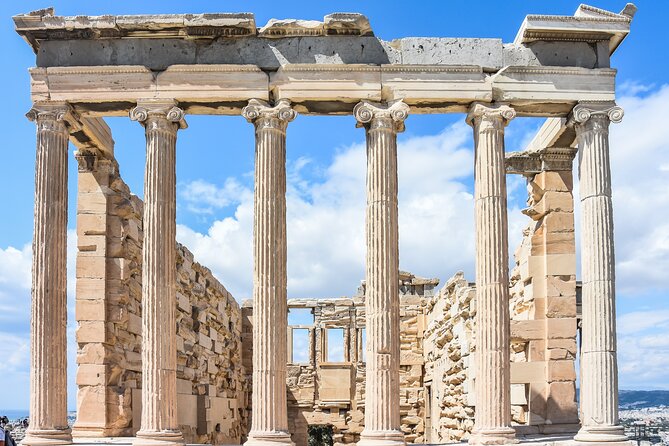
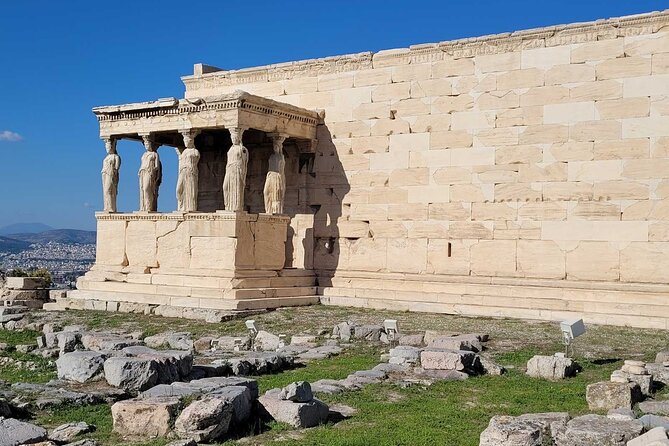
The final principal stop is the Erechtheion, usually for about 20 minutes. Its design differs sharply from the Parthenon. Instead of a clean, symmetrical rectangle, it has an uneven plan shaped by the needs of the site and the traditions connected with it.
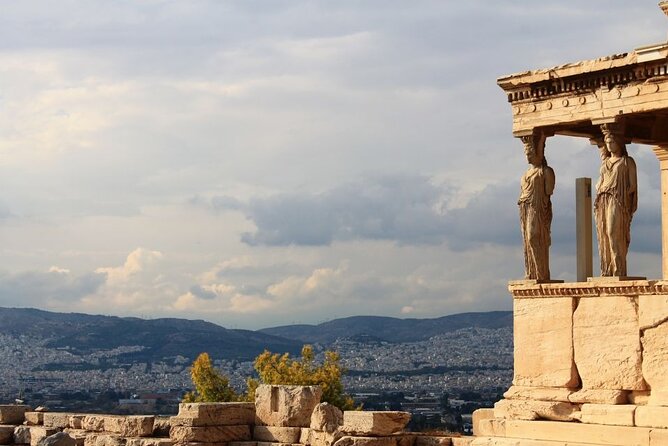
The best-known feature is its porch supported by six sculpted female figures, commonly called Caryatids. Their graceful poses make the porch one of the most memorable views on the hill. The guide can explain why the Erechtheion is considered such a distinctive work of architecture and draw your eye to details that are easy to overlook from a distance.
This is a good final stop because it gives you a different impression of ancient Greek design. The Parthenon is grand and orderly. The Erechtheion is more complicated, more asymmetrical, and full of visual surprises.
The tour ends at the Acropolis of Athens. If you want to keep exploring, you can continue on your own, take photographs, or make your way to the Acropolis Museum if you have booked that additional option. The museum is not automatically part of this two-hour visit, and its €20 admission is separate unless you select an option that includes it.
How the guides shape the experience
The guide is the main reason to book this rather than simply buy an entry ticket. Names attached to especially well-received visits include Dimitri, Bernie, Orestes, Iris, Ani, Natasha, Angel, Simon, Greg, and Sissy. You cannot necessarily request a particular person, but the guide team clearly includes several strong English-speaking leaders.
The best qualities to expect are clear storytelling, practical pacing, and a willingness to stop for photographs. Orestes was praised for humor and for choosing places where the group could rest in shade. Angel helped the group choose safer paths over slippery stone. Other guides made a point of keeping people together on crowded days without rushing every photograph.
That said, guide quality can vary from one departure to another. One account described a guide as rude, monotone, and impatient. That experience appears out of step with the many positive comments, but it is worth keeping in mind. A group tour depends on the individual leading it, as well as on crowd levels and the behavior of the group.
For groups larger than five, disposable earphones are provided. These are useful when several guides are speaking nearby. In very crowded conditions, sound quality can still be affected by other groups’ equipment, so stay close enough to see your guide and do not rely on the earphones alone.
Admission choices and the $41.13 price
The advertised price is $41.13 per person, but the ticket choice deserves close attention. You can select a version with the Acropolis admission included, or choose the version without entry tickets.
If you select the ticket option, the guide hands you a paper ticket at the meeting point on the date and time of your visit. If you choose the version without tickets, the provider may buy the ticket in advance so you can avoid the ticket-office queue. In that case, carry cash with you. You may also buy the ticket yourself, but you must arrive on time and be ready for the scheduled departure.
The stated Acropolis entry fee is €30 per person unless included in your selection. The Acropolis Museum ticket is €20 unless that option is included. Read the booking screen carefully before paying, since the guide fee and admission fee can be presented as separate choices. One person found the arrangement confusing and felt the total cost was high.
I see the value most clearly if you are visiting Athens for the first time, have limited time, or want historical explanations rather than a self-guided walk. The fee pays for direction, interpretation, and help managing the site. It is less attractive if you already know the monuments well and are comfortable arranging your own entry.
Heat, crowds, and the two-hour pace
The official duration is about two hours, though timing can shift with crowd control, the group’s pace, and the order of the stops. You will be outside for nearly the entire visit, with limited shade.
An 8:00 or 9:00 start can be a smart choice in hot weather. Several people found an early visit helped them finish before the worst heat and reach the museum around lunchtime when booking the museum add-on. But early does not always mean quiet. Cruise ships can send large numbers of people to the Acropolis in the morning.
Late afternoon may be the better choice if your schedule allows. One account described the morning as intensely crowded and found the later part of the day much more comfortable. Conditions change from day to day, so no start time guarantees a peaceful visit.
The operator may alter the order of the monuments to make the climb more comfortable. That means your tour might not follow the exact sequence described above. It is a sensible policy, especially in heat or during heavy foot traffic.
Who should book this experience?
I would recommend this tour to first-time visitors who want the major Acropolis sights explained without spending hours studying a guidebook. It also suits couples, families with older children, and small groups of friends who want a shared route and a live English-speaking guide.
It is a good fit for anyone who values stories and context. The Theater of Dionysus, Temple of Athena Nike, and Erechtheion are easy to overlook when you focus only on the Parthenon. A guide helps you notice the whole complex.
I would not choose it for children under six, since the activity is not suitable for them. It is also not suitable for people with mobility impairments. Strollers are not allowed, and group tours cannot use the Acropolis elevator.
If you have knee, balance, or walking concerns, think carefully before booking. The hill is steep in places, and the stones can be slippery, especially in rain. Bring water, wear solid shoes, and plan to move at a steady pace.
Should you add the Acropolis Museum?
The museum is not part of the standard two-hour Acropolis route unless you choose an option that includes it. I think it is a useful addition if you want to understand the sculptures and architectural pieces in a protected setting.
Several people found that combining the hill and museum added important context. After seeing the Parthenon and Erechtheion outdoors, the museum can help you examine related objects more closely. It also offers a break from the sun and uneven stone.
The museum adds cost, with a stated entry fee of €20 unless included in your chosen option. It also adds time, so do not book it if you need to rush straight to another appointment.
Cancellation and practical booking notes
You can cancel for a full refund up to 24 hours before the local start time. Changes or cancellations made less than 24 hours in advance are not accepted for a refund.
Confirmation is provided at booking. Check the selected ticket version, meeting point, start time, and language before leaving your hotel. Since the tour starts promptly and the Acropolis is not a place where you can easily catch up with a group, allow extra time to reach Mitseon 2.
The activity is offered in English, with a private option available on request. The maximum group size is 24 people, and most people can participate if they are comfortable with the climb.
Final verdict: a strong choice with one big warning
I would book this tour if you want a well-organized introduction to the Acropolis and prefer a guide to make sense of the monuments. The 4.9 rating from 319 ratings and 98 percent recommendation reflect what the experience does best: clear historical explanations, friendly pacing, useful rest stops, and coverage of the main sights.
The warning is simple: prepare for a climb. This is not a flat city walk, and the stone can be slick. Choose your start time with heat and cruise ship crowds in mind, confirm whether admission is included, and bring water.
For a first Acropolis visit, the guide’s help is worth the extra cost for many people. If you want complete freedom, a slower pace, or time to linger at every column, buy your own ticket and explore independently instead.
FAQ
How long does the Acropolis guided walking tour last?
The tour lasts approximately two hours.
Is admission to the Acropolis included?
Admission is included only if you select the ticket-included option. The stated Acropolis entry fee is €30 per person when it is not included.
Can I avoid the Acropolis entrance line?
No one can skip all lines at the Acropolis. The ticket option, or the provider’s advance ticket purchase for the no-ticket option, can help you avoid the ticket-office queue, but a separate entrance line may still apply.
Is the Acropolis Museum included?
The museum is included only with an option that specifically lists it. Otherwise, the stated museum entry fee is €20 per person.
Where does the tour begin?
The meeting point is Mitseon 2, Athina 117 42, Greece.
Where does the tour end?
The tour ends at the Acropolis of Athens.
Is the tour offered in English?
Yes. The experience is offered in English.
Is the tour suitable for people with mobility impairments?
No. The activity is not suitable for people with mobility impairments. The Acropolis is on a steep hill with uneven and sometimes slippery surfaces.
Can I bring a stroller?
No. Strollers are not allowed at the Acropolis.
Are tickets to the Acropolis elevator included?
No. The group tours cannot use the elevator at Acropolis Hill.
What should I bring?
Bring a bottle of water, a hat, and sunglasses. On rainy days, bring an umbrella and take care on slippery stone.
How large is the group?
The maximum group size is 24 people. Groups larger than five receive disposable earphones for clearer narration.
Is the tour suitable for children?
The activity is not suitable for children under six years old.
Can I cancel for a refund?
Yes. You can cancel at least 24 hours before the local start time for a full refund. Cancellations or changes made less than 24 hours before the start are not refunded.
Recently reviewed around Athens
- Small-Group Women History in Ancient Greece Walking Tour★ 5.0 · 38 reviews
- Ceramic and Pottery Creative Workshop with Two Local Artists★ 4.0 · 57 reviews
- Athens: Wine Workshop Create your Own Wine under the Acropolis★ 5.0 · 77 reviews
- Athens: Greek Wines Tasting with Sommelier and Acropolis Views★ 5.0 · 88 reviews
- Small-Group Wine Tour in Athens with Tasting★ 5.0 · 33 reviews
- Wine Trails Private Tour/ Nemea visit 3 wineries from Athens or Nafplion (10 h)★ 5.0 · 44 reviews
- Hydra Private Day Trip by Ferry from Athens with Transfers★ 4.0 · 30 reviews
- Private Athens Transfer Airport/Port -Greek Tours-Hourly service★ 5.0 · 88 reviews
Acropolis & Acropolis Museum Tours, compared.

Acropolis & up to 5 Archaeological Sites Combo Pass
Read our review →

Acropolis, Parthenon & Acropolis Museum Guided Tour
Read our review →
Acropolis, Parthenon & Acropolis Museum Guided Tour
Read our review →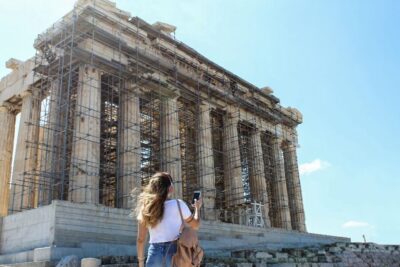


Acropolis monuments & Parthenon Walking Tour with Optional Acropolis Museum
Read our review →Browse the lists this tour appears in