
Reviewed · AUDIO TOURS
Athens: Ancient Agora E-Ticket and Audio Tour
The Ancient Agora is where Athens feels less like a collection of ruins and more like a working city. This self-guided tour uses the Agora’s buildings and pathways to explain how ordinary citizens helped shape early democracy, then connects the site with Mars Hill, the Pnyx, Socrates’ prison, and the Theatre of Dionysus. It is a good choice if you want more than labels beside broken stones.
I like the offline audio guide, since you can listen without using mobile data inside the archaeological site. I also like the freedom to pause for photos, linger in the museum, or move on when a section loses your attention. The main drawback is navigation: some paths run beside one another, and the directions can be vague, especially if you are trying to follow the tour while taking pictures.
- Start with the foundations of democracy: Learn how Solon’s legal reforms helped shape Athenian civic life.
- See where laws were prepared: The ruined Bouleuterion recalls the council of 500 citizens.
- Visit the Agora Museum: Displays explain daily life, politics, and the methods Athens used to defend its democracy.
- Look across Athens from Mars Hill and the Pnyx: These hilltop stops provide memorable views toward the Acropolis.
- Connect Socrates with the city around him: The route includes the Prison of Socrates and stories about his life and death.
- Finish near ancient drama: The tour ends by the Theatre of Dionysus, linked with Aeschylus, Sophocles, and Euripides.
In This Review
- Why the Ancient Agora deserves time beyond the Acropolis
- Entering with the pre-booked Ancient Agora ticket
- Solon, Hephaestus, and the beginning of Athenian democracy
- The Bouleuterion and the council of 500
- Aristides, Pericles, and the human side of politics
- The Agora Museum and the second-floor view
- Mars Hill and the Pnyx views
- Socrates, Samuel the Cobbler, and the final walk
- How the audio guide works in real use
- Is $30 a fair price?
- Who will enjoy this Ancient Agora visit most?
- Should you book it?
- FAQ
- How long does the Ancient Agora audio tour take?
- Is a live guide included?
- Which languages are available?
- Do I need internet access inside the Ancient Agora?
- Can I use the GetYourGuide voucher at the entrance?
- What should I bring?
- Is the tour suitable for wheelchair users?
- Can EU students and minors enter for free?
Why the Ancient Agora deserves time beyond the Acropolis
Many people plan Athens around the Acropolis and treat the Ancient Agora as an optional extra. I would not skip it if you have room in your schedule. The Acropolis shows the city’s religious and monumental side. The Agora shows how the city functioned day to day.
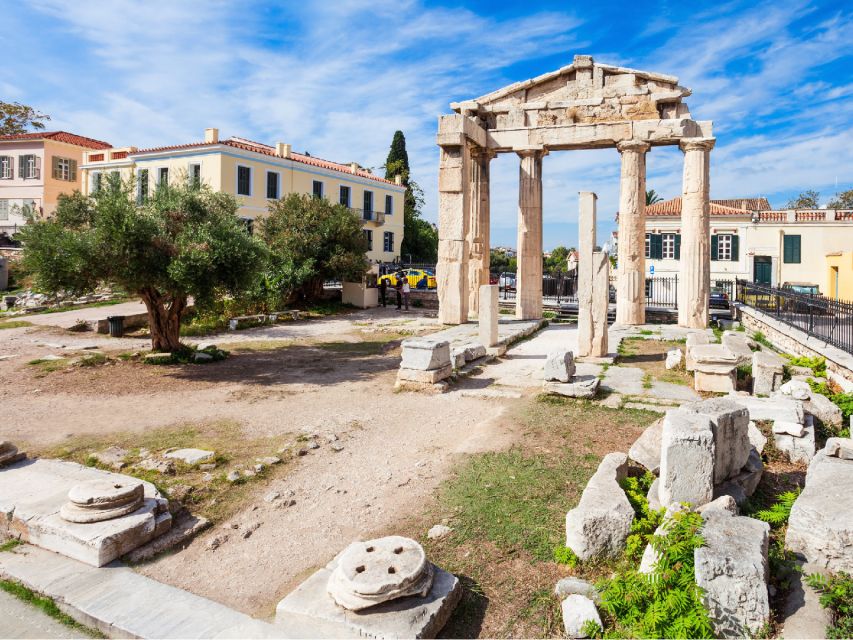
This was the center of public life. Citizens came here to trade, meet, debate, make laws, and take part in the machinery of government. The remains are not all intact, so a little imagination helps. That is where the audio tour earns its keep. Instead of asking you to admire columns without context, it explains what happened in each area and why the ruins mattered.
The Ancient Agora is also less demanding than a long climb through the Acropolis complex. You still need comfortable shoes, and some sections are uneven or difficult for wheelchair users, but the visit gives you space to wander at your own pace. Allow about 90 minutes to two hours for the full experience.
Entering with the pre-booked Ancient Agora ticket
The ticket is designed to make entry simple. You receive an adult e-ticket separately from the local provider, Clio Muse Tours, along with instructions for the audio tour. This is important: the GetYourGuide voucher itself is not accepted at the entrance. You need the separate ticket email, so check your spam folder if it does not appear in your inbox.
Download the ticket before you arrive. The archaeological site does not provide internet access, and you should not count on being able to retrieve an email at the gate. The ticket can be printed or stored on your phone, then used at the validating machines.
The process is generally quick, but do not assume every visitor gets the same arrangement. EU students and minors can enter free with valid identification, but they still need to queue for a zero-value pass. Non-EU students and people over 65 may qualify for reduced admission, though they must go to the ticket office. If one of those categories applies to you, compare the $30 tour price with the reduced or free entry rules before booking.
The activity is non-refundable. That makes it less forgiving if your Athens plans are uncertain, so choose your date with care.
More Athens trips worth a second look
- Athens: Acropolis Ticket with Optional Audio or Live Guide
★ 4.2 · 11,055 reviews - Athens: Cape Sounio & Poseidon Temple Trip with Audio Guide
★ 4.4 · 4,521 reviews - Athens: Acropolis Ticket with Audio Guide
★ 4.0 · 3,575 reviews
Solon, Hephaestus, and the beginning of Athenian democracy
The audio route begins with the political changes that made democracy possible. Near the Temple of Hephaestus, you hear about Solon and his legal reforms. The point is not simply to memorize another ancient name. The commentary explains how legal changes helped create an early form of civil society and gave Athens a path toward broader citizen participation.
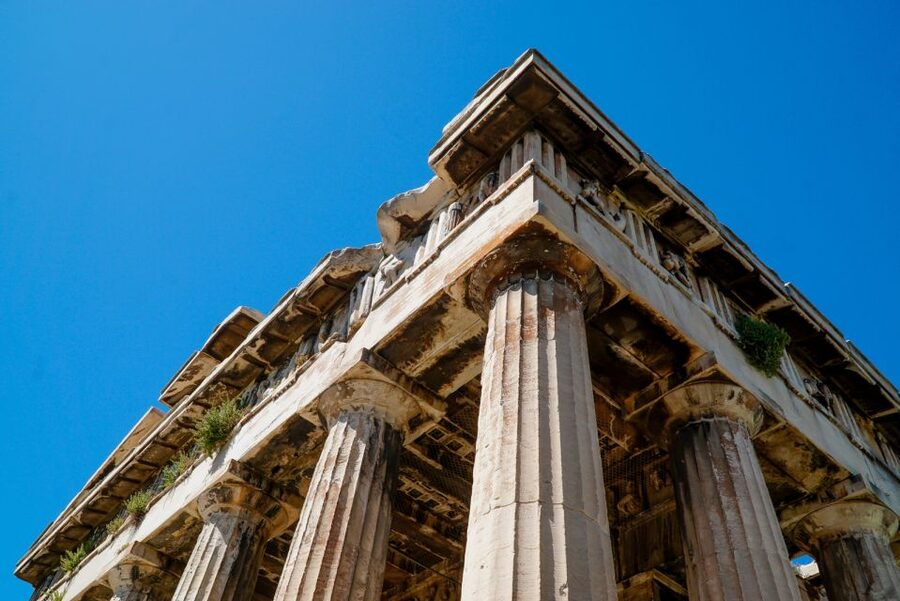
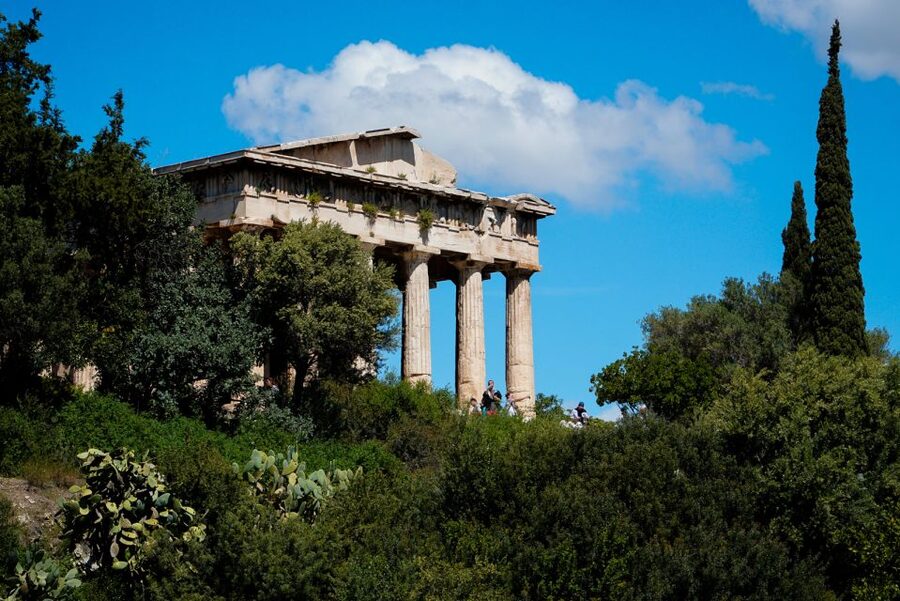
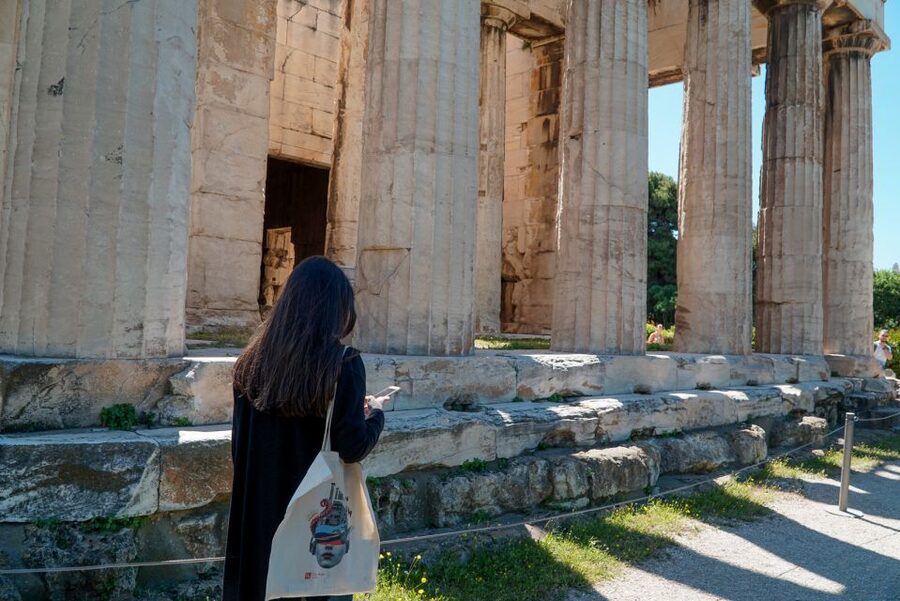
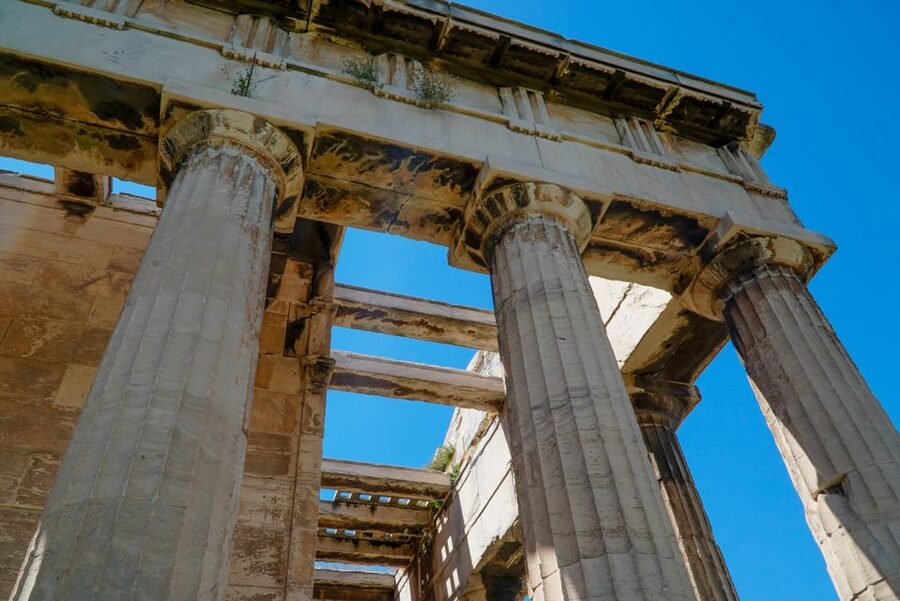
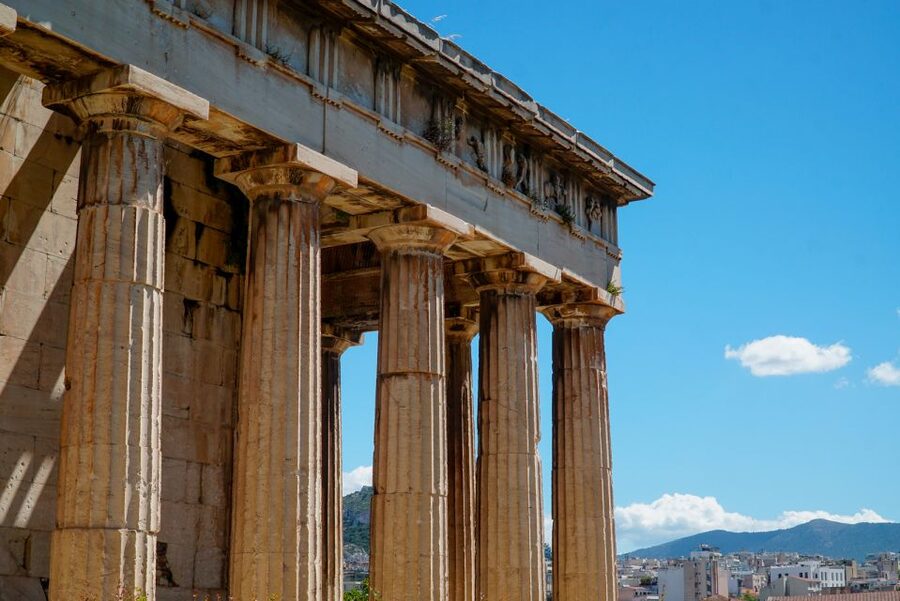
The Temple of Hephaestus gives this opening section a powerful setting. It is one of the best-preserved ancient temples in Athens, and its position above the Agora makes it an easy landmark as you get your bearings. The audio commentary helps connect the temple, the public square below, and the political world that grew around them.
The tour’s style is best suited to people who enjoy historical context. It assumes you are comfortable with names, dates, and political ideas, though it remains accessible if you take your time. You can stop the recording, replay a section, or read the displays in the museum before continuing.
The Bouleuterion and the council of 500
One of the most useful stops is the ruined Bouleuterion. This was where the council of 500 met to prepare laws and proposals for the popular assembly. The building is not visually dramatic today, but its function gives the stones real weight.
The audio tour explains the difference between preparing decisions and voting on them. That distinction helps you picture the Agora as a political workplace rather than a quiet field of ruins. It also shows that Athenian democracy was not a single grand invention. It developed through institutions, procedures, arguments, and plenty of human personalities.
This is a place where a guidebook may leave you wanting more. Without explanation, the Bouleuterion can look like another low foundation. With the audio, you have a reason to pause and consider the people who met there every day.
Aristides, Pericles, and the human side of politics
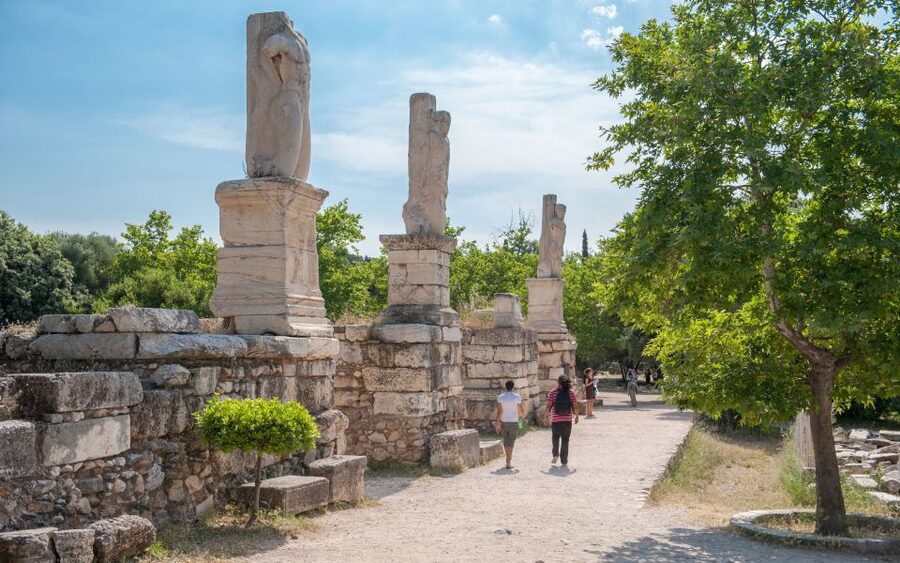
The route adds stories about figures such as Aristides the Just and Pericles. These names can make the political history feel less abstract. The audio commentary uses anecdotes to show how ambition, reputation, fairness, and power shaped the city.
I appreciate this approach because Athens was not run by marble statues. It was shaped by citizens with rival goals and strong opinions. The stories help you picture public life as a series of choices and conflicts, not as a neat march toward modern democracy.
Still, the content is not a substitute for a live guide. There is no person walking with you to answer questions or adjust the pace for your group. If you want discussion, spontaneous explanations, or help identifying every ruin, a private or group guide may suit you better.
A different kind of day out, same corner of Greece:
- Athens: Acropolis & up to 5 Archaeological Sites Combo Pass
★ 4.4 · 12,619 reviews - Athens: Acropolis, Parthenon & Acropolis Museum Guided Tour
★ 4.8 · 9,316 reviews - Athens: Cape Sounion & Poseidon Temple Sunset Half-Day Trip
★ 4.8 · 8,241 reviews - Athens: Acropolis and Parthenon Guided Walking Tour
★ 4.6 · 5,882 reviews
The Agora Museum and the second-floor view
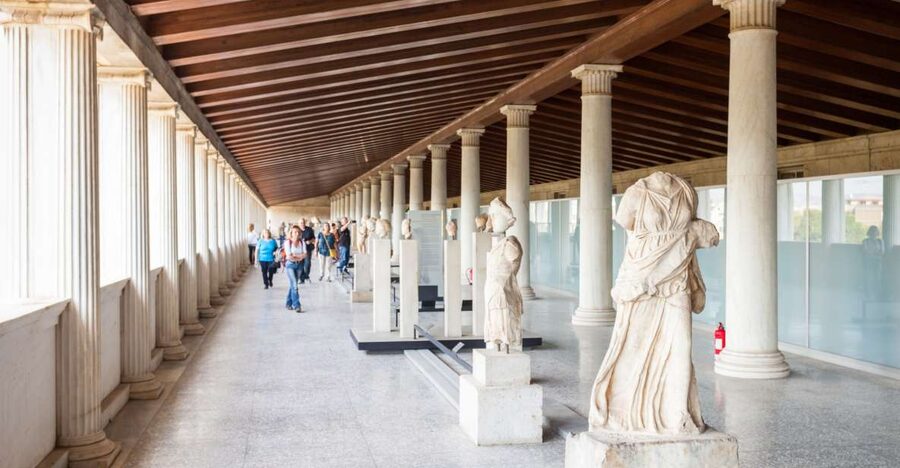
The Museum of the Ancient Agora is a major part of the visit, not a quick indoor stop to make during hot weather. Its displays provide a closer look at the objects, customs, and political practices connected with the site. The exhibits also cover the methods Athenians used to protect their democracy from harmful influence, including practices that could be ingenious and harsh.
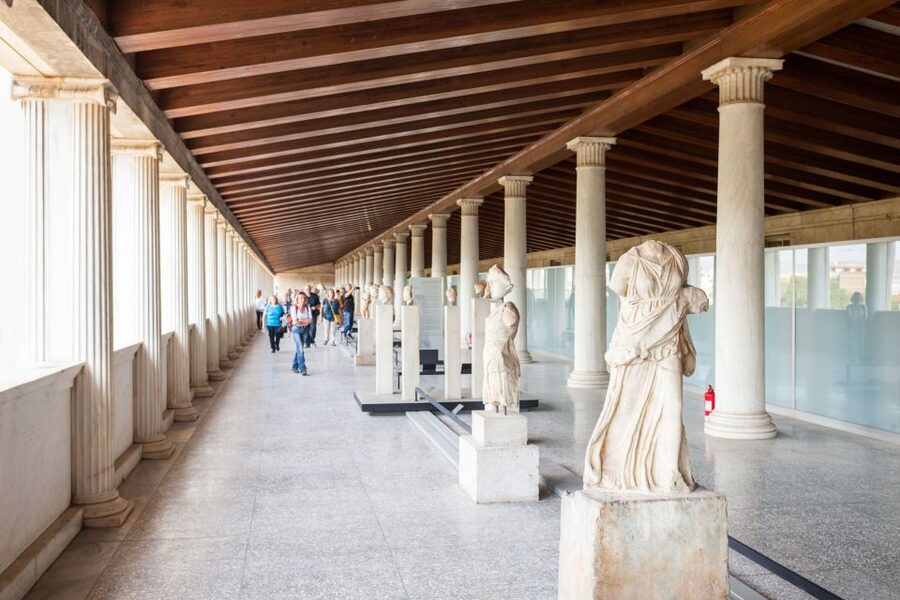
Plan enough time to read here. The museum gives shape to the open-air ruins, showing the tools, objects, and civic details that do not survive in the buildings themselves. It is also a useful break from the sun, and the building is air-conditioned.
Do not overlook the second floor. From there, you can get a different view of the Panathenaic Way, and the higher angle helps you understand how people and movement once passed through the Agora. This is an easy stop to miss if you hurry through the museum.
The audio guide works well at a relaxed pace, but pay attention to how you use your phone. One practical annoyance is that the recording may stop if you zoom in to take a photograph. You may need to restart the audio after using the camera.
Mars Hill and the Pnyx views
The experience reaches beyond the central Agora area, bringing in Mars Hill, also called the Rock of Ares, and the Pnyx. These hilltop points add views and political meaning to the route.
From Mars Hill and the Pnyx, you can look toward the Acropolis and see Athens from the same broad setting where ancient public life unfolded. The views are among the strongest parts of the experience, especially if you want photographs that show the relationship between the Agora, the Acropolis, and the surrounding hills.
The paths can be confusing. Some routes run parallel, and signs are not always clear. The audio directions are useful but not perfect, so keep the offline map open and allow extra time when moving between stops. If you are not confident with maps, this is the part of the tour most likely to test your patience.
The Pnyx is especially important because it was tied to the popular assembly. Here, the story of democracy becomes physical. You are not simply hearing that citizens gathered to debate. You are looking across the city from a place connected with those public decisions.
Socrates, Samuel the Cobbler, and the final walk
The route continues toward the Prison of Socrates on Philopappos Hill. The site and its identification should be treated as part of the historical storytelling rather than a grand, intact monument. What makes this stop worthwhile is the connection to Socrates’ life and death.
A particularly memorable story concerns Samuel the Cobbler and his relationship with Socrates. It offers a more personal view of the philosopher than the usual broad discussion of his trial and ideas. Small human stories like this can make the ancient setting easier to picture.
The climb toward the prison may add effort, especially in hot weather. Wear sturdy, comfortable shoes and consider visiting early in the morning or late in the afternoon. The open areas offer little relief from strong sun, while the museum provides a cooler pause.
The tour ends near the Theatre of Dionysus, within easy reach of the Acropolis archaeological site. This is a satisfying finish because it shifts the focus from government and philosophy to performance. The theatre is associated with the tragedies of Aeschylus, Sophocles, and Euripides, and the route places you near the setting where those works were staged.
How the audio guide works in real use
You need an Android or iOS smartphone, headphones, and a full battery. Windows phones are not supported, and the audio app also does not work with older devices including the iPhone 5, iPhone 5C, older iPod Touch models, the fourth-generation iPad, or the first iPad Mini.
Download both the ticket and audio tour before you leave your hotel or another reliable Wi-Fi spot. The package includes offline content and an interactive map, so you can avoid roaming charges and continue even when there is no site internet.
The audio is available in English, Italian, Greek, German, Spanish, and French. Its greatest strength is control. You can pause when the light is good for photographs, skip a section, or spend more time in the museum without holding up a group.
Its weakness is the same feature that gives you freedom. You are responsible for finding each stop and keeping the route moving. The map and audio directions may not always make it clear which of two nearby paths you should take. Download everything, keep your battery high, and use headphones so the commentary remains easy to follow.
Is $30 a fair price?
At $30 per person, this is not the cheapest way into the Ancient Agora. The value depends on how much you want from the visit. If you only want to walk among the ruins and take photographs, buying a standard entrance ticket may make more sense. If you want historical explanation without committing to a live guide, the ticket and audio package is more useful.
I see the price as reasonable for an independent visitor who will actually listen to most of the route. The commentary covers democracy, the Bouleuterion, the museum, political figures, Socrates, the Pnyx, and the Theatre of Dionysus. A live guide would offer more interaction, but the audio option lets you set your own pace and avoid joining a fixed group.
If you are also visiting the Acropolis, check whether a combination ticket offers better value for your plans. One practical point is worth stressing: the listed activity provides the Ancient Agora entry ticket, not a live guide or hotel transportation. Food and drinks are also not included, and large bags are not allowed inside.
Who will enjoy this Ancient Agora visit most?
I recommend it to independent visitors who like history but do not want to read every label. It works especially well for first-time visitors who want the Agora explained in relation to democracy, Socrates, the Acropolis, and classical theatre.
It is also a good fit if you prefer a quiet, flexible visit. You can listen in English, Italian, Greek, German, Spanish, or French, stop for photographs, and move at your own pace.
I would be more cautious if you have limited mobility. The experience is not suitable for wheelchair users, and some points of interest are not accessible. I would also choose a live guide if you want personal conversation, precise route-finding, or help adapting the visit for children.
For timing, early morning or late afternoon is the sensible choice during warm weather. The museum gives you an air-conditioned break, but much of the route is outdoors.
Should you book it?
Book this experience if you want the Ancient Agora to make sense, not just appear as a field of ruins. The audio commentary gives political buildings, hilltop views, and Socrates’ prison a clear place in the story of Athens.
Skip it if you already have a live guide, dislike using your phone while sightseeing, or only need basic entry. Also reconsider if your schedule may change, since the booking is non-refundable.
For most independent visitors, the strongest plan is simple: download everything in advance, wear good shoes, visit outside the hottest part of the day, allow two hours, and do not rush the Agora Museum’s second floor. That combination gives you the best chance of getting your money’s worth.
FAQ
How long does the Ancient Agora audio tour take?
The stated duration is about 90 minutes to two hours. Your actual time may vary depending on how long you spend in the museum, stop for photographs, or pause the audio.
Is a live guide included?
No. This is a self-guided audio tour for your smartphone. There is no live guide.
Which languages are available?
The audio guide is available in English, Italian, Greek, German, Spanish, and French.
Do I need internet access inside the Ancient Agora?
No internet access is provided at the archaeological site. Download the e-ticket, audio tour, and offline map before your visit.
Can I use the GetYourGuide voucher at the entrance?
No. You need the separate e-ticket sent by the local partner. The voucher itself is not accepted at the entrance.
What should I bring?
Bring a charged Android or iOS smartphone, headphones, and comfortable shoes. Large bags and luggage are not allowed.
Is the tour suitable for wheelchair users?
No. The activity is not suitable for wheelchair users, and some points of interest are not wheelchair accessible.
Can EU students and minors enter for free?
Yes, EU students and minors can enter for free with an ID card or passport. They still need to queue to receive a zero-value pass. Non-EU students and people over 65 may receive reduced tickets but must queue at the ticket office.
Recently reviewed around Athens
- Small-Group Women History in Ancient Greece Walking Tour★ 5.0 · 38 reviews
- Ceramic and Pottery Creative Workshop with Two Local Artists★ 4.0 · 57 reviews
- Athens: Wine Workshop Create your Own Wine under the Acropolis★ 5.0 · 77 reviews
- Athens: Greek Wines Tasting with Sommelier and Acropolis Views★ 5.0 · 88 reviews
- Hydra Private Day Trip by Ferry from Athens with Transfers★ 4.0 · 30 reviews
- Small-Group Wine Tour in Athens with Tasting★ 5.0 · 33 reviews
- Wine Trails Private Tour/ Nemea visit 3 wineries from Athens or Nafplion (10 h)★ 5.0 · 44 reviews
- FLYING DRESS Photoshoot in Athens – Greece★ 5.0 · 47 reviews
Audio Tours, compared.

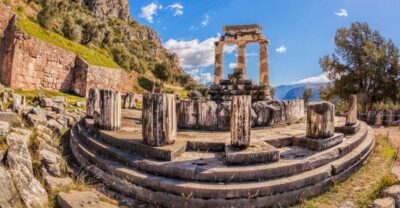
Cape Sounio & Poseidon Temple Trip with Audio Guide
Read our review →
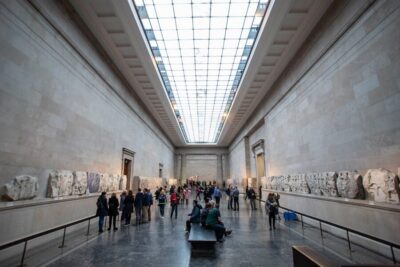
Acropolis Museum Ticket with optional Audio Guide
Read our review →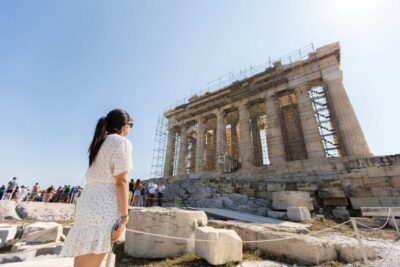
Acropolis Ticket & Optional Self-Guided Audio Tours
Read our review →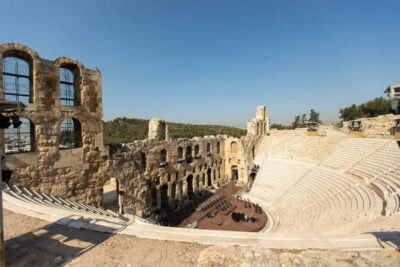
Parthenon & Acropolis Museum with Audio or Live Tour Option
Read our review →
Knossos Palace Entry Ticket with Optional Audio Guide
Read our review →Browse the lists this tour appears in