
Reviewed · HISTORICAL TOURS
Athens: History of Rebellion Walking Tour
Athens is more than temples and marble ruins. This walking tour follows the city’s record of rebellion, from resistance to Ottoman rule and the Greek Revolution to the protests, political movements, and social struggles that still shape daily life. You move from Monastiraki through Syntagma and Kolonaki before reaching Exarchia, Athens’ best-known center of activism.
I like two things right away. First, the tour gives modern Greek history the attention it often misses beside the Acropolis. Second, guide Maelle brings history, politics, street art, and ordinary life together instead of simply reciting dates. The main consideration is practical: you will walk and stand for two to three hours, often in the sun, and the subject matter favors travelers who are comfortable discussing resistance and social justice.
In This Review
- Key points about the Athens History of Rebellion Tour
- Why this tour shows you a different Athens
- Starting at Monastiraki and the Pantanassa Church
- From the Metropolitan Church to Syntagma Square
- The Parliament and the Tomb of the Unknown Soldier
- Kolonaki and the Academy of Athens
- Entering Exarchia, Athens’ activist neighborhood
- What Maelle adds to the experience
- How much walking and standing to expect
- Is $44.04 a fair price?
- The best time to take this walk
- Who should book this Athens walking tour?
- Should you book the History of Rebellion Walking Tour?
- FAQ
- How long does the Athens History of Rebellion Walking Tour last?
- Where does the tour begin?
- Where does the tour end?
- What languages are available?
- Is this a private tour?
- Is the tour suitable for people with mobility impairments?
- What should I bring?
- Can I cancel for a full refund?
Key points about the Athens History of Rebellion Tour
- Ottoman rule to modern protest: Follow Athens through roughly 200 years of political struggle, not just its ancient past.
- A thoughtful route: Walk from Monastiraki to Syntagma, the Parliament, the Academy of Athens, and Exarchia.
- Exarchia is the focus: Learn why this neighborhood matters to anarchists, refugees, LGBT+ people, artists, and local activist groups.
- Small-group feel: Private and small-group options make it easier to ask questions and discuss difficult subjects.
- Guide Maelle’s personal approach: Expect history, humor, empathy, and practical suggestions for food and further sightseeing.
- A physically active city tour: Comfortable shoes, water, a hat, and sunscreen are important.
Why this tour shows you a different Athens
Most first-time visitors meet Athens through ancient monuments. That is worthwhile, but it can leave you with an incomplete picture of the city. This tour asks how Athens became the political and social place you see today.
The route focuses on people who resisted foreign rule, fascism, violence, state power, and economic or social pressure. You hear about individuals who became symbols, as well as larger public movements in which ordinary Athenians pushed for freedom and change. That human scale is one of the tour’s strengths.
I also like that the tour does not treat rebellion as a museum subject. The story continues into modern Athens, where protest, street art, neighborhood organizing, and arguments over policing and gentrification remain part of public life. You are not simply looking backward. You are being asked to consider how the past affects the streets in front of you.
Maelle’s style seems especially suited to this material. The tour includes humor and serious discussion, and the guide encourages questions rather than shutting down debate. Several parts are designed to help you think about what you are seeing, including street art and the meaning of public spaces.
More Historical Tours in Athens
- Historical Delphi One Day Tour with Arachova Stop & Expert Guide
★ 4.5 · 1,247 reviews - Historic Athens: Small Group Electric Bike Tour
★ 4.9 · 740 reviews - The History of Athens: Greek Mythology Private Tour
★ 5.0 · 138 reviews
Starting at Monastiraki and the Pantanassa Church
Meet in Monastiraki Square, in front of Pantanassa Church, at Pl. Monastirakiou 2. Look for a guide holding a sign marked Athens City of Rebellion.
Monastiraki is a busy place, so allow enough time to locate the church and your guide. The tour begins with a short look at the square and its place in Athens’ story. You start in the middle of a popular shopping and sightseeing district, then move into the political history beneath the modern city.
The first historical period concerns Athens under Ottoman rule. The guide sets up the conditions that led to resistance and, eventually, the Greek Revolution about 200 years ago. This opening matters because it gives the rest of the walk a clear starting point. You see that Greek independence was not an isolated heroic moment. It grew from pressure, hope, organization, and conflict over who should control the country.
Expect only a short formal stop in Monastiraki, but the ideas introduced here help organize the rest of the tour.
From the Metropolitan Church to Syntagma Square
The route passes the Metropolitan Church of Athens before continuing toward Syntagma Square. Along the way, you may stop at less obvious places that help explain how political power, religion, and public life fit together in the capital.
The advertised schedule includes a short stop at a lesser-known site for guided sightseeing. Since the exact details are not specified, the value lies in the guide’s explanation rather than in a major monument you can enter. This is a tour about context. A plain street corner can matter if you understand what happened there.
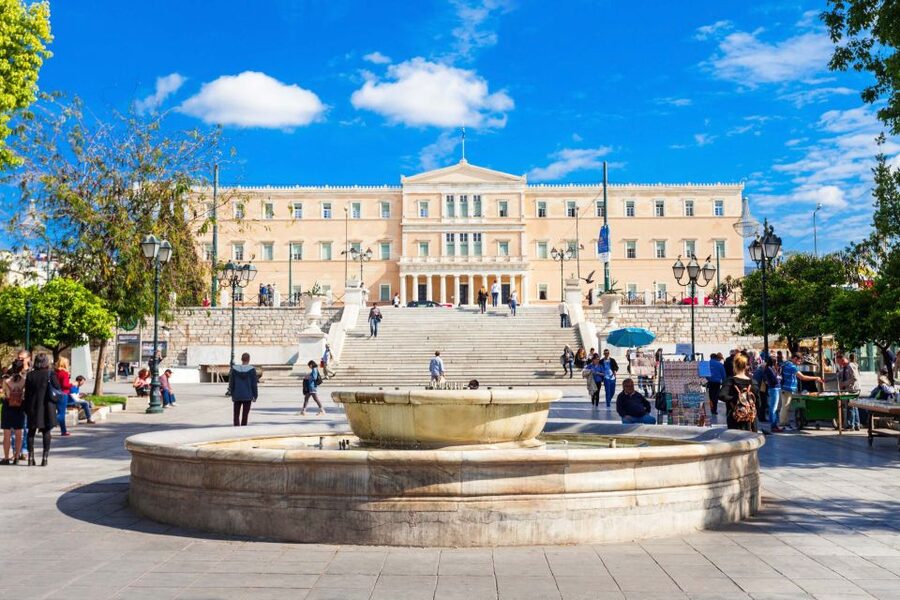
Syntagma Square is the heart of modern protest in Athens. You spend about 10 minutes here with guided sightseeing and historical explanation. The square is useful for understanding how Athenians have gathered to demand political change, oppose oppression, and respond to national crises.
I find public squares especially helpful on history walks because you can connect past events with the way a city functions now. Syntagma is not an isolated relic. It remains a place where public opinion becomes visible. The guide’s job is to link individual stories with larger movements, so pay attention to both.
The Parliament and the Tomb of the Unknown Soldier
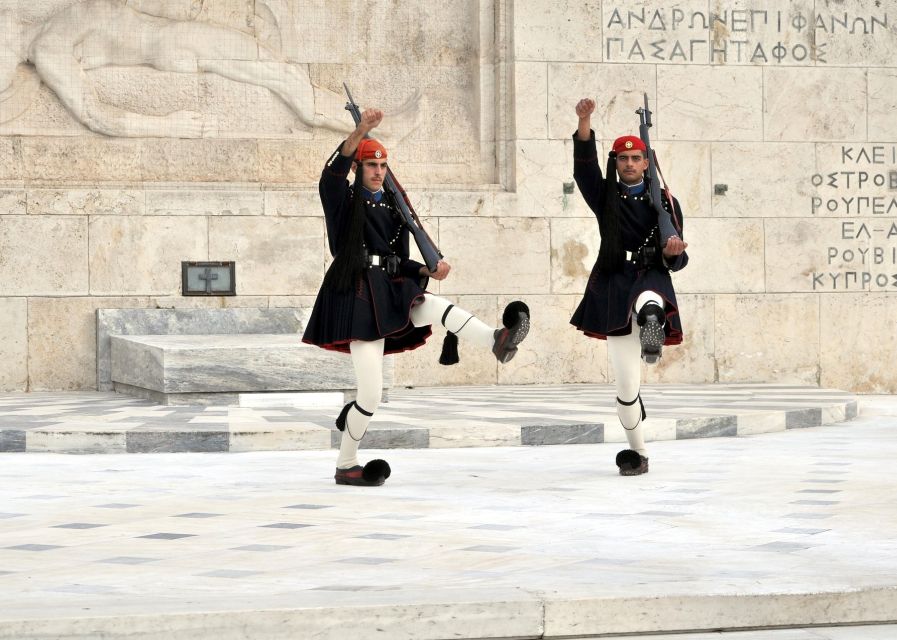
At the Hellenic Parliament, the tour spends about 10 minutes on the building and its political role. You also visit the Tomb of the Unknown Soldier, where the explanation continues for about five minutes.
These stops shift the focus from popular protest to the institutions and symbols of the Greek state. The Parliament represents formal government. The tomb honors military sacrifice and national memory. Together, they help you consider the tension between official stories and the actions of people who challenge those stories.
The guide also discusses heroic individuals who became legends. That personal angle prevents the tour from becoming a dry lesson in constitutional history. You hear how particular people can become symbols, but also how mass participation gives political movements their force.
There is no promise of an interior visit to Parliament, and the listed schedule describes guided sightseeing rather than entry. Treat this as an outdoor history stop. You will be on your feet, so take advantage of any brief pause to drink water.
More Walking Tours in Athens
- Athens: Acropolis and Parthenon Guided Walking Tour
★ 4.6 · 5,882 reviews - Greek Food Walking Tour in Athens
★ 5.0 · 4,740 reviews - Acropolis: Acropolis and Parthenon Guided Walking Tour
★ 4.7 · 3,442 reviews - Acropolis monuments & Parthenon Walking Tour with Optional Acropolis Museum
★ 5.0 · 2,678 reviews
Kolonaki and the Academy of Athens
The walk passes through Kolonaki before reaching the Academy of Athens. Kolonaki offers a useful change in setting. The route moves through a more polished part of central Athens, then places that neighborhood beside the city’s wider political story.
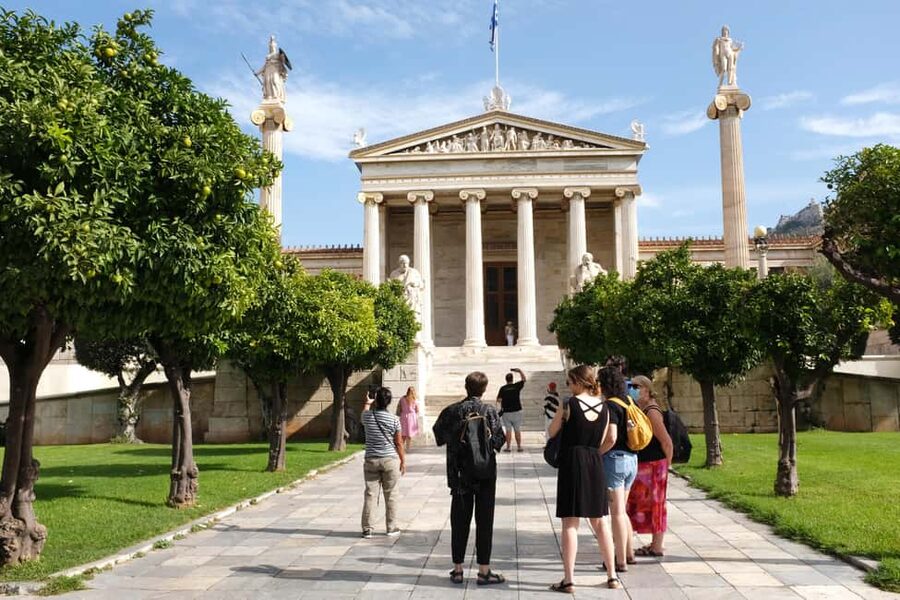
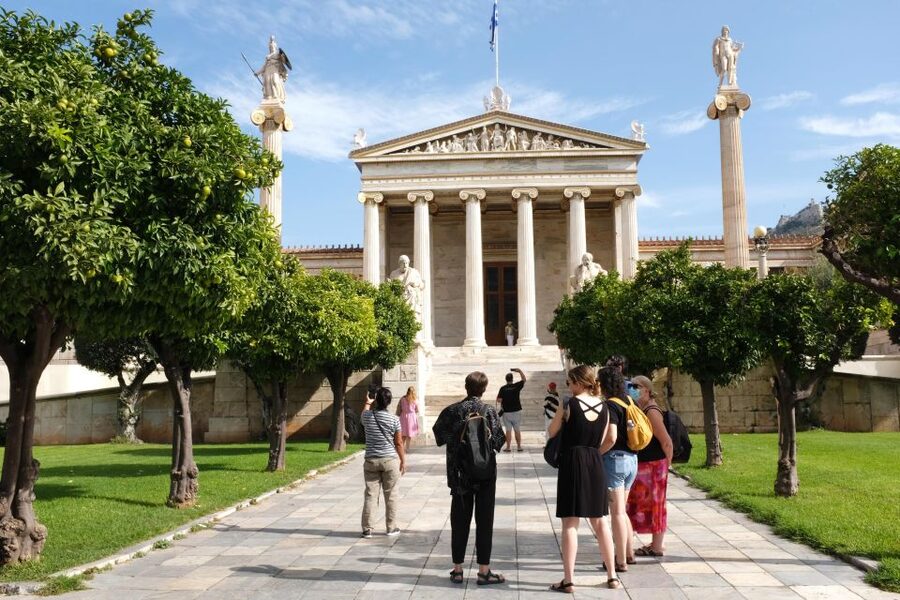
At the Academy, expect about 10 minutes of guided sightseeing. The building and its public role give the guide another chance to discuss how Greece presents its national identity, intellectual life, and relationship with the past.
This section is not the main event, but it helps keep the tour from becoming a single-note account of protest. Athens contains government offices, grand institutions, commercial districts, student areas, immigrant communities, and activist spaces. The route lets you see some of those contrasts within a short distance.
If your main interest is ancient architecture, this stop may feel familiar in spirit but different in purpose. The point is not to replace an Acropolis visit. It is to show how modern Athens uses institutions and public symbols to explain itself.
Entering Exarchia, Athens’ activist neighborhood
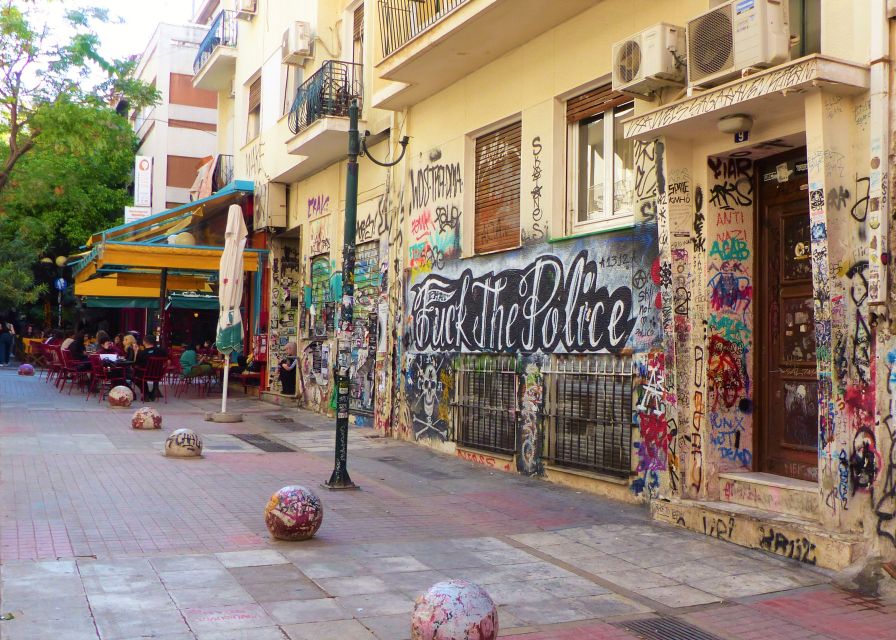
Exarchia is the tour’s most distinctive section. The neighborhood is presented as a center of resistance and activism, with connections to anarchists, refugees, LGBT+ communities, and artists. You spend time walking through Exarchia, stopping at Exarchion Square, and visiting additional less-publicized locations.
The guide explains the area’s struggles against police repression and gentrification, along with efforts to protect a collectivist and activist way of life. These are living issues, not safely finished chapters. That makes the visit more interesting, but also more complicated.
You should approach Exarchia with respect. This is a real neighborhood where people live, work, organize, and disagree. The aim is not to treat residents or political movements as a spectacle. One welcome feature of the tour is its effort to discuss the community without turning everyday life into a display for outsiders.
The route includes a 10-minute guided stop in Exarchia, a 10-minute stop at a less-publicized location, a five-minute stop at another such site, and about 10 minutes at Exarchion Square. The exact stops may depend on the day and the guide’s route, but the supplied plan makes clear that you will explore more than one point in the neighborhood.
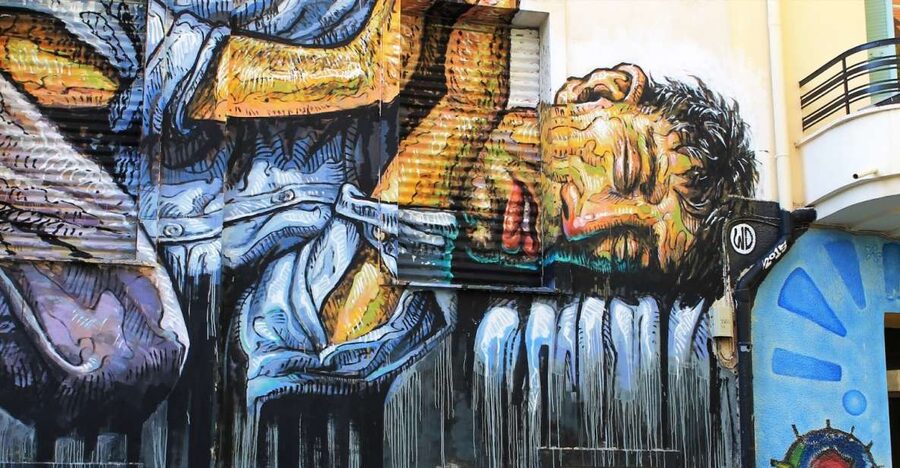
Street art is part of the discussion. Maelle uses examples such as work by the artist WD to encourage questions about who gets heard, how public space is used, and what art can say when formal politics fails to express local concerns. You are not just photographing murals. You are learning how to read them as part of the neighborhood’s public conversation.
What Maelle adds to the experience

The strongest feature of this tour is the guide-led discussion. Maelle is described as warm, patient, funny, inclusive, and deeply invested in the subject. Those qualities matter here because modern political history can quickly become either a list of facts or a one-sided lecture.
Instead, you can expect a conversation. Maelle explains events in a way that puts them in order, then connects them to wider questions about Greek society and politics. That is useful if you know little about modern Greece or have picked up scattered references without understanding how they fit together.
The tour also includes practical advice for the rest of your trip. Maelle has offered suggestions for restaurants, shopping, sights in Athens, and places to visit on the Greek islands. If you take this walk early in your stay, those recommendations can help shape the days that follow.
I would choose the small-group or private option if you want plenty of time for questions. The advertised format allows both private and small groups, and the discussion-based approach benefits from an intimate setting. English and French guiding are available.
How much walking and standing to expect
The experience lasts 2.5 hours. It is a true walking tour, not a sightseeing ride with occasional stops. You move through central Athens on foot and stand during explanations at squares, buildings, monuments, and neighborhood sites.
The route is not suitable for people with mobility impairments, according to the activity information. Even travelers without mobility concerns should wear sturdy, comfortable shoes. Bring water, sunscreen, and a sun hat, especially during hot weather.
The tour description does not provide a total distance or detailed information about steps, slopes, or seating. If those details matter to you, ask before booking. The pace may feel easy for regular walkers, but the amount of standing can be tiring in the heat.
Is $44.04 a fair price?
At $44.04 per person, this costs more than a basic orientation walk, but you are paying for a specialized subject and a guide-led conversation. The value is strongest if you want modern Greek history, political movements, social justice, and a closer look at Exarchia.
The price also makes sense for travelers who would struggle to understand Exarchia on their own. You can walk through the neighborhood independently, but the historical and political context is harder to find in a short visit. A good guide can help you notice why particular public spaces, symbols, and artworks matter.
The value is weaker if you mainly want famous monuments or a fast overview of Athens. The Acropolis, Ancient Agora, and major museums are not the focus. This tour works best as a complement to ancient-history sightseeing, not as a replacement for it.
A small or private group can improve the value because you get more room for questions and personal discussion. Since the booking terms allow cancellation up to 24 hours before the tour for a full refund and offer reserve-now, pay-later booking, you also have some flexibility when planning.
The best time to take this walk
I would schedule this tour near the beginning of your Athens stay. It gives you a working framework for modern Greece and may change how you see Syntagma, central neighborhoods, and Exarchia afterward.
Taking it on the final day can still be worthwhile, but you may wish you had the background earlier. One practical benefit of an early booking is that Maelle’s restaurant and sightseeing suggestions can help with the rest of your visit.
Starting times vary, so check availability when booking. The meeting point is central and easy to place on a map, but Monastiraki Square can be crowded. Arrive with comfortable shoes already on and water in your bag.
Who should book this Athens walking tour?
I recommend it most strongly for you if:
- You want modern Greek history, not only ancient monuments.
- You are interested in protest movements, political change, and social justice.
- You want to understand why Exarchia matters to Athens.
- You enjoy asking questions and discussing ideas while walking.
- You prefer a personal guide to an audio tour or a large group.
- You would like practical local suggestions for food and further sightseeing.
I would choose another tour if you want a relaxed, seated activity, a detailed visit inside major monuments, or a neutral overview that avoids current political questions. The tour has a clear interest in resistance movements, so its approach will suit some people more than others.
Should you book the History of Rebellion Walking Tour?
Book it if you want to see Athens as a living city shaped by conflict, memory, protest, and community action. The route from Monastiraki to Syntagma and Exarchia gives you a useful mix of national history, public spaces, institutions, street art, and present-day neighborhood struggles.
The main reasons to choose it are Maelle’s personal delivery, the small-group format, and the attention given to modern Greece. You should arrive ready to walk, stand, listen, and think. For the right audience, this can become the part of an Athens visit that makes the rest of the city easier to understand.
FAQ
How long does the Athens History of Rebellion Walking Tour last?
The tour lasts 2.5 hours. Starting times vary, so check availability for the date you want.
Where does the tour begin?
Meet in Monastiraki Square, in front of Pantanassa Church, at Pl. Monastirakiou 2. The guide carries a sign saying Athens City of Rebellion.
Where does the tour end?
The activity information says the tour ends back at the meeting point. The route details list Plateia Exarcheion as the finish, so confirm the final meeting and drop-off point when booking.
What languages are available?
The tour is available in English and French.
Is this a private tour?
Private and small-group options are available. Select the format that suits your plans when booking.
Is the tour suitable for people with mobility impairments?
No. The activity is listed as unsuitable for people with mobility impairments.
What should I bring?
Bring comfortable shoes, a sun hat, sunscreen, and water. You will walk and stand for much of the 2.5-hour experience.
Can I cancel for a full refund?
Yes. You can cancel up to 24 hours in advance for a full refund. Reserve-now, pay-later booking is also available.
Recently reviewed around Athens
- Small-Group Women History in Ancient Greece Walking Tour★ 5.0 · 38 reviews
- Ceramic and Pottery Creative Workshop with Two Local Artists★ 4.0 · 57 reviews
- Athens: Wine Workshop Create your Own Wine under the Acropolis★ 5.0 · 77 reviews
- Athens: Greek Wines Tasting with Sommelier and Acropolis Views★ 5.0 · 88 reviews
- Hydra Private Day Trip by Ferry from Athens with Transfers★ 4.0 · 30 reviews
- Small-Group Wine Tour in Athens with Tasting★ 5.0 · 33 reviews
- Wine Trails Private Tour/ Nemea visit 3 wineries from Athens or Nafplion (10 h)★ 5.0 · 44 reviews
- Private Athens Transfer Airport/Port -Greek Tours-Hourly service★ 5.0 · 88 reviews
Historical Tours, compared.
Historical Delphi One Day Tour with Arachova Stop & Expert Guide
Read our review →
Historic Athens: Small Group Electric Bike Tour
Read our review →

Half-Day Guided History and Culture Sightseeing Tour
Read our review →


Throne of Helios: The History of Rhodes in 9D Experience
Read our review →
The History of Athens: Greek Mythology Private Tour
Read our review →Browse the lists this tour appears in