
Reviewed · ATHENS TOURS
Athens: Mythology Tour for Families
The best part of this Athens tour is the way it turns the Acropolis into a stage for gods, monsters, and heroes. Instead of asking children to admire old stones in silence, your guide uses Zeus, Athena, Poseidon, and Dionysus to explain why these places mattered. I especially like the family-sized group of no more than 15 and the stop at the ancient Pnyx, where the final activity gives children something to do, not just something to look at.
I also like that the tour balances famous sights with stories that make them easier to remember. Guides such as Christina, Chrysa, Maria, Sophia, and Demi have been praised for answering children’s questions and keeping tired youngsters involved. The main caution is the length: three hours in the Athens heat can be a lot for small children, and water, sun protection, and sturdy shoes matter.
In This Review
- Key points at a glance
- Why mythology works so well on the Acropolis
- Starting at the Theater of Dionysus
- Passing through the Propylaea
- Meeting Athena Nike at the entrance
- Finding the strange beauty of the Erechtheion
- Spending 70 minutes with the Parthenon
- Walking 15 minutes to ancient Pnyx
- The 45-minute Pnyx activity
- How the guides handle different ages
- Small group or private tour?
- Is $79 per person a fair price?
- Practical matters before you go
- Who should book this Acropolis tour?
- Should you book it?
- FAQ
- How long does the mythology tour last?
- What ages suit this tour best?
- Which sites are included?
- Is Acropolis admission included?
- What languages are available?
- Can I book a private group?
- Can I bring a stroller or backpack?
- Is the tour accessible for wheelchair users?
- What should I bring?
Key points at a glance

- Myths explain the monuments: Zeus, Athena, Poseidon, Dionysus, Theseus, Hera, and Aphrodite all help bring the Acropolis to life.
- The Parthenon gets real time: You spend about 70 minutes learning about Athens’ most famous building.
- Pnyx adds a hands-on finish: The tour ends with a family activity linked to the gods and heroes you have met.
- The guide makes or breaks it: Strong guides such as Sophia, Demi, Chrysa, and Christina are especially good at adjusting stories for children.
- Best for ages 5 to 11: Older children can enjoy it too, but the style is built around younger school-age kids.
- Plan for heat and restrictions: Strollers, backpacks, and large bags are not allowed at the Acropolis, and the route is not suitable for wheelchair users.
Why mythology works so well on the Acropolis
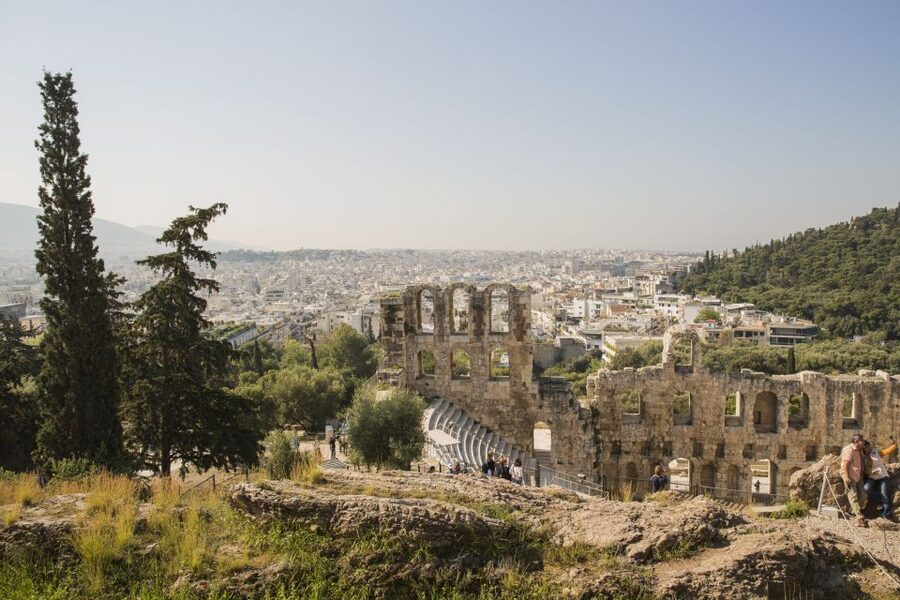
The Acropolis can be a tough sell to a child. The hill is steep, the sun can be fierce, and the monuments may first look like a collection of broken columns. Mythology gives your family a reason to care about each place.
Your guide connects the buildings to the personalities of the Greek gods. Athena, goddess of wisdom, is central to the story of Athens. Poseidon brings rivalry and the sea into the picture. Zeus supplies thunder, power, and family drama. Dionysus explains the ancient theater and gives children a memorable link between Greek religion and performance.
I like this approach because it serves adults and children at the same time. You get background on architecture, religion, politics, and ancient culture, while your children get stories about jealous gods, brave heroes, and dangerous creatures. The guide can also answer the odd question that comes from the back of the group, which is often where the best family learning begins.
The tour is not a costumed show or a children’s amusement activity. It remains a serious visit to major archaeological sites. The difference is that the information is shaped into stories, questions, and a group activity rather than delivered as a long lecture.
More Athens trips worth a second look
- Athens: Acropolis & up to 5 Archaeological Sites Combo Pass
★ 4.4 · 12,619 reviews - Athens: Acropolis Ticket with Optional Audio or Live Guide
★ 4.2 · 11,055 reviews - Athens: Acropolis, Parthenon & Acropolis Museum Guided Tour
★ 4.8 · 9,316 reviews
Starting at the Theater of Dionysus
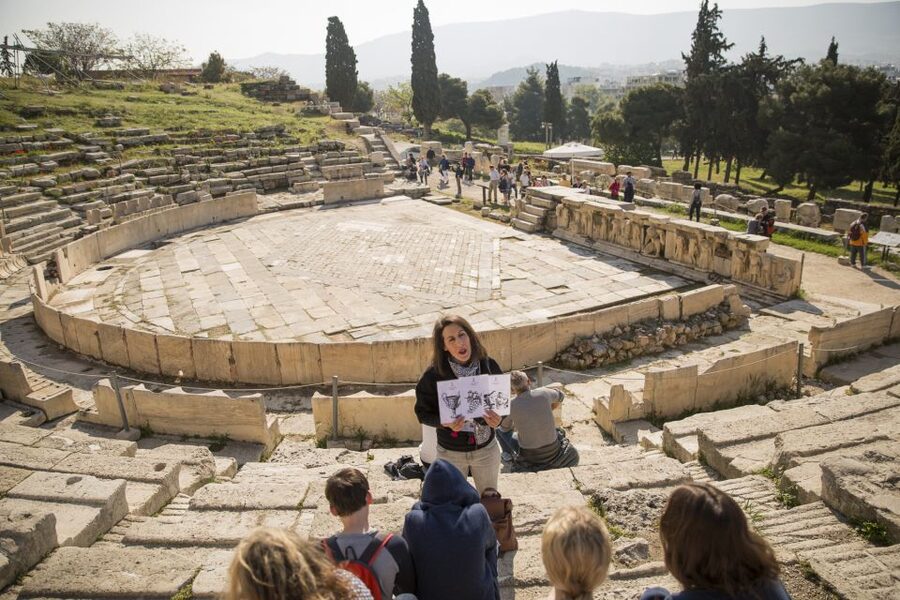
The tour begins at one of Athens’ most important cultural sites, the Theater of Dionysus. This is where your guide introduces Dionysus, the god of wine and theater, and explains why drama developed here.
The stop lasts about 15 minutes. That is enough time for a clear introduction without asking children to stand still too long at the start. The theater also gives the guide a natural way to talk about masks, performance, audiences, and the role of festivals in ancient Athens.
For parents, this is a useful opening because it shows that Greek culture was not only about temples and battles. Theater, storytelling, music, and public gatherings were part of civic life. For children, the connection is more direct: the ancient Greeks went to plays much as families now go to performances.
Passing through the Propylaea
The Propylaea is the monumental gateway to the Acropolis. You spend about 10 minutes here with the guide before moving farther up the hill.
This is a short stop, but it helps you understand the Acropolis as a planned sacred complex rather than a single temple. The grand entrance prepared ancient visitors for what lay beyond. Today, it also marks the point where the tour moves from the lower archaeological area into the famous upper citadel.
The approach involves walking and uneven ancient ground. Keep your children close, and expect pauses while the guide explains what you are seeing. Comfortable shoes are essential. Sunglasses and a sun hat are also sensible, especially in summer.
Meeting Athena Nike at the entrance
The Temple of Athena Nike receives about 15 minutes of attention. Its position near the entrance makes it easy to connect with the larger story of Athens and its patron goddess.
Athena was associated with wisdom and strategic skill, not simply brute strength. That distinction gives your guide a chance to explain why the Athenians honored her and how gods often represented qualities that a city admired.
This is one of the smaller monuments on the route, so children may not find it as immediately impressive as the Parthenon. The mythology helps here. A guide who frames the temple as part of Athena’s story can give the stop a clear purpose, rather than treating it as another name to remember.
A different kind of day out, same corner of Greece:
- Athens: Cape Sounion & Poseidon Temple Sunset Half-Day Trip
★ 4.8 · 8,241 reviews - Athens: Acropolis and Parthenon Guided Walking Tour
★ 4.6 · 5,882 reviews - All Day Cruise -3 Islands to Agistri,Moni, Aegina with lunch and drinks included
★ 5.0 · 4,958 reviews - Athens, Piraeus, and Coastline: Blue Hop-On Hop-Off Bus
★ 3.9 · 4,849 reviews
Finding the strange beauty of the Erechtheion
The Erechtheion gets about 10 minutes. It is known for its unusual design and its association with several sacred traditions, making it a good place for stories about the competing claims of Athena and Poseidon.
Your guide can use this setting to explain the contest over the city and why Athens took its name from Athena. Poseidon’s connection with the sea also matters here, since Athens was closely tied to maritime power.
The Erechtheion is a good example of why a child-friendly tour does not mean a shallow tour. The building can lead into questions about how myths explain a city’s identity, how sacred spaces can hold several stories at once, and why the ancient Athenians cared so much about their gods.
Spending 70 minutes with the Parthenon
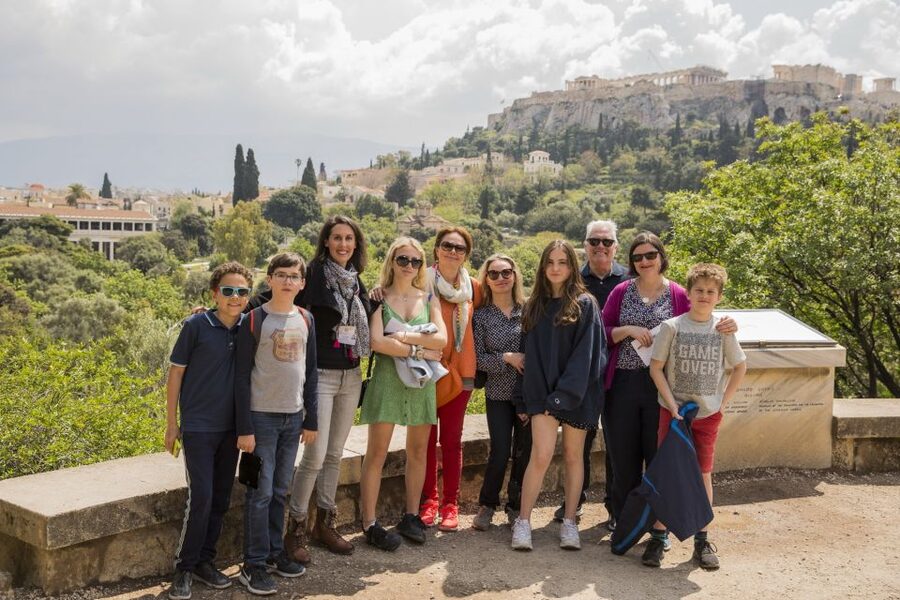
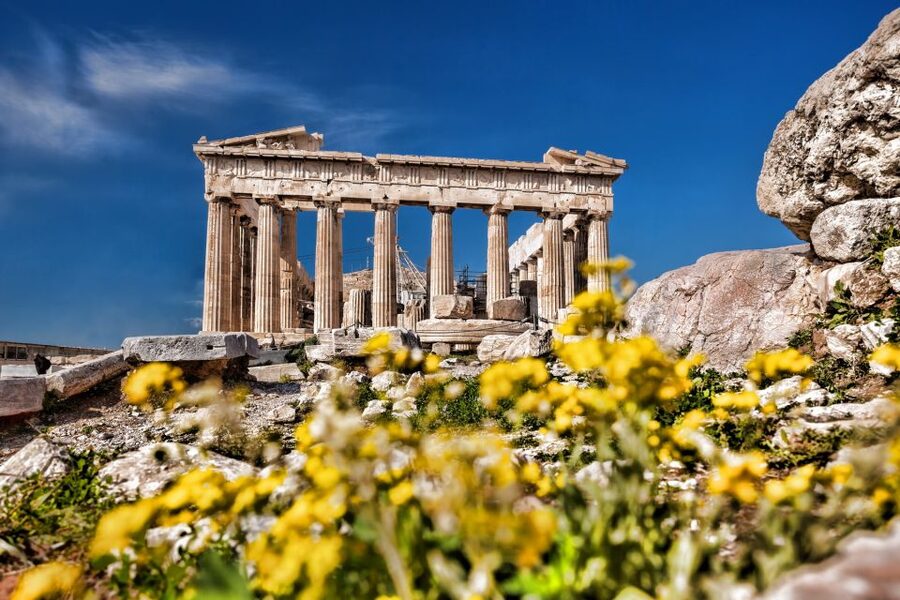
The Parthenon is the centerpiece of the Acropolis visit, and the tour allows about 70 minutes here. That is a substantial portion of the three-hour experience, which makes sense. This is the monument most families have come to see, and it deserves more than a quick photograph.
Your guide explains the building through both history and mythology. The Parthenon honors Athena, but the sculptures and stories also connect to the wider world of gods and heroes. This is where the guide’s storytelling skill matters most. Children need help noticing details, while adults may want a clearer explanation of the building’s purpose, design, and place in Athenian life.
The long stop does have a downside. Seventy minutes can feel demanding if your child is already hot, hungry, or tired. Several guides have been praised for switching tactics when children lose focus, using games, questions, or shorter story segments. Still, the pace depends on your group, the weather, and how much time is spent answering questions.
In summer, bring water before you enter. There are not many chances to stop for water on the route, and the sun can make the hill feel harder than the distance suggests. Food and drinks are not included, so plan around the tour rather than expecting a snack break during it.
Walking 15 minutes to ancient Pnyx
After the Acropolis, you walk about 15 minutes to the ancient Pnyx. This shift is one of the tour’s best choices.
The Pnyx is closely tied to the birth of democracy. Ancient Athenians gathered here to discuss public matters and politics. That gives your guide a chance to move from gods and temples to citizens, debate, and the responsibilities of taking part in public life.
For children, democracy can sound abstract. A real meeting place makes it easier to picture people gathering on a hillside to speak and listen. The setting also gives the group a little breathing room after the crowded monuments and upward walking of the Acropolis.
The finish at Pnyx Hill means you do not return to the original meeting point. Keep that in mind when planning the rest of your day. The exact starting point can vary depending on the option you book, so check those instructions carefully before leaving your hotel.
The 45-minute Pnyx activity

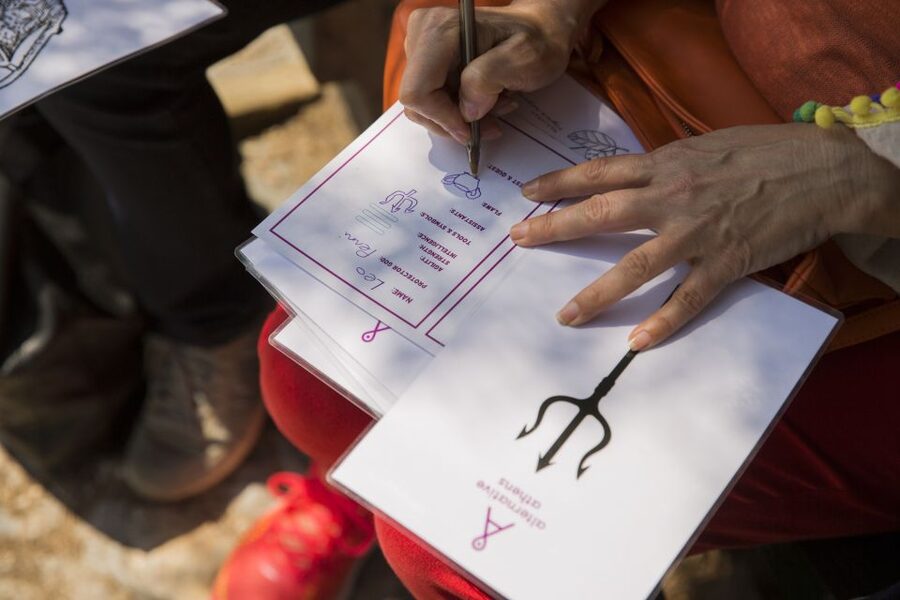
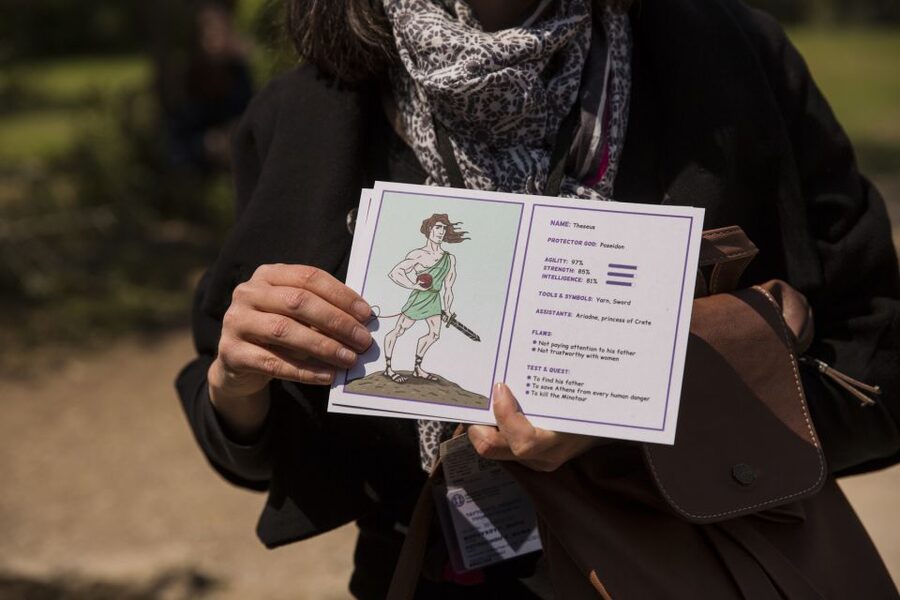
The final 45 minutes are devoted to the Pnyx and a group activity based on the gods and heroes introduced earlier. This is more than a simple quiz. Children are encouraged to use their imagination in a place connected to public speaking and civic life.
The stories may include Theseus and the Minotaur, Hera’s jealousy, and Aphrodite, goddess of love and beauty. These myths give children different kinds of characters to work with: a hero facing a monster, a powerful god with complicated feelings, and a goddess linked to beauty and desire.
I value this part because it gives the family a shared memory to take home. The Acropolis itself can feel too large for a child to absorb. Creating something together at the end gives the visit a personal finish.
The activity also helps parents join in. You are not simply waiting while children play. The setting and stories invite everyone to take part, and the best guides adjust the activity for mixed ages. Sophia, for example, has been especially effective with groups that included young children and grandparents, using games and energy to keep the whole family involved.
How the guides handle different ages
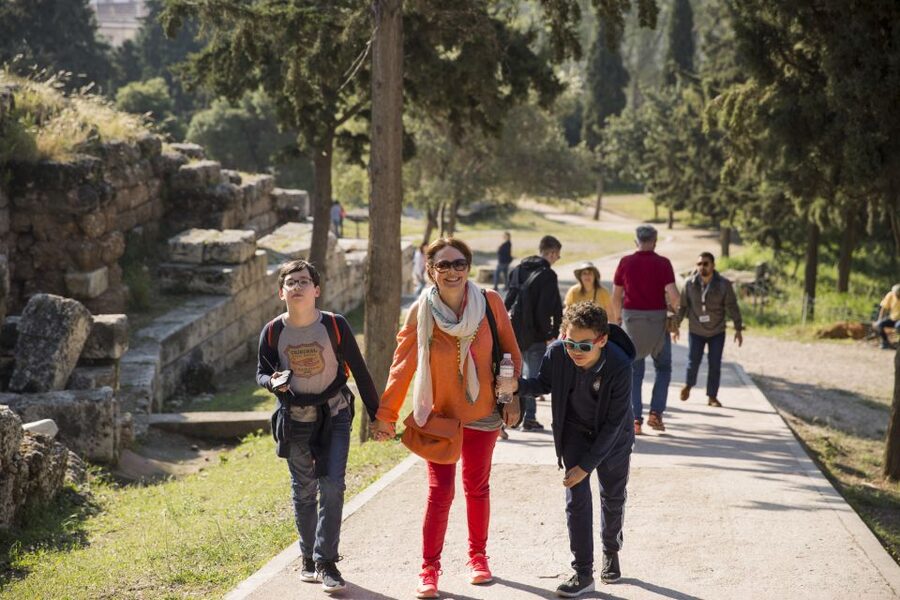
The official target is children from 5 to 11. That is a useful guide, not a hard rule.
Five-year-olds may enjoy the gods, monsters, and activity most of all. Eight- to eleven-year-olds are more likely to follow the links between mythology, architecture, and democracy. A 12-year-old may still enjoy the tour if the guide allows room for deeper questions. One family with children aged 10 and 12 had a private experience that worked well because the guide could adjust the pace and discussion.
A three-year-old may also enjoy parts of the tour, especially the stories, but the full three hours could be a stretch. An adult should be ready for shorter attention spans, heat, and the walking involved.
The strongest guides use humor, patience, and questions rather than talking over the children. Demi, Maria, Kelli, Marika, Amarylis, and Angelica have all been praised for engaging children while still giving adults useful historical context. A family group may include different guides, and the experience depends heavily on who leads your departure.
English and French are available. A private group can be booked if your family needs a more flexible pace or has particular interests.
Small group or private tour?
The shared tour allows up to 15 people. That is small enough for a guide to watch the children, answer questions, and keep the group together without the feel of a huge walking tour.
The group size can be smaller in practice. Some departures have had only one or two families, and one family found itself alone with the guide. That can make the experience feel almost private without necessarily requiring a private booking.
A private group costs more in many tour settings, but the supplied price here is $79 per person, so check the exact option before comparing. A private format may be worth considering if your children have very different ages, if someone tires quickly, or if you want to spend extra time on mythology or classical studies.
Is $79 per person a fair price?
At $79 per person, the value depends on what your booking includes. Acropolis entry tickets are included if you select the ticketed option, but entrance fees are otherwise separate. The provider can pre-purchase tickets, which can be useful when popular entry times are difficult to secure.
The price pays for more than admission. You are paying for three hours of guiding, a family-focused approach, activity materials, and help making sense of several major sites. If you would otherwise wander through the Acropolis without knowing what the buildings represented, the guide can add real value.
Families should check the ticket option carefully before paying. Entry fees are non-refundable and non-exchangeable. EU citizens under 25 can enter the Acropolis free with valid identification, and from April 1, 2025, EU and non-EU visitors under 18 can enter free with valid identification. Those rules can change, so confirm what applies to your family when booking.
Practical matters before you go
Wear shoes that can handle uneven surfaces and walking on an ancient hill. Bring water, sunglasses, and a hat. The tour does not include food or drinks, and there are few water stops during the Acropolis portion.
Do not bring a stroller, backpack, or large bag to the Acropolis. These are not allowed, and taking them to the meeting point can create avoidable trouble. Bring a passport or ID card, especially if you may qualify for a free child or youth entry.
The tour is not suitable for wheelchair users. The route includes walking between the Acropolis and Pnyx, and the archaeological terrain is not designed for wheelchairs.
Meeting instructions deserve extra care. The starting point can vary by booking option, and some families have had trouble with an incorrect address or confusing directions in the booking app. I would verify the exact meeting point with the provider before the day of the tour and allow extra time, particularly if you are arriving with several children.
Free cancellation is available up to 24 hours in advance for a full refund. You can also reserve now and pay later, which helps if your Athens plans are still shifting.
Who should book this Acropolis tour?
I would choose this tour for families with children aged 5 to 11 who want more than a quick photo stop at the Parthenon. It is especially useful if your children enjoy stories, role-play, mythology, or asking endless questions.
It also suits adults who want the major monuments explained without joining a dry academic lecture. Parents often learn as much as the children because the guide links myths to politics, religion, theater, and city life.
I would think twice if your family prefers to move quickly, dislikes organized activities, or is visiting Athens during the hottest part of the day. Three hours can feel long, and the Parthenon section alone lasts about 70 minutes. If you book in summer, choose the earliest comfortable start available, bring water, and do not plan another demanding activity immediately afterward.
Should you book it?
Book this tour if you want your children to remember the Acropolis as a place of stories and ideas, not just marble ruins. The combination of the Theater of Dionysus, Parthenon, and Pnyx gives you a strong mix of culture, mythology, and democracy, while the final activity keeps the visit from ending in fatigue.
The main reasons to book are the family-trained guide, small group size, and thoughtful use of mythology. The main reasons to hesitate are the heat, the three-hour length, the extra entry fee if tickets are not included, and occasional confusion over the meeting point.
For most families with school-age children, I think the stories and activity justify the cost. Just confirm the ticket option and meeting address, leave the stroller and large bag behind, and treat water and sun protection as essential equipment.
FAQ
How long does the mythology tour last?
The tour lasts three hours. It includes guided visits at the Acropolis, a 15-minute walk to the Pnyx, and about 45 minutes at the Pnyx.
What ages suit this tour best?
The tour is most suitable for children aged 5 to 11. Older children can also enjoy it, especially if they have an interest in Greek mythology or Classics.
Which sites are included?
The route includes the Theater of Dionysus, Propylaea, Temple of Athena Nike, Erechtheion, Parthenon, and ancient Pnyx.
Is Acropolis admission included?
Acropolis entry tickets are included only if you select the option that includes them. Entrance fees are otherwise separate, and the provider can pre-purchase tickets if requested.
What languages are available?
The tour is available in English and French.
Can I book a private group?
Yes. A private group option is available.
Can I bring a stroller or backpack?
No. Strollers, backpacks, and large bags are not allowed at the Acropolis and should not be brought on the tour.
Is the tour accessible for wheelchair users?
No. The tour is not suitable for wheelchair users.
What should I bring?
Bring a passport or ID card, comfortable shoes, sunglasses, and a sun hat. Water is also a practical choice because there are not many water stops during the route.
Recently reviewed around Athens
- Ceramic and Pottery Creative Workshop with Two Local Artists★ 4.0 · 57 reviews
- Small-Group Women History in Ancient Greece Walking Tour★ 5.0 · 38 reviews
- Athens: Wine Workshop Create your Own Wine under the Acropolis★ 5.0 · 77 reviews
- Athens: Greek Wines Tasting with Sommelier and Acropolis Views★ 5.0 · 88 reviews
- Hydra Private Day Trip by Ferry from Athens with Transfers★ 4.0 · 30 reviews
- Small-Group Wine Tour in Athens with Tasting★ 5.0 · 33 reviews
- Wine Trails Private Tour/ Nemea visit 3 wineries from Athens or Nafplion (10 h)★ 5.0 · 44 reviews
- Private Athens Transfer Airport/Port -Greek Tours-Hourly service★ 5.0 · 88 reviews
Athens Tours, compared.

Acropolis & up to 5 Archaeological Sites Combo Pass
Read our review →

Acropolis, Parthenon & Acropolis Museum Guided Tour
Read our review →
Cape Sounion & Poseidon Temple Sunset Half-Day Trip
Read our review →

All Day Cruise -3 Islands to Agistri,Moni, Aegina with lunch and drinks included
Read our review →