Reviewed · ATHENS TOURS
Biblical Corinth: St. Paul and His Letters to the Corinthians
The most meaningful part of this day is the chance to connect Paul’s letters with the places that shaped them. At Corinth, you can walk among the forum, the Bema, and the Temple of Apollo, then look toward the port where Paul sailed for Syria.
I like the private format, which lets you linger at Acrocorinth, adjust the pace, or skip places you have already seen. I also like the route’s range: it is not just a ruin visit, but a journey through ports, athletic grounds, pagan sanctuaries, churches, and working Greek towns.
The main catch is important: your driver is not a licensed archaeological guide and will not enter the sites with you. If you want an expert-led explanation among the ruins, request a licensed guide in advance and expect an extra charge.
In This Review
- Key points to know before booking
- Why Corinth matters to anyone reading Paul
- Mars Hill gives the day a strong beginning
- The Corinth Canal explains the region’s geography
- Diolkos shows how ships crossed before the canal
- Isthmia connects Paul with the ancient games
- The Isthmia Museum fills in the missing details
- Ancient Corinth is the emotional center
- The Temple of Apollo puts Paul’s challenge in view
- Cenchreae follows Paul to the sea
- Churches and local stops add a modern layer
- Acrocorinth rewards strong legs
- Lunch is part of the value
- What the private driver does well
- Is the price fair for a day from Athens?
- Practical planning for an eight-hour Corinth day
- Who should book this Corinth tour?
- FAQ
- How long does the tour from Athens to Corinth last?
- Is this a private tour?
- Does the tour include hotel or port pickup?
- Is a licensed tour guide included?
- Are entrance fees included?
- Is lunch included?
- What language is the tour offered in?
- Does the vehicle have Wi-Fi and air-conditioning?
- Can I cancel for a full refund?
Key points to know before booking
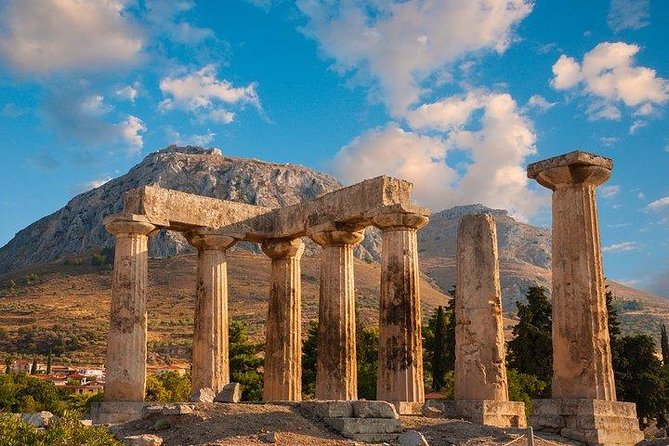
- Paul’s Corinth comes alive: Visit the Roman forum, Bema, Temple of Apollo, Cenchreae, and churches tied to Paul’s ministry.
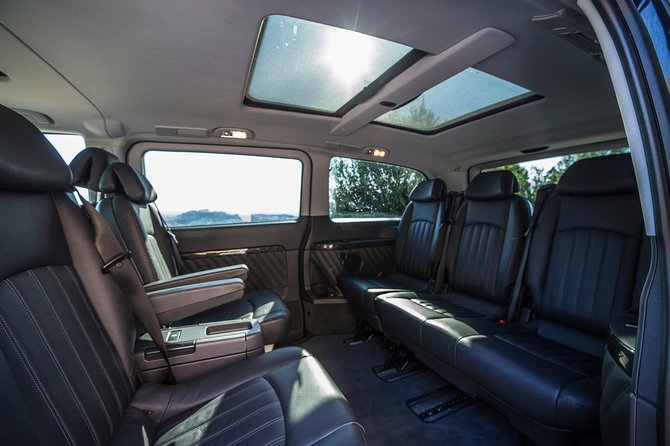
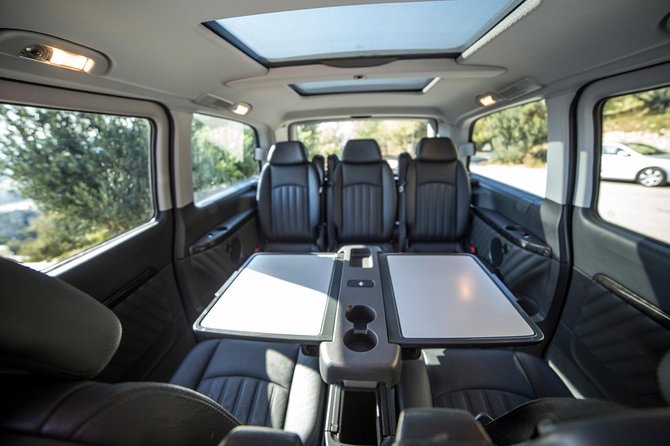
- A private car makes the long day easier: Hotel and port pickup, bottled water, air-conditioning, and onboard Wi-Fi are included.
- The route goes beyond Ancient Corinth: The Corinth Canal, Diolkos, Isthmia, and Acrocorinth add useful context.
- Your driver sets the pace: Alex, George, Stephanos, Panos, and other drivers have received strong praise for their patience and clear English.
- A licensed guide is extra: Site admission is also not included at Ancient Corinth and the Archaeological Museum of Isthmia.
- Plan for a full day: The outing lasts about eight to nine hours, with walking, stairs, ruins, and a possible climb at Acrocorinth.
Why Corinth matters to anyone reading Paul
Corinth was not a quiet religious outpost. It sat on the narrow isthmus linking mainland Greece with the Peloponnese, making it a natural crossing point for trade, armies, sailors, athletes, and ideas.
Paul spent about 18 months here around AD 51 and 52. He worked as a tentmaker, preached, and helped form one of the earliest Christian communities in Greece. His letters to the Corinthians address arguments, ethics, worship, spiritual gifts, resurrection, and the hard work of holding a divided community together.
That setting matters. Corinth was prosperous, worldly, and religiously varied. Paul was not speaking to people cut off from the wider world. He was working in a port city exposed to Greek traditions, Roman power, commercial ambition, public entertainment, and many competing gods.
This tour is at its best when it helps you picture that setting. You are not simply checking off an ancient temple. You are following the roads and harbors through which people, goods, and beliefs moved.
More Athens trips worth a second look
- Athens: Acropolis & up to 5 Archaeological Sites Combo Pass
★ 4.4 · 12,619 reviews - Athens: Acropolis Ticket with Optional Audio or Live Guide
★ 4.2 · 11,055 reviews - Athens: Acropolis, Parthenon & Acropolis Museum Guided Tour
★ 4.8 · 9,316 reviews
Mars Hill gives the day a strong beginning
The first stop is Areopagus Hill, also called Mars Hill, in Athens. Here Paul addressed the council of Athens and spoke about the city’s altar to an unknown god, using familiar religious ideas as a bridge to his Christian message.
You get about 20 minutes at the site, with no admission fee. The stop is brief, but it gives the day a clear starting point: Paul’s message began in Athens and continued west toward Corinth.
The description places the stop near the sacred grounds of the Acropolis. Confirm the exact walking point and timing with your driver, especially if you have already visited the Acropolis or have a tight schedule. This is a reflective stop rather than a full Acropolis visit.
The Corinth Canal explains the region’s geography
Leaving Athens, you reach the Corinth Canal. From the high viewpoint, you can look down into the narrow cut and watch boats pass between the steep limestone walls.
The canal is 6.4 kilometers long and only about 21.4 meters wide at its base. It has no locks because it was dug at sea level. Modern ships often cannot use it, but its purpose is easy to understand: it cuts across the Isthmus of Corinth and links the Gulf of Corinth with the Saronic Gulf.
Allow about 30 minutes. The stop works well early in the day because it gives you a physical sense of why Corinth mattered. The Peloponnese almost becomes an island here, and you can see how a short overland crossing once saved ships from sailing around the peninsula.
The viewpoint is also a practical break after the drive from Athens. Bring a light layer and sensible shoes. The main value is the broad view, not a long walk.
Diolkos shows how ships crossed before the canal
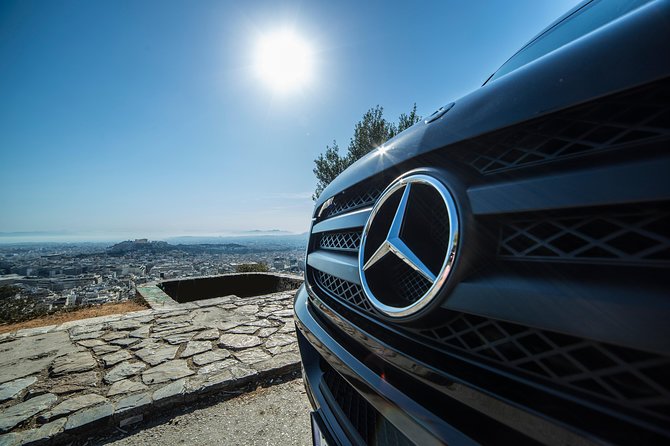
Near the canal, the remains of the Diolkos offer a more surprising piece of engineering. In ancient times, ships and cargo could be moved overland across part of the isthmus.
This was not the modern canal, but it served the same basic problem: moving between the Aegean and Ionian seas without making the long trip around the Peloponnese. The surviving roadway is modest, so you will need some imagination. Your driver can help explain how it fit into the ancient transport system.
The visit takes about 20 minutes and has no listed admission fee. I find this stop valuable because it turns Corinth’s geography into a human story. Merchants, sailors, and port workers were solving practical problems here long before Paul arrived.
A different kind of day out, same corner of Greece:
- Athens: Cape Sounion & Poseidon Temple Sunset Half-Day Trip
★ 4.8 · 8,241 reviews - Athens: Acropolis and Parthenon Guided Walking Tour
★ 4.6 · 5,882 reviews - All Day Cruise -3 Islands to Agistri,Moni, Aegina with lunch and drinks included
★ 5.0 · 4,958 reviews - Athens, Piraeus, and Coastline: Blue Hop-On Hop-Off Bus
★ 3.9 · 4,849 reviews
Isthmia connects Paul with the ancient games
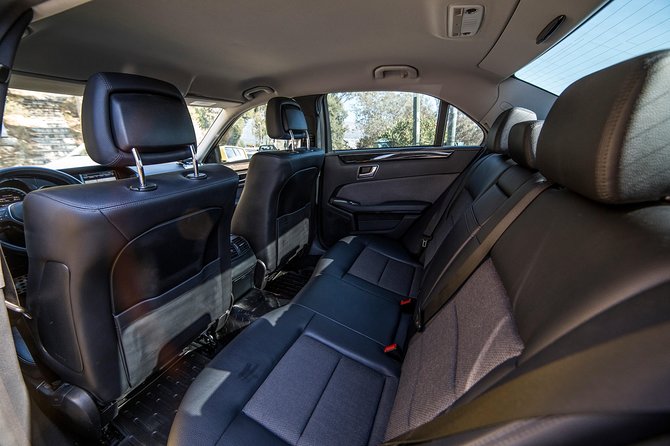
Isthmia was home to the Isthmian Games, one of the most important athletic festivals in the Greek world. The games honored Poseidon and drew athletes and spectators from across Greece.
The site’s location is not accidental. Isthmia sat where the Peloponnese met the mainland, close to roads, ports, and the canal route. In Paul’s time, this was a place where people gathered for sport, worship, business, and conversation.
The tour allows about an hour here. The connection to Paul is especially interesting because he worked as a tentmaker. The account presented on the tour links his trade with the visitors and athletes who came to the games, though you should treat the exact lodging connection as an interpretation rather than a firmly documented event.
Paul often used athletic images in his letters. Seeing the stadium and sanctuary gives those references a real setting. You can better understand why images of running, training, discipline, and winning a prize would speak to people who knew the games firsthand.
The Isthmia Museum fills in the missing details
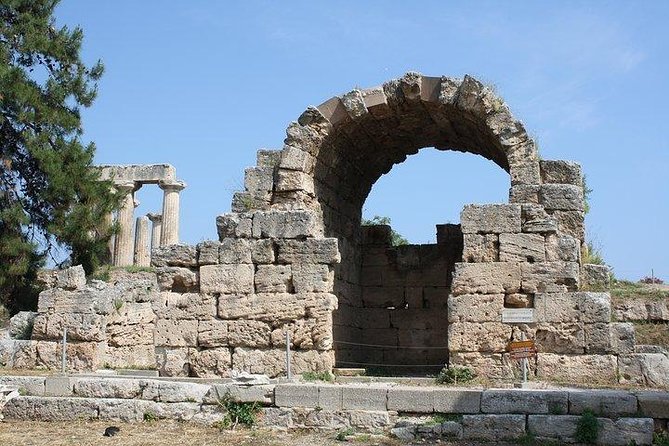
The Archaeological Museum of Isthmia helps you read the sanctuary through its objects. It includes material from the Sanctuary of Poseidon, along with statues, votive offerings, and burial finds.
One unusual highlight is a group of glass panels from Kenchreai, the eastern port of Corinth. Kenchreai is the ancient Cenchreae mentioned in connection with Paul’s departure for Syria. These objects give you a more intimate sense of the people, customs, and craftsmanship of the area than the scattered stones outside can provide.
Plan about 30 minutes. Admission is not included. The stated combined entrance cost for Ancient Corinth and the Archaeological Museum of Isthmia is €15 per person, payable on site.
The museum is small enough to visit without losing the day to indoor exhibits. Still, if you want full explanations of the objects, a licensed guide becomes more useful here. Your driver can offer commentary during the journey, but he will not accompany you inside the archaeological areas.
Ancient Corinth is the emotional center
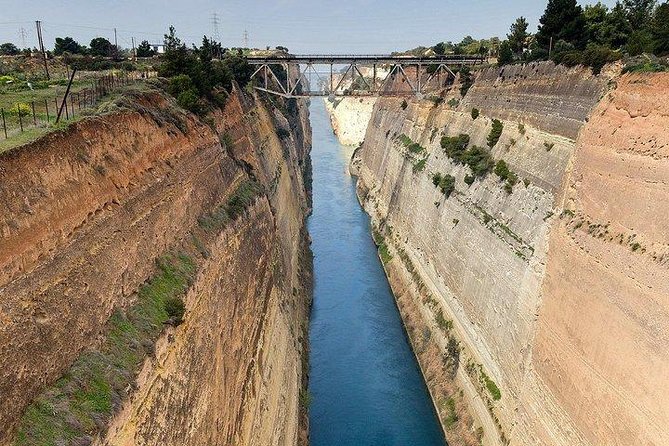
Ancient Corinth is the heart of the experience. This is where Paul lived and worked for more than a year, and where the Christian community addressed in his letters took shape.
The archaeological site includes the Roman forum, public buildings, streets, and the Bema, or judgment platform. The Bema is linked with Paul’s appearance before Proconsul Gallio, described in Acts. Gallio declined to treat the dispute as a Roman legal matter, allowing Paul to continue his work.
The Bema is not a theatrical reconstruction. It is a stone platform in a larger Roman setting, and the wider site takes some time to understand. That is precisely why preparation helps. Before you go in, ask your driver to point out what to look for and explain the layout. Several people have found that this advance briefing made the self-guided visit work well.
You get about an hour at Ancient Corinth, but a private tour may give you more flexibility. Some groups have spent longer at the ruins or adjusted the order of stops. Admission is extra, and this is the place where the lack of an included site guide matters most.
If you want a detailed reading of the forum, temple, inscriptions, and Bema, pay for the optional licensed guide. If you prefer wandering at your own pace and already know the Acts account, the driver’s pre-visit explanation may be enough.
The Temple of Apollo puts Paul’s challenge in view
The Temple of Apollo is one of the clearest visual reminders of the religious world Paul entered. Built around 560 BC, it is associated with early Doric architecture and retains massive monolithic columns.
In Paul’s day, the temple would have been a major feature of Corinth. Its columns make the ancient city easy to picture, even though much of the surrounding urban area is now gone.
The stop lasts about 30 minutes and has no separate listed admission because it is within the Ancient Corinth visit. It is a strong place to pause and consider the contrast between the city’s long-established worship and Paul’s message about one God and Christ.
Do not expect to walk through a complete temple complex. The surviving columns are impressive, but the stop is mainly visual and interpretive. It works best when paired with the forum and Bema rather than treated as a stand-alone attraction.
Cenchreae follows Paul to the sea
Kechries is the modern location associated with ancient Cenchreae, Corinth’s eastern port. Acts describes Paul leaving from here for Syria with Priscilla and Aquila after cutting his hair to fulfill a vow.
The site also connects with Phoebe, whom Paul commends in his letter to the Romans as a servant of the church at Cenchreae. That detail gives the stop added weight. Paul’s network was not limited to famous male apostles. Women held important roles in the early Christian communities.
Today, the visit is quiet and coastal, with the remains spread around a peaceful setting. Allow about 30 minutes. You will not find a large, fully rebuilt port city, so come for the connection and the setting rather than a long archaeological walk.
For anyone focused on Paul’s journeys, this may be one of the most satisfying stops. You are tracing the point where the Corinthian story continued across the sea.
Churches and local stops add a modern layer
The Church of Apostle Paul in Apostolou Pavlou honors the years Paul spent in Corinth. You have about 20 minutes here, enough for a short visit and a moment of reflection.
The church is not an ancient ruin, but it shows how Paul’s memory remains part of local religious life. It also breaks up the sequence of archaeological sites with a living place of worship.
The route includes additional stops at the ancient theater of Isthmia and places tied to Isthmia’s political and military importance. The theater once hosted musical contests connected with the Isthmian Games and featured Roman mosaics with sea creatures and Dionysian scenes.
These stops help you picture Isthmia as more than a sports venue. It was also a meeting place where political decisions and alliances took shape. Paul’s preaching took place in a region already used to public debate, religious ceremony, and international contact.
Some of these entries have no separate duration listed, so ask your driver how much time is practical on your date. The private format helps here, since the order can be adjusted around opening hours, weather, and your interests.
Acrocorinth rewards strong legs
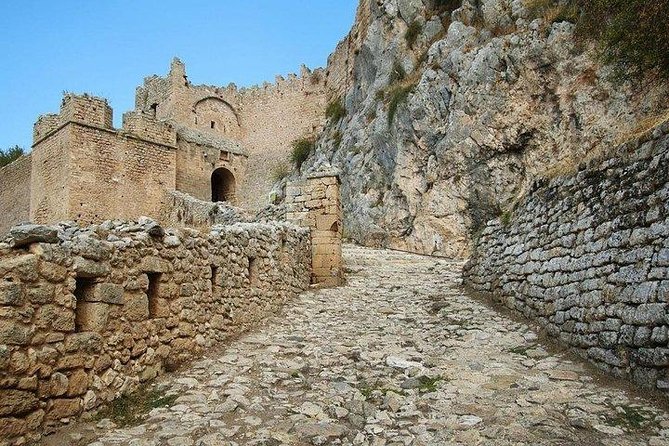
Acrocorinth is the high fortress above Ancient Corinth. The climb offers wide views over the former city, the isthmus, and the surrounding countryside.
This is also the most physically demanding part of the day. One hour is allowed, but the actual effort depends on how far you go and how long you pause. Several visitors have found the ascent harder than expected, yet worthwhile for the view. Wear shoes with a firm sole, and tell the driver if your group needs a slower pace.
The route associates Acrocorinth with Paul’s time in the area, though there is no firm evidence that he stood at a particular viewpoint. Think of this stop as a way to read the setting from above, not as a precisely documented Paul site.
The fortress can be a highlight for anyone interested in Greek history, not only biblical history. If you have limited mobility or dislike uneven paths and climbs, ask about shortening or dropping this stop.
Lunch is part of the value
The day includes a leisurely lunch at a traditional seaside Greek taverna when you choose the option with Greek traditional food. Some groups have eaten near Ancient Corinth, while others have stopped at a restaurant with a view near Acrocorinth.
The meal matters because this is a long day. A rushed sandwich would make the schedule feel like a race between ruins. A proper taverna meal gives you time to sit, recover, and enjoy local food.
Lunch is included only with the traditional-food option, so check the booking choice carefully. You can also choose to pack your own lunch. One group did this to save time, while another praised a generous meat platter served near the ruins.
The private driver can often help with the menu and suggest a suitable stop. That is useful if you want familiar dishes explained or need to keep the meal within a particular time.
What the private driver does well
The strongest part of this experience is the human service between the sites. Drivers including Alex, George, Stephanos, Panos, Vasilis, and others have been praised for clear English, safe driving, patience, flexibility, and useful historical commentary.
You may hear stories during the drive, ask questions, stop for coffee, or take a quiet stretch without conversation. Drivers have also helped with photographs, restaurant menus, bathroom breaks, and timing.
But keep the role clear. The included driver is not licensed to lead you inside the archaeological sites. He can explain what you are about to see and answer questions in English, but you explore Ancient Corinth, Isthmia, and the museum independently unless you arrange a licensed guide.
That distinction should shape your expectations. This is a private transport and commentary service with a strong biblical focus, not a traditional guided archaeological tour.
Is the price fair for a day from Athens?
At $218.43 per person, the price is easiest to justify for a small group that values door-to-door transport and flexibility. A private air-conditioned vehicle from Athens, hotel or port pickup, bottled water, Wi-Fi, and an eight to nine-hour route cover a lot of ground.
The price includes lunch only with the traditional-food option. It does not include the €15 per person entrance charge for Ancient Corinth and the Archaeological Museum of Isthmia, and it does not include a licensed site guide.
For two people, the cost is a serious outlay. For four people, the private arrangement becomes more attractive because you are sharing the vehicle and driver rather than paying for separate transfers. Group discounts may also be available.
A large part of the value is time. Public transport would not give you the same access to Diolkos, Cenchreae, Isthmia, Acrocorinth, churches, and the canal in one day. You also avoid planning each connection yourself.
Practical planning for an eight-hour Corinth day
Pickup is available from a hotel, apartment entrance, or port gate. The start time can be adjusted on request, and the driver returns you to the original location or another agreed point.
If you are arriving by cruise ship, give the operator your exact ship schedule and build in a safety margin. One driver reportedly worked hard to help a group return before sailing, but ship departures leave little room for traffic or delays.
Contact the company ahead of time to confirm the meeting point. At a hotel, the driver waits in the lobby. At a port, he waits at the gate with a sign bearing your name.
Most people can participate, and the tour is near public transport, though the long day includes walking over uneven archaeological ground and possibly climbing at Acrocorinth. Free cancellation is available until 24 hours before the start time. Changes or cancellations inside that window are not accepted for a refund.
Who should book this Corinth tour?
Book it if you want Paul’s Corinth explained as a connected story rather than as one isolated ruin. It suits Christian visitors, readers of Acts and the Corinthians letters, and anyone who wants Ancient Corinth combined with the canal, ports, Isthmia, and Acrocorinth.
It is also a good choice if you value privacy, hotel pickup, flexible pacing, and a driver who can adjust the day around your interests. Previous groups have changed the route after already visiting central Athens sites, spent extra time at the fortress, or chosen a different lunch plan.
Think twice if your priority is a formal lecture inside every archaeological site. The extra licensed guide is the answer, but you need to request it and pay more. Also think twice if your group dislikes long drives, outdoor ruins, or uphill walking.
For most people, the best version of this outing is simple: ask for the licensed guide if Ancient Corinth is your main reason for coming, wear good shoes, confirm the pickup details, and leave enough time for lunch and Acrocorinth. If you want a personal, faith-focused day that reaches well beyond the usual Athens sights, this is a strong choice.
FAQ
How long does the tour from Athens to Corinth last?
The experience lasts approximately eight to nine hours.
Is this a private tour?
Yes. Only your group participates, and the pickup time can be adjusted on request.
Does the tour include hotel or port pickup?
Yes. Pickup and drop-off are included from hotels, apartment entrances, and cruise ports.
Is a licensed tour guide included?
No. The included driver is not a licensed guide and does not enter the archaeological sites with you. A licensed guide may be arranged on request, depending on availability, for an additional cost.
Are entrance fees included?
No. Admission to Ancient Corinth and the Archaeological Museum of Isthmia is not included. The stated combined fee is €15 per person and can be paid on site.
Is lunch included?
Lunch is included when you select the With Greek Traditional Food option. You may also choose to bring your own lunch.
What language is the tour offered in?
The tour is offered in English. Drivers provide commentary in fluent English.
Does the vehicle have Wi-Fi and air-conditioning?
Yes. Private transportation, an air-conditioned vehicle, onboard Wi-Fi, and bottled water are included.
Can I cancel for a full refund?
Yes, if you cancel at least 24 hours before the experience start time. Cancellations or changes made less than 24 hours in advance are not refunded or accepted.
Recently reviewed around Athens
- Small-Group Women History in Ancient Greece Walking Tour★ 5.0 · 38 reviews
- Ceramic and Pottery Creative Workshop with Two Local Artists★ 4.0 · 57 reviews
- Athens: Wine Workshop Create your Own Wine under the Acropolis★ 5.0 · 77 reviews
- Athens: Greek Wines Tasting with Sommelier and Acropolis Views★ 5.0 · 88 reviews
- Small-Group Wine Tour in Athens with Tasting★ 5.0 · 33 reviews
- Wine Trails Private Tour/ Nemea visit 3 wineries from Athens or Nafplion (10 h)★ 5.0 · 44 reviews
- Hydra Private Day Trip by Ferry from Athens with Transfers★ 4.0 · 30 reviews
- Private Athens Transfer Airport/Port -Greek Tours-Hourly service★ 5.0 · 88 reviews
Athens Tours, compared.

Acropolis & up to 5 Archaeological Sites Combo Pass
Read our review →

Acropolis, Parthenon & Acropolis Museum Guided Tour
Read our review →
Cape Sounion & Poseidon Temple Sunset Half-Day Trip
Read our review →
All Day Cruise -3 Islands to Agistri,Moni, Aegina with lunch and drinks included
Read our review →