Reviewed · ATHENS TOURS
Biblical Tour Letters to The Corinthians – St Paul’s Footsteps
Paul’s Corinth comes alive on this long day from Athens. You’ll visit the Bema where Paul faced Gallio, walk among the ruins of Ancient Corinth, and trace his route to Cenchreae, the port where he sailed for Syria. The journey also links Paul’s preaching to the athletic world of the Isthmian Games.
I like the private format and the freedom to adjust the day. Drivers such as Alex, Kostas, Spyros, and Constantine have been praised for their local knowledge, patience, and ability to add unscheduled stops. I also like the range of places covered, from Mars Hill in Athens to the quieter coastal ruins at Kechries.
The main caution is the guide arrangement. Your driver can explain the sites but cannot enter them as an official guide. If you want detailed commentary inside Ancient Corinth and Isthmia, request a licensed guide in advance. The day can also feel rushed if you try to see every stop.
In This Review
- Key points at a glance
- Why Paul’s Corinth makes a strong day trip from Athens
- From Mars Hill to the Corinth Canal
- The Diolkos and the ancient shortcut across Greece
- Isthmia, the games, and Paul’s working world
- Ancient Corinth and the Bema of Gallio
- Cenchreae, the port, and the quieter side of the tour
- A church, lunch, and the climb toward Akrokorinthos
- What the driver and guide arrangement really means
- Is the $386.18 price good value?
- Who should book this Corinth tour?
- Should you book it?
- FAQ
- How long does the tour last?
- How many people can join the private tour?
- Is pickup included?
- Is the tour offered in English?
- Is a licensed tour guide included?
- What does the tour include?
- Are lunch and entrance fees included?
- Can I cancel for a full refund?
Key points at a glance
- Paul’s sermon site: Begin at Areopagus Hill, where Paul addressed the Athenians about the Unknown God.
- Private transport: Your group of up to four has an air-conditioned vehicle, WiFi, bottled water, and pickup from your accommodation.
- Flexible route: You can spend more time in Corinth and less time in Athens if you have already visited the Acropolis and Mars Hill.
- Ancient Corinth’s key scenes: See the Bema, Roman Forum, Temple of Apollo, and the place tied to Paul’s trial before Gallio.
- Beyond the main ruins: Visit Isthmia, the Diolkos, Cenchreae, and Akrokorinthos for a wider picture of Paul’s world.
- Extra costs: Lunch is not included, and entrance fees are separate. The listed admission cost is €15 per person for Ancient Corinth and the archaeological museum named in the tour details.
Why Paul’s Corinth makes a strong day trip from Athens
This is not simply a drive to a famous archaeological site. It follows the geography of Paul’s work. You begin in Athens, where he spoke before the Areopagus, then cross the narrow Isthmus of Corinth and reach the city where he lived and preached for about 18 months around AD 51 to 52.
That physical connection matters. Paul’s letters to the Corinthians were written to a real community in a busy commercial city. Corinth sat between mainland Greece and the Peloponnese, with ports on both sides and a steady flow of merchants, sailors, athletes, officials, and religious pilgrims.
The private car makes the route far easier than piecing it together with public transport. You are not tied to a large group or a fixed walking pace. You can ask to linger at the Bema, shorten a stop you find less interesting, or use extra time for places in Corinth if you have already seen the Acropolis.
The tour costs $386.18 per group of up to four. For four people, that is a reasonable price for a full private vehicle and an eight-hour day. For one or two people, the cost per person is higher, but the convenience is still useful if you want pickup, a direct route, and a driver who can shape the day around your interests.
More Athens trips worth a second look
- Athens: Acropolis & up to 5 Archaeological Sites Combo Pass
★ 4.4 · 12,619 reviews - Athens: Acropolis Ticket with Optional Audio or Live Guide
★ 4.2 · 11,055 reviews - Athens: Acropolis, Parthenon & Acropolis Museum Guided Tour
★ 4.8 · 9,316 reviews
From Mars Hill to the Corinth Canal
Areopagus Hill is the tour’s opening Christian-history stop. It sits beside the Acropolis, on sacred ground crowded with layers of Athenian history. Here Paul spoke to the council of Athens about the altar dedicated to an Unknown God, presenting Christianity to an audience shaped by philosophy, public debate, and many competing beliefs.
You receive about 20 minutes at the hill. That is enough to connect the place with the Book of Acts and take in the setting, but it is not a long Acropolis visit. The tour does not function as a full Athens sightseeing day, so you should already have a plan for the Parthenon if that is important to you.
One useful feature of the private format is that you can skip Mars Hill if you have already been there. One group did exactly that and used the saved time for Corinth. Tell the driver at the start what you have already seen and what matters most to you.
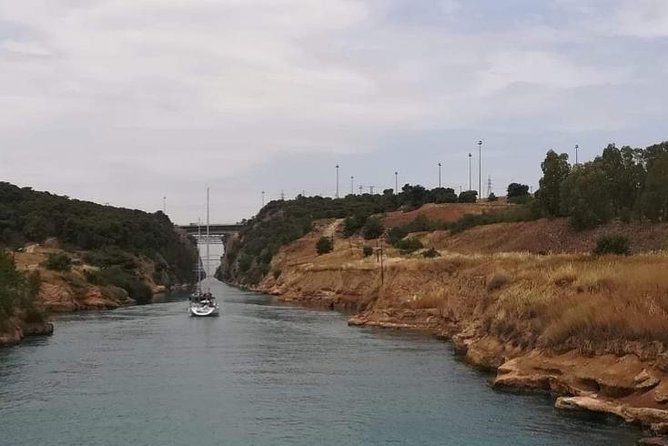
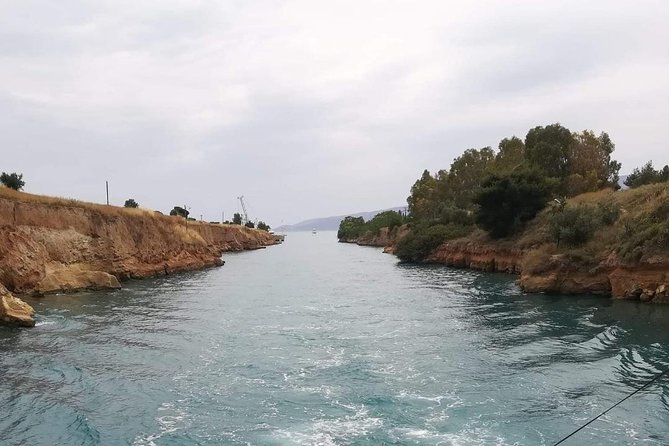
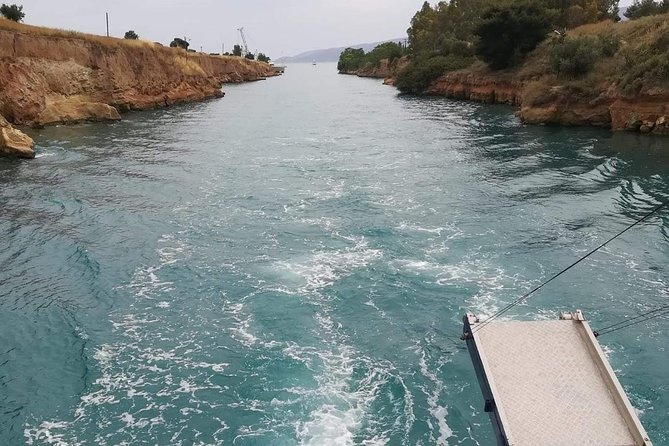
The drive west then leads to the Corinth Canal. The canal is a modern cut through the Isthmus, completed in the 19th century, but the idea reaches back to Periander, the ruler of ancient Corinth. Before the canal, ships had to travel roughly 185 extra nautical miles around the Peloponnese.
You have about 30 minutes here. The stop is short, but the scale of the cut is impressive. It also helps you understand Corinth’s importance. This narrow strip of land connected routes between the Aegean and Ionian Seas and made the area a natural center for trade and movement.
The Diolkos and the ancient shortcut across Greece
The Diolkos offers an older answer to the same transport problem. In antiquity, ships and cargo were moved across the Isthmus instead of sailing around the Peloponnese. It was a major feat of planning and labor, and it gives you a practical sense of how goods moved through Corinth before the modern canal.
You have around 20 minutes at the site. Do not expect a large museum or a long guided walk. Its value comes from seeing the route as part of the wider setting. Paul traveled through a world where ports, roads, cargo routes, and commercial hubs shaped the spread of ideas.
This is also a good place to ask your driver questions about the route. The drivers are not licensed guides and do not enter archaeological sites with you, but they are described as fluent English speakers with strong knowledge of local history. That arrangement works best if you enjoy a conversational introduction in the car and are comfortable exploring the ruins independently.
Isthmia, the games, and Paul’s working world
Isthmia is one of the most interesting parts of the day because it connects Paul with ordinary work and public life. The area hosted the Isthmian Games, one of the major athletic contests of the ancient Greek world after the Olympics. The games honored Poseidon and drew athletes and spectators from across Greece.
Paul is traditionally linked with tentmaking in the region. The tour presents the idea that he worked near the games, serving athletes and visitors while speaking about Christ. The wording matters here: the connection is historically meaningful, but not every detail can be proven from surviving evidence. You should treat the tentmaker-and-games story as a carefully presented reconstruction rather than a documented day-by-day account.
You spend about an hour around Isthmia, followed by roughly 30 minutes at the Archaeological Museum of Isthmia. The museum helps explain the sanctuary of Poseidon and the religious world Paul encountered. Its collection includes statues, votive objects, burial finds, and glass panels from Kenchreai.
The glass panels are especially useful because Kenchreai was the port from which Paul departed for Syria. They link the inland sanctuary, the port, and the wider commercial network around Corinth.
A separate archaeological area includes the Temple of Poseidon, the ancient stadium, and the Sanctuary of Palaimon, a deity connected with sailors. The ancient theater, used for musical events during the games, adds another layer. Roman mosaics with sea creatures and Dionysian scenes show how different the public culture of the area was from the Christian message Paul preached.
The itinerary also points out Isthmia’s role as a meeting place for political and military decisions. That detail helps place Paul’s ministry in a setting where public authority, religion, sport, and trade all met. He was not preaching in an isolated village. He was speaking in a region where people, money, and ideas crossed paths.
A different kind of day out, same corner of Greece:
- Athens: Cape Sounion & Poseidon Temple Sunset Half-Day Trip
★ 4.8 · 8,241 reviews - Athens: Acropolis and Parthenon Guided Walking Tour
★ 4.6 · 5,882 reviews - All Day Cruise -3 Islands to Agistri,Moni, Aegina with lunch and drinks included
★ 5.0 · 4,958 reviews - Athens, Piraeus, and Coastline: Blue Hop-On Hop-Off Bus
★ 3.9 · 4,849 reviews
Ancient Corinth and the Bema of Gallio
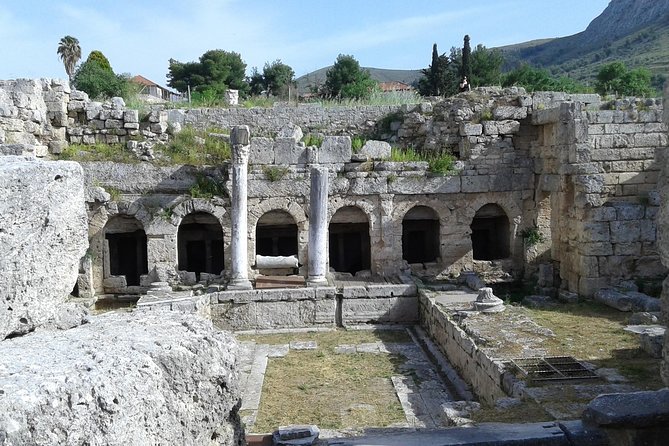
Ancient Corinth is the centerpiece. Allow at least an hour here, and more if you can arrange it. The ruins are spread through the old city, with the Temple of Apollo and the Roman Forum providing the clearest visual link to Paul’s surroundings.
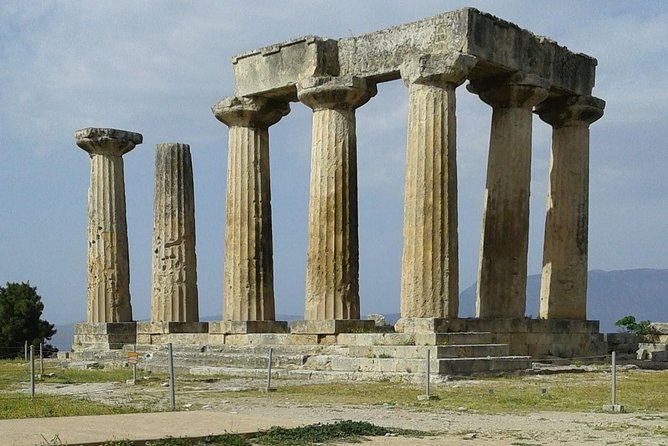
The Temple of Apollo dates to about 560 BC and is known for its large limestone columns. Only some remain, but they are enough to suggest the scale of the earlier sanctuary. When Paul arrived, temples such as this formed part of the city’s religious life. His teaching about one God and Christ crucified challenged a public world filled with established gods, rituals, and sacred buildings.
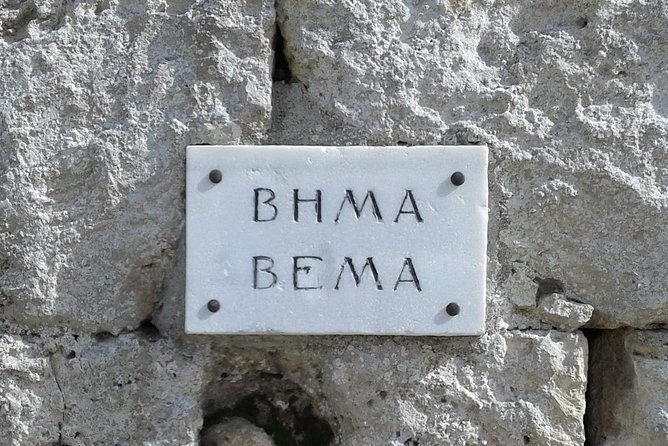
The Bema is the most direct connection to Paul. This stone platform in the Roman Forum is associated with the account in Acts in which Paul was brought before Gallio, the Roman proconsul. Gallio treated the accusation as a dispute within Jewish religious practice and declined to intervene.
That decision allowed Paul to continue his work without Roman punishment over the matter. Standing near the Bema gives you a strong link between a biblical passage and a specific civic setting. It is one of those places where the text becomes easier to picture because the basic stage is still visible.
Admission is not included. The tour information lists a €15 per-person fee for Ancient Corinth and the archaeological museum named in the inclusions section. Since the itinerary also includes the Museum of Isthmia, ask the provider which tickets are covered by that amount before the day begins. Carry water and wear shoes suited to uneven archaeological ground.
Cenchreae, the port, and the quieter side of the tour
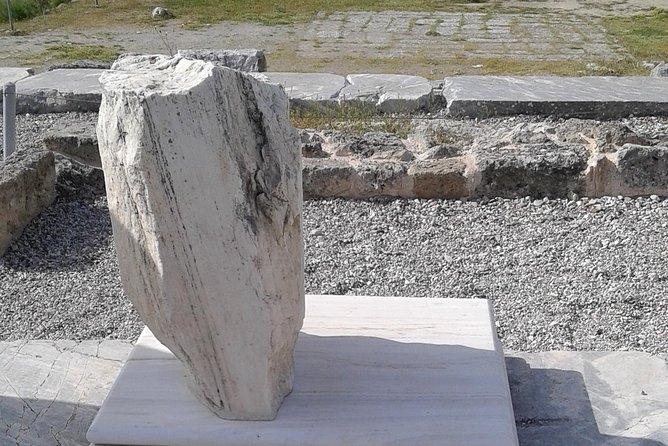
Kechries is the modern site of ancient Cenchreae, Corinth’s eastern port. The stop lasts about 30 minutes and feels different from Ancient Corinth. Instead of a large ruin field, you get a quieter coastal setting tied to Paul’s departure for Syria during his second missionary journey.
Acts 18:18 connects Paul with Cenchreae and records that he cut his hair before sailing, apparently in fulfillment of a vow. The port also matters because Paul’s letter to the Romans commends Phoebe, a servant of the church at Cenchreae. That reference gives the site an important connection to the growth of an early Christian community and to the role of women in the church.
Do not expect a fully restored harbor complex. The power of Kechries comes from the location and the biblical link. It is a reflective stop, not a place that requires a long visit.
A church, lunch, and the climb toward Akrokorinthos
Apostolou Pavlou Church provides a modern Christian pause after the ancient ruins. The church honors Paul’s 18-month mission in Corinth and his role in establishing one of the earliest Christian communities in Greece. You have about 20 minutes here, enough for quiet reflection and a look at how Paul is remembered in the city today.
Lunch is taken at a traditional seaside Greek taverna in Corinth and lasts about an hour. It is not included in the price, so plan to pay separately. The restaurant is selected as part of the day’s route, but the supplied details do not specify the menu or exact cost. Ask your driver about timing if you would rather have a quick meal and use the extra minutes at Ancient Corinth.
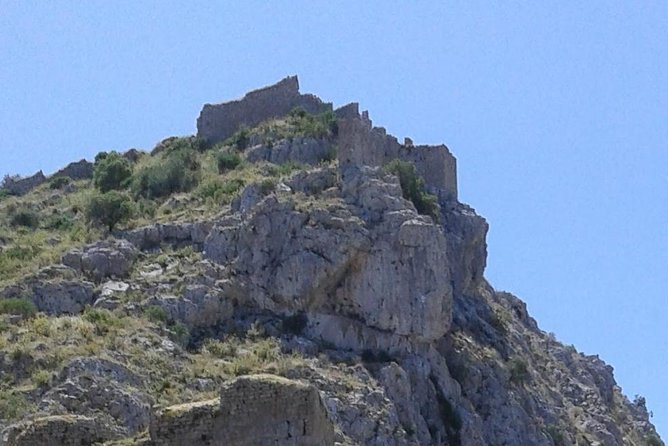
Akrokorinthos is the final major stop. This fortress rises above Ancient Corinth and gives you broad views of the city and the Isthmus. The tour allows about 40 minutes, which is enough for a taste of the site and its outlook, but not a full exploration of every wall and path.
The ascent and uneven surfaces may make this the most physically demanding stop. If you prefer history to climbing, tell your driver. The private setup lets you make a sensible choice rather than follow a group through every section.
What the driver and guide arrangement really means
Your driver is central to the experience. Names associated with strong service include Alex, Michael, Pantelis, Vicky, Kostas, Spyros, Constantine, Pericles, and Kosta. The strongest pattern is not a single scripted presentation, but flexible help with timing, local roads, historical background, and photo stops.
Michael was paired with the guide Pantelis, who provided detailed interpretation while Michael handled the driving. Vicky and Kostas were also praised for combining biblical context with practical route knowledge. These examples show the benefit of booking a licensed guide when you want full explanations at the sites.
The standard driver is not an official guide and will not accompany you inside the archaeological areas. That is the most important point to understand before booking. You can still receive useful commentary in fluent English during the drive, but the level of detail inside each ruin depends on the information available at the site and on whether you add a licensed guide.
The private format also means the day is shaped by your group. Some people value a brisk route that covers every location. Others want time to read inscriptions, pray, take photographs, or sit quietly at the Bema. Say this clearly at the beginning. One group found a six-hour finish too quick because they wanted to linger, while other groups appreciated being allowed to set their own pace.
Is the $386.18 price good value?
For up to four people, the price can work well. You receive private transportation, pickup from your accommodation, air conditioning, WiFi, bottled water, and a full route that would be awkward to arrange independently in one day.
The value is strongest for families, couples traveling with friends, and Christian groups that want a focused Corinth itinerary. It is less compelling if you only want the Corinth Canal and Ancient Corinth, since a shorter private transfer may suit you better.
Budget separately for lunch, site admissions, and a licensed guide if you want one. The entrance fee is listed as €15 per person for Ancient Corinth and the archaeological museum named in the tour details. Confirm the exact ticket coverage, since the route includes both the Museum of Isthmia and other archaeological areas.
Pickup is included, and free cancellation is available up to 24 hours before the start time. The experience is offered in English and is described as suitable for most people, though Akrokorinthos and the archaeological sites include uneven ground and walking.
Who should book this Corinth tour?
I would choose this tour if Paul’s ministry is the main reason you want to see Corinth. The route gives you biblical places, ancient pagan sanctuaries, ports, athletic grounds, and the civic setting where Paul faced Roman authority.
I would also recommend it if you want privacy and control. You can skip places you have already seen, adjust the pace, and ask for extra time in Corinth. The driver’s local knowledge can make the day feel more personal than a fixed coach excursion.
I would think twice if you want a formal lecture at every ruin. The standard service is driver commentary, not a licensed archaeological guide. Add the guide in advance and agree on a slower schedule if detailed interpretation matters to you.
Should you book it?
Book this private St. Paul tour if you want to connect the Bible with real places and prefer a flexible car journey over a fixed group outing. The Bema, Temple of Apollo, Cenchreae, and Mars Hill give the day a clear story, while Isthmia and the Diolkos add context that many shorter Corinth trips leave out.
Before paying, confirm the vehicle type, entrance coverage, lunch timing, and guide arrangement. If you have already visited Mars Hill, ask to use that time in Corinth. With those details settled, the tour offers a useful and personal way to understand the world Paul entered, worked in, and changed.
FAQ
How long does the tour last?
The tour lasts approximately eight hours.
How many people can join the private tour?
The price covers one private group of up to four people.
Is pickup included?
Yes. Pickup is offered from your place, with private transportation provided.
Is the tour offered in English?
Yes. The tour is offered in English, and the drivers can provide commentary in fluent English.
Is a licensed tour guide included?
No. The standard service includes professional drivers with historical knowledge, but they are not licensed guides and do not accompany you inside the sites. A licensed guide may be arranged on request, subject to availability.
What does the tour include?
The tour includes WiFi on board, a luxurious air-conditioned vehicle, bottled water, and private transportation.
Are lunch and entrance fees included?
No. Lunch is separate. The listed entrance cost is €15 per person for Ancient Corinth and the archaeological museum named in the tour details. Confirm the exact ticket coverage before departure.
Can I cancel for a full refund?
Yes. You can cancel at least 24 hours before the experience start time for a full refund. Changes or cancellations made less than 24 hours before the start time are not accepted for a refund.
Recently reviewed around Athens
- Small-Group Women History in Ancient Greece Walking Tour★ 5.0 · 38 reviews
- Ceramic and Pottery Creative Workshop with Two Local Artists★ 4.0 · 57 reviews
- Athens: Wine Workshop Create your Own Wine under the Acropolis★ 5.0 · 77 reviews
- Athens: Greek Wines Tasting with Sommelier and Acropolis Views★ 5.0 · 88 reviews
- Hydra Private Day Trip by Ferry from Athens with Transfers★ 4.0 · 30 reviews
- Small-Group Wine Tour in Athens with Tasting★ 5.0 · 33 reviews
- Wine Trails Private Tour/ Nemea visit 3 wineries from Athens or Nafplion (10 h)★ 5.0 · 44 reviews
- Private Athens Transfer Airport/Port -Greek Tours-Hourly service★ 5.0 · 88 reviews
Athens Tours, compared.

Acropolis & up to 5 Archaeological Sites Combo Pass
Read our review →

Acropolis, Parthenon & Acropolis Museum Guided Tour
Read our review →
Cape Sounion & Poseidon Temple Sunset Half-Day Trip
Read our review →
All Day Cruise -3 Islands to Agistri,Moni, Aegina with lunch and drinks included
Read our review →