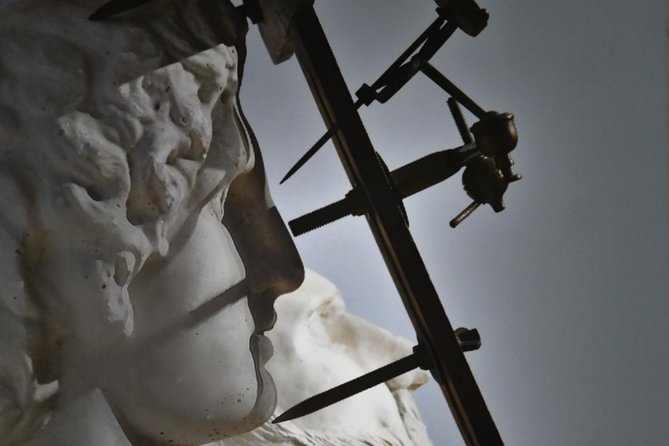
Reviewed · ATHENS TOURS
Discover your talent in sculpture, in a country where golden section was born.
The most unusual part of this Athens activity is the link between ancient Greek craft and modern game design. In a working studio in Kallithea, sculptor Manos introduces you to the tools and methods behind sculpture, then helps you make your own face of Hermes from Cretan clay. The same creative team also made armor and weapons for Assassin’s Creed Odyssey.
I like the hands-on format. You do not simply watch a demonstration or admire finished statues. You handle the tools, shape the clay, and leave with something you made. I also like the personal setting, which includes an ancient-style room, a small museum, discussion of Greek wine, and a look at the studio’s video-game work.
The main consideration is time. Two hours is enough for a satisfying introduction, but not enough to master sculpture or produce a museum-quality piece without help. The studio is also at Doiranis 39, away from the main Acropolis sights, so you will need to allow time to reach Kallithea.
In This Review
- Key Points Before You Book
- Why This Workshop Feels Different From a Museum Visit
- Entering the Ancient Room and Mini-Museum
- From Ancient Tools to Modern Props
- Shaping Your Own Face of Hermes
- Manos Makes the Class Approachable
- Is Two Hours Enough?
- The Price and What You Get for $58.05
- Getting to Doiranis 39 in Kallithea
- Who Will Enjoy This Most?
- Practical Details for a Smooth Visit
- Should You Book This Athens Sculpture Class?
- FAQ
- Where does the sculpture workshop take place?
- How long does the experience last?
- What will I make during the class?
- Can I take my sculpture home?
- Who teaches the workshop?
- Is this a private activity?
- Are beginners welcome?
- What is the cancellation policy?
- What are the opening hours?
Key Points Before You Book
- Make a Hermes sculpture: Use air-dry Cretan clay and sculpting tools to create your own face of the Greek god.
- Meet Manos: He guides the session with patience and adjusts his help to your pace and skill level.
- See Assassin’s Creed craftsmanship: The studio displays armor and weapons made for Assassin’s Creed Odyssey and related production work.
- Go beyond clay: The introduction covers ancient sculpting methods, from lost-wax casting to carving precious stone.
- Take home your work: Your finished sculpture becomes a personal Athens souvenir.
- Book with timing in mind: The session lasts about two hours, and free cancellation applies until 24 hours before the start time.
Why This Workshop Feels Different From a Museum Visit
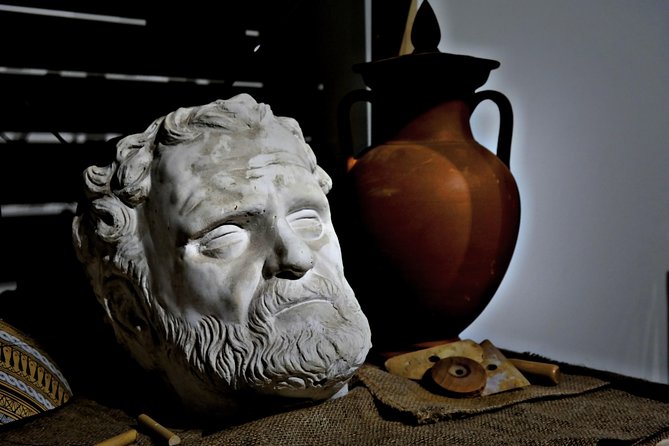
Athens gives you plenty of chances to look at ancient sculpture behind glass. This workshop changes your role. Instead of asking only how a Greek statue looks, you get to think about how an artist builds a face, removes material, creates balance, and brings expression out of a rough block.
That shift is valuable. Even a short session helps you notice the practical side of ancient art. A nose is not just a nose on a statue. It is a measured form that must be placed correctly. A mouth can alter the whole character of a face. Clay also makes you work slowly, since a small change in pressure can reshape the surface.
The studio’s connection to Assassin’s Creed Odyssey adds a modern twist. You can see selected weapons and armor made by the team involved with the game. That detail will be especially appealing if you enjoy video games, costume design, historical props, or the process of turning ancient research into something made for film and gaming.
Even if you do not know the game, the display gives the workshop a useful second angle. You see how ancient Greek ideas are re-created for a modern audience. The studio is not only presenting old techniques as museum subjects. It also shows how those skills can be used in present-day creative work.
More Athens trips worth a second look
- Athens: Acropolis & up to 5 Archaeological Sites Combo Pass
★ 4.4 · 12,619 reviews - Athens: Acropolis Ticket with Optional Audio or Live Guide
★ 4.2 · 11,055 reviews - Athens: Acropolis, Parthenon & Acropolis Museum Guided Tour
★ 4.8 · 9,316 reviews
Entering the Ancient Room and Mini-Museum
Your visit begins at the studio at Doiranis 39 in Athens, in the Kallithea area. The activity starts and ends at this same meeting point. Plan your route before leaving your hotel, since at least one participant found it a longer walk than expected from nearby accommodation and recommended taking a taxi.
Manos first shows you the ancient-style room and the studio collection. This short tour gives the clay lesson a setting and a story. You can look at sculpture-related objects, ancient-inspired pieces, armor, weapons, and other items before sitting down to work.
The small museum is an important part of the experience. It is not a separate, formal museum visit with a long sequence of galleries. Think of it as a compact collection attached to the studio. It helps you understand the maker’s interests and gives you something to explore while the clay is being prepared or discussed.
The setting also includes conversation about art and wine in ancient Greece. Manos is both an artist and a winemaker, so the wine subject is tied to his work rather than added as a random tasting stop. The supplied information does not promise a wine tasting, so you should treat this as discussion and cultural context, not as a guaranteed drink.
From Ancient Tools to Modern Props
After the introduction, you handle a selection of sculpting tools and learn what each one does. This is a useful stage because the tools can look simple until you try to control them. Some help remove clay, some shape a plane, and others refine small details.
The session also uses videos to explain ancient sculpting techniques. The exact length of the videos is not specified, but they are part of the teaching rather than a substitute for the practical work. You get a short visual explanation, then use your hands to test related ideas.
The workshop refers to several traditional methods, including lost-wax casting and precious stone carving. You will not complete a bronze statue or carve a gemstone in two hours. Instead, these topics show the wider range of sculpture and help place your clay exercise within a much larger craft tradition.
Lost-wax casting is particularly useful context. It explains how an artist can create a form in wax, prepare it for casting, and eventually produce a metal object. Precious stone carving introduces a completely different challenge, since stone cannot be pushed back into place once it has been removed. Clay is more forgiving, which makes it a sensible material for beginners.
The weapons and armor display gives you another way to think about tools and materials. Here, sculptural skill is used to develop objects with a practical or theatrical purpose. Fans of Assassin’s Creed Odyssey will appreciate the direct connection, while other visitors can still enjoy seeing how historical-looking equipment is made for a modern production.
Shaping Your Own Face of Hermes
The central project is a face of Hermes made from air-dry clay. Cretan clay gives the activity a clear Greek connection, but the material is also manageable for first-time sculptors. You can press, smooth, cut, and adjust the surface as Manos explains each step.
The instructions are designed for different skill levels. Manos has been praised for giving enough help without taking over the project. That matters because a beginner needs guidance on proportion and technique, but still wants the final piece to feel like their own work.
Expect to work on the basic shape first, then add facial details. Manos helps with finishing touches, especially when a feature needs adjustment. The goal is not to copy a full classical statue in miniature. It is to learn how a recognizable face develops from a simple piece of clay.
You may be surprised by the result. Several participants arrived with little confidence and left with a sculpture they felt proud to take home. That does not mean every piece will look perfect. Clay work is personal, and your result depends partly on how much detail you choose to add. The value is in the process, the instruction, and the memory attached to the finished object.
Air-dry clay also makes the souvenir practical. You do not need to arrange a kiln or wait for a firing service before leaving Athens. The activity information says you take your artwork home, and Manos carefully boxes finished pieces for transport. You should still handle it with care during the rest of your trip.
A different kind of day out, same corner of Greece:
- Athens: Cape Sounion & Poseidon Temple Sunset Half-Day Trip
★ 4.8 · 8,241 reviews - Athens: Acropolis and Parthenon Guided Walking Tour
★ 4.6 · 5,882 reviews - All Day Cruise -3 Islands to Agistri,Moni, Aegina with lunch and drinks included
★ 5.0 · 4,958 reviews - Athens, Piraeus, and Coastline: Blue Hop-On Hop-Off Bus
★ 3.9 · 4,849 reviews
Manos Makes the Class Approachable
The instructor is one of the strongest reasons to choose this activity. Manos is described as patient, encouraging, and good at pacing the class. If you work quickly, he can let you continue. If you need more help, he can explain the next step and assist with details.
That flexible pace is especially useful in a private activity. Only your group participates, so the session does not require you to keep up with a large class. A solo participant has also been accommodated, and the experience can work for couples, families, and small groups.
The workshop is suitable for people who think they have no artistic talent. You do not need previous sculpture experience, and the available information says most people can participate. The lesson is still worthwhile for anyone with some art experience, since you can spend more time refining the surface and facial expression.
The teaching style sounds friendly rather than formal. Expect stories about the studio’s work, clear demonstrations, and practical help at your table. The result is closer to a personal art lesson than a large commercial attraction.
Is Two Hours Enough?
For a first sculpture session, two hours is a good length. It gives you enough time for the studio tour, the cultural introduction, the tool lesson, and the clay project without turning the activity into a full-day commitment.
You should not expect a long academic lecture on Greek art. The experience offers selected ideas, videos, objects, and conversation before moving into the work. That balance suits a vacation day, especially if you want an activity that uses your hands after several hours of sightseeing.
The timing also makes this easy to fit into an Athens schedule. The published hours run from 9 a.m. to 10 p.m., Monday through Sunday, for the stated operating period. Late-evening sessions may be available, but you should confirm the time when booking rather than assume every hour is offered.
Because the session is private, you may have more freedom in choosing a suitable time. Still, availability can change, so ask before planning the rest of your day around a specific slot.
The Price and What You Get for $58.05
At $58.05 per person, this is not the cheapest way to spend two hours in Athens. You can visit public archaeological sites for less, and many museums offer a lower-cost cultural outing. The comparison is not quite fair, though, because this price includes instruction, studio access, a private session, a museum-style introduction, and a handmade souvenir.
The clay sculpture is the key value. You are not buying a mass-produced statue from a shop. You are making an object during the activity and taking that personal connection home. For couples, the experience also creates two separate keepsakes rather than one shared souvenir.
I would consider the price fair if you value participation and personal teaching. It is less compelling if you mainly want a quick historical talk or a polished finished artwork. The price makes more sense for someone who wants to spend time creating rather than simply collecting photographs.
Booking is typically done well ahead, with an average of about 28 days. That does not mean you must reserve exactly four weeks in advance, but it is a useful warning for a fixed Athens schedule. Free cancellation is available if you cancel at least 24 hours before the start time. Within 24 hours, the payment is not refunded, and late changes are not accepted.
Getting to Doiranis 39 in Kallithea
The meeting point is Doiranis 39, Athina 176 72, Greece. The activity ends at the same place. It is near public transportation, but the information provided does not specify a particular metro or bus route, so check your route using your hotel’s location and allow extra time.
A taxi is the simplest option if you are carrying luggage, traveling in the evening, or staying outside Kallithea. If you plan to walk, check the distance carefully. Kallithea is not beside the Acropolis, and a map can make the route look easier than it feels after a full day on foot.
Since this is a studio appointment, arriving at the right address matters. The host has greeted late-arriving participants outside, but you should not rely on that as a plan. Aim to arrive on time and keep the studio’s phone or booking details available in case you need help finding the entrance.
Who Will Enjoy This Most?
I would recommend this workshop to:
- Couples looking for a shared activity with a souvenir each
- Families with an interest in making things by hand
- Beginners who want calm, step-by-step instruction
- Art students or hobbyists curious about classical methods
- Assassin’s Creed Odyssey fans interested in armor and prop work
- Anyone who has already seen Athens museums and wants a more active cultural experience
It may be less suitable if you want a major archaeological site, a long guided tour, or a finished object made by a professional. The final sculpture will be yours, including its uneven edges and beginner mistakes. That is part of the charm, but it is worth knowing before you book.
The private format also makes this a good choice for people who dislike large groups. You can ask questions, work at your own speed, and spend more time on the parts that interest you.
Practical Details for a Smooth Visit
Wear clothes you do not mind getting dusty or marked with clay. The supplied information does not state a dress code or provide details about washing facilities, so keep your clothing practical and avoid bringing anything delicate.
The activity is mobile-ticket friendly, and confirmation is provided when you book. Most people can participate, and the workshop is near public transportation. Specific information about wheelchair access, child ages, or restroom facilities is not provided, so ask the provider if any of those points matter to your group.
The artwork is air-dried rather than fired, so pack it carefully for the journey home. A boxed sculpture is easier to protect than a loose piece, but you should still avoid placing heavy items on top of it.
Should You Book This Athens Sculpture Class?
Book it if you want to make something, meet a working artist, and see a side of Greek culture that does not come from walking through another gallery. The combination of Cretan clay, an ancient-style room, sculpture tools, wine discussion, a mini-museum, and Assassin’s Creed Odyssey props gives the two-hour session a lot of character.
I would especially choose it for a couple, a small private group, or anyone who says they are not artistic but wants to try. Manos’s patient guidance lowers the pressure, and taking home your own Hermes sculpture gives the activity a lasting payoff.
Skip it if your Athens plans are already packed with major sites or if you expect a polished professional sculpture. The location requires a little planning, and the price is higher than a simple museum visit. For a hands-on cultural experience with a personal souvenir, though, it offers a fair trade of time and money.
FAQ
Where does the sculpture workshop take place?
The activity takes place at Ancient Symposium, Doiranis 39, Athina 176 72, Greece, in the Kallithea area of Athens.
How long does the experience last?
The workshop lasts approximately two hours.
What will I make during the class?
You will make a face of the Greek god Hermes using air-dry Cretan clay and sculpting tools.
Can I take my sculpture home?
Yes. You take your finished artwork home as a souvenir, and completed pieces may be boxed for transport.
Who teaches the workshop?
The session is taught by Manos, a sculptor connected with the Ancient Symposium studio.
Is this a private activity?
Yes. Only your group participates in the activity.
Are beginners welcome?
Yes. Most people can participate, and the instruction is suitable for different skill levels. You do not need previous sculpture experience.
What is the cancellation policy?
You can cancel at least 24 hours before the start time for a full refund. Cancellations or changes made within 24 hours are not accepted for a refund.
What are the opening hours?
The published hours are Monday through Sunday, from 9 a.m. to 10 p.m., for the stated operating period. Confirm the available session time when booking.
Recently reviewed around Athens
- Small-Group Women History in Ancient Greece Walking Tour★ 5.0 · 38 reviews
- Ceramic and Pottery Creative Workshop with Two Local Artists★ 4.0 · 57 reviews
- Athens: Wine Workshop Create your Own Wine under the Acropolis★ 5.0 · 77 reviews
- Athens: Greek Wines Tasting with Sommelier and Acropolis Views★ 5.0 · 88 reviews
- Hydra Private Day Trip by Ferry from Athens with Transfers★ 4.0 · 30 reviews
- Small-Group Wine Tour in Athens with Tasting★ 5.0 · 33 reviews
- Wine Trails Private Tour/ Nemea visit 3 wineries from Athens or Nafplion (10 h)★ 5.0 · 44 reviews
- Private Athens Transfer Airport/Port -Greek Tours-Hourly service★ 5.0 · 88 reviews
Athens Tours, compared.

Acropolis & up to 5 Archaeological Sites Combo Pass
Read our review →

Acropolis, Parthenon & Acropolis Museum Guided Tour
Read our review →
Cape Sounion & Poseidon Temple Sunset Half-Day Trip
Read our review →

All Day Cruise -3 Islands to Agistri,Moni, Aegina with lunch and drinks included
Read our review →