Reviewed · ATHENS TOURS
From Athens: 4-Days Classical Tour with Meteora
The most impressive part of this four-day tour is its sweep. In one loop from Athens, you visit the Corinth Canal, Epidaurus, Mycenae, Olympia, Delphi, Meteora, and Thermopylae. Meteora’s monasteries on their towering rocks provide the visual high point, while Olympia and Delphi supply the strongest ancient Greek atmosphere.
I like that entrance fees, breakfast, dinner, transport, and a professional guide are bundled into the $711 price. I also like the well-planned route: long drives are broken into visits, short stops, and overnight stays rather than forcing every sight into one exhausting day. The tradeoff is clear: you spend plenty of time on the coach, and the included dinners may feel more practical than distinctly Greek.
In This Review
- Key points to know before booking
- Why this four-day route works
- Day 1: Corinth Canal, Epidaurus, and Mycenae
- Day 2: Olympia and the Corinthian Gulf
- Day 3: Delphi and the road to Kalambaka
- Day 4: Meteora and Thermopylae
- Hotels, meals, and the $711 price
- Coach comfort and the pace of the route
- Who should book this Greece tour?
- Should you book it?
- FAQ
- Where does the tour start?
- Where does the tour end?
- How long is the tour?
- Which languages are available?
- Are hotels included?
- Are meals included?
- Are entrance fees included?
- Is transport provided?
- Do I need to pay an accommodation tax?
- Can I cancel the booking?
Key points to know before booking
- Meteora is the grand finale: Visit Byzantine monasteries perched above huge rock formations on the final morning.
- The route covers Greece’s essential ancient sites: See Epidaurus, Mycenae, Olympia, and Delphi in one organized trip.
- Three overnight stops keep the route moving: Sleep in Olympia, Delphi, and Kalambaka rather than returning to Athens each night.
- Guides are available in three languages: Choose English, French, or Italian when booking.
- The package is fairly complete: Accommodation, breakfast, dinner, admission fees, coach transport, and bus Wi-Fi are included.
- A hotel upgrade may be worth considering: One detailed account praised the four-star upgrade and found the non-upgraded hotels less satisfying.
Why this four-day route works
This is a tour for seeing a lot of mainland Greece without arranging several hotels, buses, and admission tickets yourself. The route links the Peloponnese with central Greece, so you get more than a collection of famous ruins. You see how Greek mythology, athletic tradition, religious practice, Byzantine art, and modern national memory all fit into one journey.
The route is also geographically sensible. From Athens, you move west and south through the Peloponnese, then cross the Corinthian Gulf and continue north to Delphi and Meteora. The final return passes through Thermopylae before reaching Athens in the early evening.
That efficiency comes at a cost. You will not have the freedom to linger for hours at one site, and most days combine sightseeing with several hours on the road. I would choose this tour if your priority is a broad first look at mainland Greece. If you prefer slow mornings, long meals, and time for small villages, a shorter tour focused on one region would suit you better.
The professional guide matters here. The sites are spread across different periods and traditions, and a guide can connect the myths, architecture, politics, and religious practices that otherwise blur together. Named guides praised in past departures include Georgia Dova, Evie, and Anthony. Drivers mentioned by name include John and Socrates, useful reminders that a smooth four-day road trip depends as much on the driver as on the guide.
More Athens trips worth a second look
- Athens: Acropolis & up to 5 Archaeological Sites Combo Pass
★ 4.4 · 12,619 reviews - Athens: Acropolis Ticket with Optional Audio or Live Guide
★ 4.2 · 11,055 reviews - Athens: Acropolis, Parthenon & Acropolis Museum Guided Tour
★ 4.8 · 9,316 reviews
Day 1: Corinth Canal, Epidaurus, and Mycenae
The first stop is the Corinth Canal, cut through the narrow strip of land linking mainland Greece with the Peloponnese. It is a short stop, but the canal gives you an immediate sense of the geography behind the trip. You can look down at the waterway and understand why this crossing has mattered for shipping and movement between the two bodies of water.
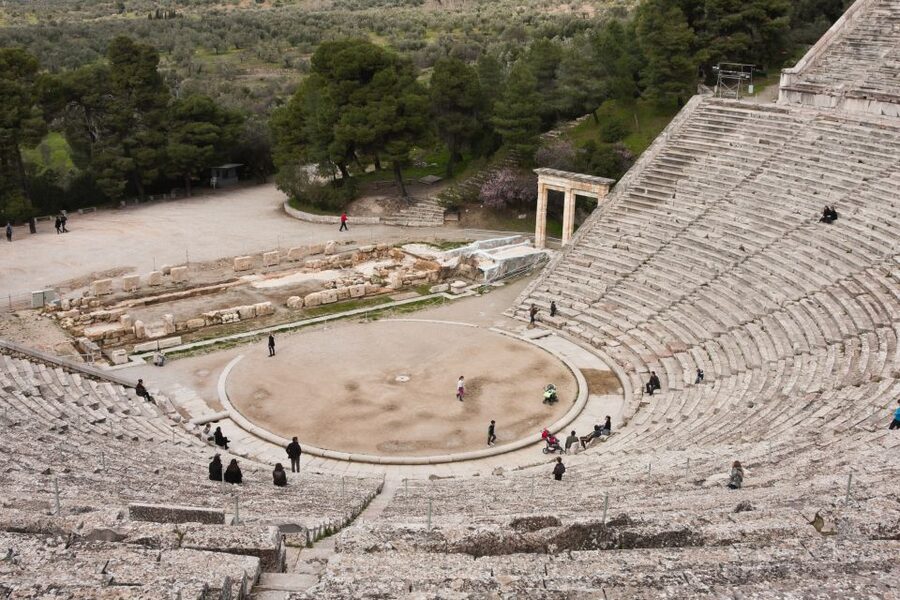
From there, you continue to Epidaurus. The ancient Theatre of Epidaurus is famous for its remarkable acoustics, and that reputation is one of the few archaeological claims you can test directly. The theatre’s design lets sound travel across the seating area, making it easier to appreciate the skill of its builders even if your visit is brief.
The setting also gives Epidaurus a different mood from the larger political sites later in the trip. This was part of a sanctuary connected with healing, and the theatre belonged to a wider sacred complex. You should expect a visit centered on the theatre and archaeological remains, with the guide supplying the wider context.
Next comes Nafplio, one of the Peloponnese’s picturesque towns. The schedule allows only a short photo stop, so do not count on free time to explore its streets, waterfront, or shops. Think of Nafplio as a pleasant pause between major archaeological visits rather than a full town visit.
Mycenae is the day’s most myth-loaded stop. You visit the archaeological site and the Tomb of Agamemnon, a monumental beehive-shaped tomb linked by tradition with the legendary king of the Trojan War. The site helps separate the world of Homeric stories from the actual remains of a powerful Bronze Age center.
You will also see the famous entrance area associated with Mycenae and the remains spread across the hill. The terrain and ruins make this a site where sturdy walking shoes are sensible, though the tour information does not specify an accessibility arrangement. Allow yourself time to look beyond the most famous monument. The broader setting explains why Mycenae became such a lasting symbol of early Greek power.
After Mycenae, the coach heads through central Peloponnese, passing Tripolis and Megalopolis before reaching Olympia. This is a substantial travel day, but the schedule breaks it into distinct chapters: canal, theatre, town stop, Bronze Age ruins, and the overnight destination.
You spend the night in Olympia with dinner included. Since lunch and drinks are not included, plan to pay separately during the day. The dinner arrangement is convenient after a full road day, although the food style may be buffet-based rather than focused on local specialties.
Day 2: Olympia and the Corinthian Gulf
Olympia deserves a full morning because it is more than the birthplace of a modern sporting event. The archaeological site includes the Sanctuary of Olympian Zeus, athletic facilities, and the ancient stadium. You also visit the spot where the torch for the modern Olympic Games is lit.
The stadium is especially useful for putting the ancient contests into physical scale. You can picture the long running track and the spectators gathered around it, while the sanctuary shows that athletic competition was tied closely to worship. The site works best when you let the guide explain the relationship between sport, religion, and civic identity.
The Archaeological Museum of Olympia adds essential pieces that are no longer in place among the ruins. Museum time can feel less dramatic than walking through the stadium, but it helps you see sculpture and objects with far more detail. If you rush through this part, you lose some of the meaning of the outdoor site.
After Olympia, the route crosses the plains of Ilia and Achaia toward the bridge over the Corinthian Gulf. The bridge links Rion and Antirion and provides a modern engineering contrast to the temples, theatres, and tombs from earlier in the trip. This is one of the tour’s useful changes of pace: you are not looking at ruins all day.
The drive continues past Nafpaktos, also called Lepanto, and Itea before reaching Delphi. These are primarily pass-by views rather than extended visits, so keep your expectations in check. The value is in seeing the shape of the route and the changing scenery from the coach.
You spend the night in Delphi, with dinner included. The overnight stop is important because Delphi is far more rewarding when you arrive with enough energy for a proper site visit the next morning. A same-day return from Athens would make the sanctuary feel like a rushed checklist stop.
Day 3: Delphi and the road to Kalambaka
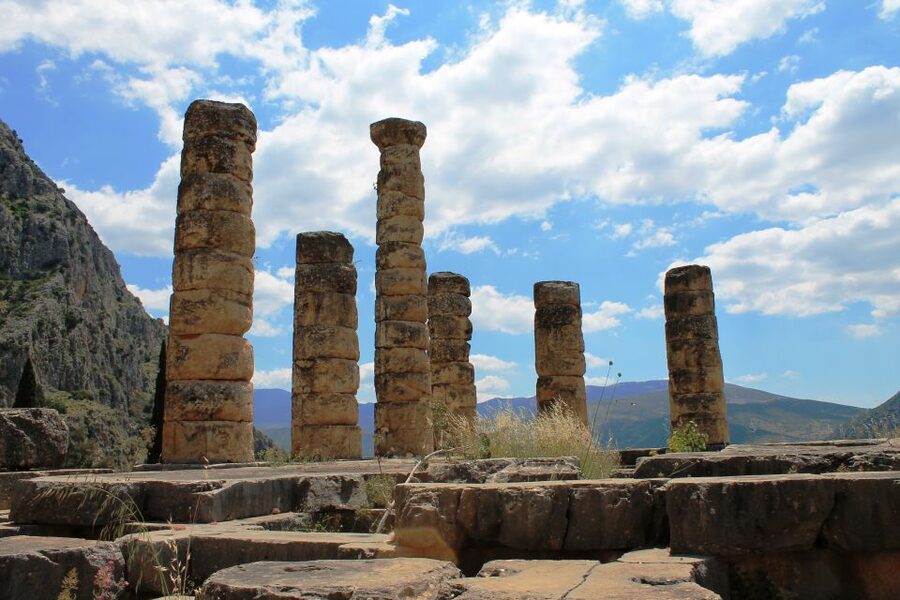
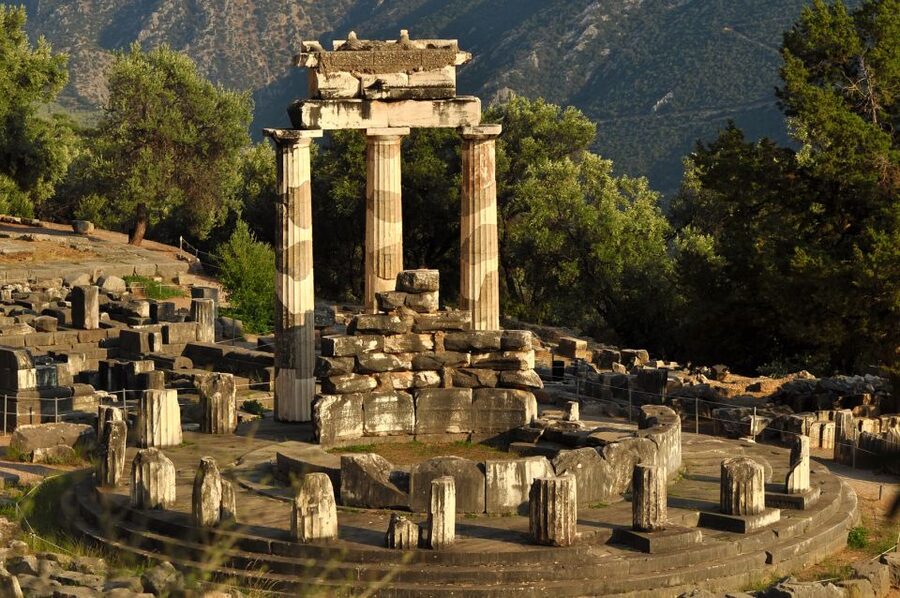
Delphi was regarded in antiquity as the home of the most famous oracle in the Greek world. Its location on the slopes of Mount Parnassus gives the site a dramatic setting, but the real interest lies in how the sanctuary operated as a religious and political center.
Your morning visit includes both the archaeological site and the Museum of Delphi. The outdoor ruins show the route through the sanctuary and the remains of its buildings, while the museum gathers important sculpture and objects from the area. The two parts belong together, so do not treat the museum as optional filler.
Delphi is also a site where a guide can make a major difference. The sanctuary contained monuments raised by different Greek communities, and their placement reflected competition, devotion, and civic pride. An English, French, or Italian-speaking guide helps turn scattered stones into a readable story.
After Delphi, you travel toward Kalambaka, a small town at the foot of Meteora. This is another long road section, but it moves you from the classical Greek world into a very different chapter. Your overnight stay in Kalambaka puts you close to the rock formations and monasteries you will visit the next day.
Dinner is included again. Breakfast and dinner are covered throughout the trip according to the schedule, while lunches and drinks remain your responsibility. I would use lunch stops to keep costs under control, especially since you may prefer a quick meal rather than a full restaurant sitting on a tightly timed touring day.
A different kind of day out, same corner of Greece:
- Athens: Cape Sounion & Poseidon Temple Sunset Half-Day Trip
★ 4.8 · 8,241 reviews - Athens: Acropolis and Parthenon Guided Walking Tour
★ 4.6 · 5,882 reviews - All Day Cruise -3 Islands to Agistri,Moni, Aegina with lunch and drinks included
★ 5.0 · 4,958 reviews - Athens, Piraeus, and Coastline: Blue Hop-On Hop-Off Bus
★ 3.9 · 4,849 reviews
Day 4: Meteora and Thermopylae
Meteora is the tour’s most unusual setting. Huge rock pillars rise above the town, and Byzantine monasteries sit on top of them. The effect is memorable because the buildings appear to cling to places that seem almost impossible to reach.
Your visit focuses on the monasteries and their Byzantine art. This is not simply a viewpoint stop. You get to see religious buildings in a setting shaped by isolation, height, and stone, along with examples of the art created inside them.
The tour description does not state how many monasteries you enter or provide specific stair information, so check current details if mobility is a concern. The site is inherently vertical, and conditions may vary from one monastery to another. Comfortable shoes and a willingness to manage uneven ground are sensible choices, but do not assume every access detail without confirming before departure.
After Meteora, the coach returns to Athens through Trikala, Lamia, and Thermopylae. The Thermopylae stop is short and lets you see across the road to the monument of Leonidas. It is a brief farewell to the heroic stories that have shaped popular ideas about ancient Greece.
Arrival in Athens is expected in the early evening, back at the meeting point. This final day combines a major visit with a long return, so it is not a relaxed sightseeing day. Still, it avoids adding another hotel night and gives the four-day route a clean ending.
Hotels, meals, and the $711 price
At $711 per person, the price is easiest to judge as a package rather than as four separate sightseeing days. You receive overnight accommodation, a professional guide, luxury air-conditioned coach transport, entrance fees, breakfast, dinner, and free Wi-Fi on the bus.
That bundle removes several expenses that can add up quickly on a multi-day trip. Admission fees at major archaeological sites and museums are included, and you do not have to arrange transport between Olympia, Delphi, and Kalambaka. For a first visit to mainland Greece, that convenience gives the tour solid value.
The hotel choice deserves attention. A past departure included a four-star upgrade that was described as very good, while the standard accommodation received less favorable treatment. The exact hotel selection and upgrade price are not provided here, so check the booking options carefully. If the upgrade is reasonably priced, it may improve your comfort during a route with early starts and long coach rides.
You must also pay the accommodation tax at the hotel. The listed rates are €1.50 per night per room for a three-star hotel, €3 for a four-star hotel, and €4 for a five-star hotel. The general information also notes that the tax can range from €1.50 to €10 per night per room, so confirm the amount attached to your selected accommodation.
Lunch, drinks, and personal purchases are not included. The included dinners make evenings simpler, but one practical criticism is that the meals may be safe buffet offerings rather than the most distinctive Greek food. If local cooking is a major reason you visit Greece, budget for a few extra snacks or meals when the schedule allows.
Coach comfort and the pace of the route
The transport is a luxury air-conditioned coach with free Wi-Fi. That matters because this itinerary covers a lot of ground, including the Peloponnese, the Corinthian Gulf, Delphi, Meteora, and the return through central Greece.
The route is busy, but the stops break the driving into manageable stretches. One detailed account described the coach travel as extensive yet bearable because the schedule was well planned. That is a fair way to view it. You are trading independence for reach.
Your guide will also shape the experience. Georgia Dova, Evie, and Anthony were praised by name on different departures for clear and informative guiding. John and Socrates were singled out as capable drivers. Names cannot guarantee who will lead your departure, but they show the level of personal service the operator has provided on previous trips.
Guiding is available in English, French, and Italian. Make sure you select the language you want when booking, since the guide’s explanations are central to understanding sites such as Mycenae, Olympia, and Delphi.
The meeting point can vary by booking option. Zappeio is listed as a starting location, but check your confirmation for the exact departure point and return arrangement. The tour ends back at the meeting point.
Free cancellation is available up to 24 hours before departure for a full refund, and you can reserve now while paying later. Those terms are useful if your Athens plans are still changing, but the main decision is still about pace: this is a packed history route, not a leisurely break.
Who should book this Greece tour?
I would recommend it to you if you want the major mainland sights but do not want to rent a car or organize several intercity connections. It is especially useful for a first visit, when seeing the famous sites in one well-supported route may matter more than having long stretches of free time.
History fans get a strong mix: Bronze Age Mycenae, classical theatres and sanctuaries, Roman and later Greek chapters, Byzantine monasteries, and the modern symbolism of the Olympic torch and Leonidas monument. The route also gives you a sense of Greece beyond Athens.
You should think twice if you dislike long coach journeys, fixed meal arrangements, or short photo stops. Nafplio, Nafpaktos, Itea, and Thermopylae receive limited time, while the largest sites are visited on a set schedule.
Should you book it?
Book this tour if your goal is maximum coverage with minimum planning. The route is ambitious but logical, and the combination of included entries, hotels, guide, coach, breakfast, and dinner makes $711 a reasonable package price.
Before paying, compare the standard and upgraded hotel options, confirm the guide language, and set aside money for lunches, drinks, and the accommodation tax. If you can accept a busy schedule and occasional buffet meals, this is a practical way to connect Greece’s most important mainland sites, with Meteora providing a memorable final morning.
FAQ
Where does the tour start?
The listed starting location is Zappeio, but the meeting point may vary according to the option booked. Check your booking confirmation for the exact location.
Where does the tour end?
The activity ends back at the meeting point in Athens.
How long is the tour?
The tour lasts four days, with starting times shown according to availability.
Which languages are available?
Live guiding is available in English, French, and Italian.
Are hotels included?
Yes. Overnight accommodation is included, with stays in Olympia, Delphi, and Kalambaka according to the schedule.
Are meals included?
Breakfast and dinner are included as stated in the itinerary. Lunch and drinks are not included.
Are entrance fees included?
Yes. Entrance fees for the included archaeological sites and museums are part of the package.
Is transport provided?
Yes. Transport is provided by a luxury air-conditioned coach, and free Wi-Fi is available on the bus.
Do I need to pay an accommodation tax?
Yes. The accommodation tax is paid at the hotel. Listed rates are €1.50 per room per night for three-star accommodation, €3 for four-star accommodation, and €4 for five-star accommodation. The general information notes that the amount may range from €1.50 to €10.
Can I cancel the booking?
You can cancel up to 24 hours in advance for a full refund. The tour also offers a reserve-now, pay-later option.
Recently reviewed around Athens
- Small-Group Women History in Ancient Greece Walking Tour★ 5.0 · 38 reviews
- Ceramic and Pottery Creative Workshop with Two Local Artists★ 4.0 · 57 reviews
- Athens: Wine Workshop Create your Own Wine under the Acropolis★ 5.0 · 77 reviews
- Athens: Greek Wines Tasting with Sommelier and Acropolis Views★ 5.0 · 88 reviews
- Hydra Private Day Trip by Ferry from Athens with Transfers★ 4.0 · 30 reviews
- Small-Group Wine Tour in Athens with Tasting★ 5.0 · 33 reviews
- Wine Trails Private Tour/ Nemea visit 3 wineries from Athens or Nafplion (10 h)★ 5.0 · 44 reviews
- Private Athens Transfer Airport/Port -Greek Tours-Hourly service★ 5.0 · 88 reviews
Athens Tours, compared.

Acropolis & up to 5 Archaeological Sites Combo Pass
Read our review →

Acropolis, Parthenon & Acropolis Museum Guided Tour
Read our review →
Cape Sounion & Poseidon Temple Sunset Half-Day Trip
Read our review →
All Day Cruise -3 Islands to Agistri,Moni, Aegina with lunch and drinks included
Read our review →