Reviewed · ATHENS TOURS
Get Lost in Athens with an Insider
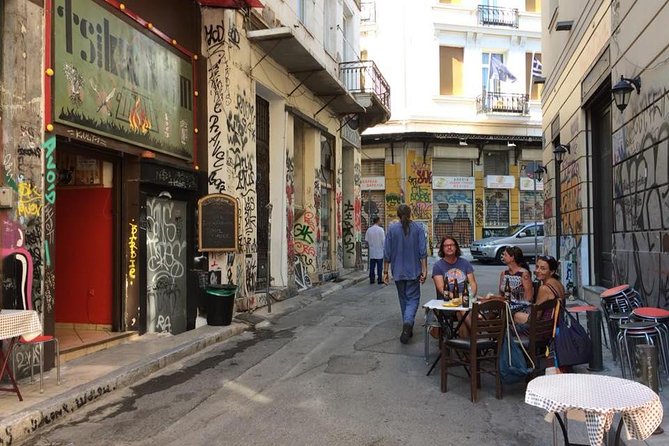
Athens opens up in unexpected layers on this walk. You move from Monastiraki’s flea market to ancient cemeteries, street-art-covered lanes, student hangouts, food stalls, and a traditional coffee shop. It is less about checking off monuments and more about seeing how old Athens and present-day Athens share the same streets.
I like the way the tour connects ancient sites with ordinary city life, especially at Kerameikos Cemetery and the Temple of Hephaestus. I also like the practical local advice: guides such as Eleni, Helena, Dionysis, Dennis, and Hercules have been praised for restaurant tips, cultural context, and taking small groups to places you might miss alone.
The main caution is pace and focus. Some people wanted more formal history, while others found the walk slow or had trouble hearing the guide in noisy streets. If you have already spent a week walking around central Athens, the route may feel familiar.
In This Review
- Key points to know before booking
- A good first walk through Athens
- Monastiraki Square and the Athens Flea Market
- The Temple of Hephaestus and Kerameikos Cemetery
- Psiri: street art, bars, and working neighborhoods
- Exarheia and Athens Central Market
- A traditional Greek coffee break
- Kolonaki and the end of the route
- What the guides add
- Price, group size, and value
- Who should choose this Athens walk?
- Should you book Get Lost in Athens with an Insider?
- FAQ
- Where does the tour begin?
- How long does the experience last?
- What language is offered?
- Is this a private tour?
- Is Greek coffee included?
- Are food and lunch included?
- What is the cancellation policy?
Key points to know before booking
- Start in Monastiraki Square: The tour begins in one of Athens’ easiest central meeting points, close to public transportation.
- See Athens beyond the postcard route: Psiri, Exarheia, and Kolonaki give you a look at local streets, shops, cafés, and urban culture.
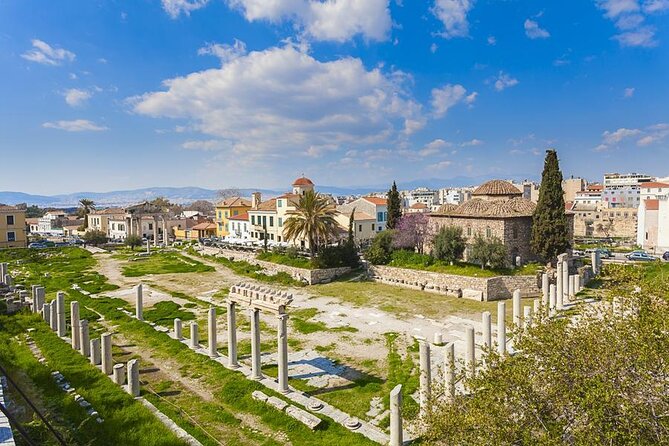
- Ancient Athens is part of the walk: You pass Kerameikos Cemetery and the Temple of Hephaestus, with time for photos and context.
- Street art gets real attention: Your guide explains Athens’ graffiti and mural culture, including its links to older Greek artistic traditions.
- Greek coffee is included: The walk pauses at a traditional coffee shop that is not presented as a standard tourist stop.
- It is a private activity: Only your group participates, which can make questions and route changes easier.
A good first walk through Athens
The best use of this tour is early in your stay. You get a broad look at several central districts, learn where the markets and cafés are, and collect ideas for later meals and evening walks.
The route is not built around long visits inside major archaeological sites. Instead, you pass important places while moving through the city. That makes the experience useful for orientation, but it also means you should not book it expecting a detailed archaeological tour.
The walk lasts about two and a half hours. Several departure times are offered, so you can place it in a morning, afternoon, or other part of your schedule. Athens can be very hot, and one booking had to be abandoned because temperatures climbed above 100 degrees. I would choose a cooler time of day when possible and carry water.
More Athens trips worth a second look
- Athens: Acropolis & up to 5 Archaeological Sites Combo Pass
★ 4.4 · 12,619 reviews - Athens: Acropolis Ticket with Optional Audio or Live Guide
★ 4.2 · 11,055 reviews - Athens: Acropolis, Parthenon & Acropolis Museum Guided Tour
★ 4.8 · 9,316 reviews
Monastiraki Square and the Athens Flea Market
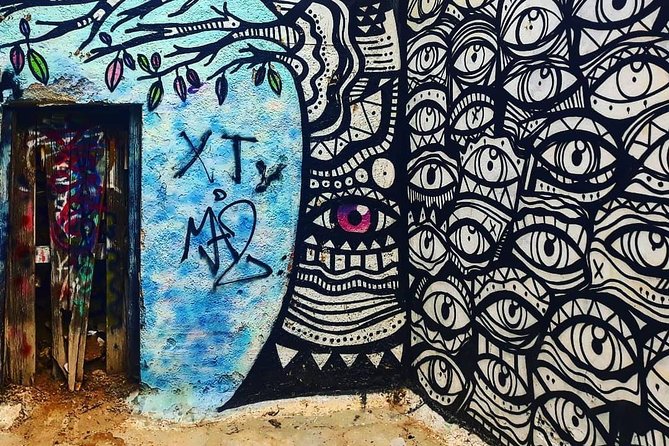
You meet your guide in Monastiraki Square, right in the historic center. This is a practical starting point because it puts you close to the market, ancient ruins, and several neighborhoods included in the walk.
The first stop is the Athens Flea Market. It is the city’s largest and busiest market, with stalls and small shops spread through the Monastiraki area. You can browse while your guide points out useful places, interesting purchases, and the difference between a market stop and a shop aimed mainly at sightseers.
This part works best if you enjoy watching city life rather than rushing from monument to monument. It also gives your guide a chance to explain how to return later, since the market is more fun when you have time to browse without keeping up with a group.
Keep your expectations sensible. The tour does not promise a shopping haul or a long buying session. The value is having someone help you read the area and tell you which corners deserve another look.
The Temple of Hephaestus and Kerameikos Cemetery
From the market, the route moves past the Theseion area and the Temple of Hephaestus. This is one of the most attractive ancient structures in central Athens, and it offers good photo opportunities as you walk by.
You also pass Kerameikos Cemetery, one of the city’s major ancient burial grounds. The itinerary gives attention to its role in antiquity, so this is more than a quick street crossing. Still, you should understand the format: you are walking past and learning along the way, not taking a full guided visit through every archaeological feature.
The route also includes the Holocaust Monument and the Jewish Synagogue. These stops add a modern human story to the ancient setting and show that Athens cannot be understood through classical ruins alone.
This mix is one of the strongest parts of the experience. You may see a cemetery, a monument, a synagogue, and a market within a short walk. That contrast gives you a clearer sense of Athens as a living city, not an open-air museum frozen in the fifth century BC.
Psiri: street art, bars, and working neighborhoods
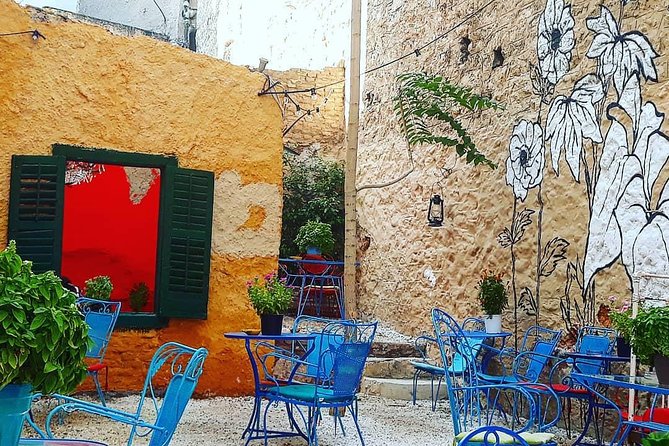
Psiri brings a different mood. Its lanes are known for street art, bars, galleries, and crafts workshops. Your guide explains the city’s urban art and discusses how visual expression connects with traditions reaching back to ancient Greece.
The street art is a particular strength for this tour. You see works that are easy to walk past without context, and the guide can explain what to notice in the walls, alleys, and changing streetscape. If you are interested in photography, this section offers some of the most rewarding pauses.
You will also hear about cafés and restaurants worth returning to. That advice can be more useful than a standard list of famous restaurants because it comes while you are standing in the neighborhood and seeing how the streets fit together.
Some people may find the pace a little slow here. The tour depends on conversation and stops, so it is not a brisk march. If you prefer constant movement, tell your guide early. Since the activity is private, your group may have more room to adjust the rhythm.
A different kind of day out, same corner of Greece:
- Athens: Cape Sounion & Poseidon Temple Sunset Half-Day Trip
★ 4.8 · 8,241 reviews - Athens: Acropolis and Parthenon Guided Walking Tour
★ 4.6 · 5,882 reviews - All Day Cruise -3 Islands to Agistri,Moni, Aegina with lunch and drinks included
★ 5.0 · 4,958 reviews - Athens, Piraeus, and Coastline: Blue Hop-On Hop-Off Bus
★ 3.9 · 4,849 reviews
Exarheia and Athens Central Market
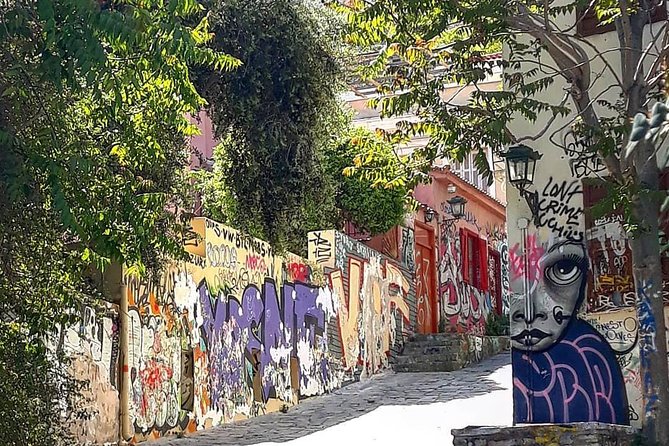
The route continues north toward Exarheia, an area associated with Athens’ student quarter. This brings you away from the most familiar ancient-center circuit and into a part of town with a more modern, local feel.
The exact balance between Exarheia and other stops can depend on the guide and the needs of your group. The published route describes the neighborhood as part of the walk, while the itinerary notes street art and urban culture. You should expect city observation and conversation rather than a formal tour of a single museum or monument.
Athens Central Market is one of the most useful stops for anyone interested in Greek food. You walk among produce stalls, herbs, spices, and local shoppers. Your guide can explain ingredients and offer ideas for Greek cooking, along with suggestions for stalls and places to eat later.
This is where the insider format earns its price. You are not simply told that Greek cuisine uses herbs, vegetables, and market produce. You are shown the kind of place where those ingredients are bought and discussed. It gives food context to the restaurant meals you will have during your stay.
The market can be crowded and noisy. One person had difficulty understanding a guide in busy areas while a mask made communication harder. If you struggle to hear, move close to the guide and ask for repetition. English is the offered language, but the quality of communication can vary with the guide, street noise, and group conditions.
A traditional Greek coffee break
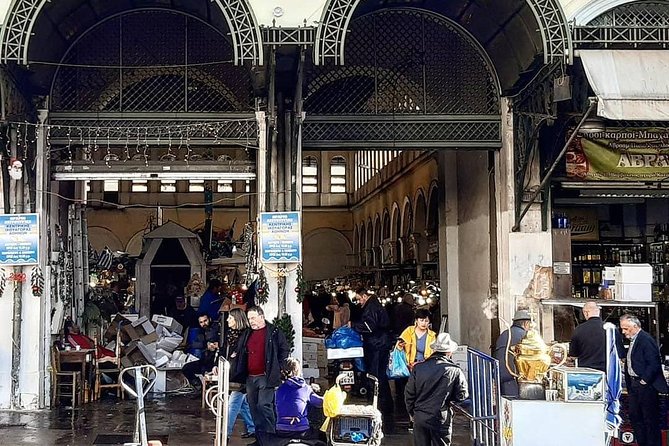
A traditional Greek coffee in a tucked-away coffee shop is included. This is a small but important part of the route because it gives the walk a pause and lets you experience a familiar local habit rather than simply pointing at cafés from the pavement.
The coffee is included, but other drinks, food, and lunch are not. Do not treat this as a meal break. If you need lunch, plan it before or after the walk, especially since the tour passes through areas where you may want to return for a full meal.
The coffee stop also gives you a chance to ask questions. Guides have been praised for discussing both ancient history and how people live in Greece today. Ask about anything you noticed in the market or neighborhoods. This is the point of a private insider walk, not just a chance to rest your feet.
Kolonaki and the end of the route
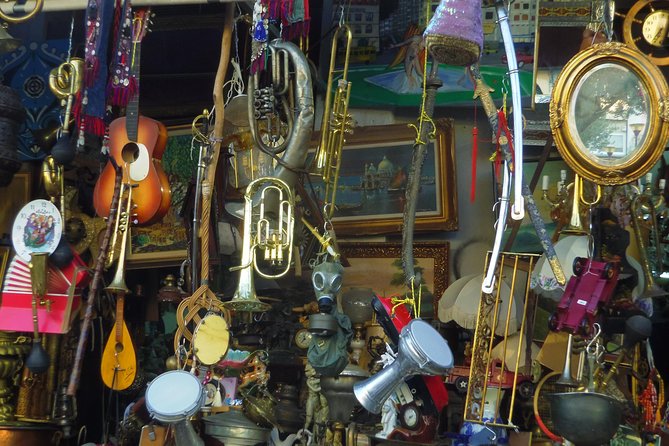
The final neighborhood is Kolonaki, Athens’ artistic quarter and main shopping center, on the slopes of Lycabettus Hill. It gives the tour a clear change of tone, from market lanes and street art to galleries, shops, and a more polished central district.
Kolonaki is a useful place to finish because you can continue shopping or exploring after the guide leaves. It also lets you compare several sides of Athens in one outing: the flea market around Monastiraki, the creative energy of Psiri, the student atmosphere of Exarheia, the food market, and the upmarket center around Kolonaki.
The route description says the walking tour ends in Kolonaki. The meeting-point details also describe the activity as ending back at the meeting point, so confirm the final drop-off location when you book. This matters if you have a timed museum visit, meal reservation, or transportation plan afterward.
What the guides add
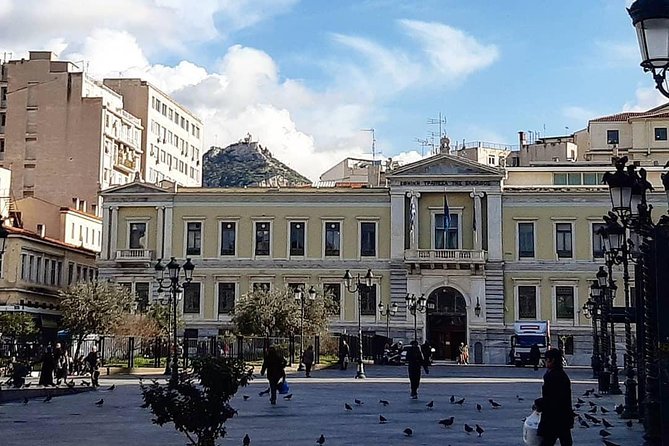
The guide is the heart of this activity. Eleni and Helena have been praised for warmth, flexibility, and strong knowledge of street art and archaeology. Dionysis and Dionysus have been singled out for explaining both Greek history and present-day society in plain English, as well as offering restaurant ideas.
Dennis has been praised for changing the itinerary when needed and finding a good traditional coffee shop. Hercules has been described as personal, relaxed, and helpful with restaurant recommendations. Guide assignments can change, so you should not assume you will receive a particular person.
The best guides appear to make the route feel personal rather than rehearsed. They answer questions, adjust the walk, and explain what you are seeing without turning every stop into a lecture. That flexibility is especially useful on a private tour.
Communication deserves a fair warning. Most feedback about the guides is strongly positive, but one person found the English hard to understand, particularly in crowded areas. Another felt the historical explanations did not go far enough. If you want a formal academic treatment of Athens, this may not satisfy you.
Price, group size, and value
The listed price is $90.36 per person. That is not a bargain for a two-and-a-half-hour walk, but the value changes if you are traveling as a small private group. Only your group participates, and several people ended up with a guide just for themselves or their party.
You are paying for more than steps on a map. The package includes a local guide, Greek coffee, help reading several neighborhoods, and practical suggestions for food and future exploring. If those local pointers lead you to one good meal or save you from spending your limited time wandering without direction, the cost may feel reasonable.
The price is harder to justify if you already know central Athens well. One person who had spent seven days walking around the city found that much of the route offered little new. I would book it near the start of your visit, not after you have already explored Psiri, Monastiraki, and the market on your own.
A group discount is available, and the experience uses a mobile ticket. Confirmation is provided at booking, and free cancellation is available up to 24 hours before the start time. Changes or cancellations inside that window are not accepted for a refund.
Who should choose this Athens walk?
I would recommend it most strongly to first-time visitors who want orientation and a local voice. It is also a good match if you like street art, food markets, neighborhood walks, and learning how modern Greek life fits beside ancient remains.
It suits couples, families, and small groups who want to ask plenty of questions. The private format means you do not have to wait for a large group to make decisions, and the guide may be able to adjust the itinerary.
You may want something else if your main goal is a detailed tour of the Acropolis, a long archaeological lecture, or a fast-paced sightseeing circuit. The experience passes important sites, but it does not replace a dedicated Acropolis or archaeological tour.
Wear casual clothes and sensible walking shoes. Service animals are allowed, public transportation is nearby, and most people can take part. Heat is the bigger practical concern, so schedule carefully during hot weather.
Should you book Get Lost in Athens with an Insider?
Book it if you want to get your bearings, see several central districts, and gather practical ideas for the rest of your stay. The strongest reasons are the private format, the street-art focus, the market visit, and the chance to discuss Athens with guides such as Helena, Eleni, or Dionysis.
Skip it if you have already spent many days exploring the same neighborhoods or if you want a tightly organized history lesson. For a first or second day in Athens, though, this is a useful way to connect ruins, markets, coffee shops, and everyday streets before you settle into the city.
FAQ
Where does the tour begin?
The tour begins in Monastiraki Square in Athens, Greece.
How long does the experience last?
The walking tour lasts approximately 2 hours and 30 minutes.
What language is offered?
The tour is offered in English.
Is this a private tour?
Yes. Only your group participates in the activity.
Is Greek coffee included?
Yes. A Greek coffee at a traditional coffee shop is included.
Are food and lunch included?
No. Food, additional drinks, and lunch are not included unless specifically stated. Only the Greek coffee is included.
What is the cancellation policy?
You can cancel up to 24 hours before the experience start time for a full refund. Cancellations or changes made less than 24 hours before the start time are not accepted for a refund.
Recently reviewed around Athens
- Small-Group Women History in Ancient Greece Walking Tour★ 5.0 · 38 reviews
- Ceramic and Pottery Creative Workshop with Two Local Artists★ 4.0 · 57 reviews
- Athens: Wine Workshop Create your Own Wine under the Acropolis★ 5.0 · 77 reviews
- Athens: Greek Wines Tasting with Sommelier and Acropolis Views★ 5.0 · 88 reviews
- Hydra Private Day Trip by Ferry from Athens with Transfers★ 4.0 · 30 reviews
- Small-Group Wine Tour in Athens with Tasting★ 5.0 · 33 reviews
- Wine Trails Private Tour/ Nemea visit 3 wineries from Athens or Nafplion (10 h)★ 5.0 · 44 reviews
- Acropolis of Athens, Parthenon and Acropolis Museum private tour with dinner★ 5.0 · 77 reviews
Athens Tours, compared.

Acropolis & up to 5 Archaeological Sites Combo Pass
Read our review →

Acropolis, Parthenon & Acropolis Museum Guided Tour
Read our review →
Cape Sounion & Poseidon Temple Sunset Half-Day Trip
Read our review →

All Day Cruise -3 Islands to Agistri,Moni, Aegina with lunch and drinks included
Read our review →