Reviewed · PRIVATE
Marathon, Thermopylae, Thebes/Plataea, Herodotus Private Tour 10h
The remarkable thing here is that you can walk the ground of Marathon, Thermopylae, and Plataea in one long day, rather than study them as isolated names in a book. I like the private car, hotel pickup, and flexible pace, and I like that guides such as Christos and Nikos add maps, booklets, videos, and battlefield context while you ride.
The trade-off is clear: this is a history-first road day with many hours in the vehicle and only a few ancient remains to see. If you prefer grand ruins, mountain scenery, or a slower museum visit, Delphi may suit you better.
In This Review
- Key points at a glance
- A road trip through the Persian Wars
- Marathon Tomb and the open battle plain
- Marathon’s small museum and the modern race route
- Thermopylae, where geography tells the story
- Thebes adds a serious museum visit
- Plataea and the final Greek victory
- What the private car changes
- How to prepare for a demanding 10 hours
- Who should book this tour?
- Should you book the Marathon, Thermopylae, and Plataea tour?
- FAQ
- How long does the tour last?
- Where does pickup take place?
- Can I be picked up from Piraeus?
- Is the tour private?
- What vehicle choices are available?
- Are entrance fees included?
- Are the museums open every day?
- Is the tour offered in English?
- What historical sites are visited?
- Can the schedule be extended?
Key points at a glance
- Three Persian War battlefields in one day: Walk around Marathon, Thermopylae, and Plataea, with Salamis sometimes possible by arrangement.
- Private transport from Athens: Choose a sedan, minivan, or minibus, with fuel, tolls, parking, and hotel pickup included.
- Strong guide support: Expect an English-speaking driver-guide, maps, booklets, and historical video or audio material during the drive.
- Thebes adds real museum time: Its Archaeological Museum holds finds from the Palaeolithic period through the post-Byzantine era.
- Plan for a fast, long day: The tour lasts about 10 hours and starts around 7:30 a.m., or earlier in summer.
- Budget for admissions: Museum and site tickets are not all included, so allow extra money beyond the $331.32 per-person tour price.
A road trip through the Persian Wars
This tour is less about preserved temples and more about understanding distance, terrain, and military strategy. You move through northern Attica and Boeotia, linking the places where Greek forces met Persian armies in 490 and 480 to 479 BC.
That matters because battlefields can feel abstract in a history book. At Marathon, you see the open coastal plain. At Thermopylae, you grasp why a narrow passage beside hot springs mattered. At Plataea, you visit the spring associated with the start of the final major Greek victory over the Persian invasion.
I find the private format especially useful here. Your guide can explain a map while you are still in the car, then point out the ground that shaped each battle. The experience is strongest when you already know the basic story, but the supplied documentaries and reading material help bring the setting to life if your ancient Greek history is a little rusty.
The tour is offered in English, and the driver is also the day’s historical guide. The most praised guides named in the information are Christos Exarchopoulos, Nikos, Nikolaus, and Phillipi. You can request a particular guide, but assignment is not guaranteed.
More Athens trips worth a second look
- Athens: Acropolis & up to 5 Archaeological Sites Combo Pass
★ 4.4 · 12,619 reviews - Athens: Acropolis Ticket with Optional Audio or Live Guide
★ 4.2 · 11,055 reviews - Athens: Acropolis, Parthenon & Acropolis Museum Guided Tour
★ 4.8 · 9,316 reviews
Marathon Tomb and the open battle plain
The day begins at the Marathon Tomb, about one kilometer west of Marathon Beach. This burial mound rises about 10 meters and marks the burial place of Athenian soldiers who died in the Battle of Marathon.
You should not expect a large complex of ruins. The value is the setting itself. The mound sits in the same broad area where the Athenian army defeated the Persians in 490 BC, and your guide can help you connect the geography with the ancient account.
The planned stop is about 20 minutes. That is enough for a look, photographs, and an explanation, but not a leisurely archaeological visit. Admission is listed at €5, with a reduced ticket of €3, and it is not included in the tour price.
From there, the route continues to Schinias, the coastal part of Marathon Bay. Today it is known for clear water and resort facilities, but the important point for this tour is its connection to the Marathon plain and shoreline. The stop lasts about 15 minutes and is free.
I would treat Schinias as a short orientation and photo stop, not a beach visit. You will not have time for a swim or a full coastal break unless the driver agrees to change the schedule.
Marathon’s small museum and the modern race route
The Archaeological Museum of Marathon is about five kilometers from the bay. Its displays cover several periods, including Neolithic pottery from the Cave of Pan and finds from the Tomb of the Athenians.
This is a useful stop because it gives you actual objects after seeing the battlefield. The museum is planned for about 20 minutes, so the visit is selective rather than exhaustive. Admission is included according to the tour details, though you should confirm ticket arrangements when booking because other admissions are specifically excluded.
The museum closes every Tuesday. That is one of the most important planning notes for this day. If your departure falls on a Tuesday, ask how the schedule will change.
You also pass along Leoforos Marathonos, the modern road associated with the Athens Marathon. The race begins in modern Marathon and ends at Athens Olympic Stadium, the birthplace of the modern Olympic Games. This 15-minute stop links ancient endurance and modern sport without pretending that the modern race follows the ancient battle itself.
Lake Marathon follows as a scenic stop or drive-by. The lake is a reservoir created by the Marathon Dam, built where the Charadros and Varnavas torrents meet. It supplied Athens from 1931 until 1959, when water from Lake Yliki became available.
The lake gives the morning a change of pace, but the supplied schedule does not assign it a precise stop length. Ask your guide how much time is planned if you want photographs.
Thermopylae, where geography tells the story
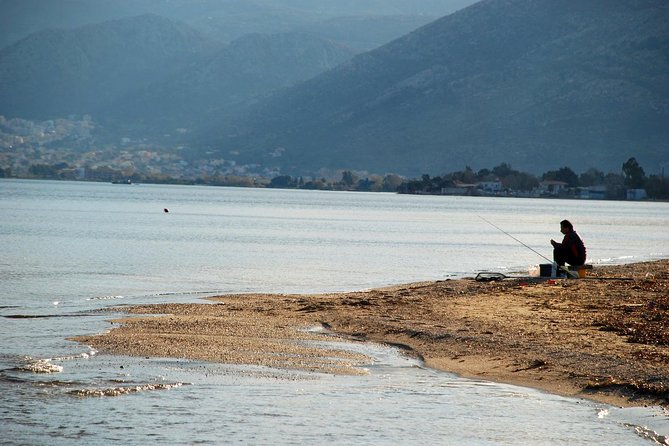
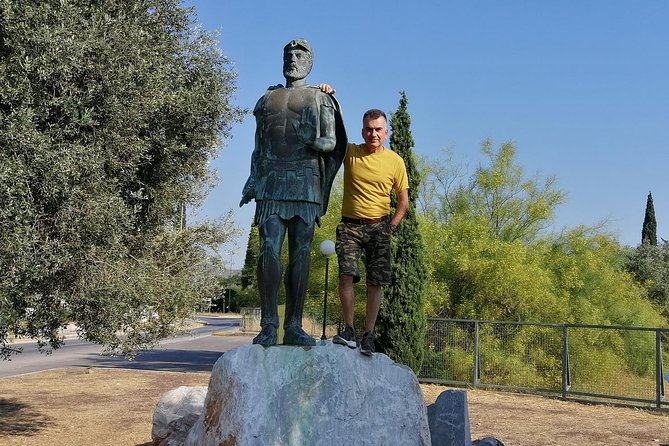
Thermopylae is the emotional center of the day for many people. The name is tied to the famous 480 BC battle between Greek forces, including the Spartans, and the invading Persian army.
The route from Marathon to Thermopylae makes the long drive worthwhile for the right audience. You are not just visiting a statue or reading a plaque. You are following the east coast passage that armies needed to use when moving north and south through this part of Greece.
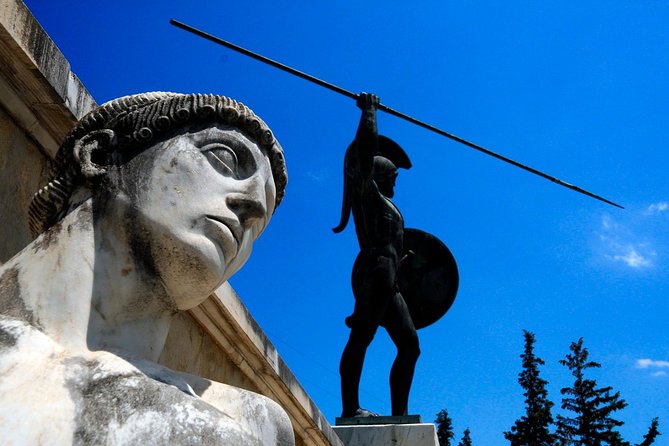
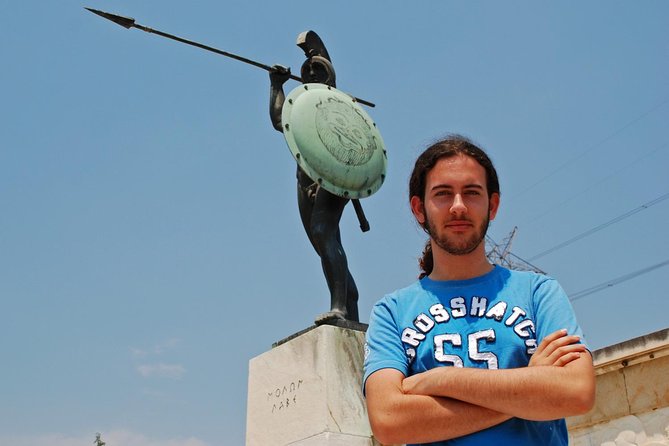
The battlefield stop lasts about 30 minutes and is free. The site has changed over time, so you should not expect the narrow ancient pass to look exactly as it did in the fifth century BC. Your guide’s explanation is essential. Without it, you may see a roadside monument and a broad modern area without understanding why this spot mattered.
One practical caution deserves attention. The road near the monument can be busy, and crossing it on foot may be uncomfortable. Ask your driver to explain the safest way to reach each point rather than assuming you should cross immediately.
Next comes the Thermopylae Museum, beside the monument to Leonidas. This interactive museum focuses on the 480 BC battle and is designed to explain the fighting through displays rather than through a large collection of ruins.
The planned visit is 30 minutes. Admission is listed at €3, with a reduced price of €1, and is not included. That is a modest extra cost, but the museum may be one of the most useful places on the route if you want a clear explanation of the battle.
The nearby Loutra Thermopilon, or hot springs of Thermopylae, receives about 15 minutes. The name Thermopylae means the hot gates, referring to the springs. In Greek mythology, the hot springs were linked with cavernous entrances to Hades, which gives this brief stop a layer of myth beyond the military story.
A different kind of day out, same corner of Greece:
- Athens: Cape Sounion & Poseidon Temple Sunset Half-Day Trip
★ 4.8 · 8,241 reviews - Athens: Acropolis and Parthenon Guided Walking Tour
★ 4.6 · 5,882 reviews - All Day Cruise -3 Islands to Agistri,Moni, Aegina with lunch and drinks included
★ 5.0 · 4,958 reviews - Athens, Piraeus, and Coastline: Blue Hop-On Hop-Off Bus
★ 3.9 · 4,849 reviews
Thebes adds a serious museum visit
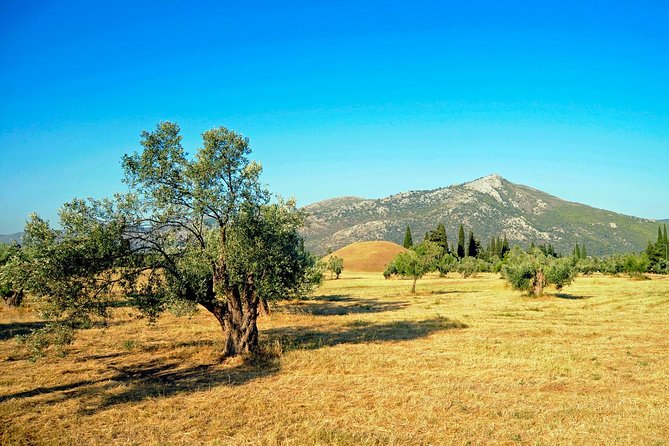
The drive through Thebes leads to the Archaeological Museum of Thebes, one of the day’s most substantial indoor stops. The museum holds discoveries from across Boeotia and covers an unusually long period, from the Palaeolithic era through post-Byzantine times.
You are allowed about one hour here, which is far more generous than the 20-minute visit at Marathon. If you care about archaeology beyond the Persian Wars, this is where the tour broadens. The exhibits are not limited to one battle or one era.
Admission is not included. The general summer price is €10, while the reduced winter price is €5. The museum closes every Tuesday, just like the Marathon museum, so check the calendar before you commit to a Tuesday departure.
Thebes is also a useful halfway marker in the day. By this point, you will have spent several hours in the car and at outdoor sites. The museum gives you shade, restrooms, and a chance to slow down, although the full schedule remains tight.
Plataea and the final Greek victory
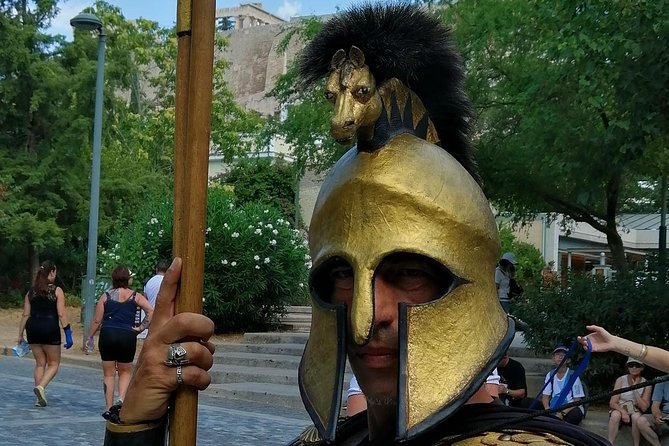
At Plataea, the tour returns to the military story. You visit the battlefield connected with the Greek victory of 479 BC, the battle that followed Thermopylae and helped drive the Persian forces from mainland Greece.
The planned visit lasts about 30 minutes and is free. As at Marathon and Thermopylae, the setting is the main attraction. Do not book this expecting standing columns, reconstructed walls, or a large archaeological park.
The stop includes Gargathia Spring, associated with the beginning of the battle. A spring may sound like a small detail, but military history often turns on water, roads, hills, and supply lines. Seeing such a feature helps you understand why commanders cared about particular points on the ground.
The final route passes Mount Cithaeron and Eleutherai on the old Athens to Thebes road. Eleutherai occupied a strategic border position between Athenian and Boeotian territory and controlled a narrow route between Athens and Thebes. The ancient fortress known as Gyftokastro occupies a lowland and rocky hill in the area.
You also pass through the coastal area near Elefsina before returning to Athens. These are drive-by sections rather than full sightseeing stops, but they add geographical context to the road back.
What the private car changes
The price is listed at $331.32 per person, but the real value depends heavily on group size. The tour uses a sedan for up to three adults, or a family of four with two adults and two children up to age 11 free. A minivan can carry one to seven people, and a minibus can carry one to 14 people. Group discounts are available, and the price changes with the vehicle and party size.
For two people, this is a costly day. For a larger family or group, splitting a private vehicle can make the price more reasonable, especially since fuel, toll roads, parking, and pickup are included.
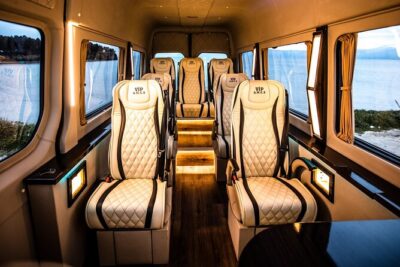
The vehicles are air-conditioned, and the service details include a clean sedan, minivan, or minibus. Guide feedback also highlights bottled water, a phone charger, safe driving, and a comfortable Mercedes sedan on one outing. These are small things, but they matter on a 10-hour road trip.
Pickup and drop-off are available from hotels or apartments in central Athens within seven kilometers. Piraeus and longer pickup points cost extra. The stated charge is generally €25 per way for locations more than seven kilometers from central Athens, while airport and Lavrio Port transfers require prior agreement. Confirm the exact surcharge because the supplied details list both €15 and €25 in different places.
You can extend the day, subject to agreement with the driver. Extra time is listed at €30 per hour for a sedan, €45 for a minivan, and €60 for a minibus.
How to prepare for a demanding 10 hours
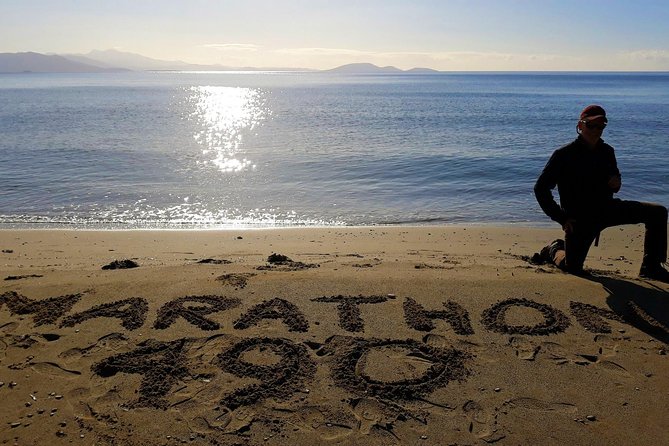
Start early. The suggested departure is 7:30 a.m., or earlier during summer. An early start gives you the best chance of reaching every planned stop without turning the final return into a late night.
Read Herodotus before you go. Even a short refresher on Marathon, Thermopylae, and Plataea will make the stops sharper and more meaningful. If you know the basic sequence of events, you can use your guide’s maps and films to ask better questions about troop movements and terrain.
Wear practical shoes and bring sun protection. The route includes outdoor battlefield areas, and some stops are short. Carry water even though the vehicle may be stocked with bottled water.
Do not plan a heavy dinner reservation in Athens immediately after the stated 10-hour window. Traffic, museum timing, photo stops, and an agreed detour can change the return time.
The day is flexible, but flexibility has limits. One guide took a group to Salamis after learning that Thermopylae had already been visited. That shows the value of a private booking, yet Salamis is not part of the standard route. Ask before departure if you want substitutions or additions.
A detour to Delphi has also been possible in unusual circumstances, but you should not count on it. Delphi is a different kind of day trip, with major archaeological remains and mountain scenery. Adding it to this route could make an already long day far too rushed.
Who should book this tour?
I would choose this tour if you teach, study, or simply love ancient military history. It lets you place several famous battles on one map, then visit the actual ground. The private setting also works well for families with older children who need explanations rather than a quick photo stop.
It can suit a small group that wants control over the vehicle, pickup point, breaks, and pace. A guide who stops for photographs and explains what you are seeing makes the long drive easier to handle.
I would not choose it as a general introduction to Greece. The day has few ancient ruins, several short stops, and long stretches on the road. If your main goals are temples, sculpture, mountain views, or relaxed village time, a Delphi trip or a more focused archaeological tour is likely a better match.
The admission costs are separate. The supplied pricing notes give a general combined estimate of €10 in winter and €20 in summer for Marathon, Thermopylae, and Thebes, while the individual entries list different prices for specific sites. Bring extra cash and confirm the current totals before departure.
Free cancellation is available up to 24 hours before the start time. Changes or cancellations inside that window are not accepted for a refund.
Should you book the Marathon, Thermopylae, and Plataea tour?
Book it if the names Marathon, Thermopylae, and Plataea already mean something to you. The guide materials, private transport, and carefully linked route turn a difficult do-it-yourself day into a workable study trip. Christos, Nikos, Nikolaus, and Phillipi are names worth requesting when available.
Skip it if you want a relaxed holiday outing or a parade of intact ruins. You will spend much of the day driving, and the battlefields require imagination. For the right history fan, that is the point. For everyone else, it may feel like a very long look at open ground.
FAQ
How long does the tour last?
The private experience lasts about 10 hours. The suggested start time is 7:30 a.m., or earlier in summer.
Where does pickup take place?
Pickup and drop-off are offered at your hotel or apartment in central Athens within seven kilometers. Another location may be possible by arrangement.
Can I be picked up from Piraeus?
Yes, pickup from Piraeus Port or the Piraeus Cruise Terminal is possible for an additional charge. Airport and Lavrio Port pickup require prior agreement.
Is the tour private?
Yes. Only your own group participates in the private tour.
What vehicle choices are available?
You can choose a sedan, minivan, or minibus. A sedan holds up to three adults, a minivan holds one to seven people, and a minibus holds one to 14 people.
Are entrance fees included?
Not all entrance fees are included. Marathon Tomb, the Thermopylae Museum, and the Archaeological Museum of Thebes list separate admission charges. The Marathon Archaeological Museum is listed as included.
Are the museums open every day?
The Archaeological Museum of Marathon and the Archaeological Museum of Thebes are closed every Tuesday.
Is the tour offered in English?
Yes. The tour includes a professional English-speaking driver-guide.
What historical sites are visited?
The route includes Marathon Tomb, Schinias, the Archaeological Museum of Marathon, Leoforos Marathonos, Lake Marathon, Thermopylae, the Thermopylae Museum, Loutra Thermopilon, the Archaeological Museum of Thebes, and Plataea.
Can the schedule be extended?
Yes, extra time may be arranged with the driver. The listed hourly charges are €30 for a sedan, €45 for a minivan, and €60 for a minibus.
Recently reviewed around Athens
- Small-Group Women History in Ancient Greece Walking Tour★ 5.0 · 38 reviews
- Ceramic and Pottery Creative Workshop with Two Local Artists★ 4.0 · 57 reviews
- Athens: Wine Workshop Create your Own Wine under the Acropolis★ 5.0 · 77 reviews
- Athens: Greek Wines Tasting with Sommelier and Acropolis Views★ 5.0 · 88 reviews
- Hydra Private Day Trip by Ferry from Athens with Transfers★ 4.0 · 30 reviews
- Small-Group Wine Tour in Athens with Tasting★ 5.0 · 33 reviews
- Wine Trails Private Tour/ Nemea visit 3 wineries from Athens or Nafplion (10 h)★ 5.0 · 44 reviews
- FLYING DRESS Photoshoot in Athens – Greece★ 5.0 · 47 reviews
Private, compared.


Private Santorini Tailor Made – Choice of the Guest!
Read our review →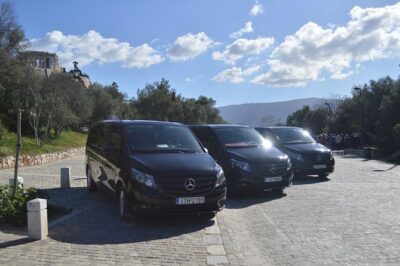
Athens Airport Private Arrival Transfer with Meet & Greet
Read our review →
Athens Airport to Athens Hotels Private Arrival Transfer
Read our review →
Private Classic Santorini Panorama: Visit the most popular destinations!
Read our review →
Sightseeing like a Mykonian(Small Group or Private)
Read our review →