Reviewed · ATHENS TOURS
Philosophical Tour in Athens
Athens becomes much more interesting when you stop treating its monuments as old stones and start asking what they were meant to teach. This walking tour follows ideas about tragedy, democracy, happiness, free thought, and self-knowledge through places linked with Socrates, Plato, Aristotle, Epicurus, and the Stoics.
I like two things right away: Lampros makes philosophy practical, connecting ancient ideas with psychology and even the future of AI, and the private format keeps the conversation focused on your group. The short videos and speakers also give the walk more shape than a standard guide talk.
The main drawback is pace. You cover many sites and several schools of philosophy in about two and a half hours, so this is a brisk introduction rather than a full course. If you prefer quiet sightseeing with only a little explanation, the discussions may feel too dense.
In This Review
- Key points to know before booking
- Why this Athens walk feels different
- Theater of Dionysus and the value of tragedy
- Herod Atticus Odeon and the masks we wear
- The Prison of Socrates and Plato’s Cave
- Agios Dimitrios Loumbardiaris and the birth of democracy
- Philopappos Monument, views, and the recipe for happiness
- Pnyx, democracy, and Aristotle’s eudaimonia
- Keramikos and Epicurus’ garden
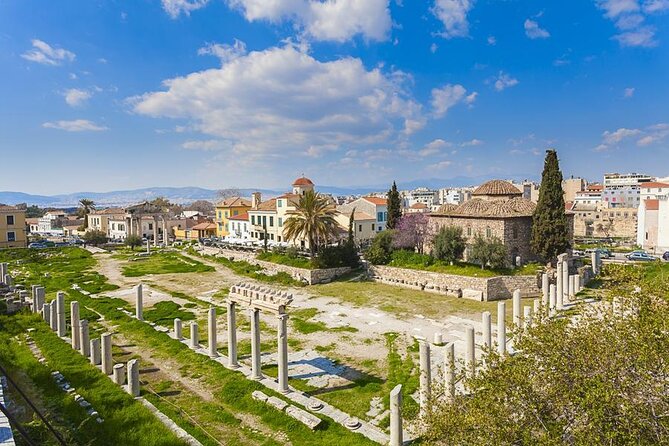
- The Roman Agora and Stoicism as a way of life
- Lysikratous Square and Nietzsche’s two sides of Athens
- Anafiotika and the final change of mood
- How much value do you get for $90.11?
- Who should book this philosophical tour?
- Should you book it?
- FAQ
- Where does the philosophical tour begin?
- What time does the tour start?
- How long does the experience last?
- Is this a private tour?
- What language is offered?
- Are admission tickets included?
- Can I cancel for a full refund?
Key points to know before booking
- A private walk for up to six people gives you room to ask questions and guide the discussion toward your own interests.
- Lampros uses multimedia presentations, not just spoken commentary, to explain difficult ideas such as Plato’s Cave and Jung’s reading of tragedy.
- The route links philosophy to real places, including the Theater of Dionysus, Pnyx, the Prison of Socrates, Keramikos, and Anafiotika.
- Happiness is a central theme, with ideas from Socrates, Plato, Aristotle, and Epicurus compared along the way.
- The best views arrive at Philopappos Monument and Pnyx, where philosophy meets broad views of the Acropolis and Athens.
- The walk suits curious families and mixed groups, including people with little previous study of philosophy.
Why this Athens walk feels different

Many Athens walks move from monument to monument, giving you dates, names, and a few memorable stories. This one uses the city as a classroom. The Theater of Dionysus becomes a place to discuss judgment and tragedy. Pnyx becomes a setting for democracy and Aristotle’s idea of eudaimonia, often translated as human flourishing or bliss.
That approach works best if you want more than photographs. You will be asked to think about how people make choices, how societies govern themselves, and what a good life might mean. The conversation can also move into psychology, self-awareness, and present-day technology.
Lampros is the guide named for this experience. His style, based on the tour details and the way the walk is structured, is personal and discussion-led rather than a memorized lecture. He uses WhatsApp to help with the meeting point, checks comfort in hot weather, and chooses shady places for explanations when possible.
The private setup matters here. A group of up to six can ask about Stoicism, Plato, psychology, or AI without waiting behind a large crowd. If one person in your party has studied philosophy and another has not, the guide can adjust the discussion. A family with a 17-year-old found the material worked across different ages, which is useful if you are planning a multigenerational day.
More Athens trips worth a second look
- Athens: Acropolis & up to 5 Archaeological Sites Combo Pass
★ 4.4 · 12,619 reviews - Athens: Acropolis Ticket with Optional Audio or Live Guide
★ 4.2 · 11,055 reviews - Athens: Acropolis, Parthenon & Acropolis Museum Guided Tour
★ 4.8 · 9,316 reviews
Theater of Dionysus and the value of tragedy
The walk begins outside the Theater of Dionysus Eleuthereus, with about 15 minutes devoted to tragedy. You will consider why ancient Athenians saw tragic drama as more than entertainment and how confronting difficult stories might soften quick judgment.
The discussion also brings in Carl Jung, Buddhist thought, and evolutionary psychology. The supplied description contains a typo in one phrase, so the exact wording of that point is unclear, but the larger topic is clear: tragedy can help people examine fear, desire, weakness, and character.
This is a strong opening because it sets the pattern for the whole experience. You do not simply hear that a theater existed here. You ask what public storytelling does to the person watching it.
Do not expect entry into the theater based on the stated details. This stop is described as outside the site, with no admission charge. That keeps the tour moving, but anyone hoping for a full archaeological visit should plan a separate ticket and more time.
Herod Atticus Odeon and the masks we wear
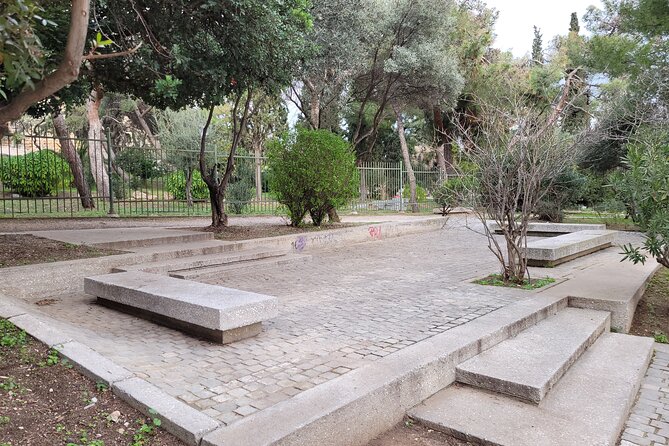
The next stop is the Herod Atticus Odeon, one of Athens’ best-known open-air theaters. The visit lasts about 10 minutes and turns toward the ideas of persona, animus, and anima in psychology.
This is one of the more unusual pairings on the route. A theater naturally raises questions about performance and identity. You may find yourself thinking about the roles you play in public, the parts of yourself you hide, and the difference between social appearance and private character.
The stop is short, so the guide cannot explore every part of Jungian psychology. That is not necessarily a problem. It keeps the route varied and gives you a concrete place to connect with an idea that can otherwise seem abstract.
The Prison of Socrates and Plato’s Cave
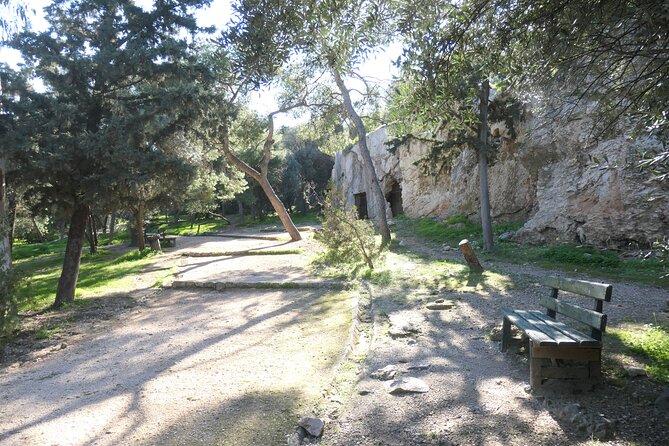
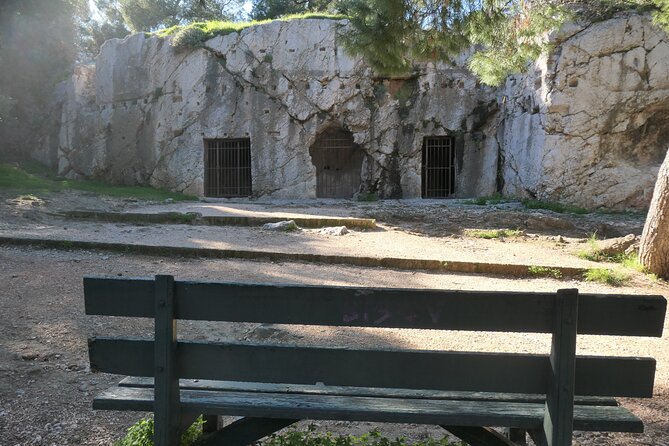
At the Prison of Socrates, the focus shifts to Plato’s philosophy and the allegory of the cave. The scheduled discussion lasts around 20 minutes, giving this one of the longer pauses on the walk.
Plato’s Cave is especially useful in Athens because it asks how people confuse appearances with truth. The setting helps turn a familiar philosophical story into a physical question: how do you know what you think you know?
Lampros also connects reason and reflection with psychology. This is where the walk can feel inward rather than simply academic. One participant described the experience as a journey into the self, with philosophy used alongside psychological ideas to think about awareness and healing.
You should come ready to talk. The tour is not built around silently listening while the guide recites a script. The more willing you are to ask questions, the more useful this stop is likely to become.
A different kind of day out, same corner of Greece:
- Athens: Cape Sounion & Poseidon Temple Sunset Half-Day Trip
★ 4.8 · 8,241 reviews - Athens: Acropolis and Parthenon Guided Walking Tour
★ 4.6 · 5,882 reviews - All Day Cruise -3 Islands to Agistri,Moni, Aegina with lunch and drinks included
★ 5.0 · 4,958 reviews - Athens, Piraeus, and Coastline: Blue Hop-On Hop-Off Bus
★ 3.9 · 4,849 reviews
Agios Dimitrios Loumbardiaris and the birth of democracy
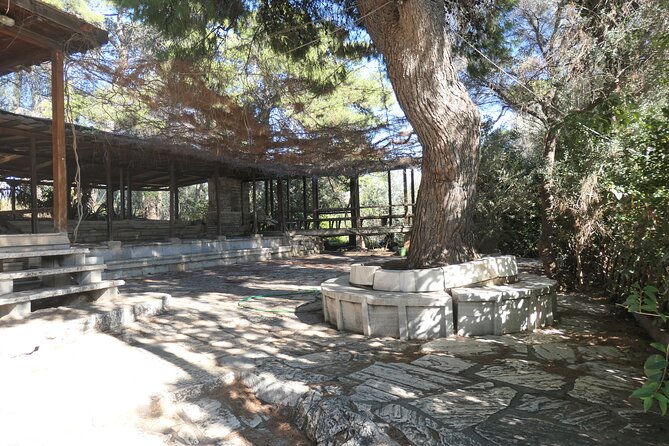
The route continues to the Church of Agios Dimitrios Loumbardiaris, with about 20 minutes on the subject of democracy. The point is not only to identify a place, but to examine how Athenian citizens began organizing public decision-making.
This discussion gives the tour a needed social and political side. The earlier stops focus on the individual mind and personal character. Here, the subject becomes the group: who gets a voice, how citizens act together, and what free public discussion requires.
The walk does not appear to include a separate entrance ticket at this point. Treat the church as a setting for the discussion rather than as a formal interior visit unless Lampros tells you otherwise.
Philopappos Monument, views, and the recipe for happiness
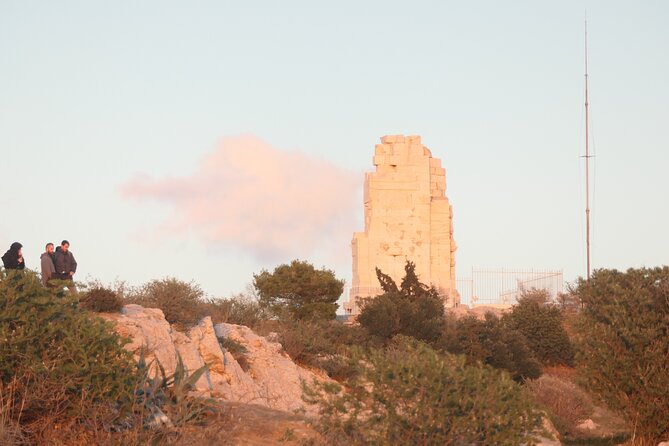
At Philopappos Monument, you get one of the tour’s best visual breaks. The stop lasts about 15 minutes and is described as one of the most energetic points in Athens, with a strong view toward the Parthenon and Acropolis.
This is a smart place to discuss happiness. Plato and Socrates approached the good life through virtue, knowledge, and the care of the soul. Looking across Athens while discussing those questions gives the subject a useful physical scale. Happiness is not treated as a quick slogan, but as a problem worth examining.
The word energetic is subjective, so do not book this expecting a scientific claim about the site. Read it as a description of atmosphere and personal impression. The reliable practical point is the view.
This is also one of the places where shade and rest can matter. Lampros has been attentive to comfort in hot weather, choosing shaded spots for conversation when possible. Athens can be tough at midday, so the 11 a.m. start is worth considering when planning your day.
Pnyx, democracy, and Aristotle’s eudaimonia
Pnyx is one of the intellectual centers of the route. It was the assembly area of Athenian citizens, and the tour uses it to discuss democracy, Aristotle’s idea of eudaimonia, and a place associated with Socrates.
The location gives the political conversation real force. Instead of discussing democracy in a museum room, you are near the setting connected with public assembly. That does not turn the stop into a formal political history lecture. It gives you a place to consider the duties of citizens and the conditions needed for a good society.
The phrase eudaimonia is often reduced to happiness, but the tour’s description points toward a fuller idea of living well. That is useful for anyone who wants to compare modern ideas of success with ancient Greek thought.
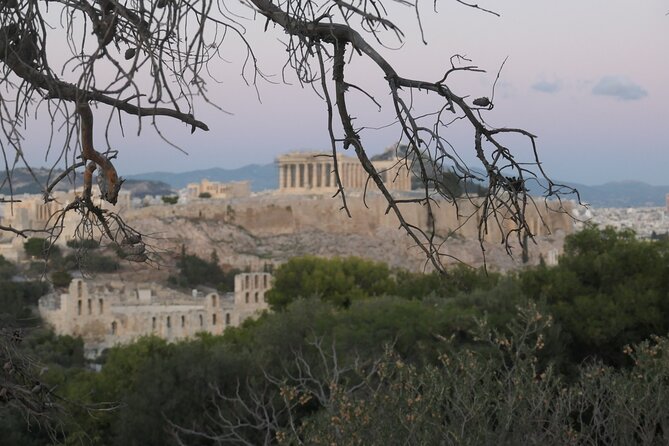
Pnyx also offers one of the best views of Athens. The tour lists admission as included here, while the other stops are described as free admission. Since the itinerary contains several open-air sites, most of the value comes from the guide’s explanation and the sequence of places rather than from paid entry.
Keramikos and Epicurus’ garden
At Keramikos Archaeological Site, the subject becomes death, pleasure, and the Epicurean recipe for happiness. The stop lasts roughly 15 minutes and uses the ancient cemetery as a setting for Epicurus’ ideas.
This is a fine example of how the route pairs location and subject. A cemetery naturally raises questions about mortality, while Epicurean philosophy is often misunderstood as a call to constant luxury. The tour gives you a chance to consider a quieter version of pleasure and the role of moderation, friendship, and freedom from fear.
You should not expect an extended archaeological tour of Keramikos. The schedule allows only a short stop, and the guide’s main purpose is philosophical interpretation. If you want detailed information about pottery, burial customs, or the site’s excavated remains, set aside another visit.
The route also passes several places connected with the wider story of Athens: the place where Stoicism was born, a particularly beautiful street, and an early meteorological station. The supplied schedule does not assign full stop descriptions or timings to each one, so think of them as passing points that add texture between the main discussions.
The Roman Agora and Stoicism as a way of life
The Roman Agora receives about 15 minutes, with the focus on Stoicism. Here, philosophy is presented as a way of life rather than a set of ideas reserved for classrooms.
That practical angle is one of the tour’s strongest themes. You are encouraged to consider how reason, self-control, and attention might shape ordinary decisions. The discussion can also connect with modern psychology, which helps keep Stoicism from becoming a list of famous sayings.
The route includes another stop near the Mnisikleous stair, described as a discussion point for philosophers and a good place for lunch. This is useful local advice. Lampros has also suggested rooftop bars, open-air cinema, and places to eat, including a restaurant known for meatballs. Since the walk ends back at its meeting point, you can ask for a recommendation and continue your day nearby.
Lysikratous Square and Nietzsche’s two sides of Athens
At Lysikratous Square, the subject turns to Nietzsche’s Apollonian and Dionysian sides of Athens. The scheduled time is about 15 minutes.
This gives the tour a more artistic reading of the city. The Apollonian suggests order, form, and restraint, while the Dionysian points toward emotion, instinct, music, and release. You will not just hear these as textbook terms. The square and nearby streets become a way to think about the tension between control and impulse.
The stop helps balance the earlier focus on logic and civic life. Athens is presented as a place of reason, theater, ritual, pleasure, and conflict. If you like art, psychology, or cultural interpretation, this may be one of the more memorable discussions.
Anafiotika and the final change of mood
The final listed stop is Anafiotika, a small area beneath the Acropolis that feels quite different from the formal monuments and archaeological sites. The tour gives it about 10 minutes and describes it as the second most energetic point, with a Cycladic island atmosphere.
That change of mood is well judged. After discussions about tragedy, democracy, ethics, and psychology, the whitewashed lanes provide a lighter finish. You can look at Athens through a local urban setting rather than only through monumental ruins.
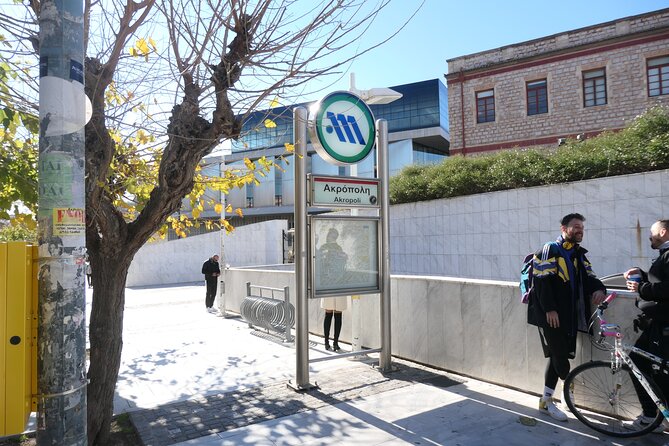
The route ends back at the original meeting point near Acropoli, at Acropoli, Athens 117 42. The start time is 11 a.m., and the total duration is about two hours and 30 minutes. The schedule adds up to a substantial number of short stops, so allow for a steady walk and frequent changes of subject.
How much value do you get for $90.11?
The listed price is $90.11 per person, with a private group format for up to six people. Because the information describes both a per-person price and one price for a group of six, check the final booking total carefully before paying.
For a solo participant, that rate is not a bargain walking tour. For a couple, family, or group of friends, the value improves because you receive a private guide and can shape the conversation around your interests. Six people sharing a private experience can make the cost more reasonable than booking several separate activities.
The value also depends on what you want. If you mainly need dates and architectural facts, a standard Athens city walk may offer more information for less money. If you want a focused discussion about philosophy, psychology, happiness, and the meaning of the places you see, the private format gives this tour a clear purpose.
The multimedia material matters too. Short videos and speakers can make Plato, Jung, Stoicism, and Nietzsche easier to follow, especially if you are new to the subject. They also break up the walking and give you something concrete to focus on during the explanations.
Who should book this philosophical tour?
I would choose this walk early in an Athens visit if you want the rest of the city to feel more meaningful. One participant who took it on the last day wished they had done it sooner, since Lampros also offered ideas for food, rooftop bars, and evening activities.
It suits:
- First-time visitors who want context for the Acropolis area
- People curious about philosophy but without formal study
- University students and adults returning to subjects they once studied
- Families with older children or teenagers
- Couples and small groups who prefer private discussion
- Visitors interested in psychology, self-knowledge, or AI
It may not suit you if you want a relaxed stroll with long photo breaks. The walk covers a lot, and the material can become emotionally or intellectually demanding. The route is described as suitable for most people, and Lampros has helped children in wheelchairs, but you should discuss your exact mobility needs with him before booking.
Wear sensible walking shoes, bring water, and plan for sun. The tour requires good weather. If poor weather cancels it, you can choose another date or receive a full refund. Free cancellation is available up to 24 hours before the 11 a.m. start, while later cancellations do not qualify for a refund.
Should you book it?
Book this private Athens philosophy tour if you want to connect famous sites with questions about how to live, think, and act. Lampros brings together ancient Greek philosophy, psychology, visual material, and modern subjects such as AI in a way that encourages conversation.
I would especially recommend it for a small group, since the private format makes the $90.11 rate easier to justify. Choose it early in your stay if possible, and use the guide’s local food and evening suggestions afterward.
Skip it if your priority is a detailed archaeological survey or a slow photographic walk. For everyone else, this is a thoughtful way to see Athens with your mind switched on, not just your camera.
FAQ
Where does the philosophical tour begin?
It begins at Acropoli, Athens 117 42, Greece.
What time does the tour start?
The scheduled start time is 11:00 a.m.
How long does the experience last?
The walking tour lasts approximately two hours and 30 minutes.
Is this a private tour?
Yes. Only your group participates, and the tour is designed for a group of up to six people.
What language is offered?
The tour is offered in English.
Are admission tickets included?
The itinerary lists admission as free at most stops and says admission is included at Pnyx. The tour is mainly an outdoor walking experience, so confirm any separate entry plans before booking.
Can I cancel for a full refund?
Yes. You can cancel at least 24 hours before the local start time for a full refund. Changes or cancellations made less than 24 hours before the start are not accepted for a refund. If poor weather cancels the experience, you can receive a full refund or choose another date.
Recently reviewed around Athens
- Small-Group Women History in Ancient Greece Walking Tour★ 5.0 · 38 reviews
- Ceramic and Pottery Creative Workshop with Two Local Artists★ 4.0 · 57 reviews
- Athens: Wine Workshop Create your Own Wine under the Acropolis★ 5.0 · 77 reviews
- Athens: Greek Wines Tasting with Sommelier and Acropolis Views★ 5.0 · 88 reviews
- Hydra Private Day Trip by Ferry from Athens with Transfers★ 4.0 · 30 reviews
- Small-Group Wine Tour in Athens with Tasting★ 5.0 · 33 reviews
- Wine Trails Private Tour/ Nemea visit 3 wineries from Athens or Nafplion (10 h)★ 5.0 · 44 reviews
- Private Athens Transfer Airport/Port -Greek Tours-Hourly service★ 5.0 · 88 reviews
Athens Tours, compared.

Acropolis & up to 5 Archaeological Sites Combo Pass
Read our review →

Acropolis, Parthenon & Acropolis Museum Guided Tour
Read our review →
Cape Sounion & Poseidon Temple Sunset Half-Day Trip
Read our review →

All Day Cruise -3 Islands to Agistri,Moni, Aegina with lunch and drinks included
Read our review →