Reviewed · VIP
Private Luxury Biblical Tour: Apostle Paul’s Footsteps – Corinth
The most moving part of this private Corinth tour is the way it ties a biblical journey to real places you can still walk through. From the eastern port where Paul arrived to the stone Bema where he faced Roman authority, the day gives physical shape to the story told in Acts 18.
I like the door-to-door pickup from Athens or Piraeus, and I like the freedom of traveling with only your own group. The English-speaking driver-guides, including Demetrios, George, Makis, and Pericles, are praised for their patience, Bible knowledge, and easygoing approach. The main drawback is that a licensed guide does not enter the archaeological sites with you, and admission fees add €20 per person.
In This Review
- Key points to know before you book
- Why Paul’s Corinth is worth the trip from Athens
- The Corinth Canal and the narrow Isthmus
- The Diolkos and ancient overland shipping
- Kenchreai, the port linked to Paul’s arrival
- Ancient Corinth, from Glauke’s Fountain to the Roman Forum
- The Temple of Apollo and Corinth’s older religious world
- The Bema and the trial before Gallio
- The Archaeological Museum of Corinth in 45 minutes
- Acrocorinth and the long view over the region
- The Apostle Paul Church in modern Corinth
- What the private vehicle and guide service add
- Price, extra fees, and overall value
- Who should book this Corinth tour?
- Should you book Apostle Paul’s Footsteps in Corinth?
- FAQ
- How long does the private Corinth tour last?
- Is pickup from Athens or Piraeus included?
- Is airport pickup included?
- What is included in the tour price?
- Are entrance fees included?
- What should I bring?
Key points to know before you book
- Paul’s Corinth in one day: Follow the route from Kenchreai to the Bema, Ancient Corinth, and the Apostle Paul Church.
- Private transport from Athens: Pickup and drop-off are included at selected hotels, apartments, and cruise ports.
- Comfortable small-group setup: Groups of one to four use a luxury sedan, while groups of five to seven travel by minivan.
- Plenty of biblical and classical context: The tour joins Paul’s mission with Greek mythology, Roman law, ancient engineering, and early Christianity.
- Plan for extra costs: Archaeological site and museum admission costs €20 per person, and a licensed site guide is not included.
- Allow a full half-day: The advertised five to six hours includes the driving time between Athens and Corinth.
Why Paul’s Corinth is worth the trip from Athens
Corinth is not just a biblical stop with a few scattered stones. It was a major city at a crucial crossroads, linked to two seas by the narrow Isthmus of Corinth. That location brought trade, sailors, merchants, officials, soldiers, and religious ideas through the city.
Paul spent roughly a year and a half in Corinth, according to Acts 18. The tour helps you place that mission in its setting. You see the port connected with his arrival, the public forum where legal cases were heard, and the remains of a city shaped first by Greek culture and later by Roman rule.
The private format matters here. You are not tied to a large coach group or a fixed pace inside each stop. You can spend more time at the canal, move quickly through a smaller site, or ask your driver to explain a biblical detail again.
The guides are driver-guides rather than licensed archaeological guides. That distinction is important. Your driver can provide historical and biblical background and take you between sites, but you should not expect a formal specialist lecture beside every ruin. Past guides have included Demetrios, Makis, George, and Pericles, with particular praise for their calm manner, patience, and grasp of Paul’s story.
More Athens trips worth a second look
- Athens: Acropolis & up to 5 Archaeological Sites Combo Pass
★ 4.4 · 12,619 reviews - Athens: Acropolis Ticket with Optional Audio or Live Guide
★ 4.2 · 11,055 reviews - Athens: Acropolis, Parthenon & Acropolis Museum Guided Tour
★ 4.8 · 9,316 reviews
The Corinth Canal and the narrow Isthmus
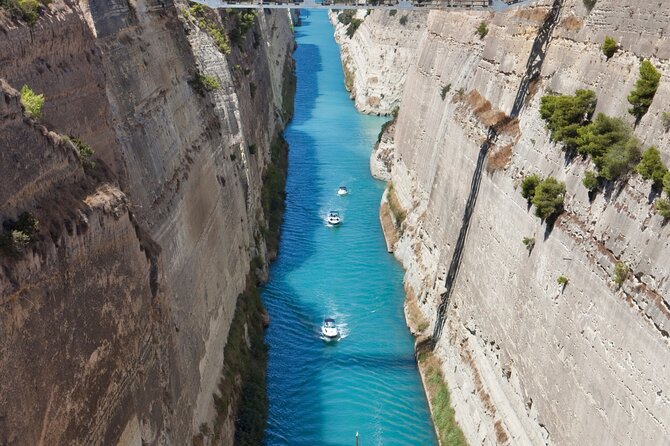
Your first stop is the Isthmus of Corinth, the thin strip of land joining mainland Greece to the Peloponnese. The modern canal cuts straight through the rock, giving ships a route between the Gulf of Corinth and the Saronic Gulf.
You have about 20 minutes here, which is enough to see the canal and take photographs. The scale is the main attraction. From above, the waterway looks narrow and sharply cut into the earth, a striking example of how modern engineering followed an ancient geographical problem.
The site also sets up the rest of the day. Corinth gained much of its importance because goods and ships could avoid sailing around the southern Peloponnese. You will understand why control of this point made the city valuable long before Paul arrived.
This is a photo stop rather than a long visit. If you want a detailed account of the canal’s construction, ask your driver early in the day so you know how much time to spend here.
The Diolkos and ancient overland shipping
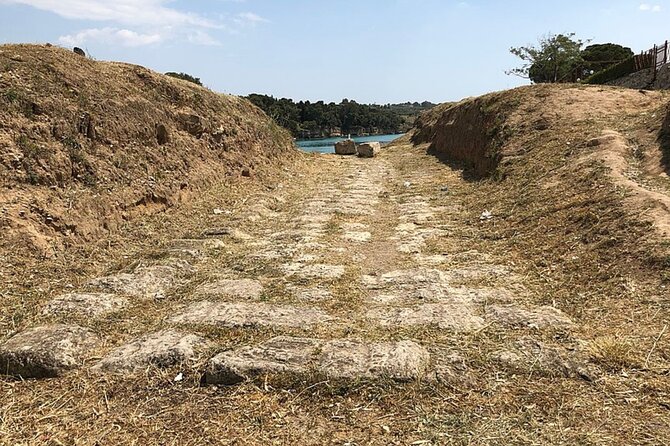
The next stop is the Diolkos, an ancient paved route across the Isthmus. It allowed ships or cargo to be hauled overland, avoiding the difficult sea passage around the peninsula.
You have about 10 minutes at the site. That is brief, but the stop adds useful context to the canal. The Diolkos shows that people in antiquity were already trying to solve the same transport problem that the modern canal solved in another way.
Do not expect a large, fully reconstructed monument. The interest lies in the surviving route and the idea behind it. This is a place where a short explanation from your driver makes the stones much easier to understand.
Kenchreai, the port linked to Paul’s arrival
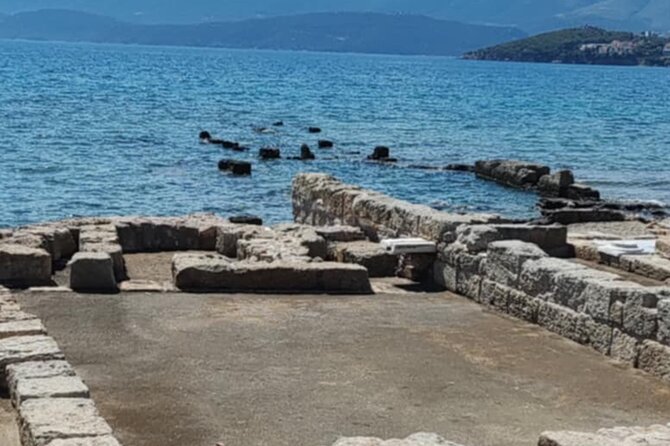
At the eastern port of Kenchreai, the biblical route becomes more personal. This was Corinth’s eastern harbor during the Roman period, and it is traditionally linked to Paul’s arrival in Corinth in about 53 AD.
The remains include parts of harbor facilities, religious structures, and early Christian traces. You have around 20 minutes to look around. The site is quieter and less grand than Ancient Corinth, but that is part of its appeal. You are seeing the kind of working port that helped connect Corinth with the wider Roman world.
This stop also gives you a useful pause before the larger archaeological area. Bring comfortable shoes, since the day includes walking on uneven ground and moving between scattered remains.
A different kind of day out, same corner of Greece:
- Athens: Cape Sounion & Poseidon Temple Sunset Half-Day Trip
★ 4.8 · 8,241 reviews - Athens: Acropolis and Parthenon Guided Walking Tour
★ 4.6 · 5,882 reviews - All Day Cruise -3 Islands to Agistri,Moni, Aegina with lunch and drinks included
★ 5.0 · 4,958 reviews - Athens, Piraeus, and Coastline: Blue Hop-On Hop-Off Bus
★ 3.9 · 4,849 reviews
Ancient Corinth, from Glauke’s Fountain to the Roman Forum
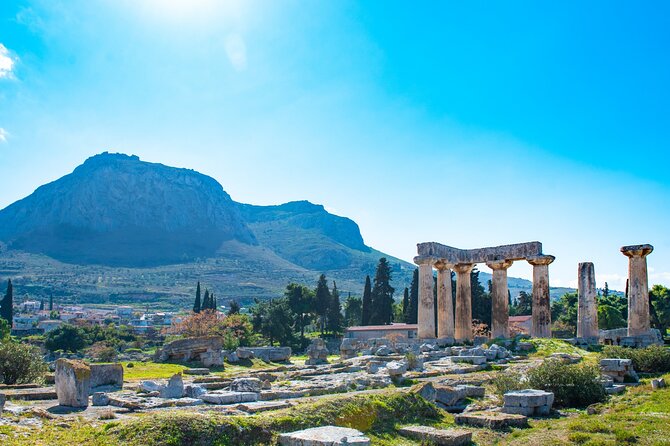
Ancient Corinth is the core of the tour. It combines Greek myth, Roman civic life, early Christianity, and museum displays in one compact area.
The Glauke Fountain comes first in the itinerary. Cut into the hillside, it is linked with the story of Glauke, the daughter of King Creon. In Greek myth, she sought refuge here after Medea poisoned her.
The fountain is a good reminder that Corinth was not only a place of trade and politics. Its public spaces were also shaped by older myths and religious traditions. You will spend about 25 minutes in this part of the site, though the exact pace can be adjusted within the private format.
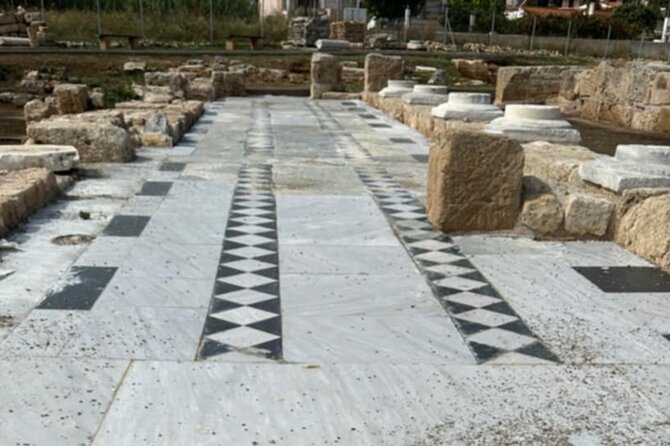
The Roman Forum brings you closer to Paul’s public life in Corinth. The Bema, or raised platform, served as a place for public speeches and legal decisions. According to the account in Acts 18, Paul was brought before Gallio, the Roman proconsul, around 51 AD. Gallio dismissed the case, allowing Paul to continue his work.
Standing near the Bema helps explain the social setting Paul faced. This was not a remote religious community. It was a Roman city with formal courts, public officials, old pagan practices, and many competing voices.
The Bema is often called Paul’s Column or Paul’s judgment platform in descriptions of the site, so listen carefully to the explanation you receive. The key point is the connection with the legal hearing before Gallio, not the idea that every nearby stone can be directly tied to Paul’s daily life.
Admission to Ancient Corinth is not included. The stated cost for archaeological sites and museums is €20 per person, so add that to the tour price when comparing options.
The Temple of Apollo and Corinth’s older religious world
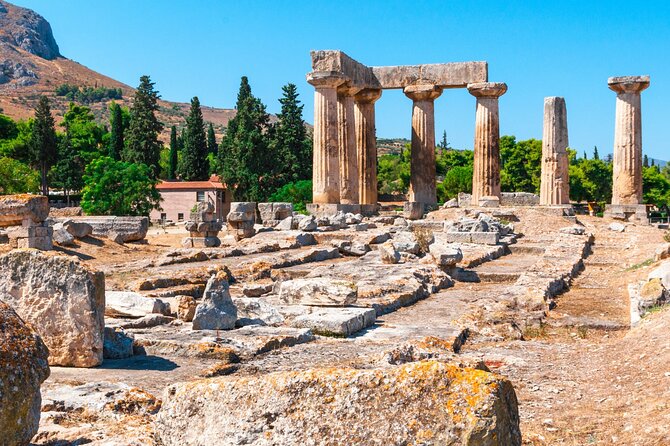
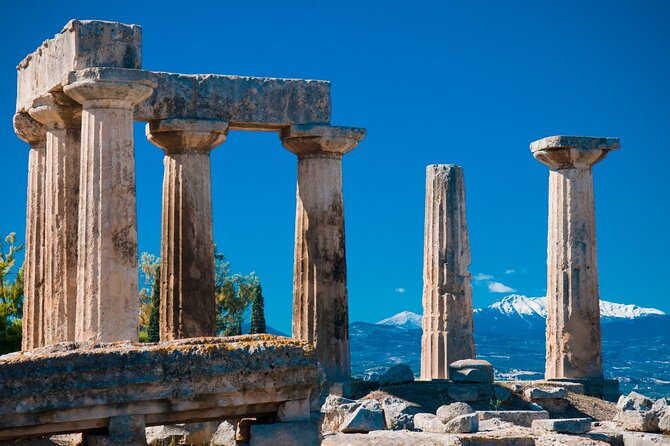
The Temple of Apollo is one of the oldest Doric temples in the Peloponnese. Its surviving columns are among the most recognizable sights at Ancient Corinth.
The temple helps you picture the city before and during Paul’s time. Christianity was developing within a world filled with established temples, civic rituals, and Greek religious traditions. Paul’s message did not arrive in an empty setting.
You have about 20 minutes here, followed by another short visit connected with the Bema of Apostle Paul. The itinerary lists the Temple of Apollo twice, but the second description concerns the Bema and Paul’s trial rather than a second temple visit.
The remaining columns are impressive, but the site is partly open and exposed. A hat, sunscreen, water, and sturdy walking shoes will make the visit more comfortable, especially on a bright Greek day.
The Bema and the trial before Gallio
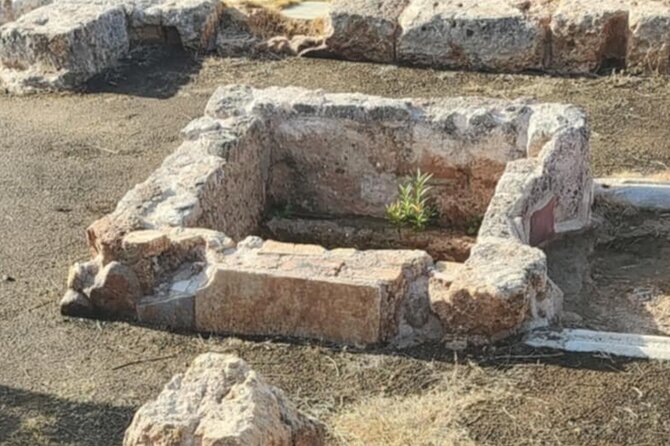
The Bema deserves a second look because it is the stop most directly tied to Paul’s time in Corinth. In the Roman period, this platform functioned as a tribunal where officials issued judgments.
The visit lasts about 10 minutes. That may seem short, but it is enough to focus on the setting and read the site through Acts 18. Modern mosaics showing Paul’s trial and journey add a later Christian layer to the ancient Roman space.
I would spend a few minutes imagining the practical reality of the scene. Paul was not speaking in a quiet chapel. He was working in a public city where a Roman official could decide whether his teaching presented a legal problem.
The site has both archaeological and religious meaning. If you want a detailed discussion of Paul’s letters, ask for it during the drive, when there is more time for conversation.
The Archaeological Museum of Corinth in 45 minutes
The Archaeological Museum gives you the objects that the open-air ruins cannot provide. You have about 45 minutes, making this one of the longer stops on the tour.
Displays cover periods from prehistoric times through the Roman era. You can see statues, pottery, and material linked to the Sanctuary of Asklepios. These objects help fill in the daily life of Corinth, from religious practice to public art and household use.
This is also the best stop for understanding how the city changed over time. The ruins outside can look like a single ancient chapter, but the museum shows that Corinth developed across many centuries.
Admission is extra. The €20 site and museum fee should be paid in addition to the advertised tour price. Since the museum is included in the planned route, you do not need to choose between a quick exterior visit and the indoor collection.
Acrocorinth and the long view over the region
Acrocorinth is the fortified acropolis above Ancient Corinth. The climb and site visit take about 40 minutes, with no separate admission charge listed for the tour.
The reward is the view across the Isthmus and the surrounding area. You can see why this high point mattered to successive powers. Greek, Byzantine, Frankish, and Ottoman fortifications all left their mark here.
This stop is less directly connected with Paul than the Bema, but it gives you the wider strategic picture. Corinth was valuable because it controlled movement, and Acrocorinth helped protect that position.
The amount of walking depends on how far you explore. Wear proper shoes and be realistic about your pace. If you prefer a gentler day, tell your driver how much time you want to spend on the upper fortress rather than treating every ruin as a must-see.
The Apostle Paul Church in modern Corinth
The final stop is the Apostolos Pavlos Church, or Apostle Paul Church. The three-aisled basilica was built in 1936 on the site of an earlier church associated with Paul.
You have about 20 minutes here. After a morning of temples, forums, and fortifications, the church shifts the focus from archaeology to living Christian remembrance.
This is a useful ending for anyone taking the tour for religious reasons. The earlier stops show the world Paul entered. The church shows how his presence continues to shape Corinth’s identity today.
The itinerary returns you to your original meeting point. Pickup and drop-off can be arranged from selected Athens hotels, apartments, and cruise ports. One especially useful option is the ability to be collected at Piraeus and dropped at a different Athens location, if arranged with the operator.
What the private vehicle and guide service add
For one to four people, transport is by luxury sedan. Groups of five to seven use a minivan. Both options include air conditioning, bottled water, private transport, and Wi-Fi.
The Wi-Fi is a small but useful touch on a long outing. You can stay connected between stops, though the real benefit of the vehicle is comfort and control. The driving time between Athens and Corinth is part of the five to six hour total, so having a clean, private vehicle makes the day easier than arranging several separate connections.
The driver-guides are repeatedly praised for being friendly, patient, and unhurried. George is described as an Orthodox Christian who could connect Scripture with local religious tradition. Demetrios is noted for taking photographs, making an extra ice-cream stop, and allowing a relaxed pace. Another Demetrios was praised for keeping water available and explaining each part of Paul’s journey.
These details point to the tour’s strongest feature: personal service. You can ask for a photo, request more time at a stop, or pause for a simple refreshment. The exact driver is not guaranteed, so book this for the private format and guide service rather than for one particular person.
Price, extra fees, and overall value
The listed price is $179.06 per person. That is before the €20 per-person admission cost for the archaeological sites and museum. Tips are also optional and not included, while airport pickup costs extra.
At first glance, the price is higher than joining a large coach excursion. The comparison changes when you consider what is included: private transport, pickup and drop-off, an air-conditioned vehicle, Wi-Fi, water, and an English-speaking driver-guide.
For a couple arriving by cruise ship, the door-to-door service can be especially useful. You avoid arranging a taxi to a bus departure point and can return to the original pickup location. For a family or small group of friends, the fixed private setup may also offer better value than buying several separate seats on a shared tour.
Lunch is not listed as included. A guide may recommend or stop at a restaurant, and one recorded outing included a highly praised lunch, but you should treat that as an optional expense rather than part of the package.
Who should book this Corinth tour?
I would choose this experience if you want the biblical connection to guide your day but still care about Greek temples, Roman law, engineering, and museum pieces. It works well for couples, families, church groups, and cruise passengers who want a private schedule.
You should also like conversation. The tour depends on the driver-guide for much of its explanation, especially since a licensed guide does not accompany you inside the sites. If you want a formal archaeological lecture at every ruin, a licensed guide may be a better fit.
The outing is also a good choice if you dislike rushing. The itinerary has set visit times, but the private group format allows some flexibility. Comfortable shoes, sun protection, and water are essential. Most people can take part, but Acrocorinth and the archaeological areas involve outdoor walking.
Free cancellation is available up to 24 hours before the start time. Changes or cancellations made later are not refunded, and poor weather can lead to a different date or a full refund.
Should you book Apostle Paul’s Footsteps in Corinth?
Book it if you want Paul’s story placed in real geographic settings, not just discussed in a vehicle. Kenchreai, the Bema, Ancient Corinth, Acrocorinth, and the Apostle Paul Church create a satisfying chain of places, while the canal and museum add interest for anyone who is not traveling solely for religious reasons.
Skip it if you want a low-cost shared excursion or a fully licensed archaeological guide. The extra admission fee also matters when you set your budget.
For a private half-day from Athens or Piraeus, the package offers strong practical value. You get flexible transport, a small group, and a guide who can connect Scripture with the physical remains. Just book it with clear expectations: this is a thoughtful driver-led visit, not a formal lecture tour at every site.
FAQ
How long does the private Corinth tour last?
The experience lasts approximately five to six hours. This total includes the time spent traveling between Athens and the Corinth-area stops.
Is pickup from Athens or Piraeus included?
Pickup is available from designated Athens hotels, apartments, and selected cruise ports. The driver waits outside a hotel or apartment, while port pickup takes place in the arrival area with a sign showing your name.
Is airport pickup included?
Airport pickup is available for an additional cost. It is not included in the listed tour price.
What is included in the tour price?
The price includes an air-conditioned vehicle, private transportation, Wi-Fi on board, bottled water, an English-speaking driver-guide, and hotel or cruise ship pickup and drop-off service.
Are entrance fees included?
No. Entrance fees for the archaeological sites and museums cost €20 per person. A licensed guide to accompany you inside the archaeological sites is also not included.
What should I bring?
Wear comfortable footwear for walking over archaeological areas and fortress paths. Bring a hat, sunscreen, and water, as the weather in Greece is often warm and sunny.
Recently reviewed around Athens
- Small-Group Women History in Ancient Greece Walking Tour★ 5.0 · 38 reviews
- Ceramic and Pottery Creative Workshop with Two Local Artists★ 4.0 · 57 reviews
- Athens: Wine Workshop Create your Own Wine under the Acropolis★ 5.0 · 77 reviews
- Athens: Greek Wines Tasting with Sommelier and Acropolis Views★ 5.0 · 88 reviews
- Hydra Private Day Trip by Ferry from Athens with Transfers★ 4.0 · 30 reviews
- Small-Group Wine Tour in Athens with Tasting★ 5.0 · 33 reviews
- Wine Trails Private Tour/ Nemea visit 3 wineries from Athens or Nafplion (10 h)★ 5.0 · 44 reviews
- Private Athens Transfer Airport/Port -Greek Tours-Hourly service★ 5.0 · 88 reviews
VIP, compared.

Luxury Catamaran Cruise from Athens with Traditional Greek Meal and BBQ
Read our review →
Hydra, Poros and Egina Day Cruise from Athens with Optional VIP Upgrade
Read our review →
Santorini Sunset Luxury Sailing Catamaran Cruise with BBQ, drinks, transfer
Read our review →
Luxury Small-Group Catamaran Cruise with BBQ, Open bar & Transfer
Read our review →
Balos & Gramvousa Luxury Catamaran Sailing Cruise
Read our review →
Athens Pub Crawl with 1hr Open Bar & VIP Nightclub Access
Read our review →