Reviewed · ATHENS TOURS
Steps to tradition: Greek Traditional Dances in Athens
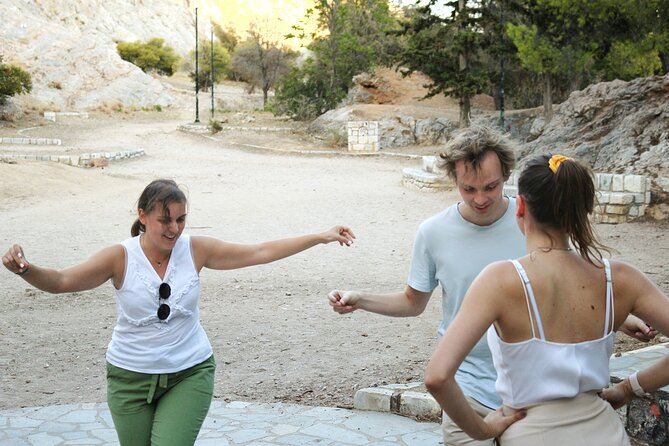
Dancing beside ancient ruins with the Acropolis in view is the heart of this experience. Tania and Kostas teach you several Greek folk dances, one step at a time, then add the stories, music, and regional traditions that give each dance its meaning.
I like the small group size, capped at 12, and the way the lesson can feel personal rather than staged. I also like the setting: a short walk through Philopappou Hill leads to a quiet outdoor spot where you learn the dances under the Athens sky.
The main thing to consider is the early listed start time of 6:00 am and the 10-minute walk up the hill. You will need comfortable shoes, water, and enough mobility for the walking portion and the dancing itself.
In This Review
- Key points to know before you book
- Greek tradition with the Acropolis as your backdrop
- Meeting Tania and beginning the hill walk
- Learning five to seven dances from Greece
- Stories behind the music and movement
- Why the Philopappou Hill setting works
- A small group makes the lesson more useful
- Extras that may come with the lesson
- Price, timing, and practical value
- Who should book this Greek dance class
- Should you book Steps to Tradition?
- FAQ
- Where does the Greek traditional dance experience begin?
- Where does the activity finish?
- How long does the experience last?
- What time does the activity start?
- How many people can join the class?
- Can I cancel for a full refund?
Key points to know before you book
- Acropolis views during the lesson: You dance outdoors on Philopappou Hill, near ancient sites and nature.
- Several regional dances: Expect roughly five to seven dances, depending on the group and lesson pace.
- Teaching by Tania and Kostas: Instructions are clear, patient, and supported by stories about Greek culture.
- A small group of up to 12: The format gives you room to ask questions and receive help with the steps.
- A gentle cultural workout: You learn through movement, music, repetition, and group dancing.
- Free cancellation with notice: Cancel at least 24 hours before the start for a full refund, subject to the weather and minimum-group rules.
Greek tradition with the Acropolis as your backdrop
Many Athens activities keep you looking at ancient Greece from behind a rope or museum barrier. This one asks you to join hands and move as part of a circle.
The setting matters. Philopappou Hill sits beside the Acropolis area, and the meeting point is at the entrance near Dionysiou Areopagitou and Apostolou Pavlou. After you meet Tania, the group walks for about 10 minutes to the class location. Along the way, you may hear about nearby sights such as Socrates’ Prison and the place of traditional dance festivals in Greece.
The lesson takes place outdoors, in a peaceful part of the hill with views toward the Acropolis. One especially appealing detail is that you are not simply watching a professional performance. You are learning the basic pattern yourself, holding hands with the people around you, and trying to keep the rhythm together.
That circle is more than a practical dance formation. Greek circular dances have roots reaching back to ancient Greece, with traditions linked to Minoan civilization in Crete around 2000 BC. The dances have continued through families, villages, islands, and regions, changing over time while keeping their social purpose.
You do not need to know all of that to enjoy the class. But the background helps explain why Greek dancing can feel less like a formal recital and more like a shared community activity.
More Athens trips worth a second look
- Athens: Acropolis & up to 5 Archaeological Sites Combo Pass
★ 4.4 · 12,619 reviews - Athens: Acropolis Ticket with Optional Audio or Live Guide
★ 4.2 · 11,055 reviews - Athens: Acropolis, Parthenon & Acropolis Museum Guided Tour
★ 4.8 · 9,316 reviews
Meeting Tania and beginning the hill walk
The advertised meeting point is the main entrance to Philopappou Hill at Dionysiou Areopagitou and Apostolou Pavlou, Athens 117 41. The activity ends back at this same meeting point.
Tania is an experienced traditional dance teacher, and the class may also include Kostas. The instruction is aimed at ordinary people, not trained dancers. Tania demonstrates the pattern, breaks it into manageable steps, and repeats it until the group can move together.
That teaching style is important. Greek folk dances can look simple when you watch a line of experienced dancers, but the timing and footwork can be tricky when you try them yourself. The class gives you time to repeat the basics before adding speed or more complex movements.
The walk to the dance spot takes about 10 minutes. It is short, but it is part of the experience rather than a transfer between two unrelated locations. You are moving through one of Athens’ historic hills, with the Acropolis nearby and points of interest along the route.
Because the class takes place on a hill, plan your footwear carefully. Comfortable walking shoes are a better choice than sandals that slip or shoes that make it hard to move. The activity is open to most participants, but anyone concerned about walking on a hill should ask the operator about current conditions before booking.
Learning five to seven dances from Greece
The exact number of dances can vary, but the class generally covers several traditional dances, often around five or six and sometimes six or seven. That gives you a broad introduction rather than a long lesson focused on one dance.
The selection can include dances associated with different parts of Greece, including islands and Crete. This regional range is one of the best features of the class. You are not learning a generic Greek routine created for tourists. You are being introduced to different local forms, each with its own pace, character, and cultural setting.
Some dances are simple enough for beginners to pick up quickly. Others, particularly Cretan dances, can include quicker steps and kicks. The instructors adjust the difficulty to the group, so you are not expected to perform every movement perfectly on the first attempt.
That flexibility is useful for families and mixed-age groups. A family with children aged 11 and 13 enjoyed learning several dances together, while another class became a small community as everyone gradually found the rhythm. The group format lets confident dancers have fun without making beginners feel like they are holding the class back.
You should expect a physical element. The class has been described as a good workout, though the focus is cultural and social rather than fitness training. You will be standing, stepping, turning, and repeating movements for much of the two and a half hours. Bring water, and do not treat this as a sit-down lecture.
Stories behind the music and movement
The best part of a traditional dance class is often the explanation of why people dance, not just how to move their feet. Tania connects the steps with the places and communities where they are performed, giving you a way to understand the differences between regional styles.
The music also plays an important role. You learn how rhythm affects the steps and how the circle brings people into one group. The lesson engages memory because you must recall the sequence, but it also gives you a feel for how Greek music and dance work together.
The instruction is practical. Tania and Kostas demonstrate the movements, explain them clearly, answer questions, and repeat sections when needed. That makes the class suitable if you have never danced before or if you are nervous about joining a group.
I especially like the way the lesson can prepare you for the rest of your time in Greece. Once you know a few basic patterns, a village festival or taverna becomes easier to understand. You may not become an expert, but you will recognize the structure and feel less like an observer.
Some participants have even used what they learned later in a taverna. That is a real measure of value: the class gives you something you can carry into the rest of your holiday.
A different kind of day out, same corner of Greece:
- Athens: Cape Sounion & Poseidon Temple Sunset Half-Day Trip
★ 4.8 · 8,241 reviews - Athens: Acropolis and Parthenon Guided Walking Tour
★ 4.6 · 5,882 reviews - All Day Cruise -3 Islands to Agistri,Moni, Aegina with lunch and drinks included
★ 5.0 · 4,958 reviews - Athens, Piraeus, and Coastline: Blue Hop-On Hop-Off Bus
★ 3.9 · 4,849 reviews
Why the Philopappou Hill setting works
Athens has many indoor cultural attractions, and you should certainly visit the major museums and ancient monuments. But a dance class on Philopappou Hill gives you a different connection to the city.
You dance near ancient ruins, among trees and open air, with the Acropolis visible from the class area. The view is not an extra photograph stop added to the schedule. It is part of the setting while you are learning.
The contrast is enjoyable. You are surrounded by reminders of ancient Athens, yet the activity centers on a living tradition that has continued through much later periods. The hill provides a natural place for the circle, while the Acropolis gives the session a memorable visual focus.
The walk back to the meeting point also provides views toward the Acropolis and the Parthenon. If you like activities that combine movement with a sense of place, this is stronger than a dance class held in an anonymous studio.
There is one tradeoff. An outdoor class depends on the weather. If poor weather causes a cancellation, you are offered another date or a full refund. That policy is sensible, but it means you should keep some flexibility in your Athens plans.
A small group makes the lesson more useful
The maximum group size is 12 people. That is large enough to create a proper dance circle, but small enough for the instructors to see how the group is doing.
This matters when a dance has a quick sequence or a less familiar step. In a very large class, you can easily lose the pattern and spend the rest of the session copying the person beside you. Here, Tania and Kostas have more chance to correct the group and help individuals.
The class may also be smaller than the maximum. One couple received what was effectively a private lesson, with the instructors adapting the dances to the places the couple planned to visit later in Greece. That kind of adjustment is a useful bonus, though you should not book expecting a private session.
The group atmosphere is part of the appeal. You hold hands and learn together, so the class naturally encourages conversation and cooperation. Several families and solo participants found it easy to join in, even when they arrived with different levels of dance experience.
If you prefer quiet sightseeing or dislike group activities, this may not be the right choice. The format depends on participation. You will be asked to move, repeat steps, and dance with the group rather than watch from the side.
Extras that may come with the lesson
The core product is the dance lesson, but the experience can include useful extras. Water has been provided, and some sessions have ended with a certificate of participation.
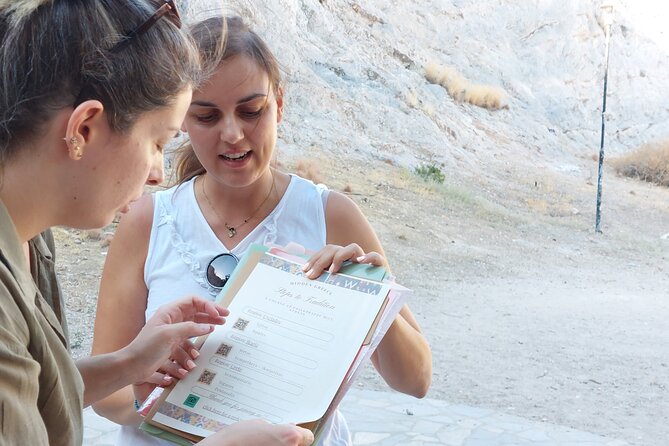
The certificate may include QR codes for a Greek traditional music playlist and an outline of the dances learned, including the regions where they are commonly performed. That is a thoughtful touch. It gives you a way to remember the class and continue listening after you leave Athens.
Photos and video may also be taken during the dancing. This has been a welcome extra for people who wanted a record of the experience. Since the supplied details do not promise photography for every session, ask Tania if having pictures is important to you.
Food and ouzo have also been included in at least one experience. Again, these should not be treated as guaranteed parts of every booking unless confirmed in advance. The main value is the teaching, the setting, and the chance to participate in Greek tradition.
Price, timing, and practical value
The listed price is $41.52 per person for about two and a half hours. For Athens, that is a reasonable price for a small-group cultural activity led by specialist instructors, particularly because the class includes a guided walk through Philopappou Hill and several dances rather than one short demonstration.
You are paying for more than exercise. The price covers direct instruction, cultural context, a carefully chosen setting, and an activity that can help you take part in Greek social life later in your trip.
Value depends on your travel style. If you want a passive show, you may find a traditional dance performance more suitable. If you want to learn by doing, this class offers more lasting value because you leave with steps, music, and a better sense of how the dances function in Greek communities.
The listed start time is 6:00 am. That is unusually early for a two-and-a-half-hour outdoor class, so confirm the time when you book and plan your route to the meeting point carefully. The information also describes dancing under the sun and some past sessions held later in the day, but the current listed start time is the detail you should rely on when arranging your morning.
The experience uses a mobile ticket. Confirmation is sent within 48 hours, subject to availability, so do not wait until the last minute if the class is central to your plans.
Who should book this Greek dance class
I would recommend it most strongly to you if you want to take part in Greek culture rather than only read about it. It works well for couples, families, solo visitors who enjoy meeting people, and anyone curious about music, regional customs, or social dance.
It is also a good choice if your Athens schedule already includes museums and ruins and you want something active to balance them. The hill walk, outdoor setting, and repeated dance steps give the morning a different pace.
Beginners are welcome based on the way the class is taught. You do not need prior dance training, and the instructors encourage you while adjusting the difficulty. Children can participate, though the activity still requires them to follow instructions and keep moving for a substantial period.
You may want to skip it if you have a serious mobility concern, dislike outdoor activities, or want a private and silent cultural visit. The hill walk and the physical class are essential parts of the experience, not minor details.
Free cancellation is available up to 24 hours before the start time for a full refund. Changes or cancellations inside that window are not accepted for a refund, and the class can also be moved or refunded if bad weather or insufficient bookings force a cancellation.
Should you book Steps to Tradition?
Book this experience if you want an active, friendly introduction to Greece that connects ancient Athens with living local customs. The combination of Tania’s patient instruction, several regional dances, and Acropolis views gives the class a clear sense of place.
At $41.52, it is a fair buy for two and a half hours, especially if your group is small. Just confirm the 6:00 am start, wear shoes you can dance and walk in, and be ready to participate. You will not leave as a Greek folk-dance expert, but you may leave knowing enough to join a circle at a taverna, which is a fine souvenir from Athens.
FAQ
Where does the Greek traditional dance experience begin?
It begins at the main entrance of Philopappou Hill, at Dionysiou Areopagitou and Apostolou Pavlou, Athens 117 41, Greece.
Where does the activity finish?
The activity ends back at the original meeting point.
How long does the experience last?
The activity lasts approximately two hours and 30 minutes, including the walk to the dance location and the lesson.
What time does the activity start?
The listed start time is 6:00 am.
How many people can join the class?
The experience has a maximum group size of 12 travelers.
Can I cancel for a full refund?
Yes. You can cancel at least 24 hours before the local start time for a full refund. Cancellations or changes made less than 24 hours before the start are not refunded or accepted.
Recently reviewed around Athens
- Small-Group Women History in Ancient Greece Walking Tour★ 5.0 · 38 reviews
- Ceramic and Pottery Creative Workshop with Two Local Artists★ 4.0 · 57 reviews
- Athens: Wine Workshop Create your Own Wine under the Acropolis★ 5.0 · 77 reviews
- Athens: Greek Wines Tasting with Sommelier and Acropolis Views★ 5.0 · 88 reviews
- Hydra Private Day Trip by Ferry from Athens with Transfers★ 4.0 · 30 reviews
- Small-Group Wine Tour in Athens with Tasting★ 5.0 · 33 reviews
- Wine Trails Private Tour/ Nemea visit 3 wineries from Athens or Nafplion (10 h)★ 5.0 · 44 reviews
- Private Athens Transfer Airport/Port -Greek Tours-Hourly service★ 5.0 · 88 reviews
Athens Tours, compared.

Acropolis & up to 5 Archaeological Sites Combo Pass
Read our review →

Acropolis, Parthenon & Acropolis Museum Guided Tour
Read our review →
Cape Sounion & Poseidon Temple Sunset Half-Day Trip
Read our review →

All Day Cruise -3 Islands to Agistri,Moni, Aegina with lunch and drinks included
Read our review →