Reviewed · ATHENS TOURS
The Apostle Paul’s Missionary Journey in Athens and Corinth
Paul’s Greek mission comes into sharper focus when you connect the city where he debated philosophers with the port where he entered Corinth. This private day trip links Athens, Kenchreai, and Ancient Corinth, turning familiar biblical names into real places you can walk across.
I like the door-to-door pickup and the freedom of a private car. I also like the mix of Scripture, archaeology, Greek Orthodox tradition, and everyday local life. Guides such as Ruslan, Yannis, Katerina, George, and Giannis have been praised for clear explanations and careful driving. The main drawback is the long day and rough, uneven ground, especially at Acrocorinth.
In This Review
- Key points at a glance
- Why Paul’s Greek journey works so well as a day trip
- Starting in Athens at the Ancient Agora
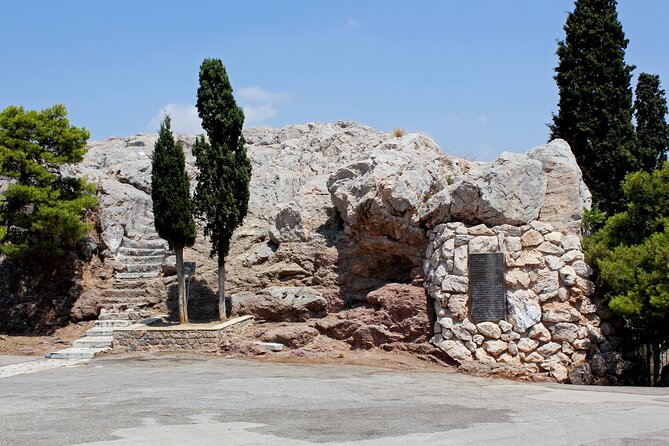
- Standing on the Areopagus
- A brief Christian stop at Saint Dionysius
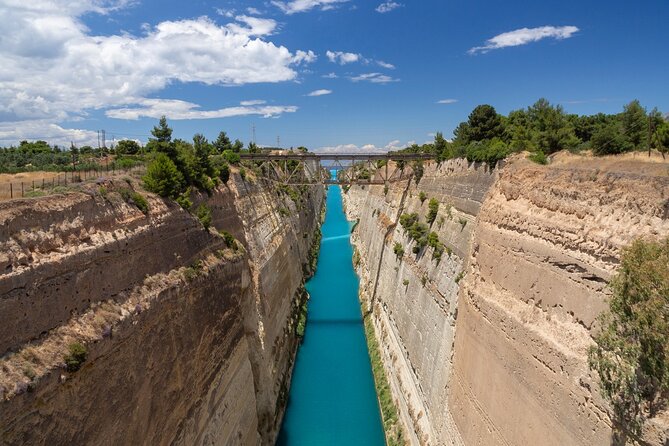
- The Corinth Canal puts the route in perspective
- Kenchreai, Paul’s eastern doorway into Corinth
- Ancient Corinth brings Paul’s letters to life
- Acrocorinth: the day’s biggest view and hardest walk
- What the private format really adds
- Is $200.25 a fair price?
- Who should book this experience?
- Should you book it?
- FAQ
- How long does the tour last?
- Is hotel pickup included?
- Can I be picked up at the port?
- Is airport pickup included?
- Are entrance fees included?
- Is this a private tour?
- Is a licensed guide included?
Key points at a glance
- Walk through the Agora where Paul met Athenian thinkers, then stand on the Areopagus, the rocky court linked to his famous address.
- Reach Corinth by way of the Corinth Canal, a dramatic modern engineering work that helps explain the region’s strategic location.
- Visit Kenchreai, the port where Paul arrived in Corinth in 51 A.D., with Roman ruins and remains of an early Christian basilica.
- See the Bema, Agora, and Temple of Apollo at Ancient Corinth, places that give physical shape to Paul’s letters.
- Climb Acrocorinth for broad views, but expect steep paths, stone steps, heat, and uneven footing.
- Use a private sedan for groups of one to four, with bottled water, onboard Wi-Fi, hotel or port pickup, and an English-speaking driver.
Why Paul’s Greek journey works so well as a day trip
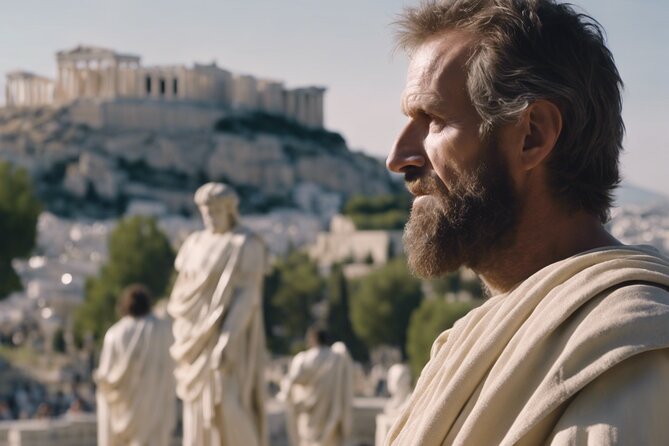
This is not simply a run through old ruins. It follows a clear story. In Athens, Paul encountered a city shaped by philosophy, public debate, and traditional religion. In Corinth, he entered a major commercial center through its eastern port and worked among a busy Roman population.
That link gives the day purpose. You are not seeing isolated stones. You are moving from the intellectual center of Athens to the port and marketplace of Corinth, where Paul spent time building an early Christian community.
The experience lasts about 8 to 9 hours. That is enough time to cover all eight stops, but it is still a full day. You will spend several hours in the car between Athens and the Corinth area, then walk across exposed archaeological sites. The private format helps because you can ask questions, adjust your pace, and stop for food without fitting into a large group schedule.
Your driver is an English-speaking local with a strong background in Greek history. Names associated with this experience include Ruslan, Yannis, Katerina, George, Giannis, Fortis, Karas, and Kostas. The exact driver depends on the date, but the important point is that the service is designed around a private driver rather than a large coach.
More Athens trips worth a second look
- Athens: Acropolis & up to 5 Archaeological Sites Combo Pass
★ 4.4 · 12,619 reviews - Athens: Acropolis Ticket with Optional Audio or Live Guide
★ 4.2 · 11,055 reviews - Athens: Acropolis, Parthenon & Acropolis Museum Guided Tour
★ 4.8 · 9,316 reviews
Starting in Athens at the Ancient Agora
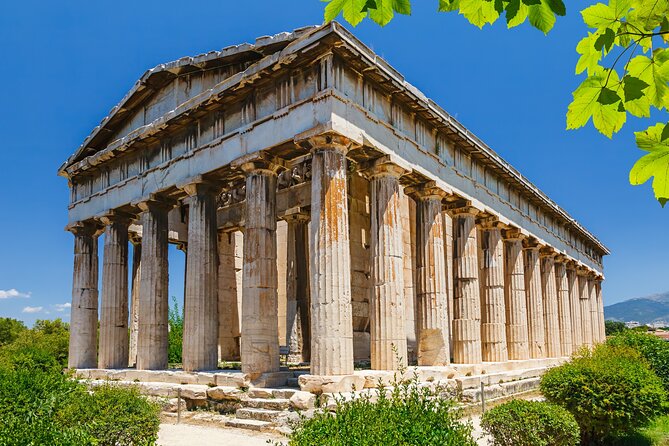
The Ancient Agora is the right place to begin. In ancient Athens, this open area served as a center for government, trade, social life, and religious activity. It was also the sort of public setting where Paul could speak with philosophers and hear competing ideas.
Plan on about an hour here. The site is much more rewarding when someone points out how the buildings worked together, so listen closely to the driver’s introduction before exploring. You may see the Temple of Hephaistos and other remains that help explain the city’s civic and religious life.
Admission is not included. Since this is a private tour with a driver rather than a licensed guide inside the archaeological sites, you should confirm the current entrance arrangements and costs before setting out. Your driver can provide historical background, but the format is not the same as hiring a licensed guide who accompanies you through every ruin.
The Agora requires walking, and the ground is not always smooth. Wear shoes with a firm sole rather than sandals with little support.
Standing on the Areopagus
A short stop at the Areopagus brings you to one of the most meaningful points for anyone following Paul. This bare marble hill northwest of the Acropolis served as a judicial and political meeting place. It was also linked with public intellectual debate.
You get about 30 minutes here, and that is usually enough. The setting is compact, but the symbolism is powerful. From the rock, you can picture Paul speaking to an audience shaped by Greek philosophy and traditional worship.
The climb and surface deserve attention. Smooth stone can be slippery, and the area is exposed to the sun. Take your time, keep both hands free, and use the visit as a short historical pause rather than rushing for a photograph.
A brief Christian stop at Saint Dionysius
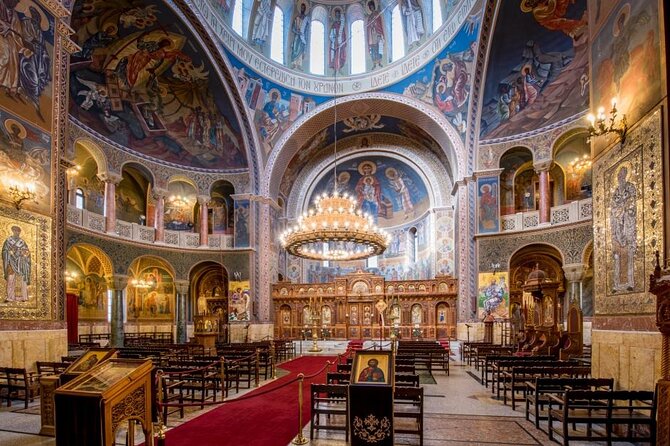
The Church of Saint Dionysius the Areopagite in Kolonaki adds a different layer to the Athens portion. Dionysius is traditionally identified as an Athenian converted by Paul who later became the city’s first bishop.
The stop lasts about 20 minutes and admission is free. It is not an archaeological site on the scale of the Agora, but it connects Paul’s public preaching with the later Christian tradition of Athens.
Because this is a functioning church, dress and behavior should be respectful. The visit is brief, yet it gives the day a welcome change of pace before the drive toward Corinth.
A different kind of day out, same corner of Greece:
- Athens: Cape Sounion & Poseidon Temple Sunset Half-Day Trip
★ 4.8 · 8,241 reviews - Athens: Acropolis and Parthenon Guided Walking Tour
★ 4.6 · 5,882 reviews - All Day Cruise -3 Islands to Agistri,Moni, Aegina with lunch and drinks included
★ 5.0 · 4,958 reviews - Athens, Piraeus, and Coastline: Blue Hop-On Hop-Off Bus
★ 3.9 · 4,849 reviews
The Corinth Canal puts the route in perspective
The Corinth Canal is not from Paul’s time. It was built much later, but it makes the geography easy to understand. The narrow Isthmus of Corinth connects the Gulf of Corinth with the Saronic Gulf and separates the Peloponnese from mainland Greece.
You stop for about 20 minutes, free of charge. The canal is a quick viewpoint rather than a major historical visit, but it explains why Corinth mattered. This narrow strip of land controlled movement between two bodies of water and helped make Corinth an important center for trade and travel.
Do not expect a long canal cruise or an extended engineering tour. The value is visual and geographic. You see the sharp cut through the land, take photographs, and understand the route before continuing to the ancient sites.
Kenchreai, Paul’s eastern doorway into Corinth
At ancient Kenchreai, the story becomes more personal. This was Corinth’s eastern port, and Paul is associated with arriving here in 51 A.D. Much of the ancient harbor is submerged or reduced to ruins, but the remains still show the scale and purpose of the settlement.
The stop lasts about 20 minutes and admission is free. You may see Roman-era engineering, including traces of storerooms, breakwaters, a nymphaeum, sanctuaries, and an early Christian basilica from the fourth century A.D.
This is a quiet place, and that is part of its appeal. It does not have the grand monuments of Ancient Corinth, but it helps you picture Paul arriving by sea and entering a city linked to the wider Roman world.
Keep your expectations realistic. Kenchreai is not a fully restored harbor, and the remains can be difficult to read without explanation. The driver’s historical context matters here. Ask how the port fit into Corinth’s trade network and how the Christian remains relate to the earlier Roman settlement.
Ancient Corinth brings Paul’s letters to life
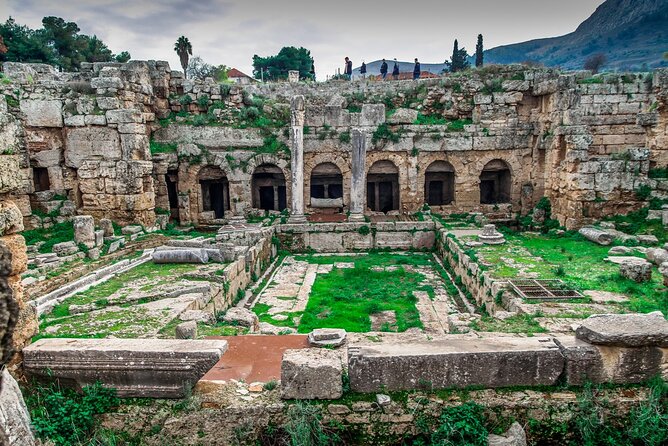
Ancient Corinth is the central stop. Allow about an hour at the archaeological site, followed by 45 minutes in the museum. Entrance fees are not included.
The Agora was the city’s marketplace and public center. Walking across it gives you a better sense of the setting behind Paul’s letters to the Corinthians. Corinth was not simply a religious community. It was a large city where commerce, politics, worship, and private life all met.
The Bema is especially important. This raised platform in the center of the city is associated with Paul’s appearance before the Roman proconsul. You can stand near the same civic center where legal and public matters were handled, then look toward the Temple of Apollo, whose surviving columns recall Corinth’s older religious traditions.
The site is spread out and exposed. Bring water, use the bottled water provided, and wear a hat and sunscreen. The midday heat can be intense in June and during other warm months.
The museum helps fill in what the ruins cannot show. Its collection includes prehistoric objects, finds from the Sanctuary of Asklepios, and displays about ordinary life, religion, and art. I like the pairing of site and museum because the stone remains show the city’s layout, while the objects reveal how people used that world.
The 45-minute museum stop is not long enough for every display. Concentrate on the sections that support your interests, then ask your driver to connect the objects with the Agora, Temple of Apollo, and surrounding ruins.
Acrocorinth: the day’s biggest view and hardest walk
Acrocorinth is the final stop and, for many people, the visual high point. This fortified hill guarded Corinth for centuries and also served as a religious center. The summit offers wide views over the surrounding plain and toward the Gulf of Corinth.
The visit is scheduled for about 30 minutes, but your actual experience depends on your pace and mobility. The climb includes uneven ground and steep sections. Several people have found it demanding, so do not treat this as a quick stroll from the car.
The site is linked with the Temple of Aphrodite, traditionally described as having up to 1,000 priestesses. Some claims about the ancient temple are debated, so listen for careful historical context rather than taking every traditional detail at face value.
If you can manage the climb, the reward is a clear sense of Corinth’s defensive position. You can see why this hill mattered to military rulers and why the city below was worth controlling.
A local lunch at a taverna near Acrocorinth can be arranged or suggested, but food is not included. One guide helped a couple find a local restaurant after the scheduled tour, while another group enjoyed lunch at Taverna Kastro. Treat this as an optional addition, not a guaranteed part of the package. It can also extend the day beyond the planned 8 to 9 hours.
What the private format really adds
For one to four people, the vehicle is a sedan. Larger groups use an air-conditioned vehicle, and Wi-Fi is available onboard. Bottled water, hotel or apartment pickup, and port pickup are included.
The private setup is useful on a route with many short stops. You are not waiting for a busload of people at Kenchreai or the canal. You can ask for more explanation at the Agora, move faster through a site that interests you less, or pause when the heat catches up with you.
The driver waits outside your hotel or apartment. At the port, the driver waits in the arrival area with a sign bearing your name. Airport pickup costs extra, so budget for that separately if needed.
The driver is not a licensed guide who accompanies you inside the archaeological sites. This distinction matters. You receive history and route guidance from a professional English-speaking driver, but visitors wanting formal site interpretation should ask about hiring a licensed guide.
Is $200.25 a fair price?
At $200.25 per person, the price is not low, especially for a solo traveler. But the value improves with two or more people because you are paying for a private vehicle, a full-day route, door-to-door transport, and a personalized pace.
You also cover a large area that would be awkward by public transport in one day. The drive to Corinth, the port at Kenchreai, Ancient Corinth, the museum, and Acrocorinth would require careful planning and several separate transport steps on your own.
Entrance fees are extra, and lunch is extra. That keeps the base price clear, but you should add those costs when comparing options. The service is best value for couples, families, or small groups who want Paul’s story to guide the day rather than simply ticking off major Greek sights.
A 4.9 rating from 50 reviews and a 96 percent recommendation rate support the strong impression of the experience. The most consistent strengths are attentive drivers, clear English, careful road work, and the ability to connect biblical events with Greek history.
Who should book this experience?
I would choose this for anyone with a serious interest in Paul, early Christianity, Greek archaeology, or the link between ancient cities and their modern setting. It also suits cruise passengers who want pickup at the port and a full day beyond central Athens.
It is a good fit for couples and families who prefer private attention over a large group. Several guides have adjusted their pace for comfort and mobility needs, but the sites themselves remain physically demanding.
You should think twice if you dislike long drives, hot open ruins, or uneven paths. Acrocorinth is the clearest concern. Comfortable shoes, a hat, sunscreen, and a willingness to walk are essential.
The experience requires good weather. You can cancel for a full refund up to 24 hours before the start time, while poor weather may lead to a new date or a full refund. Changes made within 24 hours are not accepted.
Should you book it?
Book this tour if you want Paul’s Athens and Corinth placed in physical context, with private transport and a driver who can explain the history along the way. The strongest part is the complete route: Agora, Areopagus, Kenchreai, Ancient Corinth, and Acrocorinth all contribute something different.
Skip it if you want a slow archaeological study with a licensed guide at every site, or if rough ground and a long day would limit your enjoyment. For the right visitor, this is a focused and meaningful way to connect the New Testament with the actual streets, ports, courts, and hills of Greece.
FAQ
How long does the tour last?
The experience lasts approximately 8 to 9 hours.
Is hotel pickup included?
Yes. Pickup and drop-off are included from Athens hotels and apartments. The driver waits outside the accommodation.
Can I be picked up at the port?
Yes. For port pickup, the driver waits in the arrival area holding a sign with your name.
Is airport pickup included?
No. Airport pickup is optional and costs extra.
Are entrance fees included?
No. Entrance fees for archaeological sites and museums are not included in the tour price.
Is this a private tour?
Yes. Only your group participates. Groups of one to four people use a sedan vehicle.
Is a licensed guide included?
No. The tour includes a professional English-speaking driver with historical knowledge, but not a licensed guide accompanying you inside the archaeological sites.
Recently reviewed around Athens
- Small-Group Women History in Ancient Greece Walking Tour★ 5.0 · 38 reviews
- Ceramic and Pottery Creative Workshop with Two Local Artists★ 4.0 · 57 reviews
- Athens: Wine Workshop Create your Own Wine under the Acropolis★ 5.0 · 77 reviews
- Athens: Greek Wines Tasting with Sommelier and Acropolis Views★ 5.0 · 88 reviews
- Hydra Private Day Trip by Ferry from Athens with Transfers★ 4.0 · 30 reviews
- Small-Group Wine Tour in Athens with Tasting★ 5.0 · 33 reviews
- Wine Trails Private Tour/ Nemea visit 3 wineries from Athens or Nafplion (10 h)★ 5.0 · 44 reviews
- Private Athens Transfer Airport/Port -Greek Tours-Hourly service★ 5.0 · 88 reviews
Athens Tours, compared.

Acropolis & up to 5 Archaeological Sites Combo Pass
Read our review →

Acropolis, Parthenon & Acropolis Museum Guided Tour
Read our review →
Cape Sounion & Poseidon Temple Sunset Half-Day Trip
Read our review →
All Day Cruise -3 Islands to Agistri,Moni, Aegina with lunch and drinks included
Read our review →