Reviewed · ATHENS TOURS
The Apostle Paul’s Missionary Journey in Athens and Corinth
Paul’s visit to Athens comes alive on the Areopagus, the rocky hill where he addressed the city’s thinkers. Then the road leads west to Corinth, where Roman ruins, a mountain fortress, the Corinth Canal, and the old port at Kechries give his mission a physical setting. You are not just hearing a Bible story. You are seeing the places that shaped it.
I like the private format, since your guide can adjust the pace and answer your questions without a large group slowing things down. I also like the comfortable air-conditioned transport, bottled water, and the chance to see Kechries, a less-visited stop tied to Paul’s meeting with Aquila and Priscilla. The main consideration is that no licensed guide enters the archaeological sites with you, so you will handle much of the site interpretation on your own.
In This Review
- Key points to know before booking
- Why Athens and Corinth belong in the same day
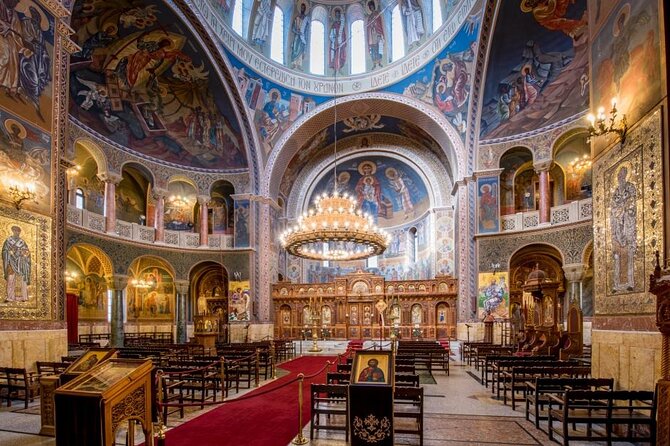
- Starting in Athens with Saint Dionysius
- The Ancient Agora: Paul’s Athens in context
- Areopagus Hill and Paul’s famous address
- The drive west to the Corinth Canal
- Kechries Port and the quieter side of Paul’s route
- Acrocorinth for the big view
- Ancient Corinth and its archaeological museum
- What the private vehicle adds to the day
- Food, flexibility, and small practical touches
- Is $79 per person a good value?
- Who should book this Athens and Corinth tour?
- Should you book it?
- FAQ
- How long is the Apostle Paul tour?
- Where does the tour begin and end?
- Does the tour include airport pickup?
- Is this a private tour?
- What vehicle is used?
- Is the tour conducted in English?
- Are archaeological entrance fees included?
- Is a licensed guide included inside Ancient Corinth?
- What should I bring?
Key points to know before booking
- Paul’s Athens story has a clear setting: Visit the Ancient Agora and Areopagus, where his encounter with the city’s religious and intellectual life is explained.
- Corinth receives most of the day: Ancient Corinth, Acrocorinth, the museum, Kechries, and the Corinth Canal make this more than a quick side trip.
- You travel in a private group: Groups of one to four use a sedan, while larger parties may use a van.
- Your driver is the main guide: English-speaking drivers such as Michael, Ruslan, Giannis, and Konstantinos provide historical and cultural background, but they are not licensed guides inside the ruins.
- The day is flexible: You have planned time at each stop, with room to spend more or less time in places that matter most to you.
- The price includes the road work, not site tickets: At $79 per person, hotel transport and private service are included, but archaeological entrance fees are extra.
Why Athens and Corinth belong in the same day
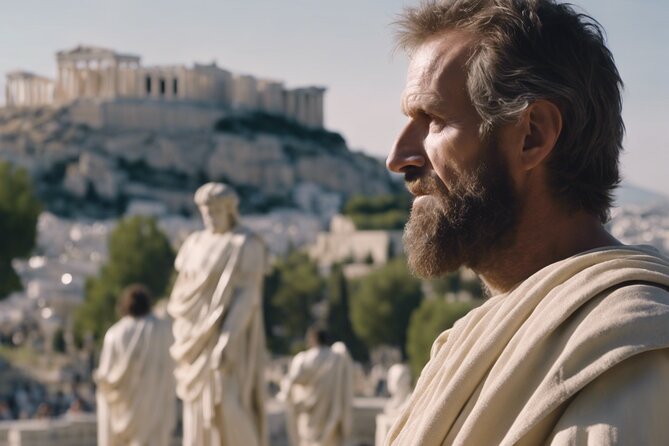
Athens and Corinth tell two different parts of Paul’s Greek story. Athens gives you the setting for his public speech and encounter with ancient philosophy. Corinth shows the working city where his Christian mission took firmer root in a major commercial center.
The connection is also practical. Both cities are within reach of Athens by road, and the tour handles the driving so you can focus on the sites. You spend roughly eight hours moving between churches, ruins, viewpoints, and the coast.
I would choose this day if Paul’s journeys are central to your visit, but also if you want an efficient introduction to classical Greece beyond the Acropolis. The tour mixes biblical places with major archaeological remains and modern Greek scenery. It is not a specialist theological seminar, and it is not a full walking tour of Athens. It is a road-based historical outing with a Christian focus.
More Athens trips worth a second look
- Athens: Acropolis & up to 5 Archaeological Sites Combo Pass
★ 4.4 · 12,619 reviews - Athens: Acropolis Ticket with Optional Audio or Live Guide
★ 4.2 · 11,055 reviews - Athens: Acropolis, Parthenon & Acropolis Museum Guided Tour
★ 4.8 · 9,316 reviews
Starting in Athens with Saint Dionysius
The first stop is the Holy Church of Saint Dionysius the Areopagite, patron saint of Athens. You have about 20 minutes for a photo stop, so this is a brief introduction rather than a full church visit.
The stop helps link ancient Athens with living Greek Orthodox culture. Several guides also bring in present-day Christianity in Greece while discussing Paul, which gives the day a useful sense of continuity. Still, keep your expectations in check. Twenty minutes is enough for photographs and a short explanation, not a long look at the church interior or its religious art.
The pickup is in Athens, and hotel pickup and drop-off are included. Airport pickup can be arranged for an extra charge, but it is not part of the standard price.
The Ancient Agora: Paul’s Athens in context
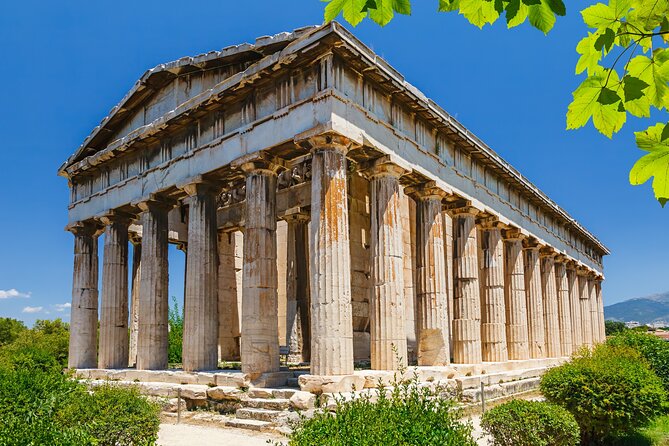
The Ancient Agora is your first major archaeological visit. You have about an hour for a self-guided visit, with your driver providing background before or after you enter.
This is a smart stop for understanding Paul’s Athens. The Agora was a public center where people gathered for business, civic affairs, debate, and worship. Paul’s message makes more sense when you can picture him in a city where ideas were discussed in public spaces rather than behind closed doors.
The one-hour slot is useful but limited. You can see the main remains and get a feel for the site, but you will not have time for every corner or a slow study of the museum displays. Since your driver does not accompany you as a licensed archaeological guide, bring a guidebook or read the relevant sections of Acts before you go. A little preparation will make the ruins far easier to read.
Entrance fees are not included, so budget for the Agora ticket and other site admissions separately. Ask your driver which tickets are needed for the day before you start.
Areopagus Hill and Paul’s famous address
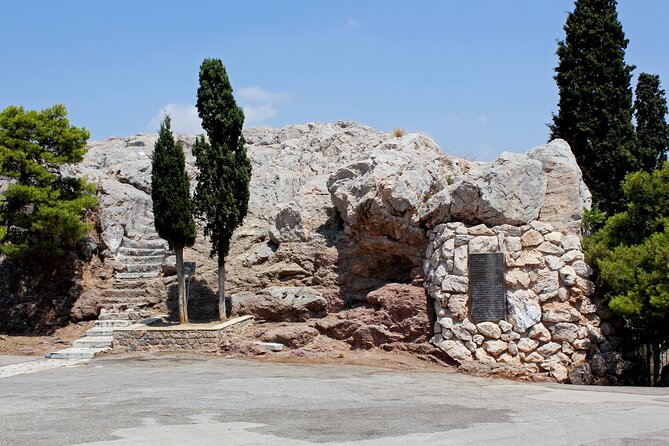
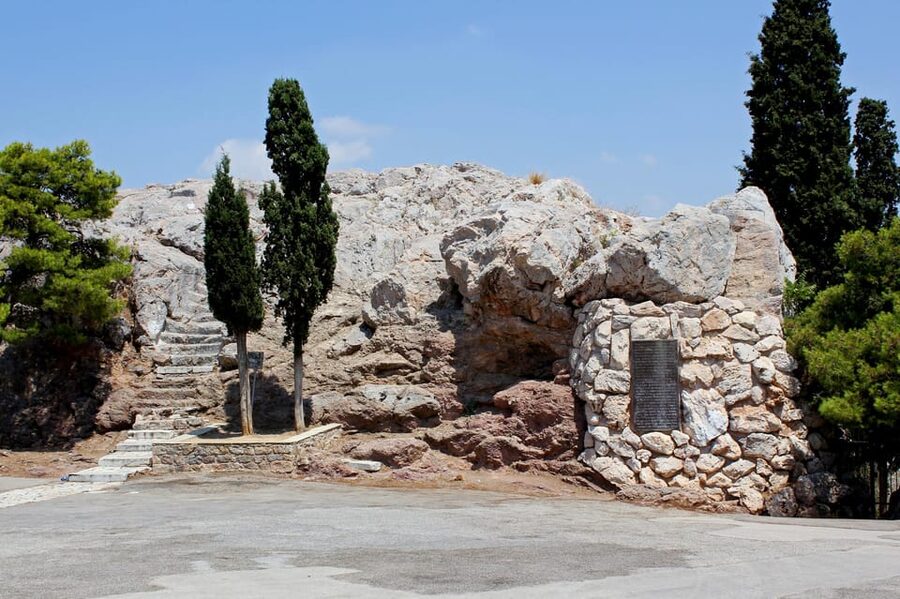
The Areopagus, also called Mars Hill, is one of the day’s most meaningful stops. You have about 30 minutes for sightseeing at the rocky outcrop, where Paul preached in Athens.
This is not a vast ruin. The value comes from the setting and the view, along with the chance to connect a well-known passage of Christian scripture to an actual place. You can pause here, look across Athens, and consider the challenge Paul faced when speaking to an audience shaped by many competing beliefs.
The stone can be uneven, and comfortable shoes are essential. Work at a careful pace, especially in hot weather or if you have trouble with steep or irregular ground. One past visit encountered repair work at Mars Hill, so access conditions can change. Your driver can explain what is open on the day.
The stop is short, but that is appropriate. The Areopagus is best treated as a place for reflection and orientation, not as a long archaeological visit.
A different kind of day out, same corner of Greece:
- Athens: Cape Sounion & Poseidon Temple Sunset Half-Day Trip
★ 4.8 · 8,241 reviews - Athens: Acropolis and Parthenon Guided Walking Tour
★ 4.6 · 5,882 reviews - All Day Cruise -3 Islands to Agistri,Moni, Aegina with lunch and drinks included
★ 5.0 · 4,958 reviews - Athens, Piraeus, and Coastline: Blue Hop-On Hop-Off Bus
★ 3.9 · 4,849 reviews
The drive west to the Corinth Canal
The transfer to Corinth takes about an hour. This is where the air-conditioned vehicle earns its keep, especially during Greece’s hot months. Bottled water is provided, and WiFi is available on board.
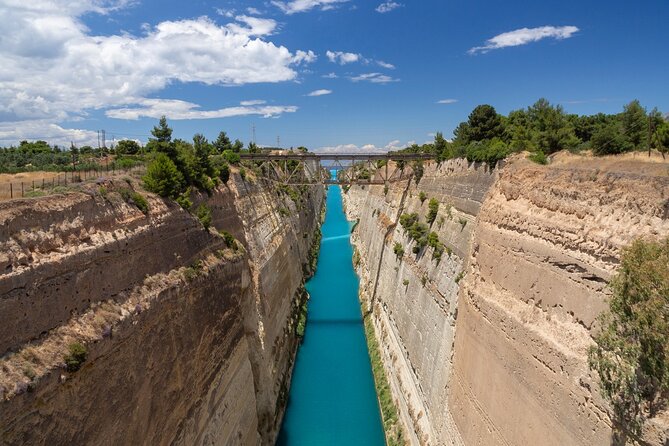
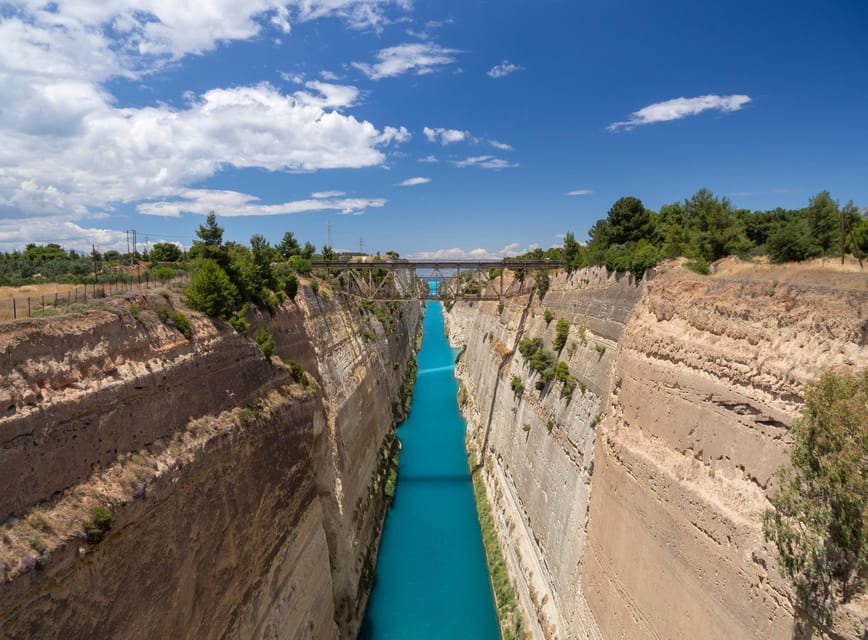
At the Isthmus of Corinth, you have about 20 minutes for sightseeing. The canal is a modern engineering project, not an ancient Paul site, but it explains why the isthmus mattered so much. Corinth sat at a key crossing point between mainland Greece and the Peloponnese, and control of this narrow strip shaped movement and trade.
The stop is mainly for photographs and a quick look. You will not spend a long time here, but the canal provides a useful bridge between ancient geography and modern Greece. It also breaks up the drive before the archaeological visits begin.
Kechries Port and the quieter side of Paul’s route
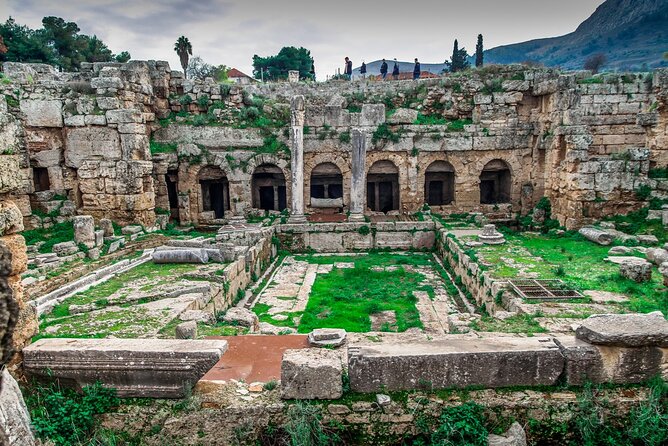
Kechries is one of the more unusual stops. You have about 20 minutes at the ancient port, where Paul’s connection with Aquila and Priscilla is part of the story.
This stop has a different feel from Ancient Corinth. Instead of a large, organized archaeological complex, you get a coastal location tied to movement, travel, and the people Paul met along the way. It helps you picture the practical side of missionary work: arriving by sea, finding contacts, and moving between port cities.
The visit is brief, and the remains may not provide the visual impact of the main Corinth site. I would still keep it on the schedule because it adds a personal element to the route. If Paul’s journey interests you, this is one of the places where the story feels less like a list of famous names and more like a series of real connections.
Acrocorinth for the big view
After Kechries, the route continues to Acrocorinth, the fortress high above Ancient Corinth. You have about 30 minutes for a self-guided visit.
The elevation gives you a broad view over the Corinthian area and helps explain the city’s strategic importance. The fortress itself is a major attraction, but the time allowed here is short. You are unlikely to explore the entire site in half an hour, so treat this as a focused visit for the viewpoint, walls, and a quick sense of the setting.
The road and terrain may require comfortable walking shoes. This is not the place for sandals with little support. If you have a strong interest in fortifications, you may wish for more time, but the schedule has to balance Acrocorinth with the museum and Ancient Corinth below.
Several guides, including Ruslan and Michael on different departures, have been praised for adding useful context at this stop and for helping with timing. Guide assignments are not guaranteed, so book based on the tour itself rather than a particular name.
Ancient Corinth and its archaeological museum
Ancient Corinth receives the largest share of the Corinth visit. You have about 45 minutes in the Archaeological Museum and about an hour in the ancient city, both explored independently.
The museum is important because it gives you objects and details that the open-air ruins cannot. Look for the kind of material that helps explain daily life, religion, and public culture. Then take that background into the city itself, where the streets, foundations, columns, and public spaces show how Corinth functioned.
This is the heart of the day, and it is where the limits of the format matter most. A licensed guide is not included inside the museum or ruins. Your driver can explain the larger story, but once you enter, you are on your own. That arrangement keeps the cost down and gives you freedom, but you need to read signs, use a guidebook, or prepare with Acts and a site plan.
The one-hour visit to Ancient Corinth is enough for a solid first look. It is not enough for a detailed study of every structure. If you prefer a slow archaeological tour with continuous commentary, you may find the self-guided format frustrating. If you like setting your own pace, it works well.
What the private vehicle adds to the day
The tour uses private transport rather than a large shared coach. For one to four people, the vehicle is a sedan. Larger groups may use a van, including a seven-passenger Mercedes van on some departures.
That matters because the schedule includes several transfers and a full return to Athens. A clean, comfortable, air-conditioned vehicle gives you a place to rest between walks. Water is supplied, and the onboard WiFi is a practical bonus.
Guides named Michael, Ruslan, Giannis, Johnnie, George, Konstantinos, and others have led departures. The strongest pattern in the feedback is not one single personality, but the value of an English-speaking driver who can explain Paul, ancient Greece, local customs, and present-day Greek life. Giannis has been praised for careful timing and friendly energy. Ruslan has been noted for adapting the day to personal interests. Michael is often described as especially strong on Paul and Athens.
The driver is also responsible for navigation and road safety. That is no small part of this excursion. You cover a lot of ground, and returning through Athens traffic can take concentration and patience.
Food, flexibility, and small practical touches
Lunch is not included, but guides may recommend or stop at a local place. Food stops have been a strong part of several departures, and the private format makes it easier to discuss what you want rather than follow a fixed group meal.
The schedule gives you set times, but the day can be adjusted. You might spend less time at a stop you find modest and more time at Ancient Corinth or the Areopagus. Guides have also accommodated illness and personal needs, though flexibility depends on the day’s traffic and opening conditions.
Wear comfortable shoes and bring sun protection for the open sites. The combination of Athens heat, exposed ruins, stone paths, and Acrocorinth’s uneven ground can tire you out. Water in the vehicle helps, but you should still plan for an active day.
One useful improvement would be a microphone or small sound system in the vehicle. If you have difficulty hearing conversation over road noise, sit close to the driver and tell the guide at the start.
Is $79 per person a good value?
At $79 per person, this is a strong price for a private eight-hour outing that includes hotel pickup and drop-off, an air-conditioned vehicle, WiFi, bottled water, and an English-speaking driver with historical training.
The price is especially attractive for a small group. Four people can share the private vehicle while paying a modest per-person rate. For one or two people, the cost is higher in practical terms, but the freedom from a large group and the direct attention may justify it.
Remember the extra costs. Archaeological and museum entrance fees are not included, and a licensed guide is not included inside the sites. Airport pickup costs extra as well. The tour’s value depends on what you want: you are paying for transport, planning, local explanation, and access to a well-connected route, not a formal guided lecture at every ruin.
Free cancellation up to 24 hours ahead and reserve-now, pay-later booking make the commitment easier, especially if your Athens schedule is still shifting.
Who should book this Athens and Corinth tour?
I would recommend it to:
- People with a serious interest in Paul’s journeys and early Christianity
- First-time visitors who want Athens and Corinth in one day
- Couples and families who value private transport
- Cruise passengers needing a planned day from Athens
- Visitors who want a driver with local knowledge and room to ask questions
- Anyone comfortable exploring major ruins independently
I would be more cautious if your main goal is a slow, expert-led archaeological study. The day covers a lot, and the sites are self-guided. You should also think twice if you dislike long road transfers or walking over uneven stone.
Should you book it?
Book this tour if you want the practical ease of a private vehicle and a clear connection between Paul’s Athens and Corinth. The strongest features are the route, the flexible pacing, the comfortable transport, and the drivers’ ability to connect ancient sites with Christian history and modern Greece.
Do not book it expecting a licensed archaeologist beside you at every monument. Prepare with the Book of Acts, wear good shoes, and accept that the day gives you a broad, meaningful visit rather than exhaustive coverage. For $79 per person, it is a sensible choice for a small group that wants to cover a lot without managing Greek roads alone.
FAQ
How long is the Apostle Paul tour?
The tour lasts eight hours, including transportation between Athens, Corinth, and the stops along the route.
Where does the tour begin and end?
Pickup and drop-off are in Athens. Hotel pickup and drop-off are included.
Does the tour include airport pickup?
Airport pickup is optional and costs extra. Standard pickup is listed for Athens.
Is this a private tour?
Yes. The tour operates as a private group experience.
What vehicle is used?
Groups of one to four people use a sedan. Larger groups may use a van. The vehicles are air-conditioned.
Is the tour conducted in English?
Yes. The host or greeter and the professional tour driver speak English.
Are archaeological entrance fees included?
No. Entrance fees for archaeological sites and museums are not included in the $79 price.
Is a licensed guide included inside Ancient Corinth?
No. The driver provides historical information, but a licensed guide does not accompany you into the archaeological sites.
What should I bring?
Bring comfortable shoes. You will walk through archaeological areas and visit the uneven terrain around Acrocorinth and the Areopagus.
Recently reviewed around Athens
- Small-Group Women History in Ancient Greece Walking Tour★ 5.0 · 38 reviews
- Ceramic and Pottery Creative Workshop with Two Local Artists★ 4.0 · 57 reviews
- Athens: Wine Workshop Create your Own Wine under the Acropolis★ 5.0 · 77 reviews
- Athens: Greek Wines Tasting with Sommelier and Acropolis Views★ 5.0 · 88 reviews
- Small-Group Wine Tour in Athens with Tasting★ 5.0 · 33 reviews
- Wine Trails Private Tour/ Nemea visit 3 wineries from Athens or Nafplion (10 h)★ 5.0 · 44 reviews
- Hydra Private Day Trip by Ferry from Athens with Transfers★ 4.0 · 30 reviews
- Private Athens Transfer Airport/Port -Greek Tours-Hourly service★ 5.0 · 88 reviews
Athens Tours, compared.

Acropolis & up to 5 Archaeological Sites Combo Pass
Read our review →

Acropolis, Parthenon & Acropolis Museum Guided Tour
Read our review →
Cape Sounion & Poseidon Temple Sunset Half-Day Trip
Read our review →

All Day Cruise -3 Islands to Agistri,Moni, Aegina with lunch and drinks included
Read our review →