
Reviewed · MUSEUMS
Thessaloniki: Museum of Illusions Admission Ticket
The Museum of Illusions Thessaloniki turns ordinary rooms into visual puzzles. Your eyes insist that the room is tilted, the floor is moving, or your body has changed size. The most entertaining part is seeing how quickly your brain accepts the wrong answer. Forty interactive illusions keep this from being a simple display of framed pictures.
I like the photo opportunities, especially in the Infinity Room, Reverse Room, and Ames Room. I also like that the exhibits explain how perception responds to light, angles, mirrors, and other stimuli. The main drawback is time: this is roughly a one-hour experience, so you should see it as a compact indoor stop rather than a full-day attraction.
In This Review
- Key points
- A Small Museum With Big Tricks
- Start With Curiosity, Not a Long Time Commitment
- The Infinity Room Turns Space Into a Picture
- The Reverse Room Plays With Gravity
- The Ames Room Changes Your Size
- Holograms and Optical Illusions Add Variety
- Why the Educational Side Matters
- The Photo Factor Is a Real Part of the Visit
- Is $12 Good Value?
- Who Will Enjoy This Most?
- A Few Smart Ways to Plan Your Visit
- Should You Book the Museum of Illusions Thessaloniki?
- FAQ
- How long does the Museum of Illusions Thessaloniki visit last?
- How much does admission cost?
- How many illusions are included?
- Which rooms are included?
- Can I take photographs inside?
- What languages are available?
- Is the museum wheelchair accessible?
- Can I cancel my booking?
Key points
- About 40 visual and interactive illusions: Expect hands-on exhibits that challenge your sense of size, direction, space, and movement.
- Three especially memorable rooms: The Infinity Room, Reverse Room, and Ames Room create the best chances for strange, shareable photos.
- A useful lesson in perception: The displays show why your assumptions about the world can be wrong.
- Good for families: The visit is short, active, and easy to enjoy together.
- Around $12 per person: The price is reasonable for a focused indoor attraction, especially if you use the exhibits fully.
- Greek and English assistance: Host or greeter support is available in both languages, and the museum is wheelchair accessible.
A Small Museum With Big Tricks
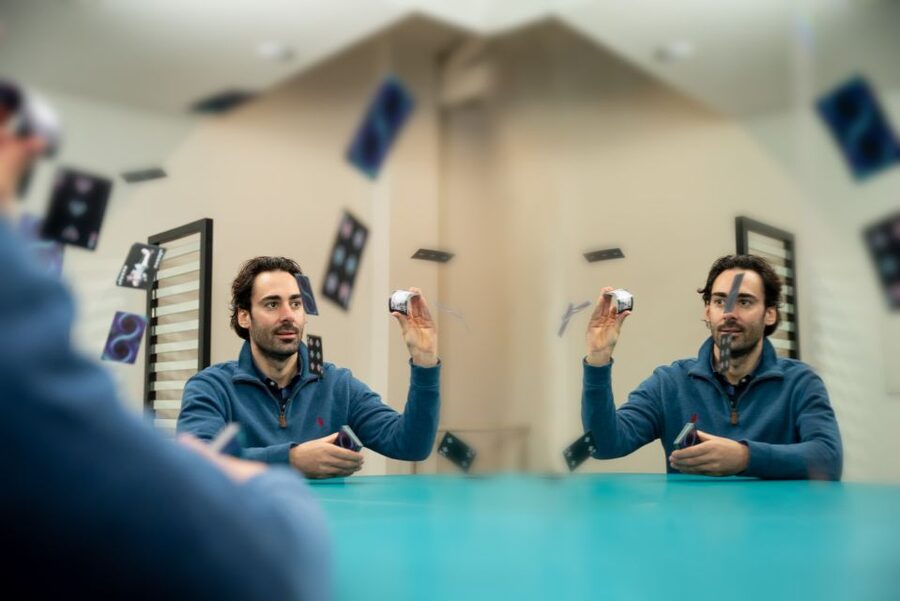
You do not come here for ancient artifacts or long labels. You come to test your senses.
The Museum of Illusions Thessaloniki presents a collection of visual and interactive displays built around a simple idea: your brain does not always report the world accurately. A room may look larger on one side than the other. A reflection may appear to stretch forever. A familiar object may seem to change size when the surrounding lines and angles change.
That mix of fun and explanation is what gives the museum more value than a set of unusual photo backdrops. You can pose, laugh, and take pictures, but you also get a quick lesson in how perception works. Each exhibit asks you to question what you see before accepting it as fact.
The format is easy to understand. You move from one installation to the next, try the illusion, look for the correct angle, and take a photo if the effect works well. You do not need a guide for every step, though Greek and English host or greeter support is available.
More Thessaloniki & Halkidiki museums and collections:
- From Thessaloniki: Aigai Royal Tombs & Pella Museum Day Trip
★ 4.6 · 40 reviews - Thessaloniki:Selfie Museum, a 60-minute immersive experience
★ 4.8 · 33 reviews - Athens: Acropolis, Parthenon & Acropolis Museum Guided Tour
★ 4.8 · 9,316 reviews
Start With Curiosity, Not a Long Time Commitment
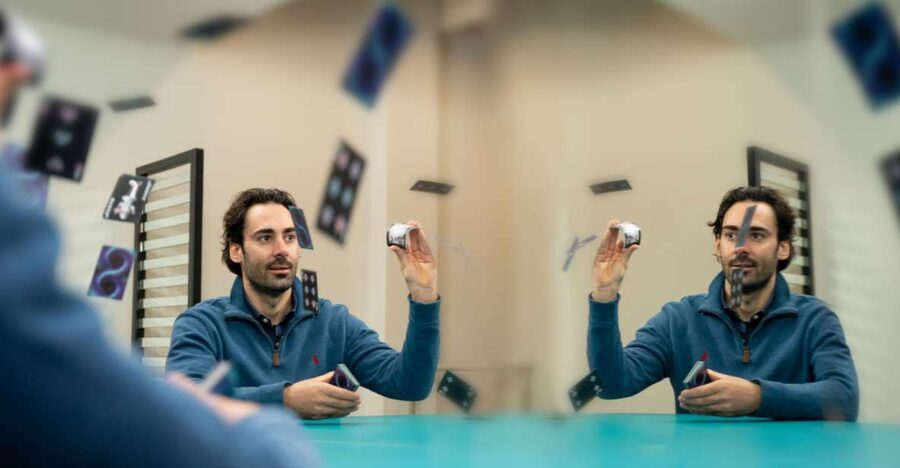
The advertised duration is one day because the admission remains valid for that day, but the actual visit is much shorter. A practical estimate is about one hour, based on the available experience details. That matters when you plan your day in Thessaloniki.
I would place this attraction between larger sightseeing stops, a meal, or a period of bad weather. It does not demand a full morning or afternoon. If you have limited time in the city, you can fit it into a compact schedule. If you are looking for an attraction that occupies several hours, this will probably feel too brief.
The short format also works well for families. Younger visitors get immediate visual surprises instead of a long explanation, while adults can focus on the science behind each trick. One hour is often enough to keep the visit lively without making the group feel trapped in a single theme.
Give yourself enough time to try each exhibit more than once. The first attempt is usually about understanding what is happening. The second is when you adjust your position and take the better picture.
The Infinity Room Turns Space Into a Picture
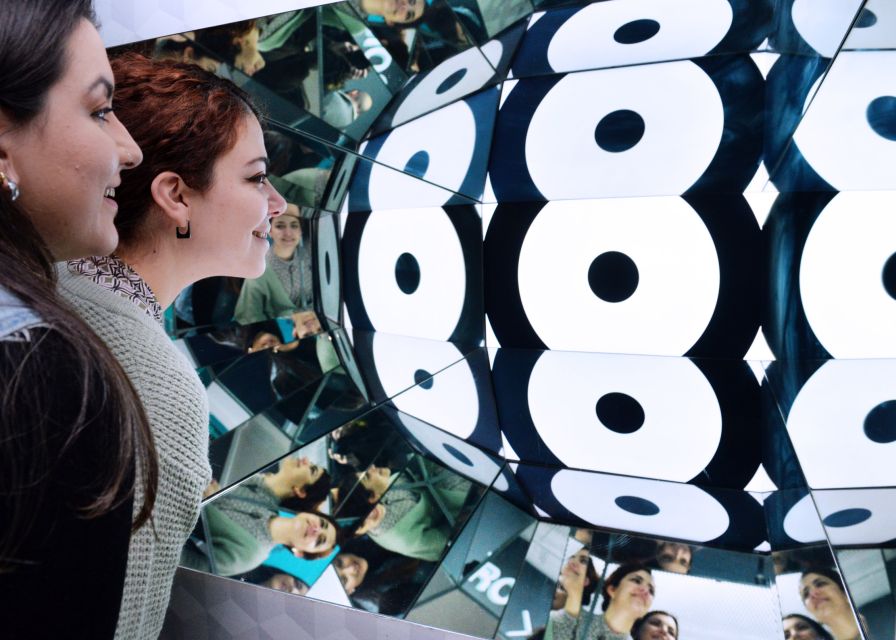
The Infinity Room is one of the clearest examples of the museum’s approach. Mirrors and repeated reflections create the impression that the room continues far beyond its actual walls.
This is a strong stop for photographs because the illusion reads well in a single image. You can appear surrounded by repeated points of light or an endless series of reflections. The effect depends on where you stand, so do not rush through it after one quick look.
The room also makes a useful point about assumption. Your eyes see repetition and depth, then your brain fills in the idea of a much larger space. You know you are in a small room, but the image suggests something far bigger. That conflict between what you know and what you see is the heart of the museum.
If you are visiting with children, this is an easy place to explain the difference between a real space and a picture that gives the impression of depth. If you are visiting with friends, it is one of the simplest places to produce a striking group photo.
The Reverse Room Plays With Gravity
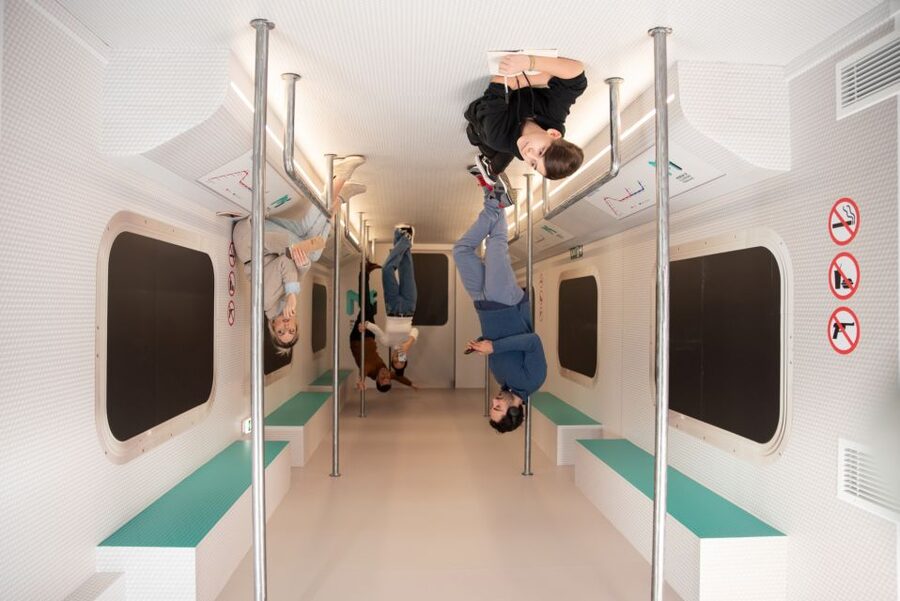
The Reverse Room asks you to ignore the normal direction of a room. Furniture and architectural details are arranged to suggest that the world has turned upside down, giving your photographs a gravity-defying look.
The effect is not about a special physical challenge. It is about choosing the right pose and camera angle so that your body appears to respond to the room in a believable way. Your photo may show you walking on a ceiling, leaning into an impossible surface, or simply standing in a direction that looks wrong.
This is a good example of why the experience is interactive. Looking at the room is only the first step. You get more from it when you take part, test a pose, and check the result. If you are not interested in photographs, the visual trick is still enjoyable, but the room’s full appeal is tied to the camera.
Keep your expectations practical. The museum provides the setting, while you provide the pose and the final picture. A little patience helps.
More Thessaloniki & Halkidiki trips worth a second look
- Athens: Acropolis Ticket with Optional Audio or Live Guide
★ 4.2 · 11,055 reviews - Athens: Acropolis Ticket with Audio Guide
★ 4.0 · 3,575 reviews - Athens All Included: Acropolis and Museum Guided Tour with Ticket
★ 4.5 · 2,673 reviews - Athens: Acropolis Museum Ticket with optional Audio Guide
★ 4.4 · 2,652 reviews
The Ames Room Changes Your Size
The Ames Room is designed to make one person appear much smaller or larger than another, even though the image suggests that both people occupy the same ordinary space.
This is one of the best demonstrations of how strongly your surroundings affect judgment. The room uses distorted proportions and viewing angles to make your brain misread height and distance. Step into the correct position and the change can look surprisingly convincing.
It is also a useful exhibit for groups. Two people can stand in different parts of the room and create the classic miniature-size effect. That makes the experience more social than a traditional museum visit. You are not simply reading about an optical illusion. You are part of the evidence.
The room may require some trial and error. If the first photo does not show the effect clearly, adjust your position rather than assuming the exhibit is not working. The illusion depends on perspective, so the camera angle matters.
Holograms and Optical Illusions Add Variety
The museum includes a collection of holograms and other optical illusions, so the visit is not limited to large themed rooms. These smaller displays give you a chance to slow down and look closely.
Holograms are especially effective because the image can appear to change as you move. That movement reminds you that the illusion is not only in the object. It is also in the relationship between the object, the light, and your viewing position.
Other optical displays may rely on patterns, contrast, or shapes that your brain interprets in unexpected ways. You might see movement in a still image, notice a form that shifts depending on your focus, or find that two equal elements look different because of the shapes around them.
This section gives the visit some educational balance. The large rooms create the memorable photographs, while the smaller displays help explain why perception is easily influenced. I would take time here rather than treating these exhibits as filler between the bigger installations.
Why the Educational Side Matters
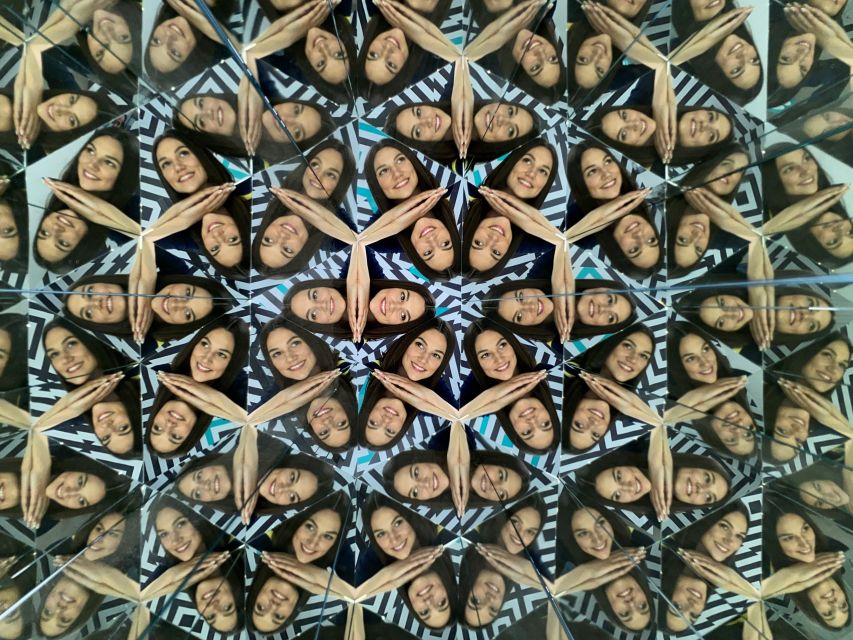
The museum’s main lesson is simple: seeing something does not always mean understanding it correctly.
Your brain makes fast judgments from visual information. It uses context, familiar patterns, light, distance, and surrounding objects to build a picture of the world. Optical illusions expose the shortcuts. They show you the final picture your brain creates, then reveal how the display led you there.
That makes this more than a photo stop. The educational value is modest but clear. You do not need a background in psychology or science. Each illusion works first as a surprise, then as a prompt to ask why the surprise happened.
I appreciate this balance because it gives adults a reason to stay engaged. Children may remember the room where someone appeared tiny. Adults may leave thinking about how often perception shapes a decision before careful thought begins.
The museum does not replace a science center or a serious psychology exhibit. It offers a short, accessible introduction to the subject through direct experience.
The Photo Factor Is a Real Part of the Visit

Photos are not an optional extra here. They are part of the fun.
The Infinity Room, Reverse Room, and Ames Room are built for images that look impossible at first glance. You can create pictures that make friends and family wonder how the scene was arranged, then explain that the trick comes from mirrors, angles, and distorted space.
Bring a phone with enough battery and storage for repeated attempts. That is practical advice rather than a claim about museum equipment. You may want several versions of the same pose, since a small change in position can make the illusion much clearer.
Take time to look at the exhibit before reaching for the camera. If you only chase pictures, you can miss the reason the trick works. The best visit alternates between experimenting with the illusion and capturing the result.
The photo appeal also explains the strong fit for families and small groups. People can help one another with poses and camera angles. A solo visitor can still enjoy the displays, but some rooms have more impact when two people create a contrast in size or position.
Is $12 Good Value?
At $12 per person, the admission is fairly priced if you want a short, interactive indoor activity. You are paying for access to about 40 illusions, not for a guided city tour or a long museum collection.
The value depends on how you use the visit. If you move quickly, take one picture, and leave after 20 minutes, the price may feel high. If you try the major rooms, inspect the holograms, read the explanations, and take several thoughtful photos, the admission makes more sense.
The one-hour length helps keep the cost in proportion. It is not a bargain if you compare it with an all-day attraction, but it can be a sensible add-on to a day in Thessaloniki. The museum is especially useful when you want something compact and weather-proof.
You can also keep your plans flexible by reserving now and paying later. Cancellation is free up to 24 hours in advance for a full refund. Those terms matter if your schedule in Thessaloniki is still changing.
Who Will Enjoy This Most?
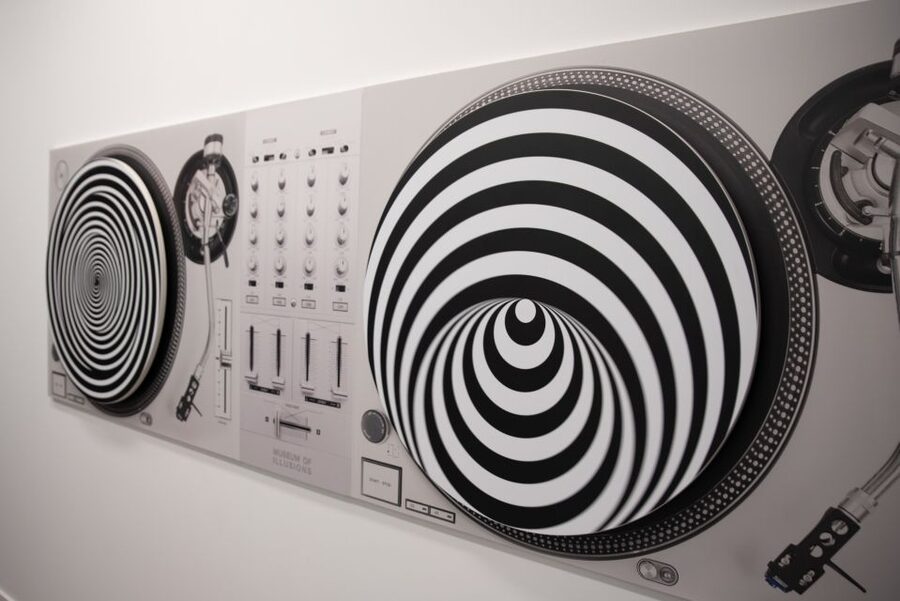
I would recommend the museum to families, couples, friends, and anyone who likes playful photography. It is also a good choice when you want an activity that does not require extensive background knowledge or a long attention span.
The short visit suits children who may tire during a traditional museum. Adults who enjoy puzzles, visual tricks, or unusual pictures should find enough variety to stay interested. The Greek and English language support makes the experience easier for a mixed-language group.
You may want to skip it if you dislike posing for photos or prefer historical objects, art, or detailed cultural displays. The museum teaches through optical effects rather than through Thessaloniki’s history. It is a modern entertainment and learning stop, not a substitute for the city’s archaeological and cultural museums.
Food and drinks are not allowed inside, so plan around that rule. The museum is wheelchair accessible, which makes it a practical option for visitors who need an accessible attraction.
A Few Smart Ways to Plan Your Visit
Use the available starting times to place the museum at a natural break in your day. Since the experience lasts about an hour, it can fit before lunch, after another central stop, or during a gap between activities.
Read the instructions at each exhibit and give yourself time to find the intended viewpoint. Some illusions work instantly, while others depend on where you stand. The better result usually comes from cooperation and patience, not from racing through the rooms.
If you are visiting as a group, decide who will take photographs and help with posing. That simple plan can save time. If everyone wants pictures, rotate the camera rather than allowing one person to become the permanent photographer.
Check your ticket details carefully when booking. One very poor experience came from selecting the wrong ticket, which is a reminder to review the option before payment. The booking information also provides free cancellation up to 24 hours ahead, so you have some protection if plans change.
Should You Book the Museum of Illusions Thessaloniki?
Book it if you want a one-hour indoor activity with strong photo appeal and simple explanations of visual perception. At $12 per person, it offers reasonable value when you take time with all 40 illusions rather than treating it as a quick photo booth.
I would especially choose it for a family day, a mixed-age group, or a rainy spell in Thessaloniki. I would not choose it as the main cultural experience of the city, and I would think twice if you dislike interactive exhibits.
The best reason to go is the combination of fun and a small lesson in how your brain works. The best reason to skip it is the limited duration. If those two points fit your plans, the Museum of Illusions Thessaloniki is an easy, playful addition to your day.
FAQ
How long does the Museum of Illusions Thessaloniki visit last?
The experience is described as approximately one hour. Admission is valid for one day, with starting times available based on the schedule.
How much does admission cost?
The listed price is $12 per person.
How many illusions are included?
The museum includes about 40 visual and interactive illusions.
Which rooms are included?
The experience includes the Infinity Room, Reverse Room, and Ames Room, along with holograms and other optical illusion displays.
Can I take photographs inside?
Yes. Taking unusual photographs is a central part of the experience, especially in the themed rooms.
What languages are available?
Host or greeter assistance is available in Greek and English.
Is the museum wheelchair accessible?
Yes, the experience is wheelchair accessible.
Can I cancel my booking?
You can cancel up to 24 hours in advance for a full refund. A reserve now and pay later option is also available.
Recently reviewed around Thessaloniki & Halkidiki
- Private Boat Trip in Halkidiki, Greece★ 5.0 · 30 reviews
- Padi Discover Scuba Diving★ 5.0 · 30 reviews
- Mount Athos & visit Ammouliani’s island (mixed cruise)★ 4.0 · 100 reviews
- Snorkeling trip★ 5.0 · 76 reviews
- Blue Lagoon-Vourvourou Lunch Cruise from Ouranoupolis★ 4.5 · 83 reviews
- Halkidiki: Sithonia Private Full Day Cruise★ 5.0 · 92 reviews
- Mount Athos Sightseeing Luxury Cruise with Glassbottom★ 4.5 · 46 reviews
- Halkidiki: Vourvourou Full Day Cruise★ 5.0 · 75 reviews
Museums, compared.

Acropolis, Parthenon & Acropolis Museum Guided Tour
Read our review →
Mythology of Delphi, Museum and Arachova Guided Tour
Read our review →Acropolis, Parthenon & Acropolis Museum Guided Tour
Read our review →
Acropolis monuments & Parthenon Walking Tour with Optional Acropolis Museum
Read our review →
Athens All Included: Acropolis and Museum Guided Tour with Ticket
Read our review →
Acropolis Museum Ticket with optional Audio Guide
Read our review →
Small-Group Delphi, Museum & Arachova Day Trip
Read our review →
Parthenon & Acropolis Museum with Audio or Live Tour Option
Read our review →Browse the lists this tour appears in