
Reviewed · ACROPOLIS & ACROPOLIS MUSEUM TOURS
Acropolis & Acropolis Museum PRIVATE Expert led Guided Tour
The best part of this private Athens tour is the connection between the stones on the hill and the objects protected inside the Acropolis Museum. A guide such as Marina, Vicky, Lydia, or Elina can show you not only what you are seeing, but why it mattered, how it was used, and which myths shaped ancient Athenian life. I like the private format for two reasons: you can ask questions freely, and your guide can adjust the pace for children, older adults, or anyone needing a break. I also like the route through the Theater of Dionysus, Propylaea, Parthenon, and Erechtheion, rather than treating the Acropolis as one big photo stop.
The main drawback is cost. At $163 per person, before admission tickets, this is a serious spend for a couple. Still, if you want context instead of a quick look at the monuments, the direct access to a licensed archaeological expert can make the price worthwhile.
In This Review
- Key points to know before booking
- Why the Acropolis makes more sense with a private guide
- Starting near the Acropolis Museum
- Theater of Dionysus and the first layer of the walk
- The ancient walls and the climb to the Propylaea
- Temple of Athena Nike and the Parthenon
- Erechtheion and the contest between Athena and Poseidon
- Athens from above and the Odeon of Herodes Atticus
- The Acropolis Museum brings the fragments together
- Ancient Agora as an alternative ending
- How much value do you get for $163?
- Timing, languages, and physical demands
- Who should book this Acropolis tour?
- Should you book it?
- FAQ
- Where does the tour meet?
- Is hotel pickup included?
- Are Acropolis and museum admission tickets included?
- How long does the full tour take?
- Is the tour private?
- Which languages are available?
- Can I book the Acropolis without the museum?
- Is the tour suitable for wheelchair users?
- What is the cancellation policy?
Key points to know before booking
- A licensed archaeological guide leads the walk, with English, German, Italian, and Greek available.
- The Acropolis and museum explain each other, giving you both the ruins and the surviving art.
- The private group format makes questions and pacing easy, with guides praised for helping children and guests with medical needs.
- Early timing can help with heat and crowds, and guides can point out shade, restrooms, and good photo positions.
- Admission is extra, so confirm in your booking messages who is supplying the timed tickets.
- You can choose other versions, including the Acropolis alone or the Acropolis with the Ancient Agora.
Why the Acropolis makes more sense with a private guide
The Acropolis is easy to admire and surprisingly hard to read. You see marble columns, broken statues, old walls, and a huge view over Athens. Without some background, though, the hill can become a sequence of impressive shapes with little connection between them.
This tour gives those remains a storyline. You hear about the religious center, the defensive role of the hill, the political power of classical Athens, and the myths that helped explain the city’s place in the world. The guide also helps separate the different time periods, since not everything on the Acropolis belongs to the famous fifth century BC.
That last point matters. The thick defensive walls were built by ancestors of the classical Greeks roughly a thousand years earlier. The site is not one single chapter of history. It is a stack of civilizations, repairs, wars, religious changes, and later uses.
A private visit is especially useful if your group has mixed interests. One person can ask about architecture, another about mythology, and a child can stop the group with a question without feeling like a nuisance. Several guides, including Lydia and Komissa, have been praised for keeping children and larger family groups involved.
More Museum Tours in Athens
- Athens: Acropolis, Parthenon & Acropolis Museum Guided Tour
★ 4.8 · 9,316 reviews - Athens: Mythology of Delphi, Museum and Arachova Guided Tour
★ 4.6 · 4,008 reviews - Athens: Acropolis, Parthenon & Acropolis Museum Guided Tour
★ 4.8 · 3,579 reviews
Starting near the Acropolis Museum
The meeting point is at Makrigianni 7, close to the Acropolis Museum. Your guide will hold a sign with your name, which keeps the first meeting simple in a busy part of central Athens.
Hotel pickup is not included, although the guide may meet you at your hotel if it is an easy walk from the Acropolis. That wording is worth noting. You should not count on a vehicle or a door-to-door transfer. Plan to reach Makrigianni 7 yourself unless the guide confirms otherwise.
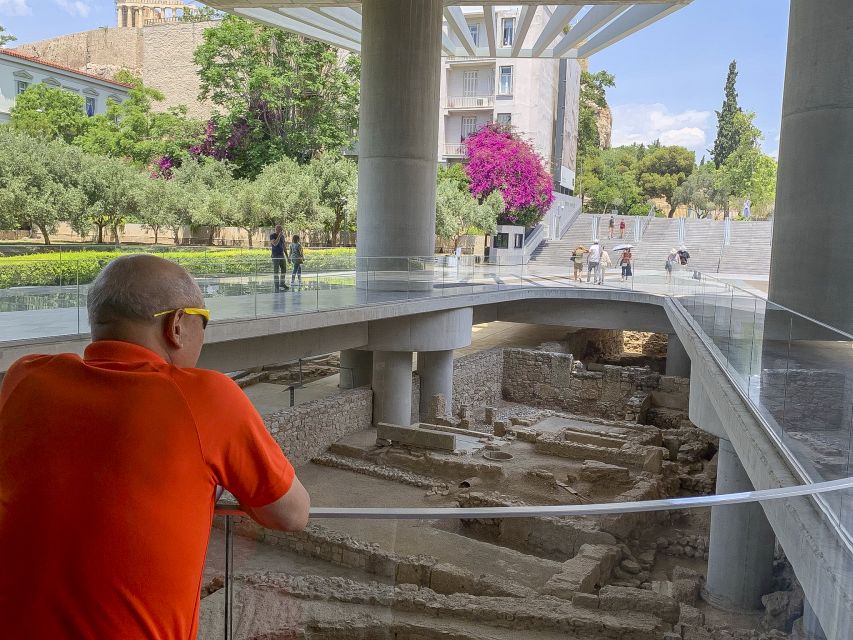
The tour can begin with the Acropolis or with the museum, depending on the guide and timing. Starting at the museum has a real advantage. You can first see models, sculptures, and architectural pieces in a controlled setting, then recognize their meaning when you reach the hill. One visitor specifically found the museum-first order helpful because the guide explained objects before showing where they belonged.
Theater of Dionysus and the first layer of the walk
The Theater of Dionysus sits on the southern slope of the Acropolis. It is tied to the origins of Greek drama, and the guide explains how plays associated with ancient Athens were performed here thousands of years ago.
This is a smart opening stop because it broadens the visit beyond temples. The Acropolis was not only a religious site. It was connected to performance, civic life, storytelling, and public identity. Standing near the theater gives you a sense of how drama fit into the city’s religious festivals.
The stop is listed at about 15 minutes. That is enough for a clear explanation and a look around, but not enough for a long independent exploration. If theater history is a major interest, ask questions while you are there.
The ancient walls and the climb to the Propylaea
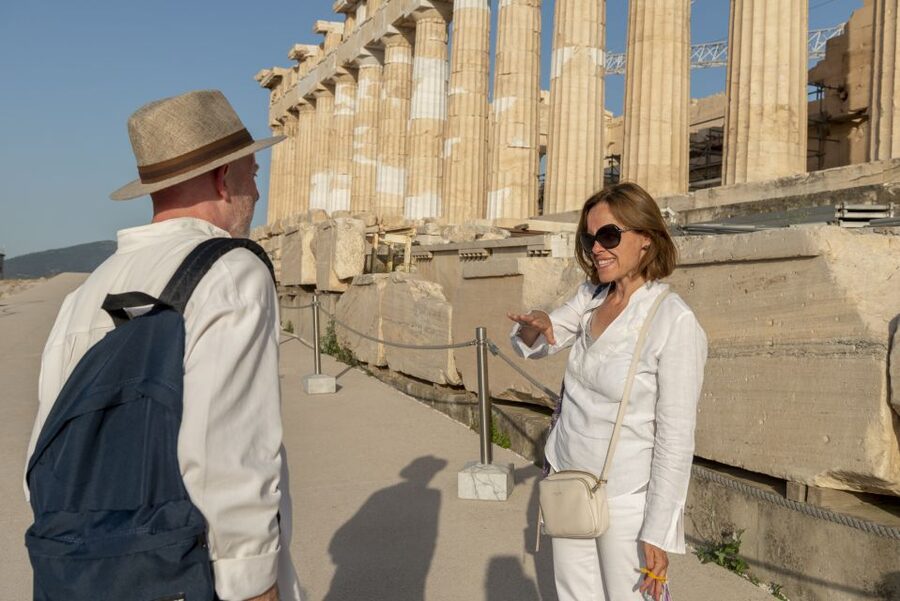
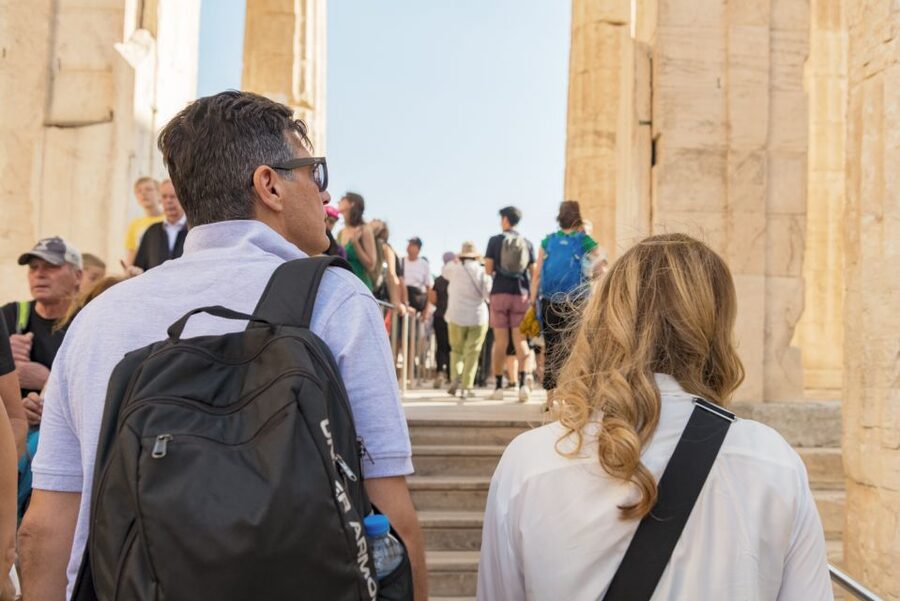
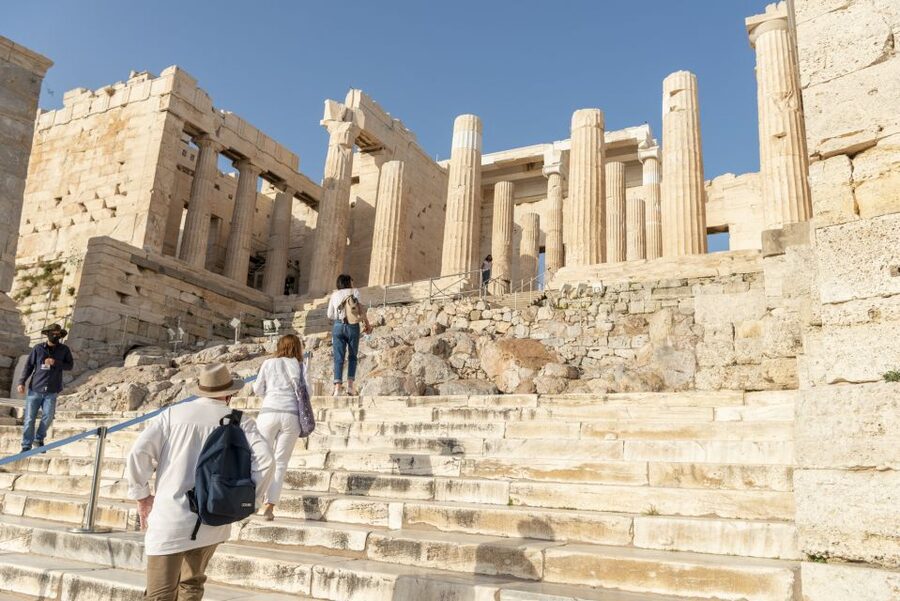
As you climb, the guide points out the massive defensive walls around the Acropolis. Their size helps you see the hill as a protected stronghold, not just a ceremonial platform.
The route then reaches the Propylaea, the grand entrance to the upper site. The guide uses the vanished statue of Athena to help you picture how imposing the approach once was. The story of a bronze spear tip catching the sun, visible to sailors far away near Cape Sounion, gives the ancient monument a strong visual hook.
Some details here are difficult to appreciate from a guidebook. You need someone to point out lines of sight, explain the original scale, and connect the entrance to Athens’ wider maritime world. That is one reason the private format works well: your guide can stop when you want to examine a view instead of moving on with a large group.
The climb is outdoors and includes uneven historic surfaces. The activity is not considered suitable for wheelchair users, and you should be ready for an uphill walk. In hot weather, timing matters. Guides such as Marina have been praised for finding shade, keeping a sensible pace, pointing out restrooms, and reminding groups to stay hydrated.
More Athens museums and collections:
- Acropolis monuments & Parthenon Walking Tour with Optional Acropolis Museum
★ 5.0 · 2,678 reviews - Athens All Included: Acropolis and Museum Guided Tour with Ticket
★ 4.5 · 2,673 reviews - Athens: Acropolis Museum Ticket with optional Audio Guide
★ 4.4 · 2,652 reviews - From Athens: Small-Group Delphi, Museum & Arachova Day Trip
★ 4.8 · 2,476 reviews
Temple of Athena Nike and the Parthenon
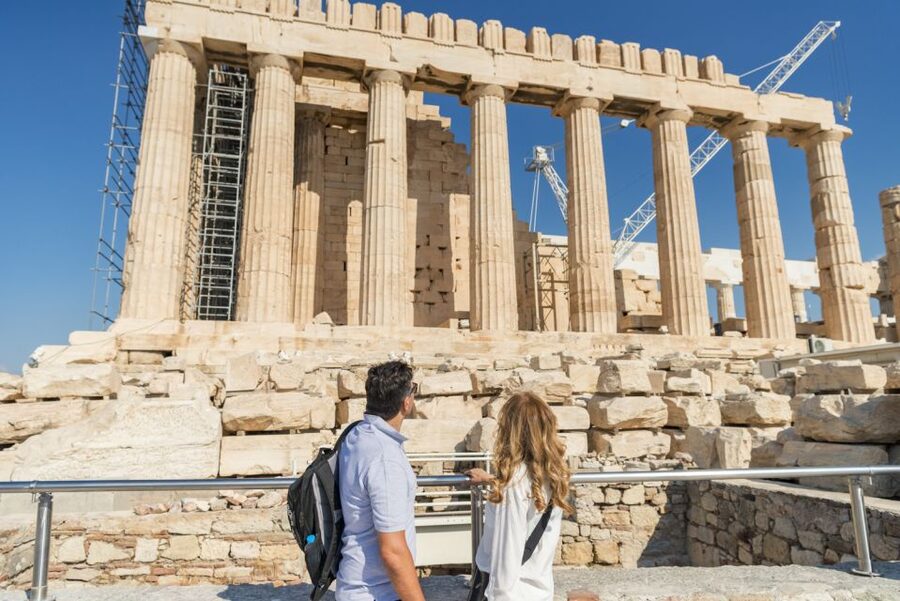
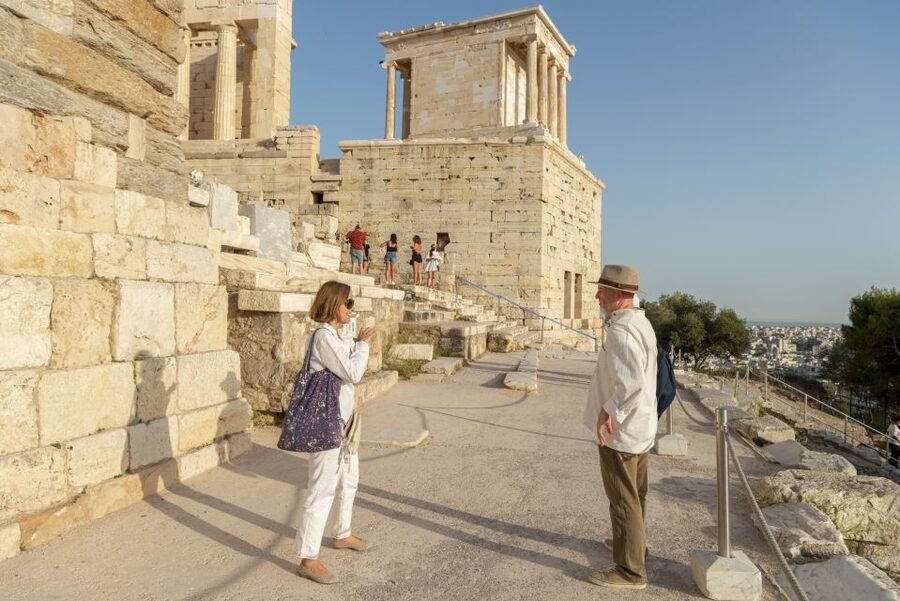
The small Temple of Athena Nike sits near the entrance. Its position gives it unusual power, since it greets people as they enter the Acropolis. Your guide explains the role of Athena Nike and the temple’s place within the larger religious complex.
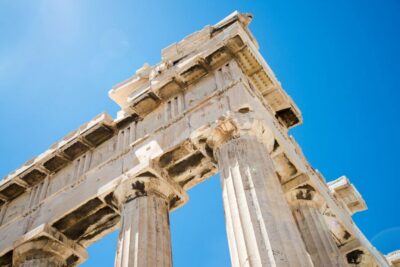
Then comes the Parthenon, the monument most people picture before arriving in Athens. A good guide keeps the explanation from becoming a list of dates and architectural terms. You learn about the building’s design, its purpose, its sculptural program, and the way later generations changed how it was used.
The Parthenon is also a place where expectations need managing. It is famous, heavily visited, and partly under conservation work. You will not see an untouched ancient building. You will see a major monument with missing pieces, restoration equipment, and a long record of damage and reuse.
That does not lessen the experience. It makes the surviving structure more remarkable. Your guide can explain what is original, what was lost, and how the museum’s sculptures and fragments relate to the temple above.
Erechtheion and the contest between Athena and Poseidon
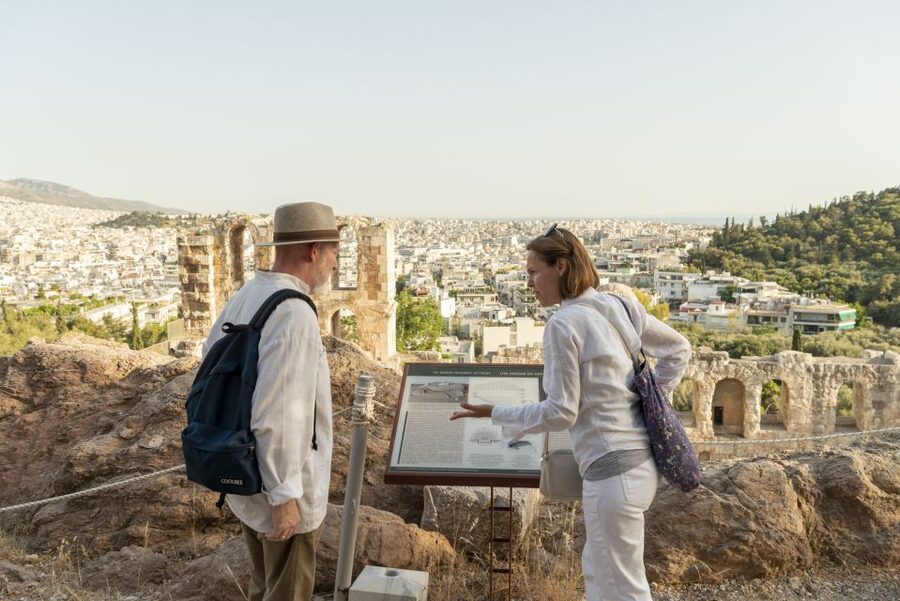
The Erechtheion is often the most myth-filled stop on the hill. Its unusual design reflects several sacred traditions gathered into one building, and the guide explains the contest between Athena and Poseidon for the protection of Athens.
This is where mythology becomes a way to understand the city. Athena’s olive tree and Poseidon’s claim are not just entertaining stories. They express the values Athenians attached to wisdom, warfare, the sea, agriculture, and civic identity.
The Erechtheion also rewards close looking. Its different levels and famous female-shaped columns make it easy to remember, but a guide gives you the reasons behind its odd layout and religious importance. You may find this stop more visually detailed than the straightforward symmetry of the Parthenon.
Athens from above and the Odeon of Herodes Atticus
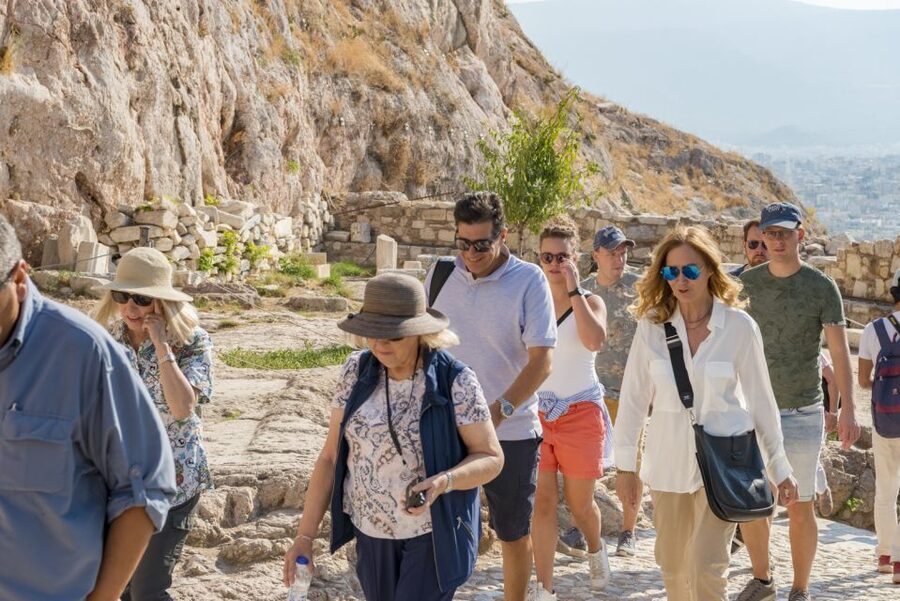
The views from the Acropolis are a major part of the visit. Your guide helps you read Athens below, rather than treating the panorama as a backdrop for photos. You can consider the hill’s position within the modern city and its connection to the wider ancient region.
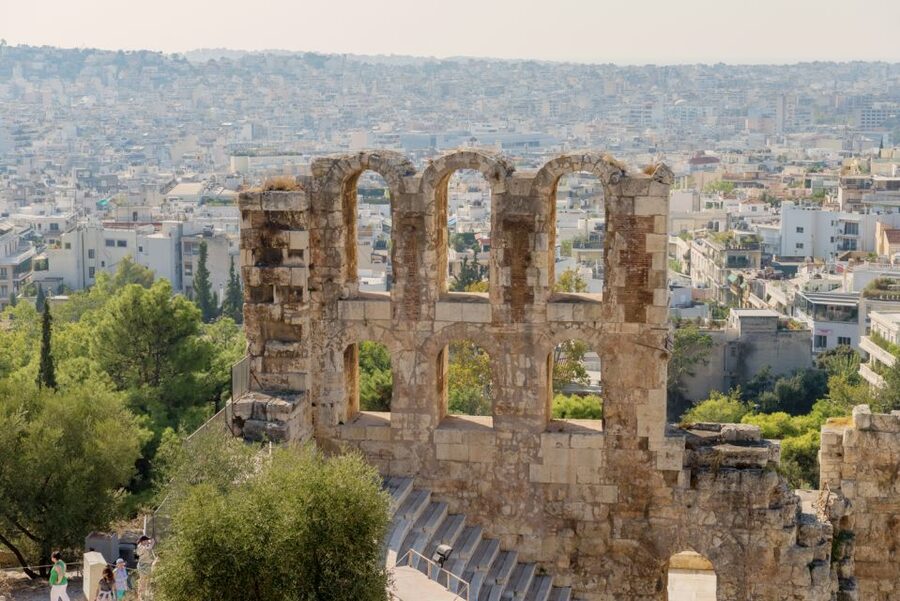
As you descend through the olive trees, the route reaches the Odeon of Herodes Atticus. This ancient theater is still used for performances in summer, which gives it a rare link between ancient construction and present-day cultural life.
The theater is generally a viewing and explanation stop rather than a full performance visit. Still, it adds a useful final note to the outdoor portion. You have seen a theater tied to the birth of drama and another that remains part of Athens’ cultural calendar.
Your guide may finish inside the Acropolis rather than escorting you all the way onward. That can be helpful because you are free to stay longer for photographs and views. If you want a strict point-to-point escort, confirm the ending plan at the start.
The Acropolis Museum brings the fragments together
The museum is not an optional extra in terms of understanding, even though you can book an Acropolis-only version. Its galleries hold important finds from the hill and provide the models, videos, and displays that help explain the buildings.
A guide will normally focus on the major pieces rather than attempt to cover every case. That is a strength during a short visit. You get the essential sculptures, architectural details, and explanations of how the museum connects to the monuments outside.
The museum also gives you a better look at details that are easy to miss on the hill. At the Parthenon, distance and crowds limit what you can study. Inside, you can examine surviving decoration and understand how sculpture worked as part of the building.
This portion is listed at about 1.5 hours. That is enough for the highlights, especially with a guide choosing the route. It is not a substitute for an unhurried museum visit if you want to read every label or study every object.
I like the pairing because it prevents two common mistakes. You do not see the Acropolis as an isolated ruin, and you do not see the museum as a collection of attractive statues without a home. The best guides, including Vicky and Elena, connect the architecture, artifacts, mythology, and daily life into one readable story.
Ancient Agora as an alternative ending
The experience can also be arranged around the Ancient Agora rather than the museum. The Agora was the civic heart of ancient Athens, linked with public debate, philosophy, democracy, and everyday activity.
This option may suit you if you have already visited the museum or care more about how the city functioned than about the Acropolis sculptures. The surviving Temple of Hephaestus is a particular draw because it is one of the most complete classical Greek temples still standing.
The supplied route information lists the finish at the Ancient Agora, while the main description focuses on the Acropolis and museum. Treat that as a sign that options vary. Confirm exactly what your selected booking includes before paying for admission tickets.
How much value do you get for $163?
The $163 price is per person, and admission fees are not included. That makes the total cost higher than the headline figure, especially for two people.
For a solo visitor or couple, it can feel expensive. You are paying for a private guide rather than simply buying entry and joining a large group. If your main goal is a quick look and a few photos, a private tour may not be the best use of your budget.
For a family or group of friends, the calculation improves. The price buys one guide for your group, and you can ask questions without competing with strangers. A six-person group was able to keep everyone involved, while another guide adjusted patiently when one person had medical issues.
I see the value most clearly for first-time visitors, history fans, families, and anyone who wants the Acropolis to make sense. You also save mental effort. The guide handles the order of the visit, identifies the key objects, and helps with entry arrangements if you request skip-the-line tickets after booking.
Be careful with that last point. Tickets are not automatically included. After booking, you are asked if you want the operator to purchase timed skip-the-line tickets. If you do not reply, the assumption is that you have bought the correct tickets yourself. A missed time slot can create delays, so check your messages and settle this before the tour day.
Timing, languages, and physical demands
The full Acropolis and museum experience takes about three hours, with roughly 1.5 hours at each main site. Other versions are shorter, including an Acropolis-only option. Check the chosen option carefully because the listed duration can range from 1.5 to 3 hours.
Available guide languages are English, German, Italian, and Greek. The guide is a state-accredited licensed archaeological expert, not simply a person reading a prepared script. That distinction matters at a site where small changes in the route, weather, crowd levels, and conservation work can affect what you can see.
The tour is a private group experience. Pets are not allowed, and the activity is not suitable for wheelchair users. You should expect outdoor walking, an uphill approach, historic surfaces, and exposure to sun. The advice from past visits is practical: earlier starts can mean fewer crowds and cooler conditions, while a measured pace helps on hot days.
Free cancellation is available up to 24 hours before the tour for a full refund, and you can reserve now and pay later. Those policies help if your Athens schedule is still shifting, but they do not remove the need to confirm ticket arrangements.
Who should book this Acropolis tour?
I would choose this tour if you want answers as you go. It is especially useful if you have only one major morning in Athens and want both the monuments and museum covered without wasting time on orientation.
Families should give it serious thought. Guides such as Lydia have been praised for explaining the site clearly enough to keep children interested, while still giving adults useful architectural and historical detail.
It also suits repeat visitors. One person who had visited the Acropolis many times still found that a guide added details missing from signs and museum videos. That is the mark of a strong private visit: it can add depth even when the setting is familiar.
You may want another option if you prefer to wander alone, spend several hours reading museum labels, or keep costs low. The private format is built around guided highlights, not unlimited independent study.
Should you book it?
Book this private tour if the difference between seeing ancient stones and understanding ancient Athens matters to you. The strongest features are the licensed archaeological guide, the direct link between the Acropolis and museum, and the freedom to ask questions and set a comfortable pace.
Before booking, confirm three things: the exact option, the order of the Acropolis and museum, and who will buy the admission tickets. If you accept the extra cost and prepare for the uphill outdoor walk, this is a thoughtful way to turn Athens’ most famous sight into a connected story rather than a quick stop for photographs.
FAQ
Where does the tour meet?
The meeting point is Makrigianni 7 in Athens, near the Acropolis Museum. Your guide will have a sign with your name.
Is hotel pickup included?
No. Hotel pickup and drop-off are not included. The guide may meet you at your hotel if it is within an easy walk of the Acropolis.
Are Acropolis and museum admission tickets included?
No. Admission fees are separate. After booking, the operator will contact you to ask if you want skip-the-line tickets purchased for you.
How long does the full tour take?
The combined Acropolis and Acropolis Museum tour takes about three hours. Other options can last about 1.5 hours.
Is the tour private?
Yes. The tour is exclusive to your group, with a private licensed archaeological guide.
Which languages are available?
Guides are available in English, German, Italian, and Greek.
Can I book the Acropolis without the museum?
Yes. Flexible options include an Acropolis-only tour or a version combining the Acropolis with the Ancient Agora.
Is the tour suitable for wheelchair users?
No. The activity is listed as not suitable for wheelchair users.
What is the cancellation policy?
You can cancel up to 24 hours in advance for a full refund. You can also reserve now and pay later.
Recently reviewed around Athens
- Small-Group Women History in Ancient Greece Walking Tour★ 5.0 · 38 reviews
- Ceramic and Pottery Creative Workshop with Two Local Artists★ 4.0 · 57 reviews
- Athens: Wine Workshop Create your Own Wine under the Acropolis★ 5.0 · 77 reviews
- Athens: Greek Wines Tasting with Sommelier and Acropolis Views★ 5.0 · 88 reviews
- Hydra Private Day Trip by Ferry from Athens with Transfers★ 4.0 · 30 reviews
- Small-Group Wine Tour in Athens with Tasting★ 5.0 · 33 reviews
- Wine Trails Private Tour/ Nemea visit 3 wineries from Athens or Nafplion (10 h)★ 5.0 · 44 reviews
- Private Athens Transfer Airport/Port -Greek Tours-Hourly service★ 5.0 · 88 reviews
Acropolis & Acropolis Museum Tours, compared.
Acropolis & up to 5 Archaeological Sites Combo Pass
Read our review →
Acropolis, Parthenon & Acropolis Museum Guided Tour
Read our review →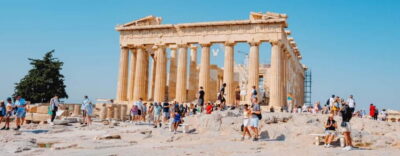
Acropolis, Parthenon & Acropolis Museum Guided Tour
Read our review →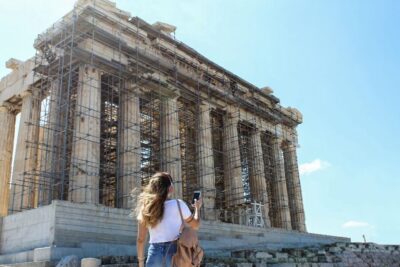


Acropolis monuments & Parthenon Walking Tour with Optional Acropolis Museum
Read our review →Browse the lists this tour appears in