
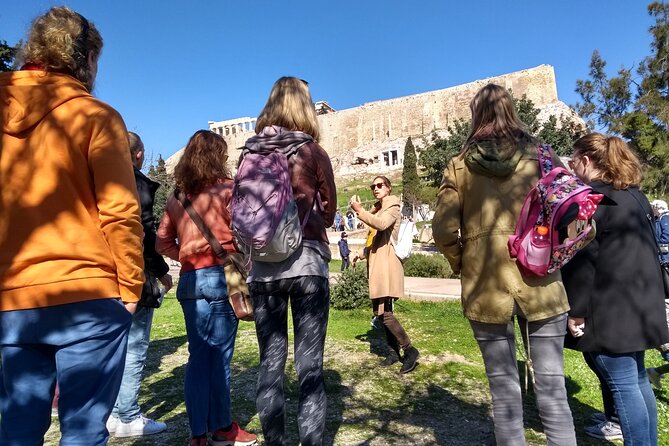
Reviewed · ACROPOLIS & ACROPOLIS MUSEUM TOURS
Acropolis Group Tour in German or Dutch
The best part of this Acropolis tour in German or Dutch is the storytelling. Instead of simply pointing at broken marble, your licensed guide connects the temples with Greek gods, ancient theater, political power, and the curious design tricks hidden in the Parthenon. At the summit, you get the reward: a wide 360-degree view across Athens.
I like the small maximum of 20 people, which gives the guide a better chance to be heard among the crowds. I also like the clear route through the Acropolis, from the Theatre of Dionysus to the Parthenon and Caryatids, with the monuments explained in a language you understand comfortably.
The main thing to watch is the price. The advertised cost is $46.26 per person, but the €30 adult entrance fee is not included, even though the operator arranges it. The tour lasts about 90 minutes, so it gives you a focused introduction rather than a long, unhurried visit.
In This Review
- Key points at a glance
- Why a German or Dutch Acropolis tour can be worth it
- Meeting your guide near the Acropoli metro station
- The Theatre of Dionysus and the beginning of Greek drama
- The Temple of Athena Nike, a small shrine with a modern connection
- Passing through the Propylaea
- The Parthenon and its almost invisible curves
- The Erechtheion, the Caryatids, and the Athena-Poseidon story
- The Herod Atticus Odeon and the final view
- How the price works, and what value you get
- A good fit for families and language-specific sightseeing
- Timing, cancellation, and practical planning
- Should you book the German or Dutch Acropolis tour?
- FAQ
- What language is the Acropolis tour offered in?
- How long does the tour last?
- What is the maximum group size?
- Is the Acropolis entrance fee included?
- What does the tour price include?
- Where does the tour begin?
- Where does the tour end?
- Which monuments are included?
- Are children able to participate?
- Can I cancel for a full refund?
Key points at a glance
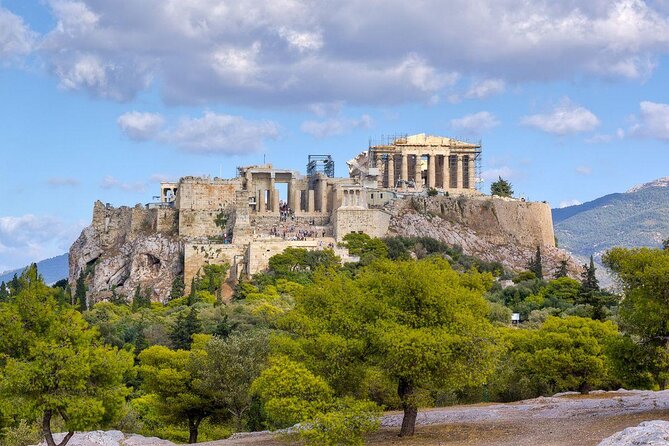
- German or Dutch commentary: Choose a tour conducted in German or Dutch, with stories about mythology, architecture, theater, and ancient Athens.
- Maximum 20 participants: The group is small enough for the guide to remain relatively close and audible.
- Seven important sights: See the Theatre of Dionysus, Temple of Athena Nike, Propylaea, Parthenon, Erechtheion, and Herod Atticus Odeon, along with the Acropolis itself.
- Jessica may guide your departure: She is described as patient with children and good at telling interesting stories.
- Entrance costs extra: Budget €30 per adult in addition to the tour price.
- Ends on the hilltop: The tour begins near the Acropoli metro station and finishes at the top of the Acropolis, not back at the station.
Why a German or Dutch Acropolis tour can be worth it
The Acropolis is one of those places where a guide can change what you notice. Without context, you see columns, stones, scaffolding, and a famous view. With the right explanation, you begin to understand why the buildings were placed where they are, why Athena mattered so much to Athens, and how myth and civic pride shaped the hill.
This tour is built around that explanation. The guide tells colorful stories in German or Dutch, placing the monuments in both historical and mythological context. That is useful if you prefer to follow a detailed explanation in your first language rather than work through an English tour or read everything from a guidebook.
The 20-person limit is another practical advantage. Twenty is not an intimate private tour, but it is much easier to manage than a large coach group. You should still expect other people on the Acropolis, since this is one of Athens’ major sights, but your own group should remain reasonably compact.
The tour is short and focused. Its advertised duration is about one hour and 30 minutes, with the listed stops adding up to roughly that amount. I would see it as a strong orientation to the Acropolis, especially if you want the major stories and monuments explained before exploring Athens on your own.
More Athens trips worth a second look
- Athens: Acropolis & up to 5 Archaeological Sites Combo Pass
★ 4.4 · 12,619 reviews - Athens: Acropolis Ticket with Optional Audio or Live Guide
★ 4.2 · 11,055 reviews - Athens: Acropolis, Parthenon & Acropolis Museum Guided Tour
★ 4.8 · 9,316 reviews
Meeting your guide near the Acropoli metro station
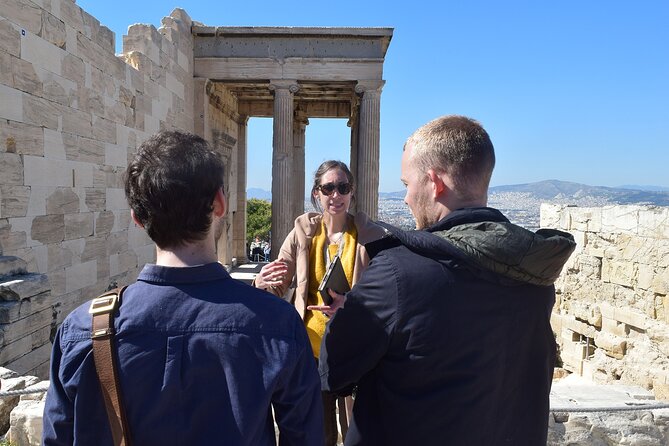
The meeting point is at the Acropoli metro station in Athens, specifically at the exit marked Makriyianni/Dionysiou Areopagitou. This matters because the Acropolis area has several paths, entrances, and busy streets. Go to the stated metro exit rather than trying to meet somewhere vaguely near the hill.
From there, the guide takes the group to the archaeological site entrance. The tour ends on top of the Acropolis Hill, so plan your next step from there. You will not be escorted back to the starting point.
The meeting area is near public transportation, and the tour does not include hotel pickup or drop-off. You should arrive ready to walk uphill and across ancient stone surfaces. The supplied information does not give a detailed accessibility assessment, so anyone with mobility concerns should confirm suitability before booking.
Bring water. Food and drinks are not included, and a bottle of water is specifically recommended. Athens can be hot, and the top of the hill offers little reason to assume you will find refreshments exactly when you need them.
The Theatre of Dionysus and the beginning of Greek drama
The route includes the Theatre of Dionysus Eleuthereus, described as the birthplace of ancient Greek theater. This is a fine early stop because it shows that the Acropolis was not only a religious center. It was also tied to public performance, civic gatherings, and the worship of Dionysus, the god of wine.
Your guide explains how theater grew from religious ceremonies connected with Dionysus. Look closely at the old marble seats, where names were carved into the stone. These details make the site feel less abstract. You are not only looking at a ruin; you are seeing a place where seating, status, and public life mattered.
The stop is scheduled for about 15 minutes. That is enough for a clear explanation and a look around, but not enough for a slow study of every surviving feature. If ancient theater is a special interest of yours, you may want extra time at the site after the tour, if your admission arrangements allow it.
The Temple of Athena Nike, a small shrine with a modern connection
The Temple of Athena Nike gets about five minutes. It is the smallest temple on the top of the Acropolis, dedicated to Nike, the goddess of victory.
The guide ties the goddess to the famous sports brand name. It is a simple detail, but a useful one for families and younger participants because it gives a familiar connection to an ancient figure. The stop is brief, so expect a quick explanation rather than a long architectural lesson.
Its location near the entrance also helps you understand the symbolism of the Acropolis. Victory was placed near the gateway, greeting those who approached the sacred hill. Even a small building could carry a major idea.
A different kind of day out, same corner of Greece:
- Athens: Cape Sounion & Poseidon Temple Sunset Half-Day Trip
★ 4.8 · 8,241 reviews - Athens: Acropolis and Parthenon Guided Walking Tour
★ 4.6 · 5,882 reviews - All Day Cruise -3 Islands to Agistri,Moni, Aegina with lunch and drinks included
★ 5.0 · 4,958 reviews - Athens, Piraeus, and Coastline: Blue Hop-On Hop-Off Bus
★ 3.9 · 4,849 reviews
Passing through the Propylaea
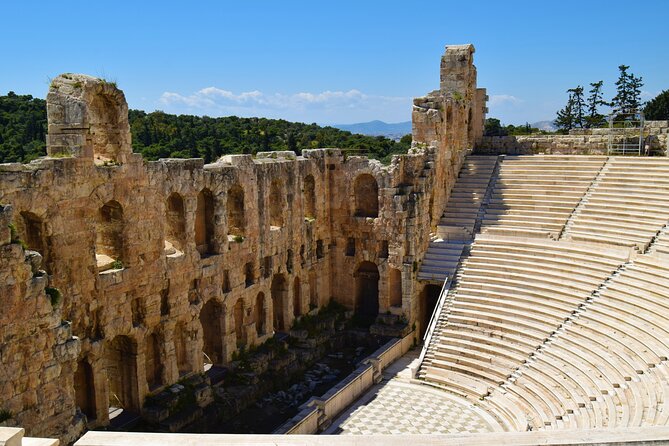
The Propylaea was the monumental entrance to the Acropolis. The tour allows about five minutes here, mainly to point out the huge marble blocks and explain how this gateway framed the approach to the temples above.
This is one of the places where a guide adds value quickly. The structure can look like a damaged passage if you do not know its role. The Propylaea was designed as an impressive threshold, and walking through it gives you a sense of the careful sequence leading toward the Parthenon.
The short stop is not a weakness by itself. The Propylaea is part of the route rather than the main destination, and the guide has to keep the group moving. Still, anyone fascinated by ancient construction should take a moment to look at the scale of the marble before continuing.
The Parthenon and its almost invisible curves
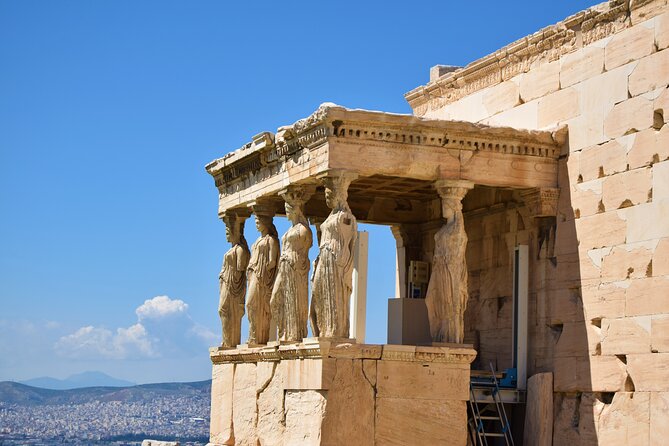
The Parthenon receives about 20 minutes, the longest stop on the upper hill. This is the largest temple on the Acropolis and was dedicated to Athena, the goddess who gave Athens its name and identity.
One of the most useful details is that the Parthenon does not rely on perfectly straight lines. Ancient builders used subtle curves and optical adjustments so the temple would appear balanced to the human eye. The guide explains how those design choices influenced architecture around the world.
This is the kind of fact that changes the way you look at the building. Instead of seeing only rows of columns, you begin to notice proportion, visual correction, and the skill required to make a massive structure appear calm and exact.
Twenty minutes is a reasonable amount of time for the main explanation and photographs. It is not a substitute for a full architectural study. The Parthenon is also the busiest part of most Acropolis visits, so a small group and a clear meeting position matter here.
The Erechtheion, the Caryatids, and the Athena-Poseidon story
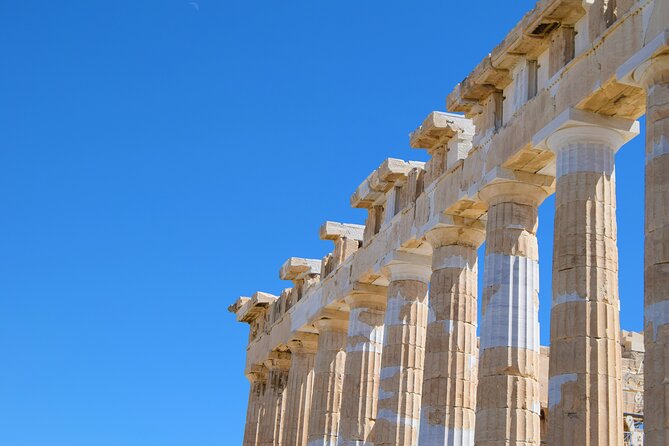
The Erechtheion gets about 10 minutes and offers a different mood from the Parthenon. Its most famous feature is the porch supported by the Caryatids, the female figures used as columns.
The guide explains what happened to one of the six original Caryatids and where it is now. This gives you a concrete story to remember, rather than a vague account of pieces being scattered across museums and collections. The stop also includes the mythic contest between Athena and Poseidon, a story that helps explain the religious importance of the Acropolis.
The Erechtheion is especially good for visitors who enjoy mythology. It is also a useful reminder that the Acropolis was not built around one single temple or one simple belief. Different sacred places shared the hill, each carrying its own stories and traditions.
Again, the scheduled time is short. You will hear the main points and see the celebrated porch, but you should not expect a detailed examination of every feature.
The Herod Atticus Odeon and the final view
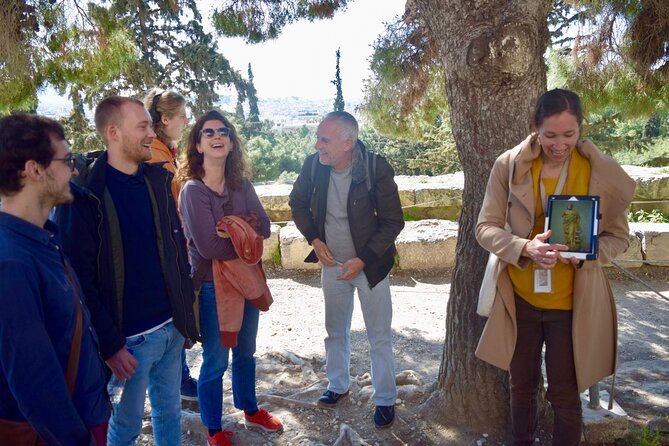
The Herod Atticus Odeon is the final listed stop, with about 10 minutes. This restored Roman concert hall was built in AD 161 by the wealthy Roman Herodes Atticus in memory of his wife, Regilla.
The building adds another layer to the Acropolis story. The hill was not important only during the classical Greek period. It continued to matter under Roman rule, when wealthy patrons used grand public buildings to honor family members and support cultural life.
The odeon is still used for performances during the summer. The tour points out that artists such as Sting and Patti Smith have performed there, which makes the ruined and restored structure easier to picture as a living performance venue rather than a silent archaeological object.
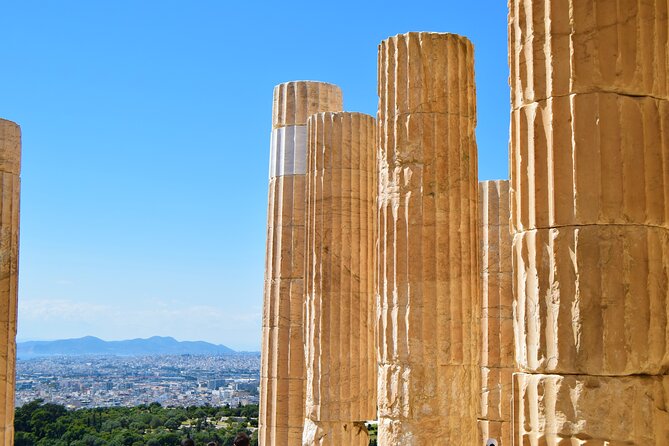
The tour finishes on top of the Acropolis Hill, where the 360-degree view across Athens is the natural payoff. You can look over the city from a position that makes the ancient site’s power and location easier to understand. Since the route ends there, you can continue exploring from the hilltop instead of retracing the tour immediately.
How the price works, and what value you get
The listed tour price is $46.26 per person. That covers the guided experience, but not admission to the archaeological site. The adult entrance fee is €30, and the operator arranges the entrance fees for the group.
That makes the real cost higher than the headline price. Keep the extra €30 in your budget before deciding if this suits you. Food, drinks, bottled water, and hotel transportation are also excluded.
The value depends on how much you want from a guide. If you only need directions and a few labels, the cost may feel high once admission is added. If you want the monuments explained in German or Dutch, the fee buys a structured route and a licensed guide who can connect architecture, mythology, and ancient public life.
The small group helps the calculation. You are not paying for a private tour, but a maximum of 20 people is more manageable than a large crowd. The strongest value comes for visitors who want an introduction that is easy to follow and does not require constant translation.
A good fit for families and language-specific sightseeing
This tour can work well for families, especially if children respond to stories about gods, victory, famous temples, and ancient theater. The available feedback specifically praises guide Jessica for being friendly, patient with children, and able to tell interesting stories.
That detail is worth taking seriously. Patience matters on the Acropolis, where children may tire during the uphill route and may not want a long technical lecture. A story-led guide can keep the visit moving without turning every stop into a school lesson.
The tour is also a natural choice for German-speaking and Dutch-speaking visitors who want the experience in one of those languages. The exact guide may vary by departure, but the tour is offered in German or Dutch, and the guide is licensed.
Most participants can take part, and service animals are allowed. The experience requires good weather, and it also requires a minimum number of participants. If poor weather or low enrollment causes cancellation, you are offered another date, another experience, or a full refund.
Timing, cancellation, and practical planning
Confirmation is provided at booking. You can cancel for a full refund up to 24 hours before the start time. Cancellations or changes made less than 24 hours before the experience are not refunded or accepted.
The cutoff uses Athens local time, so check the local date and hour carefully if you are booking from another country. This is especially important for a fixed archaeological-site visit, where a missed start can be difficult to repair.
The tour requires good weather. The Acropolis is an exposed hilltop, and conditions can affect both comfort and safety. If the operator cancels for weather, you receive the choice of a different date or a full refund.
Should you book the German or Dutch Acropolis tour?
Book it if you want a short, story-led Acropolis visit in German or Dutch, and you value a licensed guide more than the lowest possible entry cost. The route covers the essential monuments, the group is capped at 20, and the final city view gives the experience a satisfying finish.
It is particularly suitable for families and for anyone who wants mythology and architecture explained without working through a language barrier. Jessica’s reported patience with children is an encouraging sign for family bookings, though guide assignment can vary.
Think twice if you want several hours for independent photography, detailed archaeology, or a relaxed examination of each building. The 90-minute format moves at a purposeful pace, and the €30 admission fee is extra.
For a first Acropolis visit in your preferred language, this is a practical choice. Just budget for the entrance fee, bring water, meet at the correct Acropoli metro exit, and remember that you finish at the top of the hill.
FAQ
What language is the Acropolis tour offered in?
The tour is offered in German or Dutch. Choose the language that suits you when booking.
How long does the tour last?
The tour lasts approximately one hour and 30 minutes.
What is the maximum group size?
The group has a maximum of 20 participants.
Is the Acropolis entrance fee included?
No. Entrance is not included in the advertised tour price. The adult entrance fee is €30, and the operator arranges the entrance fees.
What does the tour price include?
The listed price includes a licensed guide. Food, drinks, bottled water, entrance fees, and hotel pickup and drop-off are not included.
Where does the tour begin?
The guide meets you at the exit of the Acropoli metro station marked Makriyianni/Dionysiou Areopagitou in Athens.
Where does the tour end?
The tour ends on top of the Acropolis Hill.
Which monuments are included?
The route includes the Theatre of Dionysus Eleuthereus, Temple of Athena Nike, Propylaea, Parthenon, Erechtheion, Herod Atticus Odeon, and the wider Acropolis site.
Are children able to participate?
Most participants can take part, and the tour information describes it as suitable for most people. Guide Jessica is specifically noted as being patient and friendly with children.
Can I cancel for a full refund?
Yes. You can cancel up to 24 hours before the experience start time for a full refund. Cancellations and changes made less than 24 hours before the start time are not refunded or accepted.
Recently reviewed around Athens
- Small-Group Women History in Ancient Greece Walking Tour★ 5.0 · 38 reviews
- Ceramic and Pottery Creative Workshop with Two Local Artists★ 4.0 · 57 reviews
- Athens: Wine Workshop Create your Own Wine under the Acropolis★ 5.0 · 77 reviews
- Athens: Greek Wines Tasting with Sommelier and Acropolis Views★ 5.0 · 88 reviews
- Hydra Private Day Trip by Ferry from Athens with Transfers★ 4.0 · 30 reviews
- Small-Group Wine Tour in Athens with Tasting★ 5.0 · 33 reviews
- Wine Trails Private Tour/ Nemea visit 3 wineries from Athens or Nafplion (10 h)★ 5.0 · 44 reviews
- Private Athens Transfer Airport/Port -Greek Tours-Hourly service★ 5.0 · 88 reviews
Acropolis & Acropolis Museum Tours, compared.

Acropolis & up to 5 Archaeological Sites Combo Pass
Read our review →

Acropolis, Parthenon & Acropolis Museum Guided Tour
Read our review →
Acropolis, Parthenon & Acropolis Museum Guided Tour
Read our review →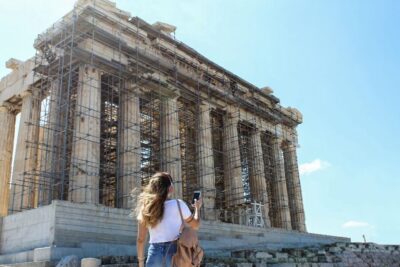


Acropolis monuments & Parthenon Walking Tour with Optional Acropolis Museum
Read our review →Browse the lists this tour appears in